1-Hydroxyethylidene-1,1-diphosphonic acid
2809-21-4 · (1-hydroxy-1-phosphonoethyl)phosphonic acid · (1-hydroxy-ethylidene)diphosphonic acid · (1-hydroxyethane-1,1-diyl)bis(phosphonic acid) · (1-Hydroxyethane-1,1-diyl)diphosphonic acid · (1-Hydroxyethylene)diphosphonic acid · (1-hydroxyethylene)diphosphonic acid, Tetrapotassium Salt · (1-Hydroxyethylidene)-1,1-diphosphonic acid · (1-Hydroxyethylidene)bis(phosphonic acid) · (1-Hydroxyethylidene)bisphosphonic acid · (1-Hydroxyethylidene)diphoshonic acid · (1-Hydroxyethylidene)diphosphonic acid · (Hydroxyethylidene)diphosphonic acid · 1,1,1-Ethanetriol diphosphonate · 1-HYDROXY-1,1-DIPHOSPHONOETHANE · 1-hydroxyethane 1,1-diphosphonic acid · 1-Hydroxyethane-1,1-bisphosphonic acid · 1-Hydroxyethane-1,1-diphosphonate · 1-Hydroxyethane-1,1-diphosphonic acid · 1-Hydroxyethanediphosphonic acid · 1-Hydroxyethylene Diphosphonate, Disodium · 1-Hydroxyethylidene-1,1-bisphosphonate · 1-Hydroxyethylidene-1,1-diphosphonic acid · Acetodiphosphonic acid · Acide etidronique · Acido etidronico · Acidum etidronicum · Dequest 2010 · Dequest 2015 · Dequest Z 010 · Dicalcium EHDP · Diphosphonate (base) · Diphosphonate, Disodium 1-Hydroxyethylene · Diphosphonic Acid, Hydroxyethylidene · Editronic acid · EHDP · EHDP, Dicalcium · ethane-1-hydroxy-1,1-bisphosphonic acid · Ethane-1-hydroxy-1,1-diphosphonate · Ethane-1-hydroxy-1,1-diphosphonic acid · Ethane-1-hydroxy-1,1-diphosphoric acid · Etidron · etidronate · Etidronate, Dicalcium · Etidronate, Disodium · Etidronate, Sodium · Etidronic acid · Etidronsaeure · Ferrofos 510 · HEDP · HEDSPA · Hydroxyethane-1,1-diphosphonic acid · Hydroxyethanediphosphonic acid · M2F465ROXU · Oxyethylidenediphosphonic acid · Phosphonic acid, (1-hydroxyethylidene)bis- · Phosphonic acid, (1-hydroxyethylidene)di- · Phosphonic acid, P,P'-(1-hydroxyethylidene)bis- · Salt Etidronate, Tetrapotassium · Turpinal SL · Xidiphon · XydiphoneCAS 2809-21-4
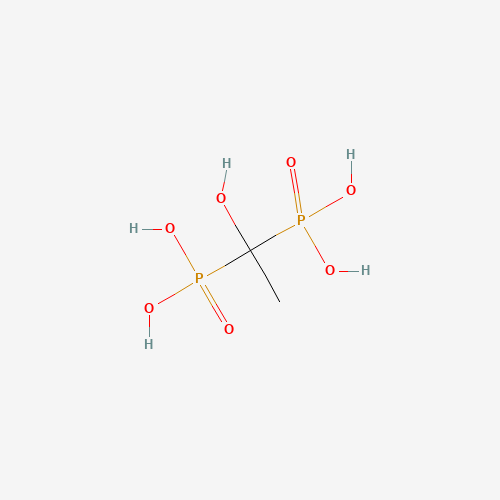
HEDP is a sequestrant — it binds metal ions — and JECFA specifies it for use in the antimicrobial washing solutions applied to foods such as poultry carcasses, not as an ingredient of a food.
Where it is and isn’t permitted
| Jurisdiction | Status | Scope and limits | Citation |
|---|---|---|---|
| Australia and New Zealand | No listed food uses foundThis site has not matched this substance to any food use on this jurisdiction’s list of authorised food additives. A food additive may be used only in foods that list names. Flavourings, enzymes, processing aids and added nutrients are regulated separately and do not appear on it. | ||
| Canada | No listing matchedHealth Canada’s lists name additives without E or INS numbers, so this site matches them by exact name. A substance listed there under a name this site does not recognise has no row here. | ||
| European Union | No listed food uses foundThis site has not matched this substance to any food use on this jurisdiction’s list of authorised food additives. A food additive may be used only in foods that list names. Flavourings, enzymes, processing aids and added nutrients are regulated separately and do not appear on it. | ||
| Great Britain | No listed food uses foundThis site has not matched this substance to any food use on this jurisdiction’s list of authorised food additives. A food additive may be used only in foods that list names. Flavourings, enzymes, processing aids and added nutrients are regulated separately and do not appear on it. | ||
| Japan | Permitted, with conditions | Designated additive: Appended Table 1, item 322, 1―ヒドロキシエチリデン―1・1―ジホスホン酸 (“1-Hydroxyethylidene-1,1-Diphosphonic Acid” in the unofficial English translation). …Designated additive: Appended Table 1, item 322, 1―ヒドロキシエチリデン―1・1―ジホスホン酸 (“1-Hydroxyethylidene-1,1-Diphosphonic Acid” in the unofficial English translation). Standards for use — Specifications and Standards for Foods, Food Additives, etc. (MHW Notification No. 370 of 1959), Part II (Food Additives), F (Standards for use), entry 1―ヒドロキシエチリデン―1,1―ジホスホン酸: (1) [must not be used in the foods stated] “1―ヒドロキシエチリデン―1,1―ジホスホン酸は、過酢酸製剤として使用する場合以外に使用してはならない。” The Japanese is the standard as published. There is no official English translation of the Notification; the English in square brackets is this site’s description of what each sentence does, not a translation of the foods or the levels. Compositional specifications for this additive, in the same Notification, are not imported and are not shown here; nor are the general rules in F 添加物一般, which apply to every additive. | Regulations for Enforcement of the Food Sanitation Act (MHW Ordinance No. 23 of 1948), Appended Table 1retrieved 2026-10-18 |
| South Korea | No listing matchedThis site imports Part III of South Korea’s Standards and Specifications for Food Additives, matched by CAS number, then INS number, then exact name. Mixed preparations and sanitisers are not imported, and an entry whose identifiers disagreed with a page’s is held for review, so an empty row does not show that South Korea does not permit the substance. | ||
| United States | Permitted, with conditions | 2 permitted uses Show every permitted use
| 21 CFR 173.310and 1 further provisionretrieved 2026-10-18 |
| Codex Alimentarius | Not listedDoes not appear on this jurisdiction’s permitted list. That is not the same as being prohibited. |
How much is permitted
A listing usually limits the quantity as well as the food. Only one of the forms that takes is a figure: quantum satis and good manufacturing practice permit the amount the technological effect requires and no more, which is a limit rather than the absence of one. Figures below are the range across every food category this page is listed in, and categories differ between regulators — see how much is permitted.
| Japan | — | 1 no quantity stated |
|---|---|---|
| United States | — | 2 no quantity stated |
No regulator sets a figure for 1-Hydroxyethylidene-1,1-diphosphonic acid. That is not an absence of control: where the listing says quantum satis or good manufacturing practice, the quantity is limited to what the effect requires.
What it is made from
Made by reacting phosphorous acid with acetic anhydride, acetyl chloride or acetic acid. The commercial product is typically a 60% solution in water.
- Vegan
- Vegetarian
Compare other additives on the dietary indexes.
- CAS registry number
- 2809-21-4
- InChIKey
- DBVJJBKOTRCVKF-UHFFFAOYSA-N
- PubChem
- CID 3305
How JECFA defines it
The international specification for identity and purity, prepared by the Joint FAO/WHO Expert Committee on Food Additives and published by FAO. It is a different document from any above, written by a different body and revised on its own cycle; it is advisory, and a country adopts it or does not.
1-Hydroxyethylidene-1,1-diphosphonic acid
1-Hydroxyethylidene-1,1-diphosphonic acid (HEDP) is manufactured commercially by the reaction of phosphorous acid with one or more acetylating agents; specifically acetic anhydride, acetyl chloride and/or acetic acid. The final product is typically a 60% solution of HEDP in water.
Synonyms: HEDP, ethane-1-hydroxy-1,1-diphosphonic acid, EHDP, etidronic acid Editronic acid; EHDP; Ethane-1-hydroxy-1,1-diphosphoric acid; HEDP
Assay, identification and purity criteria
Description and assay
- Specification history
- New specifications prepared at 63 rd JECFA (2004) and published in FNP 52 Add 12 (2004). Levels of residue that are expected to remain on foods do not pose a safety concern (63 rd JECFA, 2004).
- Chemical name
- 1-hydroxyethylidene-1,1-diphosphonic acid
- C.A.S. number
- 2809-21-4
- Chemical formula
- CH3C(OH)[PO(OH)2]2
- Empirical formula
- C2 H8 O7 P2
- Formula weight
- 205.02
- Assay
- Total active acid 58 – 62%
- DESCRIPTION
- Clear pale yellow liquid, free of suspended matter
- FUNCTIONAL USES
- Sequestrant (for use in antimicrobial washing solutions)
- METHOD OF ASSAY
- Place about 3 g of the sample, accurately weighed (w) into a beaker and add 100-150 ml of water. Stir the solution with a magnetic stirrer (maintain throughout titration). Insert pH electrode(s) and record the pH value. Titrate with 1 mol/l sodium hydroxide and record pH (or millivolts) after every 1ml added. Stop the titration at pH 10. Plot the pH as a function of added sodium hydroxide and manually draw the titration curve. Two inflection points will be observed at around pH 3 and pH 8. Take only into account the inflection point at around pH 8. Trace the tangent to this inflection point in order to determine the end-point. Calculate the total active acid from Total active acid (%) = [A x 206 x N] / [30 x w] – [1.676 x P] Where A = ml of N NaOH from start of titration to end point at pH 8-N = concentration of sodium hydroxide used P = concentration of phosphorous acid (%) (Determined as above) 1.676 = [MW of HEDP x 2] / [MW of phosphorous acid x 3] Using auto-titration for end-point detection, accuracy has been determined as +/- 0.2% at total active acid level of 63.5%
Identification
- Solubility (Vol. 4)
- Miscible with water, phosphoric acid and ethylene glycol; soluble in most organic solvents
- pH (Vol. 4)
- Not more than 2.0 (1% soln)
- Specific gravity (Vol. 4)
- 1.430- 1.471 at 20º
- Freezing point
- -25º
Purity criteria
- Chloride
- Not more than 40 mg/kg See description under TESTS
- Phosphorous acid
- Not more than 4.0% See description under TESTS
- Acetic acid
- Not more than 1.0% See description under TESTS
- Iron (Vol. 4)
- Not more than 10 mg/kg Determine using an atomic absorption technique appropriate to the specified level
- Arsenic ((Vol. 4)
- Not more than 5 mg/kg
- Lead (Vol. 4)
- Not more than 5 mg/kg Determine using an atomic absorption technique appropriate to the specified level. The selection of the sample size and method of sample preparation may be based on the principles of the method described in Volume 4, “Instrumental methods”
- Test: Chloride
- Determine by potentiometric titration by placing 25 g of the sample, accurately weighed, into a titration vessel and adding sufficient water to cover the electrodes. Add 3 ml of concentrated nitric acid. Titrate with 0.005 mol/l silver nitrate to first inflection point and record the titre in ml (A). Calculate the chloride content (mg/kg) from: Chloride (mg/kg) = [A x M x 3.55 x 10000] / W where M = concentration of silver nitrate solution (mol/l) W = weight of sample taken (g)
- Test: Phosphorous acid
- Determined by iodometric titration. Iodine oxidizes the phosphorous acid present to phosphate, excess iodine is determined and the Phosphorous acid calculated. Buffer solution pH 7.3: Dissolve 138 g of sodium dihydrogen phosphate in 800 ml of water and adjust pH to 7.3 with 50% sodium hydroxide solution. Make up to 1000 ml with water. Add 1.5 g of the sample to 20 ml of water in a 250 ml beaker. Add 50 ml of pH 7.3 phosphate buffer. Adjust pH to 7.3 using 50% sodium hydroxide. Transfer the solution to an iodine flask and add 25.0 ml of 0.1 N iodine. Stopper and swirl the solution and place in the dark immediately. After 15 min, remove the flask and add 5 ml acetic acid to flask. Titrate with 0.1 N sodium thiosulfate until a light straw yellow colour. Add starch indicator and continue titration until the end point “black to colourless” is observed and record the titre in ml (B). Repeat titration with a reagent blank determination omitting the sample and record the titre in ml (A). Calculate the percentage of phosphorus acid from: Phosphorous acid (%) = [(A-B) x N x E x 100] / [w x 1000] where N = normality of sodium thiosulfate solution E = equivalent weight of H3PO3 (40.99) w = weight of sample taken (g) The accuracy has been determined as +/- 0.01% at phosphorous acid level of 1.28%
- Test: Acetic acid
- Determine by ion chromatography using a Dionex ICE-ASI column with weak acid eluent. Set up the system in line with the instrument manufacturer’s operation procedure. The signal from the acetate ion is quantified against a calibration standard using Formic acid as the internal standard. Equipment: Dionex ICE-AS1 column Reagents: Acetic acid (analytical grade) and formic acid (analytical grade) Procedure: Carry out the determination according to the instrument manufacturer’s operation procedure
Every name it appears under
62 recorded names. A label may use any of them.
CAS registry number
- 2809-21-4
Other names
- (1-hydroxy-1-phosphonoethyl)phosphonic acid
- (1-hydroxy-ethylidene)diphosphonic acid
- (1-hydroxyethane-1,1-diyl)bis(phosphonic acid)
- (1-Hydroxyethane-1,1-diyl)diphosphonic acid
- (1-Hydroxyethylene)diphosphonic acid
- (1-hydroxyethylene)diphosphonic acid, Tetrapotassium Salt
- (1-Hydroxyethylidene)-1,1-diphosphonic acid
- (1-Hydroxyethylidene)bis(phosphonic acid)
- (1-Hydroxyethylidene)bisphosphonic acid
- (1-Hydroxyethylidene)diphoshonic acid
- (1-Hydroxyethylidene)diphosphonic acid
- (Hydroxyethylidene)diphosphonic acid
- 1,1,1-Ethanetriol diphosphonate
- 1-HYDROXY-1,1-DIPHOSPHONOETHANE
- 1-hydroxyethane 1,1-diphosphonic acid
- 1-Hydroxyethane-1,1-bisphosphonic acid
- 1-Hydroxyethane-1,1-diphosphonate
- 1-Hydroxyethane-1,1-diphosphonic acid
- 1-Hydroxyethanediphosphonic acid
- 1-Hydroxyethylene Diphosphonate, Disodium
- 1-Hydroxyethylidene-1,1-bisphosphonate
- 1-Hydroxyethylidene-1,1-diphosphonic acid
- Acetodiphosphonic acid
- Acide etidronique
- Acido etidronico
- Acidum etidronicum
- Dequest 2010
- Dequest 2015
- Dequest Z 010
- Dicalcium EHDP
- Diphosphonate (base)
- Diphosphonate, Disodium 1-Hydroxyethylene
- Diphosphonic Acid, Hydroxyethylidene
- Editronic acid
- EHDP
- EHDP, Dicalcium
- ethane-1-hydroxy-1,1-bisphosphonic acid
- Ethane-1-hydroxy-1,1-diphosphonate
- Ethane-1-hydroxy-1,1-diphosphonic acid
- Ethane-1-hydroxy-1,1-diphosphoric acid
- Etidron
- etidronate
- Etidronate, Dicalcium
- Etidronate, Disodium
- Etidronate, Sodium
- Etidronic acid
- Etidronsaeure
- Ferrofos 510
- HEDP
- HEDSPA
- Hydroxyethane-1,1-diphosphonic acid
- Hydroxyethanediphosphonic acid
- M2F465ROXU
- Oxyethylidenediphosphonic acid
- Phosphonic acid, (1-hydroxyethylidene)bis-
- Phosphonic acid, (1-hydroxyethylidene)di-
- Phosphonic acid, P,P'-(1-hydroxyethylidene)bis-
- Salt Etidronate, Tetrapotassium
- Turpinal SL
- Xidiphon
- Xydiphone
Hazard reference values
No reference value for this substance in the sources we hold.
Evidence and how bodies read it
Studies, and the differing conclusions regulators drew from them, are curated rather than machine-read, and none has been written for this substance yet.
Common questions
Assembled from what is above, in the words the questions are usually asked in. Each answer is the same statement the relevant section makes, with the same citations behind it.
- What is 1-Hydroxyethylidene-1,1-diphosphonic acid?
- HEDP is a sequestrant — it binds metal ions — and JECFA specifies it for use in the antimicrobial washing solutions applied to foods such as poultry carcasses, not as an ingredient of a food.
- Is 1-Hydroxyethylidene-1,1-diphosphonic acid banned in Europe?
- No. 1-Hydroxyethylidene-1,1-diphosphonic acid does not appear on the EU's list of authorised food additives, which is not the same as being banned: the EU permits an additive only where it has authorised it, and usually the reason for an absence is that no one applied. The EU has made no finding against this substance. It does mean it may not be used as a food additive in the EU today.
- Where is 1-Hydroxyethylidene-1,1-diphosphonic acid permitted?
- Of the seven regulators this site reads, Japan and the US permit it. Each permission is for named foods at named levels, not a blanket one; the table on this page gives them with citations.
- Is 1-Hydroxyethylidene-1,1-diphosphonic acid vegan?
- Yes. 1-Hydroxyethylidene-1,1-diphosphonic acid is not derived from animals, and is suitable for vegetarians. This page says what it is made from and how.
Sources for this page
- jp retrieved 2026-10-18
- us-listings retrieved 2026-10-18
- jecfaspecs retrieved 2026-09-23
Full licence terms and publisher details on Sources. How this page is built and updated: Method.
Machine-readable: a JSON record of this additive is given on request —how to ask for access.
Follow changes to 1-Hydroxyethylidene-1,1-diphosphonic acid:Atom feed — regulatory events, and any change the weekly refresh detects in its provisions.