Ammonium sulfate
7783-20-2 · Actamaster · AMMONIUM SULFATE · Ammonium sulfate ((NH4)2SO4) · Ammonium sulfate (2:1) · Ammonium sulfate (NF) · Ammonium sulfate 2M solution in water (+/- 0.2M) · Ammonium Sulfate ACS grade · Ammonium sulfate, 99.99% metals basis · Ammonium sulfate, 99.999% (metals basis) · Ammonium sulfate, CP,98% · Ammonium Sulfate, Trace metals grade · Ammonium sulfate, ultrapure · Ammonium sulphate · AMMONIUM SULPHATE (2:1) · Ammonium sulphate,>/=99.0%,AR · Ammoniumsulfate · Caswell No. 048 · Diammonium sulfate · Diammonium sulphate · diazanium sulfate · Dolamin · E 517 · EPA Pesticide Chemical Code 005601 · HSDB 471 · Mascagnite · SU46BAM238 · Sulfate Anion Standard Solution · Sulfate, ammonium · Sulfatom ammoniya · Sulfuric acid ammonium salt (1:2) · Sulfuric acid diammonium salt · sulphate of ammonia · E517 · diammonium sulfate · Ammonium sulfate · Ammonium sulphate · Ammonium sulphate · Ammoniumsulfaat · Ammoniumsulfaatti · Ammoniumsulfat · Ammooniumsulfaat · Ammónium-szulfát · Amonija sulfāts · AMONIJEV SULFAT · Amonijevi sulfati · Amonio sulfatas · Siarczan amonu · Solfato di ammonio · Sulfat de amoniu · Sulfat tal-ammonju · Sulfate d’ammonium · Sulfato amónico · Sulfato de amónio · Síran amonný · Θειικό αμμώνιο · Амониев сулфатE number E517CAS 7783-20-2
Listed as a raising agent, a flavour enhancer and a firming agent by the US.
Listed as raising agents (US) · flavour enhancers (US) · firming agents (US) · flour treatment agents (US) · dough strengtheners (US) · flavouring agents and adjuvants (US) · yeast foods (CA) · processing aids (US)
- United States: Leavening agent — FDA, Substances Added to Food: AMMONIUM SULFATE
- United States: Flavor enhancer — FDA, Substances Added to Food: AMMONIUM SULFATE
- United States: Firming agent — FDA, Substances Added to Food: AMMONIUM SULFATE
- United States: Firming agents — 21 CFR 184.1143, citing 21 CFR 170.3(o)(10)
- United States: Flour treating agent — FDA, Substances Added to Food: AMMONIUM SULFATE
- United States: Dough strengthener — FDA, Substances Added to Food: AMMONIUM SULFATE
- United States: Dough strengtheners — 21 CFR 184.1143, citing 21 CFR 170.3(o)(6)
- United States: Flavoring agent or adjuvant — FDA, Substances Added to Food: AMMONIUM SULFATE
- Canada: Yeast food — Health Canada, List of Permitted Yeast Foods (List 14)
- United States: Processing aid — FDA, Substances Added to Food: AMMONIUM SULFATE
- United States: Processing aids — 21 CFR 184.1143, citing 21 CFR 170.3(o)(24)
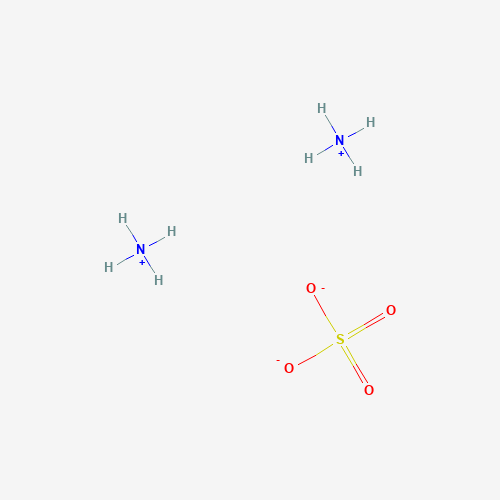
Ammonium sulfate is a dough conditioner and yeast nutrient in bread making, supplying the nitrogen the yeast needs to work quickly.
Where it is and isn’t permitted
| Jurisdiction | Status | Scope and limits | Citation |
|---|---|---|---|
| Australia and New Zealand | No listed food uses foundThis site has not matched this substance to any food use on this jurisdiction’s list of authorised food additives. A food additive may be used only in foods that list names. Flavourings, enzymes, processing aids and added nutrients are regulated separately and do not appear on it. | ||
| Canada | Permitted, with conditions | no numerical limit (good manufacturing practice) 3 permitted uses Show every permitted use
| Health Canada, List of Permitted Yeast Foods (List 14)and 2 further provisionsretrieved 2026-10-17 |
| European Union | No listed food uses foundThis site has not matched this substance to any food use on this jurisdiction’s list of authorised food additives. A food additive may be used only in foods that list names. Flavourings, enzymes, processing aids and added nutrients are regulated separately and do not appear on it. | ||
| Great Britain | No listed food uses foundThis site has not matched this substance to any food use on this jurisdiction’s list of authorised food additives. A food additive may be used only in foods that list names. Flavourings, enzymes, processing aids and added nutrients are regulated separately and do not appear on it. | ||
| Japan | Permitted, with conditions | Designated additive: Appended Table 1, item 452, 硫酸アンモニウム (“Ammonium Sulfate” in the unofficial English translation). …Designated additive: Appended Table 1, item 452, 硫酸アンモニウム (“Ammonium Sulfate” in the unofficial English translation). Standards for use — Specifications and Standards for Foods, Food Additives, etc. (MHW Notification No. 370 of 1959), Part II (Food Additives), F (Standards for use): The Notification sets no standard for use (使用基準) for this additive, so it is not restricted there to particular foods or amounts. Compositional specifications for this additive, in the same Notification, are not imported and are not shown here; nor are the general rules in F 添加物一般, which apply to every additive. | Regulations for Enforcement of the Food Sanitation Act (MHW Ordinance No. 23 of 1948), Appended Table 1retrieved 2026-10-18 |
| South Korea | Permitted, with conditions | Designated food additive: Standards and Specifications for Food Additives, Part III, 1. …Designated food additive: Standards and Specifications for Food Additives, Part III, 1. 일반식품첨가물 (general food additives), 황산암모늄 (“Ammonium Sulfate”, the English the Code prints beside it). Main use (주용도) of 황산암모늄: 팽창제. Standard for use (사용기준) of 황산암모늄: (1) [to be used under the general standard for use in II. 2. 1), the minimum amount that achieves the technical effect, with no limit set for this additive in particular] “II. 2. 1)의 규정에 따라 사용하여야 한다.” The Korean is the standard as published. There is no official English translation of the current Code (the English version on MFDS’s website is the 2020 edition and has no legal effect); the English in square brackets is this site’s description of what each sentence does, not a translation of the foods or the levels. Compositional specifications (Part IV) are not imported, nor are the general standards in Part II, which apply to every additive. | Standards and Specifications for Food Additives (식품첨가물의 기준 및 규격), MFDS Notification, Part III (Standards for use, by item)retrieved 2026-10-18 |
| United States | Permitted | 21 CFR 184.1143retrieved 2026-10-17 | |
| Codex Alimentarius | Not listedDoes not appear on this jurisdiction’s permitted list. That is not the same as being prohibited. |
How much is permitted
A listing usually limits the quantity as well as the food. Only one of the forms that takes is a figure: quantum satis and good manufacturing practice permit the amount the technological effect requires and no more, which is a limit rather than the absence of one. Figures below are the range across every food category this page is listed in, and categories differ between regulators — see how much is permitted.
| Canada | — | 2 GMP, 1 no quantity stated |
|---|---|---|
| Japan | — | 1 no quantity stated |
| South Korea | — | 1 no quantity stated |
| United States | — | 1 no quantity stated |
No regulator sets a figure for Ammonium sulfate. That is not an absence of control: where the listing says quantum satis or good manufacturing practice, the quantity is limited to what the effect requires.
What it is made from
Produced by reacting ammonia with sulfuric acid. It is also a major fertiliser, made at very large scale.
- Vegan
- Vegetarian
Compare other additives on the dietary indexes.
- CAS registry number
- 7783-20-2
- InChIKey
- BFNBIHQBYMNNAN-UHFFFAOYSA-N
- PubChem
- CID 6097028
How the EU defines it
The legal specification an additive must meet to be sold as this E number in the EU — what it is, how it may be made, and the purity it must reach. From Commission Regulation (EU) No 231/2012.
A specification does not authorise use. This site holds no EU permission for Ammonium sulfate in food; see the EU row in the status panel above.
E 517 Ammonium sulphate
Assay, identification and purity criteria
Description and assay
- Einecs
- 231-984-1
- Chemical name
- Ammonium sulphate
- Chemical formula
- (NH₄)₂SO₄
- Molecular weight
- 132,14
- Assay
- Content not less than 99,0 % and not more than 100,5 %
- Description
- White powder, shining plates or crystalline fragments
Identification
- Test for ammonium
- Passes test
- Test for sulphate
- Passes test
- Solubility
- Freely soluble in water, insoluble in ethanol
Purity criteria
- Loss on ignition
- Not more than 0,25 %
- Selenium
- Not more than 30 mg/kg
- Lead
- Not more than 3 mg/kg
Authorised in other additives, enzymes, flavourings and nutrients
These authorisations are not for use in food. They let this substance be used inside another additive, a food enzyme, a flavouring or a nutrient preparation — often as a carrier — and it reaches food only as part of that product. Annex III to Regulation (EC) No 1333/2008.
| Part | May be used in | Maximum level | Citation |
|---|---|---|---|
| Annex III, Part 1: Carriers in food additives | All food additives | quantum satis | Regulation (EC) No 1333/2008, Annex III, Part 1 |
| Annex III, Part 3: Food additives including carriers in food enzymes | Food enzymesCan be used as a carrier: Yes Note (1): Including enzymes authorised as food additives. | In enzyme preparation: 100 000 mg/kg In final food except beverages: 100 mg/kg In beverages: 50 mg/l | Regulation (EC) No 1333/2008, Annex III, Part 3 |
Every name it appears under
57 recorded names. A label may use any of them.
E number
- E517
CAS registry number
- 7783-20-2
As it appears in regulation
- Ammonium sulfate
- Ammonium sulphate
Other names
- Actamaster
- AMMONIUM SULFATE
- Ammonium sulfate ((NH4)2SO4)
- Ammonium sulfate (2:1)
- Ammonium sulfate (NF)
- Ammonium sulfate 2M solution in water (+/- 0.2M)
- Ammonium Sulfate ACS grade
- Ammonium sulfate, 99.99% metals basis
- Ammonium sulfate, 99.999% (metals basis)
- Ammonium sulfate, CP,98%
- Ammonium Sulfate, Trace metals grade
- Ammonium sulfate, ultrapure
- Ammonium sulphate
- AMMONIUM SULPHATE (2:1)
- Ammonium sulphate,>/=99.0%,AR
- Ammoniumsulfate
- Caswell No. 048
- Diammonium sulfate
- Diammonium sulphate
- diazanium sulfate
- Dolamin
- E 517
- EPA Pesticide Chemical Code 005601
- HSDB 471
- Mascagnite
- SU46BAM238
- Sulfate Anion Standard Solution
- Sulfate, ammonium
- Sulfatom ammoniya
- Sulfuric acid ammonium salt (1:2)
- Sulfuric acid diammonium salt
- sulphate of ammonia
Systematic names
- diammonium sulfate
Hazard reference values
| Type | Value | Population | Assessed by | Opinion |
|---|---|---|---|---|
| ADI | 12.5 mg/kg bw/day | consumers | EFSA | not identified in the dataset |
Evidence and how bodies read it
What assessing bodies concluded
Each conclusion is paraphrased in the body's own framing, from the published opinion linked beneath it. Where bodies differ, both stand; this site does not adjudicate between them or add a view of its own.
EFSA 2019
The FAF Panel found no concern for genotoxicity or carcinogenicity for sulphuric acid and its sodium, potassium, calcium and ammonium salts (E 513–E 517), noting exposure far below doses causing laxative effects in humans. It concluded that exposure does not raise a safety concern at reported uses and use levels and that no numerical ADI is needed.
Common questions
Assembled from what is above, in the words the questions are usually asked in. Each answer is the same statement the relevant section makes, with the same citations behind it.
- What is E 517?
- E 517 is Ammonium sulfate. Ammonium sulfate is a dough conditioner and yeast nutrient in bread making, supplying the nitrogen the yeast needs to work quickly.
- What is Ammonium sulfate used for in food?
- It is listed as a raising agent, a flavour enhancer and a firming agent — the role the US assigns it. This page shows every function each regulator records, with the citation for each.
- Is Ammonium sulfate banned in Europe?
- No. Ammonium sulfate does not appear on the EU's list of authorised food additives, which is not the same as being banned: the EU permits an additive only where it has authorised it, and usually the reason for an absence is that no one applied. The EU has made no finding against this substance. It does mean it may not be used as a food additive in the EU today.
- Where is Ammonium sulfate permitted?
- Of the seven regulators this site reads, Canada, Japan, South Korea and the US permit it. Each permission is for named foods at named levels, not a blanket one; the table on this page gives them with citations.
- Is Ammonium sulfate vegan?
- Yes. Ammonium sulfate is not derived from animals, and is suitable for vegetarians. This page says what it is made from and how.
Sources for this page
- ca retrieved 2026-10-17
- jp retrieved 2026-10-18
- kr retrieved 2026-10-18
- ecfr retrieved 2026-10-17
- euspecs retrieved 2026-10-18
Full licence terms and publisher details on Sources. How this page is built and updated: Method.
Machine-readable: a JSON record of this additive is given on request —how to ask for access.
Follow changes to Ammonium sulfate:Atom feed — regulatory events, and any change the weekly refresh detects in its provisions.