Aspartame
22839-47-0 · 53906-69-7 · 1-Methyl N-L-alpha-aspartyl-L-phenylalanate · 1-Methyl N-L-alpha-aspartyl-L-phenylalanine · 3-Amino-N-(alpha-carboxyphenethyl)succinamic acid N-methyl ester · 3-Amino-N-(alpha-methoxycarbonylphenethyl) succinamic acid · Aminosweet · Asp-Phe methyl ester · Asp-phe-ome · Aspartam · Aspartame · Aspartame (e951) · Aspartame, L,L-alpha- · Aspartamo · Aspartamum · Aspartyl phenylalanine methyl ester · Aspartylphenylalanine methyl ester · Aspartylphenylalanine, Methyl · c-mer · Canderel · CCRIS 5456 · Dipeptide sweetener · E 951 · Equal · Gold, Hermesetas · H-Asp-Phe-OMe · HSDB 3915 · Ins no.951 · Ins-951 · L-Aspartyl-L-phenylalanine methyl ester · L-Aspartyl-L-phenylalanyl methyl ester · L-Phenylalanine, L-alpha-aspartyl-, 2-methyl ester · L-Phenylalanine, N-L-.alpha.-aspartyl-, 1-methyl ester · L-Phenylalanine, N-L-alpha-aspartyl-, 1-methyl ester · Methyl aspartylphenylalanate · Methyl Aspartylphenylalanine · Methyl Ester, Aspartylphenylalanine · Methyl L-alpha-aspartyl-L-phenylalanate · methyl L-alpha-aspartyl-L-phenylalaninate · Methyl L-aspartyl-L-phenylalanine · Methyl N-L-alpha-aspartyl-L-phenylalaninate · N-L-ALPHA-ASPARTYL L-PHENYLALANINE 1-METHYL ESTER · N-L-alpha-Aspartyl-L-phenylalanine 1-methyl ester · N-L-alpha-Aspartyl-L-phenylalanine methyl ester · Nutrasweet · Pal Sweet · Palsweet Diet · PME · Sanecta · Sladex · Sweet dipeptide · Tri Sweet · Tri-sweet · TriSweet · Z0H242BBR1 · Zero-cal · E951 · 951 · (3S)-3-amino-3-{[(2S)-1-methoxy-1-oxo-3-phenylpropan-2-yl]carbamoyl}propanoic acid · (3S)-3-amino-4-[[(2S)-1-methoxy-1-oxo-3-phenylpropan-2-yl]amino]-4-oxobutanoic acid · (3S)-3-azaniumyl-4-(((2S)-1-methoxy-1-oxo-3-phenylpropan-2-yl)amino)-4-oxobutanoate · (S)-3-Amino-4-(((S)-1-methoxy-1-oxo-3-phenylpropan-2-yl)amino)-4-oxobutanoic acid · Succinamic acid, 3-amino-N-(alpha-carboxyphenethyl)-, N-methyl ester, stereoisomer · Aspartame · Aspartaam · Aspartaami · Aspartam · Aspartamas · Aspartame · Aspartamo · Aspartāms · Aszpartám · Ασπαρτάμη · АспартамE number E951INS 951CAS 22839-47-0
Listed as a sweetener by Canada, Codex, the EU and the US.
Listed as sweeteners (CA, EU, US, Codex) · flavour enhancers (US, Codex)
- Canada: Sweetener — Health Canada, List of Permitted Sweeteners (List 9)
- European Union: Sweeteners — Regulation (EC) No 1333/2008, Annex II, Part B, 2. Sweeteners (consolidated text 02008R1333-20260818)
- United States: Non-nutritive sweetener — FDA, Substances Added to Food: ASPARTAME
- Codex Alimentarius: Sweetener — CXS 192-1995 Table One, INS 951
- United States: Flavor enhancer — FDA, Substances Added to Food: ASPARTAME
- Codex Alimentarius: Flavour enhancer — CXS 192-1995 Table One, INS 951
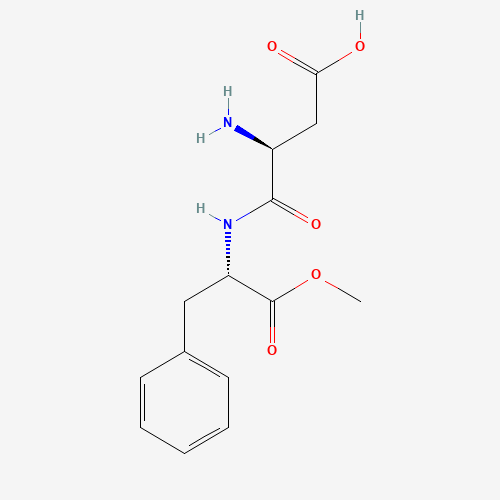
Aspartame is an intense sweetener about two hundred times as sweet as sugar, used in diet soft drinks, tabletop sweeteners, chewing gum and yoghurts. Products containing it must carry a warning that it is a source of phenylalanine, for people with phenylketonuria.
Where it is and isn’t permitted
| Jurisdiction | Status | Scope and limits | Citation |
|---|---|---|---|
| Australia and New Zealand | Permitted, with conditions | 58 food categories highest permitted level 10,000 mg/kg Show every food category
| Food Standards Code, Schedule 15, S15—5and 57 further provisionsretrieved 2026-10-17 |
| Canada | Permitted, with conditions | highest permitted level 5,000 mg/kg 11 permitted uses Show every permitted use
| Health Canada, List of Permitted Sweeteners (List 9)and 10 further provisionsretrieved 2026-10-17 |
| European Union | Permitted, with conditions | 36 food categories highest permitted level 2,500 mg/l Show every food category
| Regulation (EC) No 1333/2008and 35 further provisionsretrieved 2026-10-18 |
| Great Britain | Permitted, with conditions | 34 food categories highest permitted level 2,000 mg/kg or mg/l Show every food category
| Assimilated Regulation (EC) No 1333/2008and 33 further provisionsretrieved 2026-10-18 |
| Japan | Permitted, with conditions | Designated additive: Appended Table 1, item 15, アスパルテーム(別名L―α―アスパルチル―L―フェニルアラニンメチルエステル) (“Aspartame (L-alpha-Aspartyl-L-Phenylalanine-Methyl Ester)” in the unofficial English translation). …Designated additive: Appended Table 1, item 15, アスパルテーム(別名L―α―アスパルチル―L―フェニルアラニンメチルエステル) (“Aspartame (L-alpha-Aspartyl-L-Phenylalanine-Methyl Ester)” in the unofficial English translation). Standards for use — Specifications and Standards for Foods, Food Additives, etc. (MHW Notification No. 370 of 1959), Part II (Food Additives), F (Standards for use): The Notification sets no standard for use (使用基準) for this additive, so it is not restricted there to particular foods or amounts. Compositional specifications for this additive, in the same Notification, are not imported and are not shown here; nor are the general rules in F 添加物一般, which apply to every additive. | Regulations for Enforcement of the Food Sanitation Act (MHW Ordinance No. 23 of 1948), Appended Table 1retrieved 2026-10-18 |
| South Korea | Permitted, with conditions | Designated food additive: Standards and Specifications for Food Additives, Part III, 1. …Designated food additive: Standards and Specifications for Food Additives, Part III, 1. 일반식품첨가물 (general food additives), 아스파탐 (“Aspartame”, the English the Code prints beside it). Main use (주용도) of 아스파탐: 감미료. Standard for use (사용기준) of 아스파탐: (1) [sets a limit on the amount used] “아스파탐의 사용량은 아래와 같으며, 아래의 식품을 제외한 식품의 경우 제한받지 아니한다. 1. 빵류, 과자, 빵류 제조용 믹스, 과자 제조용 믹스 : 5.0g/kg 이하 2. 시리얼류 : 1.0g/kg 이하 3. 특수의료용도식품 : 1.0g/kg 이하 4. 체중조절용 조제식품 : 0.8g/kg 이하 5. 건강기능식품 : 5.5g/kg 이하” The Korean is the standard as published. There is no official English translation of the current Code (the English version on MFDS’s website is the 2020 edition and has no legal effect); the English in square brackets is this site’s description of what each sentence does, not a translation of the foods or the levels. Compositional specifications (Part IV) are not imported, nor are the general standards in Part II, which apply to every additive. | Standards and Specifications for Food Additives (식품첨가물의 기준 및 규격), MFDS Notification, Part III (Standards for use, by item)retrieved 2026-10-18 |
| United States | Permitted, with conditions | 21 CFR 172.804retrieved 2026-10-17 | |
| Codex Alimentarius | Permitted, with conditions | 65 food categories highest permitted level 10,000 mg/kg Show every food category and its notes
| CXS 192-1995 Table One, INS 951and 64 further provisionsretrieved 2026-09-07 |
How much is permitted
A listing usually limits the quantity as well as the food. Only one of the forms that takes is a figure: quantum satis and good manufacturing practice permit the amount the technological effect requires and no more, which is a limit rather than the absence of one. Figures below are the range across every food category this page is listed in, and categories differ between regulators — see how much is permitted.
| Australia and New Zealand | 150 mg/kg – 10,000 mg/kg | 3 numeric limit, 55 GMP |
|---|---|---|
| Canada | 500 mg/kg – 10,000 mg/kg | 9 numeric limit, 1 GMP, 1 no quantity stated |
| European Union | 110 mg/kg – 2,500 mg/kg | 33 numeric limit, 3 quantum satis |
| Great Britain | 110 mg/kg – 2,000 mg/kg | 25 numeric limit, 6 several limits, 3 quantum satis |
| Japan | — | 1 no quantity stated |
| South Korea | — | 1 no quantity stated |
| United States | — | 1 no quantity stated |
| Codex Alimentarius | 300 mg/kg – 10,000 mg/kg | 64 numeric limit, 1 GMP |
What a label must say
Words a food containing Aspartame is obliged to carry, quoted from the instrument that imposes them. A required statement is a fact about the regulation, not a finding about the substance — every rule below applies where the additive is authorised.
‘with sweetener(s)’, or ‘with sugar(s) and sweetener(s)’ where the food also contains added sugar. The statement accompanies the name of the food.
Any food containing an authorised sweetener. Regulation (EU) No 1169/2011, Annex III, points 2.1 and 2.2 · Assimilated Regulation (EU) No 1169/2011, Annex III
‘contains a source of phenylalanine’ where the sweetener is named in the ingredients; ‘contains aspartame (a source of phenylalanine)’ where it appears only as an E number.
Any food containing aspartame or aspartame-acesulfame salt. Regulation (EU) No 1169/2011, Annex III, point 2.3 · Assimilated Regulation (EU) No 1169/2011, Annex III
For polyols, ‘excessive consumption may induce laxative effects’. For aspartame or aspartame-acesulfame salt, ‘contains a source of phenylalanine’.
A table-top sweetener — the tablets, powders and drops sold to be added by the person eating. Regulation (EC) No 1333/2008, Article 23(3) · Assimilated Regulation (EC) No 1333/2008, Article 23
Every rule collected at what a label must say.
What it is made from
A methyl ester of a dipeptide, made by joining the amino acids L-aspartic acid and L-phenylalanine, both produced by fermentation, and then methylating the result. It is digested into those components rather than excreted intact, which is why the phenylalanine declaration is required.
- Vegan
- Vegetarian
Compare other additives on the dietary indexes.
- CAS registry number
- 22839-47-0
- InChIKey
- IAOZJIPTCAWIRG-QWRGUYRKSA-N
- PubChem
- CID 134601
The two specifications, compared
The European Union sets identity and purity by regulation; JECFA publishes its own through FAO, advisory until a country adopts it. Both documents are below in full. These are the parameters each puts a number on.
| Parameter | European Union | JECFA |
|---|---|---|
| Assay | no less than 98 % | no less than 98 % |
| Loss on drying | no more than 4.5 % | no more than 4.5 % |
| Sulphated ash | no more than 0.2 % | no more than 0.2 % |
| Lead | no more than 1 mg/kg | no more than 1 mg/kg |
| Arsenic | no more than 3 mg/kg | — |
The two documents state the same figures for every parameter compared here.
How the EU defines it
The legal specification an additive must meet to be sold as this E number in the EU — what it is, how it may be made, and the purity it must reach. From Commission Regulation (EU) No 231/2012.
E 951 Aspartame
Synonyms: Aspartyl phenylalanine methyl ester
Assay, identification and purity criteria
Description and assay
- Einecs
- 245-261-3
- Chemical name
- N-L-α-Aspartyl-L-phenylalanine-1-methyl ester, 3-amino-N-(α-carbomethoxy-phenethyl)-succinamic acid-N-methyl ester
- Chemical formula
- C₁₄H₁₈N₂O₅
- Molecular weight
- 294,31
- Assay
- Not less than 98 % and not more than 102 % of C₁₄H₁₈N₂O₅ on the anhydrous basis
- Description
- White, odourless, crystalline powder having a sweet taste. Approximately 200 times as sweet as sucrose
Identification
- Solubility
- Slightly soluble in water and in ethanol
- pH
- Between 4,5 and 6,0 (1 in 125 solution)
- Specific rotation
- [α]D ²⁰: + 14,5° to + 16,5° Determine in a 4 in 100/15 N formic acid solution within 30 minutes after preparation of the sample solution
Purity criteria
- Loss on drying
- Not more than 4,5 % (105 °C, 4 hours)
- Sulphated ash
- Not more than 0,2 % (expressed on dry weight basis)
- Transmittance
- The transmittance of a 1 % solution in 2N hydrochloric acid, determined in a 1-cm cell at 430 nm with a suitable spectrophotometer, using 2N hydrochloric acid as a reference, is not less than 0,95, equivalent to an absorbance of not more than approximately 0,022
- Arsenic
- Not more than 3 mg/kg (expressed on dry weight basis)
- Lead
- Not more than 1 mg/kg (expressed on dry weight basis)
- 5-Benzyl-3,6-dioxo-2-piperazineacetic acid
- Not more than 1,5 % (expressed on dry weight basis)
How JECFA defines it
The international specification for identity and purity, prepared by the Joint FAO/WHO Expert Committee on Food Additives and published by FAO. It is a different document from any above, written by a different body and revised on its own cycle; it is advisory, and a country adopts it or does not.
INS 951 Aspartame
Aspartame is a dipeptide methyl ester of L-aspartic acid and L-phenylalanine. It is produced chemically or enzymatically. Chemical synthesis of aspartame is accomplished by reacting L-phenylalanine or L-phenylalanine methyl ester with N-protected L-aspartic anhydride. This is followed by separation and crystallization of the major component, α -aspartame, from its non-sweet isomer, β -aspartame.
Synonyms: Aspartyl phenylalanine methyl ester, α -aspartame, L-aspartyl-L-phenylalanine methyl ester, N-L- α -aspartyl-L-phenylalanine-1-methyl ester, APM APM; Aspartyl phenylalanine methyl ester
Assay, identification and purity criteria
Description and assay
- Specification history
- 2 out of 6 Revised specifications prepared at the 96th JECFA (2023) and published in FAO JECFA Monograph 31 (2023) superseding specifications prepared at the 82nd JECFA (2016). Metals and arsenic specifications revised at the 57th JECFA (2001). An ADI of 0-40 mg/kg bw was established at the 25th JECFA (1981).
- Chemical names
- 3-Amino-N-(alpha-carboxy-phenethyl)-succinamic acid, L-alpha-aspartyl-L-phenylalanine-1-methyl ester
- C.A.S. number
- 22839-47-0
- INS number
- 951
- Chemical formula
- C14H18N2O5
- Formula weight
- 294.30
- Assay
- Not less than 98.0% and not more than 102.0% on the dried basis See description under TESTS
- DESCRIPTION
- White, odourless, crystalline powder
- FUNCTIONAL USES
- Sweetener, flavour enhancer 3 out of 6
- METHOD OF ASSAY
- Apparatus High performance liquid chromatograph equipped with a UV detector. Reagents and Solutions: Buffer solution: 0.05 M monobasic potassium phosphate adjusted with phosphoric acid to pH 4.3 Mobile phase: Methanol and Buffer solution (18:82) System suitability, Standard and Sample Preparation: Diluent: Methanol and water (1:9) System suitability solution: 0.1 mg/ml each of DKP Reference Standard and L-phenylalanine Reference Standard in Diluent Standard solution: 0.5 mg/ml of aspartame Reference Standard in Diluent. Sample solution: 0.5 mg/ml in Diluent. [NOTE— Prepare Standard and Sample solutions immediately before injection, avoiding exposure to heat. Use aspartame Reference Standard and DKP Reference Standard (Aspartame related compound A) from the United States Pharmacopeial Convention, or equivalent.] Procedure: HPLC Conditions: 6 out of 6 Column: 250-mm × 4.6-mm column that contains 5- μm octadecylsilane chemically bonded to porous silica or ceramic micro-particles (Lichrospher 100RP-18 (Merck KGaA), or equivalent) Column temperature: 40 °C Flow rate: 2 ml/min Injection volume: 20 μl Run time: 45 min System suitability Suitability requirement 1: The relative standard deviation, RSD, for the aspartame peak area is not more than 1.0% for five replicate injections of the Standard solution . Suitability requirement 2: The resolution, R, between L-phenylalanine and DKP in the System suitability solution is not less than 8. [NOTE: The relative retention times for L-phenylalanine and DKP are 0.6 and 1.0, respectively.] Suitability requirement 3: The tailing factor for the aspartame peaks in the Standard solution is not more than 1.5. Analysis: Separately inject equal volumes of the Standard solution and the Sample solution into the chromatograph, record the chromatograms, and measure the responses for the major peaks on the resulting chromatograms. Calculation: 𝑃𝑃 𝑈𝑈 𝐶𝐶𝑆𝑆 𝐷𝐷 𝑃𝑃𝑃𝑃𝑃𝑃𝑃𝑃𝑃𝑃𝑃𝑃𝑃𝑃𝑃𝑃𝑃𝑃 𝑜𝑜𝑜𝑜 𝐴𝐴𝐴𝐴𝐴𝐴 𝑃𝑃𝑃𝑃𝑃𝑃𝑃𝑃 𝐴𝐴 𝑃𝑃 = × × 100 𝑃𝑃 𝑆𝑆 𝐶𝐶𝑈𝑈 where rU = peak response of aspartame in the Sample solution rS = peak response of aspartame in the Standard solution CS = concentration of in the Standard solution (mg/ml) CU = concentration of the Sample solution (mg/ml)
Identification
- Solubility (Vol. 4)
- Slightly soluble in water and practically insoluble or insoluble in ethanol
- Test for amine group
- Dissolve 2 g of ninhydrin in 75 ml of dimethylsulfoxide, add 62 mg of hydrindantin, dilute to 100 ml with 4 M lithium acetate buffer solution (pH 9), and filter. Transfer about 10 mg of the sample to a test tube, add 2 ml of the reagent solution, and heat. A dark purple colour is formed.
- Test for ester
- Dissolve about 20 mg in 1 ml of methanol, add 0.5 ml of methanol saturated with hydroxylamine hydrochloride, mix, then add 0.3 ml of 5 M potassium hydroxide in methanol. Heat the mixture to boiling, then cool, adjust the pH to between 1 and 1.5 with hydrochloric acid TS, and add 0.1 ml of ferric chloride TS. A burgundy colour is produced.
Purity criteria
- Loss on drying (Vol. 4)
- Not more than 4.5% (105 °C, 4 h)
- pH (Vol. 4)
- 4.5 - 6.0 (1 g in 125 ml solution)
- Specific rotation
- [ α ] 20 : Between + 14.5° and + 16.5° (4% solution in 15 M formic acid; D
- (Vol. 4)
- determine within 30 min after preparation of the sample solution)
- Sulfated ash (Vol. 4)
- Not more than 0.2% Test 5 g of the sample (Method I)
- Lead (Vol. 4)
- Not more than 1 mg/kg Determine using a method appropriate to the specified level. The selection of sample size and method of sample preparation may be based on the principles of the method described in Volume 4, “Instrumental Methods.”
- 5-Benzyl-3,6-dioxo-2- piperazineacetic acid
- Not more than 1.5% See description under TESTS
- Other related impurities
- Not more than 2.0% See description under TESTS 4 out of 6
- Test: DKP
- Apparatus High performance liquid chromatography system equipped with a UV detector. Reagents and solutions Mobile phase: Dissolve 5.6 g of potassium dihydrogen phosphate in 820 ml of water before adjusting the pH to 4.3 with 10% phosphoric acid solution. Add 180 ml of methanol to 820 ml of this solution and mix well. Standard Preparation Standard stock solution: Dissolve 25 mg DKP Reference Standard (Aspartame Related Compound A from The United States Pharmacopeial Convention, or equivalent) in 10 ml of methanol and dilute to 100 ml with water. Standard solutions: Dilute the standard stock solution with 10% methanol to concentrations of 100, 75, 50, 25 and 5 μg/ml. Sample Preparation Accurately weigh 100 mg of the sample and dissolve in 10% methanol to make exactly 20 ml (5 mg/ml). Procedure HPLC conditions : Column: L- column2 ODS (4.6 mm I.D. × 150 mm, particle size: 5 μm, Chemical Evaluation and Research Institute, Japan) or equivalent Column temperature: 40 °C Mobile phase: Mixture of phosphate buffer solution (0.05 mol/l, pH 4.3) and methanol (82:18 v/v) Flow rate: 1.0 ml/min Injection volume: 20 μl Detector: UV at 210 nm Run Time: 50 min Inject the sample and read the concentration of the sample from the standard curve. Calculation Calculate the content (%) of DKP using the following formula: 𝐶𝐶 × 𝑉𝑉 × 0.1 % 𝐷𝐷𝐷𝐷𝐷𝐷 = 𝑊𝑊 where C is the concentration of DKP in the sample solution (μg/ml) V is the volume of the sample solution (20 ml) 5 out of 6 W is the weight of the sample (mg)
- Test: Other related impurities
- Apparatus High performance liquid chromatograph equipped with a UV detector. Reagents and Solutions: Use the Reagents and Solutions, Diluent, System suitability solution, and HPLC Conditions described in the METHOD OF ASSAY. Sample stock solution: 5 mg/ml in Diluent. [Prepare immediately before injection.] Sample solution: Using the Sample stock solution , prepare a 0.1 mg/ml solution in Diluent. System suitability Suitability requirement 1: The resolution, R, between L-phenylalanine and DKP in the System suitability solution is not less than 8. Analysis: Separately inject equal volumes of the Sample stock solution and the Sample solution into the chromatograph, record the chromatograms, and measure the sum of responses for the major peaks on the resulting chromatograms. The sum of all peak responses of the Sample stock solution , excluding DKP and aspartame, is not more than the aspartame peak response of the Sample solution (not more than 2.0%).
Every name it appears under
74 recorded names. A label may use any of them.
E number
- E951
INS number
- 951
CAS registry number
- 22839-47-0
- 53906-69-7
As it appears in regulation
- Aspartame
Other names
- 1-Methyl N-L-alpha-aspartyl-L-phenylalanate
- 1-Methyl N-L-alpha-aspartyl-L-phenylalanine
- 3-Amino-N-(alpha-carboxyphenethyl)succinamic acid N-methyl ester
- 3-Amino-N-(alpha-methoxycarbonylphenethyl) succinamic acid
- Aminosweet
- Asp-Phe methyl ester
- Asp-phe-ome
- Aspartam
- Aspartame
- Aspartame (e951)
- Aspartame, L,L-alpha-
- Aspartamo
- Aspartamum
- Aspartyl phenylalanine methyl ester
- Aspartylphenylalanine methyl ester
- Aspartylphenylalanine, Methyl
- c-mer
- Canderel
- CCRIS 5456
- Dipeptide sweetener
- E 951
- Equal
- Gold, Hermesetas
- H-Asp-Phe-OMe
- HSDB 3915
- Ins no.951
- Ins-951
- L-Aspartyl-L-phenylalanine methyl ester
- L-Aspartyl-L-phenylalanyl methyl ester
- L-Phenylalanine, L-alpha-aspartyl-, 2-methyl ester
- L-Phenylalanine, N-L-.alpha.-aspartyl-, 1-methyl ester
- L-Phenylalanine, N-L-alpha-aspartyl-, 1-methyl ester
- Methyl aspartylphenylalanate
- Methyl Aspartylphenylalanine
- Methyl Ester, Aspartylphenylalanine
- Methyl L-alpha-aspartyl-L-phenylalanate
- methyl L-alpha-aspartyl-L-phenylalaninate
- Methyl L-aspartyl-L-phenylalanine
- Methyl N-L-alpha-aspartyl-L-phenylalaninate
- N-L-ALPHA-ASPARTYL L-PHENYLALANINE 1-METHYL ESTER
- N-L-alpha-Aspartyl-L-phenylalanine 1-methyl ester
- N-L-alpha-Aspartyl-L-phenylalanine methyl ester
- Nutrasweet
- Pal Sweet
- Palsweet Diet
- PME
- Sanecta
- Sladex
- Sweet dipeptide
- Tri Sweet
- Tri-sweet
- TriSweet
- Z0H242BBR1
- Zero-cal
Systematic names
- (3S)-3-amino-3-{[(2S)-1-methoxy-1-oxo-3-phenylpropan-2-yl]carbamoyl}propanoic acid
- (3S)-3-amino-4-[[(2S)-1-methoxy-1-oxo-3-phenylpropan-2-yl]amino]-4-oxobutanoic acid
- (3S)-3-azaniumyl-4-(((2S)-1-methoxy-1-oxo-3-phenylpropan-2-yl)amino)-4-oxobutanoate
- (S)-3-Amino-4-(((S)-1-methoxy-1-oxo-3-phenylpropan-2-yl)amino)-4-oxobutanoic acid
- Succinamic acid, 3-amino-N-(alpha-carboxyphenethyl)-, N-methyl ester, stereoisomer
Hazard reference values
EFSA and JECFA have both set an acceptable daily intake for Aspartame, and they agree: 40 mg/kg bw/day. An acceptable daily intake is a reference value set by a committee, not a threshold above which harm begins. See where the two committees differ.
| Type | Value | Population | Assessed by | Opinion |
|---|---|---|---|---|
| ADI | 40 mg/kg bw/day | — | JECFA | 2023 |
| ADI | 40 mg/kg bw/day | consumers | EFSA | not identified in the dataset |
Evidence and how bodies read it
What assessing bodies concluded
Each conclusion is paraphrased in the body's own framing, from the published opinion linked beneath it. Where bodies differ, both stand; this site does not adjudicate between them or add a view of its own.
EFSA 2026
Assessing the salt of aspartame-acesulfame (E 962) through its components, the FAF Panel relied on the 2025 acesulfame K ADI of 15 mg/kg bw/day and, after updating its assessment of aspartame, confirmed the aspartame ADI of 40 mg/kg bw/day. Exposure did not exceed either ADI, and it concluded there is no safety concern at reported uses for E 950, E 951 and E 962.
IARC 2023
Classified aspartame as Group 2B, possibly carcinogenic to humans, on limited evidence for hepatocellular carcinoma in humans. IARC classifies hazard — whether an agent can cause cancer in some circumstances — and does not assess the risk at actual intakes.
Action taken: Hazard classification issued
JECFA 2023
Reviewed the same evidence as a risk assessment and reaffirmed the acceptable daily intake of 40 mg per kg of body weight per day, finding no sufficient reason to change it. The two conclusions are not contradictory: they answer different questions.
Action taken: Acceptable daily intake reaffirmed
EFSA 2013
In its full re-evaluation of aspartame (E 951), the ANS Panel concluded that aspartame and its breakdown products were not of safety concern at current exposure estimates or at the ADI, and saw no reason to revise the ADI of 40 mg/kg bw/day. It stated that the ADI does not apply to people with phenylketonuria (PKU).
EFSA 2013
Considering two reports published after its public consultation closed (a review of the Ramazzini Foundation studies and the US EPA's methanol review), the ANS Panel concluded that neither altered its risk assessment of aspartame, and EFSA confirmed the ADI of 40 mg/kg bw/day.
Common questions
Assembled from what is above, in the words the questions are usually asked in. Each answer is the same statement the relevant section makes, with the same citations behind it.
- What is E 951?
- E 951 is Aspartame. Aspartame is an intense sweetener about two hundred times as sweet as sugar, used in diet soft drinks, tabletop sweeteners, chewing gum and yoghurts. Products containing it must carry a warning that it is a source of phenylalanine, for people with phenylketonuria.
- What is Aspartame used for in food?
- It is listed as a sweetener — the role Canada, Codex, the EU and the US assign it. This page shows every function each regulator records, with the citation for each.
- Where is Aspartame permitted?
- Of the seven regulators this site reads, Australia and New Zealand, Canada, the EU, Great Britain, Japan, South Korea, the US and the Codex standard permit it. Each permission is for named foods at named levels, not a blanket one; the table on this page gives them with citations.
- Is Aspartame vegan?
- Yes. Aspartame is not derived from animals, and is suitable for vegetarians. This page says what it is made from and how.
Sources for this page
- anz retrieved 2026-10-17
- ca retrieved 2026-10-17
- eu retrieved 2026-10-18
- gb retrieved 2026-10-18
- jp retrieved 2026-10-18
- kr retrieved 2026-10-18
- ecfr retrieved 2026-10-17
- gsfa retrieved 2026-09-07
- euspecs retrieved 2026-10-18
- jecfaspecs retrieved 2026-09-23
Full licence terms and publisher details on Sources. How this page is built and updated: Method.
Machine-readable: a JSON record of this additive is given on request —how to ask for access.
Follow changes to Aspartame:Atom feed — regulatory events, and any change the weekly refresh detects in its provisions.