Benzoyl peroxide
94-36-0 · Acetoxyl · Acnegel · Akneroxid 5 · Akneroxide L · Asidopan · Aztec BPO · Benoxyl · Benzac · Benzac W · Benzaknen · Benzoic acid, peroxide · Benzol peroxide · Benzoperoxide · benzoyl benzenecarboperoxoate · BENZOYL PEROXIDE · Benzoyl superoxide · Benzoylperoxid · Benzoylperoxyde · Brevoxyl · Cadox B · Cadox bs · Clear By Design · Debroxide · Desanden · Desquam E · Dibenzoyl peroxide · Dibenzoylperoxid · Dibenzoylperoxyde · Diphenylglyoxal peroxide · Dry and Clear · Duresthin 5 · Eloxyl · Epi-Clear · Garox · Incidol · Loroxide · Lucidol · Lucidol B 50 · Lucidol G 20 · Luperco AA · Luperco AST · Luperox fl · Mytolac · Nayper B and bo · Nayper BO · Novadelox · Oxylite · Panoxyl · Perossido di benzoile · Peroxide, dibenzoyl · Peroxyde de benzoyle · Persa-Gel · Persadox · Quinolor compound · Resdan Akne · Theraderm · Topex · Vanoxide · Xerac · 928 · Benzoyl peroxideINS 928CAS 94-36-0
Listed as a flour treatment agent by Canada, Codex and the US.
Listed as flour treatment agents (CA, US, Codex) · colours (US) · preservatives (Codex) · bleaching agents (Codex)
- Canada: Flour treatment agent — Health Canada, List of Permitted Flour Treatment Agents (List 2)
- United States: Flour treating agent — FDA, Substances Added to Food: BENZOYL PEROXIDE
- Codex Alimentarius: Flour treatment agent — CXS 192-1995 Table One, INS 928
- United States: Color or coloring adjunct — FDA, Substances Added to Food: BENZOYL PEROXIDE
- Codex Alimentarius: Preservative — CXS 192-1995 Table One, INS 928
- Codex Alimentarius: Bleaching agent — CXS 192-1995 Table One, INS 928
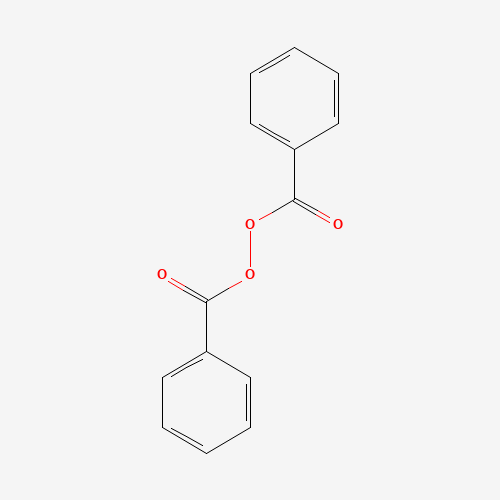
Benzoyl peroxide is a flour bleaching agent, used to whiten freshly milled flour faster than it would whiten on its own.
Where it is and isn’t permitted
| Jurisdiction | Status | Scope and limits | Citation |
|---|---|---|---|
| Australia and New Zealand | No listed food uses foundThis site has not matched this substance to any food use on this jurisdiction’s list of authorised food additives. A food additive may be used only in foods that list names. Flavourings, enzymes, processing aids and added nutrients are regulated separately and do not appear on it. | ||
| Canada | Permitted, with conditions | highest permitted level 150 mg/kg 2 permitted uses Show every permitted use
| Health Canadaand 1 further provisionretrieved 2026-10-17 |
| European Union | No listed food uses foundThis site has not matched this substance to any food use on this jurisdiction’s list of authorised food additives. A food additive may be used only in foods that list names. Flavourings, enzymes, processing aids and added nutrients are regulated separately and do not appear on it. | ||
| Great Britain | No listed food uses foundThis site has not matched this substance to any food use on this jurisdiction’s list of authorised food additives. A food additive may be used only in foods that list names. Flavourings, enzymes, processing aids and added nutrients are regulated separately and do not appear on it. | ||
| Japan | Permitted, with conditions | Designated additive: Appended Table 1, item 100, 過酸化ベンゾイル (“Benzoyl Peroxide” in the unofficial English translation). …Designated additive: Appended Table 1, item 100, 過酸化ベンゾイル (“Benzoyl Peroxide” in the unofficial English translation). Standards for use — Specifications and Standards for Foods, Food Additives, etc. (MHW Notification No. 370 of 1959), Part II (Food Additives), F (Standards for use), entry 過酸化ベンゾイル: (1) [must not be used in the foods stated] “過酸化ベンゾイルは、ミョウバン、リン酸のカルシウム塩類、硫酸カルシウム、炭酸カルシウム、炭酸マグネシウム及びデンプンのうち1種又は2種以上を配合して希釈過酸化ベンゾイルとして使用する場合以外に使用してはならない。” The Japanese is the standard as published. There is no official English translation of the Notification; the English in square brackets is this site’s description of what each sentence does, not a translation of the foods or the levels. Compositional specifications for this additive, in the same Notification, are not imported and are not shown here; nor are the general rules in F 添加物一般, which apply to every additive. | Regulations for Enforcement of the Food Sanitation Act (MHW Ordinance No. 23 of 1948), Appended Table 1retrieved 2026-10-18 |
| South Korea | Permitted, with conditions | Designated food additive: Standards and Specifications for Food Additives, Part III, 1. …Designated food additive: Standards and Specifications for Food Additives, Part III, 1. 일반식품첨가물 (general food additives), 과산화벤조일(희석) (“Diluted Benzoyl Peroxide”, the English the Code prints beside it). Main use (주용도) of 과산화벤조일(희석): 밀가루개량제. Standard for use (사용기준) of 과산화벤조일(희석): (1) [may be used only in the foods listed; sets a limit on the amount used] “과산화벤조일(희석)은 아래의 식품에 한하여 사용하여야 한다. 과산화벤조일(희석)의 사용량은 1. 밀가루류 0.3g/kg 이하” The Korean is the standard as published. There is no official English translation of the current Code (the English version on MFDS’s website is the 2020 edition and has no legal effect); the English in square brackets is this site’s description of what each sentence does, not a translation of the foods or the levels. Compositional specifications (Part IV) are not imported, nor are the general standards in Part II, which apply to every additive. | Standards and Specifications for Food Additives (식품첨가물의 기준 및 규격), MFDS Notification, Part III (Standards for use, by item)retrieved 2026-10-18 |
| United States | Permitted | 21 CFR 184.1157retrieved 2026-10-17 | |
| Codex Alimentarius | Permitted, with conditions | 3 food categories highest permitted level 100 mg/kg Show every food category and its notes
| CXS 192-1995 Table One, INS 928and 2 further provisionsretrieved 2026-09-07 |
How much is permitted
A listing usually limits the quantity as well as the food. Only one of the forms that takes is a figure: quantum satis and good manufacturing practice permit the amount the technological effect requires and no more, which is a limit rather than the absence of one. Figures below are the range across every food category this page is listed in, and categories differ between regulators — see how much is permitted.
| Canada | 100 mg/kg – 150 mg/kg | 2 numeric limit |
|---|---|---|
| Japan | — | 1 no quantity stated |
| South Korea | — | 1 no quantity stated |
| United States | — | 1 no quantity stated |
| Codex Alimentarius | 75 mg/kg – 100 mg/kg | 3 numeric limit |
What it is made from
Synthesised from benzoyl chloride and hydrogen peroxide. It decomposes to benzoic acid during use, which is why the flour does not retain the peroxide itself.
- Vegan
- Vegetarian
Compare other additives on the dietary indexes.
- CAS registry number
- 94-36-0
- InChIKey
- OMPJBNCRMGITSC-UHFFFAOYSA-N
- PubChem
- CID 7187
How JECFA defines it
The international specification for identity and purity, prepared by the Joint FAO/WHO Expert Committee on Food Additives and published by FAO. It is a different document from any above, written by a different body and revised on its own cycle; it is advisory, and a country adopts it or does not.
INS 928 Benzoyl peroxide
Benzoyl peroxide is manufactured by the reaction of benzoyl chloride, sodium hydroxide and hydrogen peroxide.
Synonyms: Benzoyl superoxide, INS No. 928 Benzoyl superoxide
Assay, identification and purity criteria
Description and assay
- Specification history
- Prepared at the 63 rd JECFA (2004), published in FNP 52 Add 12 (2004) superseding specifications prepared at the 55 th JECFA (2000) and published in FNP 52 Add 8 (2000). Treatment of whey with benzoyl peroxide at a maximum concentration of 100 mg/kg does not pose a safety concern (63 rd JECFA, 2004).
- Chemical name
- Dibenzoyl peroxide
- C.A.S. number
- 94-36-0
- Chemical formula
- C 14 H 10 O 4
- Formula weight
- 242.23
- Assay
- Not less than 96.0%
- DESCRIPTION
- Colourless, crystalline solid having a faint odour of benzaldehyde. Caution: Benzoyl peroxide, especially in the dry form, is a dangerous, highly reactive, oxidizing material and has been known to explode spontaneously
- FUNCTIONAL USES
- Bleaching agent
- METHOD OF ASSAY
- Dissolve about 250 mg of the sample, accurately weighed, in 15 ml of acetone in a 100-ml glass-stoppered bottle. Add 3 ml of 50% (w/v) potassium iodide solution and swirl for 1 min. Titrate immediately with 0.1 N sodium thiosulfate (without addition of starch as an indicator). Each ml of 0.1 N sodium thiosulfate is equivalent to 12.11 mg of C 14 H 10 O 4 .
Identification
- Solubility (Vol. 4)
- Insoluble in water, slightly soluble in ethanol and soluble in ether.
- Melting range (Vol. 4)
- 103 - 106° with decomposition
- Decomposition to benzoic acid
- To 0.5 g of the sample add 50 ml of 0.5 N ethanolic potassium hydroxide, heat gradually to boiling and continue boiling for 15 min. Cool and dilute with 200 ml of water. Add sufficient 0.5 N hydrochloric acid to make strongly acidic and extract with ether. Dry the ether solution over anhydrous sodium sulfate, and then evaporate to dryness on a steam bath. The benzoic acid so obtained melts between 121° and 123°.
Purity criteria
- Lead (Vol. 4)
- Not more than 2 mg/kg Determine using an atomic absorption technique appropriate to the specified level. The selection of sample size and method of sample preparation may be based on the principles of the method described in Volume 4, "Instrumental Methods".
Every name it appears under
62 recorded names. A label may use any of them.
INS number
- 928
CAS registry number
- 94-36-0
As it appears in regulation
- Benzoyl peroxide
Other names
- Acetoxyl
- Acnegel
- Akneroxid 5
- Akneroxide L
- Asidopan
- Aztec BPO
- Benoxyl
- Benzac
- Benzac W
- Benzaknen
- Benzoic acid, peroxide
- Benzol peroxide
- Benzoperoxide
- benzoyl benzenecarboperoxoate
- BENZOYL PEROXIDE
- Benzoyl superoxide
- Benzoylperoxid
- Benzoylperoxyde
- Brevoxyl
- Cadox B
- Cadox bs
- Clear By Design
- Debroxide
- Desanden
- Desquam E
- Dibenzoyl peroxide
- Dibenzoylperoxid
- Dibenzoylperoxyde
- Diphenylglyoxal peroxide
- Dry and Clear
- Duresthin 5
- Eloxyl
- Epi-Clear
- Garox
- Incidol
- Loroxide
- Lucidol
- Lucidol B 50
- Lucidol G 20
- Luperco AA
- Luperco AST
- Luperox fl
- Mytolac
- Nayper B and bo
- Nayper BO
- Novadelox
- Oxylite
- Panoxyl
- Perossido di benzoile
- Peroxide, dibenzoyl
- Peroxyde de benzoyle
- Persa-Gel
- Persadox
- Quinolor compound
- Resdan Akne
- Theraderm
- Topex
- Vanoxide
- Xerac
Hazard reference values
| Type | Value | Population | Assessed by | Opinion |
|---|---|---|---|---|
| ADI | not specified | — | JECFA | 2004 |
Evidence and how bodies read it
Studies, and the differing conclusions regulators drew from them, are curated rather than machine-read, and none has been written for this substance yet.
Common questions
Assembled from what is above, in the words the questions are usually asked in. Each answer is the same statement the relevant section makes, with the same citations behind it.
- What is INS 928?
- INS 928 is Benzoyl peroxide. Benzoyl peroxide is a flour bleaching agent, used to whiten freshly milled flour faster than it would whiten on its own.
- What is Benzoyl peroxide used for in food?
- It is listed as a flour treatment agent — the role Canada, Codex and the US assign it. This page shows every function each regulator records, with the citation for each.
- Is Benzoyl peroxide banned in Europe?
- No. Benzoyl peroxide does not appear on the EU's list of authorised food additives, which is not the same as being banned: the EU permits an additive only where it has authorised it, and usually the reason for an absence is that no one applied. The EU has made no finding against this substance. It does mean it may not be used as a food additive in the EU today.
- Where is Benzoyl peroxide permitted?
- Of the seven regulators this site reads, Canada, Japan, South Korea, the US and the Codex standard permit it. Each permission is for named foods at named levels, not a blanket one; the table on this page gives them with citations.
- Is Benzoyl peroxide vegan?
- Yes. Benzoyl peroxide is not derived from animals, and is suitable for vegetarians. This page says what it is made from and how.
Sources for this page
- ca retrieved 2026-10-17
- jp retrieved 2026-10-18
- kr retrieved 2026-10-18
- ecfr retrieved 2026-10-17
- gsfa retrieved 2026-09-07
- jecfaspecs retrieved 2026-09-23
Full licence terms and publisher details on Sources. How this page is built and updated: Method.
Machine-readable: a JSON record of this additive is given on request —how to ask for access.
Follow changes to Benzoyl peroxide:Atom feed — regulatory events, and any change the weekly refresh detects in its provisions.