Boric acid
10043-35-3 · 11113-50-1 · (10B)Orthoboric acid · Acidum boricum · Ant flip · Basilit B · Bluboro · Bluboro (Salt/Mix) · Boracic acid · BORIC ACID · Boric acid (BH3O3) · Boric acid (h(sub 3)bo(sub 3)) · Boric acid (H3BO3) · Boric acid (TN) · Boric acid (VAN) · Boric acid flakes · BORIC ACID, ACS · Boricum acidum · Borofax · Boron hydroxide · Boron trihydroxide · Borsaeure · Borsaure · Canagyn · Caswell No. 109 · CCRIS 855 · Collyrium Eye Wash · Dr.'s 1 Flea Terminator DF · Dr.'s 1 Flea Terminator DFPBO · Dr.'s 1 Flea Terminator DT · Dr.'s 1 Flea Terminator DTPBO · E 284 · EPA Pesticide Chemical Code 011001 · Flea Prufe · GYNOX-SOFT · Homberg's salt · Homeopathic Antifungal · HSDB 1432 · hydrogen orthoborate · HYLAFEM · HYLAFEM BORICUM ACIDUM 3X · INS NO.284 · INS-284 · Kill-off · Kjel-sorb · Niban Granular Bait · Optibor · Orthboric Acid · ortho-boric acid · Orthoboric acid · Orthoboric acid (B(OH)3) · Orthoboric acid (H3BO3) · Orthoborsaeure · R57ZHV85D4 · Super Flea Eliminator · The Killer · Three Elephant · trihydroxidoboron · Trihydroxyborane · Trihydroxyborone · V-Bella · E284 · boric acid · Boric acid · Acid boric · Acide borique · Aċidu boriku · Boorhape · Boorihappo · Boorzuur · Boric acid · Borna kiselina · Boro rūgštis · borova kislina · Borskābe · Borsyra · Borsyre · Borsäure · Bórsav · Kwas borowy · Kyselina boritá · Ácido bórico · Βορικό οξύ · Борна киселинаE number E284CAS 11113-50-1
Listed as a lubricant or release agent by the US.
Listed as lubricants and release agents (US)
- United States: Lubricant or release agent — FDA, Substances Added to Food: BORIC ACID
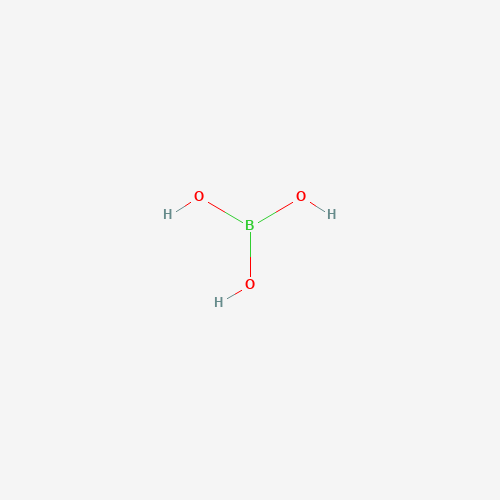
Boric acid is permitted in the EU as a preservative in exactly one food: sturgeon caviar. It was once a common preservative and was withdrawn from everything else; caviar is the exception.
Where it is and isn’t permitted
| Jurisdiction | Status | Scope and limits | Citation |
|---|---|---|---|
| Australia and New Zealand | No listed food uses foundThis site has not matched this substance to any food use on this jurisdiction’s list of authorised food additives. A food additive may be used only in foods that list names. Flavourings, enzymes, processing aids and added nutrients are regulated separately and do not appear on it. | ||
| Canada | No listing matchedHealth Canada’s lists name additives without E or INS numbers, so this site matches them by exact name. A substance listed there under a name this site does not recognise has no row here. | ||
| European Union | Permitted, with conditions | 1 food category highest permitted level 4,000 mg/kg ML = 4000 mg/kg. only Sturgeons' eggs (Caviar). Note 54: Expressed as boric acid. | Regulation (EC) No 1333/2008, Annex II, as amended by (EU) No 1129/2011retrieved 2026-10-18 |
| Great Britain | Permitted, with conditions | 1 food category highest permitted level 4,000 mg/kg or mg/l ML = 4000. only Sturgeons’ eggs (Caviar). Note (54): Expressed as boric acid. | Assimilated Regulation (EC) No 1333/2008, Annex II (as at 28 June 2024)retrieved 2026-10-18 |
| Japan | No listing matchedThis site imports only Japan’s list of designated additives (Appended Table 1 to the Regulations for Enforcement of the Food Sanitation Act), matched by English name. Existing additives, natural flavouring agents and ordinary foods used as additives are permitted outside that list and are not imported, so an empty row does not show that Japan does not permit the substance. | ||
| South Korea | No listing matchedThis site imports Part III of South Korea’s Standards and Specifications for Food Additives, matched by CAS number, then INS number, then exact name. Mixed preparations and sanitisers are not imported, and an entry whose identifiers disagreed with a page’s is held for review, so an empty row does not show that South Korea does not permit the substance. | ||
| United States | Not listedDoes not appear on this jurisdiction’s permitted list. That is not the same as being prohibited. | ||
| Codex Alimentarius | Not listedDoes not appear on this jurisdiction’s permitted list. That is not the same as being prohibited. |
How much is permitted
A listing usually limits the quantity as well as the food. Only one of the forms that takes is a figure: quantum satis and good manufacturing practice permit the amount the technological effect requires and no more, which is a limit rather than the absence of one. Figures below are the range across every food category this page is listed in, and categories differ between regulators — see how much is permitted.
| European Union | 4,000 mg/kg | 1 numeric limit |
|---|---|---|
| Great Britain | 4,000 mg/kg | 1 numeric limit |
What FDA’s inventory records
This page holds no listing for Boric acid in the parts of 21 CFR this site reads. FDA’s Substances Added to Food inventory does carry it, as BORIC ACID, pointing at a food-contact regulation, not a listing for use in food: 21 CFR 175.105, 21 CFR 176.180, 21 CFR 178.2010, 21 CFR 181.30.
Technical effects FDA records: lubricant or release agent.
The inventory is an information resource: a row means FDA holds information about the substance’s use in food, not that the substance is listed for that use. It is shown apart from the permissions above and is not counted as a US permission anywhere on this site.
What it is made from
Produced by treating borate minerals such as borax with sulfuric acid.
- Vegan
- Vegetarian
Compare other additives on the dietary indexes.
- CAS registry number
- 11113-50-1
- InChIKey
- KGBXLFKZBHKPEV-UHFFFAOYSA-N
- PubChem
- CID 7628
How the EU defines it
The legal specification an additive must meet to be sold as this E number in the EU — what it is, how it may be made, and the purity it must reach. From Commission Regulation (EU) No 231/2012.
E 284 Boric acid
Synonyms: Boracic acid; Orthoboric acid; Borofax
Assay, identification and purity criteria
Description and assay
- Einecs
- 233-139-2
- Chemical formula
- H₃BO₃
- Molecular weight
- 61,84
- Assay
- Content not less than 99,5 %
- Description
- Colourless, odourless, transparent crystals or white granules or powder; slightly unctuous to the touch; occurs in nature as the mineral sassolite
Identification
- Melting point
- At approximately 171 °C
- Burning test
- Burns with a nice green flame
- pH
- 3,8-4,8 (3,3 % aqueous solution)
Purity criteria
- Peroxides
- No colour develops with added KI-solution
- Arsenic
- Not more than 1 mg/kg
- Lead
- Not more than 5 mg/kg
- Mercury
- Not more than 1 mg/kg
Every name it appears under
84 recorded names. A label may use any of them.
E number
- E284
CAS registry number
- 10043-35-3
- 11113-50-1
As it appears in regulation
- Boric acid
Other names
- (10B)Orthoboric acid
- Acidum boricum
- Ant flip
- Basilit B
- Bluboro
- Bluboro (Salt/Mix)
- Boracic acid
- BORIC ACID
- Boric acid (BH3O3)
- Boric acid (h(sub 3)bo(sub 3))
- Boric acid (H3BO3)
- Boric acid (TN)
- Boric acid (VAN)
- Boric acid flakes
- BORIC ACID, ACS
- Boricum acidum
- Borofax
- Boron hydroxide
- Boron trihydroxide
- Borsaeure
- Borsaure
- Canagyn
- Caswell No. 109
- CCRIS 855
- Collyrium Eye Wash
- Dr.'s 1 Flea Terminator DF
- Dr.'s 1 Flea Terminator DFPBO
- Dr.'s 1 Flea Terminator DT
- Dr.'s 1 Flea Terminator DTPBO
- E 284
- EPA Pesticide Chemical Code 011001
- Flea Prufe
- GYNOX-SOFT
- Homberg's salt
- Homeopathic Antifungal
- HSDB 1432
- hydrogen orthoborate
- HYLAFEM
- HYLAFEM BORICUM ACIDUM 3X
- INS NO.284
- INS-284
- Kill-off
- Kjel-sorb
- Niban Granular Bait
- Optibor
- Orthboric Acid
- ortho-boric acid
- Orthoboric acid
- Orthoboric acid (B(OH)3)
- Orthoboric acid (H3BO3)
- Orthoborsaeure
- R57ZHV85D4
- Super Flea Eliminator
- The Killer
- Three Elephant
- trihydroxidoboron
- Trihydroxyborane
- Trihydroxyborone
- V-Bella
Systematic names
- boric acid
The EU re-evaluation programme
Every additive authorised in the EU before 20 January 2009 was put back through EFSA by Commission Regulation (EU) No 257/2010, and this one is named in it. What the Regulation required is below; whether the opinion has since been published is not something this site records.
- To be evaluated by 31 December 2015. Named in Annex II, Part II, point 1 as “Boric acid”, among the additives given priority within its class.
Hazard reference values
EFSA and JECFA have both assessed Boric acid and their conclusions are not two comparable figures — EFSA records 0.16 mg/kg bw/day, JECFA not allocated. An acceptable daily intake is a reference value set by a committee, not a threshold above which harm begins. “Not specified”, “not limited” and “not allocated” are conclusions, not missing data, and they are shown in the words each body used rather than reduced to a number. See where the two committees differ.
| Type | Value | Population | Assessed by | Opinion |
|---|---|---|---|---|
| ADI | not allocated | — | JECFA | 1961 |
| ADI | 0.16 mg/kg bw/day | consumers | EFSA | not identified in the dataset |
Evidence and how bodies read it
What assessing bodies concluded
Each conclusion is paraphrased in the body's own framing, from the published opinion linked beneath it. Where bodies differ, both stand; this site does not adjudicate between them or add a view of its own.
EFSA 2013
The ANS Panel concluded that boric acid (E 284) and borax (E 285) do not raise concern for genotoxicity, but noted adverse effects on the male reproductive system in animal studies. It established a group ADI of 0.16 mg boron/kg bw/day and concluded that regular exceedance of the ADI from the authorised use in sturgeon eggs (caviar) was unlikely.
Common questions
Assembled from what is above, in the words the questions are usually asked in. Each answer is the same statement the relevant section makes, with the same citations behind it.
- What is E 284?
- E 284 is Boric acid. Boric acid is permitted in the EU as a preservative in exactly one food: sturgeon caviar. It was once a common preservative and was withdrawn from everything else; caviar is the exception.
- What is Boric acid used for in food?
- It is listed as a lubricant or release agent — the role the US assigns it. This page shows every function each regulator records, with the citation for each.
- Where is Boric acid permitted?
- Of the seven regulators this site reads, the EU and Great Britain permit it. Each permission is for named foods at named levels, not a blanket one; the table on this page gives them with citations.
- Is Boric acid vegan?
- Yes. Boric acid is not derived from animals, and is suitable for vegetarians. This page says what it is made from and how.
Sources for this page
- eu retrieved 2026-10-18
- gb retrieved 2026-10-18
- euspecs retrieved 2026-10-18
Full licence terms and publisher details on Sources. How this page is built and updated: Method.
Machine-readable: a JSON record of this additive is given on request —how to ask for access.
Follow changes to Boric acid:Atom feed — regulatory events, and any change the weekly refresh detects in its provisions.