Brilliant black (Black PN)

E number E151INS 151CAS 2519-30-4

Listed as a colour by Codex and the EU.

Listed as colours (EU, Codex)
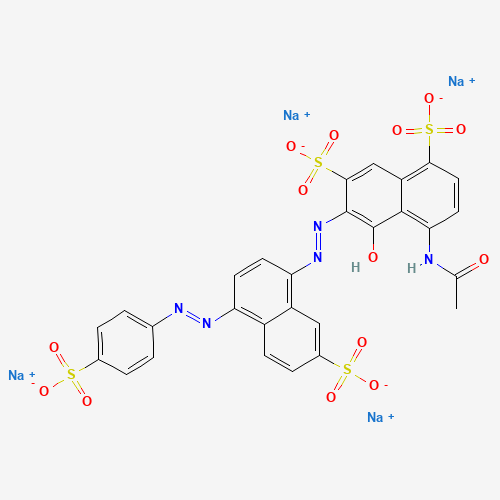
Chemical structure of Brilliant black (Black PN), from PubChem compound 17293
Structure from PubChem CID 17293 (National Library of Medicine, public domain). A depiction of one compound: where a listing covers a family, or a substance has no single structure, this page shows none.

Brilliant Black PN is a synthetic black dye used in sauces, preserved fish and confectionery, usually to deepen other colours rather than on its own.

Where it is and isn’t permitted

Status of Brilliant black (Black PN) by jurisdiction. Every jurisdiction this site covers is listed, including those where the substance does not appear.
JurisdictionStatusScope and limitsCitation
Australia and New ZealandFood Standards Australia New ZealandPermitted, with conditions

44 food categories

Show every food category
  • 0.2 ColouringsAll colourings permitted to a maximum level together: no more than 70 mg/L in a beverage or 290 mg/kg in another food (Standard 1.3.1—4(3)).
  • 0.3 FlavouringsAll colourings permitted to a maximum level together: no more than 70 mg/L in a beverage or 290 mg/kg in another food (Standard 1.3.1—4(3)).
  • 1.1.2 Liquid milk products and flavoured liquid milkAll colourings permitted to a maximum level together: no more than 70 mg/L in a beverage or 290 mg/kg in another food (Standard 1.3.1—4(3)).
  • 1.2.2 Fermented milk products and rennetted milk productsAll colourings permitted to a maximum level together: no more than 70 mg/L in a beverage or 290 mg/kg in another food (Standard 1.3.1—4(3)).
  • 1.3 Condensed milk and evaporated milkAll colourings permitted to a maximum level together: no more than 70 mg/L in a beverage or 290 mg/kg in another food (Standard 1.3.1—4(3)).
  • 1.4.2 Cream products (flavoured, whipped, thickened, sour cream etc)All colourings permitted to a maximum level together: no more than 70 mg/L in a beverage or 290 mg/kg in another food (Standard 1.3.1—4(3)).
  • 1.5 Dried milk, milk powder, cream powderAll colourings permitted to a maximum level together: no more than 70 mg/L in a beverage or 290 mg/kg in another food (Standard 1.3.1—4(3)).
  • 1.6 Cheese and cheese productsAll colourings permitted to a maximum level together: no more than 70 mg/L in a beverage or 290 mg/kg in another food (Standard 1.3.1—4(3)).
  • 11.1.1 Rainbow sugarAll colourings permitted to a maximum level together: no more than 70 mg/L in a beverage or 290 mg/kg in another food (Standard 1.3.1—4(3)).
  • 11.4 Tabletop sweetenersAll colourings permitted to a maximum level together: no more than 70 mg/L in a beverage or 290 mg/kg in another food (Standard 1.3.1—4(3)).
  • 12.1.2 Reduced sodium salt mixtureAll colourings permitted to a maximum level together: no more than 70 mg/L in a beverage or 290 mg/kg in another food (Standard 1.3.1—4(3)).
  • 12.1.3 Salt substituteAll colourings permitted to a maximum level together: no more than 70 mg/L in a beverage or 290 mg/kg in another food (Standard 1.3.1—4(3)).
  • 13.3 Formulated meal replacements and formulated supplementary foodsAll colourings permitted to a maximum level together: no more than 70 mg/L in a beverage or 290 mg/kg in another food (Standard 1.3.1—4(3)).
  • 13.4 Formulated supplementary sports foodsAll colourings permitted to a maximum level together: no more than 70 mg/L in a beverage or 290 mg/kg in another food (Standard 1.3.1—4(3)).
  • 13.5 Food for special medical purposesAll colourings permitted to a maximum level together: no more than 70 mg/L in a beverage or 290 mg/kg in another food (Standard 1.3.1—4(3)).
  • 14.1.1.2 Carbonated, mineralised and soda watersAll colourings permitted to a maximum level together: no more than 70 mg/L in a beverage or 290 mg/kg in another food (Standard 1.3.1—4(3)).
  • 14.1.2.1 Fruit and vegetable juicesFor juice separated by other than mechanical means only. All colourings permitted to a maximum level together: no more than 70 mg/L in a beverage or 290 mg/kg in another food (Standard 1.3.1—4(3)).
  • 14.1.2.2 Fruit and vegetable juice productsAll colourings permitted to a maximum level together: no more than 70 mg/L in a beverage or 290 mg/kg in another food (Standard 1.3.1—4(3)).
  • 14.1.3 Water based flavoured drinksAll colourings permitted to a maximum level together: no more than 70 mg/L in a beverage or 290 mg/kg in another food (Standard 1.3.1—4(3)).
  • 14.1.4 Formulated BeveragesAll colourings permitted to a maximum level together: no more than 70 mg/L in a beverage or 290 mg/kg in another food (Standard 1.3.1—4(3)).
  • 14.2.3 Wine based drinks and reduced alcohol winesAll colourings permitted to a maximum level together: no more than 70 mg/L in a beverage or 290 mg/kg in another food (Standard 1.3.1—4(3)).
  • 14.2.4.1 Fruit wine products and vegetable wine productsAll colourings permitted to a maximum level together: no more than 70 mg/L in a beverage or 290 mg/kg in another food (Standard 1.3.1—4(3)).
  • 14.2.5 Spirits and liqueursAll colourings permitted to a maximum level together: no more than 70 mg/L in a beverage or 290 mg/kg in another food (Standard 1.3.1—4(3)).
  • 14.3 Alcoholic beverages not included in item 14.2All colourings permitted to a maximum level together: no more than 70 mg/L in a beverage or 290 mg/kg in another food (Standard 1.3.1—4(3)).
  • 2.1 Edible oils essentially free of waterNot for olive oil. All colourings permitted to a maximum level together: no more than 70 mg/L in a beverage or 290 mg/kg in another food (Standard 1.3.1—4(3)).
  • 2.2.1.2 Butter productsAll colourings permitted to a maximum level together: no more than 70 mg/L in a beverage or 290 mg/kg in another food (Standard 1.3.1—4(3)).
  • 2.2.1.3 Margarine and similar productsAll colourings permitted to a maximum level together: no more than 70 mg/L in a beverage or 290 mg/kg in another food (Standard 1.3.1—4(3)).
  • 2.2.2 Oil emulsions (<80% oil)All colourings permitted to a maximum level together: no more than 70 mg/L in a beverage or 290 mg/kg in another food (Standard 1.3.1—4(3)).
  • 20 Foods not included in items 0 to 14All colourings permitted to a maximum level together: no more than 70 mg/L in a beverage or 290 mg/kg in another food (Standard 1.3.1—4(3)).
  • 3 Ice cream and edible icesAll colourings permitted to a maximum level together: no more than 70 mg/L in a beverage or 290 mg/kg in another food (Standard 1.3.1—4(3)).
  • 4.3 Processed fruits and vegetablesAll colourings permitted to a maximum level together: no more than 70 mg/L in a beverage or 290 mg/kg in another food (Standard 1.3.1—4(3)).
  • 5.1 Chocolate and cocoa productsPermitted on the surface of chocolate only. All colourings permitted to a maximum level together: no more than 70 mg/L in a beverage or 290 mg/kg in another food (Standard 1.3.1—4(3)).
  • 5.2 Sugar confectioneryAll colourings permitted to a maximum level together: no more than 70 mg/L in a beverage or 290 mg/kg in another food (Standard 1.3.1—4(3)).
  • 5.4 Icings and frostingsAll colourings permitted to a maximum level together: no more than 70 mg/L in a beverage or 290 mg/kg in another food (Standard 1.3.1—4(3)).
  • 6.3 Processed cereal and meal productsAll colourings permitted to a maximum level together: no more than 70 mg/L in a beverage or 290 mg/kg in another food (Standard 1.3.1—4(3)).
  • 6.4 Flour products (including noodles and pasta)All colourings permitted to a maximum level together: no more than 70 mg/L in a beverage or 290 mg/kg in another food (Standard 1.3.1—4(3)).
  • 7 Breads and bakery productsAll colourings permitted to a maximum level together: no more than 70 mg/L in a beverage or 290 mg/kg in another food (Standard 1.3.1—4(3)).
  • 8.2 Processed meat, poultry and game products in whole cuts or piecesAll colourings permitted to a maximum level together: no more than 70 mg/L in a beverage or 290 mg/kg in another food (Standard 1.3.1—4(3)).
  • 8.3 Processed comminuted meat, poultry and game products, other than products listed in item 8.3.2Not for sausage or sausage meat containing raw, unprocessed meat. All colourings permitted to a maximum level together: no more than 70 mg/L in a beverage or 290 mg/kg in another food (Standard 1.3.1—4(3)).
  • 8.4 Edible casingsAll colourings permitted to a maximum level together: no more than 70 mg/L in a beverage or 290 mg/kg in another food (Standard 1.3.1—4(3)).
  • 8.5 Animal protein productsAll colourings permitted to a maximum level together: no more than 70 mg/L in a beverage or 290 mg/kg in another food (Standard 1.3.1—4(3)).
  • 9.2 Processed fish and fish productsAll colourings permitted to a maximum level together: no more than 70 mg/L in a beverage or 290 mg/kg in another food (Standard 1.3.1—4(3)).
  • 9.3 Semi preserved fish and fish productsAll colourings permitted to a maximum level together: no more than 70 mg/L in a beverage or 290 mg/kg in another food (Standard 1.3.1—4(3)).
  • 9.4 Fully preserved fish including canned fish productsAll colourings permitted to a maximum level together: no more than 70 mg/L in a beverage or 290 mg/kg in another food (Standard 1.3.1—4(3)).
Food Standards Code, Schedule 15, S15—5and 43 further provisionsretrieved 2026-10-17
CanadaHealth CanadaNo listing matchedHealth Canada’s lists name additives without E or INS numbers, so this site matches them by exact name. A substance listed there under a name this site does not recognise has no row here.
European UnionEuropean Commission / EFSAPermitted, with conditions

25 food categories

highest permitted level 500 mg/l

Show every food category
  • 1.4 flavoured fermented milk products including heat-treated products — 150 mg/lPermitted as a member of Group III, Colours with combined maximum limit. ML = 150 mg/l. Period of application: from 1 August 2014. Note 74: Maximum limit for aluminium coming from all aluminium lakes 15 mg/kg. For the purposes of Article 22 (1) (g) of Regulation (EC) No 1333/2008 that limit shall apply from 1 February 2013.
  • 1.6.3 other creams — 150 mg/kgPermitted as a member of Group III, Colours with combined maximum limit. ML = 150 mg/kg. only flavoured creams.
  • 1.7.1 unripened cheese excluding products falling in category 16 — 150 mg/kgPermitted as a member of Group III, Colours with combined maximum limit. ML = 150 mg/kg. only flavoured unripened cheese.
  • 1.7.3 edible cheese rind — quantum satisPermitted as a member of Group III, Colours with combined maximum limit. quantum satis. Period of application: from 1 August 2014. Note 67: Maximum limit for aluminium coming from aluminium lakes of E 120 cochineal, carminic acid, carmines and E 180 litholrubine BK 10 mg/kg. No other aluminium lakes may be used. For the purposes of Article 22 (1) (g) of Regulation (EC) No 1333/2008 that limit shall apply from 1 February 2013.
  • 1.7.6 cheese products (excluding products falling in category 16) — 100 mg/kgPermitted as a member of Group III, Colours with combined maximum limit. ML = 100 mg/kg. only flavoured unripened products.
  • 12.4 Mustard — 300 mg/kgPermitted as a member of Group III, Colours with combined maximum limit. ML = 300 mg/kg.
  • 12.5 Soups and broths — 50 mg/kgPermitted as a member of Group III, Colours with combined maximum limit. ML = 50 mg/kg.
  • 12.9 Protein products excluding products covered in category 1 8 — 100 mg/kgPermitted as a member of Group III, Colours with combined maximum limit. ML = 100 mg/kg. only meat and fish analouges based on vegetable proteins.
  • 13.2 Foods for special medical purposes as defined by Regulation (EU) No 609/2013 (excluding products from food category 13.1.5.) — 50 mg/kgPermitted as a member of Group III, Colours with combined maximum limit. ML = 50 mg/kg.
  • 13.3 Total diet replacement for weight control food as defined by Regulation (EU) No 609/2013 — 50 mg/kgPermitted as a member of Group III, Colours with combined maximum limit. ML = 50 mg/kg.
  • 14.2.3 Cider and perry — 200 mg/lPermitted as a member of Group III, Colours with combined maximum limit. ML = 200 mg/l. excluding cidre bouché, cydr jakościowy, perry jakościowe, cydr lodowy, perry lodowe.
  • 14.2.4 Fruit wine and made wine — 200 mg/lPermitted as a member of Group III, Colours with combined maximum limit. ML = 200 mg/l. excluding wino owocowe jakościowe.
  • 14.2.6 Spirit drinks as defined in Regulation (EU) 2019/787 — 200 mg/lPermitted as a member of Group III, Colours with combined maximum limit. ML = 200 mg/l. except: spirit drinks as defined in categories 1-17, 22, 36, 37 and 41 of Annex I of Regulation (EU) 2019/787. Note 87: Maximum limit for aluminium coming from aluminium lakes of E 120 cochineal, carminic acid, carmines 1,5 mg/kg. No other aluminium lakes may be used. For the purposes of Article 22(1)(g) of Regulation (EC) No 1333/2008 that limit shall apply from 1 February 2013.
  • 14.2.7.3 Aromatised wine-product cocktails — 200 mg/lPermitted as a member of Group III, Colours with combined maximum limit. ML = 200 mg/l. Note 87: Maximum limit for aluminium coming from aluminium lakes of E 120 cochineal, carminic acid, carmines 1,5 mg/kg. No other aluminium lakes may be used. For the purposes of Article 22(1)(g) of Regulation (EC) No 1333/2008 that limit shall apply from 1 February 2013.
  • 14.2.8 Other alcoholic beverages including mixtures of alcoholic beverages with non-alcoholic beverages and other alcoholic beverages based on distilled alcohol with alcoholic strength by volume less than 15 % — 200 mg/lPermitted as a member of Group III, Colours with combined maximum limit. ML = 200 mg/l. only alcoholic beverages with alcoholic strength by volume less than 15 %. Note 87: Maximum limit for aluminium coming from aluminium lakes of E 120 cochineal, carminic acid, carmines 1,5 mg/kg. No other aluminium lakes may be used. For the purposes of Article 22(1)(g) of Regulation (EC) No 1333/2008 that limit shall apply from 1 February 2013.
  • 15.2 Processed nuts — 100 mg/kgPermitted as a member of Group III, Colours with combined maximum limit. ML = 100 mg/kg. only savoury coated nuts.
  • 17.2 food supplements supplied in a liquid form excluding food supplements for Infants and young children — 100 mg/lPermitted as a member of Group III, Colours with combined maximum limit. ML = 100 mg/l.
  • 18.2 Meal replacement for weight control as referred to in Commission Regulation (EU) No 432/2012 — 50 mg/kgPermitted as a member of Group III, Colours with combined maximum limit. ML = 50 mg/kg.
  • 3 edible ices — 150 mg/kgPermitted as a member of Group III, Colours with combined maximum limit. ML = 150 mg/kg. Note 25: The quantities of each of the colours E 122 and E 155 may not exceed 50 mg/kg or mg/l.
  • 4.2.4.1 fruit and vegetable preparations excluding compote — 200 mg/kgPermitted as a member of Group III, Colours with combined maximum limit. ML = 200 mg/kg. only mostarda di frutta.
  • 6.6 Batters — 500 mg/kgPermitted as a member of Group III, Colours with combined maximum limit. ML = 500 mg/kg. only batters for coating.
  • 8.3.3 Casings and coatings and decorations for meat — 500 mg/kgPermitted as a member of Group III, Colours with combined maximum limit. ML = 500 mg/kg. only decorations and coatings except edible external coating of pasturmas Period of application: from 1 August 2014. Note 78: Maximum limit for aluminium coming from aluminium lakes of E 120 cochineal, carminic acid, carmines 10 mg/kg. No other aluminium lakes may be used. For the purposes of Article 22 (1) (g) of Regulation (EC) No 1333/2008 that limit shall apply from 1 February 2013.
  • 9.2 Processed fish and fishery products including molluscs and crustaceans — 100 mg/kgML = 100 mg/kg. only fish paste and crustacean paste. Note 35: Maximum individually or for the combination of E 100, E 102, E 120, E 122, E 142, E 151, E 160e, E 161b.
  • 9.2 Processed fish and fishery products including molluscs and crustaceans — 500 mg/kgPermitted as a member of Group III, Colours with combined maximum limit. ML = 500 mg/kg. only surimi and similar products and salmon substitutes based on Theragra chalcogramma, Pollachius virens and Clupea harengus’. Note 84: Maximum limit for aluminium coming from aluminium lakes of E 120 cochineal, carminic acid, carmines 4 mg/kg. As a derogation to this rule, the maximum limit only for salmon substitutes shall be 5,5 mg/kg. No other aluminium lakes may be used. For the purposes of Article 22(1)(g) of Regulation (EC) No 1333/2008 that limit shall apply from 1 February 2013.
  • 9.3 fish roe — 300 mg/kgPermitted as a member of Group III, Colours with combined maximum limit. ML = 300 mg/kg. except Sturgeons' eggs (Caviar). Note 86: Maximum limit for aluminium coming from aluminium lakes of E 120 cochineal, carminic acid, carmines 3 mg/kg. As a derogation to this rule, the maximum limit only for pasteurised products shall be 50 mg/kg. No other aluminium lakes may be used. For the purposes of Article 22(1)(g) of Regulation (EC) No 1333/2008 that limit shall apply from 1 February 2013.
Regulation (EC) No 1333/2008, Annex IIand 24 further provisionsretrieved 2026-10-18
Great BritainFood Standards Agency / Food Standards ScotlandPermitted, with conditions

34 food categories

highest permitted level 500 mg/kg or mg/l

Show every food category
  • 1.4 Flavoured fermented milk products including heat-treated products — 150 mg/kg or mg/lPermitted as a member of Group III: Food colours with combined maximum limit. ML = 150. Period of application: from 1 August 2014. Note (74): Maximum limit for aluminium coming from all aluminium lakes 15 mg/kg. For the purposes of Article 22 (1) (g) of Regulation (EC) No 1333/2008 that limit shall apply from 1 February 2013.
  • 1.6.3 Other creams — 150 mg/kg or mg/lPermitted as a member of Group III: Food colours with combined maximum limit. ML = 150. only flavoured creams.
  • 1.7.1 Unripened cheese excluding products falling in category 16 — 150 mg/kg or mg/lPermitted as a member of Group III: Food colours with combined maximum limit. ML = 150. only flavoured unripened cheese.
  • 1.7.3 Edible cheese rind — quantum satisPermitted as a member of Group III: Food colours with combined maximum limit. quantum satis. Period of application: from 1 August 2014. Note (67): Maximum limit for aluminium coming from aluminium lakes of E 120 carminic acid, carmine and E 180 litholrubine BK 10 mg/kg. No other aluminium lakes may be used. For the purposes of Article 22(1)(g) of this Regulation, that limit shall apply from 1 February 2013.
  • 1.7.6 Cheese products (excluding products falling in category 16) — 100 mg/kg or mg/lPermitted as a member of Group III: Food colours with combined maximum limit. ML = 100. only flavoured unripened products.
  • 12.2.2 Seasonings and condiments — 500 mg/kg or mg/lPermitted as a member of Group III: Food colours with combined maximum limit. ML = 500. only seasonings, for example curry powder, tandoori Period of application: from 1 August 2014. Note (70): Maximum limit for aluminium coming from all aluminium lakes 120 mg/kg. For the purposes of Article 22 (1) (g) of Regulation (EC) No 1333/2008 that limit shall apply from 1 February 2013.
  • 12.4 Mustard — 300 mg/kg or mg/lPermitted as a member of Group III: Food colours with combined maximum limit. ML = 300.
  • 12.5 Soups and broths — 50 mg/kg or mg/lPermitted as a member of Group III: Food colours with combined maximum limit. ML = 50.
  • 12.6 Sauces — 500 mg/kg or mg/lPermitted as a member of Group III: Food colours with combined maximum limit. ML = 500. including pickles, relishes, chutney and picalilli; excluding tomato-based sauces Period of application: from 1 August 2014. Note (65): Maximum limit for aluminium coming from aluminium lakes of E 120 carminic acid, carmine 10 mg/kg. No other aluminium lakes may be used. For the puroposes of Article 22 (1) (g) of Regulation (EC) No 1333/2008 that limit shall apply from 1 February 2013.
  • 12.9 Protein products, excluding products covered in category 1.8 — 100 mg/kg or mg/lPermitted as a member of Group III: Food colours with combined maximum limit. ML = 100. only meat and fish analogues based on vegetable proteins.
  • 13.2 Dietary foods for special medical purposes defined in Directive 1999/21/EC (excluding products from food category 13.1.5) — 50 mg/kg or mg/lPermitted as a member of Group III: Food colours with combined maximum limit. ML = 50. Note (88): Maximum limit for aluminium coming from aluminium lakes of E 120 carminic acid, carmine 3 mg/kg only in liquid heat-treated products. No other aluminium lakes may be used. For the purposes of Article 22(1)(g) of Regulation (EC) No 1333/2008 that limit shall apply from 1 February 2013.
  • 13.3 Dietary foods for weight control diets intended to replace total daily food intake or an individual meal (the whole or part of the total daily diet) — 50 mg/kg or mg/lPermitted as a member of Group III: Food colours with combined maximum limit. ML = 50.
  • 14.1.4 Flavoured drinks — 100 mg/kg or mg/lPermitted as a member of Group III: Food colours with combined maximum limit. ML = 100. excluding chocolate milk and malt products Period of application: from 1 August 2014. Note (25): The quantities of each of the colours E 122 and E 155 may not exceed 50 mg/kg or mg/l. Note (74): Maximum limit for aluminium coming from all aluminium lakes 15 mg/kg. For the purposes of Article 22 (1) (g) of Regulation (EC) No 1333/2008 that limit shall apply from 1 February 2013.
  • 14.2.3 Cider and perry — 200 mg/kg or mg/lPermitted as a member of Group III: Food colours with combined maximum limit. ML = 200. excluding cidre bouché.
  • 14.2.4 Fruit wine and made wine — 200 mg/kg or mg/lPermitted as a member of Group III: Food colours with combined maximum limit. ML = 200. Excluding wino owocowe markowe.
  • 14.2.6 Spirit drinks as defined in Regulation (EC) No 110/2008 — 200 mg/kg or mg/lPermitted as a member of Group III: Food colours with combined maximum limit. ML = 200. except: spirit drinks as defined in Article 5(1) and sales denominations listed in Annex II, paragraphs 1-14 of Regulation (EC) No 110/2008 and spirits (preceded by the name of the fruit) obtained by maceration and distillation, Geist (with the name of the fruit or the raw material used), London Gin, Sambuca, Maraschino, Marrasquino or Maraskino and Mistrà. Note (87): Maximum limit for aluminium coming from aluminium lakes of E 120 carminic acid, carmine 1,5 mg/kg. No other aluminium lakes may be used. For the purposes of Article 22(1)(g) of Regulation (EC) No 1333/2008 that limit shall apply from 1 February 2013.
  • 14.2.7.3 Aromatised wine-product cocktails — 200 mg/kg or mg/lPermitted as a member of Group III: Food colours with combined maximum limit. ML = 200. Note (87): Maximum limit for aluminium coming from aluminium lakes of E 120 carminic acid, carmine 1,5 mg/kg. No other aluminium lakes may be used. For the purposes of Article 22(1)(g) of Regulation (EC) No 1333/2008 that limit shall apply from 1 February 2013.
  • 14.2.8 Other alcoholic drinks including mixtures of alcoholic drinks with non-alcoholic drinks and spirits with less than 15 % of alcohol — 200 mg/kg or mg/lPermitted as a member of Group III: Food colours with combined maximum limit. ML = 200. only alcoholic drinks with less than 15 % of alcohol and nalewka na winie owocowym, aromatyzowana nalewka na winie owocowym, nalewka na winie z soku winogronowego, aromatyzowana nalewka na winie z soku winogronowego, napój winny owocowy lub miodowy, aromatyzowany napój winny owocowy lub miodowy, wino owocowe niskoalkoholowe and aromatyzowane wino owocowe niskoalkoholowe. Note (87): Maximum limit for aluminium coming from aluminium lakes of E 120 carminic acid, carmine 1,5 mg/kg. No other aluminium lakes may be used. For the purposes of Article 22(1)(g) of Regulation (EC) No 1333/2008 that limit shall apply from 1 February 2013.
  • 15.1 Potato-, cereal-, flour- or starch-based snacks — several limitsPermitted as a member of Group III: Food colours with combined maximum limit. (1) ML 100: excluding extruded or expanded savoury snack products Period of application: from 1 August 2014; (2) ML 200: only extruded or expanded savoury snack products Period of application: from 1 August 2014. Note (71): Maximum limit for aluminium coming from all aluminium lakes 30 mg/kg. For the purposes of Article 22 (1) (g) of Regulation (EC) No 1333/2008 that limit shall apply from 1 February 2013.
  • 15.2 Processed nuts — 100 mg/kg or mg/lPermitted as a member of Group III: Food colours with combined maximum limit. ML = 100. only savoury-coated nuts.
  • 16 Desserts excluding products covered in categories 1, 3 and 4 — 150 mg/kg or mg/lPermitted as a member of Group III: Food colours with combined maximum limit. ML = 150. Period of application: from 1 August 2014. Note (74): Maximum limit for aluminium coming from all aluminium lakes 15 mg/kg. For the purposes of Article 22 (1) (g) of Regulation (EC) No 1333/2008 that limit shall apply from 1 February 2013.
  • 17.1 Food supplements supplied in a solid form, excluding food supplements for infants and young children — 300 mg/kg or mg/lPermitted as a member of Group III: Food colours with combined maximum limit. ML = 300. Period of application: from 1 August 2014. Note (69): Maximum limit for aluminium coming from all aluminium lakes 150 mg/kg. For the purposes of Article 22 (1) (g) of Regulation (EC) No 1333/2008 that limit shall apply from 1 February 2013.
  • 17.2 Food supplements supplied in a liquid form, excluding food supplements for infants and young children — 100 mg/kg or mg/lPermitted as a member of Group III: Food colours with combined maximum limit. ML = 100.
  • 3 Edible ices — 150 mg/kg or mg/lPermitted as a member of Group III: Food colours with combined maximum limit. ML = 150. Note (25): The quantities of each of the colours E 122 and E 155 may not exceed 50 mg/kg or mg/l.
  • 4.2.4.1 Fruit and vegetable preparations excluding compote — 200 mg/kg or mg/lPermitted as a member of Group III: Food colours with combined maximum limit. ML = 200. only mostarda di frutta.
  • 5.2 Other confectionery including breath refreshening microsweets — several limitsPermitted as a member of Group III: Food colours with combined maximum limit. (1) ML 300: except candied fruit and vegetables Period of application: from 1 August 2014; (2) ML 200: only candied fruit and vegetables Period of application: from 1 August 2014. Note (25): The quantities of each of the colours E 122 and E 155 may not exceed 50 mg/kg or mg/l. Note (72): Maximum limit for aluminium coming from all aluminium lakes 70 mg/kg. As a derogation to this rule, the maximum limit only for microsweets shall be 40 mg/kg. For the purposes of Article 22 (1) (g) of Regulation (EC) No 1333/2008 that limit shall apply from 1 February 2013.
  • 5.3 Chewing gum — 300 mg/kg or mg/lPermitted as a member of Group III: Food colours with combined maximum limit. ML = 300. Period of application: from 1 August 2014. Note (25): The quantities of each of the colours E 122 and E 155 may not exceed 50 mg/kg or mg/l. Note (73): Maximum limit for aluminium coming from all aluminium lakes 300 mg/kg For the purposes of Article 22 (1) (g) of Regulation (EC) No 1333/2008 that limit shall apply from 1 February 2013.
  • 5.4 Decorations, coatings and fillings, except fruit based fillings covered by category 4.2.4 — several limitsPermitted as a member of Group III: Food colours with combined maximum limit. (1) ML 500: only decorations, coatings and sauces, except fillings Period of application: from 1 August 2014; (2) ML 300: only fillings Period of application: from 1 August 2014. Note (73): Maximum limit for aluminium coming from all aluminium lakes 300 mg/kg. For the puroposes of Article 22 (1) (g) of Regulation (EC) No 1333/2008 that limit shall apply from 1 February 2013. Note (25): The quantities of each of the colours E 122 and E 155 may not exceed 50 mg/kg or mg/l.
  • 6.6 Batters — 500 mg/kg or mg/lPermitted as a member of Group III: Food colours with combined maximum limit. ML = 500. only batters for coating.
  • 7.2 Fine bakery wares — 200 mg/kg or mg/lPermitted as a member of Group III: Food colours with combined maximum limit. ML = 200. Period of application: from 1 August 2014. Note (25): The quantities of each of the colours E 122 and E 155 may not exceed 50 mg/kg or mg/l. Note (76): Maximum limit for aluminium coming from aluminium lakes of E 120 carminic acid, carmine 5 mg/kg. No other aluminium lakes may be used. For the purposes of Article 22 (1) (g) of Regulation (EC) No 1333/2008 that limit shall apply from 1 February 2013.
  • 8.3.3 Casings and coatings and decorations for meat — several limitsPermitted as a member of Group III: Food colours with combined maximum limit. (1) ML 500: only decorations and coatings except edible external coating of pasturma s Period of application: from 1 August 2014; (2) quantum satis: only edible casings Period of application: From 1 August 2014. Note (78): Maximum limit for aluminium coming from aluminium lakes of E 120 carminic acid, carmine 10 mg/kg. No other aluminium lakes may be used. For the purposes of Article 22(1)(g) of this Regulation, that limit shall apply from 1 February 2013.
  • 9.2 Processed fish and fishery products including mollusks and crustaceans — 500 mg/kg or mg/lPermitted as a member of Group III: Food colours with combined maximum limit. ML = 500. only surimi and similar products and salmon substitutes based on Theragra chalcogramma , Pollachius virens and Clupea harengus. Note (84): Maximum limit for aluminium coming from aluminium lakes of E 120 carminic acid, carmine 4 mg/kg. As a derogation to this rule, the maximum limit only for salmon substitutes shall be 5,5 mg/kg. No other aluminium lakes may be used. For the purposes of Article 22(1)(g) of Regulation (EC) No 1333/2008 that limit shall apply from 1 February 2013.
  • 9.2 Processed fish and fishery products including mollusks and crustaceans — several limits(1) ML 100: only fish paste and crustacean paste; (2) ML 250: only precooked crustacean; (3) ML 100: only smoked fish. Note (35): Maximum individually or for the combination of E 100, E 102, E 120, E 122, E 142, E 151, E 160e, E 161b. Note (36): Maximum individually or for the combination of E 100, E 102, E 120, E 122, E 129, E 142, E 151, E 160e, E 161b. Note (37): Maximum individually or for the combination of E 100, E 102, E 120, E 151, E 160e.
  • 9.3 Fish roe — 300 mg/kg or mg/lPermitted as a member of Group III: Food colours with combined maximum limit. ML = 300. except Sturgeons' eggs (Caviar). Note (86): Maximum limit for aluminium coming from aluminium lakes of E 120 carminic acid, carmine 3 mg/kg. As a derogation to this rule, the maximum limit only for pasteurised products shall be 50 mg/kg. No other aluminium lakes may be used. For the purposes of Article 22(1)(g) of Regulation (EC) No 1333/2008 that limit shall apply from 1 February 2013.
Assimilated Regulation (EC) No 1333/2008and 33 further provisionsretrieved 2026-10-18
JapanConsumer Affairs AgencyNo listing matchedThis site imports only Japan’s list of designated additives (Appended Table 1 to the Regulations for Enforcement of the Food Sanitation Act), matched by English name. Existing additives, natural flavouring agents and ordinary foods used as additives are permitted outside that list and are not imported, so an empty row does not show that Japan does not permit the substance.
South KoreaMinistry of Food and Drug SafetyNo listing matchedThis site imports Part III of South Korea’s Standards and Specifications for Food Additives, matched by CAS number, then INS number, then exact name. Mixed preparations and sanitisers are not imported, and an entry whose identifiers disagreed with a page’s is held for review, so an empty row does not show that South Korea does not permit the substance.
United StatesFood and Drug AdministrationNot listedDoes not appear on this jurisdiction’s permitted list. That is not the same as being prohibited.
Codex AlimentariusCodex Alimentarius Commission / JECFAPermitted, with conditions

29 food categories

highest permitted level 530 mg/kg

Show every food category and its notes
  • 01.1.4 Flavoured Fluid Milk Drinks — 150 mg/kg
    • Note 52 Excluding chocolate milk.
  • 01.6.1 Unripened cheese — 150 mg/kg
    • Note 3 For use in surface treatment only.
    • Note 201 For use in flavoured products only.
    • Note XS221 Excluding products conforming to the Group Standard for Unripened Cheese including Fresh Cheese (CXS 221-2001).
    • Note XS262 Excluding products conforming to the Standard for Mozzarella (CODEX STAN 262-2006).
    • Note XS273 Excluding products conforming to the Standard for Cottage Cheese (CXS 273-1968).
    • Note XS275 Excluding products conforming to the Standard for Cream Cheese (CXS 275-1973).
  • 01.6.5 Cheese analogues — 100 mg/kg
    • Note 3 For use in surface treatment only.
  • 01.7 Dairy-based desserts (e.g. pudding, fruit or flavoured yoghurt) — 150 mg/kg
  • 02.4 Fat-based desserts excluding dairy-based dessert products of food category 01.7 — 150 mg/kg
  • 03.0 Edible ices, including sherbet and sorbet — 100 mg/kg
  • 04.1.2.5 — 200 mg/kg
    • Note XS296 Excluding products conforming to the Standard for Jams, Jellies and Marmalades (CODEX STAN 296-2009).
  • 04.1.2.9 Fruit-based desserts, incl. fruit-flavoured water-based desserts — 150 mg/kg
  • 04.2.2.3 Vegetables (including mushrooms and fungi, roots and tubers, pulses and legumes, and aloe vera), and seaweeds in vinegar, oil, brine, or soybean sauce — 200 mg/kg
    • Note XS38 Excluding products conforming to the General Standard for Edible Fungi and Fungus Products (CODEX STAN 38-1981).
    • Note XS66 Excluding products conforming to the Standard for Table Olives (CODEX STAN 66-1981).
    • Note XS115 Excluding products conforming to the Standard for Pickled Cucumbers (Cucumber Pickles) (CODEX STAN 115-1981).
    • Note XS260 Excluding products conforming to the Standard for Pickled Fruits and Vegetables (CODEX STAN 260-2007).
  • 04.2.2.4 Canned or bottled (pasteurized) or retort pouch vegetables (including mushrooms and fungi, roots and tubers, pulses and legumes, and aloe vera), and seaweeds — 200 mg/kg
    • Note XS13 Excluding products conforming to the Standard for Preserved Tomatoes (CODEX STAN 13-1981).
    • Note XS38 Excluding products conforming to the General Standard for Edible Fungi and Fungus Products (CODEX STAN 38-1981).
    • Note XS57 Excluding products conforming to the Standard for Processed Tomato Concentrates (CODEX STAN 57-1981).
    • Note XS145 Excluding products conforming to the Standard for Canned Chestnuts and Canned Chestnut Puree (CODEX STAN 145-1985).
    • Note XS241 Excluding products conforming to the Standard for canned bamboo shoots (CXS 241-2003).
    • Note XS257R Excluding products conforming to the Codex Regional Standard for Canned Humus with Tehena (CODEX STAN 257R-2007).
    • Note XS258R Excluding products conforming to the Regional Standard for Canned Foul Medames (CXS 258R-2007).
    • Note XS297 Excluding products conforming to the Standard for Certain Canned Vegetables (CODEX STAN 297-2009).
  • 05.2 Confectionery including hard and soft candy, nougats, etc. other than food categories 05.1, 05.3, and 05.4 — 100 mg/kg
  • 05.3 Chewing gum — 300 mg/kg
  • 05.4 Decorations (e.g. for fine bakery wares), toppings (non-fruit), and sweet sauces — 500 mg/kg
  • 06.3 Breakfast cereals, including rolled oats — 160 mg/kg
  • 06.5 Cereal and starch based desserts (e.g. rice pudding, tapioca pudding) — 150 mg/kg
  • 07.2 Fine bakery wares (sweet, salty, savoury) and mixes — 200 mg/kg
  • 09.2.2 Frozen battered fish, fish fillets and fish products, including molluscs, crustaceans, and echinoderms — 160 mg/kg
    • Note 41 For use in breading or batter coatings only.
    • Note XS166 Excluding products conforming to the Standard for Quick Frozen Fish Sticks (Fish Fingers), Fish Portions and Fish Fillets – Breaded or in Batter (CODEX STAN 166-1989).
  • 09.2.4.1 Cooked fish and fish products — 100 mg/kg
    • Note 95 For non-standardized foods: for use in surimi and fish roe products only.
  • 09.2.4.3 Fried fish and fish products, including molluscs, crustaceans, and echinoderms — 100 mg/kg
    • Note 16 For use in glaze, coatings or decorations for fruit, vegetables, meat or fish only.
  • 09.3.3 Salmon substitutes, caviar and other fish roe products — 100 mg/kg
    • Note XS291 Excluding products conforming to the Standard for Sturgeon Caviar (CODEX STAN 291-2010).
  • 09.4 Fully preserved, including canned or fermented fish and fish products, including molluscs, crustaceans, and echinoderms — 290 mg/kg
    • Note XS3 Excluding products conforming to the Standard for Canned Salmon (CODEX STAN 3-1981).
    • Note XS37 Excluding products conforming to the Standard for Canned Shrimps or Prawns (CODEX STAN 37-1991).
    • Note XS70 Excluding products conforming to the Standard for Canned Tuna and Bonito (70-1981).
    • Note XS90 Excluding products conforming to the Standard for Canned Crab Meat (CODEX STAN 90-1981).
    • Note XS94 Excluding products conforming to the Standard for Canned Sardines and Sardine-Type Products (CODEX STAN 94-1981).
    • Note XS119 Excluding products conforming to the Standard for Canned Finfish (CODEX STAN 119-1981).
  • 12.4 Mustards — 300 mg/kg
  • 12.6 Sauces and like products — 500 mg/kg
    • Note XS302 Excluding products conforming to the Standard for Fish Sauce (CODEX STAN 302-2011).
    • Note XS306 Excluding products conforming to the Standard for Chilli Sauce (CXS 306-2011).
  • 13.6 Food supplements — 530 mg/kg
    • Note 539 For use in solid forms as sold to the consumer only.
  • 14.1.4 Water-based flavoured drinks, including "sport," “energy,” or "electrolyte" drinks and particulated drinks — 10 mg/kg
    • Note 127 On the served to the consumer basis.
  • 14.2.6 Distilled spirituous beverages containing more than 15% alcohol — 200 mg/kg
  • 14.2.7 Aromatized alcoholic beverages (e.g. beer, wine and spirituous cooler-type beverages, low-alcoholic refreshers) — 30 mg/kg
  • 15.1 Snacks - potato, cereal, flour or starch based (from roots and tubers, pulses and legumes) — 200 mg/kg
  • 15.2 Processed nuts, including coated nuts and nut mixtures (with e.g. dried fruit) — 100 mg/kg
CXS 192-1995 Table One, INS 151and 28 further provisionsretrieved 2026-09-07

How much is permitted

A listing usually limits the quantity as well as the food. Only one of the forms that takes is a figure: quantum satis and good manufacturing practice permit the amount the technological effect requires and no more, which is a limit rather than the absence of one. Figures below are the range across every food category this page is listed in, and categories differ between regulators — see how much is permitted.

Australia and New Zealand—44 no quantity stated
European Union50 mg/kg – 500 mg/kg24 numeric limit, 1 quantum satis
Great Britain50 mg/kg – 500 mg/kg28 numeric limit, 5 several limits, 1 quantum satis
Codex Alimentarius10 mg/kg – 530 mg/kg29 numeric limit

What it is made from

A tetrazo dye built from petroleum-derived aromatic intermediates through two successive diazotisation and coupling steps.

  • Vegan
  • Vegetarian

Compare other additives on the dietary indexes.

CAS registry number
2519-30-4
InChIKey
GMMAPXRGRVJYJY-UHFFFAOYSA-J
PubChem
CID 17293

The two specifications, compared

The European Union sets identity and purity by regulation; JECFA publishes its own through FAO, advisory until a country adopts it. Both documents are below in full. These are the parameters each puts a number on.

ParameterEuropean UnionJECFA
Assayno less than 80 %no less than 80 %
Leadno more than 2 mg/kgno more than 2 mg/kg
Arsenicno more than 3 mg/kg—
Mercuryno more than 1 mg/kg—
Cadmiumno more than 1 mg/kg—

The two documents state the same figures for every parameter compared here.

How the EU defines it

The legal specification an additive must meet to be sold as this E number in the EU — what it is, how it may be made, and the purity it must reach. From Commission Regulation (EU) No 231/2012.

E 151 Brilliant black pn

Brilliant Black PN consists essentially of tetrasodium-4-acetamido-5- hydroxy-6-[7-sulfonato-4-(4-sulfonatophenylazo)-1-naphthylazo] naphthalene-1,7-disulfonate and subsidiary colouring matters together with sodium chloride and/or sodium sulphate as the principal uncoloured components. Brilliant Black PN is described as the sodium salt. The calcium and the potassium salt are also permitted.

Synonyms: CI Food Black 1

Assay, identification and purity criteria

Description and assay

Colour Index No
28440
Einecs
219-746-5
Chemical name
Tetrasodium 4-acetamido-5-hydroxy-6-[7-sulfonato-4-(4-sulfonatophenylazo)-1-naphthylazo] naphthalene-1,7-disulfonate
Chemical formula
C₂₈H₁₇N₅Na₄O₁₄S₄
Molecular weight
867,69
Assay
Content not less than 80 % total colouring matters calculated as the sodium salt [image] 530 at ca. 570 nm in solution
Description
Black powder or granules
Appearance of the aqueous solution
Black-bluish

Identification

Spectrometry
Maximum in water at ca. 570 nm

Purity criteria

Water insoluble matter
Not more than 0,2 %
Subsidiary colouring matters
Not more than 4 % (expressed on the dye content)
4-acetamido-5-hydroxynaphthalene-1,7-disulfonic acid
[image] | Total not more than 0,8 % 4-amino-5-hydroxynaphthalene-1,7-disulfonic acid 8-aminonaphthalene-2-sulfonic acid 4,4′-diazoaminodi-(benzenesulfonic acid)
Unsulfonated primary aromatic amines
Not more than 0,01 % (calculated as aniline)
Ether extractable matter
Not more than 0,2 % under neutral conditions
Arsenic
Not more than 3 mg/kg
Lead
Not more than 2 mg/kg
Mercury
Not more than 1 mg/kg
Cadmium
Not more than 1 mg/kg

Commission Regulation (EU) No 231/2012, Annex, E 151

How JECFA defines it

The international specification for identity and purity, prepared by the Joint FAO/WHO Expert Committee on Food Additives and published by FAO. It is a different document from any above, written by a different body and revised on its own cycle; it is advisory, and a country adopts it or does not.

INS 151 Brilliant Black PN

Brilliant Black PN consists of tetrasodium 4-(acetylamino)-5-hydroxy-6-[2-[7-sulfo-4-[2-(4-sulfophenyl)2pprox.2]-1-naphthalenyl]2pprox.2]-1,7-naphthalenedisulfonate and subsidiary colouring matters, as well as sodium chloride and/or sodium sulfate as the principal uncoloured components. Brilliant Black PN is manufactured by diazotizing 4-aminobenzenesulfonic acid (sulfanilic acid), coupling with 8-aminonaphthalene-2-sulfonic acid (1,7-Cleve’s acid), diazotizing the product, and coupling with 4-(acetylamino)-5-hydroxy-1,7-naphthalenedisulfonic acid (N-acetyl K acid). Brilliant Black PN may be converted to the corresponding aluminium lake in which case only the requirements in the General Specifications for Aluminium Lakes of Colouring Matters apply.

Synonyms: INS No. 151, CI Food Black 1, CI (1975) No. 28440, Black PN, Brilliant Black BN Black PN; CI (1975) No. 28440; CI Food Black 1

Assay, identification and purity criteria

Description and assay

Specification history
Prepared at the 87 th JECFA and published in JECFA Monograph 23 (2019) superseding specifications prepared at the 28 th JECFA (1984), published in FNP 31/1 (1984) and in FNP 52 (1992). Metals and arsenic specifications revised at the 59 th JECFA (2002). An ADI of 0-1 mg/kg bw was established at the 25 th JECFA (1981) and confirmed at the 87 th JECFA (2019).
Chemical name
Tetrasodium 4-acetamido-5-hydroxy-6-[7-sulfonato-4-(4-sulfonato-phenylazo)-1-naphthylazo]-1,7-naphthalenedisulfonate Tetrasodium salt of 4-(acetylamino)-5-hydroxy-6-[[7-sulfo-4-[(4-sulfophenyl)azo]-1-naphthalenyl]azo]-1,7-naphthalenedisulfonic acid Tetrasodium;(6E)-4-acetamido-5-oxo-6-[[7-sulfonato-4-[(4-sulfonatophenyl)2pprox.2]naphthalen-1-yl]hydrazinylidene]naphthalene-1,7-disulfonate
C.A.S. number
2519-30-4
Chemical formula
C 28 H 17 N 5 Na 4 O 14 S 4
Formula weight
867.69
Assay
Not less than 80% total colouring matters
DESCRIPTION
Black powder or granules
FUNCTIONAL USES
Colour
METHOD OF ASSAY
Determine total colouring matters content by spectrophotometry using Procedure 1 in Volume 4 (under “Specific Methods, Food Colours”) and an appropriate solvent. Analyze immediately after preparation. Using water as the solvent: absorptivity (a) = 53.0 l/(g·cm) and wavelength of maximum absorbance = 572 nm.

Identification

Solubility (Vol. 4)
Soluble in water, sparingly soluble in ethanol.
Spectrophotometry (Vol. 4)
Maximum wavelength approximately 572 nm Determine the UV-visible absorption spectrum of the sample dissolved in water.

Purity criteria

Loss on drying, chloride and sulfate as sodium salts (Vol. 4)
Not more than 20% Determine chloride as sodium chloride, sulfate as sodium sulfate, and loss on drying (135°, 6 h) as described in Volume 4 (under “Specific Methods, Food Colours”).
Water insoluble matter (Vol. 4)
Not more than 0.2%
Lead (Vol. 4)
Not more than 2 mg/kg Determine using a method appropriate to the specified level. The selection of sample size and method of sample preparation may be based on the principles of the method described in Volume 4 (under “General Methods, Metallic Impurities”).
Subsidiary colouring matters
Not more than 4% See description under TESTS
Organic compounds other than colouring matters
Not more than 0.8% sum of 4-(acetylamino)-5-hydroxy-1,7-naphthalenedisulfonic acid, 4-amino-5-hydroxynaphthalene-1,7-disulfonic acid, 8-amino-2-naphthalenesulfonic acid, sulfanilic acid, and 4,4’-(diazoamino)dibenzenesulfonic acid See description under TESTS
Unsulfonated primary aromatic amines (Vol. 4)
Not more than 0.01% calculated as aniline
Ether extractable matter (Vol. 4)
Not more than 0.2%
Test: Subsidiary colouring matters
Determine subsidiary colouring matters content by reversed-phase HPLC (Vol. 4) using the following conditions: - Column: Atlantis T3 RP18 (4.6 mm x 150 mm, 3 μm particle size) or equivalent - Eluent A: 0.04 M ammonium acetate in water - Eluent B: methanol - Injection volume: 20 μl - Column temperature: 35 ° - Detector: UV-visible/diode array at 572 nm - Flow rate: 0.8 ml/min Gradient: Elution time Eluent A Eluent B (min) (%) (%) 0 98 2 15 60 40 30 60 40 35 10 90 35.1 98 2 45 98 2 Reagents: HPLC grade Standard: - Brilliant Black PN (C.A.S. No. 2519 -30-4 ) – USP Brilliant Black PN RS or equivalent Prepare standard solutions as required using 0.1 M ammonium acetate in water as the solvent. Sample solution (0.1 mg/ml): Weigh accurately 100±2 mg of sample into a 100 ml volumetric flask and dilute to volume with 0.1 M ammonium acetate in water. Dilute the solution, if required, to separate subsidiary colours from the primary colour component in order to improve their resolution. Procedure: Inject the standard and sample solutions. Integrate all peaks in the chromatogram of the sample solution. Identify the peak of Brilliant Black PN from the chromatogram of the standard solution. Determine the ratio of the sum of all peak areas not corresponding to Brilliant Black PN to the sum of all peak areas. Calculate the result for subsidiary colours as a percentage of the sample weight.
Test: Organic compounds other than colouring matters
Determine organic compounds other than colouring matters content by reversed-phase HPLC (Vol. 4) using the following conditions: - Column: Atlantis T3 RP18 (4.6 mm x 150 mm, 3 μm particle size) or equivalent - Eluent A: 0.04 M ammonium acetate in water - Eluent B: methanol - Injection volume: 20 μl - Column temperature: 35° - Detector: UV-visible/diode array at 254 nm - Flow rate: 0.8 ml/min Gradient: Elution time Eluent A Eluent B (min) (%) (%) 0 98 2 15 60 40 30 60 40 35 10 90 35.1 98 2 45 98 2 Reagents: HPLC grade Standards: - 4-(Acetylamino)-5-hydroxy-1,7-naphthalenedisulfonic acid (N-acetyl K acid) (C.A.S. 6409-21-8) – ChemTik, Cat. No. CTK2F3097 or equivalent - 4-Amino-5-hydroxynaphthalene-1,7-disulfonic acid (K acid) (C.A.S. 130-23-4) – BOC Sciences, Cat. No. 130-23-4 or equivalent - 8-Amino-2-naphthalenesulfonic acid (1,7-Cleve’s acid) (C.A.S. 119-28-8) – TCI Cat. No. A0356 or equivalent - Sulfanilic acid (4-aminobenzenesulfonic acid) (C.A.S. 121-57-3) – Sigma, Cat. No. 251917 or equivalent - 4,4’-(Diazoamino)dibenzenesulfonic acid (DAADBSA) (C.A.S. 17596-06-4) – Wako Cat. No. 040 33231 or equivalent Prepare standard solutions as required using the following solvents: - Dissolve N-acetyl K acid, K acid, and sulfanilic acid in water - Dissolve 1,7-Cleve’s acid in methanol/water (1:1) - Dissolve DAADBSA in water containing 1 drop of 50% sodium hydroxide in water Sample preparation: Weigh accurately 100±2 mg of sample into a 100 ml volumetric flask and dilute to volume with 0.1 M ammonium acetate in water. Procedure: Inject the standard solutions. Integrate the chromatogram peaks obtained for N-acetyl K acid, K acid, 1,7-Cleve’s acid, sulfanilic acid, and DAADBSA. Construct the relevant standard curves. Inject the sample solution and determine the concentration of each analyte from its respective standard curve.Calculate the percentage of each analyte in the sample and calculate their sum.

FAO JECFA Monograph 23 (2019)

Every name it appears under

81 recorded names. A label may use any of them.

E number

  • E151

INS number

  • 151

CAS registry number

  • 2519-30-4

As it appears in regulation

  • Brilliant Black PN

Other names

  • 1743 Black
  • 2WPR32U0CP
  • ACID BLACK 3 (NAPHTHOL BLACK C.I. 27260)
  • AGKKBBSOKGLVTM-HZGWVLLFSA-J
  • Black BN
  • Black PN
  • Black PN (~80%)
  • Black PN (~80per cent)
  • black-pn
  • Blue Black BN
  • Brillant Black 1
  • Brilliant Acid Black BN Extra Pure A
  • Brilliant Acid Black BNA Export
  • Brilliant Black
  • BRILLIANT BLACK (BLACK PN)
  • Brilliant black 1
  • Brilliant Black A
  • Brilliant Black BN
  • Brilliant Black N. FQ
  • Brilliant Black NAF
  • Brilliant Black PN
  • BRILLIANTBLACKBN
  • Brilliantschwarz BN
  • C.I. FOOD BLACK 1
  • C.I. Food Black 1, tetrasodium salt
  • C.I. Food Black-1
  • CCRIS 113
  • CERN brilantni PN [Czech]
  • CERN potravinarska 1 [Czech]
  • Certicol Black PNW
  • CI Food Black 1
  • Cilefa Black B
  • COLOUR INDEX NO. 28440
  • E 151
  • E151; Brilliant Black BN (E151)
  • Edicol Supra Black BN
  • Food black 1
  • Hexacol Black PN
  • INS NO.151
  • INS-151
  • L Black 8000
  • L-Schwarz 1
  • Melan Black
  • Noir brillant BN
  • XYLENE BLACK
  • Xylene Black F

Systematic names

  • 1,7-Naphthalenedisulfonic acid, 4-(acetylamino)-5-hydroxy-6-((7-sulfo-4-((4-sulfophenyl)azo)-1-naphthalenyl)azo)-, tetrasodium salt
  • 1,7-Naphthalenedisulfonic acid, 4-acetamido-5-hydroxy-6-((7-sulfo-4-((p-sulfophenyl)azo)-1-naphthyl)azo)-, tetrasodium salt
  • 2-(4-(p-Sulfophenylazo)-7-sulfo-1-naphthylazo)-8-acetamido-1-naphthol-3,5-di-sulonic acid, tetrasodium salt
  • Sodium 4-acetamido-5-hydroxy-6-((7-sulfonato-4-((4-sulfonatophenyl)diazenyl)naphthalen-1-yl)diazenyl)naphthalene-1,7-disulfonate
  • Tetrasodium 1-acetamido-2-hydroxy-3-(4-((4-sulphonatophenylazo)-7-sulphonato-1-naphthylazo))naphthalene-4,6-disulphonate
  • tetrasodium 4-(acetylamino)-5-hydroxy-6-[(E)-{7-sulfonato-4-[(E)-(4-sulfonatophenyl)diazenyl]naphthalen-1-yl}diazenyl]naphthalene-1,7-disulfonate
  • Tetrasodium;(6E)-4-acetamido-5-oxo-6-[[7-sulfonato-4-[(4-sulfonatophenyl)diazenyl]naphthalen-1-yl]hydrazinylidene]naphthalene-1,7-disulfonate
  • tetrasodium;4-acetamido-5-hydroxy-6-[[7-sulfonato-4-[(4-sulfonatophenyl)diazenyl]naphthalen-1-yl]diazenyl]naphthalene-1,7-disulfonate

The EU re-evaluation programme

Every additive authorised in the EU before 20 January 2009 was put back through EFSA by Commission Regulation (EU) No 257/2010, and this one is named in it. What the Regulation required is below; whether the opinion has since been published is not something this site records.

  • To be evaluated by 15 April 2010. Named in Annex II, Part I, point 1 as “Brilliant Black BN, Black PN”, among the additives given priority within its class.

Hazard reference values

The two committees set different figures. EFSA's acceptable daily intake is 5 mg/kg bw/day; JECFA's is 1 mg/kg bw/day (2019). An acceptable daily intake is a reference value set by a committee, not a threshold above which harm begins. The lower figure is not a finding that the other body was wrong: the two work to different terms of reference, on their own timetables, and sometimes from different data. This site states both and chooses between them nowhere. See where the two committees differ.

Values set by assessing bodies. A body that has not set a value is not listed here.
TypeValuePopulationAssessed byOpinion
ADI1 mg/kg bw/day—JECFA2019
ADI5 mg/kg bw/dayconsumersEFSAnot identified in the dataset

Evidence and how bodies read it

What assessing bodies concluded

Each conclusion is paraphrased in the body's own framing, from the published opinion linked beneath it. Where bodies differ, both stand; this site does not adjudicate between them or add a view of its own.

  1. EFSA 2015

    In a refined exposure assessment for Brilliant Black BN (E 151), EFSA found that high-level exposure based on maximum permitted levels exceeded the ADI of 5 mg/kg bw/day for toddlers and children in some surveys, but that exposure was below the ADI for all population groups in the refined scenarios.

    Source document

  2. EFSA 2010

    The ANS Panel concluded that the data gave no reason to revise the ADI of 5 mg/kg bw/day for Brilliant Black BN (E 151), noting negative long-term carcinogenicity studies despite some positive in vitro genotoxicity findings. Refined intake estimates were generally below the ADI, although the 95th percentile for children under 10 could exceed it at the upper end of the range.

    Source document

Common questions

Assembled from what is above, in the words the questions are usually asked in. Each answer is the same statement the relevant section makes, with the same citations behind it.

What is E 151?
E 151 is Brilliant black (Black PN). Brilliant Black PN is a synthetic black dye used in sauces, preserved fish and confectionery, usually to deepen other colours rather than on its own.
What is Brilliant black (Black PN) used for in food?
It is listed as a colour — the role Codex and the EU assign it. This page shows every function each regulator records, with the citation for each.
Where is Brilliant black (Black PN) permitted?
Of the seven regulators this site reads, Australia and New Zealand, the EU, Great Britain and the Codex standard permit it. Each permission is for named foods at named levels, not a blanket one; the table on this page gives them with citations.
Is Brilliant black (Black PN) vegan?
Yes. Brilliant black (Black PN) is not derived from animals, and is suitable for vegetarians. This page says what it is made from and how.

Sources for this page

  • anz retrieved 2026-10-17
  • eu retrieved 2026-10-18
  • gb retrieved 2026-10-18
  • gsfa retrieved 2026-09-07
  • euspecs retrieved 2026-10-18
  • jecfaspecs retrieved 2026-09-23

Full licence terms and publisher details on Sources. How this page is built and updated: Method.

Machine-readable: a JSON record of this additive is given on request —how to ask for access.

Follow changes to Brilliant black (Black PN):Atom feed — regulatory events, and any change the weekly refresh detects in its provisions.