Calcium disodium EDTA
23411-34-9 · 62-33-9 · (Ethylenedinitrilo)tetraacetic acid calcium disodium salt · 25IH6R4SGF · Adsorbonac · Antallin · Antallin; Calcitetracemate disodium; Calcium EDTA; Calcium disodium (ethylenedinitrilo)tetraacetate; Calcium disodium EDTA; Calcium disodium Versenate · C10H12CaN2Na2O8 · Calciate(2-), ((ethylenedinitrilo)tetraacetato)-, disodium · Calcium disodium (ethylenedinitrilo)tetraacetate · Calcium disodium (ethylenedinitrilo)tetraacetate dihydrate · Calcium disodium edetate · Calcium disodium edetate hydrate · Calcium disodium EDTA · Calcium disodium EDTA dihydrate · Calcium Disodium EDTA Hydrate · Calcium disodium ethylene diamine tetra-acetate (Calcium disodium EDTA) · CALCIUM DISODIUM ETHYLENE-DIAMINETETRAACETATE · Calcium disodium ethylened iaminetetraacetate hydrate · Calcium disodium ethylenediaminetetraacetate · Calcium disodium ethylenediaminetetraacetate dihydrate · Calcium Edetate Sodium · Calcium sodium 2,2',2'',2'''-(ethane-1,2-diyldinitrilo)tetraacetate (1/2/1) · calcium sodium edetate · Calcium titriplex · CAS-62-33-9 · Detoxamin · DISODIUM CALCIUM EDTA · DISODIUM((ETHYLENEDINITRILO)TETRAACETATO)CALCIATE(2-) · Disodium((ethylenedinitrilo)tetraacetato)calciate(2-) hydrate · E 385 · Edetamine · Edetate calcium disodium · Edetate calcium disodium anhydrous · Edetate calcium disodium anhydrous (USP) · EDTA CALCIUM · EDTA calcium disodium · EDTA calcium disodium salt · Edthamil · ETHYLENE DIAMINE TETRA ACETATES · Ethylene diamine tetraacetic acid, disodium calcium salt · Ethylenediaminetetraacetic acid calcium disodium salt · Ethylenediaminetetraacetic Acid Disodium Calcium Salt · Ethylenediaminetetraaceticacidcalciumdisodiumsalt · INS NO.385 · INS-385 · Mosatil · SHWNNYZBHZIQQV-UHFFFAOYSA-J · Sodium calcium edetate · Sodium calcium edetate, European Pharmacopoeia (EP) Reference Standard · Sormetal · Tetazine · E0088 · E385 · 385 · CALCIATE (2-), ((N,N'-1,2-ETHANEDIYLBIS(N-(CARBOXYMETHYL)GLYCINATO))(4-)-N,N',O,O',ON,ON')-, DISODIUM · CALCIATE (2-), ((N,N'-1,2-ETHANEDIYLBIS(N-(CARBOXYMETHYL)GLYCINATO))(4-)-N,N',O,O',ON,ON')-, DISODIUM, (OC-6-21)- · CALCIATE(2-), ((N,N'-1,2-ETHANEDIYLBIS(N-((CARBOXY- .KAPPA.O)METHYL)GLYCINATO-.KAPPA.N,.KAPPA.O))(4-))-, DISODIUM, (OC-6-21)- · CALCIATE(2-), ((N,N'-1,2-ETHANEDIYLBIS(N-((CARBOXY- .KAPPA.O)METHYL)GLYCINATO-.KAPPA.N,.KAPPA.O))(4-))-, SODIUM (1:2), (OC-6-21)- · Calciate(2-), ((N,N'-1,2-ethanediylbis(N-((carboxy-kappaO)methyl)glycinato-kappaN,kappaO))(4-))-, sodium (1:2), (OC-6-21)- · calcium disodium 2-((2-(bis(carboxymethyl)amino)ethyl)(carboxymethyl)amino)acetate · calcium disodium 2-({2-[bis(carboxylatomethyl)amino]ethyl}(carboxylatomethyl)amino)acetate · Calcium;2-[2-[bis(carboxylatomethyl)azaniumyl]ethyl-(carboxylatomethyl)azaniumyl]acetate · calcium;disodium;2-[2-[bis(carboxylatomethyl)amino]ethyl-(carboxylatomethyl)amino]acetate · Calcium disodium EDTA · Calcium disodium ethylene diamine tetra-acetate · Calcium disodium ethylene diamine tetra-acetate (Calcium disodium EDTA) · Calcium disodium ethylene diamine tetra-acetate (Calcium disodium EDTA) · CALCIUM DISODIUM ETHYLENEDIAMINETETRAACETATE · CALCIUM-DINATRIUM-ETHYLENDIAMINTETRAACETAT · Calcium-Dinatrium-Ethylendiamintetraacetat (Calcium-Dinatrium-EDTA) · CALCIUMDINATRIUM-ETHYLEENDIAMINETETRAÄCETAAT · Calciumdinatrium-ethyleendiaminetetraäcetaat (calciumdinatrium-EDTA) · CALCIUMDINATRIUMETHYLENDIAMINTETRAACETAT · Calciumdinatriumethylendiamintetraacetat (calciumdinatrium-EDTA) · DVOJSODNOVÁPENATÁ SŮL KYSELINY DIAMINTETRAOCTOVÉ · Dvojsodnovápenatá sůl kyseliny diamintetraoctové (kalcium-dinatrium EDTA) · ETILENDIAMINO-TETRACETATO DE CALCIO Y DISODIO · Etilendiamino-tetracetato de calcio y disodio (EDTA de calcio y disodio) · ETILENDIAMINOTETRAACETAT DE CALCIU DISODIC · Etilendiaminotetraacetat de calciu disodic (calciu disodic EDTA) · Etilendiamminatetraaċitat tal-kalċju disodiku (EDTA tal-kalċju disodiku) · Etilendiamminatetracetato di calcio disodico (EDTA di calcio disodico) · ETILENDIAMMINOTETRAACETATO DI CALCIO DISODICO · ETILENDIAMMINTETRAAĊETAT DISODIKU TAL-KALĊJU · ETILENODIAMINOTETRACETATO DE CÁLCIO DISSÓDICO · Etilenodiaminotetracetato de cálcio dissódico (EDTA de cálcio dissódico) · ETYLÉNDIAMÍNTETRAACETÁT VÁPENATO-DISODNÝ · Etyléndiamíntetraacetan vápenato-disodný (calcium disodium EDTA) · KALCIJA DINĀTRIJA ETILĒNDIAMĪNA TETRAACETĀTS · Kalcija dinātrija etilēndiamīna tetracetāts (kalcija dinātrija EDTA) · Kalcijev dinatrijev etilen diamin tetraacetat (kalcijev dinatrijev EDTA) · KALCIJEV DINATRIJEV ETILENDIAMINTETRA ACETAT · kalcijev dinatrijev etilendiamintetra acetat (kalcijev dinatrijev EDTA) · KALCIJEV DINATRIJEV ETILNI DIAMIN TETRAACETAT · KALCIO DINATRIO ETILENDIAMINOTETRAACETATAS · Kalcio dinatrio etilendiaminotetraacetatas (Kalcio dinatrio EDTA) · KALCIUM-DINÁTRIUM-ETILÉN-DIAMIN-TETRAACETÁT · Kalcium-dinátrium-etilén-diamin-tetraacetát (kalcium-dinátrium-EDTA) · KALCIUMDINATRIUMETYLENDIAMINTETRAACETAT · Kalciumdinatriumetylendiamintetraacetat (kalciumdinatrium-EDTA) · KALSIUMDINATRIUMETYLEENIDIAMIINITETRA-ASETAATTI · Kalsiumdinatriumetyleenidiamiinitetra-asetaatti (Kalsiumdinatrium-EDTA) · KALTSIUMDINAATRIUMETÜLEENDIAMIINTETRAATSETAAT · Kaltsiumdinaatriumetüleendiamiintetraatsetaat (kaltsiumdinaatrium-EDTA) · SÓL WAPNIOWO-DISODOWA KWASU ETYLENODIAMINOTETRAOCTOWEGO · Sól wapniowo-disodowa kwasu etylenodiaminotetraoctowego (sól wapniowo-disodowa EDTA) · ÉTHYLÈNEDIAMINETÉTRAACÉTATE DE CALCIUM ET DE DISODIUM · Éthylène-diamine-tétra-acétate de calcium disodium (calcium disodium EDTA) · ΑΙΘΥΛΕΝΟΔΙΑΜΙΝΟΤΕΤΡΑΟΞΙΚΟ ΑΣΒΕΣΤΙΟΝΑΤΡΙΟ · Αιθυλενοδιαμινοτετραοξικό ασβεστιονάτριο (άλας του EDTA με ασβεστιονάτριο) · КАЛЦИЕВ ДИНАТРИЕВ ЕТИЛЕН ДИАМИН ТЕТРААЦЕТАТ · Калциев динатриев етилен диамин тетраацетат (калциев динатриев ЕДТА)E number E385INS 385CAS 62-33-9
Listed as a sequestrant by Canada, Codex and the US.
Listed as sequestrants (CA, US, Codex) · antioxidants (US, Codex) · colours (US) · preservatives (Codex) · flavour enhancers (US) · colour retention agents (Codex)
- Canada: Sequestering agent — Health Canada, List of Permitted Sequestering Agents (List 12)
- United States: Sequestrant — FDA, Substances Added to Food: EDTA, CALCIUM DISODIUM
- Codex Alimentarius: Sequestrant — CXS 192-1995 Table One, INS 385
- United States: Antioxidant — FDA, Substances Added to Food: EDTA, CALCIUM DISODIUM
- Codex Alimentarius: Antioxidant — CXS 192-1995 Table One, INS 385
- United States: Color or coloring adjunct — FDA, Substances Added to Food: EDTA, CALCIUM DISODIUM
- Codex Alimentarius: Preservative — CXS 192-1995 Table One, INS 385
- United States: Flavor enhancer — FDA, Substances Added to Food: EDTA, CALCIUM DISODIUM
- Codex Alimentarius: Colour retention agent — CXS 192-1995 Table One, INS 385
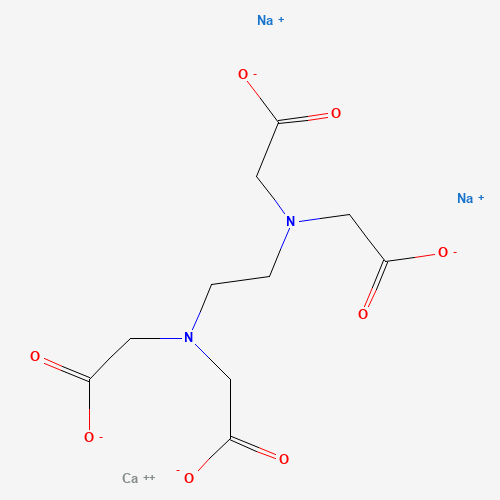
Calcium disodium EDTA is a sequestrant that binds trace metals, preventing the discolouration, rancidity and flavour loss they cause. It is used in dressings, canned goods, sauces and soft drinks.
Where it is and isn’t permitted
| Jurisdiction | Status | Scope and limits | Citation |
|---|---|---|---|
| Australia and New Zealand | Permitted, with conditions | 6 food categories highest permitted level 500 mg/kg Show every food category
| Food Standards Code, Schedule 15, S15—5and 5 further provisionsretrieved 2026-10-17 |
| Canada | Permitted, with conditions | highest permitted level 365 mg/kg 12 permitted uses Show every permitted use
| Health Canada, List of Permitted Sequestering Agents (List 12)and 11 further provisionsretrieved 2026-10-17 |
| European Union | Permitted, with conditions | 6 food categories highest permitted level 250 mg/kg Show every food category
| Regulation (EC) No 1333/2008, Annex IIand 5 further provisionsretrieved 2026-10-18 |
| Great Britain | Permitted, with conditions | 6 food categories highest permitted level 250 mg/kg or mg/l Show every food category
| Assimilated Regulation (EC) No 1333/2008and 5 further provisionsretrieved 2026-10-18 |
| Japan | Permitted, with conditions | Designated additive: Appended Table 1, item 79, エチレンジアミン四酢酸カルシウム二ナトリウム(別名EDTAカルシウム二ナトリウム) (“Calcium Disodium Ethylenediaminetetraacetate (Calcium Disodium EDTA)” in the unofficial English translation). …Designated additive: Appended Table 1, item 79, エチレンジアミン四酢酸カルシウム二ナトリウム(別名EDTAカルシウム二ナトリウム) (“Calcium Disodium Ethylenediaminetetraacetate (Calcium Disodium EDTA)” in the unofficial English translation). Standards for use — Specifications and Standards for Foods, Food Additives, etc. (MHW Notification No. 370 of 1959), Part II (Food Additives), F (Standards for use), entry エチレンジアミン四酢酸カルシウム二ナトリウム: (1) [may be used only in the foods stated] “エチレンジアミン四酢酸カルシウム二ナトリウムは、缶詰又は瓶詰食品以外の食品に使用してはならない。” (2) [sets maximum levels of use for the foods stated] “エチレンジアミン四酢酸カルシウム二ナトリウムの使用量は、エチレンジアミン四酢酸カルシウム二ナトリウムとして、缶詰又は瓶詰の清涼飲料水にあってはその1kgにつき0.035g以下、その他の缶詰又は瓶詰食品にあってはその1kgにつき0.25g以下でなければならない。” The Japanese is the standard as published. There is no official English translation of the Notification; the English in square brackets is this site’s description of what each sentence does, not a translation of the foods or the levels. Compositional specifications for this additive, in the same Notification, are not imported and are not shown here; nor are the general rules in F 添加物一般, which apply to every additive. | Regulations for Enforcement of the Food Sanitation Act (MHW Ordinance No. 23 of 1948), Appended Table 1retrieved 2026-10-18 |
| South Korea | Permitted, with conditions | Designated food additive: Standards and Specifications for Food Additives, Part III, 1. …Designated food additive: Standards and Specifications for Food Additives, Part III, 1. 일반식품첨가물 (general food additives), 이.디.티.에이.칼슘이나트륨 (“Calcium Disodium Ethylenediaminetetraacetate”, the English the Code prints beside it). Main use (주용도) of 이.디.티.에이.칼슘이나트륨: 산화방지제. Standard for use (사용기준) of 이.디.티.에이.칼슘이나트륨: (1) [may be used only in the foods listed; sets a limit on the amount used] “이.디.티.에이.칼슘이나트륨은 아래의 식품에 한하여 사용하여야 한다. 이.디.티.에이.칼슘이나트륨의 사용량은 무수이.디.티.에이.이나트륨으로서 1. 소스, 마요네즈∶0.075g/kg 이하(이.디.티.에이.이나트륨과 병용할 때에는 무수 이.디.티.에이.이나트륨으로서 사용량의 합계가 0.075g/kg 이하) 2. 통조림식품, 병조림식품∶0.25g/kg 이하(이.디.티.에이.이나트륨과 병용할 때에는 무수이.디.티.에이.이나트륨으로서 사용량의 합계가 0.25g/kg 이하) 3. 음료류(캔 또는 병제품에 한하며, 다류, 커피 제외)∶0.035g/kg 이하(이.디.티.에이.이나트륨과 병용할 때에는 무수이.디.티.에이.이나트륨으로서 사용량의 합계가 0.035g/kg 이하) 4. 마가린 : 0.1g/kg 이하(이.디.티.에이.이나트륨과 병용할 때에는 무수 이.디.티.에이.이나트륨으로서 사용량의 합계가 0.1g/kg 이하) 5. 오이초절임, 양배추초절임 : 0.22g/kg 이하(이.디.티.에이.이나트륨과 병용할 때에는 무수 이.디.티.에이.이나트륨으로서 사용량의 합계가 0.22g/kg 이하) 6. 건조과일류(바나나에 한한다) : 0.265g/kg 이하(이.디.티.에이.이나트륨과 병용할 때에는 무수 이.디.티.에이.이나트륨으로서 사용량의 합계가 0.265g/kg 이하) 7. 서류가공품(냉동감자에 한한다) : 0.365g/kg 이하(이.디.티.에이.이나트륨과 병용할 때에는 무수 이.디.티.에이.이나트륨으로서 사용량의 합계가 0.365g/kg 이하) 8. 땅콩버터 : 0.1g/kg 이하(이.디.티.에이.이나트륨과 병용할 때에는 무수 이.디.티.에이.이나트륨으로서 사용량의 합계가 0.1g/kg 이하)” The Korean is the standard as published. There is no official English translation of the current Code (the English version on MFDS’s website is the 2020 edition and has no legal effect); the English in square brackets is this site’s description of what each sentence does, not a translation of the foods or the levels. Compositional specifications (Part IV) are not imported, nor are the general standards in Part II, which apply to every additive. | Standards and Specifications for Food Additives (식품첨가물의 기준 및 규격), MFDS Notification, Part III (Standards for use, by item)retrieved 2026-10-18 |
| United States | Permitted, with conditions | 21 CFR 172.120retrieved 2026-10-17 | |
| Codex Alimentarius | Permitted, with conditions | 36 food categories highest permitted level 1,000 mg/kg Show every food category and its notes
| CXS 192-1995 Table One, INS 385and 35 further provisionsretrieved 2026-09-07 |
How much is permitted
A listing usually limits the quantity as well as the food. Only one of the forms that takes is a figure: quantum satis and good manufacturing practice permit the amount the technological effect requires and no more, which is a limit rather than the absence of one. Figures below are the range across every food category this page is listed in, and categories differ between regulators — see how much is permitted.
| Australia and New Zealand | 33 mg/kg – 500 mg/kg | 6 numeric limit |
|---|---|---|
| Canada | 25 mg/kg – 365 mg/kg | 10 numeric limit, 2 no quantity stated |
| European Union | 75 mg/kg – 250 mg/kg | 6 numeric limit |
| Great Britain | 75 mg/kg – 250 mg/kg | 5 numeric limit, 1 no quantity stated |
| Japan | — | 1 no quantity stated |
| South Korea | — | 1 no quantity stated |
| United States | — | 1 no quantity stated |
| Codex Alimentarius | 25 mg/kg – 1,000 mg/kg | 36 numeric limit |
What it is made from
Synthesised from ethylenediamine and chloroacetic acid, then complexed with calcium and sodium. The calcium form is used in food rather than the disodium form because it does not strip calcium from the body.
- Vegan
- Vegetarian
Compare other additives on the dietary indexes.
- CAS registry number
- 62-33-9
- InChIKey
- SHWNNYZBHZIQQV-UHFFFAOYSA-J
- PubChem
- CID 6093170
The two specifications, compared
The European Union sets identity and purity by regulation; JECFA publishes its own through FAO, advisory until a country adopts it. Both documents are below in full. These are the parameters each puts a number on.
| Parameter | European Union | JECFA |
|---|---|---|
| Assay | no less than 97 % | no less than 97 % |
| Lead | no more than 2 mg/kg | no more than 2 mg/kg |
| Arsenic | no more than 3 mg/kg | — |
| Mercury | no more than 1 mg/kg | — |
The two documents state the same figures for every parameter compared here.
How the EU defines it
The legal specification an additive must meet to be sold as this E number in the EU — what it is, how it may be made, and the purity it must reach. From Commission Regulation (EU) No 231/2012.
E 385 Calcium disodium ethylenediaminetetraacetate
Synonyms: Calcium disodium EDTA; Calcium disodium edetate
Assay, identification and purity criteria
Description and assay
- Einecs
- 200-529-9
- Chemical name
- N,N′-1,2-Ethanediylbis [N-(carboxymethyl)-glycinate] [(4-)-O,O′,ON,ON]calciate(2)-disodium; Calcium disodium ethylenediaminetetra acetate; Calcium disodium (ethylenedinitrilo)tetra acetate
- Chemical formula
- C₁₀H₁₂O₈CaN₂Na₂·2H₂O
- Molecular weight
- 410,31
- Assay
- Content not less than 97 % on the anhydrous basis
- Description
- White, odourless crystalline granules or white to nearly white powder, slightly hygroscopic
Identification
- Test for sodium
- Passes test
- Test for calcium
- Passes test
- Chelating activity to metal ions
- Positive
- pH
- Between 6,5 and 7,5 (1 % solution)
Purity criteria
- Water content
- 5 to 13 % (Karl Fischer method)
- Arsenic
- Not more than 3 mg/kg
- Lead
- Not more than 2 mg/kg
- Mercury
- Not more than 1 mg/kg
How JECFA defines it
The international specification for identity and purity, prepared by the Joint FAO/WHO Expert Committee on Food Additives and published by FAO. It is a different document from any above, written by a different body and revised on its own cycle; it is advisory, and a country adopts it or does not.
INS 385 Calcium Disodium Ethylenediaminetetraacetate
Synonyms: Calcium disodium EDTA, calcium disodium edetate; INS No. 385 Calcium disodium edetate; Calcium disodium EDTA
Assay, identification and purity criteria
Description and assay
- Specification history
- Prepared at the 30th JECFA (1986), published in FNP 37 (1986) and in FNP 52 (1992). Metals and arsenic specifications revised at the 61st JECFA (2003). An ADI of 0-2.5 mg/kg bw was established at the 17th JECFA (1973)
- Chemical names
- N,N'-1,2-Ethanediylbis[N-(carboxymethyl)-glycinate](4-)- N,N',O,O',O N ,O N ]calciate(2-)disodium; Calcium disodium ethylenediaminetetraacetate; Calcium disodium (ethylene-dinitrilo)- tetraacetate.
- C.A.S. number
- 62-33-9
- Chemical formula
- C10H12CaN2Na2O8 · 2H2O
- Formula weight
- 410.31
- Assay
- Not less than 97% and not more than the equivalent of 102% calculated on the anhydrous basis
- DESCRIPTION
- White, odourless crystalline granules or a white to nearly white powder; slightly hygroscopic
- FUNCTIONAL USES
- Sequestrant, preservative
- METHOD OF ASSAY
- Transfer about 1.2 g of the sample, accurately weighed, into a 250-ml beaker, and dissolve in 75 ml of water. Add 25 ml of dilute acetic acid TS and 1.0 ml of diphenylcarbazone solution (1 g in 100 ml ethanol). Titrate slowly with 0.1 M mercuric nitrate (see below) to the first appearance of a purplish colour. Each ml of 0.1 M mercuric nitrate is equivalent to 37.43 mg of C10H12CaN2Na2O8. Mercuric nitrate solution: Dissolve about 35 g of mercuric nitrate Hg(NO3)2 · H2O in a mixture of 5 ml of nitric acid and 500 ml of water and dilute with water to 1000 ml. Standardize the solution as follows: Transfer an accurately measured volume of about 20 ml of the solution into an Erlenmeyer flask and add 2 ml of nitric acid and 2 ml of ferric ammonium sulfuric TS. Cool to below 20 o and titrate with 0.1 N ammonium thiocyanate to the first appearance of a permanent brownish colour. Calculate the molarity. (0.1 M = 32.46 g Hg(NO3)2 per litre).
Identification
- Solubility (Vol. 4)
- Freely soluble in water, practically insoluble in ethanol.
- Test for calcium (Vol. 4)
- Passes test
- Test for sodium (Vol. 4)
- Passes test
- Chelating activity to metal ions
- To 5 ml of water in a test tube add 2 drops of ammonium thiocyanate TS and 2 drops of ferric chloride TS. A deep red solution develops. Add about 50 mg of the sample and mix. The deep red colour disappears.
Purity criteria
- pH (Vol. 4)
- 6.5 - 7.5 (1 in 100 soln).
- Magnesium chelating substances
- Transfer 1 g of the sample, accurately weighed, to a small beaker, and dissolve it in 5 ml of water. Add 5 ml of buffer solution prepared by dissolving 67.5 g of ammonium chloride in 200 ml of water, adding 570 ml of strong ammonia TS, and diluting with water to 1000 ml. To the buffered solution add 5 drops of eriochrome black TS, and titrate with 0.1 M magnesium acetate to the appearance of a deep wine-red colour. Not more than 2.0 ml should be required.
- Lead (Vol. 4)
- Not more than 2 mg/kg Determine using an atomic absorption technique appropriate to the specified level. The selection of sample size and method of sample preparation may be based on the principles of the method described in Volume 4, “Instrumental Methods.”
Every name it appears under
113 recorded names. A label may use any of them.
E number
- E0088
- E385
INS number
- 385
CAS registry number
- 23411-34-9
- 62-33-9
As it appears in regulation
- Calcium disodium EDTA
- Calcium disodium ethylene diamine tetra-acetate
- Calcium disodium ethylene diamine tetra-acetate (Calcium disodium EDTA)
Other names
- (Ethylenedinitrilo)tetraacetic acid calcium disodium salt
- 25IH6R4SGF
- Adsorbonac
- Antallin
- Antallin; Calcitetracemate disodium; Calcium EDTA; Calcium disodium (ethylenedinitrilo)tetraacetate; Calcium disodium EDTA; Calcium disodium Versenate
- C10H12CaN2Na2O8
- Calciate(2-), ((ethylenedinitrilo)tetraacetato)-, disodium
- Calcium disodium (ethylenedinitrilo)tetraacetate
- Calcium disodium (ethylenedinitrilo)tetraacetate dihydrate
- Calcium disodium edetate
- Calcium disodium edetate hydrate
- Calcium disodium EDTA
- Calcium disodium EDTA dihydrate
- Calcium Disodium EDTA Hydrate
- Calcium disodium ethylene diamine tetra-acetate (Calcium disodium EDTA)
- CALCIUM DISODIUM ETHYLENE-DIAMINETETRAACETATE
- Calcium disodium ethylened iaminetetraacetate hydrate
- Calcium disodium ethylenediaminetetraacetate
- Calcium disodium ethylenediaminetetraacetate dihydrate
- Calcium Edetate Sodium
- Calcium sodium 2,2',2'',2'''-(ethane-1,2-diyldinitrilo)tetraacetate (1/2/1)
- calcium sodium edetate
- Calcium titriplex
- CAS-62-33-9
- Detoxamin
- DISODIUM CALCIUM EDTA
- DISODIUM((ETHYLENEDINITRILO)TETRAACETATO)CALCIATE(2-)
- Disodium((ethylenedinitrilo)tetraacetato)calciate(2-) hydrate
- E 385
- Edetamine
- Edetate calcium disodium
- Edetate calcium disodium anhydrous
- Edetate calcium disodium anhydrous (USP)
- EDTA CALCIUM
- EDTA calcium disodium
- EDTA calcium disodium salt
- Edthamil
- ETHYLENE DIAMINE TETRA ACETATES
- Ethylene diamine tetraacetic acid, disodium calcium salt
- Ethylenediaminetetraacetic acid calcium disodium salt
- Ethylenediaminetetraacetic Acid Disodium Calcium Salt
- Ethylenediaminetetraaceticacidcalciumdisodiumsalt
- INS NO.385
- INS-385
- Mosatil
- SHWNNYZBHZIQQV-UHFFFAOYSA-J
- Sodium calcium edetate
- Sodium calcium edetate, European Pharmacopoeia (EP) Reference Standard
- Sormetal
- Tetazine
Systematic names
- CALCIATE (2-), ((N,N'-1,2-ETHANEDIYLBIS(N-(CARBOXYMETHYL)GLYCINATO))(4-)-N,N',O,O',ON,ON')-, DISODIUM
- CALCIATE (2-), ((N,N'-1,2-ETHANEDIYLBIS(N-(CARBOXYMETHYL)GLYCINATO))(4-)-N,N',O,O',ON,ON')-, DISODIUM, (OC-6-21)-
- CALCIATE(2-), ((N,N'-1,2-ETHANEDIYLBIS(N-((CARBOXY- .KAPPA.O)METHYL)GLYCINATO-.KAPPA.N,.KAPPA.O))(4-))-, DISODIUM, (OC-6-21)-
- CALCIATE(2-), ((N,N'-1,2-ETHANEDIYLBIS(N-((CARBOXY- .KAPPA.O)METHYL)GLYCINATO-.KAPPA.N,.KAPPA.O))(4-))-, SODIUM (1:2), (OC-6-21)-
- Calciate(2-), ((N,N'-1,2-ethanediylbis(N-((carboxy-kappaO)methyl)glycinato-kappaN,kappaO))(4-))-, sodium (1:2), (OC-6-21)-
- calcium disodium 2-((2-(bis(carboxymethyl)amino)ethyl)(carboxymethyl)amino)acetate
- calcium disodium 2-({2-[bis(carboxylatomethyl)amino]ethyl}(carboxylatomethyl)amino)acetate
- Calcium;2-[2-[bis(carboxylatomethyl)azaniumyl]ethyl-(carboxylatomethyl)azaniumyl]acetate
- calcium;disodium;2-[2-[bis(carboxylatomethyl)amino]ethyl-(carboxylatomethyl)amino]acetate
Hazard reference values
EFSA and JECFA have both set an acceptable daily intake for Calcium disodium EDTA, and they agree: 2.5 mg/kg bw/day. An acceptable daily intake is a reference value set by a committee, not a threshold above which harm begins. See where the two committees differ.
| Type | Value | Population | Assessed by | Opinion |
|---|---|---|---|---|
| ADI | 2.5 mg/kg bw/day | — | JECFA | 1973 |
| ADI | 2.5 mg/kg bw/day | consumers | EFSA | not identified in the dataset |
Evidence and how bodies read it
Studies, and the differing conclusions regulators drew from them, are curated rather than machine-read, and none has been written for this substance yet.
Common questions
Assembled from what is above, in the words the questions are usually asked in. Each answer is the same statement the relevant section makes, with the same citations behind it.
- What is E 385?
- E 385 is Calcium disodium EDTA. Calcium disodium EDTA is a sequestrant that binds trace metals, preventing the discolouration, rancidity and flavour loss they cause. It is used in dressings, canned goods, sauces and soft drinks.
- What is Calcium disodium EDTA used for in food?
- It is listed as a sequestrant — the role Canada, Codex and the US assign it. This page shows every function each regulator records, with the citation for each.
- Where is Calcium disodium EDTA permitted?
- Of the seven regulators this site reads, Australia and New Zealand, Canada, the EU, Great Britain, Japan, South Korea, the US and the Codex standard permit it. Each permission is for named foods at named levels, not a blanket one; the table on this page gives them with citations.
- Is Calcium disodium EDTA vegan?
- Yes. Calcium disodium EDTA is not derived from animals, and is suitable for vegetarians. This page says what it is made from and how.
Sources for this page
- anz retrieved 2026-10-17
- ca retrieved 2026-10-17
- eu retrieved 2026-10-18
- gb retrieved 2026-10-18
- jp retrieved 2026-10-18
- kr retrieved 2026-10-18
- ecfr retrieved 2026-10-17
- gsfa retrieved 2026-09-07
- euspecs retrieved 2026-10-18
- jecfaspecs retrieved 2026-09-23
Full licence terms and publisher details on Sources. How this page is built and updated: Method.
Machine-readable: a JSON record of this additive is given on request —how to ask for access.
Follow changes to Calcium disodium EDTA:Atom feed — regulatory events, and any change the weekly refresh detects in its provisions.