Copper sulfate
7758-98-7 · 7758-99-8 · Blue copper AS · Blue Vicking · Bluestone · Calcanthite · Caswell No. 256 · CCRIS 5556 · Chinese Pharmacopoeia Reagent Coloration - Primary Solution Blue · copper (2+) sulfate pentahydrate · COPPER (AS CUPRIC SULFATE) [VANDF] · Copper sulfate · Copper sulfate (CuSO4) pentahydrate · Copper sulfate pentahydrate · copper sulfate-penta hydrate · copper sulphate pentahydrate · copper sulphate(5.H2O) · copper(11) sulfate pentahydrate · Copper(2+) sulfate--water (1/1/5) · copper(2+) sulfate--water (1/5) · COPPER(2+) SULPHATE (1:1) PENTAHYDRATE · COPPER(2+) SULPHATE PENTAHYDRATE · Copper(II) sulfate pentahydrate · Copper(II) sulfate pentahydrate (99.999%-Cu) PURATREM · Copper(II) sulfate pentahydrate, ACS reagent · Copper(II) sulfate pentahydrate, Trace metals grade, 99.995% · Copper(II) Sulfide Powder · copper(II) sulphate pentahydrate · Copper(II) sulphide, thioxocopper · Copper(II)sulfatepentahydrate · copper(II)sulphate-pentahydrate · COPPERFINE-ZINC · CuH10O9S · Cupric sulfate (USP) · Cupric Sulfate [USP] · cupric sulfate copper(II) sulfate, pentahydrate CuSO4.5H2O cupric sulfate pentahydrate · Cupric sulfate pentahydrate · Cupric sulfate pentahydrate, Ultra pure, USP, EP, Crystals, Low heavy metals (As: <= 1 ppm, Cd: <= 1 ppm, Pb: <= 1 ppm & Hg: <= 0.1 ppm) · Cupric sulfate pentahydrate, Ultra pure, USP, EP, Powder, Low heavy metals (As: <= 1 ppm, Cd: <= 1 ppm, Pb: <= 1 ppm & Hg: <= 0.1 ppm) · Cupric sulphate 5-hydrate · Cupric sulphate pentahydrate · CUPRUM SULPHURICUM [HPUS] · CuSO4(H2O)5 · CuSO4.5H2O · EPA Pesticide Chemical Code 024401 · HSDB 2968 · Kupfersulfat-pentahydrat · Kupfervitriol · NATURAL CHALCANTHITE · Salzburg vitriol · Sentry AQ mardel coppersafe · SULFURIC ACID COPPER(2+) SALT (1:1), HYDRATE (1:5) · SULFURIC ACID, COPPER (2+) SALT (1:1), PENTAHYDRATE · SULFURIC ACID, COPPER (2+) SALT, PENTAHYDRATE · Triangle · Vencedor · Copper;sulfate · Copper;sulfate;pentahydrate · Copper sulfateCAS 7758-99-8
Listed as a nutrient supplement and a processing aid by the US.
Listed as nutrient supplements (US) · processing aids (US)
- United States: Nutrient supplement — FDA, Substances Added to Food: COPPER SULFATE
- United States: Nutrient supplements — 21 CFR 184.1261, citing 21 CFR 170.3(o)(20)
- United States: Processing aid — FDA, Substances Added to Food: COPPER SULFATE
- United States: Processing aids — 21 CFR 184.1261, citing 21 CFR 170.3(o)(24)
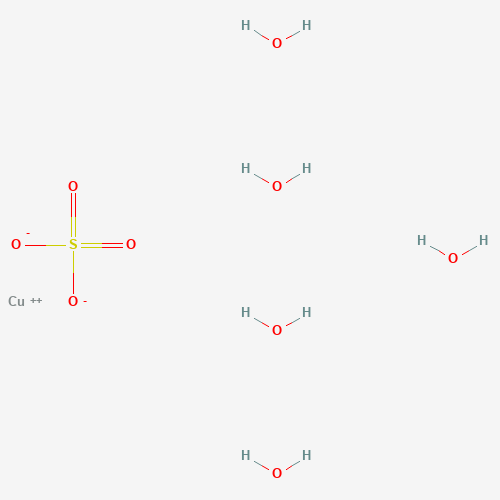
Copper sulfate is a copper source in fortified foods and a processing aid, and is also used to supplement animal feed.
Where it is and isn’t permitted
| Jurisdiction | Status | Scope and limits | Citation |
|---|---|---|---|
| Australia and New Zealand | No listed food uses foundThis site has not matched this substance to any food use on this jurisdiction’s list of authorised food additives. A food additive may be used only in foods that list names. Flavourings, enzymes, processing aids and added nutrients are regulated separately and do not appear on it. | ||
| Canada | Permitted, with conditions | no numerical limit (good manufacturing practice) 2 permitted uses Show every permitted use
| Health Canada, List of Permitted Food Additives with Other Purposes of Use (List 8)and 1 further provisionretrieved 2026-10-17 |
| European Union | No listed food uses foundThis site has not matched this substance to any food use on this jurisdiction’s list of authorised food additives. A food additive may be used only in foods that list names. Flavourings, enzymes, processing aids and added nutrients are regulated separately and do not appear on it. | ||
| Great Britain | No listed food uses foundThis site has not matched this substance to any food use on this jurisdiction’s list of authorised food additives. A food additive may be used only in foods that list names. Flavourings, enzymes, processing aids and added nutrients are regulated separately and do not appear on it. | ||
| Japan | Permitted, with conditions | Designated additive: Appended Table 1, item 274, 銅塩類(グルコン酸銅及び硫酸銅に限る。) (“Copper salts (limited to Copper Gluconate and Cupric Sulfate)” in the unofficial English translation; listed member: Cupric Sulfate). …Designated additive: Appended Table 1, item 274, 銅塩類(グルコン酸銅及び硫酸銅に限る。) (“Copper salts (limited to Copper Gluconate and Cupric Sulfate)” in the unofficial English translation; listed member: Cupric Sulfate). Standards for use — Specifications and Standards for Foods, Food Additives, etc. (MHW Notification No. 370 of 1959), Part II (Food Additives), F (Standards for use), entry 硫酸銅: (1) [may be used only in the foods stated] “硫酸銅は、ぶどう酒及び母乳代替食品以外の食品に使用してはならない。” (2) [sets maximum levels of use for the foods stated; limits how much may remain in the foods stated] “硫酸銅の使用量は、硫酸銅(Ⅱ)五水和物として、ぶどう酒にあってはその1Lにつき10mg以下でなければならない。また、硫酸銅は、銅として、ぶどう酒にあってはその1Lにつき2mgを超えて残存しないように使用しなければならない。” (3) [limits how much the food may contain] “硫酸銅は、母乳代替食品にあっては、乳及び乳製品の成分規格等に関する命令別表の二 乳等の成分規格並びに製造、調理及び保存の方法の基準の部(五) 乳等の成分又は製造若しくは保存の方法に関するその他の規格又は基準の款(5)の規定による内閣総理大臣の承認を受けて使用する場合を除き、母乳代替食品を標準調乳濃度に調乳したとき、その1Lにつき、銅として、0.60mgを超える量を含有しないように使用しなければならない。” The Japanese is the standard as published. There is no official English translation of the Notification; the English in square brackets is this site’s description of what each sentence does, not a translation of the foods or the levels. Compositional specifications for this additive, in the same Notification, are not imported and are not shown here; nor are the general rules in F 添加物一般, which apply to every additive. | Regulations for Enforcement of the Food Sanitation Act (MHW Ordinance No. 23 of 1948), Appended Table 1retrieved 2026-10-18 |
| South Korea | Permitted, with conditions | Designated food additive: Standards and Specifications for Food Additives, Part III, 2. …Designated food additive: Standards and Specifications for Food Additives, Part III, 2. 가공보조제 (processing aids), 황산동 (“Cupric Sulfate”, the English the Code prints beside it); the Code marks it as also usable as a nutrient fortifier; 3. 영양강화제 (nutrient fortifiers), 황산동; nutrient: 구리(Cu); the Code marks it as also usable as a processing aid. Main use (주용도) of 황산동: 제조용제. Standard for use (사용기준) of 황산동: (1) [may be used only in the foods listed; sets a limit on the amount used] “황산동은 아래의 식품에 한하여 사용하여야 한다. 다만, 포도주의 경우 황산동의 사용량은 동으로서 아래의 기준 이상 남지 아니하도록 사용하여야 한다. 1. 포도주 : 1mg/kg 2. 시리얼류 3. 특수의료용도식품 4. 체중조절용 조제식품 5. 건강기능식품” Standard for use (사용기준) of 황산동: (1) [follows the standard for use of another entry in the Code] “III. 2. 가공보조제의 황산동의 사용기준을 따른다.” The Korean is the standard as published. There is no official English translation of the current Code (the English version on MFDS’s website is the 2020 edition and has no legal effect); the English in square brackets is this site’s description of what each sentence does, not a translation of the foods or the levels. Compositional specifications (Part IV) are not imported, nor are the general standards in Part II, which apply to every additive. | Standards and Specifications for Food Additives (식품첨가물의 기준 및 규격), MFDS Notification, Part III (Standards for use, by item)retrieved 2026-10-18 |
| United States | Permitted | 21 CFR 184.1261retrieved 2026-10-17 | |
| Codex Alimentarius | Not listedDoes not appear on this jurisdiction’s permitted list. That is not the same as being prohibited. |
How much is permitted
A listing usually limits the quantity as well as the food. Only one of the forms that takes is a figure: quantum satis and good manufacturing practice permit the amount the technological effect requires and no more, which is a limit rather than the absence of one. Figures below are the range across every food category this page is listed in, and categories differ between regulators — see how much is permitted.
| Canada | — | 2 GMP |
|---|---|---|
| Japan | — | 1 no quantity stated |
| South Korea | — | 1 no quantity stated |
| United States | — | 1 no quantity stated |
No regulator sets a figure for Copper sulfate. That is not an absence of control: where the listing says quantum satis or good manufacturing practice, the quantity is limited to what the effect requires.
What it is made from
Produced by dissolving copper oxide or metal in sulfuric acid.
- Vegan
- Vegetarian
Compare other additives on the dietary indexes.
- CAS registry number
- 7758-99-8
- InChIKey
- JZCCFEFSEZPSOG-UHFFFAOYSA-L
- PubChem
- CID 24463
How JECFA defines it
The international specification for identity and purity, prepared by the Joint FAO/WHO Expert Committee on Food Additives and published by FAO. It is a different document from any above, written by a different body and revised on its own cycle; it is advisory, and a country adopts it or does not.
INS 519 Cupric Sulfate
Synonyms: Copper sulfate, blue stone, INS No. 519 Blue stone; Copper sulfate
Assay, identification and purity criteria
Description and assay
- Specification history
- Prepared at the 17th JECFA (1973), published in FNP 4 (1978) and in FNP 52 (1992). Metals and arsenic specifications revised at the 61st JECFA (2003). An MTDI of 0.5mg/kg bw of copper was established at the 26th JECFA (1982)
- Chemical names
- Cupric sulfate
- C.A.S. number
- 7758-98-7
- Chemical formula
- CuSO 4 · 5H 2 O
- Formula weight
- 249.68
- Assay
- Not less than 98.5% and not more than 104.5%
- DESCRIPTION
- Deep blue triclinic crystals, or blue, crystalline granules or powder; effloresces slowly in dry air
- FUNCTIONAL USES
- Antimicrobial preservative, colour fixative
- METHOD OF ASSAY
- Weigh 1 g of the sample to the nearest 0.1 mg, and dissolve in 50 ml of water. Add 4 ml of acetic acid and 3 g of potassium iodide, and titrate the liberated iodine with 0.1 N sodium thiosulfate, using starch TS as the indicator. Perform a blank determination, and make any necessary correction. Each ml of 0.1 N sodium thiosulfate is equivalent to 24.97 mg of CuSO 4 · 5H 2 O.
Identification
- Solubility (Vol. 4)
- Freely soluble in water; slightly soluble in ethanol.
- Test for copper (Vol. 4)
- Passes test
- Test for sulfate (Vol. 4) Acidity
- Passes test Dissolve 1 g of the sample in 20 ml of water. A clear blue solution should be produced. Add 0.1 ml of methyl orange TS solution. The solution should turn brownish green.
Purity criteria
- pH (Vol. 4)
- A solution of the sample is acid to litmus
- Insoluble matter (Vol. 4)
- Not more than 50 mg/kg
- Nitrogen compounds
- Not more than 10 mg/kg. Weigh 2 g of the sample to the nearest mg and dissolve in 50 ml of water. Add 1 g of Dewarda Metal and 30 ml of a 10% sodium hydroxide solution, and allow to stand protected from loss of ammonia for 2 h. Then distil gently about 40 ml of the solution into 5 ml of water containing 1 drop of dilute hydrochloric acid. Dilute the distillate to 50 ml, and add 1 ml of a 10% sodium hydroxide solution and 2 ml of Nessler solution TS. The colour produced should not be darker than that produced in a control containing 0.02 mg of nitrogen (0.08 mg NH 4 Cl) and treated in the same manner as the sample.
- Alkali and rare earths
- Not more than 0.2% To a solution of 3 g of the sample, weighed to the nearest mg, in 120 ml of water add 2 ml of hydrochloric acid. Warm to 70 o and precipitate the copper with passing hydrogen sulfide. Dilute with water to 150 ml, allow to settle and filter. Evaporate 100 ml of the filtrate and ignite at 450 o to 550 o to constant weight. Cool, weigh and calculate as percentage. (The residue should not exceed 4 mg).
- Lead (Vol. 4)
- Not more than 10 mg/kg Determine using an atomic absorption technique appropriate to the specified level. The selection of sample size and method of sample preparation may be based on the principles of the method described in Volume 4, “Instrumental Methods.”
- Other metals
- Not more than 50 mg/kg (as Ni) To the residue from the above test for alkalis and rare earths add 2 ml of hydrochloric acid, 2 ml of water and 5 drops of nitric acid, and slowly evaporate on a steam bath to dryness. Take up the residue with 1 ml of hydrochloric acid and 10 ml of water, filter if necessary, and dilute to 50 ml. To 25 ml of the solution add a slight excess of strong ammonia TS, boil for 1 min, filter and wash with 15 ml of hot water. Then cool and dilute to 50 ml. Neutralize 20 ml of the solution to litmus paper with dilute hydrochloric acid TS. Add 5 drops of dilute ammonia TS and then 2 ml of hydrogen sulfide TS. The solution should not be darker than a control made with 0.02 mg of Ni in 25 ml of water, treated with 5 drops of dilute ammonia TS and 2 ml of hydrogen sulfide TS.
Every name it appears under
59 recorded names. A label may use any of them.
CAS registry number
- 7758-98-7
- 7758-99-8
As it appears in regulation
- Copper sulfate
Other names
- Blue copper AS
- Blue Vicking
- Bluestone
- Calcanthite
- Caswell No. 256
- CCRIS 5556
- Chinese Pharmacopoeia Reagent Coloration - Primary Solution Blue
- copper (2+) sulfate pentahydrate
- COPPER (AS CUPRIC SULFATE) [VANDF]
- Copper sulfate
- Copper sulfate (CuSO4) pentahydrate
- Copper sulfate pentahydrate
- copper sulfate-penta hydrate
- copper sulphate pentahydrate
- copper sulphate(5.H2O)
- copper(11) sulfate pentahydrate
- Copper(2+) sulfate--water (1/1/5)
- copper(2+) sulfate--water (1/5)
- COPPER(2+) SULPHATE (1:1) PENTAHYDRATE
- COPPER(2+) SULPHATE PENTAHYDRATE
- Copper(II) sulfate pentahydrate
- Copper(II) sulfate pentahydrate (99.999%-Cu) PURATREM
- Copper(II) sulfate pentahydrate, ACS reagent
- Copper(II) sulfate pentahydrate, Trace metals grade, 99.995%
- Copper(II) Sulfide Powder
- copper(II) sulphate pentahydrate
- Copper(II) sulphide, thioxocopper
- Copper(II)sulfatepentahydrate
- copper(II)sulphate-pentahydrate
- COPPERFINE-ZINC
- CuH10O9S
- Cupric sulfate (USP)
- Cupric Sulfate [USP]
- cupric sulfate copper(II) sulfate, pentahydrate CuSO4.5H2O cupric sulfate pentahydrate
- Cupric sulfate pentahydrate
- Cupric sulfate pentahydrate, Ultra pure, USP, EP, Crystals, Low heavy metals (As: <= 1 ppm, Cd: <= 1 ppm, Pb: <= 1 ppm & Hg: <= 0.1 ppm)
- Cupric sulfate pentahydrate, Ultra pure, USP, EP, Powder, Low heavy metals (As: <= 1 ppm, Cd: <= 1 ppm, Pb: <= 1 ppm & Hg: <= 0.1 ppm)
- Cupric sulphate 5-hydrate
- Cupric sulphate pentahydrate
- CUPRUM SULPHURICUM [HPUS]
- CuSO4(H2O)5
- CuSO4.5H2O
- EPA Pesticide Chemical Code 024401
- HSDB 2968
- Kupfersulfat-pentahydrat
- Kupfervitriol
- NATURAL CHALCANTHITE
- Salzburg vitriol
- Sentry AQ mardel coppersafe
- SULFURIC ACID COPPER(2+) SALT (1:1), HYDRATE (1:5)
- SULFURIC ACID, COPPER (2+) SALT (1:1), PENTAHYDRATE
- SULFURIC ACID, COPPER (2+) SALT, PENTAHYDRATE
- Triangle
- Vencedor
Systematic names
- Copper;sulfate
- Copper;sulfate;pentahydrate
Hazard reference values
| Type | Value | Population | Assessed by | Opinion |
|---|---|---|---|---|
| ADI | not allocated | — | JECFA | 1973 |
Evidence and how bodies read it
Studies, and the differing conclusions regulators drew from them, are curated rather than machine-read, and none has been written for this substance yet.
Common questions
Assembled from what is above, in the words the questions are usually asked in. Each answer is the same statement the relevant section makes, with the same citations behind it.
- What is Copper sulfate?
- Copper sulfate is a copper source in fortified foods and a processing aid, and is also used to supplement animal feed.
- What is Copper sulfate used for in food?
- It is listed as a nutrient supplement and a processing aid — the role the US assigns it. This page shows every function each regulator records, with the citation for each.
- Is Copper sulfate banned in Europe?
- No. Copper sulfate is not on the EU's list of authorised food additives, but it would not be expected to be: every role regulators give it — nutrient supplement and processing aid — the EU regulates under separate law. Its absence from the additives list says nothing about whether it is permitted in Europe.
- Where is Copper sulfate permitted?
- Of the seven regulators this site reads, Canada, Japan, South Korea and the US permit it. Each permission is for named foods at named levels, not a blanket one; the table on this page gives them with citations.
- Is Copper sulfate vegan?
- Yes. Copper sulfate is not derived from animals, and is suitable for vegetarians. This page says what it is made from and how.
Sources for this page
- ca retrieved 2026-10-17
- jp retrieved 2026-10-18
- kr retrieved 2026-10-18
- ecfr retrieved 2026-10-17
- jecfaspecs retrieved 2026-09-23
Full licence terms and publisher details on Sources. How this page is built and updated: Method.
Machine-readable: a JSON record of this additive is given on request —how to ask for access.
Follow changes to Copper sulfate:Atom feed — regulatory events, and any change the weekly refresh detects in its provisions.