D-Tagatose
41847-61-4 · 87-81-0 · (2R,3S,4S,5R)-2-(Hydroxymethyl)tetrahydro-2H-pyran-2,3,4,5-tetraol · (3S,4S,5R)-2-(hydroxymethyl)oxane-2,3,4,5-tetrol · (3S,4S,5R)-2-(hydroxymethyl)tetrahydro-2H-pyran-2,3,4,5-tetraol · 20197-42-6 ((beta-D)- · 512-20-9 ((alpha-D)- · D-Lyxo-Hex-2-ulo-Pyranose · D-lyxo-Hex-2-ulopyranose · D-Lyxo-Hex-2-Ulopyranose (Tagatose) · D-lyxo-Hexulose · D-Tag · D-tagatopyranose · D-Tagatopyranoside · d-tagatos · D-Tagatose · Lactulose EP Impurity E · Lactulose Impurity N1 · lyxo-Hexulose · Naturlose · SNFG:Tag · Tag · Tag (SNFG) · tagatopyranose · Tagatopyranoside · Tagatose · TAGATOSE (USP-RS) · tagatose, (D)- · Tagatose, D- · TAGATOSE, D- (II) · D-lyxo-hex-2-ulopyranose(tagatose); (3S,4S,5R)-2-(hydroxymethyl)tetrahydro-2H-pyran-2,3,4,5-tetraolCAS 87-81-0
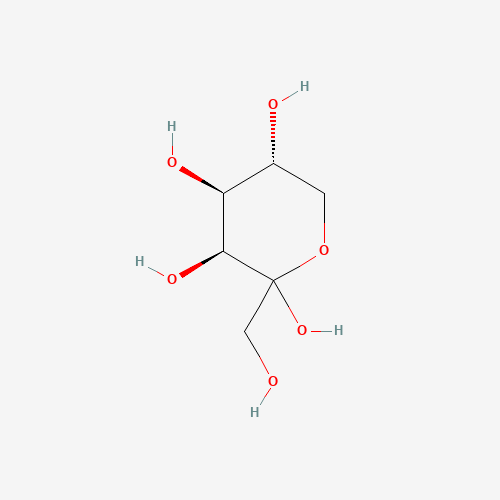
D-Tagatose is a sugar — a ketohexose closely related to fructose — used as a sweetener, and also as a texturiser, stabiliser and humectant.
Where it is and isn’t permitted
| Jurisdiction | Status | Scope and limits | Citation |
|---|---|---|---|
| Australia and New Zealand | No listed food uses foundThis site has not matched this substance to any food use on this jurisdiction’s list of authorised food additives. A food additive may be used only in foods that list names. Flavourings, enzymes, processing aids and added nutrients are regulated separately and do not appear on it. | ||
| Canada | No listing matchedHealth Canada’s lists name additives without E or INS numbers, so this site matches them by exact name. A substance listed there under a name this site does not recognise has no row here. | ||
| European Union | No listed food uses foundThis site has not matched this substance to any food use on this jurisdiction’s list of authorised food additives. A food additive may be used only in foods that list names. Flavourings, enzymes, processing aids and added nutrients are regulated separately and do not appear on it. | ||
| Great Britain | No listed food uses foundThis site has not matched this substance to any food use on this jurisdiction’s list of authorised food additives. A food additive may be used only in foods that list names. Flavourings, enzymes, processing aids and added nutrients are regulated separately and do not appear on it. | ||
| Japan | No listing matchedThis site imports only Japan’s list of designated additives (Appended Table 1 to the Regulations for Enforcement of the Food Sanitation Act), matched by English name. Existing additives, natural flavouring agents and ordinary foods used as additives are permitted outside that list and are not imported, so an empty row does not show that Japan does not permit the substance. | ||
| South Korea | No listing matchedThis site imports Part III of South Korea’s Standards and Specifications for Food Additives, matched by CAS number, then INS number, then exact name. Mixed preparations and sanitisers are not imported, and an entry whose identifiers disagreed with a page’s is held for review, so an empty row does not show that South Korea does not permit the substance. | ||
| United States | Not listedDoes not appear on this jurisdiction’s permitted list. That is not the same as being prohibited. | ||
| Codex Alimentarius | Not listedDoes not appear on this jurisdiction’s permitted list. That is not the same as being prohibited. |
GRAS notices to the FDA
A GRAS notice is a company’s conclusion that a substance is generally recognised as safe for the use it describes. FDA’s letter responds to that conclusion, for that notifier and that use. It is not a listing in 21 CFR, and it is not counted as a US permission above. The substance and use are as FDA’s inventory words them; this site matched the notice to this page by exact name.
GRN No. 352 · D-Tagatose · CJ Cheiljedang, Inc.
Intended use: Intended for use as a sweetener, texturizer, humectant, and stabilizer in ready-to-eat breakfast cereals, soft drinks, confectionery, formula diets for meal replacement, meal replacement drink mix (powder), cake, pie, cake mix, frostings, ice cream and frozen yogurt, yogurt, frostings, chewing gum (sugar free), jelly and pudding, coffee mix powder, biscuits, cookies, and cereal bars
FDA’s response (2011-02-01): FDA has no questions
GRN No. 78 · D-Tagatose · Arla Foods Ingredients amba
Intended use: Use in diet/sugar-free carbonated beverages, ready-to-eat cereals, sugar-less/sugar-free chewing gum, low calorie ready-to-drink tea beverages, icings or glazes used on baked goods, frozen dairy desserts, bars, hard candies, dietetic soft candies, and meal replacements as a bulk sweetener, humectant, texturizer or stabilizer at varying levels
FDA’s response (2001-10-25): FDA has no questions
What it is made from
Made from D-galactose by isomerising it under alkaline conditions in the presence of calcium.
- Vegan
- Vegetarian
Compare other additives on the dietary indexes.
- CAS registry number
- 87-81-0
- InChIKey
- LKDRXBCSQODPBY-OEXCPVAWSA-N
- PubChem
- CID 439312
How JECFA defines it
The international specification for identity and purity, prepared by the Joint FAO/WHO Expert Committee on Food Additives and published by FAO. It is a different document from any above, written by a different body and revised on its own cycle; it is advisory, and a country adopts it or does not.
D-Tagatose
D-Tagatose is a ketohexose, an epimer of D-fructose inverted at C-4, with a sweet taste. It is obtained from D-galactose by isomerization under alkaline conditions in the presence of calcium.
Synonyms: D- lyxo -Hexulose D-lyxo-Hexulose
Assay, identification and purity criteria
Description and assay
- Specification history
- Prepared at 61st JECFA (2003), published in FNP 52 Add 11 (2003), superseding specifications prepared at the 57th JECFA (2001), published in FNP 52 Add 9 (2001). An ADI "not specified" was established at the 63rd JECFA (2004).This ADI does not apply to individuals with hereditary fructose intolerance arising from 1- phosphofructoaldolase (aldolase B) or fructose 1,6-diphosphatase deficiency.
- Chemical names
- D-Tagatose
- C.A.S. number
- 87-81-0
- Chemical formula
- C6H12O6
- Structural formula
- CH2OH CH2OH
- Formula weight
- 180.16
- Assay
- Not less than 98% on the dry basis
- DESCRIPTION
- Virtually odourless, white or almost white crystals
- FUNCTIONAL USES
- Sweetener, texturizer, stabilizer, humectant, formulation aid
- METHOD OF ASSAY
- Determined by liquid chromatography (see Volume 4) using the following procedure. Preparation of sample solution: Weigh accurately about 50 mg of dry sample into a 10-ml volumetric flask and add about 8 ml of purified, deionized water. Bring sample to complete dissolution and dilute to mark with purified deionized water. Filter through a 0.2 μ m filter. Preparation of reference solution: Use dry standard D-tagatose. Prepare a solution of the reference material as described for the sample solution. Apparatus: Liquid chromatograph equipped with a refractive index detector and an integrator. Conditions: Column: Biorad Aminex HPX-87C (length 30 cm, diameter 7.8 mm, particle size 9 μ m) or equivalent Column temperature: 85° Mobile phase: Deionized water with 50 ppm calcium acetate Flow rate: 0.6 ml/min Injection volume: 20 μ l Procedure: Separately inject equal volumes of the sample solution and the reference solution into the chromatograph. Record the chromatograms and measure the response of D-tagatose peak. Calculate the content of D-tagatose in the sample solution by the following formula: % D-Tagatose = 100 (AS/AR) (WR/WS) Where AS = Peak area of sample solution AR = Peak area of reference solution WS = Weight of dry sample (mg) WR = Weight of dry reference standard (mg)
Identification
- Solubility (Vol. 4)
- Very soluble in water, very slightly soluble in ethanol
- Specific rotation (Vol. 4)
- 20 [ α ] D : -4 to -5.6° (1% aqueous solution)
- Melting range (Vol. 4)
- 133 − 137°
- Reaction with alkaline
- Proceed as directed for the measurement of reducing substances
- cupric tartrate (Vol. 4)
- (Method II). A copious red precipitate of cuprous oxide is formed.
- Chromatography
- The retention time for the major peak in the chromatogram of the sample solution corresponds to that for D-tagatose in the chromatogram of reference standard D-tagatose (available from Arla Foods Ingredients amba, Skanderborgvej 277, 8260 Viby, Denmark) using the conditions described in the METHOD OF ASSAY.
Purity criteria
- Loss on drying (Vol. 4)
- Not more than 0.5% (102°, 2 h)
- Total ash (Vol. 4)
- Not more than 0.1%
- Lead (Vol. 4)
- Not more than 1mg/kg Determine using an atomic absorption technique appropriate to the specified level. The selection of sample size and method of sample preparation may be based on the principles of the method described in Volume 4, “Instrumental methods”.
Every name it appears under
31 recorded names. A label may use any of them.
CAS registry number
- 41847-61-4
- 87-81-0
Other names
- (2R,3S,4S,5R)-2-(Hydroxymethyl)tetrahydro-2H-pyran-2,3,4,5-tetraol
- (3S,4S,5R)-2-(hydroxymethyl)oxane-2,3,4,5-tetrol
- (3S,4S,5R)-2-(hydroxymethyl)tetrahydro-2H-pyran-2,3,4,5-tetraol
- 20197-42-6 ((beta-D)-
- 512-20-9 ((alpha-D)-
- D-Lyxo-Hex-2-ulo-Pyranose
- D-lyxo-Hex-2-ulopyranose
- D-Lyxo-Hex-2-Ulopyranose (Tagatose)
- D-lyxo-Hexulose
- D-Tag
- D-tagatopyranose
- D-Tagatopyranoside
- d-tagatos
- D-Tagatose
- Lactulose EP Impurity E
- Lactulose Impurity N1
- lyxo-Hexulose
- Naturlose
- SNFG:Tag
- Tag
- Tag (SNFG)
- tagatopyranose
- Tagatopyranoside
- Tagatose
- TAGATOSE (USP-RS)
- tagatose, (D)-
- Tagatose, D-
- TAGATOSE, D- (II)
Systematic names
- D-lyxo-hex-2-ulopyranose(tagatose); (3S,4S,5R)-2-(hydroxymethyl)tetrahydro-2H-pyran-2,3,4,5-tetraol
Hazard reference values
No reference value for this substance in the sources we hold.
Evidence and how bodies read it
Studies, and the differing conclusions regulators drew from them, are curated rather than machine-read, and none has been written for this substance yet.
Common questions
Assembled from what is above, in the words the questions are usually asked in. Each answer is the same statement the relevant section makes, with the same citations behind it.
- What is D-Tagatose?
- D-Tagatose is a sugar — a ketohexose closely related to fructose — used as a sweetener, and also as a texturiser, stabiliser and humectant.
- Is D-Tagatose vegan?
- Yes. D-Tagatose is not derived from animals, and is suitable for vegetarians. This page says what it is made from and how.
Sources for this page
- jecfaspecs retrieved 2026-09-23
Full licence terms and publisher details on Sources. How this page is built and updated: Method.
Machine-readable: a JSON record of this additive is given on request —how to ask for access.
Follow changes to D-Tagatose:Atom feed — regulatory events, and any change the weekly refresh detects in its provisions.