Dimethyl dicarbonate
4525-33-1 · Baycovin; DEPA;Dekapex; Diethyl dicarbonate;Ue 5908 · Dicarbonic acid, 1,3-dimethyl ester · Dicarbonic acid, C,C'-dimethyl ester · Dicarbonic acid, dimethyl ester · Dimethyl dicarbonate · Dimethyl dicarbonate, for histidine methylation · Dimethyl oxydiformate · Dimethyl pyrocarbonate · Dimethyl pyrocarbonate; Methyl pyrocarbonate; Pyrocarbonic acid dimethyl ester; Velcorin · Dimethyldicarbonate · dimethylpyrocarbonate · DMDC · E 242 · Formic acid, oxydi-, dimethyl ester · Formic acid, oxydi-, dimethyl ester (7CI,8CI) · HSDB 8117 · INS NO.242 · INS-242 · methoxycarbonyl methyl carbonate · methoxycarbonyl methyl carbonate;DMPC Dimethyl pyrocarbonate Pyrocarbonic acid dimethyl ester; · Methyl pyrocarbonate · Pyrocarbonic acid dimethyl ester · Velcorin · E242 · 242 · methoxycarbonyl methyl carbonate · Dimethyl dicarbonate · Dicarbonat de dimetil · Dicarbonate de diméthyle · Dicarbonato de dimetilo · Dicarbonato dimetílico · Dimethyl dicarbonate · Dimethyldicarbonaat · Dimethyldicarbonat · Dimethyldiuhličitan · DIMETIL DICARBONATO · Dimetil dikarbonat · Dimetil-dikarbonát · Dimetilcarbonato · DIMETILDICARBONATO · Dimetildikarbonat · Dimetildikarbonatas · Dimetildikarbonāts · DIMETILO DIKARBONATAS · DIMETYL-DIKARBONÁT · Dimetyldikarbonát · Dimetylodiwęglan · Dimetyylidikarbonaatti · Dimetüüldikarbonaat · Δικαρβονικός διμεθυλεστέρας · Диметил дикарбонатE number E242INS 242CAS 4525-33-1
Listed as a preservative by Canada, Codex and the US.
Listed as preservatives (CA, US, Codex)
- Canada: Preservative — Health Canada, List of Permitted Preservatives (List 11)
- United States: Antimicrobial agent — FDA, Substances Added to Food: DIMETHYL DICARBONATE
- Codex Alimentarius: Preservative — CXS 192-1995 Table One, INS 242
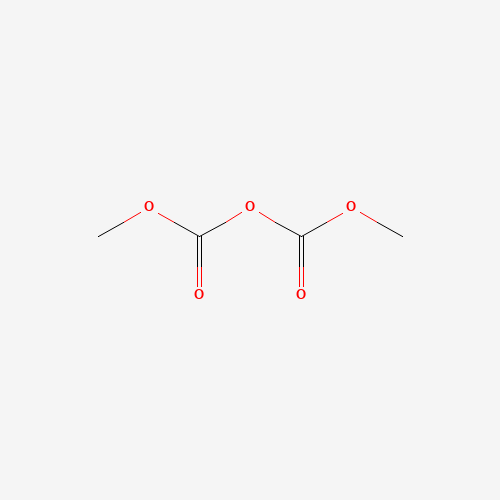
Dimethyl dicarbonate is a cold sterilant for beverages, added just before bottling to kill yeasts and moulds without heating the drink. It breaks down to methanol and carbon dioxide within hours.
Where it is and isn’t permitted
| Jurisdiction | Status | Scope and limits | Citation |
|---|---|---|---|
| Australia and New Zealand | No listed food uses foundThis site has not matched this substance to any food use on this jurisdiction’s list of authorised food additives. A food additive may be used only in foods that list names. Flavourings, enzymes, processing aids and added nutrients are regulated separately and do not appear on it. | ||
| Canada | Permitted, with conditions | highest permitted level 250 mg/kg 3 permitted uses Show every permitted use
| Health Canada, List of Permitted Preservatives (List 11)and 2 further provisionsretrieved 2026-10-17 |
| European Union | Permitted, with conditions | 9 food categories highest permitted level 250 mg/l Show every food category
| Regulation (EC) No 1333/2008and 8 further provisionsretrieved 2026-10-18 |
| Great Britain | Permitted, with conditions | 9 food categories highest permitted level 250 mg/kg or mg/l Show every food category
| Assimilated Regulation (EC) No 1333/2008and 8 further provisionsretrieved 2026-10-18 |
| Japan | Permitted, with conditions | Designated additive: Appended Table 1, item 296, 二炭酸ジメチル (“Dimethyl Dicarbonate” in the unofficial English translation). …Designated additive: Appended Table 1, item 296, 二炭酸ジメチル (“Dimethyl Dicarbonate” in the unofficial English translation). Standards for use — Specifications and Standards for Foods, Food Additives, etc. (MHW Notification No. 370 of 1959), Part II (Food Additives), F (Standards for use), entry 二炭酸ジメチル: (1) [may be used only in the foods stated] “二炭酸ジメチルは果実酒及び清涼飲料水(ミネラルウォーター類を除く。以下この目において同じ。)以外の食品に使用してはならない。” (2) [sets maximum levels of use for the foods stated] “二炭酸ジメチルの使用量は、果実酒(ぶどう酒を除く。)及び清涼飲料水にあってはその1kgにつき0.25g以下、ぶどう酒にあってはその1kgにつき0.20g以下でなければならない。” The Japanese is the standard as published. There is no official English translation of the Notification; the English in square brackets is this site’s description of what each sentence does, not a translation of the foods or the levels. Compositional specifications for this additive, in the same Notification, are not imported and are not shown here; nor are the general rules in F 添加物一般, which apply to every additive. | Regulations for Enforcement of the Food Sanitation Act (MHW Ordinance No. 23 of 1948), Appended Table 1retrieved 2026-10-18 |
| South Korea | No listing matchedThis site imports Part III of South Korea’s Standards and Specifications for Food Additives, matched by CAS number, then INS number, then exact name. Mixed preparations and sanitisers are not imported, and an entry whose identifiers disagreed with a page’s is held for review, so an empty row does not show that South Korea does not permit the substance. | ||
| United States | Permitted, with conditions | 21 CFR 172.133retrieved 2026-10-17 | |
| Codex Alimentarius | Permitted, with conditions | 8 food categories highest permitted level 250 mg/kg Show every food category and its notes
| CXS 192-1995 Table One, INS 242and 7 further provisionsretrieved 2026-09-07 |
How much is permitted
A listing usually limits the quantity as well as the food. Only one of the forms that takes is a figure: quantum satis and good manufacturing practice permit the amount the technological effect requires and no more, which is a limit rather than the absence of one. Figures below are the range across every food category this page is listed in, and categories differ between regulators — see how much is permitted.
| Canada | 200 mg/kg – 250 mg/kg | 3 numeric limit |
|---|---|---|
| European Union | 250 mg/kg | 9 numeric limit |
| Great Britain | 250 mg/kg | 9 numeric limit |
| Japan | — | 1 no quantity stated |
| United States | — | 1 no quantity stated |
| Codex Alimentarius | 200 mg/kg – 250 mg/kg | 8 numeric limit |
What it is made from
A synthetic compound made from methanol and phosgene chemistry. It is designed to disappear: it is not present in the drink by the time it is opened.
- Vegan
- Vegetarian
Compare other additives on the dietary indexes.
- CAS registry number
- 4525-33-1
- InChIKey
- GZDFHIJNHHMENY-UHFFFAOYSA-N
- PubChem
- CID 3086
The two specifications, compared
The European Union sets identity and purity by regulation; JECFA publishes its own through FAO, advisory until a country adopts it. Both documents are below in full. These are the parameters each puts a number on.
| Parameter | European Union | JECFA |
|---|---|---|
| Assay | no less than 99.8 % | no less than 99.8 % |
| Lead | no more than 2 mg/kg | no more than 2 mg/kg |
| Arsenic | no more than 3 mg/kg | — |
| Mercury | no more than 1 mg/kg | — |
The two documents state the same figures for every parameter compared here.
How the EU defines it
The legal specification an additive must meet to be sold as this E number in the EU — what it is, how it may be made, and the purity it must reach. From Commission Regulation (EU) No 231/2012.
E 242 Dimethyl dicarbonate
Synonyms: DMDC; Dimethyl pyrocarbonate
Assay, identification and purity criteria
Description and assay
- Einecs
- 224-859-8
- Chemical name
- Dimethyl dicarbonate; Pyrocarbonic acid dimethyl ester
- Chemical formula
- C₄H₆O₅
- Molecular weight
- 134,09
- Assay
- Content not less than 99,8 %
- Description
- Colourless liquid, decomposes in aqueous solution. It is corrosive to skin and eyes and toxic by inhalation and ingestion
Identification
- Decomposition
- After dilution positive tests for CO₂ and methanol
- Melting point
- 17 °C
- Boiling point
- 172 °C with decomposition
- Density 20 °C
- Approximately 1,25 g/cm³
- Infrared absorption spectrum
- Maxima at 1 156 and 1 832 cm⁻¹
Purity criteria
- Dimethyl carbonate
- Not more than 0,2 %
- Chlorine, total
- Not more than 3 mg/kg
- Arsenic
- Not more than 3 mg/kg
- Lead
- Not more than 2 mg/kg
- Mercury
- Not more than 1 mg/kg
How JECFA defines it
The international specification for identity and purity, prepared by the Joint FAO/WHO Expert Committee on Food Additives and published by FAO. It is a different document from any above, written by a different body and revised on its own cycle; it is advisory, and a country adopts it or does not.
INS 242 Dimethyl Dicarbonate
Synonyms: DMDC, dimethyl pyrocarbonate; INS No. 242 Dimethyl pyrocarbonate; DMDC
Assay, identification and purity criteria
Description and assay
- Specification history
- Prepared at the 37th JECFA (1990), published in FNP 52 (1990). Metals and arsenic specifications revised at the 63rd JECFA (2004). Considered to be acceptable in accordance with GMP (max 250mg/l) at the 37th JECFA (1990)
- Chemical names
- Dimethyl dicarbonate
- C.A.S. number
- 004-525-33-1
- Chemical formula
- C 4 H 6 O 5
- Formula weight
- 139.09
- Assay
- Not less than 99.8%
- DESCRIPTION
- Colourless liquid. Caution: Corrosive to eyes and skin and toxic by inhalation and ingestion; must be kept in a tightly sealed container to exclude moisture.
- FUNCTIONAL USES
- Preservative
- METHOD OF ASSAY
- Introduce about 70 ml of pure acetone into a 150-ml glass beaker. Using a disposable 2 ml syringe weigh 1.0-1.3 g of the sample to an accuracy of ±0.1 mg into the glass beaker. Pipette exactly 20 ml dibutyl amine solution (add chlorobenzene to 120 g dibutyl amine until the 1 L mark is reached) while stirring. Titrate the solution potentiometrically with 1N hydrochloric acid. Run a blank test. Calculate the % of dimethyldicarbonate from: where V 1 = amount of hydrochloric acid used for titration of the sample (ml) V 2 = amount of hydrochloric acid used for titration of the blank (ml) t = normality of hydrochloric acid W = weight of sample (g)
Identification
- Solubility (Vol. 4)
- Soluble in water with decomposition; miscible with toluene
- Infrared absorption
- The infrared spectrum of the sample corresponds with the reference infrared spectrum below
Purity criteria
- Dimethyl carbonate
- Not more than 0.2% See description under TESTS
- Lead (Vol. 4)
- Not more than 2 mg/kg Determine using an atomic absorption technique appropriate to the specified level. The selection of sample size and method of sample preparation may be based on the principles of the method described in Volume 4, “Instrumental Methods.”
- Test: Dimethyl carbonate
- Apparatus Gas chromatograph with a flame ionization detector, equipped for capillary gas chromatography, and inlet part for the "on column" technique (e.g., Carlo Erba Fraktovap 4160, or Hewlett-Packard 5880 or 5792). - Capillary: 50 m SE 30-D (internal diameter: 0,3 mm). - Potentiometric recorder, 1 mV. - Microliter syringes with quartz needles, contents 0,010 ml, suitable for the "on column" technique (e.g., microliter syringe from SGE, type 5 A- SOC), (See Remark 5 below). Rolled rim glass vial, 10 ml content. - Seal cap for the rolled rim vial with teflon coating. - Closure tongs for the rolled rim vial - Auxiliary for the peak area determination (e.g. HP calculator 3353). Reagents Methylisobutylketone, purest grade. Operating conditions Temperatures: - Injection block: Room temperature (approximately 25 o ) - Detector: 200 o - Capillary Tube: Initial temperature 30 o ; Preliminary phase 5 min, Rate of ascent 40 o /min; Final temperature 120 o , Final phase 5 min Carrier gas: - Preliminary pressure: 3.0 bar (Helium) - Capillary tubes: Approx. 11 ml/min - Make-up gas: 28 ml/min Hydrogen: 35 ml/min Air: 300 ml/min Recorder feed: 1 cm/min Procedure Accurately weigh about 10 g of the sample to the nearest mg (W 1 mg) into a rolled rim vial. Add in a quantity of dimethyl-isobutylketone (W 2 mg), corresponding to the anticipated dimethylcarbonate content. Seal the rolled rim vial, mix well and inject 0.002 ml. Retention times: - Dimethylcarbonate: Approx. 2 min - Methylisobutylketone: Approx. 4.5 min - Dimethyldicarbonate: Approx. 8 min Typical Chromatogram: See Figure below. Determine the peak areas of the standard (F2) and dimethylcarbonate (F1). Calculation Calculate the % of dimethyl carbonate from: where K = is a Correction Factor for Dimethylcarbonate (See Remark 3, below) Remarks 1. It should be noted the DMDC is sensitive to moisture and heat. 2. If so-called peak splits occur to some extent at the given gaschromatography conditions, then the peak areas are best determined by summation of the areas under both peaks. 3. The correction factor for dimethylcarbonate should be determined with corresponding test solutions in DMDC which is to the greatest extent possible free of dimethylcarbonate. 4. The specimen mixed with the standard must be measured immediately. 5. Hamilton syringes with Metal needles can result in a partial decomposition of the DMDC.
- Test: Infrared spectrum
- Dimethyl dicarbonate
- Test: Typical chromatogram
- Dimethyl dicarbonate
Every name it appears under
52 recorded names. A label may use any of them.
E number
- E242
INS number
- 242
CAS registry number
- 4525-33-1
As it appears in regulation
- Dimethyl dicarbonate
Other names
- Baycovin; DEPA;Dekapex; Diethyl dicarbonate;Ue 5908
- Dicarbonic acid, 1,3-dimethyl ester
- Dicarbonic acid, C,C'-dimethyl ester
- Dicarbonic acid, dimethyl ester
- Dimethyl dicarbonate
- Dimethyl dicarbonate, for histidine methylation
- Dimethyl oxydiformate
- Dimethyl pyrocarbonate
- Dimethyl pyrocarbonate; Methyl pyrocarbonate; Pyrocarbonic acid dimethyl ester; Velcorin
- Dimethyldicarbonate
- dimethylpyrocarbonate
- DMDC
- E 242
- Formic acid, oxydi-, dimethyl ester
- Formic acid, oxydi-, dimethyl ester (7CI,8CI)
- HSDB 8117
- INS NO.242
- INS-242
- methoxycarbonyl methyl carbonate
- methoxycarbonyl methyl carbonate;DMPC Dimethyl pyrocarbonate Pyrocarbonic acid dimethyl ester;
- Methyl pyrocarbonate
- Pyrocarbonic acid dimethyl ester
- Velcorin
Systematic names
- methoxycarbonyl methyl carbonate
The EU re-evaluation programme
Every additive authorised in the EU before 20 January 2009 was put back through EFSA by Commission Regulation (EU) No 257/2010, and this one is named in it. What the Regulation required is below; whether the opinion has since been published is not something this site records.
- To be evaluated by 31 December 2015. Named in Annex II, Part II, point 1 as “Dimethyl dicarbonate”, among the additives given priority within its class.
Hazard reference values
| Type | Value | Population | Assessed by | Opinion |
|---|---|---|---|---|
| ADI | not specified | — | JECFA | 1990 |
Evidence and how bodies read it
What assessing bodies concluded
Each conclusion is paraphrased in the body's own framing, from the published opinion linked beneath it. Where bodies differ, both stand; this site does not adjudicate between them or add a view of its own.
EFSA 2015
The ANS Panel concluded that an ADI could not be derived for dimethyl dicarbonate (E 242), which does not remain in treated beverages, and assessed its breakdown and reaction products instead. It found no indication of a safety concern at the currently reported uses and use levels, and said a new assessment would be warranted if conditions of use changed.
Common questions
Assembled from what is above, in the words the questions are usually asked in. Each answer is the same statement the relevant section makes, with the same citations behind it.
- What is E 242?
- E 242 is Dimethyl dicarbonate. Dimethyl dicarbonate is a cold sterilant for beverages, added just before bottling to kill yeasts and moulds without heating the drink. It breaks down to methanol and carbon dioxide within hours.
- What is Dimethyl dicarbonate used for in food?
- It is listed as a preservative — the role Canada, Codex and the US assign it. This page shows every function each regulator records, with the citation for each.
- Where is Dimethyl dicarbonate permitted?
- Of the seven regulators this site reads, Canada, the EU, Great Britain, Japan, the US and the Codex standard permit it. Each permission is for named foods at named levels, not a blanket one; the table on this page gives them with citations.
- Is Dimethyl dicarbonate vegan?
- Yes. Dimethyl dicarbonate is not derived from animals, and is suitable for vegetarians. This page says what it is made from and how.
Sources for this page
- ca retrieved 2026-10-17
- eu retrieved 2026-10-18
- gb retrieved 2026-10-18
- jp retrieved 2026-10-18
- ecfr retrieved 2026-10-17
- gsfa retrieved 2026-09-07
- euspecs retrieved 2026-10-18
- jecfaspecs retrieved 2026-09-23
Full licence terms and publisher details on Sources. How this page is built and updated: Method.
Machine-readable: a JSON record of this additive is given on request —how to ask for access.
Follow changes to Dimethyl dicarbonate:Atom feed — regulatory events, and any change the weekly refresh detects in its provisions.