dl-alpha-Tocopherol
10191-41-0 · 113085-06-6 · (+/-)-alpha-Tocopherol · (.+/-.)-.alpha.-Tocopherol · (2R,8'R)-.alpha.-Tocopherol · (2S, 4'R, 8'S)-alpha-Tocopherol · (2S, 4'S, 8'R)-alpha-Tocopherol · (2S, 4'S, 8'S)-alpha-Tocopherol · .alpha.-Tocopherol · .Alpha.-tocopherol, DL- · 2,5,7,8-Tetramethyl-2-(4',8',12'-trimethyltridecyl)-6-chromanol · 2,5,7,8-tetramethyl-2-(4,8,12-trimethyltridecyl)-3,4-dihydrochromen-6-ol · 3,4-Dihydro-2,5,7,8-tetramethyl-2-(4,8,12-trimethyltridecyl)-2H-benzopyran-6-ol · 3,4Dihydro2,5,7,8tetramethyl2(4,8,12trimethyltridecyl)2Hbenzopyran6ol · 5-17-04-00168 (Beilstein Handbook Reference) · 6-Chromanol, 2,5,7,8-tetramethyl-2-(4,8,12-trimethyltridecyl)- · 6Chromanol, 2,5,7,8tetramethyl2(4,8,12trimethyltridecyl) · 7QWA1RIO01 · a-Tocopherol · all-rac-alpha-Tocopherol · all-rac-alpha-Tocopherol (Vitamin E) · allracalphaTocopherol · Almefrol · alpha-tochopherol · alpha-Tocopherol, DL- · ALPHA-TOCOPHEROL, DL-(II) · alphaTocopherol, DL · Antisterility vitamin · Aquasol E · BRN 0094012 · CCRIS 5853 · dl-.alpha.-Tocopherol · DL-5,7,8-trimethyltocol · dl-?-Tocopherol · dl-a-Tocopherol · DL-alpha tocopherol · dl-alpha-Tocopherol · DL-alpha-Tocopherol (Standard) · DL-alpha-Tocopherol (Vitamin E) · dl-|A-tocopherol · DLallracalphaTocopherol · DLalphaTocopherol · Ephanyl · Evitaminum · HSDB 8261 · INS NO.307C · INS-307C · IRGANOX E 210 · Profecundin · RAC-.ALPHA.-TOCOPHEROL · rac-alpha-tocopherol · RONOTEC DF 120 · Syntopherol · Tocopheroxy radical · UVINUL 2000AO · Vita E · Vitamin E DL-alpha · Waynecomycin · 307c · 2,5,7,8-tetramethyl-2-(4,8,12-trimethyltridecyl)-3,4-dihydro-2H-1-benzopyran-6-ol · 2H-1-Benzopyran-6-ol, 3,4-dihydro-2,5,7,8-tetramethyl-2-(4,8,12-trimethyltridecyl)-INS 307cCAS 10191-41-0
Listed as an antioxidant by Codex.
Listed as antioxidants (Codex)
- Codex Alimentarius: Antioxidant — CXS 192-1995 Table One, INS 307c
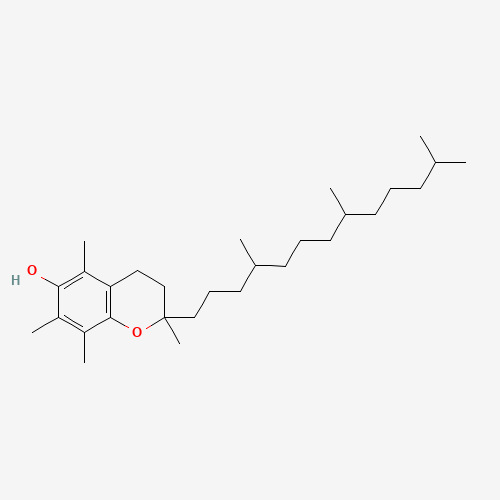
DL-alpha-tocopherol is synthetic vitamin E, used both as a nutrient and as an antioxidant to stop fats going rancid.
Where it is and isn’t permitted
| Jurisdiction | Status | Scope and limits | Citation |
|---|---|---|---|
| Australia and New Zealand | Permitted, with conditions | 4 food categories highest permitted level 30 mg/L Show every food category
| Food Standards Code, Schedule 15, S15—5and 3 further provisionsretrieved 2026-10-17 |
| Canada | No listing matchedHealth Canada’s lists name additives without E or INS numbers, so this site matches them by exact name. A substance listed there under a name this site does not recognise has no row here. | ||
| European Union | No listed food uses foundThis site has not matched this substance to any food use on this jurisdiction’s list of authorised food additives. A food additive may be used only in foods that list names. Flavourings, enzymes, processing aids and added nutrients are regulated separately and do not appear on it. | ||
| Great Britain | No listed food uses foundThis site has not matched this substance to any food use on this jurisdiction’s list of authorised food additives. A food additive may be used only in foods that list names. Flavourings, enzymes, processing aids and added nutrients are regulated separately and do not appear on it. | ||
| Japan | Permitted, with conditions | Designated additive: Appended Table 1, item 277, dl―α―トコフェロール (“dl-alpha-Tocopherol” in the unofficial English translation). …Designated additive: Appended Table 1, item 277, dl―α―トコフェロール (“dl-alpha-Tocopherol” in the unofficial English translation). Standards for use — Specifications and Standards for Foods, Food Additives, etc. (MHW Notification No. 370 of 1959), Part II (Food Additives), F (Standards for use), entry dl―α―トコフェロール: (1) [may be used only for the purposes stated; states an exception to the preceding sentence] “dl―α―トコフェロールは、酸化防止の目的以外に使用してはならない。ただし、β―カロテン、ビタミンA、ビタミンA脂肪酸エステル及び流動パラフィンの製剤中に含まれる場合は、この限りでない。” The Japanese is the standard as published. There is no official English translation of the Notification; the English in square brackets is this site’s description of what each sentence does, not a translation of the foods or the levels. Compositional specifications for this additive, in the same Notification, are not imported and are not shown here; nor are the general rules in F 添加物一般, which apply to every additive. | Regulations for Enforcement of the Food Sanitation Act (MHW Ordinance No. 23 of 1948), Appended Table 1retrieved 2026-10-18 |
| South Korea | Permitted, with conditions | Designated food additive: Standards and Specifications for Food Additives, Part III, 1. …Designated food additive: Standards and Specifications for Food Additives, Part III, 1. 일반식품첨가물 (general food additives), 비타민E (“dl-α-Tocopherol”, the English the Code prints beside it); the Code marks it as also usable as a nutrient fortifier; 3. 영양강화제 (nutrient fortifiers), 비타민E; nutrient: 비타민E; the Code marks it as also usable as a general food additive. Main use (주용도) of 비타민E: 산화방지제. Standard for use (사용기준) of 비타민E: (1) [to be used under the general standard for use in II. 2. 1), the minimum amount that achieves the technical effect, with no limit set for this additive in particular] “II. 2. 1)의 규정에 따라 사용하여야 한다.” The Korean is the standard as published. There is no official English translation of the current Code (the English version on MFDS’s website is the 2020 edition and has no legal effect); the English in square brackets is this site’s description of what each sentence does, not a translation of the foods or the levels. Compositional specifications (Part IV) are not imported, nor are the general standards in Part II, which apply to every additive. | Standards and Specifications for Food Additives (식품첨가물의 기준 및 규격), MFDS Notification, Part III (Standards for use, by item)retrieved 2026-10-18 |
| United States | Not listedDoes not appear on this jurisdiction’s permitted list. That is not the same as being prohibited. | ||
| Codex Alimentarius | Permitted, with conditions | 67 food categories highest permitted level 5,000 mg/kg Show every food category and its notes
| CXS 192-1995 Table One, INS 307cand 66 further provisionsretrieved 2026-09-07 |
How much is permitted
A listing usually limits the quantity as well as the food. Only one of the forms that takes is a figure: quantum satis and good manufacturing practice permit the amount the technological effect requires and no more, which is a limit rather than the absence of one. Figures below are the range across every food category this page is listed in, and categories differ between regulators — see how much is permitted.
| Australia and New Zealand | 10 mg/kg – 30 mg/kg | 2 numeric limit, 2 GMP |
|---|---|---|
| Japan | — | 1 no quantity stated |
| South Korea | — | 1 no quantity stated |
| Codex Alimentarius | 5 mg/kg – 5,000 mg/kg | 67 numeric limit |
What it is made from
Produced by chemical synthesis, giving a mixture of forms. The natural D form from vegetable oil is more biologically active, which is why the two are dosed differently.
- Vegan
- Vegetarian
Compare other additives on the dietary indexes.
- CAS registry number
- 10191-41-0
- InChIKey
- GVJHHUAWPYXKBD-UHFFFAOYSA-N
- PubChem
- CID 2116
How JECFA defines it
The international specification for identity and purity, prepared by the Joint FAO/WHO Expert Committee on Food Additives and published by FAO. It is a different document from any above, written by a different body and revised on its own cycle; it is advisory, and a country adopts it or does not.
INS 307c dl-alpha-Tocopherol
Synonyms: Vitamin E; INS No. 307c
Assay, identification and purity criteria
Description and assay
- Specification history
- dl- α -TOCOPHEROL Prepared at the 30th JECFA (1986), published in FNP 37 (1986) and in FNP 52 (1992). Metals and arsenic specifications revised at the 61st JECFA (2003). A group ADI of 0.15-2 mg/kg bw for dl- α -tocopherol and d- α -tocopherol, concentrate, singly or in combination, was established at the 30th JECFA (1986).
- Chemical names
- dl-5,7,8-Trimethyltocol, dl-2,5,7,8-tetramethyl-2-(4',8',12'- trimethyltridecyl)- 6-chromanol
- C.A.S. number
- No single definite C.A.S. number is for this substance. No. 59-02-9 is for vitamin E, 1406-18-4 is for alpha-tocopherol, 2074-53-5 is for all-rac-alpha-tocopherol, and 10191-40-0 is for racemic-alpha-tocopherol synthesized from natural phytol or its derivative.
- Chemical formula
- C29H50O2
- Formula weight
- 430.71
- Assay
- Not less than 96% and not more than 102%
- DESCRIPTION
- Slightly yellow to amber, nearly odourless, clear, viscous oil (It oxidizes and darkens in air and on exposure to light.)
- FUNCTIONAL USES
- Antioxidant
- METHOD OF ASSAY
- Gas Liquid Chromatographic Method Reagents and solutions Internal Standard Solution: Prepare a solution in n-hexane containing a 3 mg of hexadecyl hexadecanoate, accurately weighed, in each ml. Standard Preparation: dissolve about 30 mg of USP Alpha Tocopherol Reference Standard, accurately weighed, in 10.0 ml of the Internal Standard Solution. Assay Preparation: dissolve about 30 g of the sample accurately weighed, in 10.0 ml of the International Standard Solution. Chromatographic System Use a gas chromatograph equipped with a flame-ionization detector and a glass-lined sample- introduction system or on-column injection. Under typical conditions, the instrument contains a 2-m x 4-mm boro-silicate glass column packed with 2% methylpolysiloxane gum on 80- to 100-mesh acid-base washed silinized chromatographic diatomaceous earth. The column is maintained isothermally between 240 o and 260 o , the injection port at about 290 o , and the detector block at about 300 o . The flow rate of dry carrier gas is adjusted to obtain a hexadecyl hexadecanoate peak approximately 18 to 20 min after sample introduction when a 2% column is used, or 30 to 32 min when a 5% column is used. (NOTE: Cure and condition the column as necessary). System Suitability Chromatograph a sufficient number of injections of a mixture in n-hexane of 1 mg per ml each of USP Alpha Tocopherol Reference Standard and USP Alpha Tocopheryl Acetate Reference Standard, as directed under Calibration, to assure that the resolution factor, R, is not less than 1.0. Calibration Chromatograph successive 2- to 5-μl portions of the Standard Preparation until the relative response factor, F, is constant (i.e., within a range of approximately 2%) for three consecutive injections. If graphic integration is used, adjust the instrument to obtain at least 70% maximum recorder response for the hexadecyl hexadecanoate peak. Measure the areas under the major peaks occurring at relative retention times of approximately 0.51 (alpha-tocopherol) and 1.00 (hexadecyl hexadecanoate), and record the values as As and A1, respectively. Calculate the relative response factor, F, by the formula (As/A1) x (C1/Cs), in which C1 and Cs are the exact concentrations, in mg per ml, of hexadecyl hexadecanoate and of USP Alpha Tocopherol Reference Standard in the Standard Preparation, respectively. Procedure Inject a suitable portion (2 to 5 μl) of the Assay Preparation into the chromatograph, and record the chromatogram. Measure the areas under the major peaks occurring at relative retention times of approximately 0.51 (alpha-tocopherol) and 1.00 (hexadecyl hexadecanoate), and record the values as au and a1, respectively. Calculate the weight, in mg, of dl-alpha-tocopherol in the sample by the formula (10C1/F) x (au/a1).
Identification
- Solubility (Vol. 4)
- Insoluble in water, freely soluble in ethanol, miscible with ether
- Specific rotation (Vol. 4)
- [alpha] 20, D: 0±0.05 o (1 in 10 soln in chloroform)
- Spectrophotometry (Vol. 4)
- In absolute ethanol the maximum absorption is about 292 nm
- Colour reaction
- Dissolve about 0.01 g of the sample in 10 ml of absolute ethanol. Add, with swirling, 2 ml of nitric acid and heat at about 75 o for 15 min. A bright red to orange colour develops
Purity criteria
- Refractive index
- n (20, D): 1.503 - 1.507
- Spectrophotometry (Vol. 4)
- E (1%, 1 cm) (292 nm): 71-76 (0.01 g in 200 ml of absolute ethanol)
- Sulfated ash (Vol. 4)
- Not more than 0.1% Test 1 g of the sample (Method II)
- Acidity
- Dissolve 1 g of the sample in 25 ml of a mixture of equal volumes of ethanol and ether that has been neutralized to phenolphthalein TS with 0.1 N sodium hydroxide, add 0.5 ml of phenolphthalein TS, and titrate with 0.1 N sodium hydroxide until the solution remains faintly pink after shaking for 30 sec. Not more than 1.0 ml of 0.1 N sodium hydroxide is required.
- Lead (Vol. 4)
- Not more than 2 mg/kg Determine using an atomic absorption technique appropriate to the specified level. The selection of sample size and method of sample preparation may be based on the principles of the method described in Volume 4, “Instrumental Methods.”
Every name it appears under
61 recorded names. A label may use any of them.
INS number
- 307c
CAS registry number
- 10191-41-0
- 113085-06-6
Other names
- (+/-)-alpha-Tocopherol
- (.+/-.)-.alpha.-Tocopherol
- (2R,8'R)-.alpha.-Tocopherol
- (2S, 4'R, 8'S)-alpha-Tocopherol
- (2S, 4'S, 8'R)-alpha-Tocopherol
- (2S, 4'S, 8'S)-alpha-Tocopherol
- .alpha.-Tocopherol
- .Alpha.-tocopherol, DL-
- 2,5,7,8-Tetramethyl-2-(4',8',12'-trimethyltridecyl)-6-chromanol
- 2,5,7,8-tetramethyl-2-(4,8,12-trimethyltridecyl)-3,4-dihydrochromen-6-ol
- 3,4-Dihydro-2,5,7,8-tetramethyl-2-(4,8,12-trimethyltridecyl)-2H-benzopyran-6-ol
- 3,4Dihydro2,5,7,8tetramethyl2(4,8,12trimethyltridecyl)2Hbenzopyran6ol
- 5-17-04-00168 (Beilstein Handbook Reference)
- 6-Chromanol, 2,5,7,8-tetramethyl-2-(4,8,12-trimethyltridecyl)-
- 6Chromanol, 2,5,7,8tetramethyl2(4,8,12trimethyltridecyl)
- 7QWA1RIO01
- a-Tocopherol
- all-rac-alpha-Tocopherol
- all-rac-alpha-Tocopherol (Vitamin E)
- allracalphaTocopherol
- Almefrol
- alpha-tochopherol
- alpha-Tocopherol, DL-
- ALPHA-TOCOPHEROL, DL-(II)
- alphaTocopherol, DL
- Antisterility vitamin
- Aquasol E
- BRN 0094012
- CCRIS 5853
- dl-.alpha.-Tocopherol
- DL-5,7,8-trimethyltocol
- dl-?-Tocopherol
- dl-a-Tocopherol
- DL-alpha tocopherol
- dl-alpha-Tocopherol
- DL-alpha-Tocopherol (Standard)
- DL-alpha-Tocopherol (Vitamin E)
- dl-|A-tocopherol
- DLallracalphaTocopherol
- DLalphaTocopherol
- Ephanyl
- Evitaminum
- HSDB 8261
- INS NO.307C
- INS-307C
- IRGANOX E 210
- Profecundin
- RAC-.ALPHA.-TOCOPHEROL
- rac-alpha-tocopherol
- RONOTEC DF 120
- Syntopherol
- Tocopheroxy radical
- UVINUL 2000AO
- Vita E
- Vitamin E DL-alpha
- Waynecomycin
Systematic names
- 2,5,7,8-tetramethyl-2-(4,8,12-trimethyltridecyl)-3,4-dihydro-2H-1-benzopyran-6-ol
- 2H-1-Benzopyran-6-ol, 3,4-dihydro-2,5,7,8-tetramethyl-2-(4,8,12-trimethyltridecyl)-
Hazard reference values
| Type | Value | Population | Assessed by | Opinion |
|---|---|---|---|---|
| ADI | 0.15–2 mg/kg bw/day | — | JECFA | 1986 |
Evidence and how bodies read it
What assessing bodies concluded
Each conclusion is paraphrased in the body's own framing, from the published opinion linked beneath it. Where bodies differ, both stand; this site does not adjudicate between them or add a view of its own.
EFSA 2015
The ANS Panel considered the data too limited to establish an ADI for the tocopherols (E 306–E 309), and found no concern for genotoxicity or carcinogenicity. Taking into account that vitamin E is an essential nutrient and upper intake levels were not generally exceeded, it concluded that tocopherols are not of safety concern at the levels used in food.
Common questions
Assembled from what is above, in the words the questions are usually asked in. Each answer is the same statement the relevant section makes, with the same citations behind it.
- What is INS 307c?
- INS 307c is dl-alpha-Tocopherol. DL-alpha-tocopherol is synthetic vitamin E, used both as a nutrient and as an antioxidant to stop fats going rancid.
- What is dl-alpha-Tocopherol used for in food?
- It is listed as an antioxidant — the role Codex assigns it. This page shows every function each regulator records, with the citation for each.
- Where is dl-alpha-Tocopherol permitted?
- Of the seven regulators this site reads, Australia and New Zealand, Japan, South Korea and the Codex standard permit it. Each permission is for named foods at named levels, not a blanket one; the table on this page gives them with citations.
- Is dl-alpha-Tocopherol vegan?
- Yes. dl-alpha-Tocopherol is not derived from animals, and is suitable for vegetarians. This page says what it is made from and how.
Sources for this page
- anz retrieved 2026-10-17
- jp retrieved 2026-10-18
- kr retrieved 2026-10-18
- gsfa retrieved 2026-09-07
- jecfaspecs retrieved 2026-09-23
Full licence terms and publisher details on Sources. How this page is built and updated: Method.
Machine-readable: a JSON record of this additive is given on request —how to ask for access.
Follow changes to dl-alpha-Tocopherol:Atom feed — regulatory events, and any change the weekly refresh detects in its provisions.