FD&C Blue No. 2
860-22-0 · Acid Blue 74 · Acid Blue W · Acid Leather Blue IC · Airedale Blue IN · Amacid Brilliant Blue · Aniline Carmine powder · Atul Indigo Carmine · BLUDIGO · Bucacid indigotine B · C.I. ACID BLUE 74 · C.I. Food Blue 1 · C.I. Natural Blue 2 · Canacert Indigo Carmine · CI Food Blue 1 · Cilefa Blue R · disodium 3,3′-dioxo-2,2′-bi-indolylidene-5,5′-disulfonate · Disodium 5,5'-disulfoindigo · Dolkwal Indigo Carmine · E 132 · Edicol Supra Blue X · FD & C blue no. 2 · FD and C Blue No. 2 · FD&C Blue No. 2 · Food Blue No. 2 · Grape Blue A · Grape Blue A Geigy · HD Indigo Carmine · Hexacert Blue No. 2 · Holunder p-ac-5 · HYDROXYPROPYL STARCH INDIGOTINE (INDIGO CARMINE) · Indigo carmine · Indigo Carmine A · Indigo Carmine AC · Indigo Carmine BP · Indigo Carmine Powder · Indigo Carmine X · Indigo carmine- · Indigocarmin · indigocarmine · Indigotin · Indigotin I · Indigotindisulfonate sodium · Indigotine · Indigotine (Indigo carmine) · Indigotine 85% · Indigotine B · Indigotine Blue LZ · Indigotine Conc. Powder · Indigotine disodium salt · Indigotine I · Indigotine IA · Indigotine Lake · Indigotine N · Indocarmine F · Intense Blue · Maple Indigo Carmine · Mitsui Indigo Carmine · Murabba · Sachsischblau · San-ei Indigo Carmine · Sodium 3,3'-dioxo-[2,2'-biindolinylidene]-5,5'-disulfonate · Sodium indigo-5,5'-bisulfonate · Sodium indigotindisulfonate · Soluble Indigo · Usacert Blue No. 2 · E132 · 132 · disodium;(2E)-3-oxo-2-(3-oxo-5-sulfonato-1H-indol-2-ylidene)-1H-indole-5-sulfonate · FD&C Blue No. 2 · Indigotine, Indigo carmine · Indigotiin, indigokarmiin · Indigotiini, indigokarmiini · Indigotin (indigocarmin) · Indigotin (Indigocarmine) · Indigotin (Indigokarmin) · indigotin, indigo karmin · Indigotina, carmim de índigo · Indigotina, carminio d'indaco · INDIGOTINA, CARMÍN DE ÍNDIGO · Indigotina, carmín índigo · Indigotina, Karminju indigo · Indigotinas, indigokarminas · Indigotine, carmin d’indigo · Indigotine, Indigo carmine · INDIGOTINE, INDIGO KARMINE · Indigotine, indigokarmijn · Indigotīns, indigokarmīns · Indygotyna, indygokarmin · Ινδικοτίνη, ινδικοκαρμίνη · ИНДИГОТИН, ИНДИГО КАРМИН · Индиготин, индигокарминE number E132INS 132CAS 860-22-0
Listed as a colour by Canada, Codex, the EU and the US.
Listed as colours (CA, EU, US, Codex)
- Canada: Food Colour — Health Canada, List of Permitted Food Colours (List 3)
- Canada: Food colour — Health Canada, List of Permitted Food Colours (List 3)
- European Union: Colours — Regulation (EC) No 1333/2008, Annex II, Part B, 1. Colours (consolidated text 02008R1333-20260818)
- United States: Color additive (21 CFR part 74) — 21 CFR 74.102
- United States: Color additive (21 CFR part 82) — 21 CFR 82.102
- United States: Color or coloring adjunct — FDA, Substances Added to Food: FD&C BLUE NO. 2
- Codex Alimentarius: Colour — CXS 192-1995 Table One, INS 132
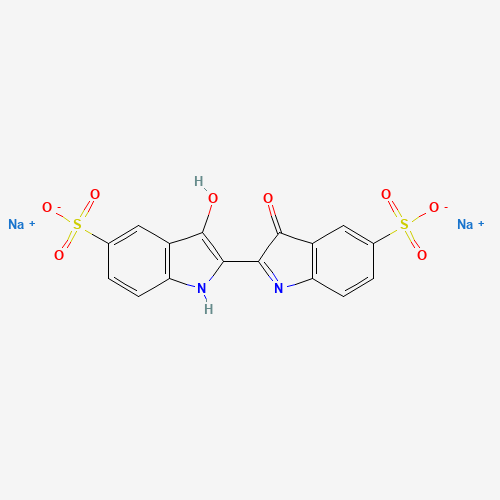
FD&C Blue No. 2, known internationally as indigotine or indigo carmine, is a synthetic blue dye used in confectionery, baked goods and pet food. It is the synthetic relative of indigo, the dye used on denim.
Where it is and isn’t permitted
| Jurisdiction | Status | Scope and limits | Citation |
|---|---|---|---|
| Australia and New Zealand | Permitted, with conditions | 44 food categories Show every food category
| Food Standards Code, Schedule 15, S15—5and 43 further provisionsretrieved 2026-10-17 |
| Canada | Permitted, with conditions | 7 permitted uses Show every permitted use
| Health Canada, List of Permitted Food Colours (List 3)and 6 further provisionsretrieved 2026-10-17 |
| European Union | Permitted, with conditions | 24 food categories highest permitted level 500 mg/l Show every food category
| Regulation (EC) No 1333/2008, Annex IIand 23 further provisionsretrieved 2026-10-18 |
| Great Britain | Permitted, with conditions | 33 food categories highest permitted level 500 mg/kg or mg/l Show every food category
| Assimilated Regulation (EC) No 1333/2008, Annex II (as at 28 June 2024)and 32 further provisionsretrieved 2026-10-18 |
| Japan | Permitted, with conditions | Designated additive: Appended Table 1, item 227, 食用青色二号(別名インジゴカルミン)及びそのアルミニウムレーキ (“Food Blue No. …Designated additive: Appended Table 1, item 227, 食用青色二号(別名インジゴカルミン)及びそのアルミニウムレーキ (“Food Blue No. 2 (Indigo Carmine) and Food Blue No. 2 Aluminum Lake” in the unofficial English translation; listed member: Food Blue No. 2 (Indigo Carmine)). Standards for use — Specifications and Standards for Foods, Food Additives, etc. (MHW Notification No. 370 of 1959), Part II (Food Additives), F (Standards for use), entry 食用青色2号: (1) [must not be used in the foods stated] “食用青色2号は、カステラ、きなこ、魚肉漬物、鯨肉漬物、こんぶ類、しょう油、食肉、食肉漬物、スポンジケーキ、鮮魚介類(鯨肉を含む。)、茶、のり類、マーマレード、豆類、みそ、めん類(ワンタンを含む。)、野菜及びわかめ類に使用してはならない。” The Japanese is the standard as published. There is no official English translation of the Notification; the English in square brackets is this site’s description of what each sentence does, not a translation of the foods or the levels. Compositional specifications for this additive, in the same Notification, are not imported and are not shown here; nor are the general rules in F 添加物一般, which apply to every additive. | Regulations for Enforcement of the Food Sanitation Act (MHW Ordinance No. 23 of 1948), Appended Table 1retrieved 2026-10-18 |
| South Korea | Permitted, with conditions | Designated food additive: Standards and Specifications for Food Additives, Part III, 1. …Designated food additive: Standards and Specifications for Food Additives, Part III, 1. 일반식품첨가물 (general food additives), 식용색소청색제2호 (“Food Blue No.2”, the English the Code prints beside it); 1. 일반식품첨가물 (general food additives), 식용색소청색제2호알루미늄레이크 (“Food Blue No.2 Aluminium Lake”, the English the Code prints beside it). Main use (주용도) of 식용색소청색제2호: 착색료. Standard for use (사용기준) of 식용색소청색제2호: (1) [may be used only in the foods listed; refers to another provision where it is used together with other additives; sets a limit on the amount used] “식용색소청색제2호는 아래의 식품에 한하여 사용하여야 한다. 다만, 다른 식용색소와 병용할 때에는 III. 1. 1) (4)의 규정에 따라 사용한다. 식용색소청색제2호의 사용량은 1. 과자 : 0.2g/kg 이하 2. 캔디류, 추잉껌 : 0.3g/kg 이하 3. 빙과 : 0.15g/kg 이하 4. 빵류 : 0.2g/kg 이하 5. 떡류 : 0.15g/kg 이하 6. 기타 코코아가공품, 초콜릿류 : 0.45g/kg 이하 7. 기타잼, 기타설탕 : 0.3g/kg 이하 8. 소시지류 : 0.1g/kg 이하 9. 어육소시지 : 0.3g/kg 이하 10. 과·채음료, 기타음료 : 0.1g/kg 이하(다만, 희석하여 음용하는 제품에 있어서는 희석한 것으로서) 11. 향신료조제품[고추냉이(와사비)가공품 및 겨자가공품에 한함] : 0.3g/kg 이하 12. 절임류(밀봉 및 가열살균 또는 멸균처리한 제품에 한함. 다만, 단무지는 제외) : 0.3g/kg 이하 13. 주류(탁주, 약주, 소주, 주정을 첨가하지 않은 청주 제외) : 0.3g/kg 이하 14. 곡류가공품 : 0.2g/kg 이하 15. 당류가공품 : 0.3g/kg 이하 16. 기타가공품, 유함유가공품 : 0.45g/kg 이하 17. 건강기능식품(정제의 제피 또는 캡슐에 한함), 캡슐류 : 0.3g/kg 이하(색소의 사용량은 총 중량 기준으로 적용) 18. 아이스크림류, 아이스크림믹스류 : 0.15g/kg 이하” Main use (주용도) of 식용색소청색제2호알루미늄레이크: 착색료. Standard for use (사용기준) of 식용색소청색제2호알루미늄레이크: (1) [may be used only in the foods listed; refers to another provision where it is used together with other additives; sets a limit on the amount used] “식용색소청색제2호알루미늄레이크는 아래의 식품에 한하여 사용하여야 한다. 다만, 다른 식용색소와 병용할 때에는 III. 1. 1) (4)의 규정에 따라 사용한다. 식용색소청색제2호알루미늄레이크의 사용량은 식용색소청색제2호로서 1. 과자 : 0.2g/kg 이하 2. 캔디류, 추잉껌 : 0.3g/kg 이하 3. 빙과 : 0.15g/kg 이하 4. 빵류 : 0.2g/kg 이하 5. 떡류 : 0.15g/kg 이하 6. 기타 코코아가공품, 초콜릿류 : 0.45g/kg 이하 7. 기타잼, 기타설탕 : 0.3g/kg 이하 8. 소시지류 : 0.1g/kg 이하 9. 어육소시지 : 0.3g/kg 이하 10. 과·채음료, 기타음료 : 0.1g/kg 이하(다만, 희석하여 음용하는 제품에 있어서는 희석한 것으로서) 11. 향신료조제품[고추냉이(와사비)가공품 및 겨자가공품에 한함] : 0.3g/kg 이하 12. 절임류(밀봉 및 가열살균 또는 멸균처리한 제품에 한함. 다만, 단무지는 제외) : 0.3g/kg 이하 13. 주류(탁주, 약주, 소주, 주정을 첨가하지 않은 청주 제외) : 0.3g/kg 이하 14. 곡류가공품 : 0.2g/kg 이하 15. 당류가공품 : 0.3g/kg 이하 16. 기타가공품, 유함유가공품 : 0.45g/kg 이하 17. 건강기능식품(정제의 제피 또는 캡슐에 한함), 캡슐류 : 0.3g/kg 이하(색소의 사용량은 총 중량 기준으로 적용) 18. 아이스크림류, 아이스크림믹스류 : 0.15g/kg 이하” The Korean is the standard as published. There is no official English translation of the current Code (the English version on MFDS’s website is the 2020 edition and has no legal effect); the English in square brackets is this site’s description of what each sentence does, not a translation of the foods or the levels. Compositional specifications (Part IV) are not imported, nor are the general standards in Part II, which apply to every additive. | Standards and Specifications for Food Additives (식품첨가물의 기준 및 규격), MFDS Notification, Part III (Standards for use, by item)retrieved 2026-10-18 |
| United States | Permitted, with conditions | 2 permitted uses Show every permitted use
| 21 CFR 74.102and 1 further provisionretrieved 2026-10-17 |
| Codex Alimentarius | Permitted, with conditions | 51 food categories highest permitted level 450 mg/kg Show every food category and its notes
| CXS 192-1995 Table One, INS 132and 50 further provisionsretrieved 2026-09-07 |
How much is permitted
A listing usually limits the quantity as well as the food. Only one of the forms that takes is a figure: quantum satis and good manufacturing practice permit the amount the technological effect requires and no more, which is a limit rather than the absence of one. Figures below are the range across every food category this page is listed in, and categories differ between regulators — see how much is permitted.
| Australia and New Zealand | — | 44 no quantity stated |
|---|---|---|
| Canada | — | 7 no quantity stated |
| European Union | 50 mg/kg – 500 mg/kg | 23 numeric limit, 1 quantum satis |
| Great Britain | 50 mg/kg – 500 mg/kg | 28 numeric limit, 4 several limits, 1 quantum satis |
| Japan | — | 1 no quantity stated |
| South Korea | — | 1 no quantity stated |
| United States | — | 2 no quantity stated |
| Codex Alimentarius | 50 mg/kg – 450 mg/kg | 51 numeric limit |
What it is made from
Made by sulfonating indigo, which is itself now produced synthetically from petroleum-derived aniline rather than extracted from the indigo plant. No animal material is involved.
- Vegan
- Vegetarian
Compare other additives on the dietary indexes.
- CAS registry number
- 860-22-0
- InChIKey
- JFVXEJADITYJHK-UHFFFAOYSA-L
- PubChem
- CID 2723854
The two specifications, compared
The European Union sets identity and purity by regulation; JECFA publishes its own through FAO, advisory until a country adopts it. Both documents are below in full. These are the parameters each puts a number on.
| Parameter | European Union | JECFA |
|---|---|---|
| Assay | no less than 85 % | no less than 85 % |
| Lead | no more than 2 mg/kg | no more than 2 mg/kg |
| Arsenic | no more than 3 mg/kg | — |
| Mercury | no more than 1 mg/kg | — |
| Cadmium | no more than 1 mg/kg | — |
The two documents state the same figures for every parameter compared here.
How the EU defines it
The legal specification an additive must meet to be sold as this E number in the EU — what it is, how it may be made, and the purity it must reach. From Commission Regulation (EU) No 231/2012.
E 132 Indigotine, indigo carmine
Indigotine consists essentially of a mixture of disodium 3,3′dioxo-2,2′-bi-indolylidene-5,5′-disulfonate, and disodium 3,3′-dioxo-2,2′-bi-indolylidene-5,7′-disulfonate and subsidiary colouring matters together with sodium chloride and/or sodium sulphate as the principal uncoloured components. Indigotine is described as the sodium salt. The calcium and the potassium salt are also permitted. Indigo carmine is obtained by sulphonation of indigo. This is accomplished by heating indigo (or indigo paste) in the presence of sulphuric acid. The dye is isolated and subjected to purification procedures.
Synonyms: CI Food Blue 1
Assay, identification and purity criteria
Description and assay
- Colour Index No
- 73015
- Einecs
- 212-728-8
- Chemical name
- Disodium 3,3′-dioxo-2,2′-bi-indolylidene-5,5′-disulfonate
- Chemical formula
- C₁₆H₈N₂Na₂O₈S₂
- Molecular weight
- 466,36
- Assay
- Content not less than 85 % total colouring matters, calculated as the sodium salt; disodium 3,3′-dioxo-2,2′-bi-indolylidene-5,7′-disulfonate: not more than 18 % [image] 480 at ca. 610 nm in aqueous solution
- Description
- Dark-blue powder or granules
- Appearance of the aqueous solution
- Blue
Identification
- Spectrometry
- Maximum in water at ca. 610 nm
Purity criteria
- Water insoluble matter
- Not more than 0,2 %
- Subsidiary colouring matters
- Excluding disodium 3,3′-dioxo-2,2′-bi-indolylidene-5,7′-disulfonate: not more than 1,0 %
- Isatin-5-sulfonic acid
- [image] | Total not more than 0,5 % 5-sulfoanthranilic acid Anthranilic acid
- Unsulfonated primary aromatic amines
- Not more than 0,01 % (calculated as aniline)
- Ether extractable matter
- Not more than 0,2 % under neutral conditions
- Arsenic
- Not more than 3 mg/kg
- Lead
- Not more than 2 mg/kg
- Mercury
- Not more than 1 mg/kg
- Cadmium
- Not more than 1 mg/kg
How JECFA defines it
The international specification for identity and purity, prepared by the Joint FAO/WHO Expert Committee on Food Additives and published by FAO. It is a different document from any above, written by a different body and revised on its own cycle; it is advisory, and a country adopts it or does not.
INS 132 Indigotine
Indigotine consists of a mixture of disodium 3,3'-dioxo-[delta2,2'-biindoline]-5,5'-disulfonate and disodium 3,3'- dioxo-[delta2,2'-biindoline]-5,7'-disulfonate and subsidiary colouring matters. Sodium chloride and/or sodium sulfate are the principal uncoloured components. Indigotine is manufactured by heating indigo in the presence of sulfuric acid. The indigo (or indigo paste) is manufactured by the fusion of N-phenylglycine (prepared from aniline and formaldehyde) in a molten mixture of sodamide and sodium and potassium hydroxides under ammonia pressure. It is isolated and subjected to purification procedures prior to sulfonation. Indigotine may be converted to the corresponding aluminium lake in which case only the requirements in the General Specifications for Aluminium Lakes of Colouring Matters apply.
Synonyms: INS No. 132, CI Food Blue 1, CI (1975) No. 73015, Indigo Carmine, Food Blue No. 2, FD&C Blue No. 2 CI (1975) No. 73015; CI Food Blue 1; FD&C Blue No. 2; Indigo Carmine
Assay, identification and purity criteria
Description and assay
- Specification history
- 2 out of 6 Prepared at the 86th JECFA and published in JECFA Monograph 22 (2018) superseding specifications prepared at the 28th JECFA (1984), published in FNP 31/1 (1984) and in FNP 52 (1992). Metals and arsenic specifications revised at the 59th JECFA (2002). An ADI of 0-5 mg/kg bw was established at the 18th JECFA (1974) and confirmed at the 86th JECFA (2018).
- Chemical names
- Disodium 3,3'-dioxo-[delta2,2'-biindoline]-5,5'-disulfonate Disodium (2E)-3-oxo-2-(3-oxo-5-sulfonato-2,3-dihydro-1H-indol-2-ylidene)-2,3-dihydro-1H-indole-5-sulfonate Disodium;(2E)-3-oxo-2-(3-oxo-5-sulfonato-1H-indol-2-ylidene)-1H-indole-5-sulfonate
- C.A.S. number
- 860-22-0 (5,5' isomer)
- Chemical formula
- C16H8N2Na2O8S2
- Formula weight
- 466.36
- Assay
- Not less than 85% total colouring matters Not more than 18% of disodium 3,3'-dioxo-[delta2,2'- biindoline]-5,7'-disulfonate
- DESCRIPTION
- Blue powder or granules
- FUNCTIONAL USES
- Colour
- METHOD OF ASSAY
- Determine total colouring matters content by spectrophotometry using Procedure 1 in Volume 4 (under “Specific Methods, Food Colours”) and an appropriate solvent. Analyse immediately after preparation. Using water as the solvent: absorptivity ( 𝑎𝑎 ) = 48.0 𝑙𝑙 /( 𝑔𝑔 × 𝑐𝑐𝑐𝑐 ) wavelength of maximum absorbance = 610 nm. Determine isomer content by HPLC using the test for subsidiary colouring matters.
Identification
- Solubility (Vol. 4)
- Soluble in water, sparingly soluble in ethanol
- Spectrophotometry (Vol. 4)
- Maximum wavelength approximately 610 nm Determine the UV-visible absorption spectrum of the sample dissolved in water.
Purity criteria
- Loss on drying, chloride and sulfate as sodium salts (Vol. 4)
- Not more than 15% Determine chloride as sodium chloride, sulfate as sodium sulfate, and loss on drying (135°, 6 h) as described in Volume 4 (under “Specific Methods, Food Colours”).
- Water insoluble matter (Vol. 4)
- Not more than 0.2%
- Lead (Vol. 4)
- Not more than 2 mg/kg Determine using a method appropriate to the specified level. The selection of sample size and method of sample preparation may be based on the principles of the method 4 out of 6 described in Volume 4 (under “General Methods, Metallic Impurities”).
- Subsidiary colouring matters
- Not more than 18% disodium 3,3'-dioxo-[delta2,2'- biindoline]-5,7'-disulfonate (isomeric subsidiary colouring matter) Not more than 1% other subsidiary colouring matters See description under TESTS
- Organic compounds other than colouring matters
- Not more than 0.5% of sum of isatin-5-sulfonic acid, 5-sulfoanthranilic acid, and anthranilic acid See description under TESTS
- Unsulfonated primary aromatic amines (Vol. 4)
- Not more than 0.01% calculated as aniline
- Ether extractable matter (Vol. 4)
- Not more than 0.2% Weigh accurately about 2 g sample instead of the 5 g stated in the general methods
- Test: Subsidiary colouring matters
- Determine subsidiary colouring matters content by reversed-phase HPLC (Vol. 4) using the following conditions: - Column: C18 (250 mm x 4 mm i.d., 5 μm particle size) - Eluent A: 0.2 M ammonium acetate in water - Eluent B: acetonitrile - Injection volume: 20 μl - Column temperature: ambient - Detector: UV-visible/diode array at 610 nm - Flow rate: 1.0 ml/min Gradient: Elution time Eluent A (%) Eluent B (%) (min) 0 100 0 20.0 40 60 5 out of 6 30.0 40 60 32.0 100 0 40.0 100 0 Reagents: HPLC grade Standards: - Indigotine disodium salt (5,7′ isomer) (isomeric subsidiary colour) (C.A.S. 27414-68-2) – Angene Chemical, Cat. No. AGN-PC-0R372R or equivalent - Sodium indigo sulfonate monosodium salt (monosulfonated subsidiary colour) (C.A.S. 27414-69-3) – Atomax Chemicals Co., Ltd., Cat No. AM27414693 or equivalent - Trisodium indigo- 5,5′,7′ -trisulfonate - (trisulfonated subsidiary colour), potassium salt (C.A.S. 67627-18-3) – Sigma-Aldrich, Cat No. 234087 or equivalent - Indigotine (C.A.S. No. 860-22-0) – TCI, Cat. No. F0148 or equivalent (use if subsidiary colouring matter standards are not available) Prepare standard solutions as required. Sample preparation: Weigh accurately 100±2 mg sample and dissolve in 100 ml of water. Dilute the solution, if required, to separate subsidiary colours from the primary colour component in order to improve their resolution. Analyze immediately after preparation. Calculations: Construct the relevant standard curves. Integrate all peaks of the chromatogram obtained at 610 nm. If Indigotine is used as a standard, calculate the ratio of the sum of all peaks not corresponding to Indigotine to the sum of all peaks.
- Test: Organic compounds other than colouring matters
- Determine organic compounds other than colouring matters content by reversed-phase HPLC (Vol. 4) using the following conditions: - Column: Luna C18 (250 mm x 4.6 mm i.d., 5 μm particle size) or equivalent - Eluent A: 0.1% trifluoroacetic acid in water - Eluent B: acetonitrile - Injection volume: 20 μl - Column temperature: 25° - Detector: UV-visible/diode array at 244 nm - Flow rate: 1.0 ml/min 6 out of 6 Gradient: Elution time Eluent A (%) Eluent B (%) (min) 0 100 0 15 80 20 20 0 100 22 0 100 22.1 100 0 32 100 0 Reagents: HPLC grade Standards: - Isatin-5-sulfonic acid sodium salt dihydrate (C.A.S. 207399-16-4) – Sigma-Aldrich Cat. No. 58245 or equivalent - 5-Sulfoanthranilic acid (2-amino-5-sulfobenzoic acid) (C.A.S. 3577-63-7) – TCI Cat No. S0802 or equivalent - Anthranilic acid (C.A.S. 118-92-3) – Sigma-Aldrich Cat No. A89855 or equivalent Prepare standard solutions as required. Sample preparation: Weigh accurately 100±2 mg sample and dissolve in 100 ml of water. Analyse immediately after preparation. Calculations: Construct the relevant standard curves. Integrate the chromatogram peaks obtained at 244 nm.
INS 142 Green S
Consists essentially of sodium N-[4-[[4-(dimethylamino)phenyl](2-hydroxy-3,6-disulfo-1-naphthalenyl)-methylene]-2,5-cyclohexadien-1-ylidene]-N-methylmethanaminium and subsidiary colouring matters together with sodium chloride and/or sodium sulfate as the principal uncoloured compounds. May be converted to the corresponding aluminium lake, in which case only the General Specifications for Aluminium Lakes .
Synonyms: CI Food Green 4, Food Green S, CI (1975) No. 44090, INS No. 142 CI (1975) No. 44090; CI Food Green 4; Food Green S
Assay, identification and purity criteria
Description and assay
- Specification history
- Prepared at the 28th JECFA (1984), published in FNP 31/1 (1984) and in FNP 52 (1992). Metals and arsenic specifications revised at the 59 th JECFA (2002). No ADI was allocated at the 18 th JECFA (1974).
- Chemical names
- Sodium N-[4-[[4-(dimethylamino)phenyl](2-hydroxy-3,6-disulfo-1-naphtalenyl)-methylene]-2,5-cyclohexadien-1-ylidene]-N-methyl-methanaminium; Sodium 5-[4-dimethylamino-I-(4-dimethyliminiocyclohexa-2,5-dienylidene) benzyl]-6-hydroxy-7-sulfonato-naphthalene-2-sulfonate (alternative chemical name)
- C.A.S. number
- 860-22-0
- Chemical formula
- C 27 H 25 N 2 NaO 7 S 2
- Formula weight
- 576.63
- Assay
- Not less than 80% total colouring matter
- DESCRIPTION
- Dark green powder or granules
- FUNCTIONAL USES
- Colour
- METHOD OF ASSAY
- Proceed as directed under Total Content by Titration with Titanous Chloride (see Volume 4) , using the following: Weight of sample: 1.4-1.5 g; Buffer: 15 g sodium hydrogen tartrate Weight (D) of colouring matters equivalent to 1.00 ml 0.1 N TiCl 3 : 28.83 mg
Identification
- Solubility (Vol. 4)
- Soluble in water; slightly soluble in ethanol
- Identification of colouring matters (Vol. 4)
- Passes test
Purity criteria
- Loss on drying at 135º (Vol. 4)
- Not more than 20% together with chloride and sulfate calculated as sodium salts
- Water insoluble matter (Vol. 4)
- Not more than 0.2%
- Lead (Vol. 4)
- Not more than 2 mg/kg Determine using an atomic absorption technique appropriate to the specified level. The selection of sample size and method of sample preparation may be based on the principles of the method described in Volume 4, “Instrumental Methods.”
- Chromium (Vol. 4)
- Not more than 50 mg/kg
- Subsidiary colouring matters (Vol. 4)
- Not more than 1% Use the following conditions: Developing solvent: No. 2 Height of ascent of solvent front: approximately 17 cm
- Organic compounds other than colouring matters (Vol. 4)
- Not more than 0.1% of 4,4'-Bis (dimethylamino) benzhydryl alcohol Not more than 0.1% of 4,4'-Bis (dimethylamino) benzophenone Not more than 0.2% of 3-Hydroxynaphthalene-2,7-disulfonic acid Use liquid chromatography under the following conditions: HPLC elution gradient: 2 to 100% at 2% per min (linear)
- Unsulfonated primary aromatic amines (Vol. 4)
- Not more than 0.01% calculated as aniline
- Leuco base (Vol. 4)
- Not more than 5.0% Weigh accurately 110±5 mg of sample and proceed as directed under Leuco Base in Sulfonated Triarylmethane Colours Absorptivity: (a) = 0.1725 mg L -1 cm -1 at approximately 634 nm Ratio = 0.9600
- Ether extractable matter (Vol. 4)
- Not more than 0.2%
Every name it appears under
92 recorded names. A label may use any of them.
E number
- E132
INS number
- 132
CAS registry number
- 860-22-0
As it appears in regulation
- FD&C Blue No. 2
- Indigotine, Indigo carmine
Other names
- Acid Blue 74
- Acid Blue W
- Acid Leather Blue IC
- Airedale Blue IN
- Amacid Brilliant Blue
- Aniline Carmine powder
- Atul Indigo Carmine
- BLUDIGO
- Bucacid indigotine B
- C.I. ACID BLUE 74
- C.I. Food Blue 1
- C.I. Natural Blue 2
- Canacert Indigo Carmine
- CI Food Blue 1
- Cilefa Blue R
- disodium 3,3′-dioxo-2,2′-bi-indolylidene-5,5′-disulfonate
- Disodium 5,5'-disulfoindigo
- Dolkwal Indigo Carmine
- E 132
- Edicol Supra Blue X
- FD & C blue no. 2
- FD and C Blue No. 2
- FD&C Blue No. 2
- Food Blue No. 2
- Grape Blue A
- Grape Blue A Geigy
- HD Indigo Carmine
- Hexacert Blue No. 2
- Holunder p-ac-5
- HYDROXYPROPYL STARCH INDIGOTINE (INDIGO CARMINE)
- Indigo carmine
- Indigo Carmine A
- Indigo Carmine AC
- Indigo Carmine BP
- Indigo Carmine Powder
- Indigo Carmine X
- Indigo carmine-
- Indigocarmin
- indigocarmine
- Indigotin
- Indigotin I
- Indigotindisulfonate sodium
- Indigotine
- Indigotine (Indigo carmine)
- Indigotine 85%
- Indigotine B
- Indigotine Blue LZ
- Indigotine Conc. Powder
- Indigotine disodium salt
- Indigotine I
- Indigotine IA
- Indigotine Lake
- Indigotine N
- Indocarmine F
- Intense Blue
- Maple Indigo Carmine
- Mitsui Indigo Carmine
- Murabba
- Sachsischblau
- San-ei Indigo Carmine
- Sodium 3,3'-dioxo-[2,2'-biindolinylidene]-5,5'-disulfonate
- Sodium indigo-5,5'-bisulfonate
- Sodium indigotindisulfonate
- Soluble Indigo
- Usacert Blue No. 2
Systematic names
- disodium;(2E)-3-oxo-2-(3-oxo-5-sulfonato-1H-indol-2-ylidene)-1H-indole-5-sulfonate
The EU re-evaluation programme
Every additive authorised in the EU before 20 January 2009 was put back through EFSA by Commission Regulation (EU) No 257/2010, and this one is named in it. What the Regulation required is below; whether the opinion has since been published is not something this site records.
- To be evaluated by 31 December 2010. Named in Annex II, Part I, point 2 as “Indigotine, Indigo carmine”, among the additives given priority within its class.
Hazard reference values
EFSA and JECFA have both set an acceptable daily intake for FD&C Blue No. 2, and they agree: 5 mg/kg bw/day. An acceptable daily intake is a reference value set by a committee, not a threshold above which harm begins. See where the two committees differ.
| Type | Value | Population | Assessed by | Opinion |
|---|---|---|---|---|
| ADI | 5 mg/kg bw/day | — | JECFA | 2018 |
| ADI | 5 mg/kg bw/day | consumers | EFSA | not identified in the dataset |
Evidence and how bodies read it
What assessing bodies concluded
Each conclusion is paraphrased in the body's own framing, from the published opinion linked beneath it. Where bodies differ, both stand; this site does not adjudicate between them or add a view of its own.
EFSA 2023
In a follow-up, the FAF Panel found that a new study did not confirm the testicular effects previously reported for indigo carmine (E 132), and confirmed the ADI of 5 mg/kg bw/day for material meeting revised specifications (minimum 85% colouring matter). It concluded there is no safety concern at reported use levels and recommended lower limits for toxic elements.
EFSA 2014
The ANS Panel concluded that Indigo Carmine (E 132) is poorly absorbed and raises no genotoxicity concern, and considered the ADI of 5 mg/kg bw/day applicable to material of the purity and manufacturing process used in studies without testicular effects. It said any extension to lower-purity material would need new data addressing a reported testicular effect, and noted exposure at maximum permitted levels exceeded the ADI for high-consuming toddlers and children but not in estimates based on usage data.
Common questions
Assembled from what is above, in the words the questions are usually asked in. Each answer is the same statement the relevant section makes, with the same citations behind it.
- What is E 132?
- E 132 is FD&C Blue No. 2. FD&C Blue No. 2, known internationally as indigotine or indigo carmine, is a synthetic blue dye used in confectionery, baked goods and pet food. It is the synthetic relative of indigo, the dye used on denim.
- What is FD&C Blue No. 2 used for in food?
- It is listed as a colour — the role Canada, Codex, the EU and the US assign it. This page shows every function each regulator records, with the citation for each.
- Where is FD&C Blue No. 2 permitted?
- Of the seven regulators this site reads, Australia and New Zealand, Canada, the EU, Great Britain, Japan, South Korea, the US and the Codex standard permit it. Each permission is for named foods at named levels, not a blanket one; the table on this page gives them with citations.
- Is FD&C Blue No. 2 vegan?
- Yes. FD&C Blue No. 2 is not derived from animals, and is suitable for vegetarians. This page says what it is made from and how.
Sources for this page
- anz retrieved 2026-10-17
- ca retrieved 2026-10-17
- eu retrieved 2026-10-18
- gb retrieved 2026-10-18
- jp retrieved 2026-10-18
- kr retrieved 2026-10-18
- ecfr retrieved 2026-10-17
- gsfa retrieved 2026-09-07
- euspecs retrieved 2026-10-18
- jecfaspecs retrieved 2026-09-23
Full licence terms and publisher details on Sources. How this page is built and updated: Method.
Machine-readable: a JSON record of this additive is given on request —how to ask for access.
Follow changes to FD&C Blue No. 2:Atom feed — regulatory events, and any change the weekly refresh detects in its provisions.