FD&C Yellow No. 6
1313437-35-2 · 2783-94-0 · 1351 Yellow · 1899 Yellow · 2-Naphthalenesulfonic acid, 6-hydroxy-5-((p-sulfophenyl)azo)-, disodium salt · Acid Food Yellow 3 · Acid Yellow TRA · Alabaster No. 3 · C.I. Direct Yellow 11 · C.I. Food Yellow 3 · CI Food Yellow 3 · Cilefa Orange S · D and C Yellow 6 · disodium 6-hydroxy-5-[2-(4-sulfonatophenyl)diazen-1-yl]naphthalene-2-sulfonate · Dolkwal Sunset Yellow · Dye FDC Yellow No. 6 · Dye Sunset Yellow · E 110 · Eniacid Sunset Yellow · Eurocert Orange FCF · FD & C Yellow No. 6 · FD and C Yellow 6 · FD and C Yellow No. 6 · FD&C Yellow 6 · FD&C Yellow No. 6 · Food yellow 3 · Food Yellow 3;Orange Yellow S;CI 15985 · Food Yellow No.5 · Gelborange-S · H77VEI93A8 · HD Sunset Yellow FCF · Orange II R · Orange PAL · Orange Yellow S · Orange Yellow S. AF · Orange Yellow S.fq · Para Orange · Sodium 6-hydroxy-5-((4-sulfonatophenyl)diazenyl)naphthalene-2-sulfonate · Solar radiation color · STILBENE YELLOW · Sun Orange A Geigy · SUN Yellow · SUN Yellow A-CE · SUN Yellow A-FDC · SUN Yellow FCF · Sun Yellow G · Sunlight Yellow FCF · Sunset red pigment · Sunset yellow · Sunset Yellow (E110) · Sunset Yellow FCF · Sunset Yellow FCF 6 · Sunset Yellow FU · Sunset Yellow Lake · Twilight Yellow · Yellow 6 · Yellow No. 6 · Yellow Orange S · Yellow S · Yellow sun · Yellow SY for food · E110 · 110 · Disodium (5E)-6-oxo-5-[(4-sulfonatophenyl)hydrazinylidene]naphthalene-2-sulfonate · FD&C Yellow No. 6 · Sunset Yellow FCF/Orange Yellow S · amarelo alaranjado S · Amarelo-sol FCF · Amarelo-sol FCF/amarelo alaranjado S · AMARILLO ANARANJADO S · Amarillo ocaso FCF · Amarillo ocaso FCF / anaranjado S · anaranjado S · galben portocaliu S · Galben Sunset (sunset yellow) FCF · Galben Sunset (sunset yellow) FCF/galben portocaliu S · Gelborange S · giallo arancio S · Giallo tramonto FCF · Giallo tramonto FCF/giallo arancio S · Isfar fl-Oranġjo S · Isfar Inżul ix-Xemx FCF · Isfar Inżul ix-Xemx FCF/Isfar fl-Oranġjo S · Jaune orange S · Narancssárga S · Orange Yellow S · oranjegeel S · oranždzeltenais S · Oranžkollane S · Para-orange · Paraoranssi · pomarančovožltá S · Päikeseloojangukollane FCF · Päikeseloojangukollane FCF / Oranžkollane S · Saulrieta dzeltenais FCF · Saulrieta dzeltenais FCF / oranždzeltenais S · SAULĖLYDŽIO GELTONASIS FCF · Saulėlydžio geltonasis FCF, apelsinų geltonasis S · SONČNO RUMENO FCF · sončno rumeno FCF, oranžno rumeno S · SUNSET YELLOW FCF · Sunset Yellow FCF (Orange Yellow S) · SUNSET YELLOW FCF, NARANCSSÁRGA S · Sunset Yellow FCF/Jaune orange S · Sunset Yellow FCF/Narancssárga S · Sunset Yellow FCF/Orange Yellow S · Zonnegeel FCF · Zonnegeel FCF/oranjegeel S · Żółcień pomarańczowa FCF · Żółcień pomarańczowa FCF/żółcień pomarańczowa S · żółcień pomarańczowa S · Žltá SY · Žltá SY /žltá FCF/pomarančovožltá S · ŽLUŤ SY · Žluť SY (Sunset Yellow FCF, Gelborange S) · žltá FCF · Κίτρινο Sunset FCF · Κίτρινο Sunset FCF/Κιτρινοπορτοκαλί S · Κιτρινοπορτοκαλί S · Сънсет жълто FCF · Сънсет жълто FCF/жълто-оранжев S · жълто-оранжев SE number E110INS 110CAS 2783-94-0
Listed as a colour by Canada, Codex, the EU and the US.
Listed as colours (CA, EU, US, Codex) · flavour enhancers (US) · flavouring agents and adjuvants (US)
- Canada: Food Colour — Health Canada, List of Permitted Food Colours (List 3)
- Canada: Food colour — Health Canada, List of Permitted Food Colours (List 3)
- European Union: Colours — Regulation (EC) No 1333/2008, Annex II, Part B, 1. Colours (consolidated text 02008R1333-20260818)
- United States: Color additive (21 CFR part 74) — 21 CFR 74.706
- United States: Color additive (21 CFR part 82) — 21 CFR 82.706
- United States: Color or coloring adjunct — FDA, Substances Added to Food: FD&C YELLOW NO. 6
- Codex Alimentarius: Colour — CXS 192-1995 Table One, INS 110
- United States: Flavor enhancer — FDA, Substances Added to Food: FD&C YELLOW NO. 6
- United States: Flavoring agent or adjuvant — FDA, Substances Added to Food: FD&C YELLOW NO. 6
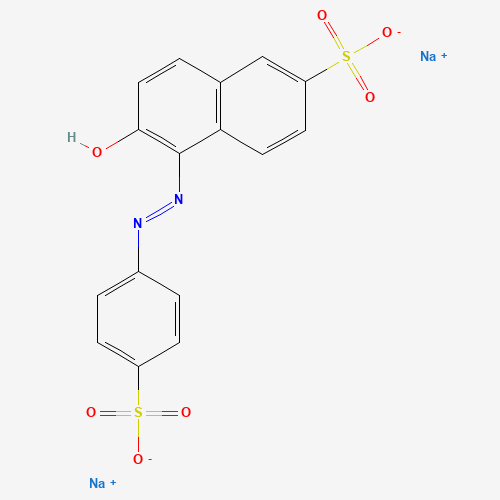
FD&C Yellow No. 6, known internationally as Sunset Yellow FCF, is a synthetic orange-yellow azo dye. It appears in soft drinks, confectionery, snack foods, sauces and preserves.
Where it is and isn’t permitted
| Jurisdiction | Status | Scope and limits | Citation |
|---|---|---|---|
| Australia and New Zealand | Permitted, with conditions | 44 food categories Show every food category
| Food Standards Code, Schedule 15, S15—5and 43 further provisionsretrieved 2026-10-17 |
| Canada | Permitted, with conditions | no numerical limit (good manufacturing practice) 12 permitted uses Show every permitted use
| Health Canada, List of Permitted Food Colours (List 3)and 11 further provisionsretrieved 2026-10-17 |
| European Union | Permitted, with conditions | 28 food categories highest permitted level 200 mg/l Show every food category
| Regulation (EC) No 1333/2008and 27 further provisionsretrieved 2026-10-18 |
| Great Britain | Permitted, with conditions | 27 food categories highest permitted level 200 mg/kg or mg/l Show every food category
| Assimilated Regulation (EC) No 1333/2008and 26 further provisionsretrieved 2026-10-18 |
| Japan | Permitted, with conditions | Designated additive: Appended Table 1, item 224, 食用黄色五号(別名サンセットイエローFCF)及びそのアルミニウムレーキ (“Food Yellow No. …Designated additive: Appended Table 1, item 224, 食用黄色五号(別名サンセットイエローFCF)及びそのアルミニウムレーキ (“Food Yellow No. 5 (Sunset Yellow FCF) and Food Yellow No. 5 Aluminum Lake” in the unofficial English translation; listed member: Food Yellow No. 5 (Sunset Yellow FCF)). Standards for use — Specifications and Standards for Foods, Food Additives, etc. (MHW Notification No. 370 of 1959), Part II (Food Additives), F (Standards for use), entry 食用黄色5号: (1) [must not be used in the foods stated] “食用黄色5号は、カステラ、きなこ、魚肉漬物、鯨肉漬物、こんぶ類、しょう油、食肉、食肉漬物、スポンジケーキ、鮮魚介類(鯨肉を含む。)、茶、のり類、マーマレード、豆類、みそ、めん類(ワンタンを含む。)、野菜及びわかめ類に使用してはならない。” The Japanese is the standard as published. There is no official English translation of the Notification; the English in square brackets is this site’s description of what each sentence does, not a translation of the foods or the levels. Compositional specifications for this additive, in the same Notification, are not imported and are not shown here; nor are the general rules in F 添加物一般, which apply to every additive. | Regulations for Enforcement of the Food Sanitation Act (MHW Ordinance No. 23 of 1948), Appended Table 1retrieved 2026-10-18 |
| South Korea | Permitted, with conditions | Designated food additive: Standards and Specifications for Food Additives, Part III, 1. …Designated food additive: Standards and Specifications for Food Additives, Part III, 1. 일반식품첨가물 (general food additives), 식용색소황색제5호 (“Food Yellow No.5”, the English the Code prints beside it); 1. 일반식품첨가물 (general food additives), 식용색소황색제5호알루미늄레이크 (“Food Yellow No.5 Aluminium Lake”, the English the Code prints beside it). Main use (주용도) of 식용색소황색제5호: 착색료. Standard for use (사용기준) of 식용색소황색제5호: (1) [may be used only in the foods listed; refers to another provision where it is used together with other additives; sets a limit on the amount used] “식용색소황색제5호는 아래의 식품에 한하여 사용하여야 한다. 다만, 다른 식용색소와 병용할 때에는 III. 1. 1) (4)의 규정에 따라 사용한다. 식용색소황색제5호의 사용량은 1. 과자 : 0.2g/kg 이하 2. 캔디류, 추잉껌 : 0.3g/kg 이하 3. 빙과, 빵류, 떡류 : 0.05g/kg 이하 4. 만두류 : 0.4g/kg 이하 5. 기타 코코아가공품, 초콜릿류 : 0.4g/kg 이하 6. 기타잼 : 0.3g/kg 이하 7. 기타설탕, 기타엿, 당시럽류 : 0.4g/kg 이하 8. 소시지류, 어육소시지 : 0.3g/kg 이하 9. 과·채음료, 탄산음료, 기타음료 : 0.1g/kg 이하(다만, 희석하여 음용하는 제품에 있어서는 희석한 것으로서) 10. 향신료조제품[고추냉이(와사비)가공품 및 겨자가공품에 한함] : 0.3g/kg 이하 11. 소스 : 0.3g/kg 이하 12. 젓갈류(명란젓에 한함) : 0.3g/kg 이하 13. 절임류(밀봉 및 가열살균 또는 멸균처리한 제품에 한함. 다만, 단무지는 제외) : 0.3g/kg 이하 14. 주류(탁주, 약주, 소주, 주정을 첨가하지 않은 청주 제외) : 0.2g/kg 이하 15. 전분가공품, 식물성크림 : 0.4g/kg 이하 16. 즉석섭취식품 : 0.3g/kg 이하 17. 곡류가공품, 기타 식용유지가공품, 당류가공품 : 0.3g/kg 이하 18. 서류가공품 : 0.05g/kg 이하 19. 기타 수산물가공품 : 0.2g/kg 이하 20. 기타가공품, 유함유가공품 : 0.4g/kg 이하 21. 건강기능식품(정제의 제피 또는 캡슐에 한함), 캡슐류 : 0.3g/kg 이하(색소의 사용량은 총 중량 기준으로 적용) 22. 아이스크림류, 아이스크림믹스류 : 0.3g/kg 이하” Main use (주용도) of 식용색소황색제5호알루미늄레이크: 착색료. Standard for use (사용기준) of 식용색소황색제5호알루미늄레이크: (1) [may be used only in the foods listed; refers to another provision where it is used together with other additives; sets a limit on the amount used] “식용색소황색제5호알루미늄레이크는 아래의 식품에 한하여 사용하여야 한다. 다만, 다른 식용색소와 병용할 때에는 III. 1. 1) (4)의 규정에 따라 사용한다. 식용색소황색제5호알루미늄레이크의 사용량은 식용색소황색제5호로서 1. 과자 : 0.2g/kg 이하 2. 캔디류, 추잉껌 : 0.3g/kg 이하 3. 빙과, 빵류, 떡류 : 0.05g/kg 이하 4. 만두류 : 0.4g/kg 이하 5. 기타 코코아가공품, 초콜릿류 : 0.4g/kg 이하 6. 기타잼 : 0.3g/kg 이하 7. 기타설탕, 기타엿, 당시럽류 : 0.4g/kg 이하 8. 소시지류, 어육소시지 : 0.3g/kg 이하 9. 과·채음료, 탄산음료, 기타음료 : 0.1g/kg 이하(다만, 희석하여 음용하는 제품에 있어서는 희석한 것으로서) 10. 향신료조제품[고추냉이(와사비)가공품 및 겨자가공품에 한함] : 0.3g/kg 이하 11. 소스 : 0.3g/kg 이하 12. 젓갈류(명란젓에 한함) : 0.3g/kg 이하 13. 절임류(밀봉 및 가열살균 또는 멸균처리한 제품에 한함. 다만, 단무지는 제외) : 0.3g/kg 이하 14. 주류(탁주, 약주, 소주, 주정을 첨가하지 않은 청주 제외) : 0.2g/kg 이하 15. 전분가공품, 식물성크림 : 0.4g/kg 이하 16. 즉석섭취식품 : 0.3g/kg 이하 17. 곡류가공품, 기타 식용유지가공품, 당류가공품 : 0.3g/kg 이하 18. 서류가공품 : 0.05g/kg 이하 19. 기타 수산물가공품 : 0.2g/kg 이하 20. 기타가공품, 유함유가공품 : 0.4g/kg 이하 21. 건강기능식품(정제의 제피 또는 캡슐에 한함), 캡슐류 : 0.3g/kg 이하(색소의 사용량은 총 중량 기준으로 적용) 22. 아이스크림류, 아이스크림믹스류 : 0.3g/kg 이하” The Korean is the standard as published. There is no official English translation of the current Code (the English version on MFDS’s website is the 2020 edition and has no legal effect); the English in square brackets is this site’s description of what each sentence does, not a translation of the foods or the levels. Compositional specifications (Part IV) are not imported, nor are the general standards in Part II, which apply to every additive. | Standards and Specifications for Food Additives (식품첨가물의 기준 및 규격), MFDS Notification, Part III (Standards for use, by item)retrieved 2026-10-18 |
| United States | Permitted, with conditions | 2 permitted uses Show every permitted use
| 21 CFR 74.706and 1 further provisionretrieved 2026-10-17 |
| Codex Alimentarius | Permitted, with conditions | 63 food categories highest permitted level 1,500 mg/kg Show every food category and its notes
| CXS 192-1995 Table One, INS 110and 62 further provisionsretrieved 2026-09-07 |
How much is permitted
A listing usually limits the quantity as well as the food. Only one of the forms that takes is a figure: quantum satis and good manufacturing practice permit the amount the technological effect requires and no more, which is a limit rather than the absence of one. Figures below are the range across every food category this page is listed in, and categories differ between regulators — see how much is permitted.
| Australia and New Zealand | — | 44 no quantity stated |
|---|---|---|
| Canada | — | 2 GMP, 10 no quantity stated |
| European Union | 5 mg/kg – 200 mg/kg | 28 numeric limit |
| Great Britain | 5 mg/kg – 200 mg/kg | 26 numeric limit, 1 several limits |
| Japan | — | 1 no quantity stated |
| South Korea | — | 1 no quantity stated |
| United States | — | 2 no quantity stated |
| Codex Alimentarius | 50 mg/kg – 1,500 mg/kg | 62 numeric limit, 1 GMP |
What a label must say
Words a food containing FD&C Yellow No. 6 is obliged to carry, quoted from the instrument that imposes them. A required statement is a fact about the regulation, not a finding about the substance — every rule below applies where the additive is authorised.
‘name or E number of the colour(s)’: may have an adverse effect on activity and attention in children.
A food containing any of six colours must carry this statement. Regulation (EC) No 1333/2008, Article 24 and Annex V · Assimilated Regulation (EC) No 1333/2008, Annex V
Except: Foods where the colour was used for health or other marking on meat products, or for stamping or decorative colouring on eggshells. Beverages containing more than 1.2 % alcohol by volume.
Every rule collected at what a label must say.
What it is made from
Made from petroleum-derived aromatic intermediates by diazotisation and coupling to a naphthalene sulfonate. No animal-derived material is involved.
- Vegan
- Vegetarian
Compare other additives on the dietary indexes.
- CAS registry number
- 2783-94-0
- InChIKey
- OIQPTROHQCGFEF-UHFFFAOYSA-L
- PubChem
- CID 17730
The two specifications, compared
The European Union sets identity and purity by regulation; JECFA publishes its own through FAO, advisory until a country adopts it. Both documents are below in full. These are the parameters each puts a number on.
| Parameter | European Union | JECFA |
|---|---|---|
| Assay | no less than 85 % | no less than 85 % |
| Lead | no more than 2 mg/kg | no more than 2 mg/kg |
| Arsenic | no more than 3 mg/kg | — |
| Mercury | no more than 1 mg/kg | — |
| Cadmium | no more than 1 mg/kg | — |
The two documents state the same figures for every parameter compared here.
How the EU defines it
The legal specification an additive must meet to be sold as this E number in the EU — what it is, how it may be made, and the purity it must reach. From Commission Regulation (EU) No 231/2012.
E 110 Sunset yellow fcf
Sunset Yellow FCF consists essentially of disodium 2-hydroxy-1-(4-sulfonatophenylazo) naphthalene-6-sulfonate and subsidiary colouring matters together with sodium chloride and/or sodium sulphate as the principal uncoloured components. Sunset Yellow FCF is manufactured by diazotizing 4-aminobenzenesulphonic acid using hydrochloric acid and sodium nitrite or sulphuric acid and sodium nitrite. The diazo compound is coupled with 6-hydroxy-2-naphthalene-sulphonic acid. The dye is isolated as the sodium salt and dried. Sunset Yellow FCF is described as the sodium salt. The calcium and the potassium salt are also permitted.
Synonyms: CI Food Yellow 3; Orange Yellow S
Assay, identification and purity criteria
Description and assay
- Colour Index No
- 15985
- Einecs
- 220-491-7
- Chemical name
- Disodium 2-hydroxy-1-(4-sulfonatophenylazo)naphthalene-6-sulfonate
- Chemical formula
- C₁₆H₁₀N₂Na₂O₇S₂
- Molecular weight
- 452,37
- Assay
- Content not less than 85 % total colouring matters calculated as the sodium salt [image] 555 at ca. 485 nm in aqueous solution at pH 7
- Description
- Orange-red powder or granules
- Appearance of the aqueous solution
- Orange
Identification
- Spectrometry
- Maximum in water at ca. 485 nm at pH 7
Purity criteria
- Water insoluble matter
- Not more than 0,2 %
- Subsidiary colouring matters
- Not more than 5,0 %
- 1-(Phenylazo)-2-naphthalenol (Sudan I)
- Not more than 0,5 mg/kg
- 4-aminobenzene-1-sulfonic acid
- [image] | Total not more than 0,5 % 3-hydroxynaphthalene-2,7-disulfonic acid 6-hydroxynaphthalene-2-sulfonic acid 7-hydroxynaphthalene-1,3-disulfonic acid 4,4′-diazoaminodi(benzene sulfonic acid) 6,6′-oxydi(naphthalene-2-sulfonic acid)
- Unsulfonated primary aromatic amines
- Not more than 0,01 % (calculated as aniline)
- Ether extractable matter
- Not more than 0,2 % under neutral conditions
- Arsenic
- Not more than 3 mg/kg
- Lead
- Not more than 2 mg/kg
- Mercury
- Not more than 1 mg/kg
- Cadmium
- Not more than 1 mg/kg
How JECFA defines it
The international specification for identity and purity, prepared by the Joint FAO/WHO Expert Committee on Food Additives and published by FAO. It is a different document from any above, written by a different body and revised on its own cycle; it is advisory, and a country adopts it or does not.
INS 110 Sunset Yellow FCF
Sunset Yellow FCF consists principally of the disodium salt of 6-hydroxy-5-[(4-sulfophenyl)azo]-2-naphthalenesulfonic acid and subsidiary colouring matters together with sodium chloride and/or sodium sulfate as the principal uncoloured components. (NOTE: The colour may be converted to the corresponding aluminium lake, in which case only the General Specifications for Aluminium Lakes of Colouring Matters apply.)
Synonyms: CI Food Yellow 3; Orange Yellow S; CI (1975) No. 15985; INS No. 110
Assay, identification and purity criteria
Description and assay
- Specification history
- Prepared at the 69 th JECFA (2008) and published in FAO JECFA Monographs 5 (2008), superseding specifications prepared at the 28 th JECFA (1984), published in combined Compendium of Food Additive Specifications, FAO JECFA Monographs 1 (2005). An ADI of 0-4 mg/kg bw was established at the 74 th JECFA (2011).
- Chemical names
- Principal component: Disodium 6-hydroxy-5-(4-sulfonatophenylazo)-2-naphthalene-sulfonate
- C.A.S. number
- 2783-94-0
- Chemical formula
- C16H10N2Na2O7S2 (Principal component)
- Structural formula
- (Principal component)
- Formula weight
- 452.38 (Principal component)
- Assay
- Not less than 85% total colouring matters
- DESCRIPTION
- Orange-red powder or granules
- FUNCTIONAL USES
- Colour
- METHOD OF ASSAY
- Proceed as directed under Colouring Matters Content by Titration with Titanous Chloride (Volume 4, under “Food Colours, Colouring Matters”) , using the following: Weight of sample: 0.5-0.6 g Buffer: 10 g sodium citrate Weight ( D ) of colouring matters equivalent to 1.00 ml of 0.1 N TiCl3: 11.31 mg
Identification
- Solubility (Vol. 4)
- Soluble in water; sparingly soluble in ethanol
- Colour test
- In water, neutral or acidic solutions of Sunset Yellow FCF are yellow-orange, whereas basic solutions are red-brown. When dissolved in concentrated sulfuric acid, the additive yields an orange solution that turns yellow when diluted with water.
- Colouring matters , identification (Vol. 4)
- Passes test
Purity criteria
- Water content (Loss on drying) (Vol. 4)
- Not more than 15% together with chloride and sulfate calculated as sodium salts
- Water-insoluble matter (Vol. 4)
- Not more than 0.2%
- Lead (Vol. 4)
- Not more than 2 mg/kg Determine using an AAS/ICP-AES technique appropriate to the specified level. The selection of sample size and method of sample preparation may be based on the principles of the method described in Volume 4 (under “General Methods, Metallic Impurities”).
- Subsidiary colouring matter content (Vol. 4)
- Not more than 5% Not more than 2% shall be colours other than trisodium 2-hydroxy-1-(4-sulfonatophenylazo)naphthalene-3,6-disulfonate Use the following conditions: Chromatography solvent: 2-Butanone:acetone:water:ammonia (s.g. 0.880) (700:300:300:2) Height of ascent of solvent front: approximately 17 cm
- Sudan I (1-(Phenylazo)-2- naphthalenol)
- Not more than 1 mg/kg See description under TESTS
- Organic compounds other than colouring matters (Vol. 4)
- Not more than 0.5%, sum of the: monosodium salt of 4-aminobenzenesulfonic acid, disodium salt of 3-hydroxy-2,7-naphthalenedisulfonic acid, monosodium salt of 6-hydroxy-2-naphthalenesulfonic acid, disodium salt of 7-hydroxy-1,3-naphthalenedisulfonic acid, disodium salt of 4,4'-diazoaminobis-benzenesulfonic acid, and disodium salt of 6,6'-oxybis-2-naphthalenesulfonic acid Proceed as directed under Determination by High Performance Liquid Chromatography using an elution gradient of 2 to 100% at 4% per min (linear) followed by elution at 100%.
- Unsulfonated primary aromatic amines (Vol. 4)
- Not more than 0.01%, calculated as aniline
- Ether-extractable matter (Vol. 4)
- Not more than 0.2%
- Test: Sudan I (1-(Phenylazo)-2- naphthalenol)
- Principle The additive is dissolved in water and methanol and filtered solutions are analysed by Reverse-Phase Liquid Chromatography (Volume 4 under “Analytical Techniques, Chromatography”), without extraction or concentration. (Based on J.AOAC Intl 90, 1373-1378 (2007).) Mobile phase Eluant A: Ammonium acetate (LC grade), 20 mM aqueous Eluant B: Methanol (LC grade) Sample solution Accurately weigh 200 mg of Sunset yellow FCF and transfer it into a 10-ml volumetric flask. Dissolve the sample in 4 ml water via swirling or sonication. Add 5 ml of methanol and swirl. Allow the solution to cool for 5 min and adjust the volume to the mark with water. Filter a part of the solution for analysis through a 13 mm syringe filter with a 0.2 μm pore size PTFE membrane by using a 5 ml polypropylene/polyethylene syringe. (NOTE: Do not substitute a PVDF filter for the PTFE filter, as a PVDF filter adsorbs Sudan I.) Standard Sudan I (>97%, Sigma Aldrich, or equivalent), recrystallized from absolute ethanol (5g/150 ml) Standard stock solution Accurately weigh a sufficient quantity of the Standard to prepare a solution in methanol of 0.0100 mg/ml. Standard solutions Transfer 0, 20, 50, 100, 150, 200, and 250 μl aliquots of the Standard stock solution to seven 10-ml volumetric flasks. To each flask, add 5 ml of methanol, swirl to mix, and add 4 ml of water. Dilute to volume with water, mix, and filter each solution through a PTFE membrane syringe filter (see Sample solution , above) into LC vials for analysis. (NOTE: These solutions nominally contain 0, 0.02, 0.05, 0.10, 0.15, 0.20, and 0.25 μg of Sudan I/ml.) Chromatographic system Detector: Photodiode Array (485 nm) Columns: 150 mm x 2.1 mm id, packed with 5 μm reversed-phase C18, or equivalent, with a guard column (10 mm x 2.1 mm i.d.) – Waters Corp., or equivalent Column temperature: 25° Flow rate: 0.25 ml/min Injection volume: 50 μl Elution: 50% Eluant A /50% Eluant B for 5 min; 50 to 100% Eluant B in 10 min; 100% Eluant B for 10 min. (NOTE: The column should be requilibrated with 50% Eluant A/ 50% Eluant B for 10 min.) System suitability: Inject three replicates of the Standard solutions with concentrations of 0.05 and 0.25 μg of Sudan I/ml. The responses for each set of three injections show relative standard deviations of not more than 2%. Procedure Separately inject the seven Standard solutions and the Sample solution into the chromatograph and measure the peak areas for Sudan I. From the chromatograms for the Standard solutions , prepare a standard curve of the concentration of Sudan I vs. the peak areas. (NOTE: The retention time for Sudan I is 19.0 min. Other peaks appearing at earlier retention times in the sample chromatograph are likely attributed to sulfonated subsidiary colours.) Determine the concentration of Sudan I in the Sample solution and convert it to mg/kg in the sample of Sunset Yellow FCF. (NOTE: The limit of determination is 0.4 mg/kg.)
Every name it appears under
122 recorded names. A label may use any of them.
E number
- E110
INS number
- 110
CAS registry number
- 1313437-35-2
- 2783-94-0
As it appears in regulation
- FD&C Yellow No. 6
- Sunset Yellow FCF/Orange Yellow S
Other names
- 1351 Yellow
- 1899 Yellow
- 2-Naphthalenesulfonic acid, 6-hydroxy-5-((p-sulfophenyl)azo)-, disodium salt
- Acid Food Yellow 3
- Acid Yellow TRA
- Alabaster No. 3
- C.I. Direct Yellow 11
- C.I. Food Yellow 3
- CI Food Yellow 3
- Cilefa Orange S
- D and C Yellow 6
- disodium 6-hydroxy-5-[2-(4-sulfonatophenyl)diazen-1-yl]naphthalene-2-sulfonate
- Dolkwal Sunset Yellow
- Dye FDC Yellow No. 6
- Dye Sunset Yellow
- E 110
- Eniacid Sunset Yellow
- Eurocert Orange FCF
- FD & C Yellow No. 6
- FD and C Yellow 6
- FD and C Yellow No. 6
- FD&C Yellow 6
- FD&C Yellow No. 6
- Food yellow 3
- Food Yellow 3;Orange Yellow S;CI 15985
- Food Yellow No.5
- Gelborange-S
- H77VEI93A8
- HD Sunset Yellow FCF
- Orange II R
- Orange PAL
- Orange Yellow S
- Orange Yellow S. AF
- Orange Yellow S.fq
- Para Orange
- Sodium 6-hydroxy-5-((4-sulfonatophenyl)diazenyl)naphthalene-2-sulfonate
- Solar radiation color
- STILBENE YELLOW
- Sun Orange A Geigy
- SUN Yellow
- SUN Yellow A-CE
- SUN Yellow A-FDC
- SUN Yellow FCF
- Sun Yellow G
- Sunlight Yellow FCF
- Sunset red pigment
- Sunset yellow
- Sunset Yellow (E110)
- Sunset Yellow FCF
- Sunset Yellow FCF 6
- Sunset Yellow FU
- Sunset Yellow Lake
- Twilight Yellow
- Yellow 6
- Yellow No. 6
- Yellow Orange S
- Yellow S
- Yellow sun
- Yellow SY for food
Systematic names
- Disodium (5E)-6-oxo-5-[(4-sulfonatophenyl)hydrazinylidene]naphthalene-2-sulfonate
The EU re-evaluation programme
Every additive authorised in the EU before 20 January 2009 was put back through EFSA by Commission Regulation (EU) No 257/2010, and this one is named in it. What the Regulation required is below; whether the opinion has since been published is not something this site records.
- Already re-evaluated when the programme began. Listed in Annex I as “Sunset yellow FCF, Orange Yellow S”, against the words “Re-evaluation completed on 24 September 2009”, and therefore not re-evaluated again under it.
Hazard reference values
| Type | Value | Population | Assessed by | Opinion |
|---|---|---|---|---|
| ADI | 4 mg/kg bw/day | — | JECFA | 2011 |
Evidence and how bodies read it
Food additives and hyperactive behaviour in 3-year-old and 8/9-year-old children in the community: a randomised, double-blinded, placebo-controlled trial
- Design
- RCT
- Model
- human
- Dose
- Two mixtures of four synthetic colours plus sodium benzoate, at doses chosen to reflect typical UK intakes, given in a drink; challenge and placebo periods.
- Endpoint
- Global hyperactivity aggregate, combining teacher and parent ratings with a computerised attention test.
- Funding
- UK Food Standards Agency
What it found. Reported a small increase in the composite hyperactivity measure in 3-year-olds and 8/9-year-olds during the additive-challenge periods compared with placebo. The authors described the effects as modest and variable between individuals.
Limitations. The additives were given as mixtures, so the result cannot be attributed to any single colour or to the benzoate. Effect sizes were small relative to the spread between children, adherence differed between age groups, and the trial measured behaviour over short challenge periods rather than long-term outcomes.
How different bodies read the evidence
Each conclusion is paraphrased in the body's own framing, from the published opinion linked beneath it. Where bodies differ, both stand; this site does not adjudicate between them or add a view of its own.
EFSA 2014
Reviewing a 28-day study requested in 2009, the ANS Panel concluded that the data provided a basis to revise the temporary ADI for Sunset Yellow FCF (E 110), and established a new ADI of 4 mg/kg bw/day, in agreement with JECFA. Exposure estimates were well below the new ADI, and it concluded that reported uses and use levels would not be of safety concern.
EFSA 2009
In re-evaluating Sunset Yellow FCF (E 110), the ANS Panel considered that reported effects on the testes justified reducing the ADI from 2.5 to 1 mg/kg bw/day and making it temporary for two years pending a new 28-day study. It concluded that intake estimates were generally below the temporary ADI, but that exposure in children aged 1–10 could exceed it at the upper end of the range.
EFSA 2008
Judged the trial to provide limited evidence of a small effect on activity and attention in some children, but held that the mixtures tested did not allow any effect to be attributed to an individual additive, and that the findings did not warrant changing the acceptable daily intakes.
Action taken: Left intake limits unchanged
European Union (legislature) 2008
Took the same evidence as grounds for a consumer-information measure rather than a change in permitted levels, requiring foods containing these colours to carry the statement that they 'may have an adverse effect on activity and attention in children'.
Action taken: Imposed a mandatory warning statement while leaving the additives authorised
Common questions
Assembled from what is above, in the words the questions are usually asked in. Each answer is the same statement the relevant section makes, with the same citations behind it.
- What is E 110?
- E 110 is FD&C Yellow No. 6. FD&C Yellow No. 6, known internationally as Sunset Yellow FCF, is a synthetic orange-yellow azo dye. It appears in soft drinks, confectionery, snack foods, sauces and preserves.
- What is FD&C Yellow No. 6 used for in food?
- It is listed as a colour — the role Canada, Codex, the EU and the US assign it. This page shows every function each regulator records, with the citation for each.
- Where is FD&C Yellow No. 6 permitted?
- Of the seven regulators this site reads, Australia and New Zealand, Canada, the EU, Great Britain, Japan, South Korea, the US and the Codex standard permit it. Each permission is for named foods at named levels, not a blanket one; the table on this page gives them with citations.
- Is FD&C Yellow No. 6 vegan?
- Yes. FD&C Yellow No. 6 is not derived from animals, and is suitable for vegetarians. This page says what it is made from and how.
Sources for this page
- anz retrieved 2026-10-17
- ca retrieved 2026-10-17
- eu retrieved 2026-10-18
- gb retrieved 2026-10-18
- jp retrieved 2026-10-18
- kr retrieved 2026-10-18
- ecfr retrieved 2026-10-17
- gsfa retrieved 2026-09-07
- euspecs retrieved 2026-10-18
- jecfaspecs retrieved 2026-09-23
Full licence terms and publisher details on Sources. How this page is built and updated: Method.
Machine-readable: a JSON record of this additive is given on request —how to ask for access.
Follow changes to FD&C Yellow No. 6:Atom feed — regulatory events, and any change the weekly refresh detects in its provisions.