Ferrous lactate
5905-52-2 · 85993-25-5 · 92542-68-2 · (S)-Bis(lactato-O1,O2)iron · 2-hydroxypropanoate;iron(2+) · 2-hydroxypropanoic acid, iron(2+) salt · C6H10FeO6 · DKKCQDROTDCQOR-UHFFFAOYSA-L · E 585 · Ferro drops · Ferrous lactate · ferrous;2-hydroxypropanoate · HSDB 462 · INS NO.585 · INS-585 · Iron dilactate · Iron(2+) 2-hydroxypropanoate, (2:1) · iron(2+) bis(2-hydroxypropanoate) · Iron(2+) lactate · Iron(2+) lactate, (2:1) · IRON(II) 2-HYDROXYPROPANOATE · Iron(II) lactate · Iron(II) lactate hydrate · IRON, BIS(2-(HYDROXY-.KAPPA.O)PROPANOATO-.KAPPA.O)-, (T-4)- · Lactic acid, iron(2+) salt (2:1) · LACTIC ACID, IRON(II) SALT (2:1) · Propanoic acid, 2-hydroxy-, iron(2+) salt (2:1) · E585 · 585 · iron(2+) bis(2-hydroxypropanoate) · Ferrous lactate · Dzelzs laktāts · Eisen(II)-lactat · Ferrolactat · FERROLAKTAAT · Ferrolaktaatti · Ferrous lactate · Geležies laktatas · IJzer(II)lactaat · Järnlaktat · Lactat feros · Lactate ferreux · Lactato ferroso · Lattat ferruż · Lattato ferroso · Mleczan żelazawy · Mliečnan železnatý · Mléčnan železnatý · Raud(II)laktaat · Vas(II)-laktát · Željezov laktat · železov (II) laktat · ΓΑΛΑΚΤΙΚΟΣ ΣΙΔΗΡΟΣ · Γαλακτικός σίδηρος (ΙΙ) · Феро лактатE number E585INS 585CAS 5905-52-2
Listed as a colour, a colour retention agent and a nutrient supplement by the US and Codex.
Listed as colours (US) · colour retention agents (Codex) · nutrient supplements (US) · flavouring agents and adjuvants (US)
- United States: Color additive (21 CFR part 73) — 21 CFR 73.165
- United States: Color or coloring adjunct — FDA, Substances Added to Food: FERROUS LACTATE
- Codex Alimentarius: Colour retention agent — CXS 192-1995 Table One, INS 585
- United States: Nutrient supplement — FDA, Substances Added to Food: FERROUS LACTATE
- United States: Nutrient supplements — 21 CFR 184.1311, citing 21 CFR 170.3(o)(20)
- United States: Flavoring agent or adjuvant — FDA, Substances Added to Food: FERROUS L-LACTATE
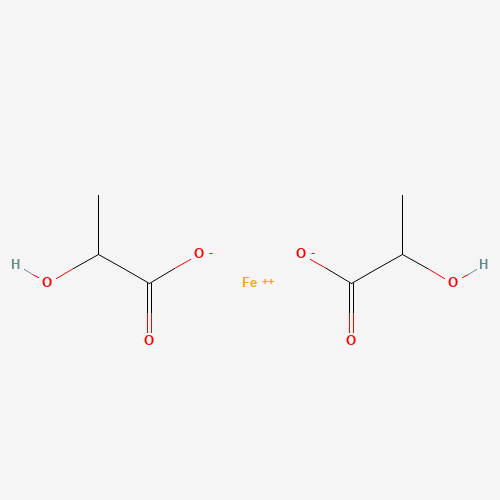
Ferrous lactate is an iron fortificant and colour retention agent, used in olives and in fortified foods.
Where it is and isn’t permitted
| Jurisdiction | Status | Scope and limits | Citation |
|---|---|---|---|
| Australia and New Zealand | No listed food uses foundThis site has not matched this substance to any food use on this jurisdiction’s list of authorised food additives. A food additive may be used only in foods that list names. Flavourings, enzymes, processing aids and added nutrients are regulated separately and do not appear on it. | ||
| Canada | No listing matchedHealth Canada’s lists name additives without E or INS numbers, so this site matches them by exact name. A substance listed there under a name this site does not recognise has no row here. | ||
| European Union | Permitted, with conditions | 2 food categories highest permitted level 150 mg/kg ML = 150 mg/kg. only mushroom Albatrellus ovinus used as a food ingredient in Swedish liver pâtés and olives darkened by oxidation’. Note 56: Expressed as Fe. Show every food category
| Regulation (EC) No 1333/2008, Annex IIand 1 further provisionretrieved 2026-10-18 |
| Great Britain | Permitted, with conditions | 2 food categories highest permitted level 150 mg/kg or mg/l ML = 150. only mushroom Albatrellus ovinus used as a food ingredient in Swedish liver pâtés and olives darkened by oxidation. Note (56): Expressed as Fe. Show every food category
| Assimilated Regulation (EC) No 1333/2008and 1 further provisionretrieved 2026-10-18 |
| Japan | No listing matchedThis site imports only Japan’s list of designated additives (Appended Table 1 to the Regulations for Enforcement of the Food Sanitation Act), matched by English name. Existing additives, natural flavouring agents and ordinary foods used as additives are permitted outside that list and are not imported, so an empty row does not show that Japan does not permit the substance. | ||
| South Korea | Permitted, with conditions | Designated food additive: Standards and Specifications for Food Additives, Part III, 1. …Designated food additive: Standards and Specifications for Food Additives, Part III, 1. 일반식품첨가물 (general food additives), 젖산철 (“Ferrous Lactate”, the English the Code prints beside it); the Code marks it as also usable as a nutrient fortifier; 3. 영양강화제 (nutrient fortifiers), 젖산철; nutrient: 철(Fe); the Code marks it as also usable as a general food additive. Main use (주용도) of 젖산철: 산도조절제. Standard for use (사용기준) of 젖산철: (1) [to be used under the general standard for use in II. 2. 1), the minimum amount that achieves the technical effect, with no limit set for this additive in particular] “II. 2. 1)의 규정에 따라 사용하여야 한다.” The Korean is the standard as published. There is no official English translation of the current Code (the English version on MFDS’s website is the 2020 edition and has no legal effect); the English in square brackets is this site’s description of what each sentence does, not a translation of the foods or the levels. Compositional specifications (Part IV) are not imported, nor are the general standards in Part II, which apply to every additive. | Standards and Specifications for Food Additives (식품첨가물의 기준 및 규격), MFDS Notification, Part III (Standards for use, by item)retrieved 2026-10-18 |
| United States | Permitted | 21 CFR 73.165and 1 further provisionretrieved 2026-10-17 | |
| Codex Alimentarius | Permitted, with conditions | 1 food category highest permitted level 150 mg/kg Note 23 As iron. Note 48 For use in olives only. Note 265 Except for use in products conforming to the Standard for Table Olives (CXS 66-1981): for use in table olives darkened with oxidation as a colour retention agent. | CXS 192-1995 Table One, INS 585, food category 04.2.2.3retrieved 2026-09-07 |
How much is permitted
A listing usually limits the quantity as well as the food. Only one of the forms that takes is a figure: quantum satis and good manufacturing practice permit the amount the technological effect requires and no more, which is a limit rather than the absence of one. Figures below are the range across every food category this page is listed in, and categories differ between regulators — see how much is permitted.
| European Union | 150 mg/kg | 2 numeric limit |
|---|---|---|
| Great Britain | 150 mg/kg | 2 numeric limit |
| South Korea | — | 1 no quantity stated |
| United States | — | 2 no quantity stated |
| Codex Alimentarius | 150 mg/kg | 1 numeric limit |
What it is made from
Made by reacting an iron salt with fermentation-derived lactic acid.
- Vegan
- Vegetarian
Compare other additives on the dietary indexes.
- CAS registry number
- 5905-52-2
- InChIKey
- DKKCQDROTDCQOR-UHFFFAOYSA-L
- PubChem
- CID 22197
The two specifications, compared
The European Union sets identity and purity by regulation; JECFA publishes its own through FAO, advisory until a country adopts it. Both documents are below in full. These are the parameters each puts a number on.
| Parameter | European Union | JECFA |
|---|---|---|
| Assay | no less than 96 % | no less than 96 % |
| Loss on drying | no more than 18 % | no more than 18 % |
| Lead | no more than 1 mg/kg | no more than 1 mg/kg |
| Arsenic | no more than 3 mg/kg | — |
| Mercury | no more than 1 mg/kg | — |
| Cadmium | no more than 1 mg/kg | — |
The two documents state the same figures for every parameter compared here.
How the EU defines it
The legal specification an additive must meet to be sold as this E number in the EU — what it is, how it may be made, and the purity it must reach. From Commission Regulation (EU) No 231/2012.
E 585 Ferrous lactate
Synonyms: Iron(II) lactate; Iron(II) 2-hydroxy propanoate; Propanoic acid, 2-hydroxy-iron(2 +) salt (2:1)
Assay, identification and purity criteria
Description and assay
- Einecs
- 227-608-0
- Chemical name
- Ferrous 2-hydroxy propanoate
- Chemical formula
- C₆H₁₀FeO₆· nH₂O (n = 2 or 3)
- Molecular weight
- 270,02 (dihydrate) 288,03 (trihydrate)
- Assay
- Content not less than 96 % on the dried basis
- Description
- Greenish-white crystals or light green powder having a characteristic smell
Identification
- Solubility
- Soluble in water. Practically insoluble in ethanol
- Test for ferrous ion
- Passes test
- Test for lactate
- Passes test
- pH
- Between 4 and 6 (2 % solution)
Purity criteria
- Loss on drying
- Not more than 18 % (100 °C, under vacuum, approximately 700 mm Hg)
- Iron (Fe III)
- Not more than 0,6 %
- Arsenic
- Not more than 3 mg/kg
- Lead
- Not more than 1 mg/kg
- Mercury
- Not more than 1 mg/kg
- Cadmium
- Not more than 1 mg/kg
How JECFA defines it
The international specification for identity and purity, prepared by the Joint FAO/WHO Expert Committee on Food Additives and published by FAO. It is a different document from any above, written by a different body and revised on its own cycle; it is advisory, and a country adopts it or does not.
INS 585 Ferrous Lactate
Synonyms: INS No. 585
Assay, identification and purity criteria
Description and assay
- Specification history
- Prepared at the 35th JECFA (1989), published in FNP 49 (1990) and in FNP 52 (1992). Metals and arsenic specifications revised at the 61st JECFA (2003). A PMTDI of 0.8 mg/kg bw for iron was established at the 35th JECFA (1989)
- Chemical names
- Ferrous lactate, iron (II) lactate, iron (II) 2-hydroxypropanoate
- C.A.S. number
- 5905-52-2
- Chemical formula
- C 6 H 10 FeO 6 · xH 2 O, (x = 2 or 3)
- Formula weight
- Dihydrate: 270.02 Trihydrate: 288.03
- Assay
- Not less than 96% on the dried basis
- DESCRIPTION
- Greenish white crystals or light green powder having a weak, characteristic smell
- FUNCTIONAL USES
- Colouring adjunct, nutrient
- METHOD OF ASSAY
- Transfer about 2 g of the dried sample, accurately weighed, to a 100-ml volumetric flask, dilute to the mark with water and mix. Pipet 20 ml of the sample solution into a 100-ml conical flask. Add 5 ml of formic acid (85% v/v). Titrate the solution with 0.1 N potassium permanganate until it turns pink. Each ml of 0.1 N potassium permanganate is equivalent to 23.40 mg of C 6 H 10 FeO 6 .
Identification
- Solubility (Vol. 4)
- Soluble in water; practically insoluble in ethanol
- pH (Vol. 4)
- 5.0 - 6.0 (1 in 50 soln)
- Test for lactate (Vol. 4)
- Passes test
- Test for ferrous salts (Vol. 4)
- Passes test
Purity criteria
- Loss on drying (Vol. 4)
- Not more than 18% (100 o using vacuum, approx. 700 mm Hg)
- Sulfates (Vol. 4)
- Not more than 0.1% Test 0.5 g of the sample as directed in the Limited Test using 1 ml of 0.01 N sulphuric acid in the control
- Chlorides (Vol. 4)
- Not more than 0.1% Test 0.5 g of the sample as directed in the Limit Test using 1.4 ml of 0.01 N hydrochloric acid in the control.
- Iron (III)
- Not more than 0.6% Dissolve about 5 g of the sample, accurately weighed, in a mixture of 100 ml of water and 10 ml of hydrochloric acid in a 250-ml glass stoppered flask. Add 3 g of potassium iodide, shake well, and allow to stand in the dark for 5 min. Titrate liberated iodine with 0.1 N sodium thiosulfate, using starch TS as the indicator. Each ml of 0.1 N sodium thiosulfate is equivalent to 5.585 mg of iron (III).
- Lead (Vol. 4)
- Not more than 1 mg/kg Determine using an atomic absorption technique appropriate to the specified level. The selection of sample size and method of sample preparation may be based on the principles of the method described in Volume 4, “Instrumental Methods.”
Every name it appears under
55 recorded names. A label may use any of them.
E number
- E585
INS number
- 585
CAS registry number
- 5905-52-2
- 85993-25-5
- 92542-68-2
As it appears in regulation
- Ferrous lactate
Other names
- (S)-Bis(lactato-O1,O2)iron
- 2-hydroxypropanoate;iron(2+)
- 2-hydroxypropanoic acid, iron(2+) salt
- C6H10FeO6
- DKKCQDROTDCQOR-UHFFFAOYSA-L
- E 585
- Ferro drops
- Ferrous lactate
- ferrous;2-hydroxypropanoate
- HSDB 462
- INS NO.585
- INS-585
- Iron dilactate
- Iron(2+) 2-hydroxypropanoate, (2:1)
- iron(2+) bis(2-hydroxypropanoate)
- Iron(2+) lactate
- Iron(2+) lactate, (2:1)
- IRON(II) 2-HYDROXYPROPANOATE
- Iron(II) lactate
- Iron(II) lactate hydrate
- IRON, BIS(2-(HYDROXY-.KAPPA.O)PROPANOATO-.KAPPA.O)-, (T-4)-
- Lactic acid, iron(2+) salt (2:1)
- LACTIC ACID, IRON(II) SALT (2:1)
- Propanoic acid, 2-hydroxy-, iron(2+) salt (2:1)
Systematic names
- iron(2+) bis(2-hydroxypropanoate)
Hazard reference values
No reference value for this substance in the sources we hold.
Evidence and how bodies read it
Studies, and the differing conclusions regulators drew from them, are curated rather than machine-read, and none has been written for this substance yet.
Common questions
Assembled from what is above, in the words the questions are usually asked in. Each answer is the same statement the relevant section makes, with the same citations behind it.
- What is E 585?
- E 585 is Ferrous lactate. Ferrous lactate is an iron fortificant and colour retention agent, used in olives and in fortified foods.
- What is Ferrous lactate used for in food?
- It is listed as a colour, a colour retention agent and a nutrient supplement — the role the US and Codex assign it. This page shows every function each regulator records, with the citation for each.
- Where is Ferrous lactate permitted?
- Of the seven regulators this site reads, the EU, Great Britain, South Korea, the US and the Codex standard permit it. Each permission is for named foods at named levels, not a blanket one; the table on this page gives them with citations.
- Is Ferrous lactate vegan?
- Yes. Ferrous lactate is not derived from animals, and is suitable for vegetarians. This page says what it is made from and how.
Sources for this page
- eu retrieved 2026-10-18
- gb retrieved 2026-10-18
- kr retrieved 2026-10-18
- ecfr retrieved 2026-10-17
- gsfa retrieved 2026-09-07
- euspecs retrieved 2026-10-18
- jecfaspecs retrieved 2026-09-23
Full licence terms and publisher details on Sources. How this page is built and updated: Method.
Machine-readable: a JSON record of this additive is given on request —how to ask for access.
Follow changes to Ferrous lactate:Atom feed — regulatory events, and any change the weekly refresh detects in its provisions.