Hexamethylene tetramine
100-97-0 · 1,3,5,7-Tetraazaadamantane · 1,3,5,7-Tetraazatricyclo[3.3.1.1(3,7)]decane · 1,3,5,7-Tetraazatricyclo[3.3.1.13,7]decane · Aceto HMT · Aminoformaldehyde · Ammoform · Ammonioformaldehyde · Antihydral · Cystamin · Cystogen · Duirexol · E 239 · Ekagom H · Esametilentetramina · Formamine · Formin · Formin (heterocycle) · Formine · Herax UTS · Heterin · Hexa (vulcanization accelerator) · Hexa-Flo-Pulver · Hexaform · Hexamethylenamine · HEXAMETHYLENE TETRAMINE · Hexamethyleneamine · Hexamethylenetetraamine · Hexamethylenetetramine · Hexamethylenetetraminum · Hexamethylentetramin · Hexamethylentetraminum · Hexamine · Hexamine (heterocycle) · Hexaminum · Hexilmethylenamine · HMTA · INS NO.239 · INS-239 · J50OIX95QV · Metenamina · Methamin · Methenamin · Methenamine · Methenamine, Silver · methenaminum · Nocceler H · Preparation AF · Resotropin · S 4 (heterocycle) · Sanceler H · Silver, Hexamine · Uramin · Uratrine · Urisol · Uritone · Urodeine · Urotropin · Urotropine · Vulkacit H 30 · Xametrin · E239 · 239 · 1,3,5,7-tetraazatricyclo[3.3.1.1]-decane · Hexamethylene tetramine · Esametilentetramina · EŻAMETILEN TETRAMMINA · HEKSAMETHILEN TETRAMIN · Heksametilen tetramin · heksametilen-tetramin · HEKSAMETILENO TETRAAMINAS · Heksametilentetraminas · Heksametilēntetramīns · Heksametyleenitetramiini · Heksametylenoczteroamina · Heksametüleentetramiin · Hexamethyleentetramine · Hexamethylene tetramine · Hexamethylentetramin · Hexametilenotetramina · Hexametilentetramina · Hexametilén-tetramin · HEXAMETYLÉN TETRAMÍN · Hexametyléntetramín · Hexaméthylènetétramine · Tetramin tal-eżametilene · Εξαμεθυλενοτετραμίνη · Хексаметилен тетраминE number E239INS 239CAS 100-97-0
Listed as a preservative by Codex.
Listed as preservatives (Codex)
- Codex Alimentarius: Preservative — CXS 192-1995 Table One, INS 239
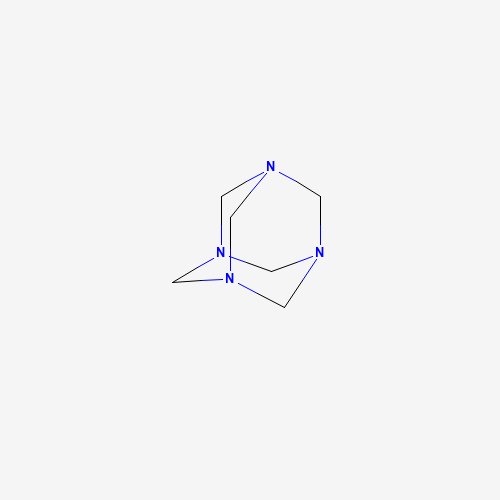
Hexamethylene tetramine is a preservative whose only EU authorisation is for provolone cheese. It works by slowly releasing formaldehyde.
Where it is and isn’t permitted
| Jurisdiction | Status | Scope and limits | Citation |
|---|---|---|---|
| Australia and New Zealand | No listed food uses foundThis site has not matched this substance to any food use on this jurisdiction’s list of authorised food additives. A food additive may be used only in foods that list names. Flavourings, enzymes, processing aids and added nutrients are regulated separately and do not appear on it. | ||
| Canada | No listing matchedHealth Canada’s lists name additives without E or INS numbers, so this site matches them by exact name. A substance listed there under a name this site does not recognise has no row here. | ||
| European Union | Permitted, with conditions | 1 food category highest permitted level 25 mg/kg ML = 25 mg/kg. residual amount, expressed as formaldehyde. only Provolone cheese. | Regulation (EC) No 1333/2008, Annex II, as amended by (EU) No 1129/2011retrieved 2026-10-18 |
| Great Britain | Permitted, with conditions | 1 food category Maximum level: 25 mg/kg residual amount, expressed as formaldehyde. only Provolone cheese. | Assimilated Regulation (EC) No 1333/2008, Annex II (as at 28 June 2024)retrieved 2026-10-18 |
| Japan | No listing matchedThis site imports only Japan’s list of designated additives (Appended Table 1 to the Regulations for Enforcement of the Food Sanitation Act), matched by English name. Existing additives, natural flavouring agents and ordinary foods used as additives are permitted outside that list and are not imported, so an empty row does not show that Japan does not permit the substance. | ||
| South Korea | No listing matchedThis site imports Part III of South Korea’s Standards and Specifications for Food Additives, matched by CAS number, then INS number, then exact name. Mixed preparations and sanitisers are not imported, and an entry whose identifiers disagreed with a page’s is held for review, so an empty row does not show that South Korea does not permit the substance. | ||
| United States | Not listedDoes not appear on this jurisdiction’s permitted list. That is not the same as being prohibited. | ||
| Codex Alimentarius | Permitted, with conditions | 1 food category highest permitted level 25 mg/kg Note 66 As formaldehyde. Note 298 For use only in products conforming to the Standard for Provolone (CXS 272-1968). Note XS208 Excluding products conforming to the Standard for Cheese in Brine (CODEX STAN 208-1999). Note XS263 Excluding products conforming to the Standard for Cheddar (CXS 263-1966). Note XS264 Excluding products conforming to the Standard for Danbo (CXS 264-1966). Note XS265 Excluding products conforming to the Standard for Edam (CXS 265-1966). Note XS266 Excluding products conforming to the Standard for Gouda (CXS 266-1966). Note XS267 Excluding products conforming to the Standard for Havarti (CXS 267-1966). Note XS268 Excluding products conforming to the Standard for Samsø (CXS 268-1966). Note XS269 Excluding products conforming to the Standard for Emmental (CXS 269-1967). Note XS270 Excluding products conforming to the Standard for Tilsiter (CXS 270-1968). Note XS271 Excluding products conforming to the Standard for Saint-Paulin (CXS 271-1968). Note XS272 Excluding products conforming to the Standard for Provolone (CXS 272-1968). Note XS274 Excluding products conforming to the Standard for Coulommiers (CXS 274-1969). Note XS276 Excluding products conforming to the Standard for Camembert (CXS 276-1973). Note XS277 Excluding products conforming to the Standard for Brie (CXS 277-1973). Note XS278 Excluding products conforming to the Standard for Extra Hard Grating Cheese (CXS 278-1978). | CXS 192-1995 Table One, INS 239, food category 01.6.2.1retrieved 2026-09-07 |
How much is permitted
A listing usually limits the quantity as well as the food. Only one of the forms that takes is a figure: quantum satis and good manufacturing practice permit the amount the technological effect requires and no more, which is a limit rather than the absence of one. Figures below are the range across every food category this page is listed in, and categories differ between regulators — see how much is permitted.
| European Union | 25 mg/kg | 1 numeric limit |
|---|---|---|
| Great Britain | — | 1 no quantity stated |
| Codex Alimentarius | 25 mg/kg | 1 numeric limit |
What it is made from
Made by reacting formaldehyde with ammonia.
- Vegan
- Vegetarian
Compare other additives on the dietary indexes.
- CAS registry number
- 100-97-0
- InChIKey
- VKYKSIONXSXAKP-UHFFFAOYSA-N
- PubChem
- CID 4101
The two specifications, compared
The European Union sets identity and purity by regulation; JECFA publishes its own through FAO, advisory until a country adopts it. Both documents are below in full. These are the parameters each puts a number on.
| Parameter | European Union | JECFA |
|---|---|---|
| Assay | no less than 99 % | no less than 99 % |
| Loss on drying | no more than 0.5 % | no more than 2 % |
| Sulphated ash | no more than 0.05 % | no more than 0.05 % |
| Lead | no more than 2 mg/kg | no more than 2 mg/kg |
| Arsenic | no more than 3 mg/kg | — |
| Mercury | no more than 1 mg/kg | — |
One parameter differs between the two documents. A difference is not a disagreement about safety: the two are revised on their own cycles, and an assay or a drying loss can be measured against a different preparation of the substance, which is why only the contaminant ceilings are marked. Within the EU the EU's figure is the one that binds.
How the EU defines it
The legal specification an additive must meet to be sold as this E number in the EU — what it is, how it may be made, and the purity it must reach. From Commission Regulation (EU) No 231/2012.
E 239 Hexamethylene tetramine
Synonyms: Hexamine; Methenamine
Assay, identification and purity criteria
Description and assay
- Einecs
- 202-905-8
- Chemical name
- 1,3,5,7-Tetraazatricyclo [3.3.1.13,7]-decane, hexamethylenetetramine
- Chemical formula
- C₆H₁₂N₄
- Molecular weight
- 140,19
- Assay
- Content not less than 99 % on the anhydrous basis
- Description
- Colourless or white crystalline powder
Identification
- Test for formaldehyde
- Passes test
- Test for ammonia
- Passes test
- Sublimation point:
- Approximately 260 °C
Purity criteria
- Loss on drying
- Not more than 0,5 % (at 105 °C in vacuum over P₂O₅ for 2 hours)
- Sulphated ash
- Not more than 0,05 %
- Sulphates
- Not more than 0,005 % expressed as SO₄
- Chlorides
- Not more than 0,005 % expressed as Cl
- Ammonium salts
- Not detectable
- Arsenic
- Not more than 3 mg/kg
- Lead
- Not more than 2 mg/kg
- Mercury
- Not more than 1 mg/kg
How JECFA defines it
The international specification for identity and purity, prepared by the Joint FAO/WHO Expert Committee on Food Additives and published by FAO. It is a different document from any above, written by a different body and revised on its own cycle; it is advisory, and a country adopts it or does not.
INS 239 Hexamethylenetetramine
Synonyms: Hexamine, methenamine, INS No. 239 Hexamine; Methenamine
Assay, identification and purity criteria
Description and assay
- Specification history
- Prepared at the 17th JECFA (1973), published in FNP 4 (1978) and in FNP 52 (1992). Metals and arsenic specifications revised at the 63rd JECFA (2004). An ADI of 0-0.15 mg/kg bw was established at the 17th JECFA (1973)
- Chemical names
- 1,3,5,7-Tetraazatricyclo[3.3.1.1 3,7 ]-decane, hexamethylenetetramine
- C.A.S. number
- 100-97-0
- Chemical formula
- C 6 H 12 N 4
- Formula weight
- 140.19
- Assay
- Not less than 99.0% on the dried basis
- DESCRIPTION
- Nearly odourless, colourless lustrous crystals, or white crystalline powder
- FUNCTIONAL USES
- Antimicrobial preservative
- METHOD OF ASSAY
- Weigh, to the nearest 0.1 mg, 1 g of the sample, previously dried for 4 h over phosphorus pentoxide. Transfer into a beaker and add 40.00 ml of N sulfuric acid. Boil gently adding water from time to time, if necessary, until the odour of formaldehyde is no longer perceptible. Cool, add 20 ml of water, and methyl red TS and titrate the excess acid with N sodium hydroxide. Each ml of N sulfuric acid is equivalent to 35.05 mg of C 6 H 12 N 4 .
Identification
- Solubility (Vol. 4)
- Freely soluble in water, soluble in ethanol
- Test for formaldehyde
- Heat a 1 in 10 solution of the sample with dilute sulfuric acid TS. Formaldehyde is liberated, recognizable by its odour and by its darkening of paper moistened with silver ammonium nitrate TS.
- Test for ammonia (Vol. 4)
- Passes test
Purity criteria
- Loss on drying (Vol. 4)
- Not more than 2.0% (over P 2 O 5 , 4 h)
- Sulfated ash (Vol. 4)
- Not more than 0.05% Test 2 g of the sample (Method I)
- Ammonium salts
- Add 1 ml of Nessler's reagent TS to 10 ml of a 5% solution of the sample. The mixture should not be darker than a mixture of 1 ml of the reagent in 10 ml of water.
- Lead (Vol. 4)
- Not more than 2 mg/kg Determine using an atomic absorption technique appropriate to the specified level. The selection of sample size and method of sample preparation may be based on the principles of the method described in Volume 4, “Instrumental Methods.”
Every name it appears under
88 recorded names. A label may use any of them.
E number
- E239
INS number
- 239
CAS registry number
- 100-97-0
As it appears in regulation
- Hexamethylene tetramine
Other names
- 1,3,5,7-Tetraazaadamantane
- 1,3,5,7-Tetraazatricyclo[3.3.1.1(3,7)]decane
- 1,3,5,7-Tetraazatricyclo[3.3.1.13,7]decane
- Aceto HMT
- Aminoformaldehyde
- Ammoform
- Ammonioformaldehyde
- Antihydral
- Cystamin
- Cystogen
- Duirexol
- E 239
- Ekagom H
- Esametilentetramina
- Formamine
- Formin
- Formin (heterocycle)
- Formine
- Herax UTS
- Heterin
- Hexa (vulcanization accelerator)
- Hexa-Flo-Pulver
- Hexaform
- Hexamethylenamine
- HEXAMETHYLENE TETRAMINE
- Hexamethyleneamine
- Hexamethylenetetraamine
- Hexamethylenetetramine
- Hexamethylenetetraminum
- Hexamethylentetramin
- Hexamethylentetraminum
- Hexamine
- Hexamine (heterocycle)
- Hexaminum
- Hexilmethylenamine
- HMTA
- INS NO.239
- INS-239
- J50OIX95QV
- Metenamina
- Methamin
- Methenamin
- Methenamine
- Methenamine, Silver
- methenaminum
- Nocceler H
- Preparation AF
- Resotropin
- S 4 (heterocycle)
- Sanceler H
- Silver, Hexamine
- Uramin
- Uratrine
- Urisol
- Uritone
- Urodeine
- Urotropin
- Urotropine
- Vulkacit H 30
- Xametrin
Systematic names
- 1,3,5,7-tetraazatricyclo[3.3.1.1]-decane
The EU re-evaluation programme
Every additive authorised in the EU before 20 January 2009 was put back through EFSA by Commission Regulation (EU) No 257/2010, and this one is named in it. What the Regulation required is below; whether the opinion has since been published is not something this site records.
- To be evaluated by 31 December 2015. Named in Annex II, Part II, point 1 as “Hexamethylene tetramine”, among the additives given priority within its class.
Hazard reference values
| Type | Value | Population | Assessed by | Opinion |
|---|---|---|---|---|
| ADI | 0.15 mg/kg bw/day | — | JECFA | 1973 |
Evidence and how bodies read it
What assessing bodies concluded
Each conclusion is paraphrased in the body's own framing, from the published opinion linked beneath it. Where bodies differ, both stand; this site does not adjudicate between them or add a view of its own.
EFSA 2014
The ANS Panel could not derive an ADI for hexamethylene tetramine (E 239) because of database limitations, but concluded that its use in Provolone cheese at the maximum permitted level of 25 mg/kg (as formaldehyde) would not be of safety concern. It considered that any extension of use would need detailed assessment and possibly new toxicity data.
Common questions
Assembled from what is above, in the words the questions are usually asked in. Each answer is the same statement the relevant section makes, with the same citations behind it.
- What is E 239?
- E 239 is Hexamethylene tetramine. Hexamethylene tetramine is a preservative whose only EU authorisation is for provolone cheese. It works by slowly releasing formaldehyde.
- What is Hexamethylene tetramine used for in food?
- It is listed as a preservative — the role Codex assigns it. This page shows every function each regulator records, with the citation for each.
- Where is Hexamethylene tetramine permitted?
- Of the seven regulators this site reads, the EU, Great Britain and the Codex standard permit it. Each permission is for named foods at named levels, not a blanket one; the table on this page gives them with citations.
- Is Hexamethylene tetramine vegan?
- Yes. Hexamethylene tetramine is not derived from animals, and is suitable for vegetarians. This page says what it is made from and how.
Sources for this page
- eu retrieved 2026-10-18
- gb retrieved 2026-10-18
- gsfa retrieved 2026-09-07
- euspecs retrieved 2026-10-18
- jecfaspecs retrieved 2026-09-23
Full licence terms and publisher details on Sources. How this page is built and updated: Method.
Machine-readable: a JSON record of this additive is given on request —how to ask for access.
Follow changes to Hexamethylene tetramine:Atom feed — regulatory events, and any change the weekly refresh detects in its provisions.