Hydrogen peroxide
7722-84-1 · Albone · Albone 35 · Albone 35CG · Albone 50 · Albone 50CG · Albone 70 · Albone 70CG · Albone DS · Astri-UC · BBX060AN9V · CleanCleaner · Comfort · Dihydrogen dioxide · dihydrogen peroxide · Divas · Elawox · EPA Pesticide Chemical Code 000595 · Eskata · High Test Peroxide · High-strength hydrogen peroxide · Hioxyl · HOOH · Hydrogen dioxide · Hydrogen peroxide · Hydrogen peroxide (aqueous) · Hydrogen peroxide (H2O2) · Hydrogen peroxide (USP) · Hyrogen peroxide · Inhibine · Interox · Kastone · Lensept · Luxury · OxiStom · oxydol · Oxyfull · Oxymate · perhydrol · Periogel · PerioRestore · Perone · Perone 30 · Perone 35 · Perone 50 · Perossido di idrogeno · Peroxaan · Peroxan · Peroxide, Hydrogen · Peroxyde d'hydrogene · Pre milk HP 0.5 · Pre milk HP 0.5 10 · Pre milk HP 1.0 · Proxyclean · Sanidry · Superoxol · T-Stuff · Teat dip HP 5 · Wasserstoffperoxid · Waterstofperoxyde · hydrogen peroxide · Hydrogen peroxideCAS 7722-84-1
Listed as a preservative, a flour treatment agent and a dough strengthener by the US.
Listed as preservatives (US) · flour treatment agents (US) · dough strengtheners (US) · bleaching agents (CA) · oxidising and reducing agents (US) · starch-modifying agents (CA)
- United States: Antimicrobial agent — FDA, Substances Added to Food: HYDROGEN PEROXIDE
- United States: Antimicrobial agents — 21 CFR 184.1366, citing 21 CFR 170.3(o)(2)
- United States: Flour treating agent — FDA, Substances Added to Food: HYDROGEN PEROXIDE
- United States: Dough strengthener — FDA, Substances Added to Food: HYDROGEN PEROXIDE
- Canada: Bleaching agent — Health Canada, List of Permitted Food Additives with Other Purposes of Use (List 8)
- United States: Oxidizing and reducing agents — 21 CFR 184.1366, citing 21 CFR 170.3(o)(22)
- United States: Oxidizing or reducing agent — FDA, Substances Added to Food: HYDROGEN PEROXIDE
- Canada: Starch-modifying agent — Health Canada, List of Permitted Starch-Modifying Agents (List 13)
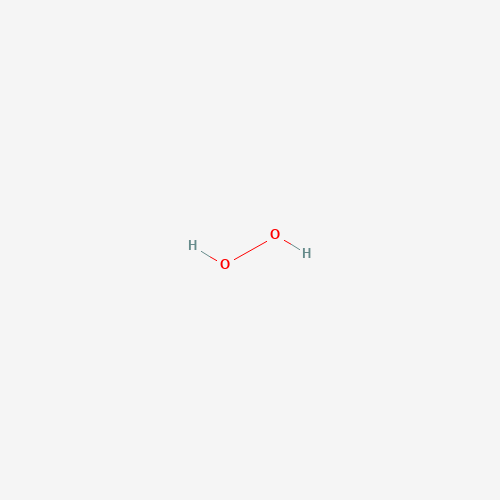
Hydrogen peroxide is an antimicrobial and bleaching agent, used to sterilise aseptic packaging, to treat milk for some cheeses, and to bleach starch. It breaks down to water and oxygen.
Where it is and isn’t permitted
| Jurisdiction | Status | Scope and limits | Citation |
|---|---|---|---|
| Australia and New Zealand | No listed food uses foundThis site has not matched this substance to any food use on this jurisdiction’s list of authorised food additives. A food additive may be used only in foods that list names. Flavourings, enzymes, processing aids and added nutrients are regulated separately and do not appear on it. | ||
| Canada | Permitted, with conditions | highest permitted level 135 mg/kg 5 permitted uses Show every permitted use
| Health Canadaand 4 further provisionsretrieved 2026-10-17 |
| European Union | No listed food uses foundThis site has not matched this substance to any food use on this jurisdiction’s list of authorised food additives. A food additive may be used only in foods that list names. Flavourings, enzymes, processing aids and added nutrients are regulated separately and do not appear on it. | ||
| Great Britain | No listed food uses foundThis site has not matched this substance to any food use on this jurisdiction’s list of authorised food additives. A food additive may be used only in foods that list names. Flavourings, enzymes, processing aids and added nutrients are regulated separately and do not appear on it. | ||
| Japan | Permitted, with conditions | Designated additive: Appended Table 1, item 99, 過酸化水素 (“Hydrogen Peroxide” in the unofficial English translation). …Designated additive: Appended Table 1, item 99, 過酸化水素 (“Hydrogen Peroxide” in the unofficial English translation). Standards for use — Specifications and Standards for Foods, Food Additives, etc. (MHW Notification No. 370 of 1959), Part II (Food Additives), F (Standards for use), entry 過酸化水素: (1) [limits how much may remain in the foods stated; must be removed or broken down before the food is finished] “過酸化水素は、釜揚げしらす及びしらす干しにあってはその1kgにつき0.005g以上残存しないように使用しなければならない。その他の食品にあっては、最終食品の完成前に過酸化水素を分解し、又は除去しなければならない。” The Japanese is the standard as published. There is no official English translation of the Notification; the English in square brackets is this site’s description of what each sentence does, not a translation of the foods or the levels. Compositional specifications for this additive, in the same Notification, are not imported and are not shown here; nor are the general rules in F 添加物一般, which apply to every additive. | Regulations for Enforcement of the Food Sanitation Act (MHW Ordinance No. 23 of 1948), Appended Table 1retrieved 2026-10-18 |
| South Korea | Permitted, with conditions | Designated food additive: Standards and Specifications for Food Additives, Part III, 2. …Designated food additive: Standards and Specifications for Food Additives, Part III, 2. 가공보조제 (processing aids), 과산화수소 (“Hydrogen Peroxide”, the English the Code prints beside it). Main use (주용도) of 과산화수소: 살균제, 제조용제. Standard for use (사용기준) of 과산화수소: (1) “과산화수소는 최종식품의 완성 전에 분해하거나 또는 제거하여야 한다.” The Korean is the standard as published. There is no official English translation of the current Code (the English version on MFDS’s website is the 2020 edition and has no legal effect); the English in square brackets is this site’s description of what each sentence does, not a translation of the foods or the levels. Compositional specifications (Part IV) are not imported, nor are the general standards in Part II, which apply to every additive. | Standards and Specifications for Food Additives (식품첨가물의 기준 및 규격), MFDS Notification, Part III (Standards for use, by item)retrieved 2026-10-18 |
| United States | Permitted, with conditions | 21 CFR 173.356and 1 further provisionretrieved 2026-10-17 | |
| Codex Alimentarius | Not listedDoes not appear on this jurisdiction’s permitted list. That is not the same as being prohibited. |
How much is permitted
A listing usually limits the quantity as well as the food. Only one of the forms that takes is a figure: quantum satis and good manufacturing practice permit the amount the technological effect requires and no more, which is a limit rather than the absence of one. Figures below are the range across every food category this page is listed in, and categories differ between regulators — see how much is permitted.
| Canada | 100 mg/kg – 135 mg/kg | 2 numeric limit, 3 GMP |
|---|---|---|
| Japan | — | 1 no quantity stated |
| South Korea | — | 1 no quantity stated |
| United States | — | 2 no quantity stated |
GRAS notices to the FDA
A GRAS notice is a company’s conclusion that a substance is generally recognised as safe for the use it describes. FDA’s letter responds to that conclusion, for that notifier and that use. It is not a listing in 21 CFR, and it is not counted as a US permission above. The substance and use are as FDA’s inventory words them; this site matched the notice to this page by exact name.
GRN No. 14 · Hydrogen peroxide · Basic Vegetable Products
Intended use: Use in the manufacture of dehydrated onions as a processing aid to extend their shelf life
FDA’s response (1999-05-26): Notice does not provide a basis for a GRAS determination
What it is made from
Produced industrially by the anthraquinone process. It is required to be removed or decomposed before the food is eaten.
- Vegan
- Vegetarian
Compare other additives on the dietary indexes.
- CAS registry number
- 7722-84-1
- InChIKey
- MHAJPDPJQMAIIY-UHFFFAOYSA-N
- PubChem
- CID 784
How JECFA defines it
The international specification for identity and purity, prepared by the Joint FAO/WHO Expert Committee on Food Additives and published by FAO. It is a different document from any above, written by a different body and revised on its own cycle; it is advisory, and a country adopts it or does not.
Hydrogen peroxide
The principal method for the manufacture of hydrogen peroxide is the catalytic reduction by hydrogen of a substituted anthraquinone dissolved in a mixed aromatic hydrocarbon solvent, to anthraquinol. The hydrogenation catalyst is removed and the anthraquinol solution is subjected to aerial oxidation, to yield anthraquinone and hydrogen peroxide. The anthraquinone is recycled and the hydrogen peroxide, extracted with water, is purified and concentrated. The dilution of the concentrate is adjusted and a tin based stabilizer added.
Assay, identification and purity criteria
Description and assay
- Specification history
- Prepared at 63 rd JECFA (2004) and published in FNP 52 ADD 12 (2004) superseding specifications prepared at the 29th JECFA (1985), published in FNP 52 (1992). No ADI was allocated by the 24 th JECFA (1980) with comment "may be used only where better methods of milk preservation are not available". Small residues of hydrogen peroxide on food (which has been treated with antimicrobial washing solutions) at the time of consumption would not pose a safety concern (63 rd JECFA, 2004).
- Chemical name
- Hydrogen peroxide
- C.A.S. number
- 7722-84-1
- Chemical formula
- H 2 O 2
- Structural formula
- H-O-O-H
- Formula weight
- 34.01
- Assay
- Not less than the labelled concentration or within the range stated on the label
- DESCRIPTION
- An odourless, or nearly odourless, transparent and colourless liquid Caution: Powerful oxidizing agent. Avoid contact with eyes and skin.
- FUNCTIONAL USES
- Antimicrobial agent
- METHOD OF ASSAY
- Accurately weigh a volume of the sample equivalent to about 300 mg of H 2 O 2 into a 100-ml volumetric flask, dilute to volume with water, and mix thoroughly. To a 20-ml portion of this solution add 25 ml of diluted sulfuric acid TS, and titrate with 0.1 N potassium permanganate. Each ml of 0.1 N potassium permanganate is equivalent to 1.701 mg of H 2 O 2 .
Identification
- Solubility (Vol. 4)
- Miscible with water
- Test for peroxide (Vol. 4)
- Passes test
- Acidity
- Acid to litmus
Purity criteria
- Non-volatile residue (Vol. 4) Acidity
- Not more than 60 mg/kg Not more than 0.03% (as sulfuric acid) Dilute 9 ml of the sample with 90 ml of carbon dioxide-free water, add methyl red TS, and titrate with 0.02 N sodium hydroxide. The volume of sodium hydroxide solution should not be more than 3 ml greater than the volume required for a blank test on 90 ml of water used for dilution.
- Phosphate
- Not more than 50 mg/kg See description under TESTS
- Iron
- Not more than 0.5 mg/kg See description under TESTS
- Tin
- Not more than 10 mg/kg See description under TESTS
- Lead (Vol. 4)
- Not more than 4 mg/kg Determine using an atomic absorption technique appropriate to the specified level. The selection of the sample size and method of sample preparation may be based on the principles of the method described in Volume 4, “Instrumental methods
- Test: Phosphate
- Evaporate 400 mg of the sample to dryness on a steam bath. Dissolve the residue in 25 ml of approximately 0.5 N sulfuric acid. Add 1 ml of ammonium molybdate solution (500 mg of (NH 4 ) 6 Mo 7 O 24 · 4H 2 O in 10 ml of water) and 1 ml of p-methylaminophenol sulfate TS, and allow to stand for 2 h. Any blue colour produced should not exceed that of a control solution made the same way as the test solution, using 2.0 ml of Phosphate Standard Solution (20 μg PO 4 ) in an equal volume of solution containing equal quantities of reagents used in the test.
- Test: Iron
- Evaporate 20 g of the sample to dryness on a steam bath with 10 mg of sodium chloride, dissolve the residue in 2 ml of hydrochloric acid, and dilute to 50 ml with water. Add about 40 mg of ammonium persulfate crystals and 10 ml of ammonium thiocyanate TS, and mix. Any red or pink colour does not exceed that produced by 1.0 ml of Iron Standard Solution (10 μg Fe) in an equal volume of solution containing the quantities of the reagents used in the test.
- Test: Tin
- Aluminium Chloride Solution : Dissolve 8.93 g of aluminium chloride, AlCl 3 · 6H 2 O, in sufficient water to make 1000 ml. Gelatin Solution : On the day of use, dissolve 100 mg of gelatin in 50 ml of boiled water that has been cooled to between 50 o and 60 o . Tin Stock Solution: Dissolve 250.0 mg of lead-free tin foil in 10 to 15 ml of hydrochloric acid, and dilute to 250.0 ml with dilute hydrochloric acid (1 in 2). Standard Solution On the day of use, transfer 5.0 ml of Tin Stock Solution into a 100-ml volumetric flask, dilute to volume with water, and mix. Transfer 2.0 ml of this solution (100 μg Sn) into a 250-ml Erlenmeyer flask, and add 15 ml of water, 5 ml of nitric acid, and 2 ml of sulfuric acid. Place a small stemless funnel in the mouth of the flask, and heat until strong fumes of sulfuric acid are evolved. Cool, add 5 ml of water, evaporate again to strong fumes, and cool. Repeat the addition of water and heating to strong fumes, then add 15 ml of water, heat to boiling, and cool. Dilute to about 35 ml with water, add 1 drop of methyl red TS and 2.0 ml of the Aluminium Chloride Solution, and mix. Make the solution just alkaline by the dropwise addition of stronger ammonia TS, stirring gently, and then add 0.1 ml in excess. (Caution: To avoid dissolving the aluminium hydroxide precipitate, do not add more than 0.1 ml in excess of the ammonia solution.) Centrifuge for about 15 min at 4000 rpm, and then decant the supernatant liquid as completely as possible without disturbing the precipitate. Dissolve the precipitate in 5 ml of dilute hydrochloric acid (1 in 2), add 1.0 ml of the Gelatin Solution, and dilute to 20.0 ml with a saturated solution of aluminium chloride. Sample Solution Transfer 10 g of the sample into a 250-ml Erlenmeyer flask, and add 15 ml of water, 5 ml of nitric acid, and 2 ml of sulfuric acid. Mix and heat gently on a hot plate to initiate and maintain a vigorous decomposition. When decomposition is complete, place a small stemless funnel in the mouth of the flask, and continue as directed for the Standard Solution (above), beginning with "... and heat until strong fumes of sulfuric acid are evolved." Procedure Rinse a polarographic cell or other vessel with a portion of the Standard Solution, then add a suitable volume to the cell, immerse it in a constant temperature bath maintained at 35±0.2 o , and deaerate by bubbling oxygen-free nitrogen or hydrogen through the solution for at least 10 min. Insert the dropping mercury electrode of a suitable polarograph, and record the polarogram from -0.2 to -0.7 V and at a sensitivity of 0.0003 μA per mm, using a saturated calomel reference electrode. In the same manner, record a polarogram of a portion of the Sample Solution at the same current sensitivity. The height of the wave produced by the Sample Solution is not greater than that produced by the Standard Solution at the same half-wave potential.
Every name it appears under
62 recorded names. A label may use any of them.
CAS registry number
- 7722-84-1
As it appears in regulation
- Hydrogen peroxide
Other names
- Albone
- Albone 35
- Albone 35CG
- Albone 50
- Albone 50CG
- Albone 70
- Albone 70CG
- Albone DS
- Astri-UC
- BBX060AN9V
- CleanCleaner
- Comfort
- Dihydrogen dioxide
- dihydrogen peroxide
- Divas
- Elawox
- EPA Pesticide Chemical Code 000595
- Eskata
- High Test Peroxide
- High-strength hydrogen peroxide
- Hioxyl
- HOOH
- Hydrogen dioxide
- Hydrogen peroxide
- Hydrogen peroxide (aqueous)
- Hydrogen peroxide (H2O2)
- Hydrogen peroxide (USP)
- Hyrogen peroxide
- Inhibine
- Interox
- Kastone
- Lensept
- Luxury
- OxiStom
- oxydol
- Oxyfull
- Oxymate
- perhydrol
- Periogel
- PerioRestore
- Perone
- Perone 30
- Perone 35
- Perone 50
- Perossido di idrogeno
- Peroxaan
- Peroxan
- Peroxide, Hydrogen
- Peroxyde d'hydrogene
- Pre milk HP 0.5
- Pre milk HP 0.5 10
- Pre milk HP 1.0
- Proxyclean
- Sanidry
- Superoxol
- T-Stuff
- Teat dip HP 5
- Wasserstoffperoxid
- Waterstofperoxyde
Systematic names
- hydrogen peroxide
Hazard reference values
| Type | Value | Population | Assessed by | Opinion |
|---|---|---|---|---|
| ADI | not specified | — | JECFA | 2004 |
Evidence and how bodies read it
Studies, and the differing conclusions regulators drew from them, are curated rather than machine-read, and none has been written for this substance yet.
Common questions
Assembled from what is above, in the words the questions are usually asked in. Each answer is the same statement the relevant section makes, with the same citations behind it.
- What is Hydrogen peroxide?
- Hydrogen peroxide is an antimicrobial and bleaching agent, used to sterilise aseptic packaging, to treat milk for some cheeses, and to bleach starch. It breaks down to water and oxygen.
- What is Hydrogen peroxide used for in food?
- It is listed as a preservative, a flour treatment agent and a dough strengthener — the role the US assigns it. This page shows every function each regulator records, with the citation for each.
- Is Hydrogen peroxide banned in Europe?
- No. Hydrogen peroxide does not appear on the EU's list of authorised food additives, which is not the same as being banned: the EU permits an additive only where it has authorised it, and usually the reason for an absence is that no one applied. The EU has made no finding against this substance. It does mean it may not be used as a food additive in the EU today.
- Where is Hydrogen peroxide permitted?
- Of the seven regulators this site reads, Canada, Japan, South Korea and the US permit it. Each permission is for named foods at named levels, not a blanket one; the table on this page gives them with citations.
- Is Hydrogen peroxide vegan?
- Yes. Hydrogen peroxide is not derived from animals, and is suitable for vegetarians. This page says what it is made from and how.
Sources for this page
- ca retrieved 2026-10-17
- jp retrieved 2026-10-18
- kr retrieved 2026-10-18
- ecfr retrieved 2026-10-17
- jecfaspecs retrieved 2026-09-23
Full licence terms and publisher details on Sources. How this page is built and updated: Method.
Machine-readable: a JSON record of this additive is given on request —how to ask for access.
Follow changes to Hydrogen peroxide:Atom feed — regulatory events, and any change the weekly refresh detects in its provisions.