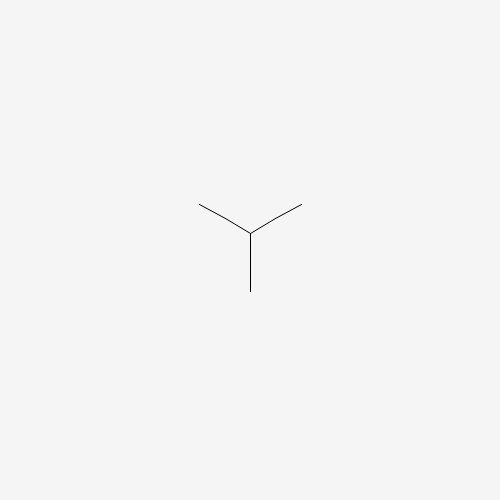
Isobutane
75-28-5 · 1,1-Dimethylethane · 2-Methyl propane · 2-METHYL-D3-PROPANE-1,1,1,3,3,3-D6 · 2-Methylpropane · 2-Methylpropane, 99% · 2-Methylpropane, 99.995% · 2-Methylpropane, puriss. · BXR49TP611 · Caswell No. 503A · dimethylethane · E 943b · EPA Pesticide Chemical Code 097101 · H-tBu · HSDB 608 · i-Butane · iso butane · iso-butane · iso-C4H10 · ISOBUTANE · ISOBUTANE (II) · ISOBUTANE (MART.) · Isobutane (NF) · MEB · Methylpropane · Pregabalin Impurity 155; Isobutane · PROPANE, 2-METHYL · Propane, 2-methyl- · tert-Butane · Trimethylmethane · E943b · isobutane · Isobutane · Isobutaan · Isobutaani · ISOBUTAN · Isobutane · Isobutano · Izobutan · Izobutanas · Izobutāns · Ισοβουτάνιο · ИзобутанE number E943bCAS 75-28-5
Listed as a propellant by Canada and the US.
Listed as propellants and aerating agents (CA, US)
- Canada: Propellant — Health Canada, List of Permitted Food Additives with Other Purposes of Use (List 8)
- United States: Propellant — FDA, Substances Added to Food: ISOBUTANE
- United States: Propellants, aerating agents, and gases — 21 CFR 184.1165, citing 21 CFR 170.3(o)(25)
Isobutane is permitted in the EU only as a propellant in vegetable oil pan sprays for professional use, alongside butane.
Where it is and isn’t permitted
| Jurisdiction | Status | Scope and limits | Citation |
|---|---|---|---|
| Australia and New Zealand | Permitted, with conditions | 54 food categories no numerical limit (good manufacturing practice) Show every food category
| Food Standards Code, Schedule 15, S15—5and 53 further provisionsretrieved 2026-10-17 |
| Canada | Permitted | no numerical limit (good manufacturing practice) In: Edible cookware coatings that are vegetable oil-based or lecithin-based, or both. Purpose: Propellant. Limit: Good Manufacturing Practice. | Health Canada, List of Permitted Food Additives with Other Purposes of Use (List 8), item I.2retrieved 2026-10-17 |
| European Union | Permitted, with conditions | 1 food category quantum satis. only vegetable oil pan spray (for professional use only) and water-based emulsion spray. | Regulation (EC) No 1333/2008, Annex II, as amended by (EU) No 1129/2011retrieved 2026-10-18 |
| Great Britain | Permitted, with conditions | 1 food category quantum satis. only vegetable oil pan spray (for professional use only) and water-based emulsion spray. | Assimilated Regulation (EC) No 1333/2008, Annex II (as at 28 June 2024)retrieved 2026-10-18 |
| Japan | No listing matchedThis site imports only Japan’s list of designated additives (Appended Table 1 to the Regulations for Enforcement of the Food Sanitation Act), matched by English name. Existing additives, natural flavouring agents and ordinary foods used as additives are permitted outside that list and are not imported, so an empty row does not show that Japan does not permit the substance. | ||
| South Korea | No listing matchedThis site imports Part III of South Korea’s Standards and Specifications for Food Additives, matched by CAS number, then INS number, then exact name. Mixed preparations and sanitisers are not imported, and an entry whose identifiers disagreed with a page’s is held for review, so an empty row does not show that South Korea does not permit the substance. | ||
| United States | Permitted | Named in 21 CFR 184.1165, a direct food substance the regulation affirms as generally recognized as safe: n-butane and iso-butane (CAS Reg. Nos. 106-97-8 and 75-28-5, respectively). The section is held on this site as the page n-butane-and-iso-butane; read it for the conditions. | 21 CFR 184.1165retrieved 2026-10-18 |
| Codex Alimentarius | Not listedDoes not appear on this jurisdiction’s permitted list. That is not the same as being prohibited. |
How much is permitted
A listing usually limits the quantity as well as the food. Only one of the forms that takes is a figure: quantum satis and good manufacturing practice permit the amount the technological effect requires and no more, which is a limit rather than the absence of one. Figures below are the range across every food category this page is listed in, and categories differ between regulators — see how much is permitted.
| Australia and New Zealand | — | 54 GMP |
|---|---|---|
| Canada | — | 1 GMP |
| European Union | — | 1 quantum satis |
| Great Britain | — | 1 quantum satis |
| United States | — | 1 no quantity stated |
No regulator sets a figure for Isobutane. That is not an absence of control: where the listing says quantum satis or good manufacturing practice, the quantity is limited to what the effect requires.
What it is made from
Separated from natural gas and petroleum refining streams.
- Vegan
- Vegetarian
Compare other additives on the dietary indexes.
- CAS registry number
- 75-28-5
- InChIKey
- NNPPMTNAJDCUHE-UHFFFAOYSA-N
- PubChem
- CID 6360
How the EU defines it
The legal specification an additive must meet to be sold as this E number in the EU — what it is, how it may be made, and the purity it must reach. From Commission Regulation (EU) No 231/2012.
E 943b Isobutane
Synonyms: 2-Methyl propane
Assay, identification and purity criteria
Description and assay
- Chemical name
- 2-methyl propane
- Chemical formula
- (CH₃)₂CH CH₃
- Molecular weight
- 58,12
- Assay
- Content not less than 94 %
- Description
- Colourless gas or liquid with mild, characteristic odour
Identification
- Vapour pressure
- 205,465 kPa at 20 °C
Purity criteria
- Methane
- Not more than 0,15 % v/v
- Ethane
- Not more than 0,5 % v/v
- Propane
- Not more than 2,0 % v/v
- n-Butane
- Not more than 4,0 % v/v
- 1,3-butadiene
- Not more than 0,1 % v/v
- Moisture
- Not more than 0,005 %
Authorised in other additives, enzymes, flavourings and nutrients
These authorisations are not for use in food. They let this substance be used inside another additive, a food enzyme, a flavouring or a nutrient preparation — often as a carrier — and it reaches food only as part of that product. Annex III to Regulation (EC) No 1333/2008.
| Part | May be used in | Maximum level | Citation |
|---|---|---|---|
| Annex III, Part 2: Food additives other than carriers in food additives | Colour preparations of group II and group III as defined in Part C of Annex II (for professional use only)Note (1): Except enzymes authorised as food additives. | 1 mg/kg in final food | Regulation (EC) No 1333/2008, Annex III, Part 2 |
Every name it appears under
43 recorded names. A label may use any of them.
E number
- E943b
CAS registry number
- 75-28-5
As it appears in regulation
- Isobutane
Other names
- 1,1-Dimethylethane
- 2-Methyl propane
- 2-METHYL-D3-PROPANE-1,1,1,3,3,3-D6
- 2-Methylpropane
- 2-Methylpropane, 99%
- 2-Methylpropane, 99.995%
- 2-Methylpropane, puriss.
- BXR49TP611
- Caswell No. 503A
- dimethylethane
- E 943b
- EPA Pesticide Chemical Code 097101
- H-tBu
- HSDB 608
- i-Butane
- iso butane
- iso-butane
- iso-C4H10
- ISOBUTANE
- ISOBUTANE (II)
- ISOBUTANE (MART.)
- Isobutane (NF)
- MEB
- Methylpropane
- Pregabalin Impurity 155; Isobutane
- PROPANE, 2-METHYL
- Propane, 2-methyl-
- tert-Butane
- Trimethylmethane
Systematic names
- isobutane
Hazard reference values
| Type | Value | Population | Assessed by | Opinion |
|---|---|---|---|---|
| ADI | not allocated | consumers | EFSA FAF | 2025 |
Evidence and how bodies read it
What assessing bodies concluded
Each conclusion is paraphrased in the body's own framing, from the published opinion linked beneath it. Where bodies differ, both stand; this site does not adjudicate between them or add a view of its own.
EFSA 2025
The FAF Panel considered butane (E 943a) and isobutane (E 943b) to be of low toxicological concern with very low dietary exposure, and concluded that their use as food additives at currently permitted uses does not raise a safety concern. It noted uncertainty about impurities other than 1,3-butadiene and recommended amendments to the specifications.
Common questions
Assembled from what is above, in the words the questions are usually asked in. Each answer is the same statement the relevant section makes, with the same citations behind it.
- What is E 943b?
- E 943b is Isobutane. Isobutane is permitted in the EU only as a propellant in vegetable oil pan sprays for professional use, alongside butane.
- What is Isobutane used for in food?
- It is listed as a propellant — the role Canada and the US assign it. This page shows every function each regulator records, with the citation for each.
- Where is Isobutane permitted?
- Of the seven regulators this site reads, Australia and New Zealand, Canada, the EU, Great Britain and the US permit it. Each permission is for named foods at named levels, not a blanket one; the table on this page gives them with citations.
- Is Isobutane vegan?
- Yes. Isobutane is not derived from animals, and is suitable for vegetarians. This page says what it is made from and how.
Sources for this page
- anz retrieved 2026-10-17
- ca retrieved 2026-10-17
- eu retrieved 2026-10-18
- gb retrieved 2026-10-18
- us-listings retrieved 2026-10-18
- euspecs retrieved 2026-10-18
Full licence terms and publisher details on Sources. How this page is built and updated: Method.
Machine-readable: a JSON record of this additive is given on request —how to ask for access.
Follow changes to Isobutane:Atom feed — regulatory events, and any change the weekly refresh detects in its provisions.