L-leucine
21675-61-6 · 61-90-5 · (2S)-2-amino-4-methylpentanoate · (2S)-2-amino-4-methylpentanoic acid · (2S)-2-azaniumyl-4-methylpentanoate · (2S)-alpha-2-amino-4-methylvaleric acid · (2S)-alpha-leucine · (L)-leucine · (S)-(+)-Leucine · (S)-2-Amino-4-methylpentanoic acid · (S)-2-Amino-4-methylvaleric acid · (S)-Leucine · 1lan · 1usk · 2-Amino-4-methylpentanoic acid (L) · 2-Amino-4-methylpentanoic acid, (S)- · 2-amino-4-methylvaleric acid · 2-Amino-4-methylvaleric acid (L) · 2-Aminoisobutylacetic acid · 3h-l-leucine · alpha-Aminoisocaproic acid · Certified Reference Material of L-leucine · D-2-Amino-4-methylpentanoic acid · E 641 · FEMA No. 3297 · GMW67QNF9C · H-Leu-2-Chlorotrityl Resin · H-Leu-OH · HSDB 7799 · L-(+)-Leucine · L-(-)-2-Amino-4-methylpentanoic acid · L-2-Amino-4-methylpentanoic acid · L-a-Aminoisocaproic acid · L-alpha-Aminoisocaproic acid · L-Isomer Leucine · L-Leu · L-Leu-OH · L-leucin · L-leucine · L-Leucine (Standard) · L-Leucine 7413 · L-Leucine High · L-Leucine High 7414 · L-Leucine, labeled with tritium · L-Leucine, Non-animal origin · L-Leuzin · L-Norvaline, 4-methyl- · leu · Leucin · Leucina · leucine · Leucine (VAN) · Leucine CRS · Leucine, l · LEUCINE, L- · Leucinum · LeuOH · Lysine Impurity 14 · Pentanoic acid, 2-amino-4-methyl- · Pentanoic acid, 2-amino-4-methyl-, (S)- · Valeric acid, 2-amino-4-methyl-, (S)- · E641 · (2S)-2-amino-4-methylpentanoic acid · L-leucine · L-leicīns · L-leucin · L-leucina · L-leucinas · L-leucine · L-leucyna · L-leusiini · L-leutsiin · L-levcin · L-lewċina · L-λευκίνη · L-левцинE number E641CAS 61-90-5
Listed as a flavour enhancer, a nutrient supplement and a flavouring agent by the US.
Listed as flavour enhancers (US) · nutrient supplements (US) · flavouring agents and adjuvants (US)
- United States: Flavor enhancer — FDA, Substances Added to Food: L-LEUCINE
- United States: Nutrient supplement — FDA, Substances Added to Food: L-LEUCINE
- United States: Flavoring agent or adjuvant — FDA, Substances Added to Food: L-LEUCINE
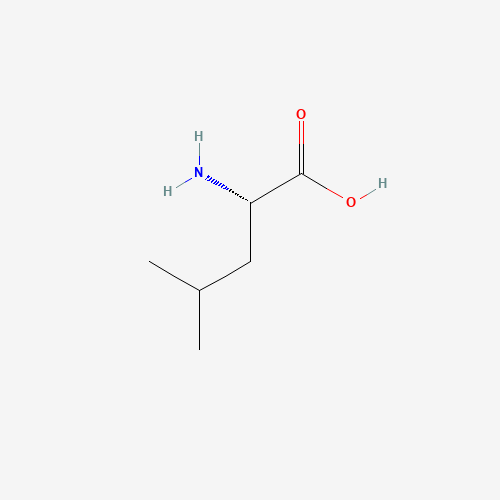
L-Leucine is an amino acid permitted in the EU only in table-top sweetener tablets. There it works as a lubricant, stopping the powder sticking to the tablet press, and is listed under the flavour enhancers.
Where it is and isn’t permitted
| Jurisdiction | Status | Scope and limits | Citation |
|---|---|---|---|
| Australia and New Zealand | Permitted | 1 food category no numerical limit (good manufacturing practice) | Food Standards Code, Schedule 15, S15—5, item 11.4, INS 641retrieved 2026-10-17 |
| Canada | Permitted | no numerical limit (good manufacturing practice) In: Table-top sweetener tablets that contain acesulfame potassium, aspartame, erythritol, neotame or sucralose. Purpose: Lubricant and binder used for the manufacture of tablets. Limit: Good Manufacturing Practice. | Health Canada, List of Permitted Food Additives with Other Purposes of Use (List 8), item L.5retrieved 2026-10-17 |
| European Union | Permitted, with conditions | 1 food category highest permitted level 50,000 mg/kg ML = 50000 mg/kg. | Regulation (EC) No 1333/2008, Annex II, as amended by (EU) No 2015/0649retrieved 2026-10-18 |
| Great Britain | Permitted, with conditions | 1 food category highest permitted level 50,000 mg/kg or mg/l ML = 50000. | Assimilated Regulation (EC) No 1333/2008, Annex II (as at 28 June 2024)retrieved 2026-10-18 |
| Japan | No listing matchedThis site imports only Japan’s list of designated additives (Appended Table 1 to the Regulations for Enforcement of the Food Sanitation Act), matched by English name. Existing additives, natural flavouring agents and ordinary foods used as additives are permitted outside that list and are not imported, so an empty row does not show that Japan does not permit the substance. | ||
| South Korea | Permitted, with conditions | Designated food additive: Standards and Specifications for Food Additives, Part III, 3. …Designated food additive: Standards and Specifications for Food Additives, Part III, 3. 영양강화제 (nutrient fortifiers), L-로이신; nutrient: 아미노산. Standard for use (사용기준) of L-로이신: (1) [to be used under the general standard for use in II. 2. 1), the minimum amount that achieves the technical effect, with no limit set for this additive in particular] “II. 2. 1)의 규정에 따라 사용하여야 한다.” The Korean is the standard as published. There is no official English translation of the current Code (the English version on MFDS’s website is the 2020 edition and has no legal effect); the English in square brackets is this site’s description of what each sentence does, not a translation of the foods or the levels. Compositional specifications (Part IV) are not imported, nor are the general standards in Part II, which apply to every additive. | Standards and Specifications for Food Additives (식품첨가물의 기준 및 규격), MFDS Notification, Part III (Standards for use, by item)retrieved 2026-10-18 |
| United States | Permitted, with conditions | Named in 21 CFR 172.320(a)(12) among the amino acids that may be added to foods as nutrients. The section lists them as a group, which this site holds as the page amino-acids; read it for the conditions and specifications. | 21 CFR 172.320retrieved 2026-10-18 |
| Codex Alimentarius | Not listedDoes not appear on this jurisdiction’s permitted list. That is not the same as being prohibited. |
How much is permitted
A listing usually limits the quantity as well as the food. Only one of the forms that takes is a figure: quantum satis and good manufacturing practice permit the amount the technological effect requires and no more, which is a limit rather than the absence of one. Figures below are the range across every food category this page is listed in, and categories differ between regulators — see how much is permitted.
| Australia and New Zealand | — | 1 GMP |
|---|---|---|
| Canada | — | 1 GMP |
| European Union | 50,000 mg/kg | 1 numeric limit |
| Great Britain | 50,000 mg/kg | 1 numeric limit |
| South Korea | — | 1 no quantity stated |
| United States | — | 1 no quantity stated |
GRAS notices to the FDA
A GRAS notice is a company’s conclusion that a substance is generally recognised as safe for the use it describes. FDA’s letter responds to that conclusion, for that notifier and that use. It is not a listing in 21 CFR, and it is not counted as a US permission above. The substance and use are as FDA’s inventory words them; this site matched the notice to this page by exact name.
GRN No. 523 · L-Leucine · INNOBIO Limited
Intended use: For use as an ingredient in milk and non-milk meal replacement beverages, sports beverages, and vitamin enhanced waters, and meal replacement bars at levels of use intended to provide between 1.5 and 3 g of added L-leucine per serving.
FDA’s response (2014-12-11): FDA has no questions
GRN No. 308 · L-leucine · Ajinomoto Aminoscience, LLC
Intended use: Ingredient in non-milk and milk based meal replacements, sports and isotonic beverages, vitamin enhanced waters, and meal replacement bars, at levels of 0.5 to 3 grams per serving
FDA’s response (2010-04-30): FDA has no questions
What it is made from
Usually produced by bacterial fermentation. Amino acids can also be obtained by hydrolysing animal protein, and the route is not declared.
- Vegan status depends on the source
- Vegetarian status depends on the source
- May raise a halal question
- May raise a kosher question
This is not an omission. What this additive is made from is not fixed — depending on the manufacturer it may be plant, animal or microbial in origin, nobody is required to say which, and the same product can change source between production runs. Ask the manufacturer if it matters to you; a label cannot answer it.
Compare other additives on the dietary indexes.
- CAS registry number
- 61-90-5
- InChIKey
- ROHFNLRQFUQHCH-YFKPBYRVSA-N
- PubChem
- CID 6106
How the EU defines it
The legal specification an additive must meet to be sold as this E number in the EU — what it is, how it may be made, and the purity it must reach. From Commission Regulation (EU) No 231/2012.
E 641 L-leucine
Synonyms: 2-Aminoisobutylacetic acid; L-2-Amino-4-methylvaleric acid; alpha-Aminoisocaproic acid; (S)-2-Amino-4-methylpentanoic acid; L-Leu
Assay, identification and purity criteria
Description and assay
- Einecs
- 200-522-0
- CAS number
- 61-90-5
- Chemical name
- L-Leucine; L-2-Amino-4-methylpentanoic acid
- Chemical formula
- C₆H₁₃NO₂
- Molecular Weight
- 131,17
- Assay
- Content not less than 98,5 % and not more than 101,0 % on the anhydrous basis
- Description
- White or almost white crystalline powder or shiny flakes
Identification
- Solubility
- Soluble in water, acetic acid, dilute HCl and alkaline hydroxides and carbonates; slightly soluble in ethanol
- Specific rotation
- [α]D ²⁰ between + 14,5° and + 16,5° (4 % solution (anhydrous basis) in 6N HCl)
Purity criteria
- Loss on drying
- Not more than 0,5 % (100 °C – 105 °C)
- Sulphated Ash
- Not more than 0,1 %
- Chlorides
- Not more than 200 mg/kg
- Sulphates
- Not more than 300 mg/kg
- Ammonium
- Not more than 200 mg/kg
- Iron
- Not more than 10 mg/kg
- Arsenic
- Not more than 3 mg/kg
- Lead
- Not more than 5 mg/kg
- Mercury
- Not more than 1 mg/kg
Every name it appears under
76 recorded names. A label may use any of them.
E number
- E641
CAS registry number
- 21675-61-6
- 61-90-5
As it appears in regulation
- L-leucine
Other names
- (2S)-2-amino-4-methylpentanoate
- (2S)-2-amino-4-methylpentanoic acid
- (2S)-2-azaniumyl-4-methylpentanoate
- (2S)-alpha-2-amino-4-methylvaleric acid
- (2S)-alpha-leucine
- (L)-leucine
- (S)-(+)-Leucine
- (S)-2-Amino-4-methylpentanoic acid
- (S)-2-Amino-4-methylvaleric acid
- (S)-Leucine
- 1lan
- 1usk
- 2-Amino-4-methylpentanoic acid (L)
- 2-Amino-4-methylpentanoic acid, (S)-
- 2-amino-4-methylvaleric acid
- 2-Amino-4-methylvaleric acid (L)
- 2-Aminoisobutylacetic acid
- 3h-l-leucine
- alpha-Aminoisocaproic acid
- Certified Reference Material of L-leucine
- D-2-Amino-4-methylpentanoic acid
- E 641
- FEMA No. 3297
- GMW67QNF9C
- H-Leu-2-Chlorotrityl Resin
- H-Leu-OH
- HSDB 7799
- L-(+)-Leucine
- L-(-)-2-Amino-4-methylpentanoic acid
- L-2-Amino-4-methylpentanoic acid
- L-a-Aminoisocaproic acid
- L-alpha-Aminoisocaproic acid
- L-Isomer Leucine
- L-Leu
- L-Leu-OH
- L-leucin
- L-leucine
- L-Leucine (Standard)
- L-Leucine 7413
- L-Leucine High
- L-Leucine High 7414
- L-Leucine, labeled with tritium
- L-Leucine, Non-animal origin
- L-Leuzin
- L-Norvaline, 4-methyl-
- leu
- Leucin
- Leucina
- leucine
- Leucine (VAN)
- Leucine CRS
- Leucine, l
- LEUCINE, L-
- Leucinum
- LeuOH
- Lysine Impurity 14
- Pentanoic acid, 2-amino-4-methyl-
- Pentanoic acid, 2-amino-4-methyl-, (S)-
- Valeric acid, 2-amino-4-methyl-, (S)-
Systematic names
- (2S)-2-amino-4-methylpentanoic acid
Hazard reference values
No reference value for this substance in the sources we hold.
Evidence and how bodies read it
Studies, and the differing conclusions regulators drew from them, are curated rather than machine-read, and none has been written for this substance yet.
Common questions
Assembled from what is above, in the words the questions are usually asked in. Each answer is the same statement the relevant section makes, with the same citations behind it.
- What is E 641?
- E 641 is L-leucine. L-Leucine is an amino acid permitted in the EU only in table-top sweetener tablets. There it works as a lubricant, stopping the powder sticking to the tablet press, and is listed under the flavour enhancers.
- What is L-leucine used for in food?
- It is listed as a flavour enhancer, a nutrient supplement and a flavouring agent — the role the US assigns it. This page shows every function each regulator records, with the citation for each.
- Where is L-leucine permitted?
- Of the seven regulators this site reads, Australia and New Zealand, Canada, the EU, Great Britain, South Korea and the US permit it. Each permission is for named foods at named levels, not a blanket one; the table on this page gives them with citations.
- Is L-leucine vegan?
- It depends on the source, and a label will not tell you. L-leucine can be made from plant or animal material, manufacturers are not obliged to say which, and the same product can change between production runs. Anyone who needs to know has to ask the manufacturer.
Sources for this page
- anz retrieved 2026-10-17
- ca retrieved 2026-10-17
- eu retrieved 2026-10-18
- gb retrieved 2026-10-18
- kr retrieved 2026-10-18
- us-listings retrieved 2026-10-18
- euspecs retrieved 2026-10-18
Full licence terms and publisher details on Sources. How this page is built and updated: Method.
Machine-readable: a JSON record of this additive is given on request —how to ask for access.
Follow changes to L-leucine:Atom feed — regulatory events, and any change the weekly refresh detects in its provisions.