Lutein from Tagetes erecta
127-40-2 · ( inverted exclamation markA)-Lutein · ()-Lutein · (3R,3'R,6'R)-beta,epsilon-carotene-3,3'-diol · (3R,3'R,6'R)-Lutein · (all-E)-Lutein · .beta.,.epsilon.-Carotene-3,3'-diol · .beta.,.epsilon.-Carotene-3,3'-diol, (3R,3'R,6'R)- · ?-Carotene-3,3'-diol · A1LXP · all-trans-(+)-Xanthophyll · all-trans-Lutein · all-trans-Xanthophyll · beta,epsilon-Carotene-3, 3'-Diol, (3R,3'R,6'S)- · beta,epsilon-Carotene-3,3'-diol · beta,epsilon-Carotene-3,3'-diol, (3R,3'R,6'R)- · beta,epsilon-Carotene-3,3'-diol, (3S,3'R,6'S)- · Bo-Xan · Citranaxanthin · E 161(i) (feed) · E 161b · e-carotene-3,3'-diol · FloraGLO · FloraGLO Lutein · gamma Lutein · INS NO.161B(I) · INS-161B(I) · Leutein · Leutin · Lutamax · Lutein · Lutein (Standard) · Lutein (Xanthophyll) · Lutein - 10% · Lutein - 20% · Lutein - 5% · Lutein - 50% · Lutein - 95% · Lutein A · Lutein ester · LUTEIN FROM TAGETES ERECTA · Lutein Powder · Lutein, 88% · Lutein, all-trans- · Lutein, analytical standard · Lutein, gamma · Lutein; Xantofyl · Mixed Carotenoids · Noon for Kids · Oro Glo 7 · trans-Lutein · Vegetable lutein · Vegetable luteol · Xanthophyll (~80%) · XANTHOPHYLL [MI] · Xanthophyll, all-trans-(+)- · Xanthophyll, from marigold · Xanthophyll, tech grade · Xanthophylls · Xantofyl · E161 · E161B · 161b(i) · (1R)-4-[(1E,3E,5E,7E,9E,11E,13E,15E,17E)-18-[(1R,4R)-4-hydroxy-2,6,6-trimethylcyclohex-2-en-1-yl]-3,7,12,16-tetramethyloctadeca-1,3,5,7,9,11,13,15,17-nonaenyl]-3,5,5-trimethylcyclohex-3-en-1-ol · (1R,4R)-4-((1E,3E,5E,7E,9E,11E,13E,15E,17E)-18-((R)-4-hydroxy-2,6,6-trimethylcyclohex-1-en-1-yl)-3,7,12,16-tetramethyloctadeca-1,3,5,7,9,11,13,15,17-nonaen-1-yl)-3,5,5-trimethylcyclohex-2-en-1-ol · (1R,4R)-4-((1E,3E,5E,7E,9E,11E,13E,15E,17E)-18-((R)-4-hydroxy-2,6,6-trimethylcyclohex-1-en-1-yl)-3,7,12,16-tetramethyloctadeca-1,3,5,7,9,11,13,15,17-nonaen-1-yl)-3,5,5-trimethylcyclohex-2-enol · (3E,5E,7E,9E,11E,13E,15E,17E,19E)-5,9,14,18-tetramethyl-20-(2,6, 6-trimethylcyclohexen-1-yl)icosa-3,5,7,9,11,13,15,17,19-nonaen-2-one · 4-(18-(4-hydroxy-2,6,6-trimethyl-1-cyclohex-2-enyl)-3,7,12,16-tetramethyl-octadeca-1,3,5,7,9,11,13,15,17-nonaenyl)-3,5,5-trimethyl-cyclohex-3-en-1-ol · Lutein · LIUTEINAS · Luteiin · Lutein · Luteinas · Lutejna · LUTEOLIINI · Luteoliini, luteiini · Luteína · Luteīns · Lutéine · Λουτεΐνη · ЛутеинE number E161bINS 161b(i)CAS 127-40-2
Listed as a colour by Codex and the EU.
Listed as colours (EU, Codex)
- European Union: Colours — Regulation (EC) No 1333/2008, Annex II, Part B, 1. Colours (consolidated text 02008R1333-20260818)
- Codex Alimentarius: Colour — CXS 192-1995 Table One, INS 161b(i)
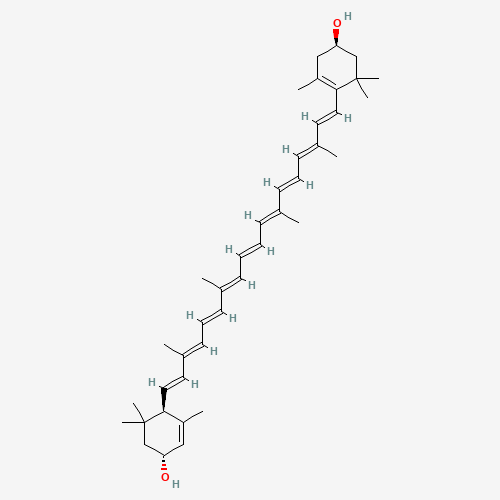
Lutein is a yellow carotenoid obtained from marigold petals, used to colour drinks, dairy products and confectionery. The same substance is sold as a dietary supplement, which is a separate regulatory question from its use as a colour.
Where it is and isn’t permitted
| Jurisdiction | Status | Scope and limits | Citation |
|---|---|---|---|
| Australia and New Zealand | Permitted, with conditions | 47 food categories no numerical limit (good manufacturing practice) Show every food category
| Food Standards Code, Schedule 15, S15—5and 46 further provisionsretrieved 2026-10-17 |
| Canada | No listing matchedHealth Canada’s lists name additives without E or INS numbers, so this site matches them by exact name. A substance listed there under a name this site does not recognise has no row here. | ||
| European Union | Permitted, with conditions | 29 food categories highest permitted level 500 mg/l Show every food category
| Regulation (EC) No 1333/2008, Annex IIand 28 further provisionsretrieved 2026-10-18 |
| Great Britain | Permitted, with conditions | 37 food categories highest permitted level 500 mg/kg or mg/l Show every food category
| Assimilated Regulation (EC) No 1333/2008, Annex II (as at 28 June 2024)and 36 further provisionsretrieved 2026-10-18 |
| Japan | No listing matchedThis site imports only Japan’s list of designated additives (Appended Table 1 to the Regulations for Enforcement of the Food Sanitation Act), matched by English name. Existing additives, natural flavouring agents and ordinary foods used as additives are permitted outside that list and are not imported, so an empty row does not show that Japan does not permit the substance. | ||
| South Korea | Permitted, with conditions | Designated food additive: Standards and Specifications for Food Additives, Part III, 1. …Designated food additive: Standards and Specifications for Food Additives, Part III, 1. 일반식품첨가물 (general food additives), 알팔파추출색소 (“Alfalfa Extract”, the English the Code prints beside it). Main use (주용도) of 알팔파추출색소: 착색료. Standard for use (사용기준) of 알팔파추출색소: (1) [must not be used in the foods listed] “알팔파추출색소는 아래의 식품에 사용하여서는 아니 된다. 1. 천연식품〔식육류, 어패류, 과일류, 채소류, 해조류, 콩류 등 및 그 단순가공품(탈피, 절단 등)〕 2. 다류 3. 커피 4. 고춧가루, 실고추 5. 김치류 6. 고추장, 조미고추장 7. 식초” The Korean is the standard as published. There is no official English translation of the current Code (the English version on MFDS’s website is the 2020 edition and has no legal effect); the English in square brackets is this site’s description of what each sentence does, not a translation of the foods or the levels. Compositional specifications (Part IV) are not imported, nor are the general standards in Part II, which apply to every additive. | Standards and Specifications for Food Additives (식품첨가물의 기준 및 규격), MFDS Notification, Part III (Standards for use, by item)retrieved 2026-10-18 |
| United States | Not listedDoes not appear on this jurisdiction’s permitted list. That is not the same as being prohibited. | ||
| Codex Alimentarius | Permitted, with conditions | 3 food categories highest permitted level 150 mg/kg Show every food category and its notes
| CXS 192-1995 Table Three, INS 161b(i)and 3 further provisionsretrieved 2026-09-07 |
How much is permitted
A listing usually limits the quantity as well as the food. Only one of the forms that takes is a figure: quantum satis and good manufacturing practice permit the amount the technological effect requires and no more, which is a limit rather than the absence of one. Figures below are the range across every food category this page is listed in, and categories differ between regulators — see how much is permitted.
| Australia and New Zealand | — | 47 GMP |
|---|---|---|
| European Union | 50 mg/kg – 500 mg/kg | 28 numeric limit, 1 quantum satis |
| Great Britain | 50 mg/kg – 500 mg/kg | 31 numeric limit, 5 several limits, 1 quantum satis |
| South Korea | — | 1 no quantity stated |
| Codex Alimentarius | 100 mg/kg – 150 mg/kg | 2 numeric limit, 2 GMP |
What it is made from
Extracted with solvents from the dried petals of the Aztec marigold, Tagetes erecta, then saponified to free the lutein from the fatty acid esters it occurs as in the flower.
- Vegan
- Vegetarian
Compare other additives on the dietary indexes.
- CAS registry number
- 127-40-2
- InChIKey
- KBPHJBAIARWVSC-RGZFRNHPSA-N
- PubChem
- CID 5281243
The two specifications, compared
The European Union sets identity and purity by regulation; JECFA publishes its own through FAO, advisory until a country adopts it. Both documents are below in full. These are the parameters each puts a number on.
| Parameter | European Union | JECFA |
|---|---|---|
| Assay | no less than 4 % | stated in prose |
| Lead | no more than 3 mg/kg | no more than 5 mg/kg |
| Arsenic | no more than 3 mg/kg | — |
| Mercury | no more than 1 mg/kg | — |
| Cadmium | no more than 1 mg/kg | — |
One parameter differs between the two documents. A difference is not a disagreement about safety: the two are revised on their own cycles, and an assay or a drying loss can be measured against a different preparation of the substance, which is why only the contaminant ceilings are marked. Within the EU the EU's figure is the one that binds.
How the EU defines it
The legal specification an additive must meet to be sold as this E number in the EU — what it is, how it may be made, and the purity it must reach. From Commission Regulation (EU) No 231/2012.
E 161b Lutein
Lutein is obtained by solvent extraction of the strains of edible fruits and plants, grass, lucerne (alfalfa) and Tagetes erecta. The main colouring principle consists of carotenoids of which lutein and its fatty acid esters account for the major part. Variable amounts of carotenes will also be present. Lutein may contain fats, oils and waxes naturally occurring in the plant material. Only the following solvents may be used for the extraction: methanol, ethanol, propan-2-ol, hexane, acetone, methyl ethyl ketone and carbon dioxide
Synonyms: Mixed Carotenoids; Xanthophylls
Assay, identification and purity criteria
Description and assay
- Einecs
- 204-840-0
- Chemical name
- 3,3′-dihydroxy-d-carotene
- Chemical formula
- C₄₀H₅₆O₂
- Molecular weight
- 568,88
- Assay
- Content of total colouring matter not less than 4 % calculated as lutein [image] 2 550 at ca. 445 nm in chloroform/ethanol (10 + 90) or in hexane/ethanol/acetone (80 + 10 + 10)
- Description
- Dark, yellowish brown liquid
Identification
- Spectrometry
- Maximum in chloroform/ethanol (1:9) at ca. 445 nm
Purity criteria
- Solvent residues
- Acetone [image] | Not more than 50 mg/kg, singly or in combination Methyl ethyl ketone Methanol Ethanol Propan-2-ol Hexane
- Arsenic
- Not more than 3 mg/kg
- Lead
- Not more than 3 mg/kg
- Mercury
- Not more than 1 mg/kg
- Cadmium
- Not more than 1 mg/kg
How JECFA defines it
The international specification for identity and purity, prepared by the Joint FAO/WHO Expert Committee on Food Additives and published by FAO. It is a different document from any above, written by a different body and revised on its own cycle; it is advisory, and a country adopts it or does not.
Mixed Carotenoids
Mixed carotenoids are obtained by solvent extraction of alfalfa, removal of chlorophylls through saponification and subsequent purification of the carotenoids by solvent extraction. The main colouring principle consists of carotenoids of which lutein accounts for the major part. Variable amounts of neoxanthin, violaxanthin and ß-carotene are present. Mixed carotenoids may contain fats, oils and waxes naturally occurring in the plant material. Vegetable oils may be added for standardizing purposes. Only the following solvents may be used for the extraction: methanol, ethanol, propan-2-ol, hexane, acetone, dichloromethane and methyl ethyl ketone. (Note: Articles of commerce may contain approved food additives in order to formulate water soluble products.)
Assay, identification and purity criteria
Description and assay
- Specification history
- Prepared at the 49th JECFA (1997), published in FNP 52 Add 5 (1997) superseding specifications prepared at the 37th JECFA (1990), published in FNP 52 (1992). Metals and arsenic specifications revised at the 59th JECFA (2002). No ADI was allocated at the 31st JECFA (1987)
- Chemical name
- Lutein: 3,3'-dihydroxy-d-carotene; ß,epsilon-carotene-3,3'-diol
- C.A.S. number
- Lutein: 127-40-2
- Chemical formula
- Lutein: C 40 H 56 O 2
- Formula weight
- Lutein: 568.88
- Assay
- Total colouring matter (as lutein) not less than declared
- DESCRIPTION
- Dark, yellowish brown liquids with a weak hay-like odour
- FUNCTIONAL USES
- Colour
- METHOD OF ASSAY
- Proceed as directed in Volume 4, General Methods , Methods for Food Colours, Colouring Matters, Total Content by Spectrophotometry, Procedure 2, using the following conditions: W = amount (g) to obtain adequate absorbance V 1 = V 2 = V 3 = 100 ml v 1 = v 2 = 10 ml A 1% = 2500 1cm lambda max = app. 445 nm
Identification
- Solubility (Vol. 4)
- Insoluble in water; soluble in hexane.
- Spectrophotometry (Vol. 4)
- A chloroform solution of the sample shows maximum absorption at about 445 nm
- Carr-Price test
- A solution of the sample in chloroform turns blue on addition of an excess of Carr-Price TS.
Purity criteria
- Synthetic colours
- Samples should be free of synthetic pigments, canthaxanthin, and apocarotenoic acid ethyl ester. See description under TESTS
- Residual solvent (Vol. 4)
- Acetone, methanol, ethanol, propan-2-ol, and hexane, not more than 50 mg/kg, singly or in combination. Dichloromethane and methyl ethyl ketone, not more than 10 mg/kg, individually.
- Lead (Vol. 4)
- Not more than 5 mg/kg Determine using an atomic absorption technique appropriate to the specified level. The selection of sample size and method of sample preparation may be based on the principles of the method described in Volume 4, “Instrumental Methods.”
- Test: Synthetic colours
- Unknown samples are compared to authentic alfalfa carotenoids. Ground dried alfalfa is extracted with dichloromethane. The extract is saponified and the carotenoids separated by reverse phase liquid chromatography. This test is qualitative and is intended to differentiate alfalfa mixed carotenoids from artificial colours. Apparatus High pressure liquid chromatograph (HPLC) equipped with a variable wavelength detector, a Zorbax ODS 150 mm x 4.6 mm id reverse phase column or equivalent, and a suitable 10-μl injection value. Reagents Acetonitrile, dichloromethane, ethyl acetate, acetone (all HPLC grade), n-decanol, butylated hydroxytoluene (BHT), potassium hydroxide, methanol, sodium sulfate (all analytical reagent or better grade). Add 1 g/l of BHT to all solvents. Add 0.1% (v/v) n-decanol to all mobile phases. Chromatography and detection Mobile phase: ethyl acetate: acetonitrile (12:88) 1.6 ml/min; injection volume 10 μl; detector wavelength 450 nm, full scale range 0.16 AUFS. Procedure Grind dried alfalfa to pass 1-mm mesh screen and thoroughly mix. Accurately weigh 1-2 g sample in a glass stoppered boiling tube. Add 30 ml dichlormethane: acetone (2:1) and shake. Let stand overnight. Add 20 ml dichloromethane, 2 ml 40% (w/v) methanolic potassium hydroxide, shake, and let stand 60 min. Add 30 ml of 10% (w/v) aqueous sodium sulfate, shake, and let stand 60 min. Remove an aliquot of the lower layer and centrifuge 10 min at 2000 rpm. Remove a 3-ml aliquot of the lower yellow layer, mix with 3 ml acetonitrile, and use this solution for analysis. Unknown mixed carotenoid samples are prepared by dissolving a 0.1-0.2 g sample in 50 ml of dichloromethane:acetonitrile (1:1). Inject 10 μl of alfalfa mixed carotenoid standard followed by 10 μl of unknown mixed carotenoid sample and compare chromatograms. The approximate retention times for neoxanthin, violaxanthin, lutein, zeaxanthin, alpha-carotene, and ß-carotene are 3.5, 3.9, 6.0, 7.0, 18, and 19 min, respectively. Synthetic pigments, canthaxanthin, and apocarotenoic acid ethyl ester elute just before lutein.
INS 161b(i) Lutein from Tagetes erecta
Lutein from Tagetes erecta is a purified extract of xanthophylls obtained from oleoresin in marigold. The oleoresin is prepared from hexane extracts of Tagetes erecta L. flowers, saponified with potassium hydroxide in either methanol or propylene glycol. The resulting reaction mixture is diluted with water and dried. The crystalline product contains lutein along with minor components that include other carotenoids and waxes.
Synonyms: INS No. 161b(i), Vegetable lutein; vegetable luteol; Bo-Xan, luteine Bo-Xan (lutein); Vegetable llutein
Assay, identification and purity criteria
Description and assay
- Specification history
- 2 out of 7 Prepared at the 86 th JECFA (2018) and published in FAO JECFA Monograph 22 (2018), superseding specifications prepared at the 63rd JECFA (2004) and published in FNP52 Add 12 (2004). A group ADI of “not specified” was established for Tagetes extract, Lutein from Tagetes erecta, Lutein esters from Tagetes erecta, Zeaxanthin (synthetic), and meso-zeaxanthin at the 86 th JECFA (2018) superseding the group ADI of 0 - 2 mg/kg bw for lutein from T. erecta L. and synthetic zeaxanthin established at the 63rd JECFA (2004).
- Chemical names
- 3R,3’R,6’R- β,ε -carotene-3,3'-diol; all- trans -lutein; 4’,5’- didehydro-5’,6’-dihydro-beta,beta-carotene-3,3’-diol
- C.A.S. number
- 127-40-2
- Chemical formula
- C40H56O2
- Formula weight
- 568.88
- Assay
- Not less than 80% total carotenoids, not less than 70% lutein
- DESCRIPTION
- A free-flowing, orange-red powder
- FUNCTIONAL USES
- Colour, nutrient supplement 3 out of 7
- METHOD OF ASSAY
- Determine the total carotenoid content and the content of lutein and zeaxanthin by UV spectrophotometry and HPLC using the following conditions: Reagents: - Hexane (HPLC grade) - Ethyl acetate (HPLC grade) - Acetone - Dehydrated ethyl alcohol (absolute alcohol) - Toluene - Solvent Mixture: (10:6:7:7 hexane:dehydrated ethyl alcohol:acetone:toluene, v/v/v/v) System Suitability Solution for HPLC: 150 μg/ml of lutein standard in solvent mixture (use USP Lutein RS available from U. S. Pharmacopeia, or equivalent standard) Apparatus UV/Vis spectrophotometer; 1-cm cuvettes HPLC system with suitable diode array detector, autosampler, column oven, signal processor and degasser. Analytical column: 3 μm silica, 4.6 mm x 250 mm Instrument Conditions - Temperature: ambient - Mobile Phase: 70:30 (v:v) hexane/ethyl acetate (isocratic elution) - Flow Rate: 1.5 ml/min - Injection: 10 μl 7 out of 7 - Detection: UV/Vis 446 nm - Run Time: approximately 40 min Concentrated Sample Preparation For the UV/Vis spectrophotometry weigh sample (30 mg) into a glass weighing funnel. Using the solvent mixture, wash crystals into a 100 ml volumetric flask, dilute to the mark with the solvent mixture and stir for 10 min. Sample Preparation Pipette 1 ml of concentrated sample preparation into a 100 ml volumetric flask. Dilute up to the mark with dehydrated ethyl alcohol, mix by inversion for 20 seconds. Read samples in a spectrophotometer at 446 nm using dehydrated ethyl alcohol as the blank. For HPLC, evaporate 1 ml of the concentrated sample preparation to dryness using a stream of nitrogen, dissolve solids in 1 ml 70:30 hexane:ethyl acetate, and add 0.5 ml to HPLC vials. Analyze this sample and the system suitability solution for HPLC using the HPLC conditions above. Results Compare the results of the chromatogram from the system suitability solution for HPLC to identify the lutein and zeaxanthin peaks at a resolution of not less than 3. Calculation Using the results obtained from the UV/Vis spectrophotometry calculate the % Total carotenoids Absorbance at 446 nm × 10000 × 100 % Total carotenoids = sample weight in g × 2550 Note: The factors 10000 and 2550 are the dilution factor and extinction value for a 1% solution, respectively. Using the chromatogram of the sample, calculate the concentration of lutein and zeaxanthin. 𝑃𝑃 𝐿𝐿𝑇𝑇 𝑃𝑃 𝐴𝐴 𝑐𝑐𝐿𝐿𝑇𝑇 𝐿𝐿𝐿𝐿 𝑇𝑇 𝐿𝐿𝐿𝐿𝐿𝐿 𝐿𝐿𝐿𝐿𝐿𝐿𝐿𝐿𝐿𝐿𝐿𝐿 (%) = % 𝑇𝑇𝑇𝑇 𝐿𝐿 𝑇𝑇𝑇𝑇 𝑐𝑐 𝑇𝑇 𝑐𝑐 𝑇𝑇𝐿𝐿𝐿𝐿𝐿𝐿𝑇𝑇𝐿𝐿 𝑐𝑐𝑐𝑐 × 𝑃𝑃 𝐿𝐿𝑇𝑇 𝑃𝑃 𝐴𝐴 𝑐𝑐𝐿𝐿𝑇𝑇 𝑇𝑇𝑇𝑇𝑇𝑇 𝐴𝐴𝐿𝐿 𝑃𝑃𝑃𝑃𝑃𝑃𝑃𝑃 𝐴𝐴𝐴𝐴 𝑃𝑃𝑃𝑃 𝑍𝑍𝑍𝑍 𝐴𝐴 𝑍𝑍 𝐴𝐴 𝑍𝑍𝑍𝑍𝑍𝑍𝑍𝑍𝑍𝑍 𝑍𝑍 𝐿𝐿𝑇𝑇 𝑍𝑍 𝑇𝑇𝐿𝐿𝐿𝐿 ℎ 𝐿𝐿𝐿𝐿 (%) = % 𝑇𝑇𝑇𝑇 𝐿𝐿 𝑇𝑇𝑇𝑇 𝑐𝑐 𝑇𝑇 𝑐𝑐 𝑇𝑇𝐿𝐿𝐿𝐿𝐿𝐿𝑇𝑇𝐿𝐿 𝑐𝑐𝑐𝑐 × 𝑃𝑃𝑃𝑃𝑃𝑃𝑃𝑃 𝐴𝐴𝐴𝐴 𝑃𝑃𝑃𝑃 𝑍𝑍 𝑇𝑇 𝑍𝑍𝐴𝐴 𝑇𝑇
Identification
- Solubility (Vol. 4)
- Insoluble in water, soluble in hexane
- Spectrophotometry (Vol. 4)
- A 2 mg/l solution in acetone shows maximum absorbance at approximately 446 nm.
- Test for carotenoids (Vol. 4)
- The colour of 2 ml of a 2 – 4 mg/l solution of the sample in acetone immediately disappears after successive addition of about 0.5 ml of 5% sodium nitrite and about 0.5 ml of 0.5 M sulfuric acid.
Purity criteria
- Moisture (Vol. 4)
- Not more than 1.0%
- Ash (Vol. 4)
- Not more than 1.0%
- Zeaxanthin
- Not more than 9.0% See description under METHOD OF ASSAY
- Lead (Vol. 4)
- Not more than 3 mg/kg. Determine using a method appropriate to the specified level. The selection of sample size and method of sample preparation may be based on the principles of the methods described in Vol. 4 (under “General Methods, Metallic Impurities”).
- Hexane (Vol. 4)
- Not more than 50 mg/kg
- Methanol (Vol. 4)
- Not more than 10 mg/kg
- Propylene glycol
- Not more than 1000 mg/kg See description under TESTS
- Waxes
- Not more than 14.0% See description under TESTS 4 out of 7
- Test: Propylene glycol
- Determine by gas chromatography (Vol. 4) under the following conditions. Internal standard solution Prepare a 500 μg/ml solution of ethylene glycol in tetrahydrofuran. Standard solutions Prepare a range of standard solutions containing 1, 5, 10, 25 and 50 μg/ml of propylene glycol and 5 μg/ml of ethylene glycol in tetrahydrofuran. Chromatography conditions - Column: Polydimethylsiloxane (30 m x 0.32 mm i.d. with 0.25 μm film) - Carrier gas: Helium - Flow rate: 1.5 ml/min (Constant flow) - Detector: FID - Temperatures: injection port: 230° - Column Temperature: Hold for 3 min at 40°, then 40-250° at 20°/min, hold for 5 min at 250° - Detector Temperature: 270° The retention times of ethylene glycol and propylene glycol derivatives under the above conditions are approx. 7.6 min and 7.8 min, respectively. Procedure Weigh accurately 1 g of the sample into a 10-ml volumetric flask, and add 100 μl of the internal standard solution. Dissolve and make up to volume with tetrahydrofuran. Take 0.5 ml of the sample solution in a centrifugation tube, and add 0.25 ml of 1,1,1,3,3,3-hexamethyldisilazane (HMDS) and 0.1 ml of trimethylchlorosilane (TMCS). After sealing the tube, shake it vigorously, let stand for 30 min at room temperature, then centrifuge. Inject 1 .0 μl of this centrifugal supernatant into the chromatograph. Standard curve Prepare following the same procedure using 0.5 ml of the 5 out of 7 standard solutions in place of the sample solution. Calculate the concentration of propylene glycol in mg/kg (CPG) from: CPG (mg/kg) = C × 10 / W where C is polyethylene glycol concentration determined (μg/ml); and W is weight of sample (g)
- Test: Waxes
- Determine by gas chromatography (Vol. 4) using the following conditions: - GC column DB- 5 (30 m x 0.25 mm ID with a 0.25 μm film thickness) or equivalent. - GC injector temperature: 280° - FID temperature: 350° - GC temperature program: 50° (2 min) 13°/min to 340° and hold for 8 min - Carrier gas (Helium) flow rate: 1.0 ml/min - Injection mode: splitless - Injection volume: 1.0 μl Standards: - Hydrocarbons mixed standard: C25 to C46 - Internal standard: Hexatriancontane (C36) Standard solutions: Prepare standard solutions by addition of hydrocarbon standards to methylene chloride to get hydrocarbon concentrations of 2.0, 5.0, 10, 25, 50, mg/l respectively. Add required quantity of hexatriancontane internal standard to get a final concentration 50 mg/l in all standard solutions. Sample Preparation Accurately weigh 100 mg of sample into a centrifuge tube and dissolve in exactly 20 ml of methylene chloride. Sonication or vortex mixing may be required to completely dissolve the product. Centrifuge sample at 2500 rpm for 5 min, if the sample appears turbid. Add 1.6 ml of methyl ene chloride and 20 μl of (5000 mg/l) hexatriancontane solution (to a final concentration of 50 mg/l) into 2 ml volumetric flask. Transfer 40 μl of sample solution and dilute with methylene chloride to the 2 ml. Transfer the solution into a 2 ml autosampler vial. Analysis 6 out of 7 Inject 1.0 μl of each of the standards solution s. Record the peak areas. Construct standard curves using the peak ratios of each hydrocarbon to the internal standard against the concentration of the hydrocarbon. Inject 1.0 μl of the sample solution and determine individual wax in the sample (mg/l) from the respective standard curve. Add the concentration of individual waxes to get the total wax concentration in the sample solution (mg/l) Calculation: C (mg/l) × 2 ml × 20 ml × 100 Waxes % w/w = 1000 (ml/l) × W (mg) × 0.04 ml = (100 × C)/W Where: C is the total concentration of waxes, mg/l in the sample W is the weight of sample, mg
INS 161b(ii) Tagetes Extract
The major colouring principles are lutein and its dipalmitate (helenien), obtained by hexane extraction of dried petals of Tagetes erecta L. with subsequent removal of the solvent. Other hydroxy derivatives of carotenes may be present together with other oxyderivatives such as epoxides; may contain fats, oils and waxes naturally occurring in the plant material. Products of commerce are normally further formulated e.g. in order to standardise the colour content or to obtain water soluble/dispersible products.
Synonyms: Xanthophylls, INS No. 161b(ii) Xanthophylls
Assay, identification and purity criteria
Description and assay
- Specification history
- Prepared at the 57th JECFA (2001) and published in FNP 52 Add 9 (2001), superseding tentative specifications prepared at the 55th JECFA (2000) and published in FNP 52 Add 8 (2000). No ADI was allocated at the 31st JECFA (1987).
- Chemical names
- Lutein: β , ε -Carotene-3,3'-diol, Helenien: Lutein dipalmitate; β , ε -Carotene-3,3'-diol dipalmitate
- C.A.S. number
- 127-40-2 (Lutein)
- Chemical formula
- Lutein: C 40 H 56 0 2 Helenien: C 72 H 116 0 4
- Structural formula
- Lutein: R = H Helenien: R = CH 3 (CH 2 ) 14 CO
- Formula weight
- Lutein: 568.88 Helenien: 1045.71
- Assay
- Content of total colouring matter (calculated as lutein) not less than declared
- DESCRIPTION
- Dark yellow-brown liquid
- FUNCTIONAL USES
- Colour
- METHOD OF ASSAY
- Accurately weigh 0.5 - 1.5 g of the sample into a 50 ml volumetric flask. Add about 30 ml of a 1:1 mixture of cyclohexane and ethanol (96%) and swirl gently until the sample is dissolved. Fill to the mark with cyclohexane/ethanol mixture and mix well. Pipette 0.200 ml of the solution into a 25 ml volumetric flask. Make up to mark with cyclohexane/ethanol and mix well. Measure the absorbance at maximum of about 444 nm using cyclohexane/ethanol mixture as blank. The absorbance should be between 0.2 and 0.8, otherwise an appropriate dilution must be prepared. Calculation: Where A = absorbance V 1 = Volume of fist volumetric flask (ml) V 2 = Volume of second volumetric flask (ml) 2900 = specific absorbance for lutein in cyclohexane/ethanol at 444 nm v = volume of pipette (0.200 ml) W = weight of sample (g)
Identification
- Solubility (Vol. 4)
- Insoluble in water; soluble in hexane
- Spectrophotometry
- An acetone solution of the sample shows maximum absorption at about 444 nm
- Positive test for carotenoids
- The colour of a solution of the sample in acetone disappears after successive addition of a 5% solution of sodium nitrite and 0.5 M of sulfuric acid.
Purity criteria
- Residual solvent (Vol. 4)
- Hexane: not more than 50 mg/kg
- Lead (Vol. 4)
- Not more than 2 mg/kg Determine using an atomic absorption technique appropriate to the specified level. The selection of sample size and method of sample preparation may be based on the principles of the method described in Volume 4, "Instrumental methods".
Every name it appears under
81 recorded names. A label may use any of them.
E number
- E161
- E161B
INS number
- 161b(i)
CAS registry number
- 127-40-2
As it appears in regulation
- Lutein
Other names
- ( inverted exclamation markA)-Lutein
- ()-Lutein
- (3R,3'R,6'R)-beta,epsilon-carotene-3,3'-diol
- (3R,3'R,6'R)-Lutein
- (all-E)-Lutein
- .beta.,.epsilon.-Carotene-3,3'-diol
- .beta.,.epsilon.-Carotene-3,3'-diol, (3R,3'R,6'R)-
- ?-Carotene-3,3'-diol
- A1LXP
- all-trans-(+)-Xanthophyll
- all-trans-Lutein
- all-trans-Xanthophyll
- beta,epsilon-Carotene-3, 3'-Diol, (3R,3'R,6'S)-
- beta,epsilon-Carotene-3,3'-diol
- beta,epsilon-Carotene-3,3'-diol, (3R,3'R,6'R)-
- beta,epsilon-Carotene-3,3'-diol, (3S,3'R,6'S)-
- Bo-Xan
- Citranaxanthin
- E 161(i) (feed)
- E 161b
- e-carotene-3,3'-diol
- FloraGLO
- FloraGLO Lutein
- gamma Lutein
- INS NO.161B(I)
- INS-161B(I)
- Leutein
- Leutin
- Lutamax
- Lutein
- Lutein (Standard)
- Lutein (Xanthophyll)
- Lutein - 10%
- Lutein - 20%
- Lutein - 5%
- Lutein - 50%
- Lutein - 95%
- Lutein A
- Lutein ester
- LUTEIN FROM TAGETES ERECTA
- Lutein Powder
- Lutein, 88%
- Lutein, all-trans-
- Lutein, analytical standard
- Lutein, gamma
- Lutein; Xantofyl
- Mixed Carotenoids
- Noon for Kids
- Oro Glo 7
- trans-Lutein
- Vegetable lutein
- Vegetable luteol
- Xanthophyll (~80%)
- XANTHOPHYLL [MI]
- Xanthophyll, all-trans-(+)-
- Xanthophyll, from marigold
- Xanthophyll, tech grade
- Xanthophylls
- Xantofyl
Systematic names
- (1R)-4-[(1E,3E,5E,7E,9E,11E,13E,15E,17E)-18-[(1R,4R)-4-hydroxy-2,6,6-trimethylcyclohex-2-en-1-yl]-3,7,12,16-tetramethyloctadeca-1,3,5,7,9,11,13,15,17-nonaenyl]-3,5,5-trimethylcyclohex-3-en-1-ol
- (1R,4R)-4-((1E,3E,5E,7E,9E,11E,13E,15E,17E)-18-((R)-4-hydroxy-2,6,6-trimethylcyclohex-1-en-1-yl)-3,7,12,16-tetramethyloctadeca-1,3,5,7,9,11,13,15,17-nonaen-1-yl)-3,5,5-trimethylcyclohex-2-en-1-ol
- (1R,4R)-4-((1E,3E,5E,7E,9E,11E,13E,15E,17E)-18-((R)-4-hydroxy-2,6,6-trimethylcyclohex-1-en-1-yl)-3,7,12,16-tetramethyloctadeca-1,3,5,7,9,11,13,15,17-nonaen-1-yl)-3,5,5-trimethylcyclohex-2-enol
- (3E,5E,7E,9E,11E,13E,15E,17E,19E)-5,9,14,18-tetramethyl-20-(2,6, 6-trimethylcyclohexen-1-yl)icosa-3,5,7,9,11,13,15,17,19-nonaen-2-one
- 4-(18-(4-hydroxy-2,6,6-trimethyl-1-cyclohex-2-enyl)-3,7,12,16-tetramethyl-octadeca-1,3,5,7,9,11,13,15,17-nonaenyl)-3,5,5-trimethyl-cyclohex-3-en-1-ol
The EU re-evaluation programme
Every additive authorised in the EU before 20 January 2009 was put back through EFSA by Commission Regulation (EU) No 257/2010, and this one is named in it. What the Regulation required is below; whether the opinion has since been published is not something this site records.
- To be evaluated by 31 December 2010. Named in Annex II, Part I, point 2 as “Lutein”, among the additives given priority within its class.
Hazard reference values
| Type | Value | Population | Assessed by | Opinion |
|---|---|---|---|---|
| ADI | 1 mg/kg bw/day | consumers | EFSA | not identified in the dataset |
Evidence and how bodies read it
What assessing bodies concluded
Each conclusion is paraphrased in the body's own framing, from the published opinion linked beneath it. Where bodies differ, both stand; this site does not adjudicate between them or add a view of its own.
EFSA 2011
Reviewing additional studies on lutein esters from Tagetes erecta, the ANS Panel concluded that the ADI of 1 mg/kg bw/day also covers lutein preparations present as esters at levels of at least 60%, and that the esters raise no concern for genotoxicity. It considered the data too limited to extend the ADI to lower-purity preparations or other sources.
EFSA 2010
The ANS Panel established an ADI of 1 mg/kg bw/day for lutein (E 161b), applying an uncertainty factor of 200 because multigeneration and long-term studies were lacking, and specified that it refers to lutein from Tagetes erecta with at least 80% carotenoids. It concluded that refined intake estimates at current use levels were above the ADI at the upper end of the range.
Common questions
Assembled from what is above, in the words the questions are usually asked in. Each answer is the same statement the relevant section makes, with the same citations behind it.
- What is E 161b?
- E 161b is Lutein from Tagetes erecta. Lutein is a yellow carotenoid obtained from marigold petals, used to colour drinks, dairy products and confectionery. The same substance is sold as a dietary supplement, which is a separate regulatory question from its use as a colour.
- What is Lutein from Tagetes erecta used for in food?
- It is listed as a colour — the role Codex and the EU assign it. This page shows every function each regulator records, with the citation for each.
- Where is Lutein from Tagetes erecta permitted?
- Of the seven regulators this site reads, Australia and New Zealand, the EU, Great Britain, South Korea and the Codex standard permit it. Each permission is for named foods at named levels, not a blanket one; the table on this page gives them with citations.
- Is Lutein from Tagetes erecta vegan?
- Yes. Lutein from Tagetes erecta is not derived from animals, and is suitable for vegetarians. This page says what it is made from and how.
Sources for this page
- anz retrieved 2026-10-17
- eu retrieved 2026-10-18
- gb retrieved 2026-10-18
- kr retrieved 2026-10-18
- gsfa retrieved 2026-09-07
- euspecs retrieved 2026-10-18
- jecfaspecs retrieved 2026-09-23
Full licence terms and publisher details on Sources. How this page is built and updated: Method.
Machine-readable: a JSON record of this additive is given on request —how to ask for access.
Follow changes to Lutein from Tagetes erecta:Atom feed — regulatory events, and any change the weekly refresh detects in its provisions.