Lycopene
502-65-8 · (all-e)-lycopene · (all-trans)-lycopene · .psi.,.psi.-Carotene · ?,?-carotene · Aec lycopene · All trans Lycopene · all-trans-Lycopene · Ateronon · Blakeslea trispora · CAS-502-65-8 · CCRIS 7925 · E 160d · E-160D(III) · FEMA NO. 4110 · INS NO.160D(III) · INS-160D(III) · LYC · LYC O MATO · LYC-O-MATO · Lyco Vit · LYCOMATO · LYCOPENE · Lycopene (>80%) · Lycopene (VAN) · Lycopene 7 · Lycopene [M+H]+ · Lycopene from blakeslea trispora · Lycopene oil · Lycopene preparation · Lycopene, >=90%, from tomato · Lycopene, >=98% (HPLC), from tomato · Lycopene, all-trans- · Lycopene, analytical standard · Lycopene, Pharmaceutical Secondary Standard; Certified Reference Material · Lycopene, United States Pharmacopeia (USP) Reference Standard · lycored · Mexoryl SAQ · Natural Yello 27 · Pro Lycopene · Pro-Lycopene · Psi,psi-carotene · psi-psi-carotene · Redivivo · Solanorubin · Tomat-O-Red · TOMATO LYCOPENE · trans-Lycopene · y,y-Carotene · |x,?|x-?carotene · E160d · (6E,8E,10E,12E,14E,16E,18E,20E,22E,24E,26E)-2,6,10,14,19,23,27,31-Octamethyl-2,6,8,10,12,14,16,18,20,22,24,26,30-dotriacontatridecaene · (6E,8E,10E,12E,14E,16E,18E,20E,22E,24E,26E)-2,6,10,14,19,23,27,31-octamethyldotriaconta-2,6,8,10,12,14,16,18,20,22,24,26,30-tridecaene · (all-E)-2,6,10,14,19,23,27,31-Octamethyl-2,6,8,10,12,14,16,18,20,22,24,26,30-dotriacontatridecaene · 2,6,10,14,19,23,27,31-octamethyldotriaconta-2,6,8,10,12,14,16,18,20,22,24,26,30-tridecaene · 2,6,8,10,12,14,16,18,20,22,24,26,30-Dotriacontatridecaene, 2,6,10,14,19,23,27,31-octamethyl-, (6E,8E,10E,12E,14E,16E,18E,20E,22E,24E,26E)- · 2,6,8,10,12,14,16,18,20,22,24,26,30-Dotriacontatridecaene, 2,6,10,14,19,23,27,31-Octamethyl-, (all-E)- · Lycopene · i Likopen sintetiku · i) LICOPENO SINTÉTICO · I) Lycopène synthétique · i) SINTETINIS LIKOPENAS · i) SYNTEETTINEN LYKOPEENI · i) Syntetický lykopen · i) SYNTHETISCH LYCOPEEN · i) Sünteetiline lükopeen · i) Синтетичен ликопен · ii Likopen mit-tadam aħmar · ii) LICOPENO PROVENIENTE DE TOMATE VERMELHO · ii) LIKOPENAS IŠ RAUDONŲJŲ POMIDORŲ · ii) LYCOPEEN UIT RODE TOMATEN · II) Lycopène de tomates rouges · ii) Lykopen ze zralých rajčat · ii) LYKOPÉN Z ČERVENÝCH RAJČIAKOV · ii) PUNAISISTA TOMAATEISTA SAATAVA LYKOPEENI · ii) Punase tomati lükopeen · ii) Ликопен от червени домати · iii Likopen minn Blakeslea trispora · iii) BLAKESLEA TRISPORA -SIENESTÄ SAATAVA LYKOPEENI · iii) Blakeslea trispora′st saadav lükopeen · iii) LICOPENO PROVENIENTE DE BLAKESLEA TRISPORA · iii) LIKOPENAS IŠ BLAKESLEA TRISPORA · iii) LYCOPEEN UIT BLAKESLEA TRISPORA · III) Lycopène issu de Blakeslea trispora · iii) Lykopen z Blakeslea trispora · iii) Ликопен от Blakeslea trispora · Licopen · Licopen din tomate · Licopen obținut din Blakeslea trispora · Licopen sintetic · Licopene · LICOPENE OTTENUTO DA BLAKESLEA TRISPORA · LICOPENE OTTENUTO DA POMODORI ROSSI · LICOPENE SINTETICO · Licopeno · Licopeno de Blakeslea trispora · Licopeno de tomates rojos · Licopeno sintético · Likopen · LIKOPEN IZ BLAKESLEA TRISPORA · LIKOPEN IZ CRVENIH RAJČICA · LIKOPEN IZ GLJIVE BLAKESLEA TRISPORA · LIKOPEN IZ RDEČIH PARADIŽNIKOV · LIKOPEN OTRZYMYWANY Z BLAKESLEA TRISPORA · LIKOPEN OTRZYMYWANY Z CZERWONYCH POMIDORÓW · LIKOPEN SYNTETYCZNY · Likopenas · Likopene · Likopin · Likopin Blakeslea trisporából · Likopin piros paradicsomból · Likopēns · Likopēns no Blakeslea trispora · Likopēns no sarkanajiem tomātiem · Lycopeen · Lycopen · LYCOPEN FRA BLAKESLEA TRISPORA · LYCOPEN FRA RØDE TOMATER · Lycopene · LYCOPENE FROM BLAKESLEA TRISPORA · LYCOPENE FROM RED TOMATOES · Lycopin · Lycopin aus Blakeslea trispora · Lycopin aus roten Tomaten · Lykopeeni · Lykopen · Lykopen från Blakeslea trispora · Lykopen från röda tomater · Lükopeen · SINTETIČNI LIKOPEN · SINTETSKI LIKOPEN · Sintētiskais likopēns · SYNTETISK LYCOPEN · Syntetiskt lykopen · SYNTHETIC LYCOPENE · Synthetisches Lycopin · Szintetikus likopin · ΛΥΚΟΠΕΝΙΟ ΑΠΟ BLAKESLEA TRISPORA · ΛΥΚΟΠΕΝΙΟ ΑΠΟ ΚΟΚΚΙΝΕΣ ΤΟΜΑΤΕΣ · Λυκοπένιο · ΣΥΝΘΕΤΙΚΟ ΛΥΚΟΠΕΝΙΟ · ЛикопенE number E160dCAS 502-65-8
Listed as a colour and a flavouring agent by the EU and the US.
Listed as colours (EU) · flavouring agents and adjuvants (US)
- European Union: Colours — Regulation (EC) No 1333/2008, Annex II, Part B, 1. Colours (consolidated text 02008R1333-20260818)
- United States: Flavoring agent or adjuvant — FDA, Substances Added to Food: TOMATO LYCOPENE
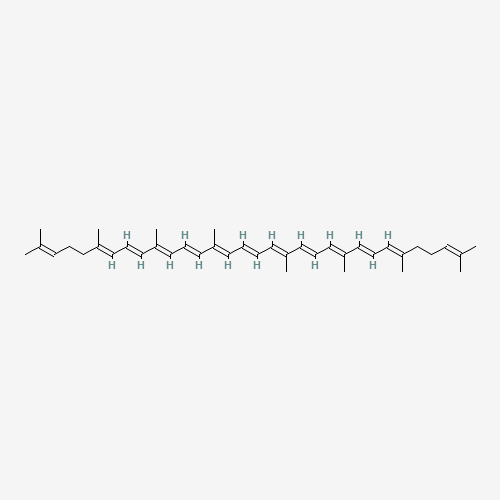
Lycopene is the red pigment of tomatoes, used as a colour in drinks, desserts, confectionery and sauces. The single E number covers several production routes.
Where it is and isn’t permitted
| Jurisdiction | Status | Scope and limits | Citation |
|---|---|---|---|
| Australia and New Zealand | Permitted, with conditions | 47 food categories no numerical limit (good manufacturing practice) Show every food category
| Food Standards Code, Schedule 15, S15—5and 46 further provisionsretrieved 2026-10-17 |
| Canada | No listing matchedHealth Canada’s lists name additives without E or INS numbers, so this site matches them by exact name. A substance listed there under a name this site does not recognise has no row here. | ||
| European Union | Permitted, with conditions | 31 food categories highest permitted level 500 mg/l Show every food category
| Regulation (EC) No 1333/2008, Annex IIand 30 further provisionsretrieved 2026-10-18 |
| Great Britain | Permitted, with conditions | 29 food categories highest permitted level 300 mg/kg or mg/l Show every food category
| Assimilated Regulation (EC) No 1333/2008, Annex II (as at 28 June 2024), under E 160dand 28 further provisionsretrieved 2026-10-18 |
| Japan | No listing matchedThis site imports only Japan’s list of designated additives (Appended Table 1 to the Regulations for Enforcement of the Food Sanitation Act), matched by English name. Existing additives, natural flavouring agents and ordinary foods used as additives are permitted outside that list and are not imported, so an empty row does not show that Japan does not permit the substance. | ||
| South Korea | No listing matchedThis site imports Part III of South Korea’s Standards and Specifications for Food Additives, matched by CAS number, then INS number, then exact name. Mixed preparations and sanitisers are not imported, and an entry whose identifiers disagreed with a page’s is held for review, so an empty row does not show that South Korea does not permit the substance. | ||
| United States | Not listedDoes not appear on this jurisdiction’s permitted list. That is not the same as being prohibited. | ||
| Codex Alimentarius | Not listedDoes not appear on this jurisdiction’s permitted list. That is not the same as being prohibited. |
How much is permitted
A listing usually limits the quantity as well as the food. Only one of the forms that takes is a figure: quantum satis and good manufacturing practice permit the amount the technological effect requires and no more, which is a limit rather than the absence of one. Figures below are the range across every food category this page is listed in, and categories differ between regulators — see how much is permitted.
| Australia and New Zealand | — | 47 GMP |
|---|---|---|
| European Union | 5 mg/kg – 500 mg/kg | 31 numeric limit |
| Great Britain | 5 mg/kg – 300 mg/kg | 26 numeric limit, 3 several limits |
What it is made from
Extracted from red tomatoes, produced by fermenting the fungus Blakeslea trispora, or made by chemical synthesis. The listing does not tell a reader which was used.
- Vegan
- Vegetarian
Compare other additives on the dietary indexes.
- CAS registry number
- 502-65-8
- InChIKey
- OAIJSZIZWZSQBC-GYZMGTAESA-N
- PubChem
- CID 446925
The two specifications, compared
The European Union sets identity and purity by regulation; JECFA publishes its own through FAO, advisory until a country adopts it. Both documents are below in full. These are the parameters each puts a number on.
| Parameter | European Union | JECFA |
|---|---|---|
| Assay | no less than 96 % | no less than 96 % |
| Loss on drying | no more than 0.5 % | no more than 0.5 % |
| Sulphated ash | no more than 1 % | no more than 1 % |
| Lead | no more than 1 mg/kg | no more than 1 mg/kg |
| Arsenic | no more than 3 mg/kg | no more than 3 mg/kg |
| Mercury | no more than 1 mg/kg | — |
| Cadmium | no more than 1 mg/kg | — |
The two documents state the same figures for every parameter compared here.
How the EU defines it
The legal specification an additive must meet to be sold as this E number in the EU — what it is, how it may be made, and the purity it must reach. From Commission Regulation (EU) No 231/2012.
E 160d LYCOPENE — (i) SYNTHETIC LYCOPENE
Synthetic lycopene is a mixture of geometric isomeres of lycopenes and is produced by the Wittig condensation of synthetic intermediates commonly used in the production of other carotenoids used in food. Synthetic lycopene consists predominantly of all-trans-lycopene together with 5-cis-lycopene and minor quantities of other isomers. Commercial lycopene preparations intended for use in food are formulated as suspensions in edible oils or water-dispersible or water-soluble powder.
Synonyms: Lycopene from chemical synthesis
Assay, identification and purity criteria
Description and assay
- Colour Index No
- 75125
- Einecs
- 207-949-1
- Chemical name
- ψ,ψ-carotene, all-trans-lycopene, (all-E)-lycopene, (all-E)-2,6,10,14,19,23,27,31-octamethyl-2,6,8,10,12,14,16,18,20,22,24,26,30-dotriacontatridecaene
- Chemical formula
- C₄₀H₅₆
- Molecular weight
- 536,85
- Assay
- Not less than 96 % total lycopenes (not less than 70 % all-trans-lycopene) [image] at 465-475 nm in hexane (for 100 % pure all-trans-lycopene) is 3 450
- Description
- Red crystalline powder
Identification
- Spectrophotometry
- A solution in hexane shows an absorption maximum at approximately 470 nm
- Test for carotenoids
- The colour of the solution of the sample in acetone disappears after successive additions of a 5 % solution of sodium nitrite and 1N sulphuric acid
- Solubility
- Insoluble in water, freely soluble in chloroform
- Properties of 1 % solution in chloroform
- Is clear and has intensive red-orange colour
Purity criteria
- Loss on drying
- Not more than 0,5 % (40 °C, 4 h at 20 mm Hg)
- Apo-12’-lycopenal
- Not more than 0,15 %
- Triphenyl phosphine oxide
- Not more than 0,01 %
- Solvent residues
- Methanol not more than 200 mg/kg, Hexane, Propan-2-ol: Not more than 10 mg/kg each. Dichloromethane: Not more than 10 mg/kg (in commercial preparations only)
- Lead
- Not more than 1 mg/kg
Commission Regulation (EU) No 231/2012, Annex, E 160d, (i) SYNTHETIC LYCOPENE
E 160d LYCOPENE — (ii) LYCOPENE FROM RED TOMATOES
Lycopene is obtained by solvent extraction of red tomatoes (Lycopersicon esculentum L.) with subsequent removal of the solvent. Only the following solvent may be used: carbon dioxide, ethyl acetate, acetone, propan-2-ol, methanol, ethanol and hexane. The major colouring principle of tomatoes is lycopene; minor amounts of other carotenoid pigments may be present. Besides the colour pigments the product may contain oil, fats, waxes and flavour components naturally occurring in tomatoes.
Synonyms: Natural Yellow 27
Assay, identification and purity criteria
Description and assay
- Colour Index No
- 75125
- Einecs
- 207-949-1
- Chemical name
- Ψ,Ψ-carotene, all-trans-lycopene, (all-E)-lycopene, (all-E)-2,6,10,14,19,23,27,31-octamethyl-2,6,8,10,12,14,16,18,20,22,24,26,30-dotriacontatridecaene
- Chemical formula
- C₄₀H₅₆
- Molecular weight
- 536,85
- Assay
- [image] at 465-475 nm in hexane (for 100 % pure all-trans-lycopene) is 3 450 . Content not less than 5 % total colouring matters
- Description
- Dark red viscous liquid
Identification
- Spectrophotometry
- Maximum in hexane at ca. 472 nm
Purity criteria
- Solvent residues
- Propan-2-ol [image] | Not more than 50 mg/kg, singly or in combination Hexane Acetone Ethanol Methanol Ethylacetate
- Sulphated ash
- Not more than 1 %
- Mercury
- Not more than 1 mg/kg
- Cadmium
- Not more than 1 mg/kg
- Arsenic
- Not more than 3 mg/kg
- Lead
- Not more than 2 mg/kg
Commission Regulation (EU) No 231/2012, Annex, E 160d, (ii) LYCOPENE FROM RED TOMATOES
E 160d LYCOPENE — (iii) LYCOPENE FROM BLAKESLEA TRISPORA
Lycopene from Blakeslea trispora is extracted from the fungal biomass and purified by crystallisation and filtration. It consists predominantly of all-trans-lycopene. It also contains minor quantities of other carotenoids. Propan-2-ol and isobutyl acetate are the only solvents used in the manufacture. Commercial lycopene preparations intended for use in food are formulated as suspensions in edible oils or water-dispersible or water-soluble powder.
Synonyms: Natural Yellow 27
Assay, identification and purity criteria
Description and assay
- Colour Index No
- 75125
- Einecs
- 207-949-1
- Chemical name
- Ψ,Ψ-carotene, all-trans-lycopene, (all-E)-lycopene, ((all-E)-2,6,10,14,19,23,27,31-octamethyl-2,6,8,10,12,14,16,18,20,22,24,26,30-dotriacontatridecaene
- Chemical formula
- C₄₀H₅₆
- Molecular weight
- 536,85
- Assay
- Not less than 95 % total lycopenes and not less than 90 % all-trans-lycopene of all colouring matters [image] at 465-475 nm in hexane (for 100 % pure all-trans-lycopene) is 3 450
- Description
- Red crystalline powder
Identification
- Spectrophotometry
- A solution in hexane shows an absorption maximum at approximately 470 nm
- Test of carotenoids
- The colour of the solution of the sample in acetone disappears after successive additions of a 5 % solution of sodium nitrite and 1N sulphuric acid
- Solubility
- Insoluble in water, freely soluble in chloroform
- Properties of 1 % solution in chloroform
- Is clear and has intensive red-orange colour
Purity criteria
- Loss on drying
- Not more than 0,5 % (40 °C, 4 h at 20 mm Hg)
- Other carotenoids
- Not more than 5 %
- Solvent residues
- Propan-2-ol: not more than 0,1 % Isobutyl acetate: not more than 1,0 % Dichloromethane: not more than 10 mg/kg (in commercial preparations only)
- Sulphated ash
- Not more than 0,3 %
- Lead
- Not more than 1 mg/kg
Commission Regulation (EU) No 231/2012, Annex, E 160d, (iii) LYCOPENE FROM BLAKESLEA TRISPORA
How JECFA defines it
The international specification for identity and purity, prepared by the Joint FAO/WHO Expert Committee on Food Additives and published by FAO. It is a different document from any above, written by a different body and revised on its own cycle; it is advisory, and a country adopts it or does not.
INS 160d(i) Lycopene (Synthetic)
Synthetic lycopene is produced by the Wittig condensation of synthetic intermediates commonly used in the production of other carotenoids used in food. Synthetic lycopene consists predominantly of all-trans-lycopene together with 5-cis-lycopene and minor quantities of other isomers. Commercial lycopene preparations intended for use in food are formulated as suspensions in edible oils or water-dispersible powders and are stabilised with antioxidants.
Synonyms: INS 160d(i)
Assay, identification and purity criteria
Description and assay
- Specification history
- 2 out of 7 Specifications revised at the 96th JECFA (2023) and published in FAO JECFA Monographs 31 (2023) superseding specifications prepared at the 67th JECFA (2006). A group ADI “not specified” for lycopene from all sources was established at the 71st JECFA (2009).
- Chemical names
- Ψ , Ψ -carotene all-trans-lycopene (all-E)-lycopene (all-E)-2,6,10,14,19,23,27,31-octamethyl-2,6,8,10,12,14,16,18,20,22,24,26,30-dotriacontatridecaene
- C.A.S. number
- 502-65-8
- Chemical formula
- C40H56
- Formula weight
- 536.9
- Assay
- Not less than 96% total lycopenes; not less than 70% all- trans-lycopene
- DESCRIPTION
- Red crystalline powder
- FUNCTIONAL USES
- Colour, nutrient supplement 3 out of 7
- METHOD OF ASSAY
- Determine total lycopenes and all- trans -lycopene by HPLC using the following conditions: Reagents (Note: all solvents should be HPLC-grade) Hexane Tetrahydrofuran stabilised with 0.025% BHT N-Ethyl-diisopropylamine Lycopene standard (purity 95% or higher; available from CaroteNature GmbH) Apparatus Spectrophotometer with a 1-cm cuvette HPLC system with a suitable pump, injector, thermostated column compartment, and integrator Column: Two serially-connected stainless steel columns (250x4.0 mm) Stationary phase: Nucleosil 300-5, 5 μm (Macherey-Nagel or equivalent) Detector: UV-Vis HPLC conditions Flow rate: 0.8 ml/min Injection volume: 20 μl Pressure: approx. 80 bar Column temperature: 20 °C Detection: 470 nm Mobile phase: 0.15% solution of N-ethyl-diisopropylamine in hexane (v/v) Run time: 30 min HPLC standard solution Accurately weigh between 5.5 and 6.5 mg of the lycopene standard into a 100-ml volumetric flask. Dissolve in 5 ml of tetrahydrofuran stabilised with BHT and make up to volume with hexane. This is a standard solution for the HPLC assay. Spectrophotometric standard solution Transfer 5.0 ml of the HPLC standard solution into a 100-ml volumetric flask and make up to volume with hexane. This is a standard solution for the spectrophotometric determination of lycopene in the lycopene standard. Sample solution Accurately weigh between 4.5 and 5.5 mg of the sample into a 100-ml volumetric flask. Dissolve in 5 ml of tetrahydrofuran stabilised with BHT and make up to volume with hexane. 6 out of 7 Spectrophotometric determination of lycopene Measure the absorbance of the spectrophotometric standard solution in a 1-cm cuvette at the wavelength of maximum absorption (approximately 470 nm). Use hexane as the blank. Calculation A × 10000 C St (mg/l) = 3450 where CSt is the lycopene concentration in the spectrophotometric standard solution (mg/l) A is absorbance at the wavelength of maximum absorption; 3450 is the specific absorbance 𝐴𝐴1 1% of all trans-lycopene 𝑐𝑐𝑐𝑐 in hexane; and 10000 is the scaling factor. HPLC analysis Repeatedly inject 20 μl of the HPLC standard solution. Record the total peak area of all detected lycopene isomers (exclude the solvent peak). Calculate the mean peak area from repeated injections and calculate the lycopene response factor (RF) according to the formula: A St RF = × 20 C St where RF is the response factor of lycopene (AU x l/mg); ASt is the mean peak area of all lycopene peaks (AU); CSt is the concentration of lycopene in the spectrophotometric standard solution (mg/l); and 20 is the dilution factor used in the preparation of the spectrophotometric standard solution from the HPLC standard solution. Inject the sample solution and record the peak areas of lycopene isomers. 7 out of 7 Results Retention times Lycopene isomer Relative Absolute retention retention time* time (approx.) 13- cis -lycopene 0.6 14 min 9- ci s-lycopene 0.8 19 min All- trans -lycopene 1.0 22 min 5- cis -lycopene 1.1 24 min * relative to all -trans- lycopene Calculations Calculate the content of total lycopenes according to the formula: 𝐴𝐴 𝑆𝑆 𝑡𝑡𝑡𝑡𝑡𝑡𝑡𝑡 +𝐴𝐴5𝑐𝑐𝑐𝑐 𝑡𝑡 +𝐴𝐴9𝑐𝑐𝑐𝑐 𝑡𝑡 +𝐴𝐴13𝑐𝑐𝑐𝑐 𝑡𝑡 +𝐴𝐴𝑥𝑥 𝑐𝑐𝑐𝑐𝑡𝑡 × 0 . 1 𝑇𝑇𝑇𝑇𝑇𝑇𝑇𝑇𝑇𝑇 𝑇𝑇 𝑙𝑙𝑙𝑙 𝑇𝑇 𝑙𝑙𝑙𝑙𝑙𝑙𝑙𝑙𝑙𝑙 ( % ) = × 100 𝑅𝑅𝑅𝑅 × 𝑊𝑊𝑆𝑆 Where: Atrans is the peak area of all- trans -lycopene (AU); A5cis, A9 cis , and A13 cis are the peak areas of 5 cis -, 9 cis -, and 13- cis -lycopene (AU); Axcis is the peak area of other cis isomers, if detected (AU); 0.1 is the volume, in litres, of the flask in which the sample was dissolved; RF is the response factor of lycopene (AU x l/mg); and WS is the weight of the sample (mg). Calculate the content of all- trans -lycopene as follow 𝐴𝐴𝑡𝑡𝑡𝑡𝑡𝑡𝑡𝑡𝑡𝑡 × 0.1 All- trans -lycopene ( % ) = × 100 𝑅𝑅𝑅𝑅 × 𝑊𝑊 𝑆𝑆
Identification
- Solubility (Vol. 4)
- Insoluble in water, sparingly soluble in tetrahydrofuran (THF)
- Test for carotenoids
- The colour of the solution of the sample in acetone disappears after successive additions of a 5% solution of sodium nitrite and 1 N sulfuric acid
- Solution in THF
- A 1% solution is clear and has intensive red-orange colour
- Spectrophotometry (Vol. 4)
- A solution in hexane shows an absorption maximum at approximately 470 nm
Purity criteria
- Loss on drying (Vol. 4)
- Not more than 0.5% (40 °C, 4 h at 10 mm Hg)
- Lead (Vol. 4)
- Not more than 1 mg/kg Determine using an AAS/ICP-AES technique appropriate to the specified level. The selection of sample size and method of sample preparation may be based on principles of methods described in Volume 4 (under “General Methods, Metallic Impurities”).
- Apo -12’-lycopenal
- Not more than 0.15% See description under TESTS
- Triphenyl phosphine oxide (TPPO) (Vol. 4)
- Not more than 0.01%
- Test: Apo -12’-lycopenal
- Determine by HPLC using the following conditions: Reagents (Note: all solvents should be HPLC-grade) Hexane Triethylamine (TEA) Tetrahydrofuran (THF) Toluene stabilised with BHT (0.5 g BHT in 1000 ml toluene) Apo -12’-lycopenal (also known as lycopene C25-aldehyde) standard (available from DSM Nutritional Products) Apparatus HPLC system with a suitable pump, injector, and integrator Column: Stainless steel (200x4.0 mm) Stationary phase: Nucleosil Si 100 3 μm (Macherey-Nagel or equivalent) 4 out of 7 Detector: UV-Vis HPLC conditions Flow: 2.0 ml/min Injection volume: 5.0 μl Pressure: approx. 135 bar Detection: 435 nm Mobile phase: A – Hexane B – Hexane: TEA (99.9:0.1) (v/v) C – Hexane: THF (80:20) (v/v) Gradient Time, min A% B% C% 0 80 20 0 16 60 20 20 22 40 20 40 24.5 80 20 0 Run time Approximately 25 min. Standard solution Accurately weigh between 14.5 and 15.5 mg of the apo -12’-lycopenal standard into a 50-ml volumetric flask. Dissolve in toluene stabilised with BHT and make up to volume. Transfer 2 ml of the solution into 100-ml volumetric flask and add toluene stabilised with BHT to volume. Sample solution Accurately weigh between 29.0 and 31.0 mg of the sample into a 10-ml volumetric flask and dissolve and dilute to volume with toluene stabilised with BHT. Put the solution in an ultrasonic bath for 10 min. Results The retention time of a po -12’-lycopenal is approximately 14 min. The relative retention time of apo -12’-lycopenal with respect to all- trans -lycopene is 1.6. Calculation ' 𝐴𝐴𝑆𝑆 × 𝑊𝑊𝑆𝑆𝑆𝑆 × 10 Apo-12 -lycopene ( % ) = × 100 𝐴𝐴𝑆𝑆𝑆𝑆 × 𝑊𝑊𝑆𝑆𝑆𝑆 × 2500 where AS is the peak area of the sample; ASt is the peak area of the standard; WSt is the weight of the standard (mg); WS is the weight of the sample (mg); 5 out of 7 10 is the volume of the volumetric flask in which the sample was dissolved (ml); and 2500 is the volume of the volumetric flask in which the standard was dissolved (50 ml) multiplied by dilution (50).
INS 160d(ii) Lycopene extract from tomato
Lycopene extract from tomatoes is obtained by ethyl acetate extraction of the pulp of ripe red tomatoes ( Lycopersicon esculentum L.) with subsequent removal of the solvent. The major colouring principle in tomato extract is lycopene; however, minor amounts of other carotenoid pigments may also be present. The product also contains oils, fats, waxes, and flavour components naturally occurring in tomatoes.
Synonyms: Lycopene (tomato); INS 160d(ii)
Assay, identification and purity criteria
Description and assay
- Specification history
- New specifications prepared at the 71 st JECFA (2009) and published in FAO JECFA Monographs 7 (2009). A group ADI “not specified” for lycopene from all sources was established at the 71 st JECFA (2009).
- Chemical names
- Ψ , Ψ -carotene all- trans -lycopene (all-E)-lycopene (all-E)-2,6,10,14,19,23,27,31-octamethyl-2,6,8,10,12,14,16,18,20,22,24,26,30-dotriacontatridecaene
- C.A.S. number
- 502-65-8 (lycopene)
- Chemical formula
- C40H56 (lycopene)
- Structural formula
- All- trans -lycopene, the major colouring principle
- Formula weight
- 536.85 (lycopene)
- Assay
- Not less than 5% and not more than 15% total lycopenes. Not less than 6.5% and not more than16.5% total carotenoids (calculated as lycopene)
- DESCRIPTION
- Dark-red viscous liquid
- FUNCTIONAL USES
- Colour
- METHOD OF ASSAY
- Total lycopenes are determined by HPLC. Total carotenoids are determined spectrophotometrically.
Identification
- Solubility (Vol. 4)
- Freely soluble in ethyl acetate and n-hexane; partially soluble in ethanol and acetone; and insoluble in water.
- Test for carotenoids
- The colour of the solution of the sample in acetone disappears after successive additions of a 5% solution of sodium nitr i te and 1 M sulfuric acid.
- Spectrophotometry (Vol. 4)
- A solution in n-hexane shows an absorption maximum at approximately 472 nm.
Purity criteria
- Sulfated Ash (Vol. 4)
- Not more than 1.0%, using a sample of 1-2 g
- Residual Solvents
- Ethyl acetate: Not more than 50 mg/kg See description under TESTS
- Lead (Vol. 4)
- Not more than 1 mg/kg Determine using an AAS/ICP-AES technique appropriate to the specified level. The selection of sample size and method of sample preparation may be based on the principles of the method described in Volume 4 (under "General methods, Metallic Impurities").
- Arsenic (Vol. 4)
- Not more than 3 mg/kg Determine using an AAS/ICP-AES technique appropriate to the specified level. The selection of sample size and method of sample preparation may be based on the principles of the method described in Volume 4 (under "General methods, Metallic Impurities").
- Test: Residual solvents
- Ethyl acetate is determined by headspace gas chromatography. Chromatographic system - Detector: flame ionization - Column : Megabore fused silica (30 m x 0.53 mm I.D), coated with a 3 μm-film of 5% diphenyl-95% dimethyl polysiloxane - Carrier gas: nitrogen - Flow rate: 4 ml/min - Injector temperature: 180° - Detector temperature: 230° - Oven temperature: 5 min at 73°; to 160° at 25°/min; then 1 min at 160° - Injection mode: splitless 1:6 - Run time: 9.5 min Ethyl acetate stock solutions - Solution A (10,000 mg/kg): Accurately weigh 500 mg of ethyl acetate to a flask, and bring accurately to 50.00 g with diethylphthalate (use an ultrasonic bath to dissolve).The solution is stable at least for two months at room temperature. - Solution B (100 mg/kg): Accurately weigh 500 mg of Solution A to a flask, and bring accurately to 50.00 g with diethylphthalate (use an ultrasonic bath to dissolve). The solution is stable at least for two months at room temperature. Ethyl acetate standard solutions - Solution C (5 mg/kg): Accurately weigh 500 mg of Solution B into a 20-mm headspace vial and bring accurately to 10.00 g (total weight), to within 0.1 mg, with diethylphthalate. Insert a 12-15 mm magnetic stirrer and seal the vial. - Solution D (10 mg/kg): Accurately weigh 1000 mg of Solution B, into a 20-mm headspace vial and bring accurately to 10.00 g (total weight), to within 0.1 mg, with diethylphthalate. Insert a 12-15 mm magnetic stirrer and seal the vial. - Solution E (17.5 mg/kg): Accurately weigh 1750 mg of Solution B into a 20-mm headspace vial and bring accurately to 10.00 g (total weight), to within 0.1 mg, with diethylphthalate. Insert a 12-15 mm magnetic stirrer and seal the vial. - Solution F (25 mg/kg): Accurately weigh 2500 mg of Solution B into a 20 mm headspace vial and bring accurately to 10.00 g (total weight), to within 0.1 mg, with diethylphthalate. Insert a 12-15 mm magnetic stirrer and seal the vial. NOTE: The vials are pre-weighted. Sample solution Select a representative sample of 30 g sample from the lot. The sampling should be done after heating the sample lot to 40-50° and extensive mechanical stirring. Warm the sample to 50° in a water bath, mix well with a glass rod or a spatula and weigh accurately 5000 mg of the sample into a 20-mm headspace vial. Bring the weight of the sample accurately to 10.00 g (total weight), to within 0.1 mg, with diethylphthalate. Insert a 12-15 mm magnetic stirrer and seal the vial. Mix well using a magnetic stirrer. Procedure Place the four standard solutions (C, D, E and F) and the sample solution in a thermostatic water bath (70°) for exactly 2 h, stirring each one for 1 min every 30 min. Inject 1000 μ l of each standard solution into the head-space gas chromatograph-FID system. Record the peak area and calculate the mean ratio of the standard concentration to peak area based on concentrations and peak areas of standard solutions C, D, E, and F. Inject 1000 μ l of each sample solution, record the peak area and calculate the concentration of the ethyl acetate (mg/kg), using the equation: ⎛ C ST ⎞ W tw Ethyl acetate (mg/kg) = A S × ⎜ ⎟ × ⎜ A ⎟ W ⎝ ST ⎠ s where As is the measured peak area of the sample solution; (CST/AST) is the mean ratio of the standard concentration to peak area based on concentrations and peak areas of standard solutions C, D, E, and F (mg/kg); Wtw is the total weight of the sample solution (g); and Ws is the sample weight (g).
- Test: Total lycopene and Total carotenoids
- TOTAL LYCOPENES Reagents - Dichloromethane (HPLC-grade) - Acetonitrile (HPLC-grade) - Methanol (HPLC-grade) - n-Hexane (HPLC-grade) - BHT (2,6 di-tert-butyl -4-methylphenol) (A.R.) - Petroleum ether (spirit) b.p. 60-80°(A.R.) - Ethanol (A.R.) - N-ethyl-diisopropylamine - All- trans -lycopene standard (purity 96% or higher, available from Lycored, P.O.B. 320, Industrial Zone, Beer-Sheva, 84102, Israel) Chromatographic system - HPLC system with a UV/VIS detector or a diode array detector, auto sampler or injector - Detector: 472 nm - Column: Select B (RP-C8) (250 x 4.6 mm, 5 μm) Merck no. 50984 or equivalent - Mobile phase: acetonitrile:methanol:dichloromethane:n-hexane:N-ethyl-diisopropylamine 850:100:25:25:0.5 (v/v/v/v/v). Mix well and sonicate for 3-4 min in an ultrasonic bath - Flow rate: 0.7 ml/min - Injection volume: 10 μ l - Run time: 12 min Diluent solution Transfer 0.5 g BHT, 600 ml acetonitrile, 100 ml methanol, 150 ml dichloromethane and 150 ml n-hexane into a 1000-ml bottle. Mix well and sonicate for 3-4 min in an ultrasonic bath. Lycopene standard stock solution (500 mg/l) Weigh accurately (to ± 0.1 mg) about 50 mg all- trans -lycopene standard into a 100-ml volumetric flask and add 100 mg of α - tocopherol and 100 mg of BHT. Add toluene to volume and sonicate 1-2 min, mix well. Dispense to 8-ml amber vials. The solution is stable for six months when stored at -18°. Lycopene standard solutions Take one vial of the Lycopene standard stock solution and warm to 50° in a water bath for several minutes, shaking the solution occasionally to ensure that the lycopene particles are completely dissolved. Transfer 3 ml of this solution to a 25-ml amber volumetric flask and add the Diluent solution to volume and mix (Solution A). Take another vial of the Lycopene standard stock solution and treat as above. Transfer 4 ml of this solution to a second 25-ml amber flask and add the Diluent solution to volume and mix (Solution B). Solutions A and B are stable for at least 3 weeks if held at -18°. Prior to each use, determine spectrophotometrically the lycopene concentration in each solution (See Standardization of the Lycopene standard solutions). BHT solution (5000 mg/l) Weigh 2.5 g BHT into a 500-ml storage bottle and add 500 ml dichloromethane. Keep the solution protected from light. This solution is stable for 3 months. Sample solutions Introduce a representative sample of the tomato extract into a vial and close it. Place the vial in a water bath at 50° for 30 minutes. (NOTE: The temperature should not exceed 60°). Stir the solution using a glass rod. Weigh accurately (to ±0.1 mg) 1.0 to 1.2 g of the sample into each of three 100-ml (VA ) volumetric flasks (samples 1, 2 and 3) and add 10 ml of BHT solution and 40 ml of dichloromethane to each flask. Homogenize the solutions using an ultrasonic bath, cool the solutions to room temperature and bring each to volume with dichloromethane and mix (Solutions C). Transfer 5 ml (VB) of each Solution C to separate amber 50-ml (VC) volumetric flasks. Bring each to volume with the Diluent solution and mix well (Solutions D). Procedure - Standardizing of the Lycopene standard solutions Transfer 2.0 ml (VD) of each of Solutions A and B into 100-ml (VE) volumetric flasks and add 10 ml of ethanol and 10 ml of BHT solution. Bring the two solutions to volume with petroleum ether (Solutions E and F). Using a suitable UV/VIS spectrophotometer and 1-cm cell, determine the absorbances of these solutions at 472 nm using petroleum ether as a blank. Calculate the lycopene concentrations ( CST mg/l) in Solutions A and B using the equation: A max × D × 10000 C ST (mg/l) = 3450 where Amax is the absorbance of either Solution E or Solution F (corresponding to Solutions A and B, respectively) at 472 nm corrected for the blank; D is the dilution factor VE/VD; 10000 is the scaling factor; and 3450 is the specific absorbance ( A 1% trans -lycopene in 1 cm) of all-petroleum ether. (NOTE: The lycopene concentrations of the standard Solutions A and B should be redetermined prior to each separate analysis.) - Chromatographic analysis Inject Solutions A and B into the chromatograph. Record the peak areas. Inject the three sample solutions (Solutions D) and record the peak areas of lycopene (the retention time of all isomers of lycopene is approximately 5 to 7 min and that for β -carotene is 8 to 9 min).The peak area of lycopene for the sample solutions should be between 80 and 120% of the standards, otherwise dilute the Solution C with the Diluent solution to bring the lycopene concentration to the desired range or increase the sample weight. - Calculation Calculate the percentage of total lycopenes in sample 1 ( TL1A ) as follows: A S × C ST × V A × D TL 1A (%) = × 100 A ST × W S where AS is the peak area of the sample; AST is the peak area of the standard Solutions A; CST is the lycopene concentration in the standard solution A (mg/l); VA is the volume (l) used to dilute WS to prepare solution C; D is the dilution factor VC/VB; and WS is the sample weight (mg). Repeat the calculation for the remaining two samples to obtain TL2A and TL3A. Use the same procedure to calculate the percent of total lycopenes in the samples using the peak area of the standard Solutions B. Record the results as TL1B, TL2B and TL3B. Calculate the mean percentage of total lycopenes in tomato extract. TOTAL CAROTENOIDS Using a volumetric pipette, transfer 2 ml (VF) of Solution D (see above) to an amber 100-ml (VG) volumetric flask. Add 10 ml of ethanol, bring to volume with petroleum ether and mix well. This is sample Solution G. Using a suitable UV/VIS spectrophotometer and 1-cm sample cells with covers, scan the spectrum of Solution G from 550 to 300 nm, using petroleum ether as the reference blank and measure the absorbance at the absorbance maximum (approximately 472 nm). The absorbance should be between 0.2 and 0.8. Calculate the percentage of total carotenoids (as lycopene) in the sample using the following equation: A × D Total carotenoid s (as lycopene) % = × 100 W S × 3450 where A is the absorbance of Solution G at 472 nm, corrected for the blank; 3450 is the specific absorbance ( A 1% trans -lycopene 1 cm) of all-in petroleum ether; WS is the weight of the sample (g); and D is the dilution factor (VGxVC/VFxVB).
INS 160d(iii) Lycopene from Blakeslea trispora
Lycopene from Blakeslea trispora is extracted from the fungal biomass and purified by crystallization and filtration using only Isopropanol and isobutyl acetate. It consists predominantly of all- trans -lycopene. It also contains minor quantities of other carotenoids. Commercial lycopene preparations intended for use in food are formulated either as suspensions in edible oils or as water-dispersible powders and are stabilised with antioxidants.
Synonyms: INS 160d(iii)
Assay, identification and purity criteria
Description and assay
- Specification history
- 2 out of 5 Specifications revised at the 96th JECFA (2023) and published in FAO JECFA Monographs 31 (2023) superseding specifications prepared at the 67th JECFA (2006). A group ADI “not specified” for lycopene from all sources was established at the 71st JECFA (2009).
- Chemical names
- Ψ , Ψ -carotene all- trans -lycopene (all-E)-lycopene (all-E)-2,6,10,14,19,23,27,31-octamethyl-2,6,8,10,12,14,16,18,20,22,24,26,30-dotriacontatridecaene
- CAS number
- 502-65-8
- Chemical formula
- C40H56
- Formula weight
- 536.9
- Assay
- Not less than 95% total lycopenes; not less than 90% all- trans -lycopene
- DESCRIPTION
- Red crystalline powder
- FUNCTIONAL USES Solubility (Vol. 4)
- Colour Insoluble in water, sparingly soluble in tetrahydrofuran (THF) 3 out of 5
- METHOD OF ASSAY
- The HPLC method of assay is suitable for determination of total lycopenes (all- trans -lycopene and cis -lycopene isomers), all- trans - lycopene, and other carotenoids. (Note: the predominant cis isomer detected in lycopene from B. trispora is 13- cis -lycopene.) Reagents (Note: all solvents should be HPLC-grade) Acetonitrile Methanol Acetone Hexane Methylene chloride Lycopene standard (purity 95% or higher; available from Vitatene S.A.) Apparatus VIS or UV-Vis spectrophotometer with a 1-cm light path optical cell HPLC system with either a VIS or UV-Vis detector or a suitable diode array detector, injector, column oven, and integrator Column: Vydac 218 TP54 5 μm (4.6x250 mm) or equivalent HPLC conditions Mobile phase: acetonitrile/methanol (40:60) Flow rate: 1 ml/min Detection: 470 nm Injection volume: 10 μl Column temperature: 30 °C Injector temperature: 10 °C Run time: 15 min 4 out of 5 Standard solution Weigh accurately about 25 mg lycopene standard into a 100-ml volumetric flask. Dissolve in 10 ml of methylene chloride and add hexane to volume. Pipet 1 ml of the above solution into a 50-ml volumetric flask and add acetone to volume. Sample solution Prepare in the same manner as the standard solution. HPLC analysis Inject the standard solution into the chromatograph and record the resulting chromatogram. The retention time of all- trans -lycopene is approximately 11.5 to 12.5 min. The relative retention time of 13- cis -lycopene with respect to all- trans -lycopene is 1.25. The relative retention times for other carotenoids with respect to all- trans - lycopene are 1.2 for β - carotene and 1.1 for γ -carotene. Record the total peak area of all- trans -lycopene and cis -lycopene isomers and calculate the response factor (RF) for lycopene as follows: 𝐴𝐴𝑠𝑠𝑠𝑠 × 5000 𝑅𝑅𝑅𝑅 = 𝑊𝑊𝑠𝑠𝑠𝑠 × 𝑃𝑃𝑠𝑠𝑠𝑠 Where RF is the response factor for lycopene (AU ml/mg); Ast is the total lycopene (all- trans -lycopene and cis -lycopene isomers) peak area; 5000 is the volume of the volumetric flask in which the standard was dissolved (100 ml) multiplied by dilution (50); Wst is the weight of the standard (mg); and Pst is the purity of the standard expressed as a proportion of lycopene in the lycopene standard (determined as described under Standard purity determination). Inject the sample solution into the chromatograph and record the following peak areas: A1 – all- trans lycopene A2 – total lycopene (all- trans -lycopene + cis -lycopene isomers) A3 – other carotenoids A4 – all carotenoids (all- trans -lycopene + cis -lycopene isomers + other carotenoids) Results Calculate the % of total lycopenes, all- trans -lycopene, and other carotenoids as follows: 𝐴𝐴2 × 5000 𝑇𝑇𝑇𝑇𝑇𝑇𝑇𝑇𝑇𝑇 𝑇𝑇 𝑙𝑙𝑙𝑙 𝑇𝑇 𝑙𝑙𝑙𝑙𝑙𝑙𝑙𝑙𝑙𝑙 % = × 100 𝑊𝑊 × 𝑅𝑅𝑅𝑅 5 out of 5 𝐴𝐴 1 𝐴𝐴 𝑇𝑇𝑇𝑇 − 𝑇𝑇 𝑡𝑡 𝑇𝑇𝑙𝑙𝑙𝑙 − 𝑇𝑇 𝑙𝑙𝑙𝑙 𝑇𝑇 𝑙𝑙𝑙𝑙𝑙𝑙𝑙𝑙 (%) = × 100 𝐴𝐴 2 𝐴𝐴3 𝑂𝑂 𝑇𝑇 ℎ 𝑙𝑙𝑡𝑡 𝑙𝑙𝑇𝑇𝑡𝑡𝑇𝑇𝑇𝑇𝑙𝑙𝑙𝑙𝑇𝑇 𝑐𝑐𝑐𝑐 𝑙𝑙 % = × 100 𝐴𝐴4 W is the sample weight (mg); RF is the response factor (AU ml/mg); and 5000 is the volume of the volumetric flask in which the standard was dissolved (100 ml) multiplied by dilution (50). Standard purity determination Accurately weigh about 20 mg of the lycopene standard into a 100-ml volumetric flask. Dissolve in 10 ml of methylene chloride and add hexane to volume. Pipet 1 ml of the solution into a 100-ml volumetric flask and add hexane to volume. Measure the absorbance in a 1-cm optical cell at the wavelength of maximum absorption (approximately 470 nm). Use hexane as the blank. Calculation 𝐴𝐴𝑚𝑚𝑚𝑚𝑚𝑚 𝑃𝑃𝑠𝑠𝑠𝑠 = × 10000 345 × 𝑊𝑊𝑠𝑠𝑠𝑠 where Pst is the purity of the lycopene standard calculated as a proportion of lycopene in the lycopene standard (NOTE: Pst equals 1 for a 100% pure standard and is less than 1 for a standard with purity below 100%); Amax is the absorbance at 470 nm; Wst is the weight of the standard (mg); 10000 is the volume of the volumetric flask in which lycopene was dissolved (100 ml) multiplied by dilution (100); and 345 is the absorptivity of lycopene in hexane.
Identification
- Test for carotenoids
- The colour of the solution of the sample in acetone disappears after successive additions of a 5% solution of sodium nitrite and 1N sulfuric acid.
- Solution in THF
- A 1% solution is clear and has intensive red-orange colour
- Spectrophotometry (Vol. 4)
- A solution in hexane shows an absorption maximum at approximately 470 nm
Purity criteria
- Other carotenoids
- Not more than 5% See description under METHOD OF ASSAY
- Loss on drying (Vol. 4)
- Not more than 0.5% (40 °C, 4 h at 20 mm Hg)
- Lead (Vol. 4)
- Not more than 1 mg/kg Determine using an AAS/ICP-AES technique appropriate to the specified level. The selection of sample size and method of sample preparation may be based on principles of methods described in Volume 4 (under “General Methods, Metallic Impurities”).
- Residual solvents (Vol. 4)
- Isopropanol: Not more than 0.1% Isobutyl acetate: Not more than 1.0%
Every name it appears under
142 recorded names. A label may use any of them.
E number
- E160d
CAS registry number
- 502-65-8
As it appears in regulation
- Lycopene
Other names
- (all-e)-lycopene
- (all-trans)-lycopene
- .psi.,.psi.-Carotene
- ?,?-carotene
- Aec lycopene
- All trans Lycopene
- all-trans-Lycopene
- Ateronon
- Blakeslea trispora
- CAS-502-65-8
- CCRIS 7925
- E 160d
- E-160D(III)
- FEMA NO. 4110
- INS NO.160D(III)
- INS-160D(III)
- LYC
- LYC O MATO
- LYC-O-MATO
- Lyco Vit
- LYCOMATO
- LYCOPENE
- Lycopene (>80%)
- Lycopene (VAN)
- Lycopene 7
- Lycopene [M+H]+
- Lycopene from blakeslea trispora
- Lycopene oil
- Lycopene preparation
- Lycopene, >=90%, from tomato
- Lycopene, >=98% (HPLC), from tomato
- Lycopene, all-trans-
- Lycopene, analytical standard
- Lycopene, Pharmaceutical Secondary Standard; Certified Reference Material
- Lycopene, United States Pharmacopeia (USP) Reference Standard
- lycored
- Mexoryl SAQ
- Natural Yello 27
- Pro Lycopene
- Pro-Lycopene
- Psi,psi-carotene
- psi-psi-carotene
- Redivivo
- Solanorubin
- Tomat-O-Red
- TOMATO LYCOPENE
- trans-Lycopene
- y,y-Carotene
- |x,?|x-?carotene
Systematic names
- (6E,8E,10E,12E,14E,16E,18E,20E,22E,24E,26E)-2,6,10,14,19,23,27,31-Octamethyl-2,6,8,10,12,14,16,18,20,22,24,26,30-dotriacontatridecaene
- (6E,8E,10E,12E,14E,16E,18E,20E,22E,24E,26E)-2,6,10,14,19,23,27,31-octamethyldotriaconta-2,6,8,10,12,14,16,18,20,22,24,26,30-tridecaene
- (all-E)-2,6,10,14,19,23,27,31-Octamethyl-2,6,8,10,12,14,16,18,20,22,24,26,30-dotriacontatridecaene
- 2,6,10,14,19,23,27,31-octamethyldotriaconta-2,6,8,10,12,14,16,18,20,22,24,26,30-tridecaene
- 2,6,8,10,12,14,16,18,20,22,24,26,30-Dotriacontatridecaene, 2,6,10,14,19,23,27,31-octamethyl-, (6E,8E,10E,12E,14E,16E,18E,20E,22E,24E,26E)-
- 2,6,8,10,12,14,16,18,20,22,24,26,30-Dotriacontatridecaene, 2,6,10,14,19,23,27,31-Octamethyl-, (all-E)-
The EU re-evaluation programme
Every additive authorised in the EU before 20 January 2009 was put back through EFSA by Commission Regulation (EU) No 257/2010, and this one is named in it. What the Regulation required is below; whether the opinion has since been published is not something this site records.
- Already re-evaluated when the programme began. Listed in Annex I as “Lycopene”, against the words “Re-evaluation completed on 30 January 2008”, and therefore not re-evaluated again under it.
Hazard reference values
EFSA and JECFA have both assessed Lycopene and their conclusions are not two comparable figures — EFSA records 0.5 mg/kg bw/day, JECFA not specified. An acceptable daily intake is a reference value set by a committee, not a threshold above which harm begins. “Not specified”, “not limited” and “not allocated” are conclusions, not missing data, and they are shown in the words each body used rather than reduced to a number. See where the two committees differ.
| Type | Value | Population | Assessed by | Opinion |
|---|---|---|---|---|
| ADI | 0.5 mg/kg bw/day | consumers | EFSA | not identified in the dataset |
| group ADI | not specified | — | JECFA | 2009 |
Evidence and how bodies read it
Studies, and the differing conclusions regulators drew from them, are curated rather than machine-read, and none has been written for this substance yet.
Common questions
Assembled from what is above, in the words the questions are usually asked in. Each answer is the same statement the relevant section makes, with the same citations behind it.
- What is E 160d?
- E 160d is Lycopene. Lycopene is the red pigment of tomatoes, used as a colour in drinks, desserts, confectionery and sauces. The single E number covers several production routes.
- What is Lycopene used for in food?
- It is listed as a colour and a flavouring agent — the role the EU and the US assign it. This page shows every function each regulator records, with the citation for each.
- Where is Lycopene permitted?
- Of the seven regulators this site reads, Australia and New Zealand, the EU and Great Britain permit it. Each permission is for named foods at named levels, not a blanket one; the table on this page gives them with citations.
- Is Lycopene vegan?
- Yes. Lycopene is not derived from animals, and is suitable for vegetarians. This page says what it is made from and how.
Sources for this page
- anz retrieved 2026-10-17
- eu retrieved 2026-10-18
- gb retrieved 2026-10-18
- euspecs retrieved 2026-10-18
- jecfaspecs retrieved 2026-09-23
Full licence terms and publisher details on Sources. How this page is built and updated: Method.
Machine-readable: a JSON record of this additive is given on request —how to ask for access.
Follow changes to Lycopene:Atom feed — regulatory events, and any change the weekly refresh detects in its provisions.