Maltol
118-71-8 · 2-Methyl pyromeconic acid · 2-methyl-3-hydroxy-4-pyranone · 2-Methyl-3-hydroxy-4-pyrone · 2-methyl-3-hydroxy-4H-pyran-4-one · 2-Methyl-3-hydroxypyrone · 2-Methyl-3-oxy-.gamma.-pyrone · 2-Methyl-3-oxy-gamma-pyrone · 2-Methylpyromeconic acid · 3-Hydroxy-2-methyl-.gamma.-pyrone · 3-Hydroxy-2-methyl-1,4-pyrone · 3-hydroxy-2-methyl-4-oxopyrane · 3-Hydroxy-2-methyl-4-pyranone · 3-hydroxy-2-methyl-4-pyrone · 3-Hydroxy-2-methyl-4-pyrone, 99% · 3-Hydroxy-2-methyl-4H-pyran-4-one · 3-Hydroxy-2-methyl-g-pyrone · 3-hydroxy-2-methyl-gamma -pyrone · 3-Hydroxy-2-methyl-gamma-pyrone · 3-Hydroxy-2-methyl-pyran-4-one · 3-hydroxy-2-methylpyr-4-one · 3-hydroxy-2-methylpyran-4-one · 3-Hydroxy-2-methylpyrone · 3-Hydroxy-2-pyran-4-one · 3-hydroxyl-2-methyl-4-pyranone · 4H-Pyran-4-one, 3-hydroxy-2-methyl- · 5-18-01-00114 (Beilstein Handbook Reference) · 5-Hydroxy-6-methyl-4H-pyran-4-one · BRN 0112169 · CAS-118-71-8 · CCRIS 3467 · Corps praline · Deferiprone EP Impurity B;Maltol · Deferiprone Impurity B · FEMA 2656 · FEMA No. 2656 · HSDB 8320 · Ins no.636 · Ins-636 · Laricinic acid · Larixic acid · Larixinic acid · Laxarinic Acid · MALTOL · Maltol (natural) · Maltol (Standard) · Maltol, >=99.0%, FCC, FG · Maltol, analytical standard · Maltol, natural, >=98.5%, FG · methyl maltol · Methylmaltol · Palatone · Pantoprazole Sodium Impurity X · QSPL 180 · Talmon · Veltol · Vetol · WLN: T6O DVJ B1 CQ · XPCTZQVDEJYUGT-UHFFFAOYSA- · E636 · 636 · 3-hydroxy-2-methyl-4H-pyran-4-oneINS 636CAS 118-71-8
Listed as a sweetener, a flavour enhancer and a flavouring agent by the US and Codex.
Listed as sweeteners (US) · flavour enhancers (Codex) · flavouring agents and adjuvants (US) · processing aids (US)
- United States: Nutritive sweetener — FDA, Substances Added to Food: MALTOL
- Codex Alimentarius: Flavour enhancer — CXS 192-1995 Table One, INS 636
- United States: Flavoring agent or adjuvant — FDA, Substances Added to Food: MALTOL
- United States: Processing aid — FDA, Substances Added to Food: MALTOL
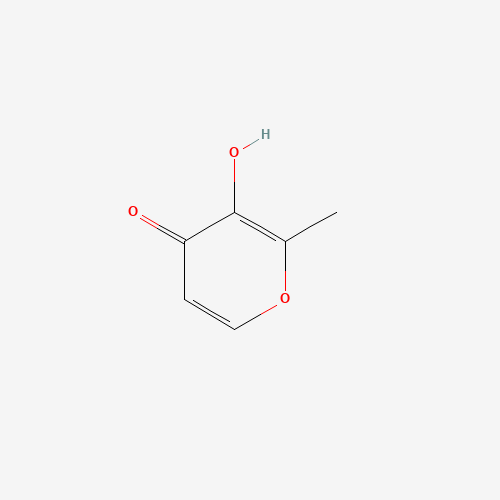
Maltol is a flavour enhancer with a caramel, baked aroma. It contributes to the smell of bread crust, roasted malt and caramel, and is added to make sweetness seem richer, so a food can taste sweeter without more sugar.
Where it is and isn’t permitted
| Jurisdiction | Status | Scope and limits | Citation |
|---|---|---|---|
| Australia and New Zealand | Permitted, with conditions | 2 food categories highest permitted level 250 mg/kg Show every food category
| Food Standards Code, Schedule 15, S15—5and 1 further provisionretrieved 2026-10-17 |
| Canada | No listing matchedHealth Canada’s lists name additives without E or INS numbers, so this site matches them by exact name. A substance listed there under a name this site does not recognise has no row here. | ||
| European Union | No listed food uses foundThis site has not matched this substance to any food use on this jurisdiction’s list of authorised food additives. A food additive may be used only in foods that list names. Flavourings, enzymes, processing aids and added nutrients are regulated separately and do not appear on it. | ||
| Great Britain | No listed food uses foundThis site has not matched this substance to any food use on this jurisdiction’s list of authorised food additives. A food additive may be used only in foods that list names. Flavourings, enzymes, processing aids and added nutrients are regulated separately and do not appear on it. | ||
| Japan | Permitted, with conditions | Designated additive: Appended Table 1, item 407, マルトール (“Maltol” in the unofficial English translation). …Designated additive: Appended Table 1, item 407, マルトール (“Maltol” in the unofficial English translation). Standards for use — Specifications and Standards for Foods, Food Additives, etc. (MHW Notification No. 370 of 1959), Part II (Food Additives), F (Standards for use), entry マルトール: (1) [may be used only for the purpose of flavouring] “マルトールは、着香の目的以外に使用してはならない。” The Japanese is the standard as published. There is no official English translation of the Notification; the English in square brackets is this site’s description of what each sentence does, not a translation of the foods or the levels. Compositional specifications for this additive, in the same Notification, are not imported and are not shown here; nor are the general rules in F 添加物一般, which apply to every additive. | Regulations for Enforcement of the Food Sanitation Act (MHW Ordinance No. 23 of 1948), Appended Table 1retrieved 2026-10-18 |
| South Korea | Permitted, with conditions | Designated food additive: Standards and Specifications for Food Additives, Part III, 1. …Designated food additive: Standards and Specifications for Food Additives, Part III, 1. 일반식품첨가물 (general food additives), 말톨 (“Maltol”, the English the Code prints beside it). Main use (주용도) of 말톨: 향료. Standard for use (사용기준) of 말톨: (1) [may be used only for flavouring] “말톨은 착향의 목적에 한하여 사용하여야 한다.” The Korean is the standard as published. There is no official English translation of the current Code (the English version on MFDS’s website is the 2020 edition and has no legal effect); the English in square brackets is this site’s description of what each sentence does, not a translation of the foods or the levels. Compositional specifications (Part IV) are not imported, nor are the general standards in Part II, which apply to every additive. | Standards and Specifications for Food Additives (식품첨가물의 기준 및 규격), MFDS Notification, Part III (Standards for use, by item)retrieved 2026-10-18 |
| United States | Permitted, with conditions | Named in the list of synthetic flavoring substances and adjuvants in 21 CFR 172.515(b), which may be safely used in food in the minimum quantity required to produce their intended effect. The section is held on this site as the page synthetic-flavoring-substances-and-adjuvants; read it for the conditions. | 21 CFR 172.515retrieved 2026-10-18 |
| Codex Alimentarius | Permitted, with conditions | 5 food categories highest permitted level 200 mg/kg Show every food category and its notes
| CXS 192-1995 Table One, INS 636and 4 further provisionsretrieved 2026-09-07 |
How much is permitted
A listing usually limits the quantity as well as the food. Only one of the forms that takes is a figure: quantum satis and good manufacturing practice permit the amount the technological effect requires and no more, which is a limit rather than the absence of one. Figures below are the range across every food category this page is listed in, and categories differ between regulators — see how much is permitted.
| Australia and New Zealand | 250 mg/kg | 1 numeric limit, 1 GMP |
|---|---|---|
| Japan | — | 1 no quantity stated |
| South Korea | — | 1 no quantity stated |
| United States | — | 1 no quantity stated |
| Codex Alimentarius | 200 mg/kg | 4 numeric limit, 1 GMP |
What a label must say
Words a food containing Maltol is obliged to carry, quoted from the instrument that imposes them. A required statement is a fact about the regulation, not a finding about the substance — every rule below applies where the additive is authorised.
‘with sweetener(s)’, or ‘with sugar(s) and sweetener(s)’ where the food also contains added sugar. The statement accompanies the name of the food.
Any food containing an authorised sweetener. Regulation (EU) No 1169/2011, Annex III, points 2.1 and 2.2 · Assimilated Regulation (EU) No 1169/2011, Annex III
Every rule collected at what a label must say.
What it is made from
Produced by chemical synthesis, and present naturally in larch bark, roasted malt, chicory and baked bread. It forms during baking rather than being present in the dough.
- Vegan
- Vegetarian
Compare other additives on the dietary indexes.
- CAS registry number
- 118-71-8
- InChIKey
- XPCTZQVDEJYUGT-UHFFFAOYSA-N
- PubChem
- CID 8369
How JECFA defines it
The international specification for identity and purity, prepared by the Joint FAO/WHO Expert Committee on Food Additives and published by FAO. It is a different document from any above, written by a different body and revised on its own cycle; it is advisory, and a country adopts it or does not.
INS 636 Maltol
Maltol is obtained by chemical synthesis
Synonyms: INS No. 636
Assay, identification and purity criteria
Description and assay
- Specification history
- Prepared at the 68 th JECFA (2007) and published in FAO JECFA Monographs 4 (2007), superseding tentative specifications prepared at the 65 th JECFA (2005) and published in the Combined Compendium of Food Additive Specifications, FAO JECFA Monographs 1 (2005). An ADI of 0-1 mg/kg bw was established at the 25 th JECFA (1981).
- Chemical names
- 3-Hydroxy-2-methyl-4-pyrone
- C.A.S. number
- 118-71-8
- Chemical formula
- C6H6O3
- Formula weight
- 126.11
- Assay
- Not less than 99.0%, calculated on the anhydrous basis
- DESCRIPTION
- White crystalline powder having a characteristic caramel-butterscotch odour
- FUNCTIONAL USES
- Flavour enhancer, flavouring agent (see 'Flavouring agents' monograph No. 1480)
- METHOD OF ASSAY
- Standard solution Transfer about 50 mg of Maltol Reference Standard (available from the United States Pharmacopoeia, 12601 Twinbrook Parkway, Rockville, MD 20852, USA), or equivalent, accurately weighed, into a 250-ml volumetric flask, dilute to volume with 0.1 N hydrochloric acid, and mix. Pipet 5 ml of this solution into a 100-ml volumetric flask, dilute to volume with 0.1 N hydrochloric acid, and mix. Assay solution Transfer about 50 mg of the sample, accurately weighed, into a 250-ml volumetric flask, dilute to volume with 0.1 N hydrochloric acid, and mix. Pipet 5 ml of this solution into a 100-ml volumetric flask, dilute to volume with 0.1 N hydrochloric acid, and mix. Procedure Determine the absorbance of each solution in a 1-cm quartz cell at the absorption maximum (about 274 nm) using 0.1 N hydrochloric acid as the blank. Calculate the percent of Maltol in the sample by the formula: % of Maltol = 100 x WS x AA / (AS x WA ) where AA is the absorbance of the sample solution AS is the absorbance of the standard solution WA is the weight in mg of sample in the sample solution WS is the weight in mg of the reference standard in the standard solution
Identification
- Solubility (Vol. 4)
- Sparingly soluble in water, soluble in ethanol and in propylene glycol
- Melting range (Vol. 4)
- 160 - 164 o
- Ultraviolet absorption (Vol. 4)
- The ultraviolet spectrum of a 10 mg/l solution of the sample in 0.1 N hydrochloric acid shows an absorption maximum at about 274 nm
Purity criteria
- Water (Vol. 4)
- Not more than 0.5% (Karl Fischer)
- Sulfated ash (Vol. 4)
- Not more than 0.2% (use 5 g sample)
- Lead (Vol. 4)
- Not more than 1 mg/kg Determine using an AAS/ICP-AES technique appropriate to the specified level. The selection of sample size and method of sample preparation may be based on the principles of the methods described in Volume 4 under “General Methods, Metallic Impurities”.
Every name it appears under
62 recorded names. A label may use any of them.
E number
- E636
INS number
- 636
CAS registry number
- 118-71-8
Other names
- 2-Methyl pyromeconic acid
- 2-methyl-3-hydroxy-4-pyranone
- 2-Methyl-3-hydroxy-4-pyrone
- 2-methyl-3-hydroxy-4H-pyran-4-one
- 2-Methyl-3-hydroxypyrone
- 2-Methyl-3-oxy-.gamma.-pyrone
- 2-Methyl-3-oxy-gamma-pyrone
- 2-Methylpyromeconic acid
- 3-Hydroxy-2-methyl-.gamma.-pyrone
- 3-Hydroxy-2-methyl-1,4-pyrone
- 3-hydroxy-2-methyl-4-oxopyrane
- 3-Hydroxy-2-methyl-4-pyranone
- 3-hydroxy-2-methyl-4-pyrone
- 3-Hydroxy-2-methyl-4-pyrone, 99%
- 3-Hydroxy-2-methyl-4H-pyran-4-one
- 3-Hydroxy-2-methyl-g-pyrone
- 3-hydroxy-2-methyl-gamma -pyrone
- 3-Hydroxy-2-methyl-gamma-pyrone
- 3-Hydroxy-2-methyl-pyran-4-one
- 3-hydroxy-2-methylpyr-4-one
- 3-hydroxy-2-methylpyran-4-one
- 3-Hydroxy-2-methylpyrone
- 3-Hydroxy-2-pyran-4-one
- 3-hydroxyl-2-methyl-4-pyranone
- 4H-Pyran-4-one, 3-hydroxy-2-methyl-
- 5-18-01-00114 (Beilstein Handbook Reference)
- 5-Hydroxy-6-methyl-4H-pyran-4-one
- BRN 0112169
- CAS-118-71-8
- CCRIS 3467
- Corps praline
- Deferiprone EP Impurity B;Maltol
- Deferiprone Impurity B
- FEMA 2656
- FEMA No. 2656
- HSDB 8320
- Ins no.636
- Ins-636
- Laricinic acid
- Larixic acid
- Larixinic acid
- Laxarinic Acid
- MALTOL
- Maltol (natural)
- Maltol (Standard)
- Maltol, >=99.0%, FCC, FG
- Maltol, analytical standard
- Maltol, natural, >=98.5%, FG
- methyl maltol
- Methylmaltol
- Palatone
- Pantoprazole Sodium Impurity X
- QSPL 180
- Talmon
- Veltol
- Vetol
- WLN: T6O DVJ B1 CQ
- XPCTZQVDEJYUGT-UHFFFAOYSA-
Systematic names
- 3-hydroxy-2-methyl-4H-pyran-4-one
Hazard reference values
| Type | Value | Population | Assessed by | Opinion |
|---|---|---|---|---|
| ADI | 1 mg/kg bw/day | consumers | EFSA FEEDAP | 2016 |
Evidence and how bodies read it
Studies, and the differing conclusions regulators drew from them, are curated rather than machine-read, and none has been written for this substance yet.
Common questions
Assembled from what is above, in the words the questions are usually asked in. Each answer is the same statement the relevant section makes, with the same citations behind it.
- What is INS 636?
- INS 636 is Maltol. Maltol is a flavour enhancer with a caramel, baked aroma. It contributes to the smell of bread crust, roasted malt and caramel, and is added to make sweetness seem richer, so a food can taste sweeter without more sugar.
- What is Maltol used for in food?
- It is listed as a sweetener, a flavour enhancer and a flavouring agent — the role the US and Codex assign it. This page shows every function each regulator records, with the citation for each.
- Is Maltol banned in Europe?
- No. Maltol does not appear on the EU's list of authorised food additives, which is not the same as being banned: the EU permits an additive only where it has authorised it, and usually the reason for an absence is that no one applied. The EU has made no finding against this substance. It does mean it may not be used as a food additive in the EU today.
- Where is Maltol permitted?
- Of the seven regulators this site reads, Australia and New Zealand, Japan, South Korea, the US and the Codex standard permit it. Each permission is for named foods at named levels, not a blanket one; the table on this page gives them with citations.
- Is Maltol vegan?
- Yes. Maltol is not derived from animals, and is suitable for vegetarians. This page says what it is made from and how.
Sources for this page
- anz retrieved 2026-10-17
- jp retrieved 2026-10-18
- kr retrieved 2026-10-18
- us-listings retrieved 2026-10-18
- gsfa retrieved 2026-09-07
- jecfaspecs retrieved 2026-09-23
Full licence terms and publisher details on Sources. How this page is built and updated: Method.
Machine-readable: a JSON record of this additive is given on request —how to ask for access.
Follow changes to Maltol:Atom feed — regulatory events, and any change the weekly refresh detects in its provisions.