Methylparaben
99-76-3 · 4-(Methoxycarbonyl)phenol · 4-HYDROXY-BENZOIC ACID METHYL ESTER · 4-Hydroxybenzoic acid methyl ester · 4-Hydroxybenzoic acid-methyl ester · Abiol · Aseptoform · Benzoic acid, 4-hydroxy-, methyl ester · Benzoic acid, p-hydroxy-, methyl ester · CAS-99-76-3 · Caswell No. 573PP · E 218 · FEMA No. 2710 · FEMA Number 2710 · INS NO.218 · INS-218 · isLeaf Long Lasting Waterproof Eyeliner Black · isLeaf Long Lasting Waterproof Eyeliner Brown · isLeaf Tattoo Eyebrow Brown · Killitol · Maseptol · Metaben · Metagin · Methaben · methyl 4- hydroxybenzoate · Methyl 4-hydroxybenzoate · Methyl butex · Methyl chemosept · Methyl ester of p-hydroxybenzoic acid · Methyl p-hydroxybenzoate · Methyl p-oxybenzoate · Methyl para-hydroxybenzoate · Methyl paraben · Methyl paraben (e218) · Methyl parahydroxybenzoate · Methyl parasept · methyl-4-hydroxybenzoat · methyl-4-hydroxybenzoate · Methyl-p-hydroxybenzoate · Methyl-p-oxybenzoate · Methylben · Methylester kyseliny p-hydroxybenzoove · Methylis hydroxybenzoas · Methylparaben · Methylparaben e218 · Metoxyde · Moldex · Nipagin · Nipagin M · p-Carbomethoxyphenol · p-Hydroxybenzoic acid methyl ester · p-Hydroxybenzoic methyl ester · p-Methoxycarbonylphenol · p-Oxybenzoesauremethylester · Paridol · Preserval · Preserval M · Septos · Solbrol · Solbrol M · Tegosept M · WLN: QR DVO1 · E218 · 218 · Methyl 4-hydroxybenzoate · Methyl p-hydroxybenzoate · Methylparaben · Methyl p-hydroxybenzoate · Methyl p-hydroxybenzoát · Methyl-p-hydroxybenzoaat · METHYL-p-HYDROXYBENZOÁT · Metil p-hidroksibenzoat · Metil p-idrossibenżoat · metil parahidroksi benzoat · Metil-p-hidroksibenzoatas · Metil-p-hidroksibenzoāts · Metil-p-hidroxi-benzoát · METILO p-HIDROKSIBENZOATAS · Metyl-p-hydroxybenzoan · METYL-p-HYDROXYBENZOÁT · Metyyli-p-hydroksibentsoaatti · Metüül-p-hüdroksübensoaat · P-hidroxibenzoat de metil · p-hidroxibenzoato de metilo · p-hydroksybenzoesan metylu · p-Hydroxibensoesyrametylester · p-HYDROXIBENZOATO DE METILO · P-hydroxybenzoate de méthyle · p-Idrossibenzoato di metile · p-IDROSSIBENŻOAT TAL-METIL · p-υδροξυβενζοϊκός μεθυλεστέρας · PHB-Methylester (Methyl-p-hydroxybenzoat) · МЕТИЛ р-ХИДРОКСИБЕНЗОАТ · Метилов р-хидроксибензоатE number E218INS 218CAS 99-76-3
Listed as a preservative by Canada, Codex and the US.
Listed as preservatives (CA, US, Codex) · flavouring agents and adjuvants (US)
- Canada: Preservative — Health Canada, List of Permitted Preservatives (List 11)
- United States: Antimicrobial agent — FDA, Substances Added to Food: METHYL P-HYDROXYBENZOATE
- United States: Antimicrobial agents — 21 CFR 184.1490, citing 21 CFR 170.3(o)(2)
- Codex Alimentarius: Preservative — CXS 192-1995 Table One, INS 218
- United States: Flavoring agent or adjuvant — FDA, Substances Added to Food: METHYL P-HYDROXYBENZOATE
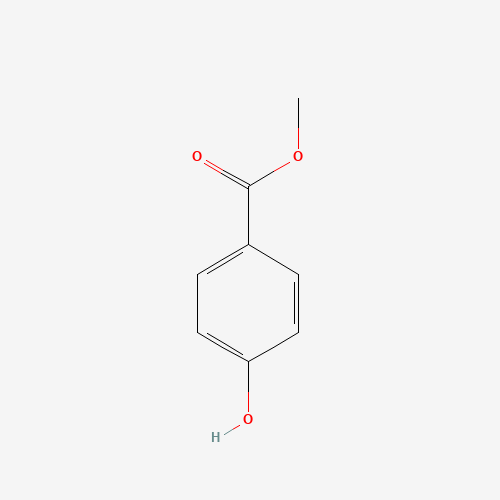
Methyl para-hydroxybenzoate, or methylparaben, is a preservative used in some baked goods, coatings and drinks. It works across a wider pH range than benzoates, which are only effective in acidic foods.
Where it is and isn’t permitted
| Jurisdiction | Status | Scope and limits | Citation |
|---|---|---|---|
| Australia and New Zealand | Permitted, with conditions | 1 food category highest permitted level 2,500 mg/kg | Food Standards Code, Schedule 15, S15—5, item 0, INS 218retrieved 2026-10-17 |
| Canada | Permitted, with conditions | no numerical limit (good manufacturing practice) 4 permitted uses Show every permitted use
| Health Canada, List of Permitted Preservatives (List 11)and 3 further provisionsretrieved 2026-10-17 |
| European Union | Permitted, with conditions | 8 food categories highest permitted level 1,500 mg/kg Show every food category
| Regulation (EC) No 1333/2008, Annex IIand 7 further provisionsretrieved 2026-10-18 |
| Great Britain | Permitted, with conditions | 9 food categories highest permitted level 1,500 mg/kg or mg/l Show every food category
| Assimilated Regulation (EC) No 1333/2008, Annex II (as at 28 June 2024)and 8 further provisionsretrieved 2026-10-18 |
| Japan | No listing matchedThis site imports only Japan’s list of designated additives (Appended Table 1 to the Regulations for Enforcement of the Food Sanitation Act), matched by English name. Existing additives, natural flavouring agents and ordinary foods used as additives are permitted outside that list and are not imported, so an empty row does not show that Japan does not permit the substance. | ||
| South Korea | Permitted, with conditions | Designated food additive: Standards and Specifications for Food Additives, Part III, 1. …Designated food additive: Standards and Specifications for Food Additives, Part III, 1. 일반식품첨가물 (general food additives), 파라옥시안식향산메틸 (“Methyl p-Hydroxybenzoate”, the English the Code prints beside it). Main use (주용도) of 파라옥시안식향산메틸: 보존료. Standard for use (사용기준) of 파라옥시안식향산메틸: (1) [may be used only in the foods listed; sets a limit on the amount used] “파라옥시안식향산메틸은 아래의 식품에 한하여 사용하여야 한다. 파라옥시안식향산메틸의 사용량은 파라옥시안식향산으로서 1. 캡슐류 : 1.0g/kg 이하 2. 잼류 : 1.0g/kg 이하(소브산, 소브산칼륨, 소브산칼슘, 안식향산, 안식향산칼륨, 안식향산칼슘, 안식향산나트륨, 파라옥시안식향산에틸, 프로피온산, 프로피온산나트륨 또는 프로피온산칼슘과 병용할 때에는 파라옥시안식향산으로서 사용량, 소브산으로서 사용량, 안식향산으로서 사용량 및 프로피온산으로서 사용량의 합계가 1.0g/kg 이하) 3. 망고처트니 : 0.25g/kg 이하(안식향산나트륨, 안식향산칼륨, 안식향산칼슘 또는 파라옥시안식향산에틸과 병용할 때에는 파라옥시안식향산으로서 사용량과 안식향산으로서 사용량의 합계가 0.25g/kg 이하) 4. 한식간장, 양조간장, 산분해간장, 효소분해간장, 혼합간장:0.25g/kg 이하(안식향산, 안식향산나트륨, 안식향산칼륨 또는 안식향산칼슘과 병용할 때에는 파라옥시안식향산으로서 사용량과 안식향산으로서 사용량의 합계가 0.6g/kg 이하이어야 하며, 그 중 파라옥시안식향산으로서의 사용량은 0.25g/kg 이하) 5. 식초 : 0.1g/kg 이하 6. 기타음료(분말제품 제외), 인삼․홍삼음료:0.1g/kg 이하(안식향산, 안식향산나트륨, 안식향산칼륨 또는 안식향산칼슘과 병용할 때에는 파라옥시안식향산으로서 사용량과 안식향산으로서 사용량의 합계가 0.6g/kg 이하이어야 하며, 그 중 파라옥시안식향산으로서의 사용량은 0.1g/kg 이하) 7. 소스 : 0.2g/kg 이하(소브산, 소브산칼륨 또는 소브산칼슘과 병용할 때에는 파라옥시안식향산으로서 사용량과 소브산으로서 사용량의 합계가 1.0g/kg 이하이어야 하며, 그 중 파라옥시안식향산으로서의 사용량은 0.2g/kg 이하) 8. 과일류(표피부분에 한한다):0.012g/kg 이하 9. 채소류(표피부분에 한한다):0.012g/kg 이하” The Korean is the standard as published. There is no official English translation of the current Code (the English version on MFDS’s website is the 2020 edition and has no legal effect); the English in square brackets is this site’s description of what each sentence does, not a translation of the foods or the levels. Compositional specifications (Part IV) are not imported, nor are the general standards in Part II, which apply to every additive. | Standards and Specifications for Food Additives (식품첨가물의 기준 및 규격), MFDS Notification, Part III (Standards for use, by item)retrieved 2026-10-18 |
| United States | Permitted | 21 CFR 184.1490retrieved 2026-10-17 | |
| Codex Alimentarius | Permitted, with conditions | 38 food categories highest permitted level 1,500 mg/kg Show every food category and its notes
| CXS 192-1995 Table One, INS 218and 37 further provisionsretrieved 2026-09-07 |
How much is permitted
A listing usually limits the quantity as well as the food. Only one of the forms that takes is a figure: quantum satis and good manufacturing practice permit the amount the technological effect requires and no more, which is a limit rather than the absence of one. Figures below are the range across every food category this page is listed in, and categories differ between regulators — see how much is permitted.
| Australia and New Zealand | 2,500 mg/kg | 1 numeric limit |
|---|---|---|
| Canada | — | 2 GMP, 2 no quantity stated |
| European Union | 500 mg/kg – 1,500 mg/kg | 6 numeric limit, 2 quantum satis |
| Great Britain | 500 mg/kg – 1,500 mg/kg | 7 numeric limit, 2 quantum satis |
| South Korea | — | 1 no quantity stated |
| United States | — | 1 no quantity stated |
| Codex Alimentarius | 36 mg/kg – 1,500 mg/kg | 38 numeric limit |
What it is made from
Made synthetically by esterifying para-hydroxybenzoic acid with methanol.
- Vegan
- Vegetarian
Compare other additives on the dietary indexes.
- CAS registry number
- 99-76-3
- InChIKey
- LXCFILQKKLGQFO-UHFFFAOYSA-N
- PubChem
- CID 7456
The two specifications, compared
The European Union sets identity and purity by regulation; JECFA publishes its own through FAO, advisory until a country adopts it. Both documents are below in full. These are the parameters each puts a number on.
| Parameter | European Union | JECFA |
|---|---|---|
| Assay | no less than 99 % | no less than 99 % |
| Loss on drying | no more than 0.5 % | no more than 0.5 % |
| Sulphated ash | no more than 0.05 % | no more than 0.05 % |
| Lead | no more than 2 mg/kg | no more than 2 mg/kg |
| Arsenic | no more than 3 mg/kg | — |
| Mercury | no more than 1 mg/kg | — |
The two documents state the same figures for every parameter compared here.
How the EU defines it
The legal specification an additive must meet to be sold as this E number in the EU — what it is, how it may be made, and the purity it must reach. From Commission Regulation (EU) No 231/2012.
E 218 METHYL p-HYDROXYBENZOATE
Synonyms: Methylparaben; Methyl-p-oxybenzoate
Assay, identification and purity criteria
Description and assay
- Einecs
- 243-171-5
- Chemical name
- Methyl p-hydroxybenzoate; Methyl ester of p-hydroxybenzoic acid
- Chemical formula
- C₈H₈O₃
- Molecular weight
- 152,15
- Assay
- Content not less than 99 % after drying for two hours at 80 °C
- Description
- Almost odourless, small colourless crystals or white crystalline powder
Identification
- Melting range
- 125 °C - 128 °C
- Test for p-hydroxybenzoate
- Melting range of p-hydroxybenzoic acid derived from the sample is 213 °C to 217 °C after drying for two hours at 80 °C
Purity criteria
- Loss on drying
- Not more than 0,5 % (80 °C, 2 hours)
- Sulphated ash
- Not more than 0,05 %
- p-Hydroxybenzoic acid and salicylic acid
- Not more than 0,35 % expressed as p-hydroxybenzoic acid
- Arsenic
- Not more than 3 mg/kg
- Lead
- Not more than 2 mg/kg
- Mercury
- Not more than 1 mg/kg
How JECFA defines it
The international specification for identity and purity, prepared by the Joint FAO/WHO Expert Committee on Food Additives and published by FAO. It is a different document from any above, written by a different body and revised on its own cycle; it is advisory, and a country adopts it or does not.
INS 218 Methyl p-Hydroxybenzoate
Synonyms: Methylparaben, methyl p-oxybenzoate; INS No. 218 Methyl p-oxybenzoate; Methylparaben
Assay, identification and purity criteria
Description and assay
- Specification history
- Prepared at the 51st JECFA (1998), published in FNP 52 Add 6 (1998) superseding specifications prepared at the 44th JECFA (1995), published in FNP 52 Add 3 (1995). Group ADI 0-10 mg/kg bw for ethyl, methyl and propyl p-hydroxybenzoate, established at the 17th JECFA in 1973.
- Chemical names
- Methyl p-hydroxybenzoate, methyl ester of p-hydroxybenzoic acid
- C.A.S. number
- 99-76-3
- Chemical formula
- C 8 H 8 O 3
- Formula weight
- 152.15
- Assay
- Not less than 99.0% on the dried basis
- DESCRIPTION
- Almost odourless, small colourless crystals or white crystalline powder
- FUNCTIONAL USES
- Preservative
- METHOD OF ASSAY
- Weigh, to the nearest mg, 2 g of the dried sample and transfer into a flask. Add 40 ml of N sodium hydroxide and rinse the sides of the flask with water. Cover with a watch glass, boil gently for 1 h and cool. Add 5 drops of bromothymol blue TS and titrate the excess sodium hydroxide with N sulfuric acid, comparing the colour with a buffer solution TS (pH 6.5) containing the same proportion of indicator. Perform a blank determination with the reagents and make any necessary correction. Each ml of N sodium hydroxide is equivalent to 152.2 mg of C 8 H 8 O 3
Identification
- Solubility (Vol. 4)
- Slightly soluble in water; freely soluble in ethanol and propylene glycol; soluble in ether
- Melting range (Vol. 4)
- 125 - 128 o
- Test for p-hydroxybenzoate
- Melting range of p-hydroxybenzoic acid derived from the sample is 212-217 o To 0.5 g of the sample add 10 ml of sodium hydroxide TS. Boil for 30 min and concentrate to about 5 ml. Cool, acidify with dilute sulfuric acid TS, collect the precipitate on a filter, and wash thoroughly with water. Dry in a desiccator over sulfuric acid. Determine the melting range of p-hydroxybenzoic acid so obtained.
Purity criteria
- Loss on drying (Vol. 4)
- Not more than 0.5% (over silica gel, 5 h)
- Sulfated ash (Vol. 4)
- Not more than 0.05%. Test 2 g of the sample (Method I)
- Acidity
- Heat 750 mg of the sample with 15 ml of water at 80 o for 1 min, cool, and filter. The filtrate should be acid or neutral to litmus. To 10 ml of the filtrate add 0.2 ml of 0.1 N sodium hydroxide and 2 drops of methyl red TS. The solution should be yellow without even a light cast of pink.
- p-Hydroxybenzoic acid and salicylic acid
- Dissolve 0.5 g of the sample, accurately weighed, in 30 ml of ether, add 20 ml of a 1 in 100 sodium hydrogen carbonate solution, shake, and separate the water layer. Wash the water layer with two 20 ml portions of ether, add 5 ml of dilute sulfuric acid and 30 ml of ether, and shake. Separate the ether layer, and shake with about 10 ml of water. Filter the ether layer, and wash the vessel and the filter with a small amount of ether. Combine the washings and the filtrate, evaporate ether on a water bath, and dry the residue over sulfuric acid to constant weight. The weight of the residue should not exceed 5 mg. Dissolve any residue in 25 ml of water, heat to about 70 o , filter, and add a few drops of dilute ferric chloride TS. No violet to reddish violet colour should be produced.
- Lead (Vol. 4)
- Not more than 2 mg/kg Determine using an atomic absorption technique appropriate to the specified level. The selection of sample size and method of sample preparation may be based on the principles of the method described in Volume 4, “Instrumental Methods.”
Authorised in other additives, enzymes, flavourings and nutrients
These authorisations are not for use in food. They let this substance be used inside another additive, a food enzyme, a flavouring or a nutrient preparation — often as a carrier — and it reaches food only as part of that product. Annex III to Regulation (EC) No 1333/2008.
| Part | May be used in | Maximum level | Citation |
|---|---|---|---|
| Annex III, Part 3: Food additives including carriers in food enzymes | Food enzymesNote (1): Including enzymes authorised as food additives. | In enzyme preparation: 2 000 mg/kg (singly or in combination expressed as the free acid) In final food except beverages: 2 mg/kg In beverages: 1 mg/l | Regulation (EC) No 1333/2008, Annex III, Part 3 |
Every name it appears under
94 recorded names. A label may use any of them.
E number
- E218
INS number
- 218
CAS registry number
- 99-76-3
As it appears in regulation
- Methyl p-hydroxybenzoate
- Methylparaben
Other names
- 4-(Methoxycarbonyl)phenol
- 4-HYDROXY-BENZOIC ACID METHYL ESTER
- 4-Hydroxybenzoic acid methyl ester
- 4-Hydroxybenzoic acid-methyl ester
- Abiol
- Aseptoform
- Benzoic acid, 4-hydroxy-, methyl ester
- Benzoic acid, p-hydroxy-, methyl ester
- CAS-99-76-3
- Caswell No. 573PP
- E 218
- FEMA No. 2710
- FEMA Number 2710
- INS NO.218
- INS-218
- isLeaf Long Lasting Waterproof Eyeliner Black
- isLeaf Long Lasting Waterproof Eyeliner Brown
- isLeaf Tattoo Eyebrow Brown
- Killitol
- Maseptol
- Metaben
- Metagin
- Methaben
- methyl 4- hydroxybenzoate
- Methyl 4-hydroxybenzoate
- Methyl butex
- Methyl chemosept
- Methyl ester of p-hydroxybenzoic acid
- Methyl p-hydroxybenzoate
- Methyl p-oxybenzoate
- Methyl para-hydroxybenzoate
- Methyl paraben
- Methyl paraben (e218)
- Methyl parahydroxybenzoate
- Methyl parasept
- methyl-4-hydroxybenzoat
- methyl-4-hydroxybenzoate
- Methyl-p-hydroxybenzoate
- Methyl-p-oxybenzoate
- Methylben
- Methylester kyseliny p-hydroxybenzoove
- Methylis hydroxybenzoas
- Methylparaben
- Methylparaben e218
- Metoxyde
- Moldex
- Nipagin
- Nipagin M
- p-Carbomethoxyphenol
- p-Hydroxybenzoic acid methyl ester
- p-Hydroxybenzoic methyl ester
- p-Methoxycarbonylphenol
- p-Oxybenzoesauremethylester
- Paridol
- Preserval
- Preserval M
- Septos
- Solbrol
- Solbrol M
- Tegosept M
- WLN: QR DVO1
Systematic names
- Methyl 4-hydroxybenzoate
The EU re-evaluation programme
Every additive authorised in the EU before 20 January 2009 was put back through EFSA by Commission Regulation (EU) No 257/2010, and this one is named in it. What the Regulation required is below; whether the opinion has since been published is not something this site records.
- Already re-evaluated when the programme began. Listed in Annex I as “Methyl p-hydroxybenzoate”, against the words “Re-evaluation completed on 13 July 2004”, and therefore not re-evaluated again under it.
Hazard reference values
| Type | Value | Population | Assessed by | Opinion |
|---|---|---|---|---|
| ADI | 10 mg/kg bw/day | — | JECFA | 1973 |
Evidence and how bodies read it
Studies, and the differing conclusions regulators drew from them, are curated rather than machine-read, and none has been written for this substance yet.
Common questions
Assembled from what is above, in the words the questions are usually asked in. Each answer is the same statement the relevant section makes, with the same citations behind it.
- What is E 218?
- E 218 is Methylparaben. Methyl para-hydroxybenzoate, or methylparaben, is a preservative used in some baked goods, coatings and drinks. It works across a wider pH range than benzoates, which are only effective in acidic foods.
- What is Methylparaben used for in food?
- It is listed as a preservative — the role Canada, Codex and the US assign it. This page shows every function each regulator records, with the citation for each.
- Where is Methylparaben permitted?
- Of the seven regulators this site reads, Australia and New Zealand, Canada, the EU, Great Britain, South Korea, the US and the Codex standard permit it. Each permission is for named foods at named levels, not a blanket one; the table on this page gives them with citations.
- Is Methylparaben vegan?
- Yes. Methylparaben is not derived from animals, and is suitable for vegetarians. This page says what it is made from and how.
Sources for this page
- anz retrieved 2026-10-17
- ca retrieved 2026-10-17
- eu retrieved 2026-10-18
- gb retrieved 2026-10-18
- kr retrieved 2026-10-18
- ecfr retrieved 2026-10-17
- gsfa retrieved 2026-09-07
- euspecs retrieved 2026-10-18
- jecfaspecs retrieved 2026-09-23
Full licence terms and publisher details on Sources. How this page is built and updated: Method.
Machine-readable: a JSON record of this additive is given on request —how to ask for access.
Follow changes to Methylparaben:Atom feed — regulatory events, and any change the weekly refresh detects in its provisions.