Neohesperidine DC
20702-77-6 · 1-[4-[(2S,3R,4S,5S,6R)-4,5-dihydroxy-6-(hydroxymethyl)-3-[(2S,3R,4R,5R,6S)-3,4,5 · CCRIS 4848 · Citrosa · E 959 · FEMA NO. 3811 · Hesperetin dihydro chalcone-4′-β-neohesperidoside · HESPERETIN DIHYDROCHALCONE-4'-.BETA.-NEOHESPERIDOSIDE · hoxyphenyl)propan-1-one · ITVGXXMINPYUHD-CUVHLRMHSA- · Neohesperidin dc · Neohesperidin dhc · neohesperidin dihydrochalcone · Neohesperidin dihydrochalcone (Standard) · Neohesperidin dihydrochalcone ,EP · Neohesperidin dihydrochalcone hydrate · Neohesperidin dihydrochalcone, >=95% (HPLC) · Neohesperidin dihydrochalcone, >=96%, FG · Neohesperidin dihydrochalcone, analytical standard · Neohesperidin dihydrochalcone, European Pharmacopoeia (EP) Reference Standard · neohesperidin dihydrochalone · Neohesperidin-dihydrochalcone · Neohesperidin-dihydrochalcone CRS · neohesperidine DC · Neohesperidine dihydrochalcone · Neosperidin dihydrochalcone · Neosperidin-dihydrochalcone · Nhdc · E959 · 1-(4-(((2S,3R,4S,5S,6R)-4,5-dihydroxy-6-(hydroxymethyl)-3-(((2S,3R,4R,5R,6S)-3,4,5-trihydroxy-6-methyltetrahydro-2H-pyran-2-yl)oxy)tetrahydro-2H-pyran-2-yl)oxy)-2,6-dihydroxyphenyl)-3-(3-hydroxy-4-met · 1-(4-((2-O-(6-DEOXY-.ALPHA.-L-MANNOPYRANOSYL)-.BETA.-D-DIHYDROCHALCONE GLUCOPYRANOSYL)OXY)-2,6-DIHYDROXYPHENYL)-3-(3-HYDROXY-4-METHOXYPHENYL)PROPAN-1-ONE · 1-(4-((2-O-(6-Deoxy-alpha-L-mannopyranosyl)-beta-D-glucopyranosyl)oxy)-2,6-dihydroxyphenyl)-3-(3-hydroxy-4-methoxyphenyl)- · 1-(4-((2-O-(6-Deoxy-alpha-L-mannopyranosyl)-beta-D-glucopyranosyl)oxy)-2,6-dihydroxyphenyl)-3-(3-hydroxy-4-methoxyphenyl)propan-1- · 1-(4-((2-O-(6-Deoxy-alpha-L-mannopyranosyl)-beta-D-glucopyranosyl)oxy)-2,6-dihydroxyphenyl)-3-(3-hydroxy-4-methoxyphenyl)propan-1-one · 1-(4-((2S,4R,5S)-4,5-dihydroxy-6-(hydroxymethyl)-3-((2S,4S,5R)-3,4,5-trihydroxy-6-methyloxan-2-yl)oxyoxan-2-yl)oxy-2,6-dihydroxyphenyl)-3-(3-hydroxy-4-methoxyphenyl)propan-1-one · 1-(4-{[(2S,3R,4S,5S,6R)-4,5-dihydroxy-6-(hydroxymethyl)-3-{[(2S,3R,4R,5R,6S)-3,4,5-trihydroxy-6-methyloxan-2-yl]oxy}oxan-2-yl]oxy}-2,6-dihydroxyphenyl)-3-(3-hydroxy-4-methoxyphenyl)propan-1-one · 1-[4-[(2S,3R,4S,5S,6R)-4,5-dihydroxy-6-(hydroxymethyl)-3-[(2S,3R,4R,5R,6S)-3,4,5-trihydroxy-6-methyloxan-2-yl]oxyoxan-2-yl]oxy-2,6-dihydroxyphenyl]-3-(3-hydroxy-4-methoxyphenyl)propan-1-one · 1-[4-[[2-O-(6-Deoxy-a-L-mannopyranosyl)-b-D-glucopyranosyl]oxy]-2,6-dihydroxyphenyl]-3-(3-hydroxy-4-methoxyphenyl)-1-propanone · 1-PROPANONE, 1-(4-((2-O-(6-DEOXY-.ALPHA.-L-MANNOPYRANOSYL)-.BETA.-D-GLUCOPYRANOSYL)OXY)-2,6-DIHYDROXYPHENYL)-3-(3-HYDROXY-4-METHOXYPHENYL)- · 1-Propanone, 1-(4-((2-O-(6-deoxy-alpha-L-mannopyranosyl)-beta-D-glucopyranosyl)oxy)-2,6-dihydroxyphenyl)-3-(3-hydroxy-4-me · 1-Propanone, 1-[4-[[2-O-(6-deoxy-alpha-L-mannopyranosyl)-beta-D-glucopyranosyl]oxy]-2,6-dihydroxyphenyl]-3-(3-hydroxy-4-methoxyphenyl)- · 1-Propanone, 1-[4-[[2-O-(6-deoxy-|A-L-mannopyranosyl)-|A-D-glucopyranosyl]oxy]-2,6-dihydroxyphenyl]-3-(3-hydroxy-4-methoxyphenyl)- · 3,5-Dihydroxy-4-(3-hydroxy-4-methoxyhydrocinnamoyl)phenyl) 2-O-(6-deoxy-alpha-L-mannopyranosyl)-beta-D-glucopyranoside · 3,5-dihydroxy-4-[3-(3-hydroxy-4-methoxyphenyl)propanoyl]phenyl 2-O-(6-deoxy-alpha-L-mannopyranosyl)-beta-D-glucopyranoside · Glucopyranoside, 3,5-dihydroxy-4-(3-hydroxy-4-methoxyhydrocinnamoyl)phenyl 2-O-(6-deoxy-.alpha.-L-mannopyranosyl)-, .beta.-D- · Glucopyranoside, 3,5-dihydroxy-4-(3-hydroxy-4-methoxyhydrocinnamoyl)phenyl 2-O-(6-deoxy-alpha-L-mannopyranosyl)-, beta-D- · GLUCOPYRANOSIDE, 3,5-DIHYDROXY-4-(3-HYDROXY-4-METHOXYHYDROCINNAMOYL)PHENYL 2-O-.ALPHA.-L-RHAMNOPYRANOSYL- · GLUCOPYRANOSIDE, 3,5-DIHYDROXY-4-(3-HYDROXY-4-METHOXYHYDROCINNAMOYL)PHENYL 2-O-ALPHA-L-RHAMNOPYRANOSYL- · Glucopyranoside, 3,5-dihydroxy-4-(3-hydroxy-4-methoxyhydrocinnamoyl)phenyl-2-O-(6-deoxy-alpha-L-mannopyranosyl)-, beta-D- · Neohesperidine DC · DIHIDROCALCONĂ DE NEOHESPERIDINĂ · DIHYDROCHALCONE DE NÉOHESPÉRIDINE · Neo-hesperidina DC · Neoesperidina DC · NEOESPERIDINA DIIDROCALCONE · NEOESPERIDINA DIIDROĊALKON · Neohesperidiin DC · NEOHESPERIDIINDIVESINIKKALKOON · Neohesperidiini DC · NEOHESPERIDIINIDIHYDROKALKONI · Neohesperidin DC · NEOHESPERIDIN-DC · Neohesperidina DC · NEOHESPERIDINA DIHIDROCALCONA · Neohesperidinas DC · Neohesperidindihydrochalcon · Neohesperidine DC · NEOHESPERIDINE DIHYDROCHALCONE · Neohesperidine-DC · NEOHESPERIDINE-DIHYDROCHALCON · Neohesperidīns DC · Neohesperydyna DC · NEOHESPERYDYNA DIWODOROCHALKONU · Neoheszperidin DC · NEOHESZPERIDIN-DIHIDRO-KALKON · Νεοεσπεριδίνη DC · НЕОХЕСПЕРИДИН ДИХИДРОХАЛКОН · Неохесперидин DСE number E959CAS 20702-77-6
Listed as a sweetener and a flavouring agent by the EU and the US.
Listed as sweeteners (EU) · flavouring agents and adjuvants (US)
- European Union: Sweeteners — Regulation (EC) No 1333/2008, Annex II, Part B, 2. Sweeteners (consolidated text 02008R1333-20260818)
- United States: Flavoring agent or adjuvant — FDA, Substances Added to Food: NEOHESPERIDIN DIHYDROCHALCONE
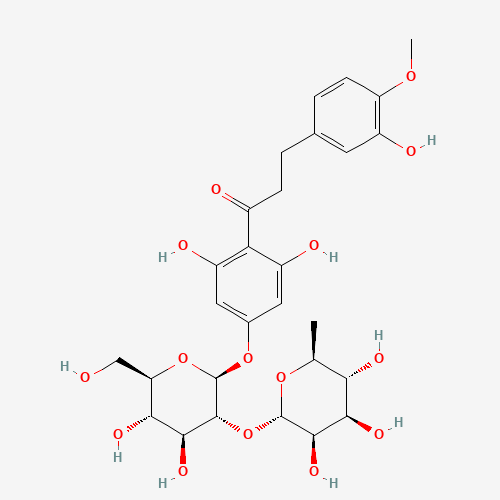
Neohesperidine dihydrochalcone is a sweetener well over a thousand times sweeter than sugar, permitted in the EU in energy-reduced products and also as a flavour enhancer. It masks bitterness well, and is often blended with other sweeteners.
Where it is and isn’t permitted
| Jurisdiction | Status | Scope and limits | Citation |
|---|---|---|---|
| Australia and New Zealand | No listed food uses foundThis site has not matched this substance to any food use on this jurisdiction’s list of authorised food additives. A food additive may be used only in foods that list names. Flavourings, enzymes, processing aids and added nutrients are regulated separately and do not appear on it. | ||
| Canada | No listing matchedHealth Canada’s lists name additives without E or INS numbers, so this site matches them by exact name. A substance listed there under a name this site does not recognise has no row here. | ||
| European Union | Permitted, with conditions | 40 food categories highest permitted level 150 mg/l Show every food category
| Regulation (EC) No 1333/2008and 39 further provisionsretrieved 2026-10-18 |
| Great Britain | Permitted, with conditions | 38 food categories highest permitted level 100 mg/kg or mg/l Show every food category
| Assimilated Regulation (EC) No 1333/2008and 37 further provisionsretrieved 2026-10-18 |
| Japan | No listing matchedThis site imports only Japan’s list of designated additives (Appended Table 1 to the Regulations for Enforcement of the Food Sanitation Act), matched by English name. Existing additives, natural flavouring agents and ordinary foods used as additives are permitted outside that list and are not imported, so an empty row does not show that Japan does not permit the substance. | ||
| South Korea | No listing matchedThis site imports Part III of South Korea’s Standards and Specifications for Food Additives, matched by CAS number, then INS number, then exact name. Mixed preparations and sanitisers are not imported, and an entry whose identifiers disagreed with a page’s is held for review, so an empty row does not show that South Korea does not permit the substance. | ||
| United States | Not listedDoes not appear on this jurisdiction’s permitted list. That is not the same as being prohibited. | ||
| Codex Alimentarius | Not listedDoes not appear on this jurisdiction’s permitted list. That is not the same as being prohibited. |
How much is permitted
A listing usually limits the quantity as well as the food. Only one of the forms that takes is a figure: quantum satis and good manufacturing practice permit the amount the technological effect requires and no more, which is a limit rather than the absence of one. Figures below are the range across every food category this page is listed in, and categories differ between regulators — see how much is permitted.
| European Union | 5 mg/kg – 150 mg/kg | 37 numeric limit, 3 quantum satis |
|---|---|---|
| Great Britain | 5 mg/kg – 100 mg/kg | 28 numeric limit, 7 several limits, 3 quantum satis |
What a label must say
Words a food containing Neohesperidine DC is obliged to carry, quoted from the instrument that imposes them. A required statement is a fact about the regulation, not a finding about the substance — every rule below applies where the additive is authorised.
‘with sweetener(s)’, or ‘with sugar(s) and sweetener(s)’ where the food also contains added sugar. The statement accompanies the name of the food.
Any food containing an authorised sweetener. Regulation (EU) No 1169/2011, Annex III, points 2.1 and 2.2 · Assimilated Regulation (EU) No 1169/2011, Annex III
Every rule collected at what a label must say.
What FDA’s inventory records
This page holds no listing for Neohesperidine DC in the parts of 21 CFR this site reads. FDA’s Substances Added to Food inventory does carry it, as NEOHESPERIDIN DIHYDROCHALCONE, pointing at a flavour industry number, with no 21 CFR citation, and FEMA number 3811.
Technical effects FDA records: flavoring agent or adjuvant.
The inventory is an information resource: a row means FDA holds information about the substance’s use in food, not that the substance is listed for that use. It is shown apart from the permissions above and is not counted as a US permission anywhere on this site.
GRAS notices to the FDA
A GRAS notice is a company’s conclusion that a substance is generally recognised as safe for the use it describes. FDA’s letter responds to that conclusion, for that notifier and that use. It is not a listing in 21 CFR, and it is not counted as a US permission above. The substance and use are as FDA’s inventory words them; this site matched the notice to this page by exact name.
GRN No. 902 · Neohesperidin dihydrochalcone · HealthTech BioActives, S.L.U.
Intended use: Intended for use as as a sweetener in sweet crackers; biscuits; cornbread, corn muffins, tortillas; other muffins, popovers; other quick breads; fruit juices (with and without citrus); nectars; carbonated soft drinks; fruit drinks; nonfruit beverages; nutrition drinks and powders (reconstituted powders); energy drinks; sports drinks; cakes; cookies; pies; cobblers, eclairs, turnovers, pastries; Danish, doughnuts; coffee cake; sugar replacement or substitutes; jellies, jams, preserves; ices and popsicles; candies; cottage cheeses; yogurt; flavored milk and milk drinks; frozen milk desserts; puddings, custards and other milk desserts; soups with legumes as major ingredient; soups with grain as major ingredient; dark-green vegetable soups; deep yellow vegetable soups; tomato soups; vegetable soups; Puerto Rican stews/soups with starchy vegetables at levels ranging from 10-1000 ppm
FDA’s response (2020-11-23): FDA has no questions
What it is made from
Made from neohesperidin, a bitter flavonoid in bitter oranges, by hydrogenation in alkaline conditions. The chemical change turns a bitter compound into a sweet one.
- Vegan
- Vegetarian
Compare other additives on the dietary indexes.
- CAS registry number
- 20702-77-6
- InChIKey
- ITVGXXMINPYUHD-CUVHLRMHSA-N
- PubChem
- CID 30231
How the EU defines it
The legal specification an additive must meet to be sold as this E number in the EU — what it is, how it may be made, and the purity it must reach. From Commission Regulation (EU) No 231/2012.
E 959 Neohesperidine dihydrochalcone
It is obtained by catalytic hydrogenation of neohesperidin
Synonyms: Neohesperidin dihydrochalcone; NHDC; Hesperetin dihydrochalcone-4′-β-neohesperidoside; Neohesperidin DC
Assay, identification and purity criteria
Description and assay
- Einecs
- 243-978-6
- Chemical name
- 2-O-α-L-rhamnopyranosyl-4′-β-D-glucopyranosyl hesperetin dihydrochalcone.
- Chemical formula
- C₂₈H₃₆O₁₅
- Molecular weight
- 612,6
- Assay
- Content not less than 96 % on the dried basis
- Description
- Off-white, odourless, crystalline powder. Approximately between 1 000 and 1 800 times as sweet as sucrose
Identification
- Solubility
- Freely soluble in hot water, very slightly soluble in cold water, practically insoluble in ether and benzene
- Ultraviolet absorption maximum
- 282 to 283 nm for a solution of 2 mg in 100 ml methanol
- Neu's test
- Dissolve about 10 mg of neohesperidine DC in 1 ml methanol, add 1 ml of a 1 % 2-aminoethyl diphenyl borate methanolic solution. A bright yellow colour is produced
Purity criteria
- Loss on drying
- Not more than 11 % (105 °C, 3 hours)
- Sulphated ash
- Not more than 0,2 % (expressed on dry weight basis)
- Arsenic
- Not more than 3 mg/kg expressed on dry weight basis
- Lead
- Not more than 2 mg/kg (expressed on dry weight basis)
Every name it appears under
78 recorded names. A label may use any of them.
E number
- E959
CAS registry number
- 20702-77-6
As it appears in regulation
- Neohesperidine DC
Other names
- 1-[4-[(2S,3R,4S,5S,6R)-4,5-dihydroxy-6-(hydroxymethyl)-3-[(2S,3R,4R,5R,6S)-3,4,5
- CCRIS 4848
- Citrosa
- E 959
- FEMA NO. 3811
- Hesperetin dihydro chalcone-4′-β-neohesperidoside
- HESPERETIN DIHYDROCHALCONE-4'-.BETA.-NEOHESPERIDOSIDE
- hoxyphenyl)propan-1-one
- ITVGXXMINPYUHD-CUVHLRMHSA-
- Neohesperidin dc
- Neohesperidin dhc
- neohesperidin dihydrochalcone
- Neohesperidin dihydrochalcone (Standard)
- Neohesperidin dihydrochalcone ,EP
- Neohesperidin dihydrochalcone hydrate
- Neohesperidin dihydrochalcone, >=95% (HPLC)
- Neohesperidin dihydrochalcone, >=96%, FG
- Neohesperidin dihydrochalcone, analytical standard
- Neohesperidin dihydrochalcone, European Pharmacopoeia (EP) Reference Standard
- neohesperidin dihydrochalone
- Neohesperidin-dihydrochalcone
- Neohesperidin-dihydrochalcone CRS
- neohesperidine DC
- Neohesperidine dihydrochalcone
- Neosperidin dihydrochalcone
- Neosperidin-dihydrochalcone
- Nhdc
Systematic names
- 1-(4-(((2S,3R,4S,5S,6R)-4,5-dihydroxy-6-(hydroxymethyl)-3-(((2S,3R,4R,5R,6S)-3,4,5-trihydroxy-6-methyltetrahydro-2H-pyran-2-yl)oxy)tetrahydro-2H-pyran-2-yl)oxy)-2,6-dihydroxyphenyl)-3-(3-hydroxy-4-met
- 1-(4-((2-O-(6-DEOXY-.ALPHA.-L-MANNOPYRANOSYL)-.BETA.-D-DIHYDROCHALCONE GLUCOPYRANOSYL)OXY)-2,6-DIHYDROXYPHENYL)-3-(3-HYDROXY-4-METHOXYPHENYL)PROPAN-1-ONE
- 1-(4-((2-O-(6-Deoxy-alpha-L-mannopyranosyl)-beta-D-glucopyranosyl)oxy)-2,6-dihydroxyphenyl)-3-(3-hydroxy-4-methoxyphenyl)-
- 1-(4-((2-O-(6-Deoxy-alpha-L-mannopyranosyl)-beta-D-glucopyranosyl)oxy)-2,6-dihydroxyphenyl)-3-(3-hydroxy-4-methoxyphenyl)propan-1-
- 1-(4-((2-O-(6-Deoxy-alpha-L-mannopyranosyl)-beta-D-glucopyranosyl)oxy)-2,6-dihydroxyphenyl)-3-(3-hydroxy-4-methoxyphenyl)propan-1-one
- 1-(4-((2S,4R,5S)-4,5-dihydroxy-6-(hydroxymethyl)-3-((2S,4S,5R)-3,4,5-trihydroxy-6-methyloxan-2-yl)oxyoxan-2-yl)oxy-2,6-dihydroxyphenyl)-3-(3-hydroxy-4-methoxyphenyl)propan-1-one
- 1-(4-{[(2S,3R,4S,5S,6R)-4,5-dihydroxy-6-(hydroxymethyl)-3-{[(2S,3R,4R,5R,6S)-3,4,5-trihydroxy-6-methyloxan-2-yl]oxy}oxan-2-yl]oxy}-2,6-dihydroxyphenyl)-3-(3-hydroxy-4-methoxyphenyl)propan-1-one
- 1-[4-[(2S,3R,4S,5S,6R)-4,5-dihydroxy-6-(hydroxymethyl)-3-[(2S,3R,4R,5R,6S)-3,4,5-trihydroxy-6-methyloxan-2-yl]oxyoxan-2-yl]oxy-2,6-dihydroxyphenyl]-3-(3-hydroxy-4-methoxyphenyl)propan-1-one
- 1-[4-[[2-O-(6-Deoxy-a-L-mannopyranosyl)-b-D-glucopyranosyl]oxy]-2,6-dihydroxyphenyl]-3-(3-hydroxy-4-methoxyphenyl)-1-propanone
- 1-PROPANONE, 1-(4-((2-O-(6-DEOXY-.ALPHA.-L-MANNOPYRANOSYL)-.BETA.-D-GLUCOPYRANOSYL)OXY)-2,6-DIHYDROXYPHENYL)-3-(3-HYDROXY-4-METHOXYPHENYL)-
- 1-Propanone, 1-(4-((2-O-(6-deoxy-alpha-L-mannopyranosyl)-beta-D-glucopyranosyl)oxy)-2,6-dihydroxyphenyl)-3-(3-hydroxy-4-me
- 1-Propanone, 1-[4-[[2-O-(6-deoxy-alpha-L-mannopyranosyl)-beta-D-glucopyranosyl]oxy]-2,6-dihydroxyphenyl]-3-(3-hydroxy-4-methoxyphenyl)-
- 1-Propanone, 1-[4-[[2-O-(6-deoxy-|A-L-mannopyranosyl)-|A-D-glucopyranosyl]oxy]-2,6-dihydroxyphenyl]-3-(3-hydroxy-4-methoxyphenyl)-
- 3,5-Dihydroxy-4-(3-hydroxy-4-methoxyhydrocinnamoyl)phenyl) 2-O-(6-deoxy-alpha-L-mannopyranosyl)-beta-D-glucopyranoside
- 3,5-dihydroxy-4-[3-(3-hydroxy-4-methoxyphenyl)propanoyl]phenyl 2-O-(6-deoxy-alpha-L-mannopyranosyl)-beta-D-glucopyranoside
- Glucopyranoside, 3,5-dihydroxy-4-(3-hydroxy-4-methoxyhydrocinnamoyl)phenyl 2-O-(6-deoxy-.alpha.-L-mannopyranosyl)-, .beta.-D-
- Glucopyranoside, 3,5-dihydroxy-4-(3-hydroxy-4-methoxyhydrocinnamoyl)phenyl 2-O-(6-deoxy-alpha-L-mannopyranosyl)-, beta-D-
- GLUCOPYRANOSIDE, 3,5-DIHYDROXY-4-(3-HYDROXY-4-METHOXYHYDROCINNAMOYL)PHENYL 2-O-.ALPHA.-L-RHAMNOPYRANOSYL-
- GLUCOPYRANOSIDE, 3,5-DIHYDROXY-4-(3-HYDROXY-4-METHOXYHYDROCINNAMOYL)PHENYL 2-O-ALPHA-L-RHAMNOPYRANOSYL-
- Glucopyranoside, 3,5-dihydroxy-4-(3-hydroxy-4-methoxyhydrocinnamoyl)phenyl-2-O-(6-deoxy-alpha-L-mannopyranosyl)-, beta-D-
Hazard reference values
EFSA and JECFA have both assessed Neohesperidine DC and their conclusions are not two comparable figures — EFSA records 5 mg/kg bw/day, JECFA temporary: 0–3.8 mg/kg bw/day. An acceptable daily intake is a reference value set by a committee, not a threshold above which harm begins. “Not specified”, “not limited” and “not allocated” are conclusions, not missing data, and they are shown in the words each body used rather than reduced to a number. See where the two committees differ.
Evidence and how bodies read it
What assessing bodies concluded
Each conclusion is paraphrased in the body's own framing, from the published opinion linked beneath it. Where bodies differ, both stand; this site does not adjudicate between them or add a view of its own.
EFSA 2022
The FAF Panel found no genotoxicity concern for neohesperidine dihydrochalcone (E 959) and derived an ADI of 20 mg/kg bw/day from a 13-week rat study. Exposure was below the ADI in all age groups, and it concluded that use at reported uses and use levels would not raise a safety concern.
Common questions
Assembled from what is above, in the words the questions are usually asked in. Each answer is the same statement the relevant section makes, with the same citations behind it.
- What is E 959?
- E 959 is Neohesperidine DC. Neohesperidine dihydrochalcone is a sweetener well over a thousand times sweeter than sugar, permitted in the EU in energy-reduced products and also as a flavour enhancer. It masks bitterness well, and is often blended with other sweeteners.
- What is Neohesperidine DC used for in food?
- It is listed as a sweetener and a flavouring agent — the role the EU and the US assign it. This page shows every function each regulator records, with the citation for each.
- Where is Neohesperidine DC permitted?
- Of the seven regulators this site reads, the EU and Great Britain permit it. Each permission is for named foods at named levels, not a blanket one; the table on this page gives them with citations.
- Is Neohesperidine DC vegan?
- Yes. Neohesperidine DC is not derived from animals, and is suitable for vegetarians. This page says what it is made from and how.
Sources for this page
- eu retrieved 2026-10-18
- gb retrieved 2026-10-18
- euspecs retrieved 2026-10-18
Full licence terms and publisher details on Sources. How this page is built and updated: Method.
Machine-readable: a JSON record of this additive is given on request —how to ask for access.
Follow changes to Neohesperidine DC:Atom feed — regulatory events, and any change the weekly refresh detects in its provisions.