Patent Blue V
3536-49-0 · Acid blue 3 · Acid Blue 3 calcium · Acid Blue 3 calcium salt · Acidal Carmine V · Alphazurine 2 G (C.I. 42051) · ARIAVIT PATENT BLUE V · Bleu patente V [French] · Blue ZN 3 · C.I. Acid Blue 3 · C.I. Acid Blue 3, calcium salt (2:1) · C.I. Food Blue 5 · C.I.Acid Blue 3 (C.I.42051) · Carmine Blue V · CI FOOD BLUE 5 · COGILOR BLUE 517.11 · Dai-ei Acid Pure Blue VX · E 131 · Epitope ID:131791 · INS NO.131 · INS-131 · L-Blau 3 [German] · m-Hydroxytetraethyldiaminotriphenylcarbinol anhydride disulfonic acid calcium salt · Merantine Blue V · Mitsui Acid Pure Blue VX · New Patent Blue A-CE Extra · New Patent Blue Extra Pure A · Patent Blue 5 · Patent Blue V · PATENT BLUE V (E 131) · PATENT BLUE V (MART.) · Patent Blue V and L · Patent Blue V calcium salt (C.I. 42051) · Patent blue V calcium salt (C.I. 42051), extra pure · Patent Blue V calcium salt, analytical standard · PATENT BLUE V CI 42051 E131 [WHO-DD] · Patent Blue V hemicalcium salt · Schultz No. 826 · Solar Pure Blue VX · VITASYN PATENT BLUE V 50 · VITASYN PATENT BLUE V 85 · XYLENE BLUE V · E131 · Bis(hydrogen (4-(4-(diethylamino)-5'-hydroxy-2',4'-disulphonatobenzhydrylidene)cyclohexa-2,5-dien-1-ylidene)diethylammonium), calcium salt · Calcium 4-((4-(diethylamino)phenyl)(4-(diethyliminio)cyclohexa-2,5-dien-1-ylidene)methyl)-6-hydroxybenzene-1,3-disulfonate · calcium 4-[[4-(diethylamino)phenyl]-(4-diethylazaniumylidenecyclohexa-2,5-dien-1-ylidene)methyl]-6-hydroxybenzene-1,3-disulfonate · calcium bis(4-{[4-(diethylamino)phenyl][4-(diethyliminio)cyclohexa-2,5-dien-1-ylidene]methyl}-6-hydroxybenzene-1,3-disulfonate) · calcium;4-[[4-(diethylamino)phenyl]-(4-diethylazaniumylidenecyclohexa-2,5-dien-1-ylidene)methyl]-6-hydroxybenzene-1,3-disulonate · Ethanaminium, N-(4-((4-(diethylamino)phenyl)(5-hydroxy-2,4-disulfophenyl)methyl- ene)-2,5-cyclohexadien-1-ylidene)-N-ethyl-, hydroxide, inner salt, calcium salt (2:1) · Ethanaminium, N-(4-((4-(diethylamino)phenyl)(5-hydroxy-2,4-disulfophenyl)methyl-ene)-2,5-cyclohexadien-1-ylidene)-N-ethyl-, hydroxide, inner salt, calcium salt (2:1) · Ethanaminium, N-(4-((4-(diethylamino)phenyl)(5-hydroxy-2,4-disulfophenyl)methylene)-2,5-cyclohexadien-1-ylidene)-N-ethyl-, hydroxide, inner salt, calcium salt (2:1) · Ethanaminium, N-(4-((4-(diethylamino)phenyl)(5-hydroxy-2,4-disulfophenyl)methylene)-2,5-cyclohexadien-1-ylidene)-N-ethyl-, inner salt, calcium salt (2:1) · N-(4-((4-(Diethylamino)phenyl)(5-hydroxy-2,4-disulfophenyl)methyl- ene)-2,5-cyclohexadien-1-ylidene)-N-ethylethanaminium, hydroxide, inner salt, calcium salt (2:1) · N-(4-((4-(Diethylamino)phenyl)(5-hydroxy-2,4-disulfophenyl)methyl-ene)-2,5-cyclohexadien-1-ylidene)-N-ethylethanaminium, hydroxide, inner salt, calcium salt (2:1) · N-(4-((4-(diethylamino)phenyl)(5-hydroxy-2,4-disulfophenyl)methylene)cyclohexa-2,5-dien-1-ylidene)-N-ethylethanaminium · Patent Blue V · Albastru patent V · Azul patente V · Azul patenteado V · Bleu patenté V · Blu Patentat V · Blu patentato V · Błękit patentowy V · MĖLYNASIS PATENTUOTAS V · Patent Blue V · Patentblau V · Patentblauw V · Patentblått V · Patentkék V · patentno modro V · Patentná modrá V · Patentní modř V · Patentsinine V · Patenttisininen V · Patentuotas mėlynasis V · Patentzilais V · Πάτεντ Μπλε V · Патент синьо VE number E131CAS 3536-49-0
Listed as a colour by the EU.
Listed as colours (EU)
- European Union: Colours — Regulation (EC) No 1333/2008, Annex II, Part B, 1. Colours (consolidated text 02008R1333-20260818)
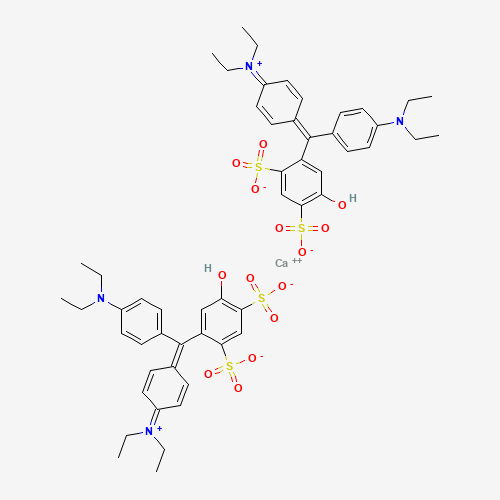
Patent Blue V is a synthetic blue dye used in a range of foods, often combined with yellows to make greens. Outside food it is used in medicine to trace lymph vessels.
Where it is and isn’t permitted
| Jurisdiction | Status | Scope and limits | Citation |
|---|---|---|---|
| Australia and New Zealand | No listed food uses foundThis site has not matched this substance to any food use on this jurisdiction’s list of authorised food additives. A food additive may be used only in foods that list names. Flavourings, enzymes, processing aids and added nutrients are regulated separately and do not appear on it. | ||
| Canada | No listing matchedHealth Canada’s lists name additives without E or INS numbers, so this site matches them by exact name. A substance listed there under a name this site does not recognise has no row here. | ||
| European Union | Permitted, with conditions | 28 food categories highest permitted level 500 mg/l Show every food category
| Regulation (EC) No 1333/2008, Annex IIand 27 further provisionsretrieved 2026-10-18 |
| Great Britain | Permitted, with conditions | 37 food categories highest permitted level 500 mg/kg or mg/l Show every food category
| Assimilated Regulation (EC) No 1333/2008and 36 further provisionsretrieved 2026-10-18 |
| Japan | No listing matchedThis site imports only Japan’s list of designated additives (Appended Table 1 to the Regulations for Enforcement of the Food Sanitation Act), matched by English name. Existing additives, natural flavouring agents and ordinary foods used as additives are permitted outside that list and are not imported, so an empty row does not show that Japan does not permit the substance. | ||
| South Korea | No listing matchedThis site imports Part III of South Korea’s Standards and Specifications for Food Additives, matched by CAS number, then INS number, then exact name. Mixed preparations and sanitisers are not imported, and an entry whose identifiers disagreed with a page’s is held for review, so an empty row does not show that South Korea does not permit the substance. | ||
| United States | Not listedDoes not appear on this jurisdiction’s permitted list. That is not the same as being prohibited. | ||
| Codex Alimentarius | Not listedDoes not appear on this jurisdiction’s permitted list. That is not the same as being prohibited. |
How much is permitted
A listing usually limits the quantity as well as the food. Only one of the forms that takes is a figure: quantum satis and good manufacturing practice permit the amount the technological effect requires and no more, which is a limit rather than the absence of one. Figures below are the range across every food category this page is listed in, and categories differ between regulators — see how much is permitted.
| European Union | 50 mg/kg – 500 mg/kg | 27 numeric limit, 1 quantum satis |
|---|---|---|
| Great Britain | 50 mg/kg – 500 mg/kg | 32 numeric limit, 4 several limits, 1 quantum satis |
What it is made from
A synthetic triarylmethane dye produced from petroleum-derived aromatic intermediates.
- Vegan
- Vegetarian
Compare other additives on the dietary indexes.
- CAS registry number
- 3536-49-0
- InChIKey
- RTMBGDBBDQKNNZ-UHFFFAOYSA-L
- PubChem
- CID 77073
The two specifications, compared
The European Union sets identity and purity by regulation; JECFA publishes its own through FAO, advisory until a country adopts it. Both documents are below in full. These are the parameters each puts a number on.
| Parameter | European Union | JECFA |
|---|---|---|
| Assay | no less than 85 % | no less than 85 % |
| Lead | no more than 2 mg/kg | no more than 2 mg/kg |
| Arsenic | no more than 3 mg/kg | — |
| Mercury | no more than 1 mg/kg | — |
| Cadmium | no more than 1 mg/kg | — |
The two documents state the same figures for every parameter compared here.
How the EU defines it
The legal specification an additive must meet to be sold as this E number in the EU — what it is, how it may be made, and the purity it must reach. From Commission Regulation (EU) No 231/2012.
E 131 Patent blue v
Patent Blue V consists essentially of the calcium or sodium compound of [4-(α-(4-diethylaminophenyl)-5-hydroxy-2,4-disulfophenyl-methylidene)2,5-cyclohexadien-1-ylidene] diethylammonium hydroxide inner salt and subsidiary colouring matters together with sodium chloride and/or sodium sulphate and/or calcium sulphate as the principal uncoloured components. The potassium salt is also permitted.
Synonyms: CI Food Blue 5
Assay, identification and purity criteria
Description and assay
- Colour Index No
- 42051
- Einecs
- 222-573-8
- Chemical name
- The calcium or sodium compound of [4-(α-(4-diethylaminophenyl)-5-hydroxy-2,4-disulfophenyl-methylidene) 2,5-cyclohexadien-1-ylidene] diethyl-ammonium hydroxide inner salt
- Chemical formula
- Calcium compound: C₂₇H₃₁N₂O₇S₂Ca1/2 Sodium compound: C₂₇H₃₁N₂O₇S₂Na
- Molecular weight
- Calcium compound: 579,72 Sodium compound: 582,67
- Assay
- Content not less than 85 % total colouring matters, calculated as the sodium salt [image] 2 000 at ca. 638 nm in aqueous solution at pH 5
- Description
- Dark blue powder or granules
- Appearance of the aqueous solution
- Blue
Identification
- Spectrometry
- Maximum in water at 638 nm at pH 5
Purity criteria
- Water insoluble matter
- Not more than 0,2 %
- Subsidiary colouring matters
- Not more than 2,0 %
- 3-hydroxy benzaldehyde
- [image] | Total not more than 0,5 % 3-hydroxy benzoic acid 3-hydroxy-4-sulfobenzoic acid N,N-diethylamino benzene sulfonic acid
- Leuco base
- Not more than 4,0 %
- Unsulfonated primary aromatic amines
- Not more than 0,01 % (calculated as aniline)
- Ether extractable matter
- From a solution of pH 5 not more than 0,2 %
- Arsenic
- Not more than 3 mg/kg
- Lead
- Not more than 2 mg/kg
- Mercury
- Not more than 1 mg/kg
- Cadmium
- Not more than 1 mg/kg
How JECFA defines it
The international specification for identity and purity, prepared by the Joint FAO/WHO Expert Committee on Food Additives and published by FAO. It is a different document from any above, written by a different body and revised on its own cycle; it is advisory, and a country adopts it or does not.
INS 131 Patent Blue V
Patent Blue V consists essentially of the calcium or sodium salt of 2-[(4-diethylaminophenyl)(4-diethylimino-2,5-cyclohexadien-1-ylidene)methyl]- 4-hydroxy-1,5-benzenedisulfonate and subsidiary colouring matters. Water, sodium chloride, sodium sulfate, calcium chloride, and calcium sulfate can be present as the principal uncoloured components. Patent Blue V may be converted to the corresponding aluminium lake, in which case only the General Specifications for Aluminium Lakes of Colouring Matters applies.
Synonyms: CI Food Blue 5, Patent Blue 5; CI (1975) No. 42051; INS No. 131 CI Food Blue 5; Patent Blue 5
Assay, identification and purity criteria
Description and assay
- Specification history
- Prepared at the 69 th JECFA (2008), published in FAO JECFA Monographs 5 (2008), superseding specifications prepared at the 31st JECFA (1987), published in the combined Compendium of Food Additive Specifications, FAO JECFA Monographs 1 (2005). No ADI could be allocated at the 26 th JECFA (1982).
- Chemical names
- Calcium or sodium salt of 2-[(4-diethylaminophenyl)(4-diethylimino-2,5-cyclohexadien-1-ylidene)methyl]-4-hydroxy-1,5-benzene-disulfonate; Calcium or sodium salt of [4-[ alpha -(4-diethyl-aminophenyl)-5-hydroxy-2,4-disulfonatophenylmethylidene]-2,5-cyclohexadien-1-ylidene] diethylammonium hydroxide inner salt
- C.A.S. number
- 3536-49-0
- Chemical formula
- Calcium salt: C27H31N2O7S2½Ca Sodium salt: C27H31N2O7S2Na
- Structural formula
- where X = ½Ca for the calcium salt X = Na for the sodium salt
- Formula weight
- ½Calcium salt: 579.14 Sodium salt: 582.15
- Assay
- Not less than 85% total colouring matter
- DESCRIPTION
- Blue powder or granules
- FUNCTIONAL USES
- Colour
- METHOD OF ASSAY
- Proceed as directed under Colouring Matters Content by Titration with Titanous Chloride (Volume 4) , under Food Colours, Colouring Matters ) , using the following: Weight of sample: 1.3-1.4 g Buffer: 15 g sodium hydrogen tartrate Weight ( D ) of colouring matters equivalent to 1.00 ml of 0.1 N TiCl3: 28.98 mg of the calcium salt 29.13 mg of the sodium salt.
Identification
- Solubility (Vol. 4)
- Soluble in water; slightly soluble in ethanol
- Colouring matters , Identification (Vol. 4)
- Passes test
Purity criteria
- Water content (Loss on drying) (Vol. 4)
- Not more than 15% together with chloride and sulfate calculated as sodium salts
- Water-insoluble matter (Vol. 4)
- Not more than 0.5%
- Lead (Vol. 4)
- Not more than 2 mg/kg Determine using an AAS/ICP-AES technique appropriate to the specified level. The selection of sample size and method of sample preparation may be based on the principles of the methods described in Volume 4 (under “General Methods, Metallic Impurities”).
- Chromium (Vol. 4)
- Not more than 50 mg/kg Determine using an AAS/ICP-AES technique appropriate to the specified level. The selection of sample size and method of sample preparation may be based on the principles of the methods described in Volume 4 (under “General Methods, Metallic Impurities”)
- Subsidiary colouring matter content (Vol. 4)
- Not more than 2% Use the following conditions: Chromatography solvent: n-butanol:water:ethanol:ammonia (s.g. 0.880) (600:264:135:6) Height of ascent of solvent front: approximately 17 cm
- Organic compounds other than colouring matters
- Not more than 0.5% (Sum of 3-hydroxybenzaldehyde, 3-hydroxybenzoic acid, 3-hydroxy-4-sulfonatobenzoic acid and N,N - diethylaminobenzenesulfonic acids) See description under TESTS
- Leuco base (Vol. 4)
- Not more than 4% Proceed as directed in Volume 4 using the following parameters: - Sample: 110 mg - Ratio of the formula weight of the colouring matter to the formula weight of its leuco base: Sodium salt: 582.15/606.66 = 0.95960 ½Calcium salt: 579.14/600.76 = 0.96401 - Absorptivity: 0.200 l/(mg·cm) at 638 nm
- Unsulfonated primary aromatic amines (Vol. 4)
- Not more than 0.01%, calculated as aniline
- Ether-extractable matter (Vol. 4)
- Not more than 0.2%
- Test: Organic compounds other than colouring matters (Vol. 4)
- Proceed as directed under Determination by High Performance Liquid Chromatography using the following conditions: Instrument: High Performance Liquid Chromatograph fitted with a gradient elution accessory Detector: A UV detector monitored at 254 nm Column: 250 x 4 mm (Kartusche). LiChrosorb RP 18, 7 μm or equivalent. Mobile phase: (A) Acetate buffer pH 4.6: water (10% w/v) - prepared using 1 M sodium hydroxide, 1 M acetic acid and water (5:10:35) (B) Acetonitrile Gradient Min % (A) % (B) Flow rate (ml/min) 0 85 15 1 12 85 15 1 25 20 80 2 28 20 80 2 40 85 15 1
Every name it appears under
78 recorded names. A label may use any of them.
E number
- E131
CAS registry number
- 3536-49-0
As it appears in regulation
- Patent Blue V
Other names
- Acid blue 3
- Acid Blue 3 calcium
- Acid Blue 3 calcium salt
- Acidal Carmine V
- Alphazurine 2 G (C.I. 42051)
- ARIAVIT PATENT BLUE V
- Bleu patente V [French]
- Blue ZN 3
- C.I. Acid Blue 3
- C.I. Acid Blue 3, calcium salt (2:1)
- C.I. Food Blue 5
- C.I.Acid Blue 3 (C.I.42051)
- Carmine Blue V
- CI FOOD BLUE 5
- COGILOR BLUE 517.11
- Dai-ei Acid Pure Blue VX
- E 131
- Epitope ID:131791
- INS NO.131
- INS-131
- L-Blau 3 [German]
- m-Hydroxytetraethyldiaminotriphenylcarbinol anhydride disulfonic acid calcium salt
- Merantine Blue V
- Mitsui Acid Pure Blue VX
- New Patent Blue A-CE Extra
- New Patent Blue Extra Pure A
- Patent Blue 5
- Patent Blue V
- PATENT BLUE V (E 131)
- PATENT BLUE V (MART.)
- Patent Blue V and L
- Patent Blue V calcium salt (C.I. 42051)
- Patent blue V calcium salt (C.I. 42051), extra pure
- Patent Blue V calcium salt, analytical standard
- PATENT BLUE V CI 42051 E131 [WHO-DD]
- Patent Blue V hemicalcium salt
- Schultz No. 826
- Solar Pure Blue VX
- VITASYN PATENT BLUE V 50
- VITASYN PATENT BLUE V 85
- XYLENE BLUE V
Systematic names
- Bis(hydrogen (4-(4-(diethylamino)-5'-hydroxy-2',4'-disulphonatobenzhydrylidene)cyclohexa-2,5-dien-1-ylidene)diethylammonium), calcium salt
- Calcium 4-((4-(diethylamino)phenyl)(4-(diethyliminio)cyclohexa-2,5-dien-1-ylidene)methyl)-6-hydroxybenzene-1,3-disulfonate
- calcium 4-[[4-(diethylamino)phenyl]-(4-diethylazaniumylidenecyclohexa-2,5-dien-1-ylidene)methyl]-6-hydroxybenzene-1,3-disulfonate
- calcium bis(4-{[4-(diethylamino)phenyl][4-(diethyliminio)cyclohexa-2,5-dien-1-ylidene]methyl}-6-hydroxybenzene-1,3-disulfonate)
- calcium;4-[[4-(diethylamino)phenyl]-(4-diethylazaniumylidenecyclohexa-2,5-dien-1-ylidene)methyl]-6-hydroxybenzene-1,3-disulonate
- Ethanaminium, N-(4-((4-(diethylamino)phenyl)(5-hydroxy-2,4-disulfophenyl)methyl- ene)-2,5-cyclohexadien-1-ylidene)-N-ethyl-, hydroxide, inner salt, calcium salt (2:1)
- Ethanaminium, N-(4-((4-(diethylamino)phenyl)(5-hydroxy-2,4-disulfophenyl)methyl-ene)-2,5-cyclohexadien-1-ylidene)-N-ethyl-, hydroxide, inner salt, calcium salt (2:1)
- Ethanaminium, N-(4-((4-(diethylamino)phenyl)(5-hydroxy-2,4-disulfophenyl)methylene)-2,5-cyclohexadien-1-ylidene)-N-ethyl-, hydroxide, inner salt, calcium salt (2:1)
- Ethanaminium, N-(4-((4-(diethylamino)phenyl)(5-hydroxy-2,4-disulfophenyl)methylene)-2,5-cyclohexadien-1-ylidene)-N-ethyl-, inner salt, calcium salt (2:1)
- N-(4-((4-(Diethylamino)phenyl)(5-hydroxy-2,4-disulfophenyl)methyl- ene)-2,5-cyclohexadien-1-ylidene)-N-ethylethanaminium, hydroxide, inner salt, calcium salt (2:1)
- N-(4-((4-(Diethylamino)phenyl)(5-hydroxy-2,4-disulfophenyl)methyl-ene)-2,5-cyclohexadien-1-ylidene)-N-ethylethanaminium, hydroxide, inner salt, calcium salt (2:1)
- N-(4-((4-(diethylamino)phenyl)(5-hydroxy-2,4-disulfophenyl)methylene)cyclohexa-2,5-dien-1-ylidene)-N-ethylethanaminium
The EU re-evaluation programme
Every additive authorised in the EU before 20 January 2009 was put back through EFSA by Commission Regulation (EU) No 257/2010, and this one is named in it. What the Regulation required is below; whether the opinion has since been published is not something this site records.
- To be evaluated by 31 December 2010. Named in Annex II, Part I, point 2 as “Patent Blue V”, among the additives given priority within its class.
Hazard reference values
EFSA and JECFA have both assessed Patent Blue V and their conclusions are not two comparable figures — EFSA records 5 mg/kg bw/day, JECFA not allocated. An acceptable daily intake is a reference value set by a committee, not a threshold above which harm begins. “Not specified”, “not limited” and “not allocated” are conclusions, not missing data, and they are shown in the words each body used rather than reduced to a number. See where the two committees differ.
Evidence and how bodies read it
What assessing bodies concluded
Each conclusion is paraphrased in the body's own framing, from the published opinion linked beneath it. Where bodies differ, both stand; this site does not adjudicate between them or add a view of its own.
EFSA 2013
The ANS Panel concluded that the data provided a rationale for redefining the ADI for Patent Blue V (E 131) and set it at 5 mg/kg bw/day (the SCF value was 15 mg/kg bw/day). Exposure at maximum permitted levels exceeded this ADI for high-consuming toddlers and children, but estimates at maximum reported use levels were below it for all groups.
Common questions
Assembled from what is above, in the words the questions are usually asked in. Each answer is the same statement the relevant section makes, with the same citations behind it.
- What is E 131?
- E 131 is Patent Blue V. Patent Blue V is a synthetic blue dye used in a range of foods, often combined with yellows to make greens. Outside food it is used in medicine to trace lymph vessels.
- What is Patent Blue V used for in food?
- It is listed as a colour — the role the EU assigns it. This page shows every function each regulator records, with the citation for each.
- Where is Patent Blue V permitted?
- Of the seven regulators this site reads, the EU and Great Britain permit it. Each permission is for named foods at named levels, not a blanket one; the table on this page gives them with citations.
- Is Patent Blue V vegan?
- Yes. Patent Blue V is not derived from animals, and is suitable for vegetarians. This page says what it is made from and how.
Sources for this page
- eu retrieved 2026-10-18
- gb retrieved 2026-10-18
- euspecs retrieved 2026-10-18
- jecfaspecs retrieved 2026-09-23
Full licence terms and publisher details on Sources. How this page is built and updated: Method.
Machine-readable: a JSON record of this additive is given on request —how to ask for access.
Follow changes to Patent Blue V:Atom feed — regulatory events, and any change the weekly refresh detects in its provisions.