Potassium aluminium silicate
1327-44-2 · aluminum;potassium;dioxido(oxo)silane · E 555 · Mica · Microcline, naturally occurring mineral · Potassium aluminium silicate · Potassium aluminum silicate, anhydrous · Silicic acid, aluminum potassium salt · Titanium Silicalite · E555 · aluminum potassium tetraoxidosilane · Potassium aluminium silicate · Kaaliumalumiiniumsilikaat · Kalij aluminijev silikat · KALIJEV ALUMINIJEV SILIKAT · Kalio aliuminio silikatas · Kaliumalumiinisilikaatti · Kaliumaluminiumsilicaat · Kaliumaluminiumsilicat · Kaliumaluminiumsilikat · Kremičitan hlinitodraselný · Krzemian glinowo-potasowy · Kálium-alumínium-szilikát · Kālija alumīnija silikāts · Křemičitan draselno-hlinitý · Potassium aluminium silicate · Silicat de aluminiu și potasiu · Silicate alumino-potassique · Silicato de alumínio e potássio · Silicato de potasio y aluminio · Silicato di potassio e alluminio · Silikat tal-potassju tal-aluminju · SILIKAT TAL-POTASSJU U TAL-ALUMINJU · Πυριτικό αργιλιοκάλιο · Калиевоалуминиев силикатE number E555CAS 1327-44-2
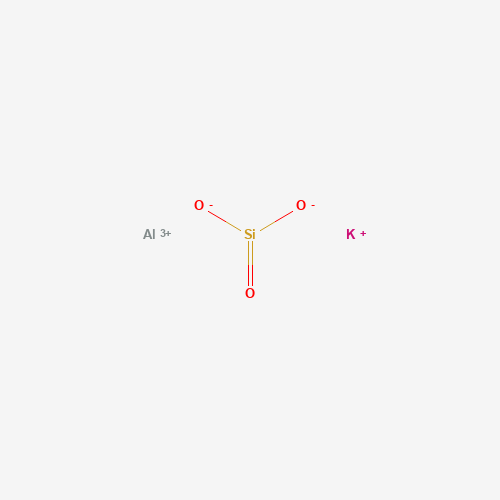
Potassium aluminium silicate is mica. As an additive it is chiefly the base of pearlescent pigments, which get their shimmer from thin mineral coatings on mica flakes.
Where it is and isn’t permitted
| Jurisdiction | Status | Scope and limits | Citation |
|---|---|---|---|
| Australia and New Zealand | Permitted, with conditions | 2 food categories highest permitted level 10,000 mg/kg Show every food category
| Food Standards Code, Schedule 15, S15—5and 1 further provisionretrieved 2026-10-17 |
| Canada | No listing matchedHealth Canada’s lists name additives without E or INS numbers, so this site matches them by exact name. A substance listed there under a name this site does not recognise has no row here. | ||
| European Union | No listed food uses foundThis site has not matched this substance to any food use on this jurisdiction’s list of authorised food additives. A food additive may be used only in foods that list names. Flavourings, enzymes, processing aids and added nutrients are regulated separately and do not appear on it. | ||
| Great Britain | No listed food uses foundThis site has not matched this substance to any food use on this jurisdiction’s list of authorised food additives. A food additive may be used only in foods that list names. Flavourings, enzymes, processing aids and added nutrients are regulated separately and do not appear on it. | ||
| Japan | No listing matchedThis site imports only Japan’s list of designated additives (Appended Table 1 to the Regulations for Enforcement of the Food Sanitation Act), matched by English name. Existing additives, natural flavouring agents and ordinary foods used as additives are permitted outside that list and are not imported, so an empty row does not show that Japan does not permit the substance. | ||
| South Korea | No listing matchedThis site imports Part III of South Korea’s Standards and Specifications for Food Additives, matched by CAS number, then INS number, then exact name. Mixed preparations and sanitisers are not imported, and an entry whose identifiers disagreed with a page’s is held for review, so an empty row does not show that South Korea does not permit the substance. | ||
| United States | Not listedDoes not appear on this jurisdiction’s permitted list. That is not the same as being prohibited. | ||
| Codex Alimentarius | Not listedDoes not appear on this jurisdiction’s permitted list. That is not the same as being prohibited. |
How much is permitted
A listing usually limits the quantity as well as the food. Only one of the forms that takes is a figure: quantum satis and good manufacturing practice permit the amount the technological effect requires and no more, which is a limit rather than the absence of one. Figures below are the range across every food category this page is listed in, and categories differ between regulators — see how much is permitted.
| Australia and New Zealand | 10,000 mg/kg | 1 numeric limit, 1 GMP |
|---|
What it is made from
Mined as the mineral muscovite mica, then purified and milled into fine flakes. Pearlescent effects come from coating the flakes with another pigment.
- Vegan
- Vegetarian
Compare other additives on the dietary indexes.
- CAS registry number
- 1327-44-2
- InChIKey
- SCMLWOSTMLVMQY-UHFFFAOYSA-N
- PubChem
- CID 21881688
The two specifications, compared
The European Union sets identity and purity by regulation; JECFA publishes its own through FAO, advisory until a country adopts it. Both documents are below in full. These are the parameters each puts a number on.
| Parameter | European Union | JECFA |
|---|---|---|
| Assay | no less than 98 % | no less than 98 % |
| Loss on drying | no more than 0.5 % | no more than 0.5 % |
| Lead | no more than 5 mg/kg | — |
| Arsenic | no more than 3 mg/kg | — |
| Mercury | no more than 1 mg/kg | — |
| Cadmium | no more than 2 mg/kg | — |
The two documents state the same figures for every parameter compared here.
How the EU defines it
The legal specification an additive must meet to be sold as this E number in the EU — what it is, how it may be made, and the purity it must reach. From Commission Regulation (EU) No 231/2012.
A specification does not authorise use. This site holds no EU permission for Potassium aluminium silicate in food; see the EU row in the status panel above.
E 555 Potassium aluminium silicate
Natural mica consists of mainly potassium aluminium silicate (muscovite)
Synonyms: Mica
Assay, identification and purity criteria
Description and assay
- Einecs
- 310-127-6
- Chemical name
- Potassium aluminium silicate
- Chemical formula
- KAl₂[AlSi₃O₁₀](OH)₂
- Molecular weight
- 398
- Assay
- Content not less than 98 %
- Description
- Light grey to white crystalline platelets or powder
Identification
- Solubility
- Insoluble in water, diluted acids and alkali and organic solvents
Purity criteria
- Loss on drying
- Not more than 0,5 % (105 °C, 2 hours)
- Antimony
- Not more than 20 mg/kg
- Zinc
- Not more than 25 mg/kg
- Barium
- Not more than 25 mg/kg
- Chromium
- Not more than 100 mg/kg
- Copper
- Not more than 25 mg/kg
- Nickel
- Not more than 50 mg/kg
- Arsenic
- Not more than 3 mg/kg
- Mercury
- Not more than 1 mg/kg
- Cadmium
- Not more than 2 mg/kg
- Lead
- Not more than 5 mg/kg
How JECFA defines it
The international specification for identity and purity, prepared by the Joint FAO/WHO Expert Committee on Food Additives and published by FAO. It is a different document from any above, written by a different body and revised on its own cycle; it is advisory, and a country adopts it or does not.
INS 555 Potassium aluminium silicate
Potassium aluminium silicate is mined from natural sources and then further purified.
Synonyms: Mica, Muscovite, INS No. 555 Mica; Muscovite
Assay, identification and purity criteria
Description and assay
- Specification history
- Prepared at the 79 th JECFA (2014), published in FAO Monographs 16 (2014), superseding the specifications prepared at the 77 th JECFA (2013), published in FAO Monographs 14 (2013). A PTWI of 2 mg/kg bw for total aluminium was established at the 74th JECFA (2011). The PTWI applies to all aluminium compounds in food, including food additives.
- Chemical name
- Potassium aluminium silicate
- C.A.S. number
- 12001-26-2
- Chemical formula
- KAl2[AlSi3O10](OH)2 (Idealized)
- Formula weight
- 398.31
- Assay
- Not less than 98%
- DESCRIPTION
- Light grey to white crystalline platelets or powder.
- FUNCTIONAL USES
- Anticaking agent
- METHOD OF ASSAY
- Weigh about 0.5 g of the sample to the nearest 0.1 mg, in a platinum or nickel crucible, add 5 g potassium hydroxide and 2 g boric acid, mix and melt completely using a torch burner (alkali fusion) and allow to stand at room temperature. Place the reaction product along with crucible in a 250-ml PTFE beaker, add 150 ml hot deionized water and dissolve residue by agitation. Wash the crucible with a small amount of hot water and add the washings to the beaker. Add 50 ml hydrochloric acid and transfer the contents into a 250-ml volumetric flask. Wash the beaker three times with hot water, transfer the washings to the volumetric flask and make up to volume (Solution A). Prepare the test solution by diluting Solution A with 2% hydrochloric acid solution to get the solution within the linear dynamic range of the analyzer. Analyze aluminium in the test solution using ICP-AES (Vol. 4). Set instrument parameters as specified by the instrument manufacturer and use the analytical line for aluminium (396.152 nm). Determine the concentration (as μg/ml) of aluminium from the respective standard curve. Calculate the percentage of potassium aluminium silicate in the sample from aluminium using the formula below. 4.92 x CAl x 250 x DF Potassium Aluminium Silicate (%) = ---------------------------------- W x 10 6 Where: C = Concentration of Al in the test solution, μg/ml DF = Dilution factor (dilution of Solution A to get test solution) W = Weight of sample, g
Identification
- Solubility (Vol. 4)
- Practically insoluble or insoluble in water, dilute acids and alkali and organic solvents
- Test for aluminium and silicon
- Passes test See description under TESTS
- Test: Test for aluminium and silicon
- Use the test solution as shown under method of assay. Analyze aluminium and silica in the test solution by ICP-AES technique (Volume 4). Set instrument parameters as specified by the instrument manu-facturer, use the analytical lines for Al (396.15 nm) and Si (251.611 nm).
Purity criteria
- Loss on Drying (Vol. 4)
- Not more than 0.5% (105°, 2 h)
- Impurities soluble in 0.5 M hydrochloric acid
- Antimony: Not more than 20 mg/kg Arsenic: Not more than 3 mg/kg Barium: Not more than 25 mg/kg Cadmium: Not more than 2 mg/kg Chromium: Not more than 100 mg/kg Copper: Not more than 25 mg/kg Lead: Not more than 5 mg/kg Mercury: Not more than 1 mg/kg Nickel: Not more than 50 mg/kg Zinc: Not more than 25 mg/kg See description under TESTS
- Test: Impurities soluble in 0.5 M hydrochloric acid
- Extract 20 g of finely ground sample under reflux conditions (to prevent loss of mercury) with 100 ml of 0.5 M hydrochloric acid (spectroscopic grade) for 30 min. Let solution cool, then filter through a 0.1 μm membrane filter. Wash the filter twice with hot 0.5 M hydrochloric acid. Combine the filtrate and wash solution in a 200 ml volumetric flask and make up to volume with 0.5 M hydrochloric acid. Determine arsenic using an AAS (Hydride generation) technique; antimony, barium, chromium, copper, nickel and zinc by an ICP-AES technique; lead and cadmium using an AAS (Electrothermal atomization) technique; and mercury using an AAS (Cold vapour generation) technique. See “Metallic impurities” in the Combined Compendium of Food Additive Specifications (Volume 4).
Authorised in other additives, enzymes, flavourings and nutrients
These authorisations are not for use in food. They let this substance be used inside another additive, a food enzyme, a flavouring or a nutrient preparation — often as a carrier — and it reaches food only as part of that product. Annex III to Regulation (EC) No 1333/2008.
| Part | May be used in | Maximum level | Citation |
|---|---|---|---|
| Annex III, Part 1: Carriers in food additives | In E 172 iron oxides and hydroxides | 90 % relative to the pigment | Regulation (EC) No 1333/2008, Annex III, Part 1 |
Every name it appears under
35 recorded names. A label may use any of them.
E number
- E555
CAS registry number
- 1327-44-2
As it appears in regulation
- Potassium aluminium silicate
Other names
- aluminum;potassium;dioxido(oxo)silane
- E 555
- Mica
- Microcline, naturally occurring mineral
- Potassium aluminium silicate
- Potassium aluminum silicate, anhydrous
- Silicic acid, aluminum potassium salt
- Titanium Silicalite
Systematic names
- aluminum potassium tetraoxidosilane
Hazard reference values
| Type | Value | Population | Assessed by | Opinion |
|---|---|---|---|---|
| ADI | not allocated | — | JECFA | 2014 |
Evidence and how bodies read it
What assessing bodies concluded
Each conclusion is paraphrased in the body's own framing, from the published opinion linked beneath it. Where bodies differ, both stand; this site does not adjudicate between them or add a view of its own.
EFSA 2020
The FAF Panel concluded that the safety of sodium aluminium silicate (E 554) and potassium aluminium silicate (E 555) could not be assessed because toxicological data and physicochemical characterisation were very limited. It noted that aluminium exposure from these uses could exceed EFSA's tolerable weekly intake for aluminium.
Common questions
Assembled from what is above, in the words the questions are usually asked in. Each answer is the same statement the relevant section makes, with the same citations behind it.
- What is E 555?
- E 555 is Potassium aluminium silicate. Potassium aluminium silicate is mica. As an additive it is chiefly the base of pearlescent pigments, which get their shimmer from thin mineral coatings on mica flakes.
- Where is Potassium aluminium silicate permitted?
- Of the seven regulators this site reads, Australia and New Zealand permits it. Each permission is for named foods at named levels, not a blanket one; the table on this page gives them with citations.
- Is Potassium aluminium silicate vegan?
- Yes. Potassium aluminium silicate is not derived from animals, and is suitable for vegetarians. This page says what it is made from and how.
Sources for this page
- anz retrieved 2026-10-17
- euspecs retrieved 2026-10-18
- jecfaspecs retrieved 2026-09-23
Full licence terms and publisher details on Sources. How this page is built and updated: Method.
Machine-readable: a JSON record of this additive is given on request —how to ask for access.
Follow changes to Potassium aluminium silicate:Atom feed — regulatory events, and any change the weekly refresh detects in its provisions.