Potassium nitrite
1092528-35-2 · 7758-09-0 · 92937-66-1 · Caswell No. 698 · CCRIS 3959 · E 249 · EPA Pesticide Chemical Code 076203 · HSDB 1216 · INS NO.249 · INS-249 · Kaliumnitrit · KNO2 · NITRITES · Nitrous acid potassium salt (1:1) · Nitrous acid, potassium salt · Potassium nitrite · POTASSIUM NITRITE (15N) · Potassium nitrite (1:1) · Potassium nitrite (KNO2) · Potassium nitrite, ACS grade · Potassium nitrite, ACS reagent, >=96.0% · Potassium nitrite, meets analytical specification of FCC, 97-100.5% · Potassium nitrite, p.a., 97% · Potassium nitrite, ~97% (titration) · potassium nitrite-15N · E249 · 249 · nitrite · potassium nitrite · Potassium nitrite · Azotyn potasu · Dusitan draselný · Kaaliumnitrit · Kalijev nitrit · Kalio nitritas · Kaliumnitriet · Kaliumnitriitti · Kaliumnitrit · Kálium-nitrit · Kālija nitrīts · Nitrit de potasiu · Nitrit tal-potassju · Nitrite de potassium · Nitrito de potássio · Nitrito di potassio · Nitrito potásico · Potassium nitrite · Νιτρώδες κάλιο · Калиев нитритE number E249INS 249CAS 7758-09-0
Listed as a preservative by Canada and Codex.
Listed as preservatives (CA, Codex) · colour retention agents (Codex)
- Canada: Preservative — Health Canada, List of Permitted Preservatives (List 11)
- Codex Alimentarius: Preservative — CXS 192-1995 Table One, INS 249
- Codex Alimentarius: Colour retention agent — CXS 192-1995 Table One, INS 249
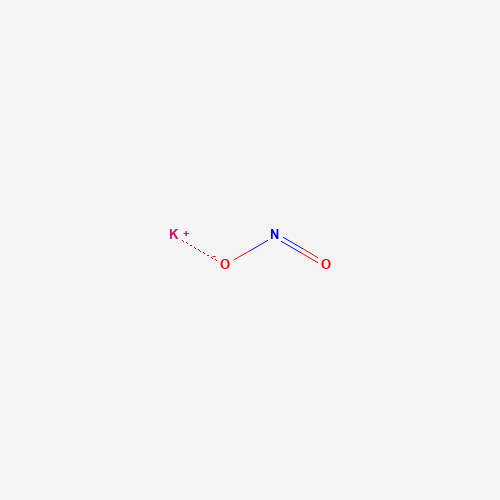
Potassium nitrite is a curing agent for meat, doing the same job as sodium nitrite: fixing the pink colour, contributing the cured flavour, and suppressing Clostridium botulinum.
Where it is and isn’t permitted
| Jurisdiction | Status | Scope and limits | Citation |
|---|---|---|---|
| Australia and New Zealand | Permitted, with conditions | 5 food categories highest permitted level 125 mg/kg Show every food category
| Food Standards Code, Schedule 15, S15—5and 4 further provisionsretrieved 2026-10-17 |
| Canada | Permitted, with conditions | no numerical limit (good manufacturing practice) 4 permitted uses Show every permitted use
| Health Canada, List of Permitted Preservatives (List 11)and 3 further provisionsretrieved 2026-10-17 |
| European Union | Permitted, with conditions | 19 food categories highest permitted level 105 mg/kg Show every food category
| Regulation (EC) No 1333/2008, Annex II, consolidated text 02008R1333-20260818and 18 further provisionsretrieved 2026-10-18 |
| Great Britain | Permitted, with conditions | 6 food categories highest permitted level 150 mg/kg or mg/l Show every food category
| Assimilated Regulation (EC) No 1333/2008, Annex II (as at 28 June 2024)and 5 further provisionsretrieved 2026-10-18 |
| Japan | No listing matchedThis site imports only Japan’s list of designated additives (Appended Table 1 to the Regulations for Enforcement of the Food Sanitation Act), matched by English name. Existing additives, natural flavouring agents and ordinary foods used as additives are permitted outside that list and are not imported, so an empty row does not show that Japan does not permit the substance. | ||
| South Korea | No listing matchedThis site imports Part III of South Korea’s Standards and Specifications for Food Additives, matched by CAS number, then INS number, then exact name. Mixed preparations and sanitisers are not imported, and an entry whose identifiers disagreed with a page’s is held for review, so an empty row does not show that South Korea does not permit the substance. | ||
| United States | Not listedDoes not appear on this jurisdiction’s permitted list. That is not the same as being prohibited. | ||
| Codex Alimentarius | Permitted, with conditions | 2 food categories highest permitted level 80 mg/kg Show every food category and its notes
| CXS 192-1995 Table One, INS 249and 1 further provisionretrieved 2026-09-07 |
How much is permitted
A listing usually limits the quantity as well as the food. Only one of the forms that takes is a figure: quantum satis and good manufacturing practice permit the amount the technological effect requires and no more, which is a limit rather than the absence of one. Figures below are the range across every food category this page is listed in, and categories differ between regulators — see how much is permitted.
| Australia and New Zealand | 50 mg/kg – 125 mg/kg | 5 numeric limit |
|---|---|---|
| Canada | — | 1 GMP, 3 no quantity stated |
| European Union | 30 mg/kg – 105 mg/kg | 19 numeric limit |
| Great Britain | 150 mg/kg | 2 numeric limit, 4 several limits |
| Codex Alimentarius | 80 mg/kg | 2 numeric limit |
What FDA’s inventory records
This page holds no listing for Potassium nitrite in the parts of 21 CFR this site reads. FDA’s Substances Added to Food inventory does carry it, as POTASSIUM NITRITE, pointing at a food-contact regulation, not a listing for use in food: 21 CFR 181.33, 21 CFR 181.34.
The inventory is an information resource: a row means FDA holds information about the substance’s use in food, not that the substance is listed for that use. It is shown apart from the permissions above and is not counted as a US permission anywhere on this site.
What it is made from
Manufactured by absorbing nitrogen oxides into potassium carbonate or hydroxide solution.
- Vegan
- Vegetarian
Compare other additives on the dietary indexes.
- CAS registry number
- 7758-09-0
- InChIKey
- BXNHTSHTPBPRFX-UHFFFAOYSA-M
- PubChem
- CID 516910
The two specifications, compared
The European Union sets identity and purity by regulation; JECFA publishes its own through FAO, advisory until a country adopts it. Both documents are below in full. These are the parameters each puts a number on.
| Parameter | European Union | JECFA |
|---|---|---|
| Assay | no less than 95 % | no less than 95 % |
| Loss on drying | no more than 3 % | no more than 3 % |
| Lead | no more than 0.1 mg/kg | no more than 2 mg/kg |
| Arsenic | no more than 0.1 mg/kg | — |
| Mercury | no more than 0.1 mg/kg | — |
One parameter differs between the two documents. A difference is not a disagreement about safety: the two are revised on their own cycles, and an assay or a drying loss can be measured against a different preparation of the substance, which is why only the contaminant ceilings are marked. Within the EU the EU's figure is the one that binds.
How the EU defines it
The legal specification an additive must meet to be sold as this E number in the EU — what it is, how it may be made, and the purity it must reach. From Commission Regulation (EU) No 231/2012.
E 249 Potassium nitrite
Assay, identification and purity criteria
Description and assay
- Einecs
- 231-832-4
- Chemical name
- Potassium nitrite
- Chemical formula
- KNO₂
- Molecular weight
- 85,11
- Assay
- Content not less than 95 % on the anhydrous basis
- Description
- White or slightly yellow, deliquescent granules
Identification
- Test for nitrite
- Passes test
- Test for potassium
- Passes test
- pH
- 6,0-9,0 (5 % solution)
Purity criteria
- Loss on drying
- Not more than 3 % (4 hours, over silica gel)
- Arsenic
- Not more than 0,1 mg/kg
- Lead
- Not more than 0,1 mg/kg
- Mercury
- Not more than 0,1 mg/kg May only be sold in a mixture with salt or a salt substitute.
How JECFA defines it
The international specification for identity and purity, prepared by the Joint FAO/WHO Expert Committee on Food Additives and published by FAO. It is a different document from any above, written by a different body and revised on its own cycle; it is advisory, and a country adopts it or does not.
INS 249 Potassium Nitrite
Synonyms: INS No. 249
Assay, identification and purity criteria
Description and assay
- Specification history
- Prepared at the 44th JECFA (1995), published in FNP 52 Add 3 (1995) superseding specifications prepared at the 20th JECFA (1976), published in FNP 4 (1978) and in FNP 52 (1992). Metals and arsenic specifications revised at the 63rd JECFA (2004). An ADI of 0-0.06 mg/kg bw was established at 44th JECFA (1995). Nitrite should not be used for infants below 3 months
- Chemical names
- Potassium nitrite
- C.A.S. number
- 7758-09-0
- Chemical formula
- KNO 2
- Formula weight
- 85.10
- Assay
- Not less than 95.0% on the dried basis
- DESCRIPTION
- Small, white or slightly yellow, deliquescent granules or rods
- FUNCTIONAL USES
- Antimicrobial preservative, colour fixative
- METHOD OF ASSAY
- Weigh, to the nearest mg, 1 g of the sample, previously dried over silica gel for 4 h. Transfer to a 100 ml volumetric flask and dissolve in water diluting to the mark. Pipette 10.0 ml of this solution into a mixture of 50.0 ml of 0.1N potassium permanganate, 100 ml of water and 5 ml of sulfuric acid, keeping the tip of the pipette well below the surface of the liquid. Warm the solution to 40º, allow it to stand for 5 min and add 25.0 ml of 0.1N oxalic acid. Heat the mixture to about 80º and titrate with 0.1N potassium permanganate. where X = ml of 0.1N potassium permanganate used for titration W = weight (in grams) of the sample.
Identification
- Solubility (Vol. 4)
- Freely soluble in water, sparingly soluble in ethanol
- Test for potassium (Vol. 4)
- Passes test
- Test for nitrite (Vol. 4)
- Passes test
Purity criteria
- Loss on drying (Vol. 4)
- Not more than 3% (over silica gel, 4 h)
- Lead (Vol. 4)
- Not more than 2 mg/kg Determine using an atomic absorption technique appropriate to the specified level. The selection of sample size and method of sample preparation may be based on the principles of the method described in Volume 4, “Instrumental Methods.”
Every name it appears under
49 recorded names. A label may use any of them.
E number
- E249
INS number
- 249
CAS registry number
- 1092528-35-2
- 7758-09-0
- 92937-66-1
As it appears in regulation
- Potassium nitrite
Other names
- Caswell No. 698
- CCRIS 3959
- E 249
- EPA Pesticide Chemical Code 076203
- HSDB 1216
- INS NO.249
- INS-249
- Kaliumnitrit
- KNO2
- NITRITES
- Nitrous acid potassium salt (1:1)
- Nitrous acid, potassium salt
- Potassium nitrite
- POTASSIUM NITRITE (15N)
- Potassium nitrite (1:1)
- Potassium nitrite (KNO2)
- Potassium nitrite, ACS grade
- Potassium nitrite, ACS reagent, >=96.0%
- Potassium nitrite, meets analytical specification of FCC, 97-100.5%
- Potassium nitrite, p.a., 97%
- Potassium nitrite, ~97% (titration)
- potassium nitrite-15N
Systematic names
- nitrite
- potassium nitrite
The EU re-evaluation programme
Every additive authorised in the EU before 20 January 2009 was put back through EFSA by Commission Regulation (EU) No 257/2010, and this one is named in it. What the Regulation required is below; whether the opinion has since been published is not something this site records.
- To be evaluated by 31 December 2015. Named in Annex II, Part II, point 1 as “Potassium nitrite”, among the additives given priority within its class.
Hazard reference values
EFSA and JECFA have both set an acceptable daily intake for Potassium nitrite, and they agree: 0.07 mg/kg bw/day. An acceptable daily intake is a reference value set by a committee, not a threshold above which harm begins. See where the two committees differ.
Evidence and how bodies read it
What assessing bodies concluded
Each conclusion is paraphrased in the body's own framing, from the published opinion linked beneath it. Where bodies differ, both stand; this site does not adjudicate between them or add a view of its own.
EFSA 2017
The ANS Panel derived an ADI of 0.07 mg nitrite ion/kg bw/day for potassium and sodium nitrite (E 249, E 250), based on methaemoglobin formation, and found additive exposure within it except for a slight exceedance in high-consuming children. It estimated a margin of exposure below 10,000 for preformed nitrosamines in meat products at high exposure, and reported some epidemiological evidence linking dietary nitrite with gastric cancer and nitrite plus nitrate from processed meat with colorectal cancer.
Common questions
Assembled from what is above, in the words the questions are usually asked in. Each answer is the same statement the relevant section makes, with the same citations behind it.
- What is E 249?
- E 249 is Potassium nitrite. Potassium nitrite is a curing agent for meat, doing the same job as sodium nitrite: fixing the pink colour, contributing the cured flavour, and suppressing Clostridium botulinum.
- What is Potassium nitrite used for in food?
- It is listed as a preservative — the role Canada and Codex assign it. This page shows every function each regulator records, with the citation for each.
- Where is Potassium nitrite permitted?
- Of the seven regulators this site reads, Australia and New Zealand, Canada, the EU, Great Britain and the Codex standard permit it. Each permission is for named foods at named levels, not a blanket one; the table on this page gives them with citations.
- Is Potassium nitrite vegan?
- Yes. Potassium nitrite is not derived from animals, and is suitable for vegetarians. This page says what it is made from and how.
Sources for this page
- anz retrieved 2026-10-17
- ca retrieved 2026-10-17
- eu retrieved 2026-10-18
- gb retrieved 2026-10-18
- gsfa retrieved 2026-09-07
- euspecs retrieved 2026-10-18
- jecfaspecs retrieved 2026-09-23
Full licence terms and publisher details on Sources. How this page is built and updated: Method.
Machine-readable: a JSON record of this additive is given on request —how to ask for access.
Follow changes to Potassium nitrite:Atom feed — regulatory events, and any change the weekly refresh detects in its provisions.