Potassium propionate
327-62-8 · 7H1F04CKTX · E 283 · INS NO. 283 · INS-283 · Potassium propanoate · Potassium propionate · Potassium propionate, AldrichCPR · Propanoic acid, potassium salt · Propionic Acid Potassium Salt · PROPIONICACIDPOTASSIUMSALT · E283 · potassium;propanoate · Potassium propionate · Kaaliumpropionaat · Kalijev propionat · Kalio propionatas · Kaliumpropionaat · Kaliumpropionaatti · Kaliumpropionat · Kálium-propionát · Kālija propionāts · Potassium propionate · Propionan draselný · Propionat de potasiu · Propionate de potassium · Propionato de potássio · Propionato di potassio · Propionato potásico · Propionian potasu · Propjonat tal-potassju · Προπιονικό κάλιο · Калиев пропионатE number E283INS 283CAS 327-62-8
Listed as a preservative by Codex.
Listed as preservatives (Codex)
- Codex Alimentarius: Preservative — CXS 192-1995 Table Three, INS 283
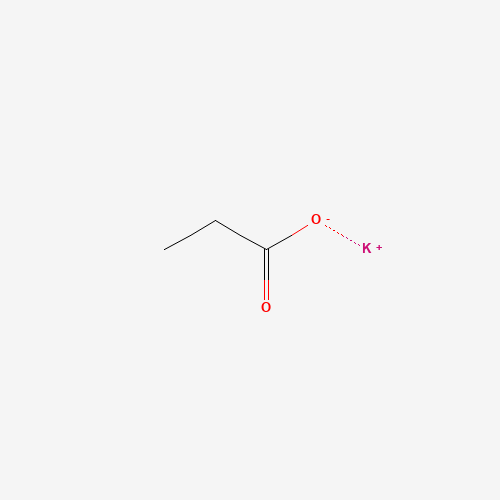
Potassium propionate is a mould inhibitor used in baked goods where sodium is being reduced.
Where it is and isn’t permitted
| Jurisdiction | Status | Scope and limits | Citation |
|---|---|---|---|
| Australia and New Zealand | Permitted, with conditions | 4 food categories highest permitted level 4,000 mg/kg Show every food category
| Food Standards Code, Schedule 15, S15—5and 3 further provisionsretrieved 2026-10-17 |
| Canada | No listing matchedHealth Canada’s lists name additives without E or INS numbers, so this site matches them by exact name. A substance listed there under a name this site does not recognise has no row here. | ||
| European Union | Permitted, with conditions | 6 food categories highest permitted level 3,000 mg/kg Show every food category
| Regulation (EC) No 1333/2008, Annex IIand 5 further provisionsretrieved 2026-10-18 |
| Great Britain | Permitted, with conditions | 6 food categories highest permitted level 2,000 mg/kg or mg/l Show every food category
| Assimilated Regulation (EC) No 1333/2008, Annex II (as at 28 June 2024)and 5 further provisionsretrieved 2026-10-18 |
| Japan | No listing matchedThis site imports only Japan’s list of designated additives (Appended Table 1 to the Regulations for Enforcement of the Food Sanitation Act), matched by English name. Existing additives, natural flavouring agents and ordinary foods used as additives are permitted outside that list and are not imported, so an empty row does not show that Japan does not permit the substance. | ||
| South Korea | No listing matchedThis site imports Part III of South Korea’s Standards and Specifications for Food Additives, matched by CAS number, then INS number, then exact name. Mixed preparations and sanitisers are not imported, and an entry whose identifiers disagreed with a page’s is held for review, so an empty row does not show that South Korea does not permit the substance. | ||
| United States | Not listedDoes not appear on this jurisdiction’s permitted list. That is not the same as being prohibited. | ||
| Codex Alimentarius | Permitted | no numerical limit (good manufacturing practice) | CXS 192-1995 Table Three, INS 283retrieved 2026-09-07 |
How much is permitted
A listing usually limits the quantity as well as the food. Only one of the forms that takes is a figure: quantum satis and good manufacturing practice permit the amount the technological effect requires and no more, which is a limit rather than the absence of one. Figures below are the range across every food category this page is listed in, and categories differ between regulators — see how much is permitted.
| Australia and New Zealand | 2,000 mg/kg – 4,000 mg/kg | 2 numeric limit, 2 GMP |
|---|---|---|
| European Union | 1,000 mg/kg – 3,000 mg/kg | 3 numeric limit, 3 quantum satis |
| Great Britain | 1,000 mg/kg – 2,000 mg/kg | 2 numeric limit, 1 several limits, 3 quantum satis |
| Codex Alimentarius | — | 1 GMP |
What it is made from
Made by neutralising propionic acid with a potassium base.
- Vegan
- Vegetarian
Compare other additives on the dietary indexes.
- CAS registry number
- 327-62-8
- InChIKey
- BWILYWWHXDGKQA-UHFFFAOYSA-M
- PubChem
- CID 23663619
The two specifications, compared
The European Union sets identity and purity by regulation; JECFA publishes its own through FAO, advisory until a country adopts it. Both documents are below in full. These are the parameters each puts a number on.
| Parameter | European Union | JECFA |
|---|---|---|
| Assay | no less than 99 % | no less than 99 % |
| Loss on drying | no more than 4 % | no more than 4 % |
| Lead | no more than 5 mg/kg | no more than 5 mg/kg |
| Arsenic | no more than 3 mg/kg | — |
| Mercury | no more than 1 mg/kg | — |
The two documents state the same figures for every parameter compared here.
How the EU defines it
The legal specification an additive must meet to be sold as this E number in the EU — what it is, how it may be made, and the purity it must reach. From Commission Regulation (EU) No 231/2012.
E 283 Potassium propionate
Assay, identification and purity criteria
Description and assay
- Einecs
- 206-323-5
- Chemical name
- Potassium propionate; Potassium propanoate
- Chemical formula
- C₃H₅KO₂
- Molecular weight
- 112,17
- Assay
- Content not less than 99 % after drying for two hours at 105 °C
- Description
- White crystalline powder
Identification
- Test for propionate
- Passes test
- Test for potassium
- Passes test
Purity criteria
- Loss on drying
- Not more than 4 % (105 °C, 2 hours)
- Water insoluble matter
- Not more than 0,1 %
- Iron
- Not more than 30 mg/kg
- Fluoride
- Not more than 10 mg/kg
- Arsenic
- Not more than 3 mg/kg
- Lead
- Not more than 5 mg/kg
- Mercury
- Not more than 1 mg/kg
How JECFA defines it
The international specification for identity and purity, prepared by the Joint FAO/WHO Expert Committee on Food Additives and published by FAO. It is a different document from any above, written by a different body and revised on its own cycle; it is advisory, and a country adopts it or does not.
INS 283 Potassium Propionate
Synonyms: Potassium propanoate, INS No. 283 Potassium propanoate
Assay, identification and purity criteria
Description and assay
- Specification history
- Prepared at the 49th JECFA (1997) , published in FNP 52 Add 5 (1997) superseding specifications prepared at the 44th JECFA (1995), published in FNP 52 Add 3 (1995). An ADI not limited' was established at the 17th JECFA (1973)
- Chemical name
- Potassium propionate
- C.A.S. number
- 327-62-8
- Chemical formula
- C 3 H 5 KO 2
- Formula weight
- 112.17
- Assay
- Not less than 99.0 % on the dried basis
- DESCRIPTION
- White or colourless crystals
- FUNCTIONAL USES
- Preservative, antimould and antirope agent
- METHOD OF ASSAY
- h into a distillation flask and add 200 ml of 50% phosphoric acid. Boil for 2 h and collect the distillate. During distillation keep the volume in the flask at about 200 ml by adding water using dropping funnel. Titrate the distillate with 1N sodium hydroxide using phenolphthalein TS as indicator. Each ml of 1N sodium hydroxide corresponds to 112.17 mg of C 3 H 5 KO 2 .
Identification
- Solubility (Vol. 4)
- Freely soluble in water, soluble in ethanol
- Positive test for potassium (Vol. 4)
- Passes test
- Positive test for propionate
- Warm the sample with sulfuric acid. The propionic acid evolved may be recognized by its odour.
- Positive test for alkali salt of organic acid
- Ignite the sample at a relatively low temperature. The alkaline residue effervesces with acid.
Purity criteria
- Loss on drying (Vol. 4)
- Not more than 4% (105 o , 2 h)
- pH (Vol. 4)
- 7.5 - 10.5 ( 1 in 10 soln)
- Water-insoluble matter
- Not more than 0.1 % Weigh 5 g of the sample to the nearest mg, transfer into a 100-ml beaker and add 50 ml of water. Stir until all the sample appears to be completely dissolved. Filter through a Gooch crucible, tared to an accuracy of ± 0.2 mg. Rinse the beaker with 20 ml of water. Dry the crucible with its contents in a 60° oven to constant weight. Cool in a desiccator, weigh, and calculate as percentage.
- Iron (Vol. 4)
- Not more than 30 mg/kg Test 0.5 g of the sample as described in the Limit Test using 1.5 ml of Iron Standard Solution (15 μg), in the control.
- Lead (Vol. 4)
- Not more than 5 mg/kg Determine using an atomic absorption technique appropriate to the specified level. The selection of sample size and method of sample preparation may be based on the principles of the method described in Volume 4, “Instrumental Methods.” Weigh, to the nearest mg, 3 g of the sample previously dried at 105 o for 2
Every name it appears under
33 recorded names. A label may use any of them.
E number
- E283
CAS registry number
- 327-62-8
As it appears in regulation
- Potassium propionate
Other names
- 7H1F04CKTX
- E 283
- INS NO. 283
- INS-283
- Potassium propanoate
- Potassium propionate
- Potassium propionate, AldrichCPR
- Propanoic acid, potassium salt
- Propionic Acid Potassium Salt
- PROPIONICACIDPOTASSIUMSALT
Systematic names
- potassium;propanoate
Hazard reference values
| Type | Value | Population | Assessed by | Opinion |
|---|---|---|---|---|
| ADI | not limited | — | JECFA | 1973 |
Evidence and how bodies read it
What assessing bodies concluded
Each conclusion is paraphrased in the body's own framing, from the published opinion linked beneath it. Where bodies differ, both stand; this site does not adjudicate between them or add a view of its own.
EFSA 2014
The ANS Panel found no concern for genotoxicity or carcinogenicity for propionic acid and its salts (E 280–E 283), but concluded the database did not allow an ADI to be allocated. It concluded there would not be a safety concern from the maximum concentrations at the currently authorised uses and use levels.
Common questions
Assembled from what is above, in the words the questions are usually asked in. Each answer is the same statement the relevant section makes, with the same citations behind it.
- What is E 283?
- E 283 is Potassium propionate. Potassium propionate is a mould inhibitor used in baked goods where sodium is being reduced.
- What is Potassium propionate used for in food?
- It is listed as a preservative — the role Codex assigns it. This page shows every function each regulator records, with the citation for each.
- Where is Potassium propionate permitted?
- Of the seven regulators this site reads, Australia and New Zealand, the EU, Great Britain and the Codex standard permit it. Each permission is for named foods at named levels, not a blanket one; the table on this page gives them with citations.
- Is Potassium propionate vegan?
- Yes. Potassium propionate is not derived from animals, and is suitable for vegetarians. This page says what it is made from and how.
Sources for this page
- anz retrieved 2026-10-17
- eu retrieved 2026-10-18
- gb retrieved 2026-10-18
- gsfa retrieved 2026-09-07
- euspecs retrieved 2026-10-18
- jecfaspecs retrieved 2026-09-23
Full licence terms and publisher details on Sources. How this page is built and updated: Method.
Machine-readable: a JSON record of this additive is given on request —how to ask for access.
Follow changes to Potassium propionate:Atom feed — regulatory events, and any change the weekly refresh detects in its provisions.