Potassium sulfite
10117-38-1 · 015KZC652E · Dipotassium sulfite · DIPOTASSIUM SULPHITE · HSDB 5052 · INS NO.225 · INS-225 · Kaliumsulfit · Potassium sulfite · Potassium sulfite (K2SO3) · Potassium sulfite(IV) · Potassium sulfite, 90% · Potassium sulfite, SAJ first grade, >=95.0% · Potassium sulphite · Potassiumsulfite · Sulfurous acid, dipotassium salt · Sulfurous acid, potassium salt · Sulfurous acid, potassium salt (1:2) · E225 · 225INS 225CAS 10117-38-1
Listed as a preservative and an antioxidant by Codex.
Listed as preservatives (Codex) · antioxidants (Codex)
- Codex Alimentarius: Preservative — CXS 192-1995 Table One, INS 225
- Codex Alimentarius: Antioxidant — CXS 192-1995 Table One, INS 225
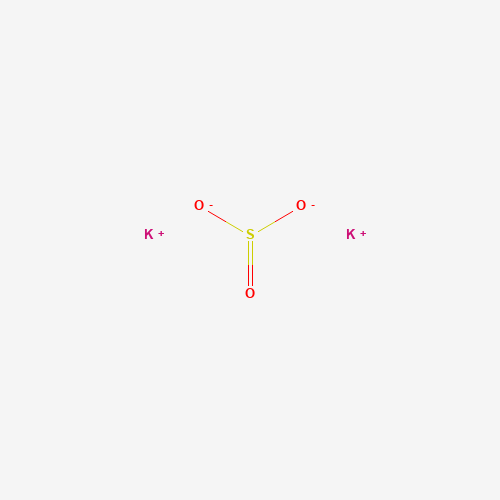
Potassium sulfite is a preservative and antioxidant used in wine, dried fruit and juices. Sulphites must be declared above ten parts per million because they provoke reactions in some asthmatics.
Where it is and isn’t permitted
| Jurisdiction | Status | Scope and limits | Citation |
|---|---|---|---|
| Australia and New Zealand | Permitted, with conditions | 39 food categories highest permitted level 3,000 mg/kg Show every food category
| Food Standards Code, Schedule 15, S15—5and 38 further provisionsretrieved 2026-10-17 |
| Canada | No listing matchedHealth Canada’s lists name additives without E or INS numbers, so this site matches them by exact name. A substance listed there under a name this site does not recognise has no row here. | ||
| European Union | No listed food uses foundThis site has not matched this substance to any food use on this jurisdiction’s list of authorised food additives. A food additive may be used only in foods that list names. Flavourings, enzymes, processing aids and added nutrients are regulated separately and do not appear on it. | ||
| Great Britain | No listed food uses foundThis site has not matched this substance to any food use on this jurisdiction’s list of authorised food additives. A food additive may be used only in foods that list names. Flavourings, enzymes, processing aids and added nutrients are regulated separately and do not appear on it. | ||
| Japan | No listing matchedThis site imports only Japan’s list of designated additives (Appended Table 1 to the Regulations for Enforcement of the Food Sanitation Act), matched by English name. Existing additives, natural flavouring agents and ordinary foods used as additives are permitted outside that list and are not imported, so an empty row does not show that Japan does not permit the substance. | ||
| South Korea | No listing matchedThis site imports Part III of South Korea’s Standards and Specifications for Food Additives, matched by CAS number, then INS number, then exact name. Mixed preparations and sanitisers are not imported, and an entry whose identifiers disagreed with a page’s is held for review, so an empty row does not show that South Korea does not permit the substance. | ||
| United States | Not listedDoes not appear on this jurisdiction’s permitted list. That is not the same as being prohibited. | ||
| Codex Alimentarius | Permitted, with conditions | 59 food categories highest permitted level 1,000 mg/kg Show every food category and its notes
| CXS 192-1995 Table One, INS 225and 58 further provisionsretrieved 2026-09-07 |
How much is permitted
A listing usually limits the quantity as well as the food. Only one of the forms that takes is a figure: quantum satis and good manufacturing practice permit the amount the technological effect requires and no more, which is a limit rather than the absence of one. Figures below are the range across every food category this page is listed in, and categories differ between regulators — see how much is permitted.
| Australia and New Zealand | 20 mg/kg – 3,000 mg/kg | 39 numeric limit |
|---|---|---|
| Codex Alimentarius | 15 mg/kg – 1,000 mg/kg | 59 numeric limit |
What it is made from
Produced by reacting sulfur dioxide with potassium carbonate.
- Vegan
- Vegetarian
Compare other additives on the dietary indexes.
Allergen labelling
- EU allergen list: sulphur dioxide and sulphites. A sulphite. Annex II item 12 requires sulphites to be declared where the food as consumed contains more than 10 mg/kg or 10 mg/litre, counted as total sulphur dioxide.
The EU’s list of allergens an ingredients list must emphasise is Regulation (EU) No 1169/2011, Annex II (consolidated text of 1 April 2025). Whether a product must declare one depends on what its additive was actually made from, which the label may not show; see the allergen origin index.
- CAS registry number
- 10117-38-1
- InChIKey
- BHZRJJOHZFYXTO-UHFFFAOYSA-L
- PubChem
- CID 24958
How JECFA defines it
The international specification for identity and purity, prepared by the Joint FAO/WHO Expert Committee on Food Additives and published by FAO. It is a different document from any above, written by a different body and revised on its own cycle; it is advisory, and a country adopts it or does not.
INS 225 Potassium Sulfite
Synonyms: INS No. 225
Assay, identification and purity criteria
Description and assay
- Specification history
- Prepared at the 53rd JECFA (1999) and published in FNP 52 Add 7 (1999), superseding tentative specifications prepared at the 51st JECFA (1998), published in FNP 52 Add 6 (1998). Group ADI 0-0.7 mg/kg bw as SO2 for sulfites established at the 51st JECFA in 1998.
- Chemical names
- Potassium sulfite
- C.A.S. number
- 10117-38-1
- Chemical formula
- K 2 SO 3
- Formula weight
- 158.25
- Assay
- Not less than 90.0%
- DESCRIPTION
- White, odourless, granular powder
- FUNCTIONAL USES
- Antibrowning agent, antioxidant, preservative
- METHOD OF ASSAY
- Weigh accurately about 0.75 g of the sample and dissolve in a mixture of 100 ml of 0.1 N iodine and 5 ml of dilute hydrochloric acid TS. Titrate the excess iodine with 0.1 N sodium thiosulfate, adding starch TS as the indicator. Each ml of 0.1 N iodine is equivalent to 7.912 mg of K 2 SO 3 .
Identification
- Solubility (Vol. 4)
- Freely soluble in water; slightly soluble in ethanol
- Test for potassium (Vol. 4)
- Passes test
- Test for sulfite (Vol. 4)
- Passes test
Purity criteria
- Alkalinity
- Between 0.25 and 0.45% as K 2 CO 3 Dissolve 1 g of the sample in 20 ml of water and add 25 ml of 3% hydrogen peroxide, previously neutralized to methyl red TS. Mix thoroughly, cool to room temperature, and titrate with 0.02 N hydrochloric acid. Perform a blank determination using 25 ml of neutralized hydrogen peroxide solution. Each ml of 0.02 N hydrochloric acid is equivalent to 1.38 mg of K 2 CO 3 .
- Iron (Vol. 4)
- Not more than 10 mg/kg Proceed as directed in the Limit Test using 0.5 ml of Iron Standard Solution (5 μg Fe) in the control
- Lead (Vol. 4)
- Not more than 2 mg/kg Determine using an atomic absorption technique appropriate to the specified level. The selection of sample size and method of sample preparation may be based on the principles of the method described in Volume 4, “Instrumental Methods.”
- Selenium
- Not more than 5 mg/kg See description under TESTS
- Test: Selenium
- Reagents: Hydrochloric acid, hydrazinium sulfate, standard selenium solution (100 μg Se/ml) Procedure Weigh 2.0 ± 0.1 g of sample and transfer to a 50-ml beaker. Add 10 ml water, 5 ml hydrochloric acid and boil to remove SO 2 . Into a second beaker, weigh 1.0 ± 0.1 g of sample, add 0.05 ml standard selenium solution and proceed as above. To each beaker add 2 g hydrazinium sulfate and warm to dissolve. Let stand for 5 min. Dilute the contents of each beaker to 50 ml in a Nessler tube and compare the colour of the two solutions. The sample should be less pink than the sample with the added standard.
Every name it appears under
20 recorded names. A label may use any of them.
E number
- E225
INS number
- 225
CAS registry number
- 10117-38-1
Other names
- 015KZC652E
- Dipotassium sulfite
- DIPOTASSIUM SULPHITE
- HSDB 5052
- INS NO.225
- INS-225
- Kaliumsulfit
- Potassium sulfite
- Potassium sulfite (K2SO3)
- Potassium sulfite(IV)
- Potassium sulfite, 90%
- Potassium sulfite, SAJ first grade, >=95.0%
- Potassium sulphite
- Potassiumsulfite
- Sulfurous acid, dipotassium salt
- Sulfurous acid, potassium salt
- Sulfurous acid, potassium salt (1:2)
Hazard reference values
| Type | Value | Population | Assessed by | Opinion |
|---|---|---|---|---|
| ADI | 0.7 mg/kg bw/day | — | JECFA | 1998 |
Evidence and how bodies read it
Studies, and the differing conclusions regulators drew from them, are curated rather than machine-read, and none has been written for this substance yet.
Common questions
Assembled from what is above, in the words the questions are usually asked in. Each answer is the same statement the relevant section makes, with the same citations behind it.
- What is INS 225?
- INS 225 is Potassium sulfite. Potassium sulfite is a preservative and antioxidant used in wine, dried fruit and juices. Sulphites must be declared above ten parts per million because they provoke reactions in some asthmatics.
- What is Potassium sulfite used for in food?
- It is listed as a preservative and an antioxidant — the role Codex assigns it. This page shows every function each regulator records, with the citation for each.
- Where is Potassium sulfite permitted?
- Of the seven regulators this site reads, Australia and New Zealand and the Codex standard permit it. Each permission is for named foods at named levels, not a blanket one; the table on this page gives them with citations.
- Is Potassium sulfite vegan?
- Yes. Potassium sulfite is not derived from animals, and is suitable for vegetarians. This page says what it is made from and how.
Sources for this page
- anz retrieved 2026-10-17
- gsfa retrieved 2026-09-07
- jecfaspecs retrieved 2026-09-23
Full licence terms and publisher details on Sources. How this page is built and updated: Method.
Machine-readable: a JSON record of this additive is given on request —how to ask for access.
Follow changes to Potassium sulfite:Atom feed — regulatory events, and any change the weekly refresh detects in its provisions.