Propylene oxide
75-56-9 · (+-)-Propylene oxide · (+/-)-1,2-Epoxypropane · (+/-)-1,2-Propylene oxide · (+/-)-Methyloxirane · (+/-)-Propylene oxide · (+/-)-Propylene oxide, >=99.5% · (+/-)-Propylene oxide, ReagentPlus(R), >=99% · (R)-2-Methyloxirane · (RS)-methyloxirane · (rs)-propylene oxide · 1,2-epoxipropane · 1,2-epoxy propane · 1,2-epoxy-propane · 1,2-epoxypropane · 1,2-PROPYLENE OXIDE · 1,2-propylenoxide · 2,3-Epoxypropane · 2-Methyl oxirane · 2-methyl-oxirane · 2-Methyloxiran · 2-Methyloxirane · 3-Methyl-1,2-epoxypropane · 5-17-01-00017 (Beilstein Handbook Reference) · AD 6 (suspending agent) · BRN 0079763 · Caswell No. 713A · CCRIS 540 · DL-1,2-EPOXYPROPANE · EPA Pesticide Chemical Code 042501 · Epihydrin · epoxy-propane · Epoxypropane · Ethylene oxide, methyl- · HSDB 173 · Methyl ethylene oxide · Methyl oxirane · Methyl-(S)-Oxirane · Methyl-Ethylene oxide · methyl-oxirane · Methylethylene oxide · Methyloxacyclopropane · Methyloxirane · oxirane, 2-methyl- · Oxirane, methyl- · Oxyde de propylene · Propane, 1,2-epoxy- · Propane, epoxy- · propene epoxide · Propene oxide · propeneoxide · proplyene oxide · Propylene epoxide · Propylene oxide · Propylene oxide (JAN) · Propyleneoxide · propylenoxide · rac-propylene oxide · S(-)-Methyloxirane · Y4Y7NYD4BKCAS 75-56-9
Listed as a starch-modifying agent by Canada.
Listed as starch-modifying agents (CA)
- Canada: Starch-modifying agent — Health Canada, List of Permitted Starch-Modifying Agents (List 13)
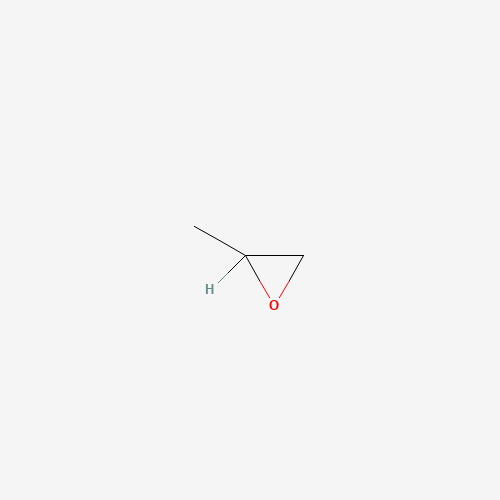
Propylene oxide is a colourless liquid used as an antimicrobial treatment — a fumigant applied to foods such as nuts, cocoa and spices, and used in making modified starches. It is a reactive epoxide and is intended to react away or be removed, not to remain.
Where it is and isn’t permitted
| Jurisdiction | Status | Scope and limits | Citation |
|---|---|---|---|
| Australia and New Zealand | No listed food uses foundThis site has not matched this substance to any food use on this jurisdiction’s list of authorised food additives. A food additive may be used only in foods that list names. Flavourings, enzymes, processing aids and added nutrients are regulated separately and do not appear on it. | ||
| Canada | Permitted, with conditions | highest permitted level 25 % In: Starch used in the manufacture of modified starch. Purpose: Starch-modifying agent. Limit: 25%. | Health Canada, List of Permitted Starch-Modifying Agents (List 13), item P.5retrieved 2026-10-17 |
| European Union | No listed food uses foundThis site has not matched this substance to any food use on this jurisdiction’s list of authorised food additives. A food additive may be used only in foods that list names. Flavourings, enzymes, processing aids and added nutrients are regulated separately and do not appear on it. | ||
| Great Britain | No listed food uses foundThis site has not matched this substance to any food use on this jurisdiction’s list of authorised food additives. A food additive may be used only in foods that list names. Flavourings, enzymes, processing aids and added nutrients are regulated separately and do not appear on it. | ||
| Japan | No listing matchedThis site imports only Japan’s list of designated additives (Appended Table 1 to the Regulations for Enforcement of the Food Sanitation Act), matched by English name. Existing additives, natural flavouring agents and ordinary foods used as additives are permitted outside that list and are not imported, so an empty row does not show that Japan does not permit the substance. | ||
| South Korea | No listing matchedThis site imports Part III of South Korea’s Standards and Specifications for Food Additives, matched by CAS number, then INS number, then exact name. Mixed preparations and sanitisers are not imported, and an entry whose identifiers disagreed with a page’s is held for review, so an empty row does not show that South Korea does not permit the substance. | ||
| United States | Not listedDoes not appear on this jurisdiction’s permitted list. That is not the same as being prohibited. | ||
| Codex Alimentarius | Not listedDoes not appear on this jurisdiction’s permitted list. That is not the same as being prohibited. |
How much is permitted
A listing usually limits the quantity as well as the food. Only one of the forms that takes is a figure: quantum satis and good manufacturing practice permit the amount the technological effect requires and no more, which is a limit rather than the absence of one. Figures below are the range across every food category this page is listed in, and categories differ between regulators — see how much is permitted.
| Canada | 250,000 mg/kg | 1 numeric limit |
|---|
What it is made from
Made industrially by oxidising propylene.
- Vegan
- Vegetarian
Compare other additives on the dietary indexes.
- CAS registry number
- 75-56-9
- InChIKey
- GOOHAUXETOMSMM-UHFFFAOYSA-N
- PubChem
- CID 6378
How JECFA defines it
The international specification for identity and purity, prepared by the Joint FAO/WHO Expert Committee on Food Additives and published by FAO. It is a different document from any above, written by a different body and revised on its own cycle; it is advisory, and a country adopts it or does not.
Propylene Oxide
Synonyms: 1,2-epoxypropane; Methyl oxirane
Assay, identification and purity criteria
Description and assay
- Specification history
- Prepared at the 3rd JECFA (1958), published in Specifications for Identity and Purity of Food Additives, Vol. I, FAO (1962) and in FNP 52 (1992). No ADI was allocated at the 3rd JECFA (1958)
- Chemical names
- Propylene oxide, methyl oxirane, 1,2-epoxypropane
- C.A.S. number
- 75-56-9
- Chemical formula
- C 3 H 6 O
- Formula weight
- 58.08
- Assay
- Not less than 99%
- DESCRIPTION
- A colourless liquid with a sweetish odour
- FUNCTIONAL USES
- Antimicrobial preservative
- METHOD OF ASSAY
- Introduce 0.8000-1.3000 g of propylene oxide into a tared thin-walled glass bulb (15 mm in diameter with a neck 30 mm long) which is packed in dry ice. Seal the bulb with the flame from an oxygen-gas torch, remove the bulb from the dry ice, wash with acetone, dry in a 60º oven, cool and weigh. From a pipette introduce 25 ml of pyridinium chloride-chloroform TS into a pressure bottle. Insert the bulb into the pressure bottle, seal the latter, and place it in an ice bath for 30 min. Remove the bottle from the ice bath, put it into a canvas bag and shake to break the bulb. After the bulb is broken, allow the pressure bottle to warm to room temperature and then put it into a steam bath for 20 min. Remove the bottle from the steam bath and cool. After the bottle is cool remove the canvas bag, wash the stopper and neck of the bottle with methanol, add 10 drops of phenolphthalein TS and titrate with N sodium hydroxide in methanol (which should be freshly standardized before using). Two blanks should be run with the sample (A N aqueous solution of sodium hydroxide may be used if methanol is added to the chloroform solution in the pressure bottle.) Calculate the % propylene oxide from:
Identification
- Solubility (Vol. 4)
- 1 g of the sample is soluble in 1.7 ml of water. Miscible in ethanol and in ether
- Infrared absorption
- Infrared spectrum is recommended
Purity criteria
- Water (Vol. 4)
- Not more than 0.1% (Karl Fischer Method)
- Distillation range
- 32 - 37 o (at 760 mm Hg) See description under TESTS
- Insoluble matter (Vol. 4)
- Substantially free from suspended matter
- Non-volatile residue (Vol. 4)
- Not more than 0.1%
- Total acidity
- Not more than 0.05% (as acetic acid) See description under TESTS
- Total chlorides
- Not more than 0.1% See description under TESTS
- Aldehydes
- Passes test See description under TESTS
- Test: Distillation range
- Measure a 100-ml sample in a 100-ml graduated cylinder at 10 to 15º and transfer directly to the distillation flask. Connect the flask to the condenser. Place the graduated cylinder used to measure the sample, without rinsing or drying, at the outlet of the condenser tube in such a position that the condenser tube extends into it for at least 2.5 cm but not below the 100-ml mark. Immerse the receiving cylinder up to the 100- ml mark in a transparent bath maintained between 10 and 15º. Cover the top of the graduated cylinder with a piece of blotting paper cut so as to fit tightly over the end of the condenser tube. Apply heat slowly with a micro-Bunsen burner and regulate (a good needle valve is best) so that the first drop of condensate falls from the condenser in not less than 5 or more than 10 min. Adjust the receiving cylinder so that the end of the condenser tube touches its side. Regulate the heat so that the distillation proceeds at a uniform rate of 4 to 5 ml per min. Maintain this rate and continue the distillation to dryness. Record the temperature when the first drop of distillation falls from the end of the condenser. Take readings when the level reaches 5 ml, 10 ml, and each additional 10 ml, including 90 ml, and at 95 ml. Take the final reading when the liquid disappears from the bottom of the flask. the boiling points observed may be corrected for barometric pressure by adding 0.044º to the observed boiling point for each mm Hg pressure under 760 mm or by subtracting and equal amount for each mm Hg pressure over 760 mm. The range of difference between the initial boiling point and the dry point should be 32-37º.
- Test: Total acidity
- Measure 50 ml of the sample in a chilled 100-ml graudate cylinder and transfer to a cooled 250-ml conical flask. Add 1 ml of phenolphthalein TS and titrate with 0.01 N sodium hydroxide to a faint pink colour which persists for at least 15 sec. The proportion, expressed as acetic acid, should not exceed 0.05%.
- Test: Total chlorides
- Method A: Connect a weighed stainless steel sample cylinder (30-ml capacity) to the sample container and flush the cylinder for a few sec with liquid ethylene oxide. Close the valve on the cylinder and allow it to fill to between 22 and 25 g of the sample. Weight the cylinder and contents to the nearest 0.1 g. Connect the cylinder to the burner assembly as shown in Figure 1. Pour 50±0.5 ml of freshly prepared 0.02 N sodium arsenite into the gas absorber. Connect the absorber to the air condenser. Connect the vacuum line to the gas absorber and apply a light vacuum to the system. Light the pilot burner and burn the sample in the following manner: allow a small flow of oxygen to the ring around the burner (Figure 1, valve A). Allow a small flow of hydrogen to the burner (Figure 1, valve B) and light it with a flint lighter. Adjust the flame to a height of about 2.5 cm. Regulate the oxygen flow to the burner tip so as to obtain a flame cone about 1.3 cm high (Figure 1, valve C ). Set the chimney in place secure the clamps. Place a beaker of hot water (50º) around the cylinder (replenish with warm water during the run) Open the Hoke valve very slowly and allow the sample to raise the flame height to about 6.5-7.5 cm. Adjust the oxygen flow to the burner tip to obtain a cone in the flame about 1.3 cm high. Readjust the vacuum as necessary to ensure a slight vacuum in the system at all times. Allow the sample to burn until the flame gives evidence that the sample is almost burned out (20 to 25 min) then adjust the oxygen flow to the burner to keep the flame cone at about 1.3 cm. Adjust the Hoke valve on the sample cylinder during the run so that when the run is finished the valve is completely open. Shut off the oxygen flow to the tip of the burner when the sample is burner out, then shut off the hydrogen flow. Allow several min for the system to be purged with the oxygen flow from the ring around the burner. Then release the vacuum and shut of the oxygen flow to the ring. Allow the condenser and glass to cool to room temperature and then rinse with a minimum amount of water into the gas scrubber. Transfer the contents of the gas-washing bottle to a 250-ml beaker and chill to about 5º in a refrigerator or in crushed ice. Insert a magnetic agitator and the freshly washed silver chloride electrodes into the beaker. Acidify the solution with nitric acid using methyl red TS as indicator. Titrate the solution potentiometrically with 0.02 N silver nitrate solution. Prepare a blank solution of the reagents and titrate. The proportion of total chlorides should not exceed 0.1%. where V 1 = ml of silver nitrate required by the sample V 2 = ml of silver nitrate required by the blank N = normality of the silver nitrate Method B (Alternative method): Cool a 50-ml graduated cylinder by immersing in ice water or by placing in a refrigerator at 0º for about 15 min. Pour 50 ml of sodium ethoxide TS and 70 ml of methyl alcohol into a 250-ml conical flask and place in ice water or in refrigerator at 0º for 30 min. Pour as rapidly as possible 30 ml of the sample into the cooled cylinder and transfer the contents to the flask containing the cooled sodium ethoxide. Attach a water-cooled reflux condenser and gently boil the mixture for 1 h. Cool and transfer the mixture to a 600-ml beaker rinsing the flask with 100 ml of water. Make the liquid just acid with 1.5 N nitric acid (usually about 130 ml) using litmus paper as indicator and add 10 ml more. Keep the solution cool (below 30º) and stir constantly during the neutralization. Titrate the chloride present electrometrically using 0.025 N silver nitrate. Prepare a blank in the same way but omitting the sample. where V = volume of silver nitrate used in titrating sample V b = volume of silver nitrate used in titrating blank N = normality of silver nitrate V s = volume of sample.
- Test: Aldehydes
- Measure 20 ml of the sample into a glass-stoppered conical flask containing 5 ml of chilled sodium bisulfite TS and 25 ml of water. Place the flask and its contents in a refrigerator for exactly 15 min. Prepare a reagent blank along with each set of samples and treat it in the same manner as the samples. Titrate the excess bisulfite solution in the blank and sample flasks with 0.1 N iodine solution until persistence of the yellow brown colour due to the liberated iodine. The proportion, expressed as propionic aldehyde, should not exceed 0.1%. Calculate the ion % propionic aldehyde from: where V s = ml of iodine solution required by the sample V b = ml of iodine solution required by the blank N = normality of iodine solution.
Every name it appears under
60 recorded names. A label may use any of them.
CAS registry number
- 75-56-9
Other names
- (+-)-Propylene oxide
- (+/-)-1,2-Epoxypropane
- (+/-)-1,2-Propylene oxide
- (+/-)-Methyloxirane
- (+/-)-Propylene oxide
- (+/-)-Propylene oxide, >=99.5%
- (+/-)-Propylene oxide, ReagentPlus(R), >=99%
- (R)-2-Methyloxirane
- (RS)-methyloxirane
- (rs)-propylene oxide
- 1,2-epoxipropane
- 1,2-epoxy propane
- 1,2-epoxy-propane
- 1,2-epoxypropane
- 1,2-PROPYLENE OXIDE
- 1,2-propylenoxide
- 2,3-Epoxypropane
- 2-Methyl oxirane
- 2-methyl-oxirane
- 2-Methyloxiran
- 2-Methyloxirane
- 3-Methyl-1,2-epoxypropane
- 5-17-01-00017 (Beilstein Handbook Reference)
- AD 6 (suspending agent)
- BRN 0079763
- Caswell No. 713A
- CCRIS 540
- DL-1,2-EPOXYPROPANE
- EPA Pesticide Chemical Code 042501
- Epihydrin
- epoxy-propane
- Epoxypropane
- Ethylene oxide, methyl-
- HSDB 173
- Methyl ethylene oxide
- Methyl oxirane
- Methyl-(S)-Oxirane
- Methyl-Ethylene oxide
- methyl-oxirane
- Methylethylene oxide
- Methyloxacyclopropane
- Methyloxirane
- oxirane, 2-methyl-
- Oxirane, methyl-
- Oxyde de propylene
- Propane, 1,2-epoxy-
- Propane, epoxy-
- propene epoxide
- Propene oxide
- propeneoxide
- proplyene oxide
- Propylene epoxide
- Propylene oxide
- Propylene oxide (JAN)
- Propyleneoxide
- propylenoxide
- rac-propylene oxide
- S(-)-Methyloxirane
- Y4Y7NYD4BK
Hazard reference values
No reference value for this substance in the sources we hold.
Evidence and how bodies read it
Studies, and the differing conclusions regulators drew from them, are curated rather than machine-read, and none has been written for this substance yet.
Common questions
Assembled from what is above, in the words the questions are usually asked in. Each answer is the same statement the relevant section makes, with the same citations behind it.
- What is Propylene oxide?
- Propylene oxide is a colourless liquid used as an antimicrobial treatment — a fumigant applied to foods such as nuts, cocoa and spices, and used in making modified starches. It is a reactive epoxide and is intended to react away or be removed, not to remain.
- What is Propylene oxide used for in food?
- It is listed as a starch-modifying agent — the role Canada assigns it. This page shows every function each regulator records, with the citation for each.
- Where is Propylene oxide permitted?
- Of the seven regulators this site reads, Canada permits it. Each permission is for named foods at named levels, not a blanket one; the table on this page gives them with citations.
- Is Propylene oxide vegan?
- Yes. Propylene oxide is not derived from animals, and is suitable for vegetarians. This page says what it is made from and how.
Sources for this page
- ca retrieved 2026-10-17
- jecfaspecs retrieved 2026-09-23
Full licence terms and publisher details on Sources. How this page is built and updated: Method.
Machine-readable: a JSON record of this additive is given on request —how to ask for access.
Follow changes to Propylene oxide:Atom feed — regulatory events, and any change the weekly refresh detects in its provisions.