Sodium adipate
7486-38-6 · 1,4-Butanedicarboxylic acid disodium salt · 3XG6T5KYKM · ADIPIC ACID, DISODIUM SALT · Adipic acid, sodium salt · di-sodium adipate · Disodium adipate · disodium;hexanedioate · Hexanedioate · Hexanedioic acid, disodium salt · Hexanedioic acid, sodium salt · Hexanedioic acid, sodium salt (1:2) · Hexanedioic acid, sodium salt (1:?) · INS NO.356 · INS-356 · Sodium adipate · E356 · Sodium adipate · Adipan sodný · Adipat de sodiu · Adipat tas-sodju · Adipate de sodium · ADIPATO DE SODIO · Adipato di sodio · Adipato sódico · Adipát sodný · Adypinian sodu · Naatriumadipaat · Natrijev adipat · Natrio adipatas · Natriumadipaat · Natriumadipaatti · Natriumadipat · Nátrium-adipát · Nātrija adipināts · Sodium adipate · Αδιπικό νάτριο · Натриев адипатE number E356
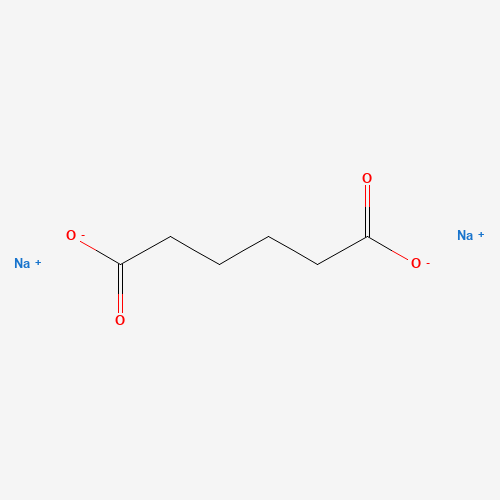
Sodium adipate is an acidity regulator permitted in the EU within the limits shared by adipic acid and its salts, chiefly in desserts, fillings and powdered drink mixes.
Where it is and isn’t permitted
| Jurisdiction | Status | Scope and limits | Citation |
|---|---|---|---|
| Australia and New Zealand | No listed food uses foundThis site has not matched this substance to any food use on this jurisdiction’s list of authorised food additives. A food additive may be used only in foods that list names. Flavourings, enzymes, processing aids and added nutrients are regulated separately and do not appear on it. | ||
| Canada | No listing matchedHealth Canada’s lists name additives without E or INS numbers, so this site matches them by exact name. A substance listed there under a name this site does not recognise has no row here. | ||
| European Union | Permitted, with conditions | 5 food categories highest permitted level 10,000 mg/l Show every food category
| Regulation (EC) No 1333/2008, Annex IIand 4 further provisionsretrieved 2026-10-18 |
| Great Britain | Permitted, with conditions | 5 food categories highest permitted level 10,000 mg/kg or mg/l Show every food category
| Assimilated Regulation (EC) No 1333/2008, Annex II (as at 28 June 2024)and 4 further provisionsretrieved 2026-10-18 |
| Japan | No listing matchedThis site imports only Japan’s list of designated additives (Appended Table 1 to the Regulations for Enforcement of the Food Sanitation Act), matched by English name. Existing additives, natural flavouring agents and ordinary foods used as additives are permitted outside that list and are not imported, so an empty row does not show that Japan does not permit the substance. | ||
| South Korea | No listing matchedThis site imports Part III of South Korea’s Standards and Specifications for Food Additives, matched by CAS number, then INS number, then exact name. Mixed preparations and sanitisers are not imported, and an entry whose identifiers disagreed with a page’s is held for review, so an empty row does not show that South Korea does not permit the substance. | ||
| United States | Not listedDoes not appear on this jurisdiction’s permitted list. That is not the same as being prohibited. | ||
| Codex Alimentarius | Not listedDoes not appear on this jurisdiction’s permitted list. That is not the same as being prohibited. |
How much is permitted
A listing usually limits the quantity as well as the food. Only one of the forms that takes is a figure: quantum satis and good manufacturing practice permit the amount the technological effect requires and no more, which is a limit rather than the absence of one. Figures below are the range across every food category this page is listed in, and categories differ between regulators — see how much is permitted.
| European Union | 1,000 mg/kg – 10,000 mg/kg | 5 numeric limit |
|---|---|---|
| Great Britain | 1,000 mg/kg – 10,000 mg/kg | 4 numeric limit, 1 several limits |
What it is made from
Made by neutralising adipic acid with sodium. Adipic acid is made in bulk from petroleum-derived cyclohexane, mainly as a starting material for nylon.
- Vegan
- Vegetarian
Compare other additives on the dietary indexes.
- InChIKey
- KYKFCSHPTAVNJD-UHFFFAOYSA-L
- PubChem
- CID 24073
How the EU defines it
The legal specification an additive must meet to be sold as this E number in the EU — what it is, how it may be made, and the purity it must reach. From Commission Regulation (EU) No 231/2012.
E 356 Sodium adipate
Assay, identification and purity criteria
Description and assay
- Einecs
- 231-293-5
- Chemical name
- Sodium adipate
- Chemical formula
- C₆H₈Na₂O₄
- Molecular weight
- 190,11
- Assay
- Content not less than 99,0 % (on anhydrous basis)
- Description
- White odourless crystals or crystalline powder
Identification
- Melting range
- 151-152 °C (for adipic acid)
- Solubility
- Approximately 50 g/100 ml water (20 °C)
- Test for sodium
- Passes test
Purity criteria
- Water content
- Not more than 3 % (Karl Fischer)
- Arsenic
- Not more than 3 mg/kg
- Lead
- Not more than 2 mg/kg
- Mercury
- Not more than 1 mg/kg
Every name it appears under
38 recorded names. A label may use any of them.
E number
- E356
CAS registry number
- 7486-38-6
As it appears in regulation
- Sodium adipate
Other names
- 1,4-Butanedicarboxylic acid disodium salt
- 3XG6T5KYKM
- ADIPIC ACID, DISODIUM SALT
- Adipic acid, sodium salt
- di-sodium adipate
- Disodium adipate
- disodium;hexanedioate
- Hexanedioate
- Hexanedioic acid, disodium salt
- Hexanedioic acid, sodium salt
- Hexanedioic acid, sodium salt (1:2)
- Hexanedioic acid, sodium salt (1:?)
- INS NO.356
- INS-356
- Sodium adipate
Hazard reference values
| Type | Value | Population | Assessed by | Opinion |
|---|---|---|---|---|
| ADI | 5 mg/kg bw/day | — | JECFA | 1977 |
Evidence and how bodies read it
Studies, and the differing conclusions regulators drew from them, are curated rather than machine-read, and none has been written for this substance yet.
Common questions
Assembled from what is above, in the words the questions are usually asked in. Each answer is the same statement the relevant section makes, with the same citations behind it.
- What is E 356?
- E 356 is Sodium adipate. Sodium adipate is an acidity regulator permitted in the EU within the limits shared by adipic acid and its salts, chiefly in desserts, fillings and powdered drink mixes.
- Where is Sodium adipate permitted?
- Of the seven regulators this site reads, the EU and Great Britain permit it. Each permission is for named foods at named levels, not a blanket one; the table on this page gives them with citations.
- Is Sodium adipate vegan?
- Yes. Sodium adipate is not derived from animals, and is suitable for vegetarians. This page says what it is made from and how.
Sources for this page
- eu retrieved 2026-10-18
- gb retrieved 2026-10-18
- euspecs retrieved 2026-10-18
Full licence terms and publisher details on Sources. How this page is built and updated: Method.
Machine-readable: a JSON record of this additive is given on request —how to ask for access.
Follow changes to Sodium adipate:Atom feed — regulatory events, and any change the weekly refresh detects in its provisions.