Sodium ethyl p-hydroxybenzoate
35285-68-8 · E 215 · p-Hydroxybenzoic acid ethyl ester sodium salt · p-Hydroxybenzoic acid ethyl ester sodium salt;Sodium 2-ethyl-4-hydroxybenzoate · Sodium ethyl p-hydroxybenzoate · Sodium Ethyl Paraben · E215 · Sodium 4-ethoxycarbonylphenolate · Sodium ethyl p-hydroxybenzoate · Dérivé sodique de l’ester éthylique de l’acide p-hydroxybenzoïque · Ethyl p-hydroxybenzoát sodná sůl · Ethyl-p-hydroxybenzoaat, natriumzout · Ethyl-p-hydroxybenzoat, natriumsalt · ETHYL-p-HYDROXYBENZOÁT SODNÁ SŮL · ETIL p-IDROSSIBENŻOAT TAS-SODJU · Etil-p-idrossibenzoato di sodio · Etyl-p-hydroxybenzoan sodný · Naatriumetüül-p-hüdroksübensoaat · NATRIJEV ETIL p-HIDROKSIBENZOAT · natrijev etil parahidroksi benzoat · Natrijev etil-p-hidroksibenzoat · Natrio etil-p-hidroksibenzoatas · NATRIO ETILO p–HIDROKSIBENZOATAS · Natriumetyyli-p-hydroksibentsoaatti · NÁTRIUM-ETYL-p-HYDROXYBENZOÁT · Nátrium-etil-p-hidroxi-benzoát · Nātrija etil-p-hidroksibenzoāts · p-Hidroxibenzoato de etilo sódico · p-hidroxibenzoato sódico de etilo · p-Hydroxibensoesyraetylesterns natriumsalt · p-υδροξυβενζοϊκός αιθυλεστέρας, άλας με νάτριο · PHB-Ethylester-Natriumsalz (Natriumethyl-p-hydroxybenzoat) · SAL SÓDICO DO p-HIDROXIBENZOATO DE ETILO · Sarea de sodiu a p-hidroxibenzoatului de etil · Sodium ethyl p-hydroxybenzoate · Sodju etil p-idrossibenżoat · Sól sodowa p-hydroksybenzoesanu etylu · ÉTHYL p-HYDROXYBENZOATE DE SODIUM · Натриев етил р-хидроксибензоатE number E215CAS 35285-68-8
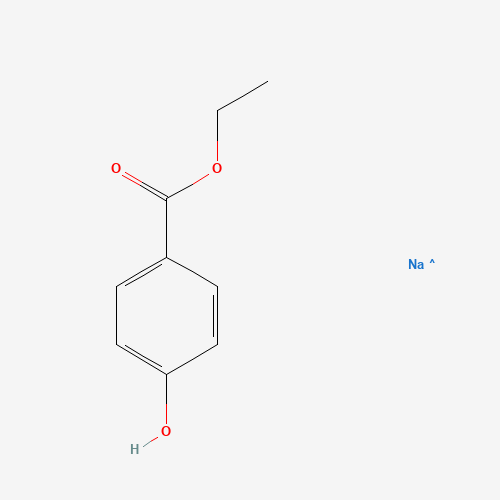
Sodium ethyl p-hydroxybenzoate is a paraben preservative permitted in the EU in a short list of foods, including gelatine coatings on meat products, snacks, coated nuts and some confectionery. The EU kept the methyl and ethyl parabens when it removed propyl paraben from food in 2006.
Where it is and isn’t permitted
| Jurisdiction | Status | Scope and limits | Citation |
|---|---|---|---|
| Australia and New Zealand | No listed food uses foundThis site has not matched this substance to any food use on this jurisdiction’s list of authorised food additives. A food additive may be used only in foods that list names. Flavourings, enzymes, processing aids and added nutrients are regulated separately and do not appear on it. | ||
| Canada | No listing matchedHealth Canada’s lists name additives without E or INS numbers, so this site matches them by exact name. A substance listed there under a name this site does not recognise has no row here. | ||
| European Union | Permitted, with conditions | 8 food categories highest permitted level 1,500 mg/kg Show every food category
| Regulation (EC) No 1333/2008, Annex IIand 7 further provisionsretrieved 2026-10-18 |
| Great Britain | Permitted, with conditions | 9 food categories highest permitted level 1,500 mg/kg or mg/l Show every food category
| Assimilated Regulation (EC) No 1333/2008, Annex II (as at 28 June 2024)and 8 further provisionsretrieved 2026-10-18 |
| Japan | No listing matchedThis site imports only Japan’s list of designated additives (Appended Table 1 to the Regulations for Enforcement of the Food Sanitation Act), matched by English name. Existing additives, natural flavouring agents and ordinary foods used as additives are permitted outside that list and are not imported, so an empty row does not show that Japan does not permit the substance. | ||
| South Korea | No listing matchedThis site imports Part III of South Korea’s Standards and Specifications for Food Additives, matched by CAS number, then INS number, then exact name. Mixed preparations and sanitisers are not imported, and an entry whose identifiers disagreed with a page’s is held for review, so an empty row does not show that South Korea does not permit the substance. | ||
| United States | Not listedDoes not appear on this jurisdiction’s permitted list. That is not the same as being prohibited. | ||
| Codex Alimentarius | Not listedDoes not appear on this jurisdiction’s permitted list. That is not the same as being prohibited. |
How much is permitted
A listing usually limits the quantity as well as the food. Only one of the forms that takes is a figure: quantum satis and good manufacturing practice permit the amount the technological effect requires and no more, which is a limit rather than the absence of one. Figures below are the range across every food category this page is listed in, and categories differ between regulators — see how much is permitted.
| European Union | 500 mg/kg – 1,500 mg/kg | 6 numeric limit, 2 quantum satis |
|---|---|---|
| Great Britain | 500 mg/kg – 1,500 mg/kg | 7 numeric limit, 2 quantum satis |
What it is made from
Made by reacting para-hydroxybenzoic acid with ethanol and converting the ester to its sodium salt.
- Vegan
- Vegetarian
Compare other additives on the dietary indexes.
- CAS registry number
- 35285-68-8
- InChIKey
- HLEKLAHSVAPCPF-UHFFFAOYSA-N
- PubChem
- CID 52913806
How the EU defines it
The legal specification an additive must meet to be sold as this E number in the EU — what it is, how it may be made, and the purity it must reach. From Commission Regulation (EU) No 231/2012.
E 215 SODIUM ETHYL p-HYDROXYBENZOATE
Assay, identification and purity criteria
Description and assay
- Einecs
- 252-487-6
- Chemical name
- Sodium ethyl p-hydroxybenzoate; Sodium compound of the ethyl ester of p-hydroxybenzoic acid
- Chemical formula
- C₉H₉O₃Na
- Molecular weight
- 188,8
- Assay
- Content of ethylester of p-hydroxybenzoic acid not less than 83 % on the anhydrous basis
- Description
- White, crystalline hygroscopic powder
Identification
- Melting range
- 115 °C to 118 °C, after vacuum drying in a sulphuric acid desiccator
- Test for p-hydroxybenzoate
- Melting range of p-hydroxybenzoic acid derived from the sample is 213 °C to 217 °C
- Test for sodium
- Passes test
- pH
- 9,9-10,3 (0,1 % aqueous solution)
Purity criteria
- Loss on drying
- Not more than 5 %, (by vacuum drying in a sulphuric acid desiccator)
- Sulphated ash
- 37 to 39 %
- p-Hydroxybenzoic acid and salicylic acid
- Not more than 0,35 % expressed as p-hydroxybenzoic acid
- Arsenic
- Not more than 3 mg/kg
- Lead
- Not more than 2 mg/kg
- Mercury
- Not more than 1 mg/kg
Authorised in other additives, enzymes, flavourings and nutrients
These authorisations are not for use in food. They let this substance be used inside another additive, a food enzyme, a flavouring or a nutrient preparation — often as a carrier — and it reaches food only as part of that product. Annex III to Regulation (EC) No 1333/2008.
| Part | May be used in | Maximum level | Citation |
|---|---|---|---|
| Annex III, Part 3: Food additives including carriers in food enzymes | Food enzymesNote (1): Including enzymes authorised as food additives. | In enzyme preparation: 2 000 mg/kg (singly or in combination expressed as the free acid) In final food except beverages: 2 mg/kg In beverages: 1 mg/l | Regulation (EC) No 1333/2008, Annex III, Part 3 |
Every name it appears under
39 recorded names. A label may use any of them.
E number
- E215
CAS registry number
- 35285-68-8
As it appears in regulation
- Sodium ethyl p-hydroxybenzoate
Other names
- E 215
- p-Hydroxybenzoic acid ethyl ester sodium salt
- p-Hydroxybenzoic acid ethyl ester sodium salt;Sodium 2-ethyl-4-hydroxybenzoate
- Sodium ethyl p-hydroxybenzoate
- Sodium Ethyl Paraben
Systematic names
- Sodium 4-ethoxycarbonylphenolate
The EU re-evaluation programme
Every additive authorised in the EU before 20 January 2009 was put back through EFSA by Commission Regulation (EU) No 257/2010, and this one is named in it. What the Regulation required is below; whether the opinion has since been published is not something this site records.
- Already re-evaluated when the programme began. Listed in Annex I as “Sodium ethyl p-hydroxybenzoate”, against the words “Re-evaluation completed on 13 July 2004”, and therefore not re-evaluated again under it.
Hazard reference values
No reference value for this substance in the sources we hold.
Evidence and how bodies read it
Studies, and the differing conclusions regulators drew from them, are curated rather than machine-read, and none has been written for this substance yet.
Common questions
Assembled from what is above, in the words the questions are usually asked in. Each answer is the same statement the relevant section makes, with the same citations behind it.
- What is E 215?
- E 215 is Sodium ethyl p-hydroxybenzoate. Sodium ethyl p-hydroxybenzoate is a paraben preservative permitted in the EU in a short list of foods, including gelatine coatings on meat products, snacks, coated nuts and some confectionery. The EU kept the methyl and ethyl parabens when it removed propyl paraben from food in 2006.
- Where is Sodium ethyl p-hydroxybenzoate permitted?
- Of the seven regulators this site reads, the EU and Great Britain permit it. Each permission is for named foods at named levels, not a blanket one; the table on this page gives them with citations.
- Is Sodium ethyl p-hydroxybenzoate vegan?
- Yes. Sodium ethyl p-hydroxybenzoate is not derived from animals, and is suitable for vegetarians. This page says what it is made from and how.
Sources for this page
- eu retrieved 2026-10-18
- gb retrieved 2026-10-18
- euspecs retrieved 2026-10-18
Full licence terms and publisher details on Sources. How this page is built and updated: Method.
Machine-readable: a JSON record of this additive is given on request —how to ask for access.
Follow changes to Sodium ethyl p-hydroxybenzoate:Atom feed — regulatory events, and any change the weekly refresh detects in its provisions.