Sodium hydroxide
1310-73-2 · 81133-20-2 · Aetznatron · Ascarite · Ascarite II · Caswell No. 773 · Caustic soda · Caustic soda, bead · Caustic soda, dry · Caustic soda, liquid · Collo-Grillrein · Collo-Tapetta · E 524 · EPA Pesticide Chemical Code 075603 · Fuers Rohr · HSDB 229 · Hydroxide, Sodium · Hydroxyde de sodium · hydroxyl sodium · INS-524 · Lewis-red devil lye · Liquid-plumr · Lye · NaOH · Natrii hydroxydum · Natrium causticum · Natrium-hydroxid, reinstes · Natriumhydroxid · Natriumhydroxyde · Plung · Promoter 3308b · Rohrputz · Rohrreiniger Rofix · Soda asbestos · Soda lye · Soda, caustic · Soda, hydrate · Soda, kaustische · Sodio(idrossido di) · sodium hydoxide · Sodium hydrate · sodium hydroxid · Sodium hydroxide · Sodium Hydroxide (0.1M in water (0.1N)) · Sodium hydroxide (Na(OH)) · Sodium hydroxide (Na2(OH)2) · Sodium hydroxide dimer · Sodium hydroxide pearls · Sodium hydroxide, flake · Sodium hydroxide, pellets · Sodium hydroxide, solid · Sodium hydroxide; NaOH · sodium hyroxide · Sodium(hydroxyde de) · sodiumhydroxid · sodiumhydroxide · soude caustique · Stamperprep · Tosoh pearl · UN 1823 (solid) · White caustic · E524 · 524 · Sodium;hydroxide · Sodium hydroxide · Hidroxid de sodiu · HIDRÓXIDO SÓDICO · Hidróxido de sodio · Hydroxid sodný · Hydroxyde de sodium · Idrossido di sodio · Idrossidu tas-sodju · Naatriumhüdroksiid · Natrijev hidroksid · Natrio hidroksidas · Natriumhydroksidi · Natriumhydroxid · Natriumhydroxide · Nátrium-hidroxid · Nātrija hidroksīds · Sodium hydroxide · Wodorotlenek sodu · Υδροξείδιο του νατρίου · Натриев хидроксидE number E524INS 524CAS 1310-73-2
Listed as an acidity regulator by Canada, Codex and the US.
Listed as acidity regulators (CA, US, Codex) · colours (US) · flavour enhancers (US) · flour treatment agents (US) · dough strengtheners (US) · flavouring agents and adjuvants (US) · oxidising and reducing agents (US) · starch-modifying agents (CA) · processing aids (US)
- Canada: Acidity regulator — Health Canada, List of Permitted Acidity Regulators and Acid-Reacting Materials (List 10)
- United States: pH control agent — FDA, Substances Added to Food: SODIUM HYDROXIDE
- United States: pH control agents — 21 CFR 184.1763, citing 21 CFR 170.3(o)(23)
- Codex Alimentarius: Acidity regulator — CXS 192-1995 Table One, INS 524
- United States: Color or coloring adjunct — FDA, Substances Added to Food: SODIUM HYDROXIDE
- United States: Flavor enhancer — FDA, Substances Added to Food: SODIUM HYDROXIDE
- United States: Flour treating agent — FDA, Substances Added to Food: SODIUM HYDROXIDE
- United States: Dough strengthener — FDA, Substances Added to Food: SODIUM HYDROXIDE
- United States: Flavoring agent or adjuvant — FDA, Substances Added to Food: SODIUM HYDROXIDE
- United States: Oxidizing or reducing agent — FDA, Substances Added to Food: SODIUM HYDROXIDE
- Canada: Starch-modifying agent — Health Canada, List of Permitted Starch-Modifying Agents (List 13)
- United States: Processing aid — FDA, Substances Added to Food: SODIUM HYDROXIDE
- United States: Processing aids — 21 CFR 184.1763, citing 21 CFR 170.3(o)(24)
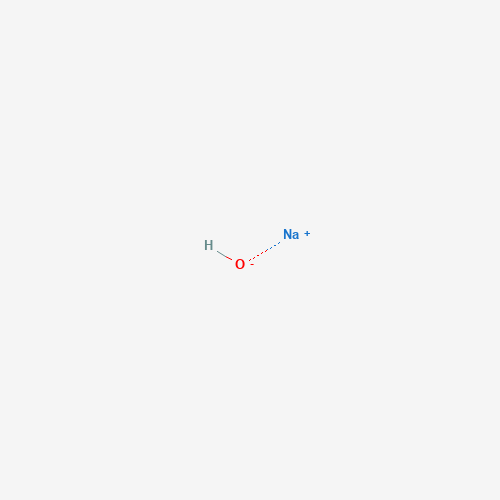
Sodium hydroxide, or lye, is a strongly alkaline processing aid. It gives pretzels their crust and colour, cures olives, and produces hominy from maize; it is normally neutralised or washed out.
Where it is and isn’t permitted
| Jurisdiction | Status | Scope and limits | Citation |
|---|---|---|---|
| Australia and New Zealand | Permitted, with conditions | 2 food categories highest permitted level 2,000 mg/L Show every food category
| Food Standards Code, Schedule 15, S15—5and 1 further provisionretrieved 2026-10-17 |
| Canada | Permitted, with conditions | no numerical limit (good manufacturing practice) 10 permitted uses Show every permitted use
| Health Canadaand 9 further provisionsretrieved 2026-10-17 |
| European Union | Permitted, with conditions | 76 food categories highest permitted level 70,000 mg/l Show every food category
| Regulation (EC) No 1333/2008and 75 further provisionsretrieved 2026-10-18 |
| Great Britain | Permitted, with conditions | 73 food categories highest permitted level 70,000 mg/kg or mg/l Show every food category
| Assimilated Regulation (EC) No 1333/2008and 72 further provisionsretrieved 2026-10-18 |
| Japan | Permitted, with conditions | Designated additive: Appended Table 1, item 234, 水酸化ナトリウム(別名カセイソーダ) (“Sodium Hydroxide (Caustic Soda)” in the unofficial English translation). …Designated additive: Appended Table 1, item 234, 水酸化ナトリウム(別名カセイソーダ) (“Sodium Hydroxide (Caustic Soda)” in the unofficial English translation). Standards for use — Specifications and Standards for Foods, Food Additives, etc. (MHW Notification No. 370 of 1959), Part II (Food Additives), F (Standards for use), entry 水酸化ナトリウム: (1) [must be removed or broken down before the food is finished] “水酸化ナトリウムは、最終食品の完成前に中和し、又は除去しなければならない。” The Japanese is the standard as published. There is no official English translation of the Notification; the English in square brackets is this site’s description of what each sentence does, not a translation of the foods or the levels. Compositional specifications for this additive, in the same Notification, are not imported and are not shown here; nor are the general rules in F 添加物一般, which apply to every additive. | Regulations for Enforcement of the Food Sanitation Act (MHW Ordinance No. 23 of 1948), Appended Table 1retrieved 2026-10-18 |
| South Korea | Permitted, with conditions | Designated food additive: Standards and Specifications for Food Additives, Part III, 1. …Designated food additive: Standards and Specifications for Food Additives, Part III, 1. 일반식품첨가물 (general food additives), 수산화나트륨 (“Sodium Hydroxide”, the English the Code prints beside it); the Code marks it as also usable as a processing aid; 2. 가공보조제 (processing aids), 수산화나트륨 (“Sodium Hydroxide”, the English the Code prints beside it); the Code marks it as also usable as a general food additive. Main use (주용도) of 수산화나트륨: 산도조절제. Standard for use (사용기준) of 수산화나트륨: (1) [must be neutralised or removed before the final food is complete] “수산화나트륨은 최종식품 완성 전에 중화 또는 제거하여야 한다.” Main use (주용도) of 수산화나트륨: 제조용제. The Korean is the standard as published. There is no official English translation of the current Code (the English version on MFDS’s website is the 2020 edition and has no legal effect); the English in square brackets is this site’s description of what each sentence does, not a translation of the foods or the levels. Compositional specifications (Part IV) are not imported, nor are the general standards in Part II, which apply to every additive. | Standards and Specifications for Food Additives (식품첨가물의 기준 및 규격), MFDS Notification, Part III (Standards for use, by item)retrieved 2026-10-18 |
| United States | Permitted | 21 CFR 184.1763retrieved 2026-10-17 | |
| Codex Alimentarius | Permitted, with conditions | 8 food categories highest permitted level 2,000 mg/kg Show every food category and its notes
| CXS 192-1995 Table Three, INS 524and 8 further provisionsretrieved 2026-09-07 |
How much is permitted
A listing usually limits the quantity as well as the food. Only one of the forms that takes is a figure: quantum satis and good manufacturing practice permit the amount the technological effect requires and no more, which is a limit rather than the absence of one. Figures below are the range across every food category this page is listed in, and categories differ between regulators — see how much is permitted.
| Australia and New Zealand | 2,000 mg/kg | 1 numeric limit, 1 GMP |
|---|---|---|
| Canada | — | 9 GMP, 1 no quantity stated |
| European Union | 70,000 mg/kg | 1 numeric limit, 46 several limits, 7 quantum satis, 22 no quantity stated |
| Great Britain | 70,000 mg/kg | 1 numeric limit, 72 quantum satis |
| Japan | — | 1 no quantity stated |
| South Korea | — | 1 no quantity stated |
| United States | — | 1 no quantity stated |
| Codex Alimentarius | 2,000 mg/kg | 2 numeric limit, 7 GMP |
What it is made from
Manufactured by the electrolysis of brine. It is corrosive as supplied and is handled as a processing aid rather than an ingredient.
- Vegan
- Vegetarian
Compare other additives on the dietary indexes.
- CAS registry number
- 1310-73-2
- InChIKey
- HEMHJVSKTPXQMS-UHFFFAOYSA-M
- PubChem
- CID 14798
The two specifications, compared
The European Union sets identity and purity by regulation; JECFA publishes its own through FAO, advisory until a country adopts it. Both documents are below in full. These are the parameters each puts a number on.
| Parameter | European Union | JECFA |
|---|---|---|
| Assay | no less than 98 % | stated in prose |
| Lead | no more than 0.5 mg/kg | no more than 2 mg/kg |
| Arsenic | no more than 3 mg/kg | — |
| Mercury | no more than 1 mg/kg | — |
One parameter differs between the two documents. A difference is not a disagreement about safety: the two are revised on their own cycles, and an assay or a drying loss can be measured against a different preparation of the substance, which is why only the contaminant ceilings are marked. Within the EU the EU's figure is the one that binds.
How the EU defines it
The legal specification an additive must meet to be sold as this E number in the EU — what it is, how it may be made, and the purity it must reach. From Commission Regulation (EU) No 231/2012.
E 524 Sodium hydroxide
Synonyms: Caustic soda; Lye
Assay, identification and purity criteria
Description and assay
- Einecs
- 215-185-5
- Chemical name
- Sodium hydroxide
- Chemical formula
- NaOH
- Molecular weight
- 40,0
- Assay
- Content of solid forms not less than 98,0 % of total alkali (as NaOH). Content of solutions accordingly, based on the stated or labelled percentage of NaOH
- Description
- White or nearly white pellets, flakes, sticks, fused masses or other forms. Solutions are clear or slightly turbid, colourless or slightly coloured, strongly caustic and hygroscopic and when exposed to the air they absorb carbon dioxide, forming sodium carbonate
Identification
- Test for sodium
- Passes test
- pH
- Strongly alkaline (1 % solution)
- Solubility
- Very soluble in water. Freely soluble in ethanol
Purity criteria
- Water insoluble and organic matter
- A 5 % solution is completely clear and colourless to slightly coloured
- Carbonate
- Not more than 0,5 % (as Na₂CO₃)
- Arsenic
- Not more than 3 mg/kg
- Lead
- Not more than 0,5 mg/kg
- Mercury
- Not more than 1 mg/kg
How JECFA defines it
The international specification for identity and purity, prepared by the Joint FAO/WHO Expert Committee on Food Additives and published by FAO. It is a different document from any above, written by a different body and revised on its own cycle; it is advisory, and a country adopts it or does not.
INS 524 Sodium Hydroxide
Synonyms: Caustic soda; Lye; Sodium hydrate
Assay, identification and purity criteria
Description and assay
- Specification history
- Prepared at the 19th JECFA (1975), published in NMRS 55B (1976) and in FNP 52 (1992). Metals and arsenic specifications revised at the 59th JECFA (2002). An ADI not limited' was established at the 9th JECFA (1965)
- SYNONYMS DEFINITION Chemical names C.A.S. number Chemical formula Formula weight Assay DESCRIPTION FUNCTIONAL USES Solubility (Vol. 4) Test for alkali Test for sodium (Vol. 4) Water insoluble substances Carbonate
- Caustic soda, lye, sodium hydrate, INS No. 524 Sodium hydroxide 1310-73-2 NaOH 40.00 Not less than 95.0% of total alkali calculated as NaOH White or nearly white pellets, flakes, sticks, fused masses or other forms Alkali Very soluble in water; freely soluble in ethanol A 1 in 100 solution of the sample is strongly alkaline Passes test 1 g of the sample dissolves completely in 20 ml of water and gives a clear and colourless solution Not more than 3% as sodium carbonate Each ml of 1 N sulfuric acid required between the phenolphthalein and methyl orange end-points in the Method of assay is equivalent to 106.0 mg of Na 2 CO 3
Purity criteria
- Lead (Vol. 4)
- Not more than 2 mg/kg Determine using an atomic absorption technique appropriate to the specified level. The selection of sample size and method of sample preparation may be based on the principles of the method described in Volume 4, “Instrumental Methods.” .
- METHOD OF
- Dissolve about 1.5 g of the sample, accurately weighed, in 40 ml of recently boiled and cooled water, cool to 15 o , add phenolphthalein TS and titrate
- ASSAY
- with 1 N sulfuric acid. At the discharge of the pink colour, record the volume of acid required, then add methyl orange TS and continue to titrate to a persistent pink colour. Record the total volume of acid required for the titration. Each ml of 1 N sulfuric acid is equivalent to 40.00 mg of total alkali, calculated as NaOH.
Authorised in other additives, enzymes, flavourings and nutrients
These authorisations are not for use in food. They let this substance be used inside another additive, a food enzyme, a flavouring or a nutrient preparation — often as a carrier — and it reaches food only as part of that product. Annex III to Regulation (EC) No 1333/2008.
| Part | May be used in | Maximum level | Citation |
|---|---|---|---|
| Annex III, Part 2: Food additives other than carriers in food additives | All food additive preparationsAuthorised as a member of Table 1 of Part 6, listed as "Table 1" Note (1): Except enzymes authorised as food additives. | quantum satis | Regulation (EC) No 1333/2008, Annex III, Part 2, via Table 1 of Part 6 |
| Annex III, Part 3: Food additives including carriers in food enzymes | Food enzymesNote (1): Including enzymes authorised as food additives. | In enzyme preparation: quantum satis In final food except beverages: quantum satis In beverages: quantum satis | Regulation (EC) No 1333/2008, Annex III, Part 3 |
| Annex III, Part 4: Food additives including carriers in food flavourings | All flavouringsAuthorised as a member of Table 1 of Part 6, listed as "Table 1" | quantum satis | Regulation (EC) No 1333/2008, Annex III, Part 4, via Table 1 of Part 6 |
| Annex III, Part 5, Section A: Food additives added in nutrients except in nutrients intended to be used in foodstuffs listed in Part E, point 01.10, of Annex II and foodstuffs for infants and young children listed in Part E, point 13.1, of Annex II | All nutrients | quantum satis | Regulation (EC) No 1333/2008, Annex III, Part 5, Section A |
Every name it appears under
84 recorded names. A label may use any of them.
E number
- E524
INS number
- 524
CAS registry number
- 1310-73-2
- 81133-20-2
As it appears in regulation
- Sodium hydroxide
Other names
- Aetznatron
- Ascarite
- Ascarite II
- Caswell No. 773
- Caustic soda
- Caustic soda, bead
- Caustic soda, dry
- Caustic soda, liquid
- Collo-Grillrein
- Collo-Tapetta
- E 524
- EPA Pesticide Chemical Code 075603
- Fuers Rohr
- HSDB 229
- Hydroxide, Sodium
- Hydroxyde de sodium
- hydroxyl sodium
- INS-524
- Lewis-red devil lye
- Liquid-plumr
- Lye
- NaOH
- Natrii hydroxydum
- Natrium causticum
- Natrium-hydroxid, reinstes
- Natriumhydroxid
- Natriumhydroxyde
- Plung
- Promoter 3308b
- Rohrputz
- Rohrreiniger Rofix
- Soda asbestos
- Soda lye
- Soda, caustic
- Soda, hydrate
- Soda, kaustische
- Sodio(idrossido di)
- sodium hydoxide
- Sodium hydrate
- sodium hydroxid
- Sodium hydroxide
- Sodium Hydroxide (0.1M in water (0.1N))
- Sodium hydroxide (Na(OH))
- Sodium hydroxide (Na2(OH)2)
- Sodium hydroxide dimer
- Sodium hydroxide pearls
- Sodium hydroxide, flake
- Sodium hydroxide, pellets
- Sodium hydroxide, solid
- Sodium hydroxide; NaOH
- sodium hyroxide
- Sodium(hydroxyde de)
- sodiumhydroxid
- sodiumhydroxide
- soude caustique
- Stamperprep
- Tosoh pearl
- UN 1823 (solid)
- White caustic
Systematic names
- Sodium;hydroxide
Hazard reference values
| Type | Value | Population | Assessed by | Opinion |
|---|---|---|---|---|
| ADI | not limited | — | JECFA | 1965 |
Evidence and how bodies read it
Studies, and the differing conclusions regulators drew from them, are curated rather than machine-read, and none has been written for this substance yet.
Common questions
Assembled from what is above, in the words the questions are usually asked in. Each answer is the same statement the relevant section makes, with the same citations behind it.
- What is E 524?
- E 524 is Sodium hydroxide. Sodium hydroxide, or lye, is a strongly alkaline processing aid. It gives pretzels their crust and colour, cures olives, and produces hominy from maize; it is normally neutralised or washed out.
- What is Sodium hydroxide used for in food?
- It is listed as an acidity regulator — the role Canada, Codex and the US assign it. This page shows every function each regulator records, with the citation for each.
- Where is Sodium hydroxide permitted?
- Of the seven regulators this site reads, Australia and New Zealand, Canada, the EU, Great Britain, Japan, South Korea, the US and the Codex standard permit it. Each permission is for named foods at named levels, not a blanket one; the table on this page gives them with citations.
- Is Sodium hydroxide vegan?
- Yes. Sodium hydroxide is not derived from animals, and is suitable for vegetarians. This page says what it is made from and how.
Sources for this page
- anz retrieved 2026-10-17
- ca retrieved 2026-10-17
- eu retrieved 2026-10-18
- gb retrieved 2026-10-18
- jp retrieved 2026-10-18
- kr retrieved 2026-10-18
- ecfr retrieved 2026-10-17
- gsfa retrieved 2026-09-07
- euspecs retrieved 2026-10-18
- jecfaspecs retrieved 2026-09-23
Full licence terms and publisher details on Sources. How this page is built and updated: Method.
Machine-readable: a JSON record of this additive is given on request —how to ask for access.
Follow changes to Sodium hydroxide:Atom feed — regulatory events, and any change the weekly refresh detects in its provisions.