Sodium nitrite
7632-00-0 · 0.1M Sodium nitrite (naturally short expiry) · Acidified sodium nitrite (ASN) · Anti-rust · Azotyn sodowy · Caswell No. 782 · CCRIS 559 · Dusitan sodny · E 250 · EPA Pesticide Chemical Code 076204 · Erinitrit · Filmerine · HSDB 757 · INS NO.250 · INS-250 · NaNO2 · Natrii nitris · Natrium nitrit · natrium nitrite · Natrum nitrosum · NITHIODOTE COMPONENT SODIUM NITRITE · Nitrite de sodium · Nitrite, sodium · Nitrito sodico · Nitrous acid soda · Nitrous acid, sodium salt · Nitrous acid, sodium salt (1:1) · NNaO2 · Reagecon Nitrite (Sodium Nitrite) 100 microg/mL Stock Solution in Water according to Chinese Pharmacopoeia (ChP) · Reagecon Sodium Nitrite 0.1M according to Chinese Pharmacopoeia (ChP) · Ribavirin Impurity 5 · sodium nitrit · Sodium nitrite · Sodium nitrite (USP) · Sodium Nitrite 1000ppm As N · Sodium nitrite ACS grade · Sodium nitrite, 99.5%, super free-flowing · Sodium nitrite, 99.999% trace metals basis · Sodium nitrite, >=99.99% trace metals basis · Sodium nitrite, ACS reagent, >=97.0% · Sodium nitrite, analytical standard · Sodium nitrite, anhydrous, free-flowing, Redi-Dri(TM), ACS reagent, >=97% · Sodium nitrite, AR, >=98% · Sodium nitrite, granular, 99.5% · Sodium nitrite, JIS special grade, >=98.5% · Sodium nitrite, LR, >=98% · Sodium nitrite, p.a., ACS reagent, 99% · Sodium nitrite, puriss. p.a., ACS reagent, >=99.0% (RT) · Sodium nitrite, puriss. p.a., ACS reagent, reag. Ph. Eur., >=99% · Sodium nitrite, purum p.a., >=98.0% (RT) · Sodium nitrite, ReagentPlus(R), >=99.0% · Sodium nitrite, SAJ first grade, >=97.0% · Sodium nitrite, Trace metals grade · Sodium nitrite, United States Pharmacopeia (USP) Reference Standard · Sodium Nitrite-18O2 (10% 16O2) · sodiumnitrite · Synfat 1004 · E250 · 250 · sodium nitrite · Sodium nitrite · Azotyn sodu · Dusitan sodný · Naatriumnitrit · Natrijev nitrit · Natrio nitritas · Natriumnitriet · Natriumnitriitti · Natriumnitrit · Nitrit de sodiu · Nitrit tas-sodju · Nitrite de sodium · Nitrito de sódio · Nitrito di sodio · Nitrito sódico · Nátrium-nitrit · Nātrija nitrīts · Sodium nitrite · Νιτρώδες νάτριο · Натриев нитритE number E250INS 250CAS 7632-00-0
Listed as a preservative by Canada, Codex and the US.
Listed as preservatives (CA, US, Codex) · colours (US) · antioxidants (US) · flavour enhancers (US) · colour retention agents (Codex) · propellants and aerating agents (US) · flavouring agents and adjuvants (US)
- Canada: Preservative — Health Canada, List of Permitted Preservatives (List 11)
- United States: Antimicrobial agent — FDA, Substances Added to Food: SODIUM NITRITE
- Codex Alimentarius: Preservative — CXS 192-1995 Table One, INS 250
- United States: Color or coloring adjunct — FDA, Substances Added to Food: SODIUM NITRITE
- United States: Antioxidant — FDA, Substances Added to Food: SODIUM NITRITE
- United States: Flavor enhancer — FDA, Substances Added to Food: SODIUM NITRITE
- Codex Alimentarius: Colour retention agent — CXS 192-1995 Table One, INS 250
- United States: Propellant — FDA, Substances Added to Food: SODIUM NITRITE
- United States: Flavoring agent or adjuvant — FDA, Substances Added to Food: SODIUM NITRITE
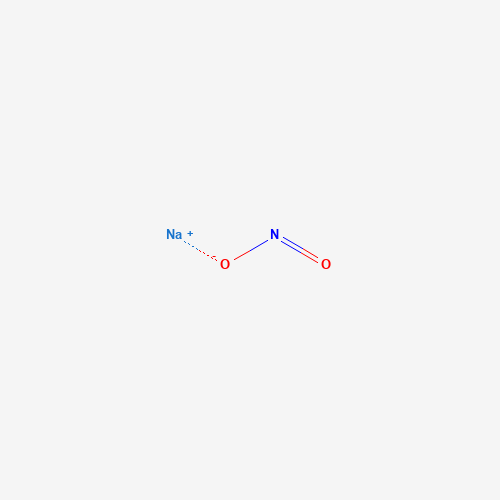
Sodium nitrite is a curing agent for meat, giving cured products their pink colour and characteristic flavour while suppressing Clostridium botulinum. It is used in bacon, ham, hot dogs and many preserved sausages.
Where it is and isn’t permitted
| Jurisdiction | Status | Scope and limits | Citation |
|---|---|---|---|
| Australia and New Zealand | Permitted, with conditions | 5 food categories highest permitted level 125 mg/kg Show every food category
| Food Standards Code, Schedule 15, S15—5and 4 further provisionsretrieved 2026-10-17 |
| Canada | Permitted, with conditions | highest permitted level 200 mg/kg 5 permitted uses Show every permitted use
| Health Canada, List of Permitted Preservatives (List 11)and 4 further provisionsretrieved 2026-10-17 |
| European Union | Permitted, with conditions | 19 food categories highest permitted level 105 mg/kg Show every food category
| Regulation (EC) No 1333/2008, Annex II, consolidated text 02008R1333-20260818and 18 further provisionsretrieved 2026-10-18 |
| Great Britain | Permitted, with conditions | 6 food categories highest permitted level 150 mg/kg or mg/l Show every food category
| Assimilated Regulation (EC) No 1333/2008, Annex II (as at 28 June 2024)and 5 further provisionsretrieved 2026-10-18 |
| Japan | Permitted, with conditions | Designated additive: Appended Table 1, item 6, 亜硝酸ナトリウム (“Sodium Nitrite” in the unofficial English translation). …Designated additive: Appended Table 1, item 6, 亜硝酸ナトリウム (“Sodium Nitrite” in the unofficial English translation). Standards for use — Specifications and Standards for Foods, Food Additives, etc. (MHW Notification No. 370 of 1959), Part II (Food Additives), F (Standards for use), entry 亜硝酸ナトリウム: (1) [may be used only in the foods stated] “亜硝酸ナトリウムは、食肉製品、鯨肉ベーコン、魚肉ソーセージ、魚肉ハム、いくら、すじこ及びたらこ(スケトウダラの卵巣を塩蔵したものをいう。以下この目において同じ。)以外の食品に使用してはならない。” (2) [limits how much may remain in the foods stated] “亜硝酸ナトリウムは、亜硝酸根として、食肉製品及び鯨肉ベーコンにあってはその1kgにつき0.070gを超える量を、魚肉ソーセージ及び魚肉ハムにあってはその1kgにつき0.050gを超える量を、いくら、すじこ及びたらこにあってはその1kgにつき0.0050gを超える量を残存しないように使用しなければならない。” The Japanese is the standard as published. There is no official English translation of the Notification; the English in square brackets is this site’s description of what each sentence does, not a translation of the foods or the levels. Compositional specifications for this additive, in the same Notification, are not imported and are not shown here; nor are the general rules in F 添加物一般, which apply to every additive. | Regulations for Enforcement of the Food Sanitation Act (MHW Ordinance No. 23 of 1948), Appended Table 1retrieved 2026-10-18 |
| South Korea | Permitted, with conditions | Designated food additive: Standards and Specifications for Food Additives, Part III, 1. …Designated food additive: Standards and Specifications for Food Additives, Part III, 1. 일반식품첨가물 (general food additives), 아질산나트륨 (“Sodium Nitrite”, the English the Code prints beside it). Main use (주용도) of 아질산나트륨: 발색제, 보존료. Standard for use (사용기준) of 아질산나트륨: (1) [may be used only in the foods listed; sets a limit on the amount used] “아질산나트륨은 아래의 식품에 한하여 사용하여야 한다. 아질산나트륨의 사용량은 아질산이온으로서 아래의 기준 이상 남지 아니하도록 사용하여야 한다. 1. 식육가공품(식육추출가공품 제외), 기타동물성가공식품(기타식육이 함유된 제품에 한함)∶0.07g/kg 2. 어육소시지∶0.05g/kg 3. 명란젓, 연어알젓∶0.005g/kg” The Korean is the standard as published. There is no official English translation of the current Code (the English version on MFDS’s website is the 2020 edition and has no legal effect); the English in square brackets is this site’s description of what each sentence does, not a translation of the foods or the levels. Compositional specifications (Part IV) are not imported, nor are the general standards in Part II, which apply to every additive. | Standards and Specifications for Food Additives (식품첨가물의 기준 및 규격), MFDS Notification, Part III (Standards for use, by item)retrieved 2026-10-18 |
| United States | Permitted, with conditions | 21 CFR 172.175retrieved 2026-10-17 | |
| Codex Alimentarius | Permitted, with conditions | 2 food categories highest permitted level 80 mg/kg Show every food category and its notes
| CXS 192-1995 Table One, INS 250and 1 further provisionretrieved 2026-09-07 |
How much is permitted
A listing usually limits the quantity as well as the food. Only one of the forms that takes is a figure: quantum satis and good manufacturing practice permit the amount the technological effect requires and no more, which is a limit rather than the absence of one. Figures below are the range across every food category this page is listed in, and categories differ between regulators — see how much is permitted.
| Australia and New Zealand | 50 mg/kg – 125 mg/kg | 5 numeric limit |
|---|---|---|
| Canada | 200 mg/kg | 1 numeric limit, 1 GMP, 3 no quantity stated |
| European Union | 30 mg/kg – 105 mg/kg | 19 numeric limit |
| Great Britain | 150 mg/kg | 2 numeric limit, 4 several limits |
| Japan | — | 1 no quantity stated |
| South Korea | — | 1 no quantity stated |
| United States | — | 1 no quantity stated |
| Codex Alimentarius | 80 mg/kg | 2 numeric limit |
What it is made from
Manufactured industrially by absorbing nitrogen oxides, produced from ammonia, into sodium carbonate or sodium hydroxide solution. Curing salts sold to processors are usually a dilute mixture of sodium nitrite in ordinary salt, dyed pink so it cannot be mistaken for it. No animal material is involved.
- Vegan
- Vegetarian
Compare other additives on the dietary indexes.
- CAS registry number
- 7632-00-0
- InChIKey
- LPXPTNMVRIOKMN-UHFFFAOYSA-M
- PubChem
- CID 23668193
The two specifications, compared
The European Union sets identity and purity by regulation; JECFA publishes its own through FAO, advisory until a country adopts it. Both documents are below in full. These are the parameters each puts a number on.
| Parameter | European Union | JECFA |
|---|---|---|
| Assay | no less than 97 % | no less than 97 % |
| Loss on drying | no more than 0.25 % | no more than 0.25 % |
| Lead | no more than 0.1 mg/kg | no more than 2 mg/kg |
| Arsenic | no more than 0.1 mg/kg | — |
| Mercury | no more than 0.1 mg/kg | — |
One parameter differs between the two documents. A difference is not a disagreement about safety: the two are revised on their own cycles, and an assay or a drying loss can be measured against a different preparation of the substance, which is why only the contaminant ceilings are marked. Within the EU the EU's figure is the one that binds.
How the EU defines it
The legal specification an additive must meet to be sold as this E number in the EU — what it is, how it may be made, and the purity it must reach. From Commission Regulation (EU) No 231/2012.
E 250 Sodium nitrite
Assay, identification and purity criteria
Description and assay
- Einecs
- 231-555-9
- Chemical name
- Sodium nitrite
- Chemical formula
- NaNO₂
- Molecular weight
- 69,00
- Assay
- Content not less than 97 % on the anhydrous basis
- Description
- White crystalline powder or yellowish lumps
Identification
- Test for nitrite
- Passes test
- Test for sodium
- Passes test
Purity criteria
- Loss on drying
- Not more than 0,25 % (4 hours, over silica gel)
- Arsenic
- Not more than 0,1 mg/kg
- Lead
- Not more than 0,1 mg/kg
- Mercury
- Not more than 0,1 mg/kg May only be sold in a mixture with salt or a salt substitute.
How JECFA defines it
The international specification for identity and purity, prepared by the Joint FAO/WHO Expert Committee on Food Additives and published by FAO. It is a different document from any above, written by a different body and revised on its own cycle; it is advisory, and a country adopts it or does not.
INS 250 Sodium Nitrite
Synonyms: INS No. 250
Assay, identification and purity criteria
Description and assay
- Specification history
- Prepared at the 44th JECFA (1995), published in FNP 52 Add 3 (1995) superseding specifications prepared at the 17th JECFA (1973), published in FNP 4 (1978) and in FNP 52 (1992). Metals and arsenic specifications revised at the 63rd JECFA (2004). An ADI of 0-0.06 mg/kg bw was established at 44th JECFA (1995). Nitrite should not be used for infants below 3 months
- Chemical names
- Sodium nitrite
- C.A.S. number
- 7632-00-0
- Chemical formula
- NaNO 2
- Formula weight
- 69.00
- Assay
- Not less than 97.0% on the dried basis
- DESCRIPTION
- White or slightly yellow, hygroscopic and deliquescent granules, powder, or opaque, fused masses of sticks
- FUNCTIONAL USES
- Antimicrobial preservative, colour fixative
- METHOD OF ASSAY
- Weigh, to the nearest mg, 1 g of the dried sample. Transfer to a 100 ml volumetric flask and dissolve in water diluting to the mark. Pipette 10.0 ml of this solution into a mixture of 50.0 ml of 0.1N potassium permanganate, 100 ml of water and 5 ml of sulfuric acid, keeping the tip of the pipette well below the surface of the liquid. Warm the solution to 40 o , allow it to stand for 5 min, and add 25.0 ml of 0.1N oxalic acid. Heat the mixture to about 80 o and titrate with 0.1N potassium permanganate. where X = ml of 0.1N potassium permanganate used for titration W = weight (in grams) of the sample
Identification
- Solubility (Vol. 4)
- Freely soluble in water, sparingly soluble in ethanol
- Test for sodium (Vol. 4)
- Passes test
- Test for nitrite (Vol. 4)
- Passes test
Purity criteria
- Loss on drying (Vol. 4)
- Not more than 0.25% (over silica gel, 4 h)
- Lead (Vol. 4)
- Not more than 2 mg/kg Determine using an atomic absorption technique appropriate to the specified level. The selection of sample size and method of sample preparation may be based on the principles of the method described in Volume 4, “Instrumental Methods.”
Authorised in other additives, enzymes, flavourings and nutrients
These authorisations are not for use in food. They let this substance be used inside another additive, a food enzyme, a flavouring or a nutrient preparation — often as a carrier — and it reaches food only as part of that product. Annex III to Regulation (EC) No 1333/2008.
| Part | May be used in | Maximum level | Citation |
|---|---|---|---|
| Annex III, Part 3: Food additives including carriers in food enzymes | Food enzymesNote (1): Including enzymes authorised as food additives. | In enzyme preparation: 500 mg/kg In final food except beverages: 0,01 mg/kg In beverages: No use | Regulation (EC) No 1333/2008, Annex III, Part 3 |
Every name it appears under
80 recorded names. A label may use any of them.
E number
- E250
INS number
- 250
CAS registry number
- 7632-00-0
As it appears in regulation
- Sodium nitrite
Other names
- 0.1M Sodium nitrite (naturally short expiry)
- Acidified sodium nitrite (ASN)
- Anti-rust
- Azotyn sodowy
- Caswell No. 782
- CCRIS 559
- Dusitan sodny
- E 250
- EPA Pesticide Chemical Code 076204
- Erinitrit
- Filmerine
- HSDB 757
- INS NO.250
- INS-250
- NaNO2
- Natrii nitris
- Natrium nitrit
- natrium nitrite
- Natrum nitrosum
- NITHIODOTE COMPONENT SODIUM NITRITE
- Nitrite de sodium
- Nitrite, sodium
- Nitrito sodico
- Nitrous acid soda
- Nitrous acid, sodium salt
- Nitrous acid, sodium salt (1:1)
- NNaO2
- Reagecon Nitrite (Sodium Nitrite) 100 microg/mL Stock Solution in Water according to Chinese Pharmacopoeia (ChP)
- Reagecon Sodium Nitrite 0.1M according to Chinese Pharmacopoeia (ChP)
- Ribavirin Impurity 5
- sodium nitrit
- Sodium nitrite
- Sodium nitrite (USP)
- Sodium Nitrite 1000ppm As N
- Sodium nitrite ACS grade
- Sodium nitrite, 99.5%, super free-flowing
- Sodium nitrite, 99.999% trace metals basis
- Sodium nitrite, >=99.99% trace metals basis
- Sodium nitrite, ACS reagent, >=97.0%
- Sodium nitrite, analytical standard
- Sodium nitrite, anhydrous, free-flowing, Redi-Dri(TM), ACS reagent, >=97%
- Sodium nitrite, AR, >=98%
- Sodium nitrite, granular, 99.5%
- Sodium nitrite, JIS special grade, >=98.5%
- Sodium nitrite, LR, >=98%
- Sodium nitrite, p.a., ACS reagent, 99%
- Sodium nitrite, puriss. p.a., ACS reagent, >=99.0% (RT)
- Sodium nitrite, puriss. p.a., ACS reagent, reag. Ph. Eur., >=99%
- Sodium nitrite, purum p.a., >=98.0% (RT)
- Sodium nitrite, ReagentPlus(R), >=99.0%
- Sodium nitrite, SAJ first grade, >=97.0%
- Sodium nitrite, Trace metals grade
- Sodium nitrite, United States Pharmacopeia (USP) Reference Standard
- Sodium Nitrite-18O2 (10% 16O2)
- sodiumnitrite
- Synfat 1004
Systematic names
- sodium nitrite
The EU re-evaluation programme
Every additive authorised in the EU before 20 January 2009 was put back through EFSA by Commission Regulation (EU) No 257/2010, and this one is named in it. What the Regulation required is below; whether the opinion has since been published is not something this site records.
- To be evaluated by 31 December 2015. Named in Annex II, Part II, point 1 as “Sodium nitrite”, among the additives given priority within its class.
Hazard reference values
The two committees set different figures. EFSA's acceptable daily intake is 0.1 mg/kg bw/day (2017); JECFA's is 0.07 mg/kg bw/day (2002). An acceptable daily intake is a reference value set by a committee, not a threshold above which harm begins. The lower figure is not a finding that the other body was wrong: the two work to different terms of reference, on their own timetables, and sometimes from different data. This site states both and chooses between them nowhere. See where the two committees differ.
Evidence and how bodies read it
What assessing bodies concluded
Each conclusion is paraphrased in the body's own framing, from the published opinion linked beneath it. Where bodies differ, both stand; this site does not adjudicate between them or add a view of its own.
EFSA 2017
The ANS Panel derived an ADI of 0.07 mg nitrite ion/kg bw/day for potassium and sodium nitrite (E 249, E 250), based on methaemoglobin formation, and found additive exposure within it except for a slight exceedance in high-consuming children. It estimated a margin of exposure below 10,000 for preformed nitrosamines in meat products at high exposure, and reported some epidemiological evidence linking dietary nitrite with gastric cancer and nitrite plus nitrate from processed meat with colorectal cancer.
Common questions
Assembled from what is above, in the words the questions are usually asked in. Each answer is the same statement the relevant section makes, with the same citations behind it.
- What is E 250?
- E 250 is Sodium nitrite. Sodium nitrite is a curing agent for meat, giving cured products their pink colour and characteristic flavour while suppressing Clostridium botulinum. It is used in bacon, ham, hot dogs and many preserved sausages.
- What is Sodium nitrite used for in food?
- It is listed as a preservative — the role Canada, Codex and the US assign it. This page shows every function each regulator records, with the citation for each.
- Where is Sodium nitrite permitted?
- Of the seven regulators this site reads, Australia and New Zealand, Canada, the EU, Great Britain, Japan, South Korea, the US and the Codex standard permit it. Each permission is for named foods at named levels, not a blanket one; the table on this page gives them with citations.
- Is Sodium nitrite vegan?
- Yes. Sodium nitrite is not derived from animals, and is suitable for vegetarians. This page says what it is made from and how.
Sources for this page
- anz retrieved 2026-10-17
- ca retrieved 2026-10-17
- eu retrieved 2026-10-18
- gb retrieved 2026-10-18
- jp retrieved 2026-10-18
- kr retrieved 2026-10-18
- ecfr retrieved 2026-10-17
- gsfa retrieved 2026-09-07
- euspecs retrieved 2026-10-18
- jecfaspecs retrieved 2026-09-23
Full licence terms and publisher details on Sources. How this page is built and updated: Method.
Machine-readable: a JSON record of this additive is given on request —how to ask for access.
Follow changes to Sodium nitrite:Atom feed — regulatory events, and any change the weekly refresh detects in its provisions.