Sodium sorbate

CAS 7757-81-5

Listed as a preservative by Canada and the US.

Listed as preservatives (CA, US)
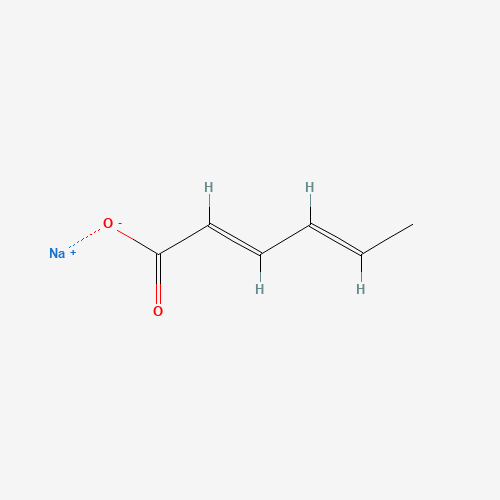
Chemical structure of Sodium sorbate, from PubChem compound 23665582
Structure from PubChem CID 23665582 (National Library of Medicine, public domain). A depiction of one compound: where a listing covers a family, or a substance has no single structure, this page shows none.

Sodium sorbate is a preservative against moulds and yeasts, one of the sorbate family used in cheese, baked goods and drinks.

Where it is and isn’t permitted

Status of Sodium sorbate by jurisdiction. Every jurisdiction this site covers is listed, including those where the substance does not appear.
JurisdictionStatusScope and limitsCitation
Australia and New ZealandFood Standards Australia New ZealandPermitted, with conditions

34 food categories

highest permitted level 9,000 mg/kg

Show every food category
  • 0 Preparations of food additives — 1,000 mg/kg
  • 0.4 Rennetting enzymes — 9,000 mg/kg
  • 1.6 Cheese and cheese products — 3,000 mg/kg
  • 11.4.1 Tabletop sweeteners—liquid preparation — GMP
  • 13.4.2 Liquid formulated supplementary sports foods — 400 mg/kg
  • 13.5 Food for special medical purposes — 1,500 mg/kg
  • 14.1.2 Fruit and vegetable juices and fruit and vegetable juice products — 400 mg/kgNote: For each item under 14.1.2, the GMP principle precludes the use of preservatives in juices represented as not preserved by chemical or heat treatment.
  • 14.1.3 Water based flavoured drinks — 400 mg/kg
  • 14.1.4 Formulated Beverages — 400 mg/kg
  • 14.2.2 Wine, sparkling wine and fortified wine — 200 mg/kg
  • 14.2.4 Fruit wine, vegetable wine and mead (including cider and perry) — 400 mg/kg
  • 14.3 Alcoholic beverages not included in item 14.2 — 400 mg/kg
  • 2.2.2 Oil emulsions (<80% oil) — 2,000 mg/kg
  • 20.2.0.3 Dairy and fat based desserts, dips and snacks — 500 mg/kg
  • 20.2.0.4 Sauces and toppings (including mayonnaises and salad dressings) — 1,000 mg/kg
  • 3.1 Ice confection sold in liquid form — 400 mg/kg
  • 4.1.3 Fruits and vegetables that are peeled, cut, or both peeled and cut — 375 mg/kg
  • 4.3.0.2 Mushrooms in brine or water and not commercially sterile — 500 mg/kg
  • 4.3.1 Dried fruits and vegetables — 1,000 mg/kg
  • 4.3.2 Fruits and vegetables in vinegar, oil, brine or alcohol — 1,000 mg/kg
  • 4.3.4.1 Low joule chutneys, low joule jams and low joule spreads — 1,000 mg/kg
  • 4.3.5 Candied fruits and vegetables — 500 mg/kg
  • 4.3.6 Fruit and vegetable preparations including pulp — 1,000 mg/kg
  • 4.3.7 Fermented fruit and vegetable products — 500 mg/kgOnly lactic acid fermented fruit and vegetables.
  • 4.3.8.2 Imitation fruit — 500 mg/kg
  • 5.0.1 Fruit filling for confectionery containing not less than 200 g/kg of fruit — 500 mg/kg
  • 5.2 Sugar confectionery — 1,000 mg/kg
  • 5.4 Icings and frostings — 1,500 mg/kg
  • 6.4 Flour products (including noodles and pasta) — 1,000 mg/kg
  • 7 Breads and bakery products — 1,200 mg/kg
  • 8.2.3 Dried meat — 1,500 mg/kg
  • 8.3.1 Fermented, uncooked processed comminuted meat products — 1,500 mg/kg
  • 8.4 Edible casings — 100 mg/kg
  • 9.3 Semi preserved fish and fish products — 2,500 mg/kg
Food Standards Code, Schedule 15, S15—5and 33 further provisionsretrieved 2026-10-17
CanadaHealth CanadaPermitted, with conditions

highest permitted level 3,350 mg/kg

10 permitted uses

Show every permitted use
  • In: Apple and (naming the fruit or fruits) jam; Concentrated (naming the fruit) juice, except frozen concentrated orange juice; Fig marmalade with pectin; (Naming the fruit or fruits) jam; (Naming the fruit or fruits) jam with pectin; (Naming the fruit or fruits) jelly with pectin; (Naming the fruit) juice; (Naming the fruits) juice; (Naming the citrus fruit or citrus fruits) marmalade with pectin; Mincemeat; Pickles and relishes; Pineapple marmalade with pectin; Rhubarb and (naming the fruit or fruits) jam; (Naming the source of the glucose) syrup; Tomato catsup; Tomato paste; Tomato pulp; Tomato puree. Purpose: Preservative. Limit: If used singly, the amount not to exceed 1,000 ppm, calculated as sorbic acid. If used in any combination with calcium sorbate, potassium sorbate or sorbic acid, the total combined amount not to exceed 1,000 ppm, calculated as sorbic acid. — Health Canada, List of Permitted Preservatives (List 11), item S.15(a)
  • In: Bread. Purpose: Preservative. Limit: If used singly, the amount not to exceed 1,000 ppm, calculated as sorbic acid. If used in any combination with calcium sorbate, potassium sorbate or sorbic acid, the total combined amount not to exceed 1,000 ppm, calculated as sorbic acid. — Health Canada, List of Permitted Preservatives (List 11), item S.15(b)
  • In: Calorie-reduced margarine; Margarine. Purpose: Preservative. Limit: If used singly, the amount not to exceed 1,000 ppm, calculated as sorbic acid. If used in any combination with benzoic acid, potassium benzoate, sodium benzoate, calcium sorbate, potassium sorbate, or sorbic acid, the total combined amount not to exceed 1,000 ppm, calculated as benzoic acid and sorbic acid, respectively. — Health Canada, List of Permitted Preservatives (List 11), item S.15(c)
  • In: Cheddar cheese; (Naming the variety) cheese; Cold-pack (naming the variety) cheese; Cold-pack cheese food; Cold-pack cheese food with (naming the added ingredients); Cold-pack (naming the variety) cheese with (naming the added ingredients); Cream cheese; Cream cheese with (naming the added ingredients); Cream cheese spread; Cream cheese spread with (naming the added ingredients); Processed (naming the variety) cheese; Processed cheese food; Processed cheese food with (naming the added ingredients); Processed cheese spread; Processed cheese spread with (naming the added ingredients); Processed (naming the variety) cheese with (naming the added ingredients). Purpose: Preservative. Limit: If used singly, the amount not to exceed 3,000 ppm, calculated as sorbic acid. If used in any combination with calcium sorbate, potassium sorbate or sorbic acid, the total combined amount not to exceed 3,000 ppm, calculated as sorbic acid. If used in any combination with calcium propionate, propionic acid, sodium propionate, calcium sorbate, potassium sorbate or sorbic acid, the total combined amount not to exceed 3,000 ppm, calculated as propionic acid and sorbic acid, respectively, provided that the amount of propionic acid does not exceed 2,000 ppm. — Health Canada, List of Permitted Preservatives (List 11), item S.15(d)
  • In: Cider; Fruit wine; Honey wine; Wine. Purpose: Preservative. Limit: If used singly, the amount not to exceed 500 ppm, calculated as sorbic acid. If used in any combination with calcium sorbate, potassium sorbate or sorbic acid, the total combined amount not to exceed 500 ppm, calculated as sorbic acid. — Health Canada, List of Permitted Preservatives (List 11), item S.15(e)
  • In: Cold-processed smoked and salted fish paste; Smoked or salted dried fish. Purpose: Preservative. Limit: If used singly, the amount not to exceed 1,000 ppm, calculated as sorbic acid. If used in any combination with calcium sorbate, potassium sorbate or sorbic acid, the total combined amount not to exceed 1,000 ppm, calculated as sorbic acid. — Health Canada, List of Permitted Preservatives (List 11), item S.15(f)
  • In: (Naming the flavour) essence; (Naming the flavour) extract; (Naming the flavour) flavour. Purpose: Preservative. Limit: Good Manufacturing Practice. Amendment notices: M-FAA-24-14. — Health Canada, List of Permitted Preservatives (List 11), item S.15(f.1)
  • In: Olives. Purpose: Preservative. Limit: If used singly, the amount not to exceed 300 ppm in the olive brine, calculated as sorbic acid. If used in any combination with calcium sorbate, potassium sorbate or sorbic acid, the total combined amount not to exceed 300 ppm in the olive brine, calculated as sorbic acid. — Health Canada, List of Permitted Preservatives (List 11), item S.15(g)
  • In: Unstandardized foods, except unstandardized preparations of meat or meat by-product, fish or meat (as defined in section B.21.002 of the Food and Drug Regulations) or poultry meat or poultry meat by-product and those unstandardized foods set out in paragraph (i) of this item. Purpose: Preservative. Limit: If used singly, the amount not to exceed 1,000 ppm, calculated as sorbic acid. If used in any combination with calcium sorbate, potassium sorbate or sorbic acid, the total combined amount not to exceed 1,000 ppm, calculated as sorbic acid. Amendment notices: NOM/ADM-0122. — Health Canada, List of Permitted Preservatives (List 11), item S.15(h)
  • In: Unstandardized salad dressings. Purpose: Preservative. Limit: 3,350 ppm, calculated as sorbic acid. — Health Canada, List of Permitted Preservatives (List 11), item S.15(i)
Health Canada, List of Permitted Preservatives (List 11)and 9 further provisionsretrieved 2026-10-17
European UnionEuropean Commission / EFSANo listed food uses foundThis site has not matched this substance to any food use on this jurisdiction’s list of authorised food additives. A food additive may be used only in foods that list names. Flavourings, enzymes, processing aids and added nutrients are regulated separately and do not appear on it.
Great BritainFood Standards Agency / Food Standards ScotlandNo listed food uses foundThis site has not matched this substance to any food use on this jurisdiction’s list of authorised food additives. A food additive may be used only in foods that list names. Flavourings, enzymes, processing aids and added nutrients are regulated separately and do not appear on it.
JapanConsumer Affairs AgencyNo listing matchedThis site imports only Japan’s list of designated additives (Appended Table 1 to the Regulations for Enforcement of the Food Sanitation Act), matched by English name. Existing additives, natural flavouring agents and ordinary foods used as additives are permitted outside that list and are not imported, so an empty row does not show that Japan does not permit the substance.
South KoreaMinistry of Food and Drug SafetyNo listing matchedThis site imports Part III of South Korea’s Standards and Specifications for Food Additives, matched by CAS number, then INS number, then exact name. Mixed preparations and sanitisers are not imported, and an entry whose identifiers disagreed with a page’s is held for review, so an empty row does not show that South Korea does not permit the substance.
United StatesFood and Drug AdministrationPermitted21 CFR 182.3795retrieved 2026-10-17
Codex AlimentariusCodex Alimentarius Commission / JECFANot listedDoes not appear on this jurisdiction’s permitted list. That is not the same as being prohibited.

How much is permitted

A listing usually limits the quantity as well as the food. Only one of the forms that takes is a figure: quantum satis and good manufacturing practice permit the amount the technological effect requires and no more, which is a limit rather than the absence of one. Figures below are the range across every food category this page is listed in, and categories differ between regulators — see how much is permitted.

Australia and New Zealand100 mg/kg – 9,000 mg/kg33 numeric limit, 1 GMP
Canada3,350 mg/kg1 numeric limit, 1 GMP, 8 no quantity stated
United States—1 no quantity stated

What it is made from

Made by neutralising sorbic acid, produced synthetically, with sodium. The potassium salt is far more common in practice because it keeps better.

  • Vegan
  • Vegetarian

Compare other additives on the dietary indexes.

CAS registry number
7757-81-5
InChIKey
LROWVYNUWKVTCU-STWYSWDKSA-M
PubChem
CID 23665582

Every name it appears under

23 recorded names. A label may use any of them.

E number

  • E201

CAS registry number

  • 7757-81-5

As it appears in regulation

  • Sodium sorbate

Other names

  • (E,E)-2,4-HEXADIENOIC ACID SODIUM SALT
  • 2,4-Hexadienoic acid, sodium salt
  • 2,4-HEXADIENOIC ACID, SODIUM SALT (1:1), (2E,4E)-
  • 2,4-Hexadienoic acid, sodium salt, (2E,4E)-
  • 2,4-Hexadienoic acid, sodium salt, (E,E)-
  • C6H7NaO2
  • CCRIS 5163
  • HSDB 771
  • INS NO.201
  • INS-201
  • Sodium (E,E)-2,4-hexadienoate
  • Sodium (E,E)-hexa-2,4-dienoate
  • SODIUM .ALPHA.-TRANS-.GAMMA.-TRANS-SORBATE
  • Sodium 2,4-hexadienoate, (E,E)-
  • SODIUM SORBATE
  • sodium;(2E,4E)-hexa-2,4-dienoate
  • Sorban sodny
  • Sorbic acid, sodium salt
  • SORBICACIDSODIUMSALT
  • TGW6Q2CCVM

Hazard reference values

Values set by assessing bodies. A body that has not set a value is not listed here.
TypeValuePopulationAssessed byOpinion
ADI25 mg/kg bw/day—JECFA1985

Evidence and how bodies read it

Studies, and the differing conclusions regulators drew from them, are curated rather than machine-read, and none has been written for this substance yet.

Common questions

Assembled from what is above, in the words the questions are usually asked in. Each answer is the same statement the relevant section makes, with the same citations behind it.

What is Sodium sorbate?
Sodium sorbate is a preservative against moulds and yeasts, one of the sorbate family used in cheese, baked goods and drinks.
What is Sodium sorbate used for in food?
It is listed as a preservative — the role Canada and the US assign it. This page shows every function each regulator records, with the citation for each.
Is Sodium sorbate banned in Europe?
No. Sodium sorbate does not appear on the EU's list of authorised food additives, which is not the same as being banned: the EU permits an additive only where it has authorised it, and usually the reason for an absence is that no one applied. The EU has made no finding against this substance. It does mean it may not be used as a food additive in the EU today.
Where is Sodium sorbate permitted?
Of the seven regulators this site reads, Australia and New Zealand, Canada and the US permit it. Each permission is for named foods at named levels, not a blanket one; the table on this page gives them with citations.
Is Sodium sorbate vegan?
Yes. Sodium sorbate is not derived from animals, and is suitable for vegetarians. This page says what it is made from and how.

Sources for this page

  • anz retrieved 2026-10-17
  • ca retrieved 2026-10-17
  • ecfr retrieved 2026-10-17

Full licence terms and publisher details on Sources. How this page is built and updated: Method.

Machine-readable: a JSON record of this additive is given on request —how to ask for access.

Follow changes to Sodium sorbate:Atom feed — regulatory events, and any change the weekly refresh detects in its provisions.