Succinic acid
110-15-6 · 26776-24-9 · 1,2 Ethanedicarboxylic Acid · 1,2-Ethanedicarboxylate · 1,2-Ethanedicarboxylic acid · 1,4 Butanedioic Acid · 1,4-Butanedioate · 1,4-Butanedioic acid · 1cze · AB6MNQ6J6L · acide butanedioique · acide succinique · Acidum succinicum · Amber acid · Amber acid, Butanedioic acid, Ethylenesuccinic acid · Asuccin · Bernsteinsaeure · Bernsteinsaure · BRN 1754069 · Butandisaeure · Butane diacid · butanedioate;hydron · butanedioic acid · Butanedioic acid (9CI) · Butanedioic acid diammonium salt · Butanedionic acid · CAS-110-15-6 · Dihydrofumarate · Dihydrofumaric acid · E 363 · Ethanedicarboxylic acid · Ethylene dicarboxylic acid · Ethylene succinic acid · ethylenesuccinic acid · FEMA NO. 4719 · HOOC-CH2-CH2-COOH · HSDB 791 · Katasuccin · Kyselina jantarova · Sal succini · SIN · sodium succinate (anhydrous) · succ · succinate, 9 · Succinate, Potassium · succinct acid · Succinellite · Succinic acid · Succinic acid (8CI) · Succinic acid CRS · Succinic acid, 6 · Succinic acid, 99% · SUCCINIC ACID, ACS · Succinic acid, FCC · Succinic acid, natural · Succinic Acid; Butanedioic acid · succinic-acid · Succinicate · Succinicum acidum · Succunic Acide · WLN: QV2VQ · Wormwood acid · E363 · Butanedioic acid · Succinic acid · Acid succinic · Acide succinique · Aċidu suċċiniku · Barnsteenzuur · Bernsteinsäure · Borostyánkősav · Bärnstenssyra · Dzintarskābe · Gintaro rūgštis · Jantarna kiselina · jantarna kislina · Kwas bursztynowy · Kyselina jantarová · Merevaikhape · Meripihkahappo · Ravsyre · Succinic acid · Ácido succínico · Ηλεκτρικό οξύ · Сукцинова киселинаE number E363CAS 110-15-6
Listed as an acidity regulator and a flavour enhancer by the US.
Listed as acidity regulators (US) · flavour enhancers (US)
- United States: pH control agent — FDA, Substances Added to Food: SUCCINIC ACID
- United States: pH control agents — 21 CFR 184.1091, citing 21 CFR 170.3(o)(23)
- United States: Flavor enhancer — FDA, Substances Added to Food: SUCCINIC ACID
- United States: Flavor enhancers — 21 CFR 184.1091, citing 21 CFR 170.3(o)(11)
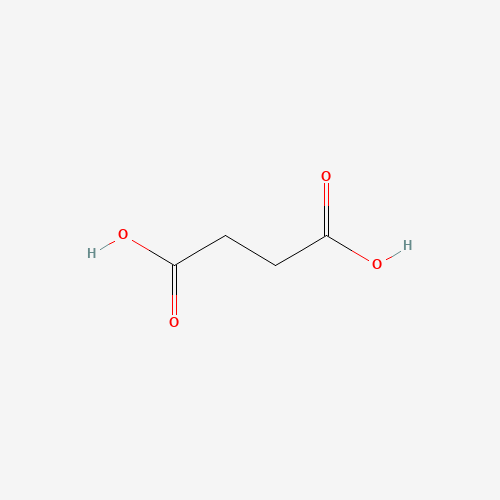
Succinic acid is an acidulant and flavouring with a distinctive savoury sourness. It occurs naturally in wine, sauerkraut and shellfish, where it contributes to the taste.
Where it is and isn’t permitted
| Jurisdiction | Status | Scope and limits | Citation |
|---|---|---|---|
| Australia and New Zealand | Permitted | 1 food category no numerical limit (good manufacturing practice) | Food Standards Code, Schedule 15, S15—5, item 12.1.3, INS 363retrieved 2026-10-17 |
| Canada | No listing matchedHealth Canada’s lists name additives without E or INS numbers, so this site matches them by exact name. A substance listed there under a name this site does not recognise has no row here. | ||
| European Union | Permitted, with conditions | 5 food categories highest permitted level 6,000 mg/l Show every food category
| Regulation (EC) No 1333/2008and 4 further provisionsretrieved 2026-10-18 |
| Great Britain | Permitted, with conditions | 5 food categories highest permitted level 6,000 mg/kg or mg/l Show every food category
| Assimilated Regulation (EC) No 1333/2008and 4 further provisionsretrieved 2026-10-18 |
| Japan | Permitted, with conditions | Designated additive: Appended Table 1, item 148, コハク酸 (“Succinic Acid” in the unofficial English translation). …Designated additive: Appended Table 1, item 148, コハク酸 (“Succinic Acid” in the unofficial English translation). Standards for use — Specifications and Standards for Foods, Food Additives, etc. (MHW Notification No. 370 of 1959), Part II (Food Additives), F (Standards for use): The Notification sets no standard for use (使用基準) for this additive, so it is not restricted there to particular foods or amounts. Compositional specifications for this additive, in the same Notification, are not imported and are not shown here; nor are the general rules in F 添加物一般, which apply to every additive. | Regulations for Enforcement of the Food Sanitation Act (MHW Ordinance No. 23 of 1948), Appended Table 1retrieved 2026-10-18 |
| South Korea | Permitted, with conditions | Designated food additive: Standards and Specifications for Food Additives, Part III, 1. …Designated food additive: Standards and Specifications for Food Additives, Part III, 1. 일반식품첨가물 (general food additives), 호박산 (“Succinic Acid”, the English the Code prints beside it). Main use (주용도) of 호박산: 산도조절제, 향미증진제. Standard for use (사용기준) of 호박산: (1) [to be used under the general standard for use in II. 2. 1), the minimum amount that achieves the technical effect, with no limit set for this additive in particular] “II. 2. 1)의 규정에 따라 사용하여야 한다.” The Korean is the standard as published. There is no official English translation of the current Code (the English version on MFDS’s website is the 2020 edition and has no legal effect); the English in square brackets is this site’s description of what each sentence does, not a translation of the foods or the levels. Compositional specifications (Part IV) are not imported, nor are the general standards in Part II, which apply to every additive. | Standards and Specifications for Food Additives (식품첨가물의 기준 및 규격), MFDS Notification, Part III (Standards for use, by item)retrieved 2026-10-18 |
| United States | Permitted | 21 CFR 184.1091retrieved 2026-10-17 | |
| Codex Alimentarius | Not listedDoes not appear on this jurisdiction’s permitted list. That is not the same as being prohibited. |
How much is permitted
A listing usually limits the quantity as well as the food. Only one of the forms that takes is a figure: quantum satis and good manufacturing practice permit the amount the technological effect requires and no more, which is a limit rather than the absence of one. Figures below are the range across every food category this page is listed in, and categories differ between regulators — see how much is permitted.
| Australia and New Zealand | — | 1 GMP |
|---|---|---|
| European Union | 3,000 mg/kg – 6,000 mg/kg | 5 numeric limit |
| Great Britain | 3,000 mg/kg – 6,000 mg/kg | 5 numeric limit |
| Japan | — | 1 no quantity stated |
| South Korea | — | 1 no quantity stated |
| United States | — | 1 no quantity stated |
GRAS notices to the FDA
A GRAS notice is a company’s conclusion that a substance is generally recognised as safe for the use it describes. FDA’s letter responds to that conclusion, for that notifier and that use. It is not a listing in 21 CFR, and it is not counted as a US permission above. The substance and use are as FDA’s inventory words them; this site matched the notice to this page by exact name.
GRN No. 552 · Succinic acid · BioAmber Inc.
Intended use: For use as a flavor enhancer and pH control agent for use in foods at levels not to exceed good manufacturing practice.
FDA’s response (2015-05-13): FDA has no questions
What it is made from
Produced by fermentation, increasingly from renewable feedstocks, or synthetically from petroleum intermediates.
- Vegan
- Vegetarian
Compare other additives on the dietary indexes.
- CAS registry number
- 110-15-6
- InChIKey
- KDYFGRWQOYBRFD-UHFFFAOYSA-N
- PubChem
- CID 1110
How the EU defines it
The legal specification an additive must meet to be sold as this E number in the EU — what it is, how it may be made, and the purity it must reach. From Commission Regulation (EU) No 231/2012.
E 363 Succinic acid
Assay, identification and purity criteria
Description and assay
- Einecs
- 203-740-4
- Chemical name
- Butanedioic acid
- Chemical formula
- C₄H₆O₄
- Molecular weight
- 118,09
- Assay
- Content no less than 99,0 %
- Description
- Colourless or white, odourless crystals
Identification
- Melting range
- 185,0-190,0 °C
Purity criteria
- Residue on ignition
- Not more than 0,025 % (800 °C, 15 min)
- Arsenic
- Not more than 3 mg/kg
- Lead
- Not more than 2 mg/kg
- Mercury
- Not more than 1 mg/kg
Every name it appears under
85 recorded names. A label may use any of them.
E number
- E363
CAS registry number
- 110-15-6
- 26776-24-9
As it appears in regulation
- Succinic acid
Other names
- 1,2 Ethanedicarboxylic Acid
- 1,2-Ethanedicarboxylate
- 1,2-Ethanedicarboxylic acid
- 1,4 Butanedioic Acid
- 1,4-Butanedioate
- 1,4-Butanedioic acid
- 1cze
- AB6MNQ6J6L
- acide butanedioique
- acide succinique
- Acidum succinicum
- Amber acid
- Amber acid, Butanedioic acid, Ethylenesuccinic acid
- Asuccin
- Bernsteinsaeure
- Bernsteinsaure
- BRN 1754069
- Butandisaeure
- Butane diacid
- butanedioate;hydron
- butanedioic acid
- Butanedioic acid (9CI)
- Butanedioic acid diammonium salt
- Butanedionic acid
- CAS-110-15-6
- Dihydrofumarate
- Dihydrofumaric acid
- E 363
- Ethanedicarboxylic acid
- Ethylene dicarboxylic acid
- Ethylene succinic acid
- ethylenesuccinic acid
- FEMA NO. 4719
- HOOC-CH2-CH2-COOH
- HSDB 791
- Katasuccin
- Kyselina jantarova
- Sal succini
- SIN
- sodium succinate (anhydrous)
- succ
- succinate, 9
- Succinate, Potassium
- succinct acid
- Succinellite
- Succinic acid
- Succinic acid (8CI)
- Succinic acid CRS
- Succinic acid, 6
- Succinic acid, 99%
- SUCCINIC ACID, ACS
- Succinic acid, FCC
- Succinic acid, natural
- Succinic Acid; Butanedioic acid
- succinic-acid
- Succinicate
- Succinicum acidum
- Succunic Acide
- WLN: QV2VQ
- Wormwood acid
Systematic names
- Butanedioic acid
Hazard reference values
No reference value for this substance in the sources we hold.
Evidence and how bodies read it
Studies, and the differing conclusions regulators drew from them, are curated rather than machine-read, and none has been written for this substance yet.
Common questions
Assembled from what is above, in the words the questions are usually asked in. Each answer is the same statement the relevant section makes, with the same citations behind it.
- What is E 363?
- E 363 is Succinic acid. Succinic acid is an acidulant and flavouring with a distinctive savoury sourness. It occurs naturally in wine, sauerkraut and shellfish, where it contributes to the taste.
- What is Succinic acid used for in food?
- It is listed as an acidity regulator and a flavour enhancer — the role the US assigns it. This page shows every function each regulator records, with the citation for each.
- Where is Succinic acid permitted?
- Of the seven regulators this site reads, Australia and New Zealand, the EU, Great Britain, Japan, South Korea and the US permit it. Each permission is for named foods at named levels, not a blanket one; the table on this page gives them with citations.
- Is Succinic acid vegan?
- Yes. Succinic acid is not derived from animals, and is suitable for vegetarians. This page says what it is made from and how.
Sources for this page
- anz retrieved 2026-10-17
- eu retrieved 2026-10-18
- gb retrieved 2026-10-18
- jp retrieved 2026-10-18
- kr retrieved 2026-10-18
- ecfr retrieved 2026-10-17
- euspecs retrieved 2026-10-18
Full licence terms and publisher details on Sources. How this page is built and updated: Method.
Machine-readable: a JSON record of this additive is given on request —how to ask for access.
Follow changes to Succinic acid:Atom feed — regulatory events, and any change the weekly refresh detects in its provisions.