Sucralose
56038-13-2 · (2R,3R,4R,5R,6R)-2-[(2R,3S,4S,5S)-2,5-bis(chloromethyl)-3,4-dihydroxyoxolan-2-yl]oxy-5-chloro-6-(hydroxymethyl)oxane-3,4-diol · 1',4',6'-trichloro-1',4,6'-trideoxygalactosucrose · 1',4',6'-TRICHLORO-GALACTOSUCROSE · 1',4,6'-Trichlorogalactosucrose · 1,6-dichloro-1,6-dideoxy-beta-d-fructofuranosyl4-chloro-4-deoxy-alpha-d-gala · 4,1',6'-Trichloro-4,1',6'-trideoxy-galacto-sucrose · 4,1',6'-trichlorogalactosucrose · 4,1’,6’-Trichlorogalactosucrose · Acucar Light · alpha-D-Galactopyranoside, 1,6-dichloro-1,6-dideoxy-beta-D-fructofuranosyl 4-chl · Aspasvit · BAQAVOSOZGMPRM-QBMZZYIRSA-N · BRN 3654410 · CCRIS 8449 · E 955 · E955;Trichlorosucrose · HSDB 7964 · INS NO.955 · INS-955 · San sweet sa 8020 · Sansweet su 100 · Splenda · Sucralose · SUCRALOSE (TRICHLOROGALACTOSUCROSE) · Sucralose 1000 microg/mL in Acetonitrile · Sucralose 1000 |Ig/mL in Acetonitrile · Sucralose CRS · Sucralose, >=98.0% (HPLC) · Sucralose, analytical standard · Sucralose, European Pharmacopoeia (EP) Reference Standard · Sucralose, Pharmaceutical Secondary Standard; Certified Reference Material · Sucralose, United States Pharmacopeia (USP) Reference Standard · Sucrazit · Trichlorogalacto-sucrose · Trichlorogalactosucrose · Trichlorosucrose · E955 · 955 · (2R,3R,4R,5R,6R)-2-(((2R,3S,4S,5S)-2,5-Bis(chloromethyl)-3,4-dihydroxytetrahydrofuran-2-yl)oxy)-5-chloro-6-(hydroxymethyl)tetrahydro-2H-pyran-3,4-diol · (2R,3R,4R,5R,6R)-2-[(2R,3S,4S,5S)-2,5-bis(chloromethyl)-3,4-dihydroxy-tetrahydrofuran-2-yl]oxy-5-chloro-6-(hydroxymethyl)tetrahydropyran-3,4-diol · (2R,3R,4R,5R,6R)-2-[(2R,3S,4S,5S)-2,5-bis(chloromethyl)-3,4-dihydroxyoxolan-2-yl]oxy-5-chloro-6-(hydroxymethyl)oxane-3,4-diol · .alpha.-D-Galactopyranoside, 1,6-dichloro-1,6-dideoxy-.beta.-D-fructofuranosyl 4-chloro-4-deoxy- · 1,6-dichloro-1,6-dideoxy-.beta.-d-fructofuranosyl-4-chloro-4-deoxy-.alpha.-d-galactopyranoside · 1,6-Dichloro-1,6-dideoxy-b-D-fructofuranosyl-4-chloro-4-deoxy-a-D-galactopyranoside · 1,6-dichloro-1,6-dideoxy-beta-D-fructofuranosyl 4-chloro-4-deoxy-alpha-D-galactopyranoside · 1,6-Dichloro-1,6-dideoxy-beta-D-fructofuranosyl 4-chloro-4-deoxy-alpha-D-galactose · 1,6-Dichloro-1,6-dideoxy-beta-D-fructofuranosyl-4-chloro-4-deoxy-alpha-D-galactopyranoside · 1,6-Dichloro-1,6-dideoxy-|A-D-fructofuranosyl 4-chloro-4-deoxy-|A-D-galactopyranoside · 1,6-Dichloro-1,6-dideoxy-|A-D-fructofuranosyl-4-chloro-4-deoxy-|A-D-galactopyranoside; E955; Trichlorosucrose · 1-(1,6-Dichloro-1,6-dideoxy-beta-D-fructofuranosyl)-4-chloro-4-deoxy-alpha-D-galactopyranoside · a-D-Galactopyranoside, 1,6-dichloro-1,6-dideoxy-b-D-fructofuranosyl4-chloro-4-deoxy- · alpha-D-Galactopyranoside, 1,6-dichloro-1,6-dideoxy-beta-D-fructofuranosyl 4-chloro-4-deoxy- · Sucralose; 1,6-Dichloro-1,6-dideoxy-beta-d-fructofuranosyl 4-chloro-4-deoxy-alpha-d-galactopyranoside · Sucralose · Sucralosa · Sucralose · Sucralosio · Sucraloză · Sukraloos · Sukraloosi · Sukralos · Sukralosa · Sukraloza · Sukralozė · Sukralożju · Szukralóz · Σουκραλόζη · СукралозаE number E955INS 955CAS 56038-13-2
Listed as a sweetener by Canada, Codex, the EU and the US.
Listed as sweeteners (CA, EU, US, Codex) · flavour enhancers (Codex)
- Canada: Sweetener — Health Canada, List of Permitted Sweeteners (List 9)
- European Union: Sweeteners — Regulation (EC) No 1333/2008, Annex II, Part B, 2. Sweeteners (consolidated text 02008R1333-20260818)
- United States: Nutritive sweetener — FDA, Substances Added to Food: SUCRALOSE
- Codex Alimentarius: Sweetener — CXS 192-1995 Table One, INS 955
- Codex Alimentarius: Flavour enhancer — CXS 192-1995 Table One, INS 955
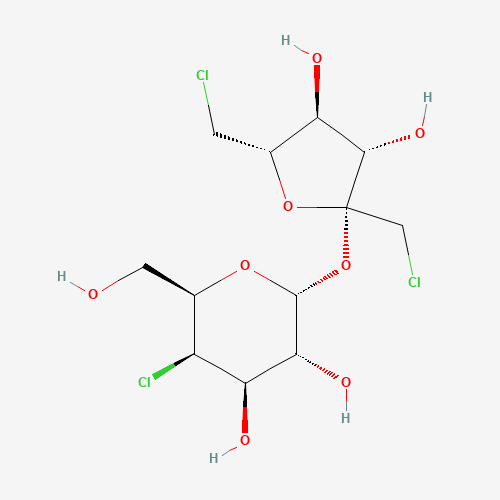
Sucralose is an intense sweetener roughly six hundred times as sweet as sugar and stable enough to be used in baking. It is found in soft drinks, tabletop sweeteners, dairy products and baked goods.
Where it is and isn’t permitted
| Jurisdiction | Status | Scope and limits | Citation |
|---|---|---|---|
| Australia and New Zealand | Permitted, with conditions | 57 food categories highest permitted level 2,500 mg/kg Show every food category
| Food Standards Code, Schedule 15, S15—5and 56 further provisionsretrieved 2026-10-17 |
| Canada | Permitted, with conditions | highest permitted level 2,000 mg/kg 20 permitted uses Show every permitted use
| Health Canada, List of Permitted Sweeteners (List 9)and 19 further provisionsretrieved 2026-10-17 |
| European Union | Permitted, with conditions | 36 food categories highest permitted level 1,200 mg/l Show every food category
| Regulation (EC) No 1333/2008and 35 further provisionsretrieved 2026-10-18 |
| Great Britain | Permitted, with conditions | 34 food categories highest permitted level 800 mg/kg or mg/l Show every food category
| Assimilated Regulation (EC) No 1333/2008and 33 further provisionsretrieved 2026-10-18 |
| Japan | Permitted, with conditions | Designated additive: Appended Table 1, item 236, スクラロース(別名トリクロロガラクトスクロース) (“Sucralose (Trichlorogalactosucrose)” in the unofficial English translation). …Designated additive: Appended Table 1, item 236, スクラロース(別名トリクロロガラクトスクロース) (“Sucralose (Trichlorogalactosucrose)” in the unofficial English translation). Standards for use — Specifications and Standards for Foods, Food Additives, etc. (MHW Notification No. 370 of 1959), Part II (Food Additives), F (Standards for use), entry スクラロース: (1) [sets maximum levels of use for the foods stated; states an exception to the preceding sentence] “スクラロースの使用量は、生菓子及び菓子にあってはその1kgにつき1.8g以下(チューインガムにあってはその1kgにつき2.6g以下)、ジャムにあってはその1kgにつき1.0g以下、清酒、合成清酒、果実酒、雑酒、清涼飲料水、乳飲料及び乳酸菌飲料(希釈して飲用に供する飲料水にあっては希釈後の飲料水)にあってはその1kgにつき0.40g以下、砂糖代替食品(コーヒー、紅茶等に直接加え、砂糖に代替する食品として用いられるものをいう。)にあってはその1kgにつき12g以下、その他の食品にあってはその1kgにつき0.58g以下でなければならない。ただし、特別用途表示の許可又は承認を受けた場合は、この限りでない。” The Japanese is the standard as published. There is no official English translation of the Notification; the English in square brackets is this site’s description of what each sentence does, not a translation of the foods or the levels. Compositional specifications for this additive, in the same Notification, are not imported and are not shown here; nor are the general rules in F 添加物一般, which apply to every additive. | Regulations for Enforcement of the Food Sanitation Act (MHW Ordinance No. 23 of 1948), Appended Table 1retrieved 2026-10-18 |
| South Korea | Permitted, with conditions | Designated food additive: Standards and Specifications for Food Additives, Part III, 1. …Designated food additive: Standards and Specifications for Food Additives, Part III, 1. 일반식품첨가물 (general food additives), 수크랄로스 (“Sucralose”, the English the Code prints beside it). Main use (주용도) of 수크랄로스: 감미료. Standard for use (사용기준) of 수크랄로스: (1) [may be used only in the foods listed; sets a limit on the amount used] “수크랄로스는 아래의 식품에 한하여 사용하여야 한다. 수크랄로스의 사용량은 1. 과자 : 1.8g/kg 이하 2. 추잉껌 : 2.6g/kg 이하 3. 잼류 : 0.4g/kg 이하 4. 음료류, 가공유, 발효유류 : 0.40g/kg 이하(다만, 희석하여 음용하는 제품에 있어서는 희석한 것으로서) 5. 설탕대체식품 : 12g/kg 이하 6. 시리얼류 : 1.0g/kg 이하 7. 특수의료용도식품 : 0.4g/kg 이하 8. 체중조절용 조제식품 : 0.32g/kg 이하 9. 건강기능식품 : 1.25g/kg 이하 10. 상기 식품을 제외한 식품 : 0.58g/kg 이하” The Korean is the standard as published. There is no official English translation of the current Code (the English version on MFDS’s website is the 2020 edition and has no legal effect); the English in square brackets is this site’s description of what each sentence does, not a translation of the foods or the levels. Compositional specifications (Part IV) are not imported, nor are the general standards in Part II, which apply to every additive. | Standards and Specifications for Food Additives (식품첨가물의 기준 및 규격), MFDS Notification, Part III (Standards for use, by item)retrieved 2026-10-18 |
| United States | Permitted, with conditions | 21 CFR 172.831retrieved 2026-10-17 | |
| Codex Alimentarius | Permitted, with conditions | 62 food categories highest permitted level 5,000 mg/kg Show every food category and its notes
| CXS 192-1995 Table One, INS 955and 61 further provisionsretrieved 2026-09-07 |
How much is permitted
A listing usually limits the quantity as well as the food. Only one of the forms that takes is a figure: quantum satis and good manufacturing practice permit the amount the technological effect requires and no more, which is a limit rather than the absence of one. Figures below are the range across every food category this page is listed in, and categories differ between regulators — see how much is permitted.
| Australia and New Zealand | 250 mg/kg – 2,500 mg/kg | 2 numeric limit, 55 GMP |
|---|---|---|
| Canada | 150 mg/kg – 25,000 mg/kg | 18 numeric limit, 1 GMP, 1 no quantity stated |
| European Union | 45 mg/kg – 1,200 mg/kg | 33 numeric limit, 3 quantum satis |
| Great Britain | 45 mg/kg – 800 mg/kg | 25 numeric limit, 6 several limits, 3 quantum satis |
| Japan | — | 1 no quantity stated |
| South Korea | — | 1 no quantity stated |
| United States | — | 1 no quantity stated |
| Codex Alimentarius | 120 mg/kg – 5,000 mg/kg | 61 numeric limit, 1 GMP |
What a label must say
Words a food containing Sucralose is obliged to carry, quoted from the instrument that imposes them. A required statement is a fact about the regulation, not a finding about the substance — every rule below applies where the additive is authorised.
‘with sweetener(s)’, or ‘with sugar(s) and sweetener(s)’ where the food also contains added sugar. The statement accompanies the name of the food.
Any food containing an authorised sweetener. Regulation (EU) No 1169/2011, Annex III, points 2.1 and 2.2 · Assimilated Regulation (EU) No 1169/2011, Annex III
Every rule collected at what a label must say.
What it is made from
Made from sucrose by selectively replacing three hydroxyl groups with chlorine atoms. It therefore starts from ordinary cane or beet sugar but is not itself a sugar, and most of it passes through the body unabsorbed.
- Vegan
- Vegetarian
Compare other additives on the dietary indexes.
- CAS registry number
- 56038-13-2
- InChIKey
- BAQAVOSOZGMPRM-QBMZZYIRSA-N
- PubChem
- CID 71485
The two specifications, compared
The European Union sets identity and purity by regulation; JECFA publishes its own through FAO, advisory until a country adopts it. Both documents are below in full. These are the parameters each puts a number on.
| Parameter | European Union | JECFA |
|---|---|---|
| Assay | no less than 98 % | no less than 98 % |
| Sulphated ash | no more than 0.7 % | no more than 0.7 % |
| Lead | no more than 1 mg/kg | no more than 1 mg/kg |
The two documents state the same figures for every parameter compared here.
How the EU defines it
The legal specification an additive must meet to be sold as this E number in the EU — what it is, how it may be made, and the purity it must reach. From Commission Regulation (EU) No 231/2012.
E 955 Sucralose
Synonyms: 4,1’,6’-Trichlorogalactosucrose
Assay, identification and purity criteria
Description and assay
- Einecs
- 259-952-2
- Chemical name
- 1,6-Dichloro-1,6-dideoxy-β-D-fructofuranosyl-4-chloro-4-deoxy-α-D-galactopyranoside
- Chemical formula
- C₁₂H₁₉Cl₃O₈
- Molecular weight
- 397,64
- Assay
- Content not less than 98 % and not more than 102 % C₁₂H₁₉Cl₃O₈ calculated on an anhydrous basis.
- Description
- White to off-white, practically odourless, crystalline powder.
Identification
- Solubility
- Freely soluble in water, methanol and ethanol Slightly soluble in ethyl acetate
- Infrared absorption spectrum
- The infrared spectrum of a potassium bromide dispersion of the sample exhibits relative maxima at similar wave numbers as those shown in the reference spectrum obtained using a sucralose reference standard.
- Thin layer chromatography
- The main spot in the test solution has the same Rf value as that of the main spot of standard solution A referred to in the test for other chlorinated disaccharides. This standard solution is obtained by dissolving 1,0g of sucralose reference standard in 10 ml of methanol.
- Specific rotation
- [α]D ²⁰ + 84,0° to + 87,5° calculated on the anhydrous basis (10 % w/v solution)
Purity criteria
- Water content
- Not more than 2,0 % (Karl Fischer method)
- Sulphated ash
- Not more than 0,7 %
- Other chlorinated disaccharides
- Not more than 0,5 %
- Chlorinated monosaccharides
- Not more than 0,1 %
- Triphenylphosphine oxide
- Not more than 150 mg/kg
- Methanol
- Not more than 0,1 %
- Lead
- Not more than 1 mg/kg
How JECFA defines it
The international specification for identity and purity, prepared by the Joint FAO/WHO Expert Committee on Food Additives and published by FAO. It is a different document from any above, written by a different body and revised on its own cycle; it is advisory, and a country adopts it or does not.
INS 955 Sucralose
Synonyms: 4,1',6'-trichlorogalactosucrose; INS No. 955
Assay, identification and purity criteria
Description and assay
- Specification history
- Prepared at the 41st JECFA (1993), published in FNP 52 Add 2 (1993). Metals and arsenic specifications revised at the 63rd JECFA (2004). An ADI of 0-15 mg/kg bw was established at the 37th JECFA (1990)
- Chemical names
- 1,6-Dichloro-1,6-dideoxy-ß-D-fructofuranosyl-4-chloro-4-deoxy-alpha-D-galactopyranoside
- C.A.S. number
- 56038-13-2
- Chemical formula
- C 12 H 19 Cl 3 O 8
- Formula weight
- 397.64
- Assay
- Not less than 98% and not more than 102% calculated on an anhydrous basis
- DESCRIPTION
- White to off-white, practically odourless crystalline powder
- FUNCTIONAL USES
- Sweetener
- METHOD OF ASSAY
- Chromatographic system: Fit a high pressure liquid chromatograph, operated at room temperature, with a radial compression module containing a 10 cm 5 μm C 18 reverse phase column. The mobile phase is maintained at a pressure and flow rate (typically 1.5 ml/min) capable of giving the required elution time (see System Suitability Test). An ultraviolet detector that monitors absorption at 190 nm, or a refractive index detector, is used. Mobile Phase: Add 150 ml of acetonitrile (HPLC grade, far UV, filtered through a 0.45 μm Millipore filter or equivalent) to 850 ml of water (glass distilled, filtered through a 0.45 μm Millipore filter or equivalent). Mix and de-gas thoroughly. Standard Solution: Weigh accurately about 250 mg of sucralose Reference Standard into a 25 ml volumetric flask. Dissolve and make up to volume using the Mobile Phase. Filter the solution through a 0.45 μm Millipore filter or equivalent. Record the weight of Reference Standard as W s . Test solution: Weigh accurately about 250 mg of sample into a 25 ml volumetric flask. Dissolve and make up to volume using the mobile phase. Filter the solution through a 0.45 μm Millipore filter or equivalent. Record the weight of sample as W t . System Suitability Test: Inject duplicate 20 μl portions of Standard Solution into the chromatograph. The retention time of the sucralose should be approximately 9 min. (NOTE: The retention time quoted is appropriate for a 10 cm 5 μm Rad-Pak C 18 column. If a column of a different make or length is used it may be necessary to adjust the proportion of acetonitrile in the eluent to obtain the required retention time). The co-efficient of variation (100 x standard deviation divided by mean peak area) for the peak areas should not exceed 2%. Procedure: Analyse the Test Solution under the conditions described above, making duplicate 20 μl injections, and calculate the mean peak area. Calculate the percentage purity from the relative peak areas of the Test (A t ) and Standard (A s ) Solutions according to the following formula: Calculate the percentage purity on a water-free and methanol-free basis using the values obtained in the tests for water and methanol.
Identification
- Solubility (Vol. 4)
- Freely soluble in water, methanol and ethanol; slightly soluble in ethyl acetate
- Infrared absorption
- The infrared spectrum of a potassium bromide dispersion of the sample corresponds with the reference infrared spectrum in the Appendix
- Thin layer chromatography (Vol. 4)
- The main spot in the test solution has the same R f value as that of the main spot of Standard Solution A obtained in the test for Other chlorinated disaccharides.
Purity criteria
- Water (Vol. 4)
- Not more than 2.0% (Karl Fischer Method)
- Specific rotation (Vol. 4)
- [alpha] 20, D: Between +84.0 and +87.5 o (10% w/v solution)
- Sulfated ash (Vol. 4)
- Not more than 0.7%
- Other chlorinated disaccharides
- Passes test See description under TESTS
- Chlorinated monosaccharides
- Passes test See description under TESTS
- Triphenylphosphine oxide
- Not more than 150 mg/kg See description under TESTS
- Methanol
- Not more than 0.1% See description under TESTS
- Lead (Vol. 4)
- Not more than 1 mg/kg Determine using an atomic absorption technique appropriate to the specified level. The selection of sample size and method of sample preparation may be based on the principles of the method described in Volume 4, “Instrumental Methods.”
- Test: Other chlorinated disaccharides
- TLC Plates: Use reverse phase Thin-layer chromatography plates coated with 0.20 mm layer of silica gel absorbent (e.g., Whatman LKC 18 ). Mobile Phase: Mix 7 volumes of a 5.0% w/v aqueous solution of sodium chloride and 3 volumes of acetonitrile. Spray Reagent: Use 15% v/v solution of concentrated sulfuric acid in methanol. Standard Solutions: Dissolve 1.0 g of sucralose Reference Standard (available e.g. from Tate & Lyle Speciality Sweeteners, PO Box 68 Whiteknights, Reading, RG6 2 BX, United Kingdom) in 10 ml of methanol (Solution A). Dilute 0.5 ml of Solution A with methanol to 100 ml (Solution B). Test Solution: Dissolve 1.0 g of sample in 10 ml of methanol Procedure Apply 5 μl each of Solution A, Solution B and Test Solution to the bottom of the chromatographic plate. Place the plate in a suitable chromatography chamber containing freshly prepared Mobile Phase and allow the solvent front to ascend 15 cm. Remove the plate from the chamber, allow it to dry and spray with Spray Reagent. Heat the plate in an oven at 125 o for 10 min. The main spot in the Test Solution has the same R f value as the main spot in Solution A and no other spot in the Test Solution is more intense than the 0.5% spot in Solution B.
- Test: Chlorinated monosaccharides
- TLC plates: Use a thin-layer chromatography plate coated with a 0.25 mm thickness of Merck-silica gel 60 or equivalent. Spray Reagent: Dissolve 1.23 g p-anisidine and 1.66 g phthalic acid in 100 ml methanol. Store the solution in darkness and refrigerate to prevent it becoming decolourised. Discard if solution becomes discoloured. (Note: p-anisidine is toxic by skin absorption and inhalation and should be used with due caution). Standard Solution A: Dissolve 10.0 g of mannitol, weighed to 0.001 g, in water in a 100 ml volumetric flask, and dilute to volume with water. Standard Solution B: Dissolve 10 g of mannitol and 40 mg of fructose (Analar grade) in 25 ml of water in a 100 ml volumetric flask and make up to volume with water. Sample Solution: Dissolve 2.5 g of sample in 5 ml of methanol in a 10 ml volumetric flask and make up to volume with methanol. Procedure: Spot 5 μl of each of Standard Solutions A and B onto the TLC plate applying the solution slowly in 1 μl aliquots and allowing the plate to dry between applications. Spot 5 μl of the Sample Solution onto the plate in a similar manner. The three spots should be of similar size. Spray the plate with Spray Reagent and heat at 100 ± 2 o for 15 min. Immediately after heating, view the plate against a dark background. The spot from the Sample Solution is not more coloured than the spot from Solution B (equivalent to a limit of 0.1% maximum total chlorinated monosaccharides). (Darkening of the mannitol spot from Standard Solution A indicates that the plate has been held too long in the oven, and a second plate should be prepared.)
- Test: Triphenylphosphine oxide
- Chromatographic system: Typically a high pressure liquid chromatograph, operated at room temperature, is fitted with a radial compression module containing a 5 μm C 18 Rad Pak reverse phase column (10 cm x 8 mm). The mobile phase is maintained at a pressure and flow rate (typically 1.5 ml/min) capable of giving the required elution time. The chromatograph is equipped with a UV detector (220 nm). Mobile Phase: Add 67 volumes of acetonitrile (HPLC grade, far UV, filtered through a 0.45 μm Millipore filter or equivalent) to 33 volumes of water (glass distilled, filtered through a 0.45 μm Millipore filter or equivalent). Mix and de-gas thoroughly. Standard Solution: Weigh accurately 100 mg of triphenylphosphine oxide into a 10 ml volumetric flask. Dissolve and make up to volume using the Mobile Phase. Take 1.0 ml of the resulting solution and make up to 100 ml with Mobile Phase. From this solution prepare a further 100-fold dilution with Mobile Phase and use this as the Standard Solution. Filter through a 0.45 μm Millipore filter or equivalent. Test Solution: Weigh accurately about 100 mg of sample into a 10 ml volumetric flask. Dissolve and make up to volume with Mobile Phase. Filter through a 0.45 μm Millipore filter or equivalent. Record the weight of sample as W t mg. Procedure: Inject duplicate 25 μl portions of the Standard and Test Solutions into the chromatograph. Under the conditions stated above the retention time for triphenylphosphine oxide is 6 min. Record the mean peak areas for the Standard and Test Solutions as A s and A t respectively. Calculate the concentration of triphenylphosphine oxide (TPPO) in the sample from the following formula:
- Test: Methanol
- Apparatus: Use a suitable gas chromatograph equipped with a hydrogen flame ionization detector containing a 2.1 m x 4.0 mm (id) glass column packed with Porapak PS 80-100 mesh or equivalent materials. Operating conditions: The operating conditions may vary depending upon the particular instrument used but a suitable chromatogram may be obtained by using the following conditions: - Column temperature: 150 o (isothermal) - Inlet temperature: 200 o - Detector temperature: 250 o - Carrier gas nitrogen:20 ml/min Standard Solution: Using a 2.0-ml class A volumetric pipet, pipet 2.0 ml of methanol into a 100-ml volumetric flask, dilute to volume with pyridine, and mix. Transfer 1.0 ml of this solution to a 100-ml volumetric flask, dilute to volume with pyridine, and mix. Sample Solution: Weigh accurately about 2 g of the sample into a 10-ml volumetric flask, dilute to volume with pyridine, and mix. Procedure: Inject a 1-μl portion of the Standard Solution onto a gas chromatography column, obtain the chromatogram, and measure the area of the peak produced. The relative standard deviation for replicate injections is not more than 2.0%. Calculate the mean peak areas for the Standard Solution. Similarly, inject a 1-μl portion of the Sample Solution into the gas chromatograph, and measure the areas of the peaks produced by methanol. Calculate the mean peak areas, and determine the methanol concentration using the following formula: where S A = the sample area C S = the concentration of methanol in the standard in percent (volume of methanol X dilution factor X density of solvent equals 2 X 10 -4 X 0.79 X 100) V S = the volume of the Sample Solution A S = the standard area W S = the weight of the sample
- Test: Infrared spectrum
- Sucralose
Every name it appears under
69 recorded names. A label may use any of them.
E number
- E955
INS number
- 955
CAS registry number
- 56038-13-2
As it appears in regulation
- Sucralose
Other names
- (2R,3R,4R,5R,6R)-2-[(2R,3S,4S,5S)-2,5-bis(chloromethyl)-3,4-dihydroxyoxolan-2-yl]oxy-5-chloro-6-(hydroxymethyl)oxane-3,4-diol
- 1',4',6'-trichloro-1',4,6'-trideoxygalactosucrose
- 1',4',6'-TRICHLORO-GALACTOSUCROSE
- 1',4,6'-Trichlorogalactosucrose
- 1,6-dichloro-1,6-dideoxy-beta-d-fructofuranosyl4-chloro-4-deoxy-alpha-d-gala
- 4,1',6'-Trichloro-4,1',6'-trideoxy-galacto-sucrose
- 4,1',6'-trichlorogalactosucrose
- 4,1’,6’-Trichlorogalactosucrose
- Acucar Light
- alpha-D-Galactopyranoside, 1,6-dichloro-1,6-dideoxy-beta-D-fructofuranosyl 4-chl
- Aspasvit
- BAQAVOSOZGMPRM-QBMZZYIRSA-N
- BRN 3654410
- CCRIS 8449
- E 955
- E955;Trichlorosucrose
- HSDB 7964
- INS NO.955
- INS-955
- San sweet sa 8020
- Sansweet su 100
- Splenda
- Sucralose
- SUCRALOSE (TRICHLOROGALACTOSUCROSE)
- Sucralose 1000 microg/mL in Acetonitrile
- Sucralose 1000 |Ig/mL in Acetonitrile
- Sucralose CRS
- Sucralose, >=98.0% (HPLC)
- Sucralose, analytical standard
- Sucralose, European Pharmacopoeia (EP) Reference Standard
- Sucralose, Pharmaceutical Secondary Standard; Certified Reference Material
- Sucralose, United States Pharmacopeia (USP) Reference Standard
- Sucrazit
- Trichlorogalacto-sucrose
- Trichlorogalactosucrose
- Trichlorosucrose
Systematic names
- (2R,3R,4R,5R,6R)-2-(((2R,3S,4S,5S)-2,5-Bis(chloromethyl)-3,4-dihydroxytetrahydrofuran-2-yl)oxy)-5-chloro-6-(hydroxymethyl)tetrahydro-2H-pyran-3,4-diol
- (2R,3R,4R,5R,6R)-2-[(2R,3S,4S,5S)-2,5-bis(chloromethyl)-3,4-dihydroxy-tetrahydrofuran-2-yl]oxy-5-chloro-6-(hydroxymethyl)tetrahydropyran-3,4-diol
- (2R,3R,4R,5R,6R)-2-[(2R,3S,4S,5S)-2,5-bis(chloromethyl)-3,4-dihydroxyoxolan-2-yl]oxy-5-chloro-6-(hydroxymethyl)oxane-3,4-diol
- .alpha.-D-Galactopyranoside, 1,6-dichloro-1,6-dideoxy-.beta.-D-fructofuranosyl 4-chloro-4-deoxy-
- 1,6-dichloro-1,6-dideoxy-.beta.-d-fructofuranosyl-4-chloro-4-deoxy-.alpha.-d-galactopyranoside
- 1,6-Dichloro-1,6-dideoxy-b-D-fructofuranosyl-4-chloro-4-deoxy-a-D-galactopyranoside
- 1,6-dichloro-1,6-dideoxy-beta-D-fructofuranosyl 4-chloro-4-deoxy-alpha-D-galactopyranoside
- 1,6-Dichloro-1,6-dideoxy-beta-D-fructofuranosyl 4-chloro-4-deoxy-alpha-D-galactose
- 1,6-Dichloro-1,6-dideoxy-beta-D-fructofuranosyl-4-chloro-4-deoxy-alpha-D-galactopyranoside
- 1,6-Dichloro-1,6-dideoxy-|A-D-fructofuranosyl 4-chloro-4-deoxy-|A-D-galactopyranoside
- 1,6-Dichloro-1,6-dideoxy-|A-D-fructofuranosyl-4-chloro-4-deoxy-|A-D-galactopyranoside; E955; Trichlorosucrose
- 1-(1,6-Dichloro-1,6-dideoxy-beta-D-fructofuranosyl)-4-chloro-4-deoxy-alpha-D-galactopyranoside
- a-D-Galactopyranoside, 1,6-dichloro-1,6-dideoxy-b-D-fructofuranosyl4-chloro-4-deoxy-
- alpha-D-Galactopyranoside, 1,6-dichloro-1,6-dideoxy-beta-D-fructofuranosyl 4-chloro-4-deoxy-
- Sucralose; 1,6-Dichloro-1,6-dideoxy-beta-d-fructofuranosyl 4-chloro-4-deoxy-alpha-d-galactopyranoside
Hazard reference values
EFSA and JECFA have both set an acceptable daily intake for Sucralose, and they agree: 15 mg/kg bw/day. An acceptable daily intake is a reference value set by a committee, not a threshold above which harm begins. See where the two committees differ.
| Type | Value | Population | Assessed by | Opinion |
|---|---|---|---|---|
| ADI | 15 mg/kg bw/day | — | JECFA | 1990 |
| ADI | 15 mg/kg bw/day | consumers | EFSA | not identified in the dataset |
Evidence and how bodies read it
What assessing bodies concluded
Each conclusion is paraphrased in the body's own framing, from the published opinion linked beneath it. Where bodies differ, both stand; this site does not adjudicate between them or add a view of its own.
EFSA 2026
The FAF Panel found no genotoxicity concern for sucralose (E 955) and saw no need to revise the SCF's ADI of 15 mg/kg bw/day, concluding there is no safety concern at reported uses. It could not conclude on a proposed extension of use in fine bakery wares because of uncertainty about chlorinated compounds formed during baking, and recommended revising the specifications.
Common questions
Assembled from what is above, in the words the questions are usually asked in. Each answer is the same statement the relevant section makes, with the same citations behind it.
- What is E 955?
- E 955 is Sucralose. Sucralose is an intense sweetener roughly six hundred times as sweet as sugar and stable enough to be used in baking. It is found in soft drinks, tabletop sweeteners, dairy products and baked goods.
- What is Sucralose used for in food?
- It is listed as a sweetener — the role Canada, Codex, the EU and the US assign it. This page shows every function each regulator records, with the citation for each.
- Where is Sucralose permitted?
- Of the seven regulators this site reads, Australia and New Zealand, Canada, the EU, Great Britain, Japan, South Korea, the US and the Codex standard permit it. Each permission is for named foods at named levels, not a blanket one; the table on this page gives them with citations.
- Is Sucralose vegan?
- Yes. Sucralose is not derived from animals, and is suitable for vegetarians. This page says what it is made from and how.
Sources for this page
- anz retrieved 2026-10-17
- ca retrieved 2026-10-17
- eu retrieved 2026-10-18
- gb retrieved 2026-10-18
- jp retrieved 2026-10-18
- kr retrieved 2026-10-18
- ecfr retrieved 2026-10-17
- gsfa retrieved 2026-09-07
- euspecs retrieved 2026-10-18
- jecfaspecs retrieved 2026-09-23
Full licence terms and publisher details on Sources. How this page is built and updated: Method.
Machine-readable: a JSON record of this additive is given on request —how to ask for access.
Follow changes to Sucralose:Atom feed — regulatory events, and any change the weekly refresh detects in its provisions.