Tartaric acid
87-69-4 · (+)-(2R,3R)-Tartaric acid · (+)-(R,R)-Tartaric acid · (+)-L-Tartaric acid · (+)-Tartaric acid · (+)-Weinsaeure · (+/-)-Tartaric Acid · (2R,3R)-(+)-Tartaric acid · (2R,3R)-2,3-Dihydroxybernsteinsaeure · (2R,3R)-2,3-dihydroxybutanedioic acid · (2R,3R)-2,3-dihydroxysuccinic acid · (2R,3R)-rel-2,3-Dihydroxysuccinic acid · (2R,3R)-Tartaric acid · (R,R)-(+)-Tartaric acid · (R,R)-Tartaric acid · (R,R)-tartrate · 1,2-Dihydroxyethane-1,2-dicarboxylic acid · 2,3-Dihydroxysuccinic Acid · 28959-58-2 (NH4-Na(1:1:1) salt(R*,R*)-(+-)- · 3095-65-6 (mono-NH4 salt(R-(R*,R*))- · 3164-34-9 (Ca salt (R-R*,R*)- · Acidum tartaricum · BAROS COMPONENT TARTARIC ACID · Butanedioic acid, 2,3-dihydroxy- (2R,3R)- · Butanedioic acid, 2,3-dihydroxy- (R-(R*,R*))- · Butanedioic acid, 2,3-dihydroxy-, (2R,3R)-rel- · d-alpha,beta-Dihydroxysuccinic acid · d-α,β-dihydroxy succinic acid · Dextrotartaric acid · E 334 · FEMA No. 3044 · INS NO.334 · INS-334 · Kyselina 2,3-dihydroxybutandiova [Czech] · Kyselina vinna · L(+)-Tartaric acid · L-(+)-Tartaric acid · L-2,3-dihydroxybutanedioic acid · L-2,3-DIHYDROXYSUCCINIC ACID · L-tartarate · L-tartaric acid · L-threaric acid · Natural tartaric acid · Rechtsweinsaeure · Resolvable tartaric acid · RR-tartaric acid · TARAC · tartaric acid · TARTARIC ACID (EP MONOGRAPH) · TARTARIC ACID (II) · Tartaric acid (L(+)-) · TARTARIC ACID (USP-RS) · Tartaric acid (VAN) · TARTARIC ACID COMPONENT OF BAROS · tartaric acid, (R-(R*,R*))- · tartaric acid, l · Tartaric acid, L- · TARTARICUM ACIDUM · TARTRATES · Threaric acid · Weinsaeure · Weinsteinsaeure · E334 · 334 · (2R,3R)-2,3-Dihydroxysuccinic acid · Tartaric acid · Tartaric acid (L(+)-) · Tartaric acid – tartrates · Tartaric acid – tartrates E 334 – 337 and E 354 · ACID L(+)- TARTRIC, ACID TARTRIC · Acid tartric (L(+)–) · ACIDE L(+)-TARTRIQUE, ACIDE TARTRIQUE · Acide tartrique [L (+)] · Aċidu tartariku (L(+)-) · Borkősav (L(+)-) · Kwas winowy (L(+)-) · KWAS WINOWY L(+), KWAS WINOWY · KYSELINA L-(+)-VÍNNA, KYSELINA VÍNNA · Kyselina vinná (L (+)-) · L(+)-ACIDO TARTARICO, ACIDO TARTARICO · L(+)-AĊIDU TARTARIKU, AĊIDU TARTARIKU · L(+)-BORKŐSAV, BORKŐSAV · L(+)-KYSELINA VINNÁ · L(+)-TARTARIC ACID, TARTARIC ACID · L(+)-VIINHAPE, VIINHAPE · L(+)-VIINIHAPPO, VIINIHAPPO · L(+)-VINSKA KISELINA, VINSKA KISELINA · L(+)-Vinsyra · L(+)-VĪNSKĀBE, VĪNSKĀBE · L(+)-Wijnsteenzuur · L(+)-WIJNSTEENZUUR, WIJNSTEENZUUR · L(+)-ΤΡΥΓΙΚΟ ΟΞΥ, ΤΡΥΓΙΚΟ ΟΞΥ · L(+)-ВИНЕНА КИСЕЛИНА, ВИНЕНА КИСЕЛИНА · Tartaric acid (L(+)-) · Viinhape, L(±) · Viinihappo (L(+)-) · Vinska kiselina (L(+)-) · vinska kislina (L (+) - ) · VINSKA KISLINA (L (+) -), VINSKA KISLINA · VINSYRE (KUN SOM L(+)) · Vinsyre (kun som L(+)–) · VYNO RŪGŠTIS (L(+)-), VYNO RŪGŠTIS · Vyno rūgštis (L(+)-) · Vīnskābe (L(+)-) · Weinsäure (L+) · ÁCIDO L(+)-TARTÁRICO, ÁCIDO TARTÁRICO · Ácido L(+)-tartárico · Ácido tartárico [L(+)–] · Τρυγικό οξύ [L(+)–] · Винена киселина (L(+)-)E number E334INS 334CAS 87-69-4
Listed as an acidity regulator by Canada, Codex and the US.
Listed as acidity regulators (CA, US, Codex) · raising agents (CA, US) · flavour enhancers (US, Codex) · preservatives (CA) · antioxidants (Codex) · humectants (US) · anticaking agents (US) · firming agents (US) · sequestrants (Codex) · flavouring agents and adjuvants (US)
- Canada: Acidity regulator — Health Canada, List of Permitted Acidity Regulators and Acid-Reacting Materials (List 10)
- United States: pH control agent — FDA, Substances Added to Food: TARTARIC ACID, L
- United States: pH control agents — 21 CFR 184.1099, citing 21 CFR 170.3(o)(23)
- Codex Alimentarius: Acidity regulator — CXS 192-1995 Table One, INS 334
- Canada: Acid-reacting material — Health Canada, List of Permitted Acidity Regulators and Acid-Reacting Materials (List 10)
- United States: Leavening agent — FDA, Substances Added to Food: TARTARIC ACID, L
- United States: Flavor enhancer — FDA, Substances Added to Food: TARTARIC ACID, L
- United States: Flavor enhancers — 21 CFR 184.1099, citing 21 CFR 170.3(o)(11)
- Codex Alimentarius: Flavour enhancer — CXS 192-1995 Table One, INS 334
- Canada: Preservative — Health Canada, List of Permitted Preservatives (List 11)
- Codex Alimentarius: Antioxidant — CXS 192-1995 Table One, INS 334
- United States: Humectant — FDA, Substances Added to Food: TARTARIC ACID, L
- United States: Humectants — 21 CFR 184.1099, citing 21 CFR 170.3(o)(16)
- United States: Anticaking agent or free-flow agent — FDA, Substances Added to Food: TARTARIC ACID, L
- United States: Firming agent — FDA, Substances Added to Food: TARTARIC ACID, L
- United States: Firming agents — 21 CFR 184.1099, citing 21 CFR 170.3(o)(10)
- Codex Alimentarius: Sequestrant — CXS 192-1995 Table One, INS 334
- United States: Flavoring agent or adjuvant — FDA, Substances Added to Food: TARTARIC ACID, L
- United States: Flavoring agents and adjuvants — 21 CFR 184.1099, citing 21 CFR 170.3(o)(12)
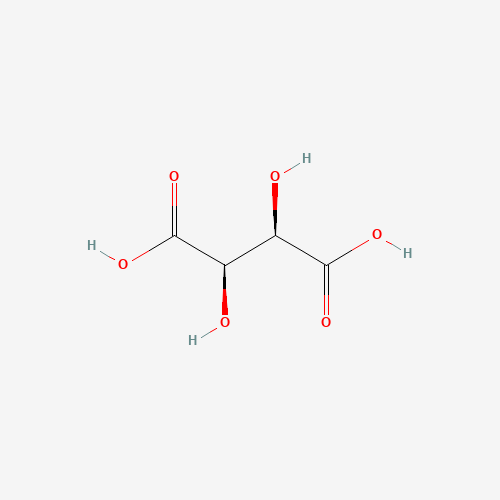
Tartaric acid is the characteristic acid of grapes, used in baking powder, confectionery, soft drinks and jams. It is what gives cream of tartar its name and its function.
Where it is and isn’t permitted
| Jurisdiction | Status | Scope and limits | Citation |
|---|---|---|---|
| Australia and New Zealand | Permitted, with conditions | 57 food categories no numerical limit (good manufacturing practice) Show every food category
| Food Standards Code, Schedule 15, S15—5and 56 further provisionsretrieved 2026-10-17 |
| Canada | Permitted, with conditions | no numerical limit (good manufacturing practice) 13 permitted uses Show every permitted use
| Health Canadaand 12 further provisionsretrieved 2026-10-17 |
| European Union | Permitted, with conditions | 33 food categories highest permitted level 270,000 mg/l Show every food category
| Regulation (EC) No 1333/2008and 32 further provisionsretrieved 2026-10-18 |
| Great Britain | Permitted, with conditions | 76 food categories highest permitted level 5,000 mg/kg or mg/l Show every food category
| Assimilated Regulation (EC) No 1333/2008and 75 further provisionsretrieved 2026-10-18 |
| Japan | Permitted, with conditions | Designated additive: Appended Table 1, item 206, L―酒石酸(別名d―酒石酸) (“L-Tartaric Acid (d-Tartaric Acid)” in the unofficial English translation). …Designated additive: Appended Table 1, item 206, L―酒石酸(別名d―酒石酸) (“L-Tartaric Acid (d-Tartaric Acid)” in the unofficial English translation). Standards for use — Specifications and Standards for Foods, Food Additives, etc. (MHW Notification No. 370 of 1959), Part II (Food Additives), F (Standards for use): The Notification sets no standard for use (使用基準) for this additive, so it is not restricted there to particular foods or amounts. Compositional specifications for this additive, in the same Notification, are not imported and are not shown here; nor are the general rules in F 添加物一般, which apply to every additive. | Regulations for Enforcement of the Food Sanitation Act (MHW Ordinance No. 23 of 1948), Appended Table 1retrieved 2026-10-18 |
| South Korea | Permitted, with conditions | Designated food additive: Standards and Specifications for Food Additives, Part III, 1. …Designated food additive: Standards and Specifications for Food Additives, Part III, 1. 일반식품첨가물 (general food additives), L-주석산 (“L-Tartaric Acid”, the English the Code prints beside it). Main use (주용도) of L-주석산: 산도조절제. Standard for use (사용기준) of L-주석산: (1) [to be used under the general standard for use in II. 2. 1), the minimum amount that achieves the technical effect, with no limit set for this additive in particular] “II. 2. 1)의 규정에 따라 사용하여야 한다.” The Korean is the standard as published. There is no official English translation of the current Code (the English version on MFDS’s website is the 2020 edition and has no legal effect); the English in square brackets is this site’s description of what each sentence does, not a translation of the foods or the levels. Compositional specifications (Part IV) are not imported, nor are the general standards in Part II, which apply to every additive. | Standards and Specifications for Food Additives (식품첨가물의 기준 및 규격), MFDS Notification, Part III (Standards for use, by item)retrieved 2026-10-18 |
| United States | Permitted | 21 CFR 184.1099retrieved 2026-10-17 | |
| Codex Alimentarius | Permitted, with conditions | 63 food categories highest permitted level 30,000 mg/kg Show every food category and its notes
| CXS 192-1995 Table One, INS 334and 62 further provisionsretrieved 2026-09-07 |
How much is permitted
A listing usually limits the quantity as well as the food. Only one of the forms that takes is a figure: quantum satis and good manufacturing practice permit the amount the technological effect requires and no more, which is a limit rather than the absence of one. Figures below are the range across every food category this page is listed in, and categories differ between regulators — see how much is permitted.
| Australia and New Zealand | — | 57 GMP |
|---|---|---|
| Canada | — | 12 GMP, 1 no quantity stated |
| European Union | 240 mg/kg – 270,000 mg/kg | 32 numeric limit, 1 quantum satis |
| Great Britain | 5,000 mg/kg | 2 numeric limit, 74 quantum satis |
| Japan | — | 1 no quantity stated |
| South Korea | — | 1 no quantity stated |
| United States | — | 1 no quantity stated |
| Codex Alimentarius | 100 mg/kg – 30,000 mg/kg | 62 numeric limit, 1 GMP |
What it is made from
Recovered from the deposits left in wine barrels and from grape pomace, by-products of winemaking.
- Vegan
- Vegetarian
Compare other additives on the dietary indexes.
- CAS registry number
- 87-69-4
- InChIKey
- FEWJPZIEWOKRBE-JCYAYHJZSA-N
- PubChem
- CID 444305
The two specifications, compared
The European Union sets identity and purity by regulation; JECFA publishes its own through FAO, advisory until a country adopts it. Both documents are below in full. These are the parameters each puts a number on.
| Parameter | European Union | JECFA |
|---|---|---|
| Assay | no less than 99.5 % | — |
| Loss on drying | no more than 0.5 % | — |
| Sulphated ash | no more than 1,000 mg/kg | no more than 0.1 % |
| Lead | no more than 2 mg/kg | no more than 2 mg/kg |
| Mercury | no more than 1 mg/kg | — |
The two documents state the same figures for every parameter compared here.
How the EU defines it
The legal specification an additive must meet to be sold as this E number in the EU — what it is, how it may be made, and the purity it must reach. From Commission Regulation (EU) No 231/2012.
E 334 L(+)-tartaric acid, tartaric acid
Assay, identification and purity criteria
Description and assay
- Einecs
- 201-766-0
- Chemical name
- L-tartaric acid; L-2,3-dihydroxybutanedioic acid; d-α,β-dihydroxysuccinic acid
- Chemical formula
- C₄H₆O₆
- Molecular weight
- 150,09
- Assay
- Content not less than 99,5 % on the anhydrous basis
- Description
- Colourless or translucent crystalline solid or white crystalline powder
Identification
- Melting range
- Between 168 °C and 170 °C
- Test for tartrate
- Passes test
- Specific rotation
- [α]D ²⁰ between + 11,5° and + 13,5° (20 % w/v aqueous solution)
Purity criteria
- Loss on drying
- Not more than 0,5 % (over P₂O₅, 3 hours)
- Sulphated ash
- Not more than 1 000 mg/kg (after calcination at 800 ± 25 °C)
- Lead
- Not more than 2 mg/kg
- Mercury
- Not more than 1 mg/kg
- Oxalates
- Not more than 100 mg/kg expressed as oxalic acid, after drying
How JECFA defines it
The international specification for identity and purity, prepared by the Joint FAO/WHO Expert Committee on Food Additives and published by FAO. It is a different document from any above, written by a different body and revised on its own cycle; it is advisory, and a country adopts it or does not.
INS 334 L(+)-Tartaric Acid
Assay, identification and purity criteria
Description and assay
- Specification history
- Prepared at the 53rd JECFA (1999) and published in FNP 52 Add 7 (1999), superseding specifications prepared at the 21st JECFA (1977), published in NMRS 57 (1977) and in FNP 52 (1992). An ADI of 0-30 mg/kg bw was established at the 17th JECFA (1973) and reconfirmed at the 21st JECFA (1977)
- SYNONYMS DEFINITION Chemical names
- INS No. 334 L-Tartaric acid, L-2,3-dihydroxybutanedioic acid, L-2,3-dihydroxysuccinic acid
- C.A.S. number Chemical formula Structural formula
- 87-69-4 C 4 H 6 O 6
- Formula weight Assay DESCRIPTION
- 150.09 Not less than 99.5% on the dried basis Colourless or translucent crystals, or white, fine to granular, crystalline powder; odourless
- FUNCTIONAL USES Solubility (Vol. 4) Specific rotation (Vol. 4 Test for tartrate (Vol. 4) Loss on drying (Vol. 4) Specific rotation (Vol. 4)
- Synergist for antioxidants, acid, sequestrant, flavouring agent Very soluble in water; freely soluble in ethanol A 1 in 10 solution is dextrorotatory Passes test Not more than 0.5% (over P 2 O 5 , 3 h) [alpha] 20, D: Between +11.5 o and +13.5 o
- METHOD OF ASSAY
- Weigh accurately about 2 g of the dried sample, dissolve in 40 ml of water, add phenolphthalein TS, and titrate with 1 N sodium hydroxide. Each ml of 1 N sodium hydroxide is equivalent to 75.04 mg of C 4 H 6 O 6 .
Purity criteria
- Sulfated ash (Vol. 4)
- Not more than 0.1% Test 2 g of the sample (Method I)
- Sulfates (Vol. 4)
- Not more than 0.05% 0.4 g of the sample meets the requirements of the Limit Test using 0.2 mg of sulfate ion (SO 4 ) in the control
- Oxalate
- Nearly neutralize 10 ml of a 1 in 10 solution of the sample with ammonia TS, and add 10 ml of calcium sulfate TS. No turbidity is produced
- Lead (Vol. 4)
- Not more than 2 mg/kg Determine using an atomic absorption technique appropriate to the specified level. The selection of sample size and method of sample preparation may be based on the principles of the method described in Volume 4, “Instrumental Methods.”
Authorised in other additives, enzymes, flavourings and nutrients
These authorisations are not for use in food. They let this substance be used inside another additive, a food enzyme, a flavouring or a nutrient preparation — often as a carrier — and it reaches food only as part of that product. Annex III to Regulation (EC) No 1333/2008.
| Part | May be used in | Maximum level | Citation |
|---|---|---|---|
| Annex III, Part 2: Food additives other than carriers in food additives | E 440 Pectins used in food category 05.2 (Other confectionery including breath freshening microsweets) and food category 05.4 (Decorations, coatings and fillings, except fruit-based fillings covered by category 4.2.4)Authorised as a member of Table 8 of Part 6 (Tartaric acid – tartrates), listed as "E 334–337 and E 354 Tartaric acid – tartrates (Table 8 of Part 6)" Note (1): Except enzymes authorised as food additives. | 220 000 mg/kg singly or in combination in the preparation and 11 000 mg/kg in the final product expressed as the free acid | Regulation (EC) No 1333/2008, Annex III, Part 2, via Table 8 of Part 6 |
| Annex III, Part 4: Food additives including carriers in food flavourings | All flavouringsAuthorised as a member of Table 8 of Part 6 (Tartaric acid – tartrates), listed as "E 334–337 and E 354 Tartaric acid – tartrates (Table 8 of Part 6)" | 20 000 mg/kg singly or in combination in the flavouring and 400 mg/kg in the final product expressed as the free acid | Regulation (EC) No 1333/2008, Annex III, Part 4, via Table 8 of Part 6 |
| Annex III, Part 5, Section A: Food additives added in nutrients except in nutrients intended to be used in foodstuffs listed in Part E, point 01.10, of Annex II and foodstuffs for infants and young children listed in Part E, point 13.1, of Annex II | All nutrientsAuthorised as a member of Table 8 of Part 6 (Tartaric acid – tartrates), listed as "E 334–337 and E 354 Tartaric acid – tartrates (Table 8 of Part 6)" | 1 000 mg/kg singly or in combination in the nutrient preparation | Regulation (EC) No 1333/2008, Annex III, Part 5, Section A, via Table 8 of Part 6 |
Every name it appears under
110 recorded names. A label may use any of them.
E number
- E334
INS number
- 334
CAS registry number
- 87-69-4
As it appears in regulation
- Tartaric acid
- Tartaric acid (L(+)-)
- Tartaric acid – tartrates
- Tartaric acid – tartrates E 334 – 337 and E 354
Other names
- (+)-(2R,3R)-Tartaric acid
- (+)-(R,R)-Tartaric acid
- (+)-L-Tartaric acid
- (+)-Tartaric acid
- (+)-Weinsaeure
- (+/-)-Tartaric Acid
- (2R,3R)-(+)-Tartaric acid
- (2R,3R)-2,3-Dihydroxybernsteinsaeure
- (2R,3R)-2,3-dihydroxybutanedioic acid
- (2R,3R)-2,3-dihydroxysuccinic acid
- (2R,3R)-rel-2,3-Dihydroxysuccinic acid
- (2R,3R)-Tartaric acid
- (R,R)-(+)-Tartaric acid
- (R,R)-Tartaric acid
- (R,R)-tartrate
- 1,2-Dihydroxyethane-1,2-dicarboxylic acid
- 2,3-Dihydroxysuccinic Acid
- 28959-58-2 (NH4-Na(1:1:1) salt(R*,R*)-(+-)-
- 3095-65-6 (mono-NH4 salt(R-(R*,R*))-
- 3164-34-9 (Ca salt (R-R*,R*)-
- Acidum tartaricum
- BAROS COMPONENT TARTARIC ACID
- Butanedioic acid, 2,3-dihydroxy- (2R,3R)-
- Butanedioic acid, 2,3-dihydroxy- (R-(R*,R*))-
- Butanedioic acid, 2,3-dihydroxy-, (2R,3R)-rel-
- d-alpha,beta-Dihydroxysuccinic acid
- d-α,β-dihydroxy succinic acid
- Dextrotartaric acid
- E 334
- FEMA No. 3044
- INS NO.334
- INS-334
- Kyselina 2,3-dihydroxybutandiova [Czech]
- Kyselina vinna
- L(+)-Tartaric acid
- L-(+)-Tartaric acid
- L-2,3-dihydroxybutanedioic acid
- L-2,3-DIHYDROXYSUCCINIC ACID
- L-tartarate
- L-tartaric acid
- L-threaric acid
- Natural tartaric acid
- Rechtsweinsaeure
- Resolvable tartaric acid
- RR-tartaric acid
- TARAC
- tartaric acid
- TARTARIC ACID (EP MONOGRAPH)
- TARTARIC ACID (II)
- Tartaric acid (L(+)-)
- TARTARIC ACID (USP-RS)
- Tartaric acid (VAN)
- TARTARIC ACID COMPONENT OF BAROS
- tartaric acid, (R-(R*,R*))-
- tartaric acid, l
- Tartaric acid, L-
- TARTARICUM ACIDUM
- TARTRATES
- Threaric acid
- Weinsaeure
- Weinsteinsaeure
Systematic names
- (2R,3R)-2,3-Dihydroxysuccinic acid
Hazard reference values
No reference value for this substance in the sources we hold.
Evidence and how bodies read it
What assessing bodies concluded
Each conclusion is paraphrased in the body's own framing, from the published opinion linked beneath it. Where bodies differ, both stand; this site does not adjudicate between them or add a view of its own.
EFSA 2020
The FAF Panel found no genotoxic or carcinogenic potential for L(+)-tartaric acid and tartrates (E 334–E 337, E 354) and, using a chemical-specific uncertainty factor based on lower internal exposure in humans than rats, established a group ADI of 240 mg/kg bw/day expressed as tartaric acid (the SCF had set 30 mg/kg bw/day). Refined exposure estimates did not exceed the group ADI.
Common questions
Assembled from what is above, in the words the questions are usually asked in. Each answer is the same statement the relevant section makes, with the same citations behind it.
- What is E 334?
- E 334 is Tartaric acid. Tartaric acid is the characteristic acid of grapes, used in baking powder, confectionery, soft drinks and jams. It is what gives cream of tartar its name and its function.
- What is Tartaric acid used for in food?
- It is listed as an acidity regulator — the role Canada, Codex and the US assign it. This page shows every function each regulator records, with the citation for each.
- Where is Tartaric acid permitted?
- Of the seven regulators this site reads, Australia and New Zealand, Canada, the EU, Great Britain, Japan, South Korea, the US and the Codex standard permit it. Each permission is for named foods at named levels, not a blanket one; the table on this page gives them with citations.
- Is Tartaric acid vegan?
- Yes. Tartaric acid is not derived from animals, and is suitable for vegetarians. This page says what it is made from and how.
Sources for this page
- anz retrieved 2026-10-17
- ca retrieved 2026-10-17
- eu retrieved 2026-10-18
- gb retrieved 2026-10-18
- jp retrieved 2026-10-18
- kr retrieved 2026-10-18
- ecfr retrieved 2026-10-17
- gsfa retrieved 2026-09-07
- euspecs retrieved 2026-10-18
- jecfaspecs retrieved 2026-09-23
Full licence terms and publisher details on Sources. How this page is built and updated: Method.
Machine-readable: a JSON record of this additive is given on request —how to ask for access.
Follow changes to Tartaric acid:Atom feed — regulatory events, and any change the weekly refresh detects in its provisions.