TBHQ
1948-33-0 · 1,4-Benzenediol (1,1-dimethylethyl)- · 1,4-Benzenediol, 2-(1,1-dimethylethyl)- · 2-(1,1-Dimethylethyl)-1,4-benzenediol · 2-(1,1-Dimethylethyl)-1,4-dihydroxybenzene · 2-(1,1-dimethylethyl)benzene-1,4-diol · 2-(tert-butyl)benzene-1,4-diol · 2-(tert-butyl)benzene-14-diol · 2-t-butyl hydroquinone · 2-t-Butyl-1,4-benzenediol · 2-t-Butylhydroquinone · 2-tert-Butyl(1,4 · 2-tert-Butyl(1,4)hydroquinone · 2-tert-Butyl-1,4-benzenediol · 2-tert-butyl-hydroquinone · 2-tert-butylbenzene-1,4-diol · 2-tert-Butylhydroquinone · 2-tertiary-butylhydroquinone · Banox 20BA · BRN 0637923 · Butylhydroquinone, t- · Butylhydroquinone, tert- · Butylhydroxyanisole O-Desmethyl Impurity · CCRIS 1447 · E 319 · Eastman MTBHQ · EYK · HSDB 838 · Hydroquinone, t-butyl- · Hydroquinone, tert-butyl- · INS NO.319 · INS-319 · Mono-tert-butylhydroquinone · Mono-tertiarybutylhydroquinone · monotertiary butyl hydroquinone · MTBHQ · Sustane · Sustane TBHQ · t-BHQ · t-Butyl hydroquinone · t-butyl-hydroquinone · T-BUTYLHYDROQUINONE · TBHQ · TBHQ (Standard) · TBHQ/tert-Butylhydroquinone · Tenox 20 · Tenox TBHO · Tenox TBHQ · Tenox TBHQTBHQ · tert-butyl hydroquinone · Tert-butyl hydroquinone TBHQ · tert-Butyl-1,4-benzenediol · tert-butyl-hydroquinone · tert-Butylhydrochinone · tert-Butylhydroquinon · tert-Butylhydroquinone · tert-Butylhydroquinone, 97% · tert.-butyl hydroquinone · Tertiary butylhydroquinone · Tertiary butylhydroquinone (TBHQ) · Tertiary-butyl hydroquinone (TBHQ) · tertiary-Butylhydroquinone · E319 · 319 · 2-Tert-butylbenzene-1,4-diol · TBHQ · Tertiary-butyl hydroquinone · Tertiary-butyl hydroquinone (TBHQ) · -BUTYLHYDROQUINONE TERTIAIRE (BHQT) · Butilhidrochinonă terțiară (TBHQ) · Butilidrochinone terziario (TBHQ) · BUTILIDROKINON TERZJARJU (TBHQ) · Butylhydro-quinone tertiaire (BHQT) · Terbutilhidroquinona (TBHQ) · TERC BUTIL-HIDROQUINONA (TBHQ) · terc-Butil-hidrokinon (TBHQ) · terc-Butil-hidroquinona (TBHQ) · Terc-butilhidrohinons (TBHQ) · terc-butilhidrokinon (TBHQ) · Tercijarni butil hidrokinon (TBHQ) · TERCIÁLNY BUTYLHYDROCHINÓN (TBHQ) · TERCIÁRNÍ BUTYLHYDROCHINON (TBHQ) · Terciální butylhydrochinon (TBHQ) · Terciárny butylhydrochinón (TBHQ) · tert-Butylhydrochinon (TBHQ) · Tert-butylhydroquinon (TBHQ) · Tert-butylohydrochinon (TBHQ) · TERT-BUTYYLIHYDROKINONI (TBHQ) · Tertbutyylihydroksikinoni (TBHQ) · Tertiary-butyl hydroquinone (TBHQ) · TERTIARY-BUTYLHYDROQUINONE (TBHQ) · Tertiär-Butylhydrochinon (TBHQ) · Tertiär-butylhydrokinon (TBHQ) · Tertsiaarbutüülhüdrokinoon (TBHQ) · Tretinis butilhidrochinonas (TBHQ) · Τριτοταγής βουτυλ-υδροκινόνη (TBHQ) · ТРЕТИЧЕН БУТИЛХИДРОКВИНОН (ТБХК) · Третичен бутил-хидроквинон (ТБХК) · “Butil idrokinone” terzjarju (TBHQ)E number E319INS 319CAS 1948-33-0
Listed as an antioxidant by Codex and the US.
Listed as antioxidants (US, Codex) · preservatives (CA)
- United States: Antioxidant — FDA, Substances Added to Food: TERT-BUTYLHYDROQUINONE
- Codex Alimentarius: Antioxidant — CXS 192-1995 Table One, INS 319
- Canada: Preservative — Health Canada, List of Permitted Preservatives (List 11)
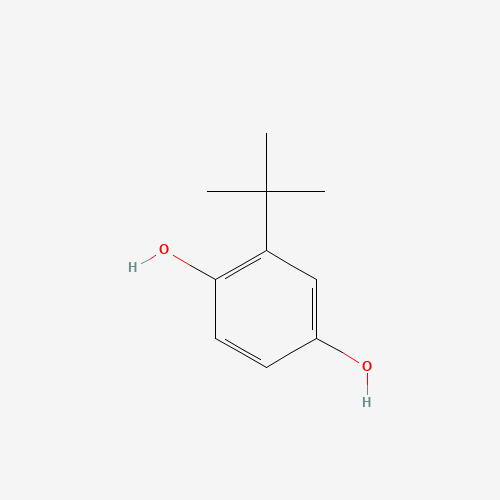
TBHQ, or tertiary butylhydroquinone, is a synthetic antioxidant used in frying oils and fatty snack foods. It is one of the more effective antioxidants for oils held at high temperature.
Where it is and isn’t permitted
| Jurisdiction | Status | Scope and limits | Citation |
|---|---|---|---|
| Australia and New Zealand | Permitted, with conditions | 2 food categories highest permitted level 200 mg/kg Show every food category
| Food Standards Code, Schedule 15, S15—5and 1 further provisionretrieved 2026-10-17 |
| Canada | Permitted, with conditions | In: Fats and oils, except milk fat, olive oil and suet; Lard; Shortening. Purpose: Preservative. Limit: If used singly, the amount not to exceed 200 ppm. If used in any combination with butylated hydroxyanisole, butylated hydroxytoluene or propyl gallate, the total combined amount not to exceed 200 ppm. | Health Canada, List of Permitted Preservatives (List 11), item T.2retrieved 2026-10-17 |
| European Union | Permitted, with conditions | 18 food categories highest permitted level 400 mg/kg Show every food category
| Regulation (EC) No 1333/2008, Annex II, as amended by (EU) No 2018/1481, via Propyl gallateand 17 further provisionsretrieved 2026-10-18 |
| Great Britain | Permitted, with conditions | 18 food categories highest permitted level 400 mg/kg or mg/l Show every food category
| Assimilated Regulation (EC) No 1333/2008, Annex II (as at 28 June 2024)and 17 further provisionsretrieved 2026-10-18 |
| Japan | No listing matchedThis site imports only Japan’s list of designated additives (Appended Table 1 to the Regulations for Enforcement of the Food Sanitation Act), matched by English name. Existing additives, natural flavouring agents and ordinary foods used as additives are permitted outside that list and are not imported, so an empty row does not show that Japan does not permit the substance. | ||
| South Korea | Permitted, with conditions | Designated food additive: Standards and Specifications for Food Additives, Part III, 1. …Designated food additive: Standards and Specifications for Food Additives, Part III, 1. 일반식품첨가물 (general food additives), 터셔리부틸히드로퀴논 (“tert-Butylhydroquinone”, the English the Code prints beside it). Main use (주용도) of 터셔리부틸히드로퀴논: 산화방지제. Standard for use (사용기준) of 터셔리부틸히드로퀴논: (1) [may be used only in the foods listed; sets a limit on the amount used] “터셔리부틸히드로퀴논은 아래의 식품에 한하여 사용하여야 한다. 터셔리부틸히드로퀴논의 사용량은 1. 식용유지류(모조치즈, 식물성크림 제외), 버터류, 어패건제품, 어패염장품:0.2g/kg 이하(부틸히드록시아니솔 또는 디부틸히드록시톨루엔과 병용할 때에는 터셔리부틸히드로퀴논으로서 사용량, 디부틸히드록시톨루엔으로서 사용량 및 부틸히드록시아니솔으로서 사용량의 합계가 0.2g/kg 이하) 2. 어패냉동품(생식용 냉동선어패류, 생식용굴은 제외)의 침지액:1g/kg 이하(부틸히드록시아니솔 또는 디부틸히드록시톨루엔과 병용할 때에는 터셔리부틸히드로퀴논으로서 사용량, 디부틸히드록시톨루엔으로서 사용량 및 부틸히드록시아니솔으로서 사용량의 합계가 1g/kg 이하) 3. 추잉껌∶0.4g/kg 이하(부틸히드록시아니솔 또는 디부틸히드록시톨루엔과 병용할 때에는 터셔리부틸히드로퀴논으로서 사용량, 디부틸히드록시톨루엔으로서 사용량 및 부틸히드록시아니솔으로서 사용량의 합계가 0.4g/kg 이하)” The Korean is the standard as published. There is no official English translation of the current Code (the English version on MFDS’s website is the 2020 edition and has no legal effect); the English in square brackets is this site’s description of what each sentence does, not a translation of the foods or the levels. Compositional specifications (Part IV) are not imported, nor are the general standards in Part II, which apply to every additive. | Standards and Specifications for Food Additives (식품첨가물의 기준 및 규격), MFDS Notification, Part III (Standards for use, by item)retrieved 2026-10-18 |
| United States | Permitted, with conditions | 21 CFR 172.185retrieved 2026-10-17 | |
| Codex Alimentarius | Permitted, with conditions | 25 food categories highest permitted level 400 mg/kg Show every food category and its notes
| CXS 192-1995 Table One, INS 319and 24 further provisionsretrieved 2026-09-07 |
How much is permitted
A listing usually limits the quantity as well as the food. Only one of the forms that takes is a figure: quantum satis and good manufacturing practice permit the amount the technological effect requires and no more, which is a limit rather than the absence of one. Figures below are the range across every food category this page is listed in, and categories differ between regulators — see how much is permitted.
| Australia and New Zealand | 200 mg/kg | 2 numeric limit |
|---|---|---|
| Canada | — | 1 no quantity stated |
| European Union | 25 mg/kg – 400 mg/kg | 18 numeric limit |
| Great Britain | 25 mg/kg – 400 mg/kg | 18 numeric limit |
| South Korea | — | 1 no quantity stated |
| United States | — | 1 no quantity stated |
| Codex Alimentarius | 100 mg/kg – 400 mg/kg | 25 numeric limit |
What it is made from
Synthesised from hydroquinone and isobutylene, both petroleum-derived.
- Vegan
- Vegetarian
Compare other additives on the dietary indexes.
- CAS registry number
- 1948-33-0
- InChIKey
- BGNXCDMCOKJUMV-UHFFFAOYSA-N
- PubChem
- CID 16043
The two specifications, compared
The European Union sets identity and purity by regulation; JECFA publishes its own through FAO, advisory until a country adopts it. Both documents are below in full. These are the parameters each puts a number on.
| Parameter | European Union | JECFA |
|---|---|---|
| Assay | no less than 99 % | no less than 99 % |
| Lead | no more than 2 mg/kg | no more than 2 mg/kg |
The two documents state the same figures for every parameter compared here.
How the EU defines it
The legal specification an additive must meet to be sold as this E number in the EU — what it is, how it may be made, and the purity it must reach. From Commission Regulation (EU) No 231/2012.
E 319 Tertiary-butylhydroquinone (tbhq)
Synonyms: TBHQ
Assay, identification and purity criteria
Description and assay
- Einecs
- 217-752-2
- Chemical name
- Tert-butyl-1,4-benzenediol; 2-(1,1-Dimethylethyl)-1,4-benzenediol
- Chemical formula
- C₁₀H₁₄O₂
- Molecular weight
- 166,22
- Assay
- Content not less than 99 % of C₁₀H₁₄O₂
- Description
- White crystalline solid having a characteristic odour
Identification
- Solubility
- Practically insoluble in water; soluble in ethanol
- Melting point
- Not less than 126,5 °C
- Phenolics
- Dissolve about 5 mg of the sample in 10 ml of methanol and add 10,5 ml of dimethylamine solution (1 in 4). A red to pink colour is produced
Purity criteria
- Tertiary-Butyl-p-benzoquinone
- Not more than 0,2 %
- 2,5-Di-tertiary-butyl hydroquinone
- Not more than 0,2 %
- Hydroxyquinone
- Not more than 0,1 %
- Toluene
- Not more than 25 mg/kg
- Lead
- Not more than 2 mg/kg
How JECFA defines it
The international specification for identity and purity, prepared by the Joint FAO/WHO Expert Committee on Food Additives and published by FAO. It is a different document from any above, written by a different body and revised on its own cycle; it is advisory, and a country adopts it or does not.
INS 319 Tertiary Butylhydroquinone
Synonyms: TBHQ, INS No 319 TBHQ
Assay, identification and purity criteria
Description and assay
- Specification history
- Prepared at the 49th JECFA (1997) , published in FNP 52 Add 5 (1997) superseding specifications prepared at the 44th JECFA (1995), publishe d in FNP 52 Add 3 (1995). Metals and arsenic specifications revised at the 61st JECFA (2003). An ADI of 0-0.7 mg/kg bw was established at the 49th JECFA (1997).
- Chemical names
- Mono-tert-butylhydroquinone, t -butylhydroquinone, 2-(1,1-dimethylethyl)- 1,4-benzenediol
- C.A.S. number
- 1948-33-0
- Chemical formula
- C 10 H 14 O 2
- Formula weight
- 166.22
- Assay
- Not less than 99.0% of C 10 H 14 O 2
- DESCRIPTION
- White, crystalline solid having a characteristic odour.
- FUNCTIONAL USES
- Antioxidant
Identification
- Solubility (Vol. 4)
- Practically insoluble in water; soluble in ethanol
- Melting point (Vol. 4)
- Not less than 126.5 o
- Phenolics
- Dissolve about 5 mg of the sample in 10 ml of methanol, and add 10.5 ml of dimethylamine solution (1 in 4). A red to pink colour is produced.
Purity criteria
- t-Butyl-p-benzoquinone
- Not more than 0.2% See description under TESTS
- 2,5-Di-t-butyl hydroquinone
- Not more than 0.2% See description under TESTS
- Hydroxyquinone
- Not more than 0.1% See description under TESTS
- Toluene
- Not more than 25 mg/kg See description under TESTS
- Lead (Vol. 4)
- Not more than 2 mg/kg Determine using an atomic absorption technique appropriate to the specified level. The selection of sample size and method of sample preparation may be based on the principles of the method described in Volume 4, “Instrumental Methods.”
- Test: t-Butyl-p-benzoquinone
- Apparatus: Use a suitable double-beam infrared spectrophotometer and matched 0.4 mm liquid sample cells with calcium fluoride windows. Reagents and Solutions: Standard preparation: Transfer about 10 mg of mono-tertiary-butyl-p-benzoquinone Reference Standard (available from US Pharmacopeial Convention, Inc., 12601 Twinbrook Parkway, Rockville, MD 20852, USA), accurately weighed, into a 10-ml volumetric flask, dissolve in chloroform, dilute to volume with the same solvent and mix. Sample preparation: Transfer about 1 g of the sample, previously ground to a fine powder in a high-speed blender and accurately weighed, into a 10-ml volumetric flask, dissolve in chloroform, dilute to volume with the same solvent, and mix. Filter through a Millipore filter (UHWPO1300), or equivalent, before use in the Procedure below. Procedure: Fill the reference cell with chloroform and the sample cell with the Standard preparation. Place the cells in the respective reference and sample beam of the spectrophotometer, and record the infrared spectrum from 1600 to 1775 cm -1 . On the spectrum draw a background line from 1612 to 1750 cm -1 , and determine the net absorbence (A ) of the S Standard preparation at 1659 cm -1 . Similarly, obtain the spectrum of the sample preparation, and determine its net absorbence (A ) at 1659 cm -1 . U Calculation: Calculate the percent of t-butyl-p-benzoquinone in the sample by the formula: 100 × A U /A S × W S /W U where W S = the exact weight, in mg, of the mono-tertiary-butyl-p-benzoquinone Reference Standard taken W U = the exact weight, in mg, of the sample taken.
- Test: 2,5-Di-t-butylhydroquinone and hydroquinone
- Apparatus: Use a suitable gas chromatograph equipped with a thermal conductivity detector (F and M Model 810 or equivalent), containing a 0.61-m (2 ft) × 6.35-mm (outside diameter) stainless steel column packed with 20% Silicone SE-30, by weight and 80% Diatoport S (60/80-mesh), or equivalent materials. Operating conditions: The operating parameters may vary, depending upon the particular instrument used, but a suitable chromatogram may be obtained using the following conditions: - Column temperature: programmed from 100 to 270°, at 15° per min - Injection port temperature: 300° - Carrier gas: helium, flowing at a rate of 100 ml per min - Bridge current: 140 mA - Sensitivity: 1 × for integrator (Infotronics CRS 100), 2 × for recorder Reagents and Solutions: Stock solution: Weigh accurately about 50 mg each of hydroquinone (HQ), 2,5-di-t-butylhydroquinone (DTBHQ), and methyl benzoate (internal standard), transfer into separate 50-ml volumetric flasks, dilute to volume with pyridine, and mix. Calibration standards: Into separate 10-ml volumetric flasks add 0.50, 1.0, 2.0 and 3.0 ml of the HQ stock solution, then to each flask add 2 ml of the methyl benzoate (internal standard) stock solution, dilute each to volume with pyridine, and mix. In the same manner prepare four DTBHQ calibrating solutions. Prepare the trimethylsilyl derivative of each solution as follows. Add 9 drops of calibration solution to a 2-ml gas syringe, add 250 μl of N,O-bistrimethylsilylacetamide, and heat at about 80° for 10 min. Chromatograph 10-μl portions of each standard in duplicate, and plot the concentration ratio of HQ to internal standard (X-axis) against the response ratio of HQ to internal standard (Y-axis). Plot the same relationships between DTBHQ and the internal standard. Procedure: Transfer about 1 g of the sample, accurately weighed, into a 10-ml volumetric flask, add 2 ml of the methyl benzoate internal standard stock solution, dilute to volume with pyridine, and mix. Prepare the trimethylsilyl derivative as described above under Calibration standards, and then chromatograph duplicate 10-μl portions to obtain the chromatogram. The approximate peak times, in minutes, are: methyl benzoate, 2.5; TMS derivative of HQ, 5.5; TMS derivative of tert-butylhydroquinone, 7.3; TMS derivative of DTBHQ, 8.4. Calculation: Determine the peak areas (response) of interest by automatic integration or manual triangulation. Calculate the response ratio of HQ and DTBHQ to internal standard. From the calibration curves determine the concentration ratio of HQ and DTBHQ to internal standard, and calculate the % HQ and % DTBHQ in the sample by the formula: A = Y × I × 10/S where A = the % HQ or % DTBHQ in the sample Y = the concentration ratio (X-axis on calibration curve) I = the percentage (w/v) of internal standard in the Sample preparation S = the weight of sample taken, in g.
- Test: Toluene
- Apparatus: Use a suitable gas chromatograph equipped with a flame ionization detector (F and M Model 810 or equivalent), containing a 3.66-m (12-ft) × 3.18-mm (outside diameter) stainless steel column packed with 10% Silicone SE-30, by weight, and 90% Diatoport S (60/80 mesh), or equivalent materials. Operating conditions: The operating parameters may vary, depending upon the particular instrument used, but a suitable chromatogram may be obtained using the following conditions: - Column temperature: programmed from 70 to 280° at 15° per minute and held - Injection port temperature: 275° - Cell temperature: 300° - H 2 and O 2 (or air) settings: 1.4 atm (20 psi) each Reagents and solutions: Standard solution: Prepare a solution of toluene in octanol containing approximately 50 μg per ml, and calculate the exact concentration (C R ) in percent (w/v). Sample solution: Transfer about 2 g of the sample, accurately weighed, into a 10-ml volumetric flask, dissolve in octanol, dilute to volume with the same solvent, and mix. Calculate the exact concentration of the solution (C S ) in percent (w/v). Procedure: Inject a 5-μl portion of the Standard solution into the chromatograph, and measure the height of the toluene peak (H R ) on the chromatogram. The toluene retention time is 3.3 min; other peaks are of no interest in this analysis. Similarly, obtain the chromatogram on a 5-μl portion of the Sample solution and of a blank consisting of octanol, and measure the height of the toluene peak (H S ). Calculation: Calculate the mg/kg of toluene in the sample by the formula: H /C × C /C × 10 6 S R R S
- Test: METHOD OF
- Transfer about 170 mg of the sample, previously ground to a fine powder
- Test: ASSAY
- and accurately weighed, into a 250-ml wide-mouth conical flask, and dissolve in 10 ml of methanol. Add 150 ml of water, 1 ml of N sulfuric acid, and 4 drops of diphenylamine indicator (3 mg of p-diphenylaminesulfonic acid, sodium salt, per ml of 0.1 N sulfuric acid), and titrate with 0.1 N ceric sulfate to the first complete colour change from yellow to red-violet. Record the volume, in ml, of 0.1 N ceric sulfate required as V. Calculate the percent of C 10 H 14 O 2 in the sample, uncorrected for hydroquinone (HQ) and 2,5-di-tert-butylhydro- quinone (DTBHQ), by the formula: (V - 0.1 ml) × N × 8.311/W where 0.1 ml = the volume of ceric sulfate consumed by the primary oxidation products of tert-butylhydroquinone ordinarily present in the sample N = the normality of the standard ceric sulfate solution W = the weight of the sample taken, in g. Record the uncorrected percentage thus calculated as A. If HQ and DTBHQ are present in the sample, they will be included in the titration. Calculate the corrected percentage of C 10 H 14 O 2 in the sample by the formula: A - (%HQ x 1.51) - (%DTBHQ x 0.75) using the respective values for % HQ and % DTBHQ as determined by the gas chromatographic procedures given above.
Authorised in other additives, enzymes, flavourings and nutrients
These authorisations are not for use in food. They let this substance be used inside another additive, a food enzyme, a flavouring or a nutrient preparation — often as a carrier — and it reaches food only as part of that product. Annex III to Regulation (EC) No 1333/2008.
| Part | May be used in | Maximum level | Citation |
|---|---|---|---|
| Annex III, Part 4: Food additives including carriers in food flavourings | Essential oils | 1 000 mg/kg (propyl gallate, TBHQ and BHA, individually or in combination) in the essential oils | Regulation (EC) No 1333/2008, Annex III, Part 4 |
Every name it appears under
99 recorded names. A label may use any of them.
E number
- E319
INS number
- 319
CAS registry number
- 1948-33-0
As it appears in regulation
- TBHQ
- Tertiary-butyl hydroquinone
- Tertiary-butyl hydroquinone (TBHQ)
Other names
- 1,4-Benzenediol (1,1-dimethylethyl)-
- 1,4-Benzenediol, 2-(1,1-dimethylethyl)-
- 2-(1,1-Dimethylethyl)-1,4-benzenediol
- 2-(1,1-Dimethylethyl)-1,4-dihydroxybenzene
- 2-(1,1-dimethylethyl)benzene-1,4-diol
- 2-(tert-butyl)benzene-1,4-diol
- 2-(tert-butyl)benzene-14-diol
- 2-t-butyl hydroquinone
- 2-t-Butyl-1,4-benzenediol
- 2-t-Butylhydroquinone
- 2-tert-Butyl(1,4
- 2-tert-Butyl(1,4)hydroquinone
- 2-tert-Butyl-1,4-benzenediol
- 2-tert-butyl-hydroquinone
- 2-tert-butylbenzene-1,4-diol
- 2-tert-Butylhydroquinone
- 2-tertiary-butylhydroquinone
- Banox 20BA
- BRN 0637923
- Butylhydroquinone, t-
- Butylhydroquinone, tert-
- Butylhydroxyanisole O-Desmethyl Impurity
- CCRIS 1447
- E 319
- Eastman MTBHQ
- EYK
- HSDB 838
- Hydroquinone, t-butyl-
- Hydroquinone, tert-butyl-
- INS NO.319
- INS-319
- Mono-tert-butylhydroquinone
- Mono-tertiarybutylhydroquinone
- monotertiary butyl hydroquinone
- MTBHQ
- Sustane
- Sustane TBHQ
- t-BHQ
- t-Butyl hydroquinone
- t-butyl-hydroquinone
- T-BUTYLHYDROQUINONE
- TBHQ
- TBHQ (Standard)
- TBHQ/tert-Butylhydroquinone
- Tenox 20
- Tenox TBHO
- Tenox TBHQ
- Tenox TBHQTBHQ
- tert-butyl hydroquinone
- Tert-butyl hydroquinone TBHQ
- tert-Butyl-1,4-benzenediol
- tert-butyl-hydroquinone
- tert-Butylhydrochinone
- tert-Butylhydroquinon
- tert-Butylhydroquinone
- tert-Butylhydroquinone, 97%
- tert.-butyl hydroquinone
- Tertiary butylhydroquinone
- Tertiary butylhydroquinone (TBHQ)
- Tertiary-butyl hydroquinone (TBHQ)
- tertiary-Butylhydroquinone
Systematic names
- 2-Tert-butylbenzene-1,4-diol
Hazard reference values
EFSA and JECFA have both set an acceptable daily intake for TBHQ, and they agree: 0.7 mg/kg bw/day. An acceptable daily intake is a reference value set by a committee, not a threshold above which harm begins. See where the two committees differ.
| Type | Value | Population | Assessed by | Opinion |
|---|---|---|---|---|
| ADI | 0.7 mg/kg bw/day | — | JECFA | 1997 |
| ADI | 0.7 mg/kg bw/day | consumers | EFSA | not identified in the dataset |
Evidence and how bodies read it
Studies, and the differing conclusions regulators drew from them, are curated rather than machine-read, and none has been written for this substance yet.
Common questions
Assembled from what is above, in the words the questions are usually asked in. Each answer is the same statement the relevant section makes, with the same citations behind it.
- What is E 319?
- E 319 is TBHQ. TBHQ, or tertiary butylhydroquinone, is a synthetic antioxidant used in frying oils and fatty snack foods. It is one of the more effective antioxidants for oils held at high temperature.
- What is TBHQ used for in food?
- It is listed as an antioxidant — the role Codex and the US assign it. This page shows every function each regulator records, with the citation for each.
- Where is TBHQ permitted?
- Of the seven regulators this site reads, Australia and New Zealand, Canada, the EU, Great Britain, South Korea, the US and the Codex standard permit it. Each permission is for named foods at named levels, not a blanket one; the table on this page gives them with citations.
- Is TBHQ vegan?
- Yes. TBHQ is not derived from animals, and is suitable for vegetarians. This page says what it is made from and how.
Sources for this page
- anz retrieved 2026-10-17
- ca retrieved 2026-10-17
- eu retrieved 2026-10-18
- gb retrieved 2026-10-18
- kr retrieved 2026-10-18
- ecfr retrieved 2026-10-17
- gsfa retrieved 2026-09-07
- euspecs retrieved 2026-10-18
- jecfaspecs retrieved 2026-09-23
Full licence terms and publisher details on Sources. How this page is built and updated: Method.
Machine-readable: a JSON record of this additive is given on request —how to ask for access.
Follow changes to TBHQ:Atom feed — regulatory events, and any change the weekly refresh detects in its provisions.