Urea
57-13-6 · 20% Urea Cream · Alphadrate · Antisepsis bolus · Aqua Care · Aqua Care HP · Aquadrate · Azodicarboxylic acid-diamide · Balneum plus · Carbaderm · Carbamide · Carbamide resin · Carbonyl diamide · Carbonyldiamide · Carbonyldiamine · Caswell No. 902 · Cem-urea · Clear 40 · Cracked Skin Cream · E 927b · Elaqua xx · EPA Pesticide Chemical Code 085702 · Flexifoot · Flexitol · Harnstoff · Hydromol intensive · INS NO.927A · INS-927A · Keratinamin · Lanaphilic · Mocovina · Nutraplus · Pastaron · Prespersion, 75 urea · Protexa · RYNODERM · Sential e · St.james balm · Sterile Urea · Supercel 3000 · Ultra Mide · Umecta Mousse · Umecta Mousse Urea · Urea · Urea 39% Cream · Urea 40 Nail Gel · Urea 40 Percent · Urea Cream 40% · Urea Cream 41% · Urea Foam · Ureacin-10 lotion · Ureacin-40 Creme · Ureaphil · Ureophil · Urepearl · Urevert · UterCleanse · Vanamide · Varioform ii · Xurea · E927b · Urea · Carbamide · Urea · Carbamid · Carbamida · Carbamide · Carbammide · Karbamid · KARBAMIDA · Karbamidas · Karbamidi · Karbamiid · Karbammid · Karbamīds · Ureia (carbamida) · Καρβαμίδιο · КарбамидE number E927bCAS 57-13-6
Listed as a formulation aid by the US.
Listed as formulation aids (US)
- United States: Formulation aid — FDA, Substances Added to Food: UREA
- United States: Formulation aids — 21 CFR 184.1923, citing 21 CFR 170.3(o)(14)
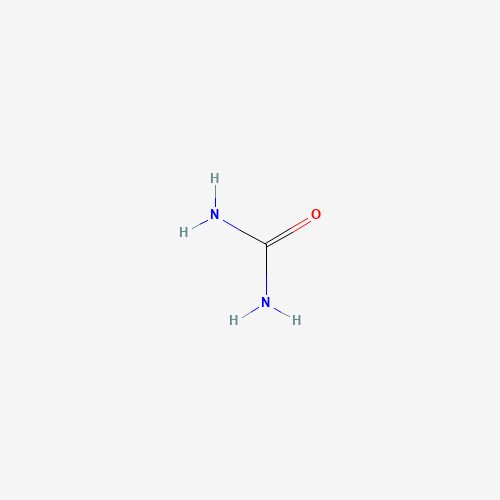
Urea is a yeast nutrient and fermentation aid, used chiefly in winemaking and baking to supply nitrogen to the yeast.
Where it is and isn’t permitted
| Jurisdiction | Status | Scope and limits | Citation |
|---|---|---|---|
| Australia and New Zealand | No listed food uses foundThis site has not matched this substance to any food use on this jurisdiction’s list of authorised food additives. A food additive may be used only in foods that list names. Flavourings, enzymes, processing aids and added nutrients are regulated separately and do not appear on it. | ||
| Canada | No listing matchedHealth Canada’s lists name additives without E or INS numbers, so this site matches them by exact name. A substance listed there under a name this site does not recognise has no row here. | ||
| European Union | Permitted, with conditions | 1 food category highest permitted level 30,000 mg/kg ML = 30000 mg/kg. only with no added sugar. | Regulation (EC) No 1333/2008, Annex II, as amended by (EU) No 1129/2011retrieved 2026-10-18 |
| Great Britain | Permitted, with conditions | 1 food category highest permitted level 30,000 mg/kg or mg/l ML = 30000. only with no added sugar. | Assimilated Regulation (EC) No 1333/2008, Annex II (as at 28 June 2024)retrieved 2026-10-18 |
| Japan | No listing matchedThis site imports only Japan’s list of designated additives (Appended Table 1 to the Regulations for Enforcement of the Food Sanitation Act), matched by English name. Existing additives, natural flavouring agents and ordinary foods used as additives are permitted outside that list and are not imported, so an empty row does not show that Japan does not permit the substance. | ||
| South Korea | No listing matchedThis site imports Part III of South Korea’s Standards and Specifications for Food Additives, matched by CAS number, then INS number, then exact name. Mixed preparations and sanitisers are not imported, and an entry whose identifiers disagreed with a page’s is held for review, so an empty row does not show that South Korea does not permit the substance. | ||
| United States | Permitted | 21 CFR 184.1923retrieved 2026-10-17 | |
| Codex Alimentarius | Not listedDoes not appear on this jurisdiction’s permitted list. That is not the same as being prohibited. |
How much is permitted
A listing usually limits the quantity as well as the food. Only one of the forms that takes is a figure: quantum satis and good manufacturing practice permit the amount the technological effect requires and no more, which is a limit rather than the absence of one. Figures below are the range across every food category this page is listed in, and categories differ between regulators — see how much is permitted.
| European Union | 30,000 mg/kg | 1 numeric limit |
|---|---|---|
| Great Britain | 30,000 mg/kg | 1 numeric limit |
| United States | — | 1 no quantity stated |
What it is made from
Produced industrially from ammonia and carbon dioxide.
- Vegan
- Vegetarian
Compare other additives on the dietary indexes.
- CAS registry number
- 57-13-6
- InChIKey
- XSQUKJJJFZCRTK-UHFFFAOYSA-N
- PubChem
- CID 1176
The two specifications, compared
The European Union sets identity and purity by regulation; JECFA publishes its own through FAO, advisory until a country adopts it. Both documents are below in full. These are the parameters each puts a number on.
| Parameter | European Union | JECFA |
|---|---|---|
| Assay | no less than 99 % | no less than 99 % |
| Loss on drying | no more than 1 % | no more than 1 % |
| Sulphated ash | no more than 0.1 % | no more than 0.1 % |
| Lead | no more than 2 mg/kg | no more than 2 mg/kg |
| Arsenic | no more than 3 mg/kg | — |
The two documents state the same figures for every parameter compared here.
How the EU defines it
The legal specification an additive must meet to be sold as this E number in the EU — what it is, how it may be made, and the purity it must reach. From Commission Regulation (EU) No 231/2012.
E 927b Carbamide
Synonyms: Urea
Assay, identification and purity criteria
Description and assay
- Einecs
- 200-315-5
- Chemical formula
- CH₄N₂O
- Molecular weight
- 60,06
- Assay
- Content not less than 99,0 % on the anhydrous basis
- Description
- Colourless to white, prismatic, crystalline powder or small, white pellets
Identification
- Solubility
- Very soluble in water Soluble in ethanol
- Precipitation with nitric acid
- To pass the test a white, crystalline precipitate is formed
- Colour reaction
- To pass the test a reddish-violet colour is produced
- Melting range
- 132 °C to 135 °C
Purity criteria
- Loss on drying
- Not more than 1,0 % (105 °C, 1 hour)
- Sulphated ash
- Not more than 0,1 %
- Ethanol-insoluble matter
- Not more than 0,04 %
- Alkalinity
- Passes test
- Ammonium-ion
- Not more than 500 mg/kg
- Biuret
- Not more than 0,1 %
- Arsenic
- Not more than 3 mg/kg
- Lead
- Not more than 2 mg/kg
How JECFA defines it
The international specification for identity and purity, prepared by the Joint FAO/WHO Expert Committee on Food Additives and published by FAO. It is a different document from any above, written by a different body and revised on its own cycle; it is advisory, and a country adopts it or does not.
Urea
Synonyms: Carbamide
Assay, identification and purity criteria
Description and assay
- Specification history
- Prepared at the 41st JECFA (1993), published in FNP 52 Add 2 (1993). Metals and arsenic specifications revised at the 63rd JECFA (2004). Use level of up to 3% in chewing gum, of no toxicological concern, at 41 st JECFA (1993)
- Chemical names
- Urea
- C.A.S. number
- 57-13-6
- Chemical formula
- CH 4 N 2 O
- Formula weight
- 60.06
- Assay
- Not less than 99.0% and not more than 101.0% on the dried basis
- DESCRIPTION
- Colourless or white small pellets or crystalline powder.
- FUNCTIONAL USES
- Texturizer in chewing gum, yeast food
- METHOD OF ASSAY
- Accurately weigh about 0.5 g of the sample and dissolve in a 10% sulfuric acid solution and dilute to 100 ml with the same acid. Introduce 5.0 ml of this solution into a long-necked combustion flask, add 10 ml of sulfuric acid TS and heat gently until gas is no longer evolved. Boil gently for 10 min, cool and add cautiously 40 ml of water. Cool again and place in a steam-distillation apparatus. Add 50 ml of 10 N sodium hydroxide solution and distil immediately by passing steam through the mixture. Distil for 1 hour, collecting about 50 ml of distillate in 40 ml of a 4% w/v solution of boric acid. Add 0.25 ml of methyl red/methylene blue TS and titrate with 0.1 N hydrochloric acid. Carry out a blank determination. Each ml of 0.1 N hydrochloric acid is equivalent to 3.003 mg of CH 4 N 2 O.
Identification
- Solubility (Vol. 4)
- Very soluble in water; soluble in ethanol
- Precipitate formation
- Dissolve 0.1 g of the sample in water. Add 1 ml of concentrated nitric acid. A white, crystalline precipitate is formed.
- Colour reaction
- Heat 1 g of the sample in a test tube until it liquefies and the liquid becomes turbid. Cool, dissolve in a mixture of 10 ml water and 1 ml of 2 N sodium hydroxide and add 0.05 ml of cupric sulfate TS. A reddish-violet colour is produced.
- Melting range (Vol. 4)
- 132 o - 135 o
Purity criteria
- Loss on drying (Vol. 4)
- Not more than 1.0% (105 o , 1 h)
- Sulfated ash (Vol. 4)
- Not more than 0.1%
- Ethanol-insoluble matter
- Not more than 0.04% Dissolve 5.0 g of the sample in 50 ml of warm ethanol. Filter the solution on a tared filter, wash the filter with 20 ml of warm ethanol and dry at 105 o for 1 h. Cool in a desiccator and weigh. The difference between the total weight and the weight of the filter is the weight of the ethanol-insoluble matter. Calculate the percentage.
- Alkalinity
- To 10 ml of a 5.0% solution of the sample add 0.1 ml of methyl red TS and 0.4 ml of 0.01 N hydrochloric acid. The resulting solution is red to orange.
- Ammonium ion
- Not more than 500 mg/kg Mix 0.1 ml of a 20% solution of the sample with 14 ml of water in a test tube, make alkaline if necessary by the addition of dilute sodium hydroxide TS and dilute to 15 ml with water. To the solution add 0.3 ml of alkaline potassium tetraiodomercurate solution (dissolve 11 g potassium iodide and 15 g of mercuric iodide in water and dilute to 100 ml. Immediately before use, mix 1 volume of this solution with an equal volume of a 25% solution of sodium hydroxide). Prepare a standard by mixing 10 ml of ammonium-ion solution (1 mg NH + /l) with water and add 0.3 ml of alkaline potassium tetraiodomercurate solution. Stopper the test tubes. After 5 min, any yellow colour in the test solution is not more intense than in the standard.
- Biuret
- Not more than 0.1% To 10 ml of a 20% solution of the sample add 5 ml water, 0.5 ml of a 0.5 % w/v solution of cupric sulfate and 0.5 ml of 10 N sodium hydroxide. Allow to stand for 5 min. Any reddish-violet colour in the solution is not more intense than that in a standard prepared at the same time in the same manner using 10 ml of a 0.02% w/v of biuret in place of the sample solution being examined.
- Lead (Vol. 4)
- Not more than 2 mg/kg Determine using an atomic absorption technique appropriate to the specified level. The selection of sample size and method of sample preparation may be based on the principles of the method described in Volume 4, “Instrumental Methods.”
Every name it appears under
78 recorded names. A label may use any of them.
E number
- E927b
CAS registry number
- 57-13-6
As it appears in regulation
- Carbamide
- Urea
Other names
- 20% Urea Cream
- Alphadrate
- Antisepsis bolus
- Aqua Care
- Aqua Care HP
- Aquadrate
- Azodicarboxylic acid-diamide
- Balneum plus
- Carbaderm
- Carbamide
- Carbamide resin
- Carbonyl diamide
- Carbonyldiamide
- Carbonyldiamine
- Caswell No. 902
- Cem-urea
- Clear 40
- Cracked Skin Cream
- E 927b
- Elaqua xx
- EPA Pesticide Chemical Code 085702
- Flexifoot
- Flexitol
- Harnstoff
- Hydromol intensive
- INS NO.927A
- INS-927A
- Keratinamin
- Lanaphilic
- Mocovina
- Nutraplus
- Pastaron
- Prespersion, 75 urea
- Protexa
- RYNODERM
- Sential e
- St.james balm
- Sterile Urea
- Supercel 3000
- Ultra Mide
- Umecta Mousse
- Umecta Mousse Urea
- Urea
- Urea 39% Cream
- Urea 40 Nail Gel
- Urea 40 Percent
- Urea Cream 40%
- Urea Cream 41%
- Urea Foam
- Ureacin-10 lotion
- Ureacin-40 Creme
- Ureaphil
- Ureophil
- Urepearl
- Urevert
- UterCleanse
- Vanamide
- Varioform ii
- Xurea
Systematic names
- Urea
Hazard reference values
EFSA and JECFA have both assessed Urea and their conclusions are not two comparable figures — EFSA records not allocated, JECFA not specified. An acceptable daily intake is a reference value set by a committee, not a threshold above which harm begins. “Not specified”, “not limited” and “not allocated” are conclusions, not missing data, and they are shown in the words each body used rather than reduced to a number. See where the two committees differ.
| Type | Value | Population | Assessed by | Opinion |
|---|---|---|---|---|
| ADI | not specified | — | JECFA | 1993 |
| ADI | not allocated | — | EFSA | not identified in the dataset |
Evidence and how bodies read it
Studies, and the differing conclusions regulators drew from them, are curated rather than machine-read, and none has been written for this substance yet.
Common questions
Assembled from what is above, in the words the questions are usually asked in. Each answer is the same statement the relevant section makes, with the same citations behind it.
- What is E 927b?
- E 927b is Urea. Urea is a yeast nutrient and fermentation aid, used chiefly in winemaking and baking to supply nitrogen to the yeast.
- What is Urea used for in food?
- It is listed as a formulation aid — the role the US assigns it. This page shows every function each regulator records, with the citation for each.
- Where is Urea permitted?
- Of the seven regulators this site reads, the EU, Great Britain and the US permit it. Each permission is for named foods at named levels, not a blanket one; the table on this page gives them with citations.
- Is Urea vegan?
- Yes. Urea is not derived from animals, and is suitable for vegetarians. This page says what it is made from and how.
Sources for this page
- eu retrieved 2026-10-18
- gb retrieved 2026-10-18
- ecfr retrieved 2026-10-17
- euspecs retrieved 2026-10-18
- jecfaspecs retrieved 2026-09-23
Full licence terms and publisher details on Sources. How this page is built and updated: Method.
Machine-readable: a JSON record of this additive is given on request —how to ask for access.
Follow changes to Urea:Atom feed — regulatory events, and any change the weekly refresh detects in its provisions.