Acetone
67-64-1 · .beta.-Ketopropane · 2-propanal · 2-propanone · 2propanone · Aceton · Acetone · ACETONE (1,1,1,3,3,3-D6) · Acetone (natural) · Acetone (NF) · Acetone ACS · Acetone ACS low benzene · Acetone HPLC grade · Acetone oil · Acetone SpS · Acetone, ACS reagent · Acetone, ACS reagent, >=99.5% · Acetone, analytical standard · Acetone, for HPLC · Acetone, for HPLC, >=99.8% · Acetone, for HPLC, >=99.9% · Acetone, histological grade · ACETONE, HPLC · Acetone-2-(1)(3)C · b-Ketopropane · beta-Ketopropane · Bio acetone · CAS-67-64-1 · Caswell No. 004 · CCRIS 5953 · CH3COCH3 · Chevron acetone · Dimethyl formaldehyde · Dimethyl ketone · dimethylcetone · Dimethylformaldehyde · Dimethylketal · Dimethylketon · dimethylketone · EPA Pesticide Chemical Code 004101 · FEMA No. 3326 · HSDB 41 · isopropanal · Ketone propane · Ketone, dimethyl · Ketone, dimethyl- · Methyl ketone · methyl methyl ketone · methyl-ketone · methylketone · propan-2-one · Propanon · propanone · propanone (acetone) · Pyroacetic acid · Pyroacetic ether · RCRA waste no. U002 · RCRA waste number U002 · Sasetone · Taimax · TAK - Toxic Alcohols · propan-2-one · AcetoneCAS 67-64-1
Listed as a solvent by Canada and the US.
Listed as solvents and vehicles (CA, US) · flavour enhancers (US) · flavouring agents and adjuvants (US) · carriers (CA)
- Canada: Carrier solvent — Health Canada, List of Permitted Solvents (List 15)
- Canada: Extraction solvent — Health Canada, List of Permitted Solvents (List 15)
- United States: Solvent or vehicle — FDA, Substances Added to Food: ACETONE
- United States: Flavor enhancer — FDA, Substances Added to Food: ACETONE
- United States: Flavoring agent or adjuvant — FDA, Substances Added to Food: ACETONE
- Canada: Carrier solvent — Health Canada, List of Permitted Solvents (List 15)
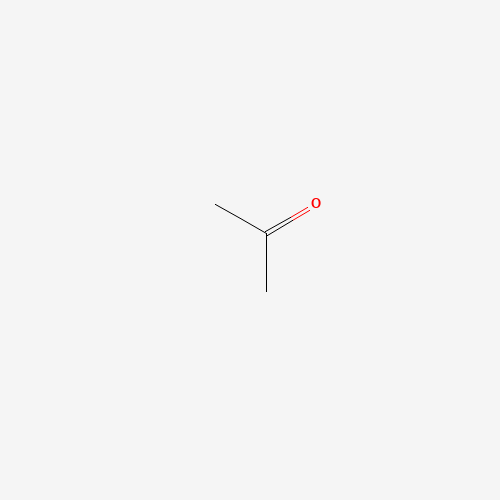
Acetone is a solvent used to extract spice oleoresins and to process other food ingredients. It is evaporated off after use, and residues in the finished product are limited.
Where it is and isn’t permitted
| Jurisdiction | Status | Scope and limits | Citation |
|---|---|---|---|
| Australia and New Zealand | No listed food uses foundThis site has not matched this substance to any food use on this jurisdiction’s list of authorised food additives. A food additive may be used only in foods that list names. Flavourings, enzymes, processing aids and added nutrients are regulated separately and do not appear on it. | ||
| Canada | Permitted, with conditions | no numerical limit (good manufacturing practice) 2 permitted uses Show every permitted use
| Health Canada, List of Permitted Solvents (List 15)and 1 further provisionretrieved 2026-10-17 |
| European Union | No listed food uses foundThis site has not matched this substance to any food use on this jurisdiction’s list of authorised food additives. A food additive may be used only in foods that list names. Flavourings, enzymes, processing aids and added nutrients are regulated separately and do not appear on it. | ||
| Great Britain | No listed food uses foundThis site has not matched this substance to any food use on this jurisdiction’s list of authorised food additives. A food additive may be used only in foods that list names. Flavourings, enzymes, processing aids and added nutrients are regulated separately and do not appear on it. | ||
| Japan | Permitted, with conditions | Designated additive: Appended Table 1, item 23, アセトン (“Acetone” in the unofficial English translation). …Designated additive: Appended Table 1, item 23, アセトン (“Acetone” in the unofficial English translation). Standards for use — Specifications and Standards for Foods, Food Additives, etc. (MHW Notification No. 370 of 1959), Part II (Food Additives), F (Standards for use), entry アセトン: (1) [may be used only for the purposes stated; must be removed or broken down before the food is finished] “アセトンは、ガラナ飲料を製造する際のガラナ豆の成分を抽出する目的及び油脂の成分を分別する目的以外に使用してはならない。また、使用したアセトンは、最終食品の完成前に除去しなければならない。” The Japanese is the standard as published. There is no official English translation of the Notification; the English in square brackets is this site’s description of what each sentence does, not a translation of the foods or the levels. Compositional specifications for this additive, in the same Notification, are not imported and are not shown here; nor are the general rules in F 添加物一般, which apply to every additive. | Regulations for Enforcement of the Food Sanitation Act (MHW Ordinance No. 23 of 1948), Appended Table 1retrieved 2026-10-18 |
| South Korea | Permitted, with conditions | Designated food additive: Standards and Specifications for Food Additives, Part III, 2. …Designated food additive: Standards and Specifications for Food Additives, Part III, 2. 가공보조제 (processing aids), 아세톤 (“Acetone”, the English the Code prints beside it). Main use (주용도) of 아세톤: 추출용제. Standard for use (사용기준) of 아세톤: (1) [may be used only in the foods or uses listed] “아세톤은 아래의 식품 또는 용도에 한하여 사용하여야 한다. 1. 식용유지 제조 시 유지성분을 분별하는 목적(다만, 사용한 아세톤은 최종식품의 완성 전에 제거해야함) 2. 건강기능식품의 기능성원료 추출 또는 분리 등의 목적 : 0.03g/kg 이하(아세톤으로서 잔류량)” The Korean is the standard as published. There is no official English translation of the current Code (the English version on MFDS’s website is the 2020 edition and has no legal effect); the English in square brackets is this site’s description of what each sentence does, not a translation of the foods or the levels. Compositional specifications (Part IV) are not imported, nor are the general standards in Part II, which apply to every additive. | Standards and Specifications for Food Additives (식품첨가물의 기준 및 규격), MFDS Notification, Part III (Standards for use, by item)retrieved 2026-10-18 |
| United States | Permitted, with conditions | 21 CFR 173.210retrieved 2026-10-17 | |
| Codex Alimentarius | Not listedDoes not appear on this jurisdiction’s permitted list. That is not the same as being prohibited. |
How much is permitted
A listing usually limits the quantity as well as the food. Only one of the forms that takes is a figure: quantum satis and good manufacturing practice permit the amount the technological effect requires and no more, which is a limit rather than the absence of one. Figures below are the range across every food category this page is listed in, and categories differ between regulators — see how much is permitted.
| Canada | — | 1 GMP, 1 no quantity stated |
|---|---|---|
| Japan | — | 1 no quantity stated |
| South Korea | — | 1 no quantity stated |
| United States | — | 1 no quantity stated |
No regulator sets a figure for Acetone. That is not an absence of control: where the listing says quantum satis or good manufacturing practice, the quantity is limited to what the effect requires.
What it is made from
Produced industrially as a co-product of phenol manufacture from petroleum feedstocks. It also occurs naturally in the body as a product of fat metabolism.
- Vegan
- Vegetarian
Compare other additives on the dietary indexes.
- CAS registry number
- 67-64-1
- InChIKey
- CSCPPACGZOOCGX-UHFFFAOYSA-N
- PubChem
- CID 180
How JECFA defines it
The international specification for identity and purity, prepared by the Joint FAO/WHO Expert Committee on Food Additives and published by FAO. It is a different document from any above, written by a different body and revised on its own cycle; it is advisory, and a country adopts it or does not.
Acetone
Synonyms: Dimethylketone, propanone Dimethylketone; Propanone
Assay, identification and purity criteria
Description and assay
- Specification history
- Prepared at the 51st JECFA (1998), published in FNP 52 Add 6 (1998) superseding earlier specifications prepared at the 14th JECFA (1970), published in NMRS 48B (1971) and republished in FNP 52 (1992). ADI "limited by GMP", established at the 14th JECFA in 1970.
- Chemical names
- Propan-2-one
- C.A.S. number
- 67-64-1
- Chemical formula
- C 3 H 6 O
- Structural formula
- CH 3 COCH 3
- Formula weight
- 58.08
- Assay
- Not less than 99.5% (w/w)
- DESCRIPTION
- Clear, colourless, volatile, highly flammable liquid with a characteristic odour; free from sediment and suspended matter
- FUNCTIONAL USES
- Extraction solvent, flavouring agent (see "Flavouring agents" monograph, JECFA no. 139)
- METHOD OF ASSAY
- Weigh accurately about 1 g of the sample in a flask containing 20 ml of water, and add water to 1,000 ml. Place 10 ml of the solution in a glass stoppered flask, add 25 ml of sodium hydroxide TS, and allow to stand for 5 min. Add 25 ml of 0.1 N iodine, stopper, allow to stand in a cold and dark place for 10 min, and add 30 ml of 1 N sulfuric acid. Titrate the excess iodine with 0.1 N sodium thiosulfate, using starch TS as the indicator. Perform a blank test in the same manner as the sample and make any necessary correction. Each ml of 0.1 N iodine is equivalent to 0.9675 mg of C 3 H 6 O.
Identification
- Solubility
- Miscible in all proportions with water and with ethanol
- Specific gravity (Vol. 4)
- d 20 : 0.790 - 0.793
- Refractive index (Vol. 4)
- n 20 : 1.358 - 1.360 D
Purity criteria
- Distillation range (Vol. 4)
- 55.5 - 57.0 o
- Non-volatile residue (Vol. 4)
- Not more than 0.001% (w/w)
- Acidity
- Not more than 0.002% (w/w) (calculated as acetic acid) See description under TESTS
- Phenol
- Not more than 0.001% (w/w) Place 3 ml of the sample in a crucible and evaporate to dryness at 60 o , add 3 drops of a solution of 0.1 g sodium nitrite dissolved in 5 ml of sulfuric acid and allow to stand for 2-3 min. Carefully add 3 ml 2 N sodium hydroxide. No colour is produced.
- Readily oxidizable substances
- 30 ml of the sample does not discolour 0.1 ml of 3% m/v freshly prepared aqueous potassium permanganate solution when shaken and allowed to stand at 20 o for 15 min.
- Test: Acidity
- Place 100 ml of freshly boiled and cooled distilled water (neutralized to phenolphthalein TS) and a few antibumping granules in a 500 ml conical flask of boro-silicate glass and boil gently for 5 min to eliminate carbon dioxide. Cool slightly and add 100 ml of the sample. Boil gently for a further 5 min. Then seal the flask with a stopper carrying a soda-lime tube and allow to cool. When cold remove the stopper, add 0.5 ml phenolphthalein TS and examine for alkalinity: if not alkaline titrate with 0.1 N sodium hydroxide solution using a micro-burette. Calculate the acidity as acetic acid (%, w/w) from where T = volume (ml) of 0.1 N sodium hydroxide solution consumed d = specific gravity of the sample.
Every name it appears under
63 recorded names. A label may use any of them.
CAS registry number
- 67-64-1
As it appears in regulation
- Acetone
Other names
- .beta.-Ketopropane
- 2-propanal
- 2-propanone
- 2propanone
- Aceton
- Acetone
- ACETONE (1,1,1,3,3,3-D6)
- Acetone (natural)
- Acetone (NF)
- Acetone ACS
- Acetone ACS low benzene
- Acetone HPLC grade
- Acetone oil
- Acetone SpS
- Acetone, ACS reagent
- Acetone, ACS reagent, >=99.5%
- Acetone, analytical standard
- Acetone, for HPLC
- Acetone, for HPLC, >=99.8%
- Acetone, for HPLC, >=99.9%
- Acetone, histological grade
- ACETONE, HPLC
- Acetone-2-(1)(3)C
- b-Ketopropane
- beta-Ketopropane
- Bio acetone
- CAS-67-64-1
- Caswell No. 004
- CCRIS 5953
- CH3COCH3
- Chevron acetone
- Dimethyl formaldehyde
- Dimethyl ketone
- dimethylcetone
- Dimethylformaldehyde
- Dimethylketal
- Dimethylketon
- dimethylketone
- EPA Pesticide Chemical Code 004101
- FEMA No. 3326
- HSDB 41
- isopropanal
- Ketone propane
- Ketone, dimethyl
- Ketone, dimethyl-
- Methyl ketone
- methyl methyl ketone
- methyl-ketone
- methylketone
- propan-2-one
- Propanon
- propanone
- propanone (acetone)
- Pyroacetic acid
- Pyroacetic ether
- RCRA waste no. U002
- RCRA waste number U002
- Sasetone
- Taimax
- TAK - Toxic Alcohols
Systematic names
- propan-2-one
Hazard reference values
| Type | Value | Population | Assessed by | Opinion |
|---|---|---|---|---|
| ADI | 0.9 mg/kg bw/day | consumers | EFSA CONTAM | 2012 |
Evidence and how bodies read it
Studies, and the differing conclusions regulators drew from them, are curated rather than machine-read, and none has been written for this substance yet.
Common questions
Assembled from what is above, in the words the questions are usually asked in. Each answer is the same statement the relevant section makes, with the same citations behind it.
- What is Acetone?
- Acetone is a solvent used to extract spice oleoresins and to process other food ingredients. It is evaporated off after use, and residues in the finished product are limited.
- What is Acetone used for in food?
- It is listed as a solvent — the role Canada and the US assign it. This page shows every function each regulator records, with the citation for each.
- Is Acetone banned in Europe?
- No. Acetone does not appear on the EU's list of authorised food additives, which is not the same as being banned: the EU permits an additive only where it has authorised it, and usually the reason for an absence is that no one applied. The EU has made no finding against this substance. It does mean it may not be used as a food additive in the EU today.
- Where is Acetone permitted?
- Of the seven regulators this site reads, Canada, Japan, South Korea and the US permit it. Each permission is for named foods at named levels, not a blanket one; the table on this page gives them with citations.
- Is Acetone vegan?
- Yes. Acetone is not derived from animals, and is suitable for vegetarians. This page says what it is made from and how.
Sources for this page
- ca retrieved 2026-10-17
- jp retrieved 2026-10-18
- kr retrieved 2026-10-18
- ecfr retrieved 2026-10-17
- jecfaspecs retrieved 2026-09-23
Full licence terms and publisher details on Sources. How this page is built and updated: Method.
Machine-readable: a JSON record of this additive is given on request —how to ask for access.
Follow changes to Acetone:Atom feed — regulatory events, and any change the weekly refresh detects in its provisions.