Ammonium hydroxide
1336-21-6 · agua de amoniaco · AMINE HYDRATE · Ammonia (ammonium hydroxide) 28% by weight or more NH3 · Ammonia aqueous · ammonia hydrate · Ammonia solution 25% · Ammonia water · Ammonia water (JP18) · Ammonia water 29% · Ammonia Water; Ammonia, Aqua; Ammonia, Monohydrate; Aqua AmmoniaSX 1; SX 1 (Ammonia Water); · Ammonia, aqua · Ammonia, monohydrate · ammoniaque · Ammonium aqueous (28% or less NH3) · ammonium hydorxide · ammonium hydoxide · Ammonium hydrate · ammonium hydroxid · Ammonium hydroxide · Ammonium hydroxide ((NH4)(OH)) · Ammonium hydroxide (28% or less ammonia) · Ammonium hydroxide, 1N aqueous solution (+/-0.1N) · Ammonium hydroxide, 25% NH3 · AMMONIUM HYDROXIDE, ACS · ammonium hyroxide · Ammoniumhydroxid · ammoniumhydroxide · amonium hydroxide · amrnonium hydroxide · Aqua ammonia · Aquammonia · Caswell No. 044 · E 527 · EPA Pesticide Chemical Code 005301 · hidroxido de amonio · Household ammonia · HSDB 5125 · Hydroxide, Ammonium · hydroxyde d'ammonium · NH3 water · Strong ammonia solution · SX 1 (ammonia water) · USP Solution Ammonia (Ammonium Hydroxide) TS Conforms to USP · VHUUQVKOLVNVRT-UHFFFAOYSA-N · water ammonia · water NH3 · E527 · 527 · ammonium hydroxide · Ammonium hydroxide · Ammonium hydroxide · Ammoniumhydroksidi · Ammoniumhydroxid · Ammoniumhydroxide · Ammooniumhüdroksiid · Ammónium-hidroxid · Amonija hidroksīds · Amonijev hidroksid · Amonio hidroksidas · Hidroxid de amoniu · HIDRÓXIDO AMÓNICO · Hidróxido de amonio · Hydroxid amonný · Hydroxyde d’ammonium · Idrossido d'ammonio · IDROSSIDO DI AMMONIO · Idrossidu tal-ammonju · Wodorotlenek amonu · Υδροξείδιο του αμμωνίου · Амониев хидроксидE number E527INS 527CAS 1336-21-6
Listed as an acidity regulator by Canada, Codex and the US.
Listed as acidity regulators (CA, US, Codex) · raising agents (US) · glazing and surface-finishing agents (US)
- Canada: Acidity regulator — Health Canada, List of Permitted Acidity Regulators and Acid-Reacting Materials (List 10)
- United States: pH control agent — FDA, Substances Added to Food: AMMONIUM HYDROXIDE
- United States: pH control agents — 21 CFR 184.1139, citing 21 CFR 170.3(o)(23)
- Codex Alimentarius: Acidity regulator — CXS 192-1995 Table One, INS 527
- United States: Leavening agent — FDA, Substances Added to Food: AMMONIUM HYDROXIDE
- United States: Leavening agents — 21 CFR 184.1139, citing 21 CFR 170.3(o)(17)
- United States: Surface-finishing agent — FDA, Substances Added to Food: AMMONIUM HYDROXIDE
- United States: Surface-finishing agents — 21 CFR 184.1139, citing 21 CFR 170.3(o)(30)
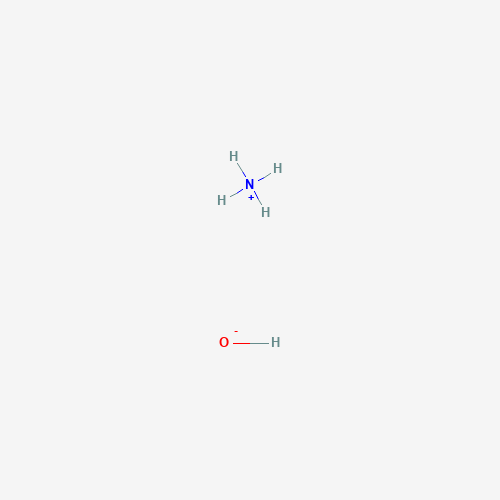
Ammonium hydroxide is an alkaline processing aid used to adjust pH during manufacture, notably in caramel colour production and in some meat processing.
Where it is and isn’t permitted
| Jurisdiction | Status | Scope and limits | Citation |
|---|---|---|---|
| Australia and New Zealand | No listed food uses foundThis site has not matched this substance to any food use on this jurisdiction’s list of authorised food additives. A food additive may be used only in foods that list names. Flavourings, enzymes, processing aids and added nutrients are regulated separately and do not appear on it. | ||
| Canada | Permitted, with conditions | no numerical limit (good manufacturing practice) 3 permitted uses Show every permitted use
| Health Canada, List of Permitted Acidity Regulators and Acid-Reacting Materials (List 10)and 2 further provisionsretrieved 2026-10-17 |
| European Union | Permitted, with conditions | 70 food categories highest permitted level 70,000 mg/l Show every food category
| Regulation (EC) No 1333/2008, Annex IIand 69 further provisionsretrieved 2026-10-18 |
| Great Britain | Permitted, with conditions | 68 food categories highest permitted level 70,000 mg/kg or mg/l Show every food category
| Assimilated Regulation (EC) No 1333/2008and 67 further provisionsretrieved 2026-10-18 |
| Japan | No listing matchedThis site imports only Japan’s list of designated additives (Appended Table 1 to the Regulations for Enforcement of the Food Sanitation Act), matched by English name. Existing additives, natural flavouring agents and ordinary foods used as additives are permitted outside that list and are not imported, so an empty row does not show that Japan does not permit the substance. | ||
| South Korea | Permitted, with conditions | Designated food additive: Standards and Specifications for Food Additives, Part III, 1. …Designated food additive: Standards and Specifications for Food Additives, Part III, 1. 일반식품첨가물 (general food additives), 수산화암모늄 (“Ammonium Hydroxide”, the English the Code prints beside it). Main use (주용도) of 수산화암모늄: 산도조절제. Standard for use (사용기준) of 수산화암모늄: (1) [to be used under the general standard for use in II. 2. 1), the minimum amount that achieves the technical effect, with no limit set for this additive in particular] “II. 2. 1)의 규정에 따라 사용하여야 한다.” The Korean is the standard as published. There is no official English translation of the current Code (the English version on MFDS’s website is the 2020 edition and has no legal effect); the English in square brackets is this site’s description of what each sentence does, not a translation of the foods or the levels. Compositional specifications (Part IV) are not imported, nor are the general standards in Part II, which apply to every additive. | Standards and Specifications for Food Additives (식품첨가물의 기준 및 규격), MFDS Notification, Part III (Standards for use, by item)retrieved 2026-10-18 |
| United States | Permitted | 21 CFR 184.1139retrieved 2026-10-17 | |
| Codex Alimentarius | Permitted, with conditions | 1 food category no numerical limit (good manufacturing practice) | CXS 192-1995 Table Three, INS 527and 1 further provisionretrieved 2026-09-07 |
How much is permitted
A listing usually limits the quantity as well as the food. Only one of the forms that takes is a figure: quantum satis and good manufacturing practice permit the amount the technological effect requires and no more, which is a limit rather than the absence of one. Figures below are the range across every food category this page is listed in, and categories differ between regulators — see how much is permitted.
| Canada | — | 3 GMP |
|---|---|---|
| European Union | 70,000 mg/kg | 1 numeric limit, 46 several limits, 1 quantum satis, 22 no quantity stated |
| Great Britain | 70,000 mg/kg | 1 numeric limit, 67 quantum satis |
| South Korea | — | 1 no quantity stated |
| United States | — | 1 no quantity stated |
| Codex Alimentarius | — | 2 GMP |
What it is made from
A solution of ammonia gas in water. It is a processing aid rather than an ingredient and is normally neutralised or driven off.
- Vegan
- Vegetarian
Compare other additives on the dietary indexes.
- CAS registry number
- 1336-21-6
- InChIKey
- VHUUQVKOLVNVRT-UHFFFAOYSA-N
- PubChem
- CID 14923
The two specifications, compared
The European Union sets identity and purity by regulation; JECFA publishes its own through FAO, advisory until a country adopts it. Both documents are below in full. These are the parameters each puts a number on.
| Parameter | European Union | JECFA |
|---|---|---|
| Assay | no less than 27 % | no less than 27 % |
| Lead | no more than 2 mg/kg | no more than 2 mg/kg |
| Arsenic | no more than 3 mg/kg | — |
The two documents state the same figures for every parameter compared here.
How the EU defines it
The legal specification an additive must meet to be sold as this E number in the EU — what it is, how it may be made, and the purity it must reach. From Commission Regulation (EU) No 231/2012.
E 527 Ammonium hydroxide
Synonyms: Aqua ammonia; Strong ammonia solution
Assay, identification and purity criteria
Description and assay
- Chemical name
- Ammonium hydroxide
- Chemical formula
- NH₄OH
- Molecular weight
- 35,05
- Assay
- Content not less than 27 % of NH₃
- Description
- Clear, colourless solution, having an exceedingly pungent, characteristic odour
Identification
- Test for ammonia
- Passes test
Purity criteria
- Non-volatile matter
- Not more than 0,02 %
- Arsenic
- Not more than 3 mg/kg
- Lead
- Not more than 2 mg/kg
How JECFA defines it
The international specification for identity and purity, prepared by the Joint FAO/WHO Expert Committee on Food Additives and published by FAO. It is a different document from any above, written by a different body and revised on its own cycle; it is advisory, and a country adopts it or does not.
INS 527 Ammonia Solution
Synonyms: Ammonium hydroxide, strong ammonia solution, aqueous ammonia, INS No. 527 Ammonium hydroxide; Aqueous ammonia; Strong ammonia solution
Assay, identification and purity criteria
Description and assay
- Specification history
- Prepared at the 46th JECFA (1996), published in FNP 52 Add 4 (1996) superseding specifications prepared at the 19 th JECFA (1975), published in NMRS 55B (1976) and in FNP 52 (1992) under the name Ammonium Hydroxide. Metals and arsenic specifications revised at the 59th JECFA (2002) An ADI 'not limited' was established at the 9th JECFA (1965)
- Chemical names
- Ammonia solution
- C.A.S. number
- 7664-41-7 (ammonia) 1336-21-6 (aqueous ammonia)
- Chemical formula
- NH 3 (aqueous)
- Formula weight
- 17.03
- Assay
- Not less than 27% and not more than 30%
- DESCRIPTION
- Clear, colourless liquid having an exceedingly pungent, characteristic odour. Upon exposure to air it loses ammonia rapidly
- FUNCTIONAL USES
- Acidity regulator
- METHOD OF ASSAY
- Tare accurately a 125-ml glass-stoppered conical flask containing 35.0 ml of 1N sulfuric acid. Cool the sample in the original bottle to 10 o or lower. Partially fill a 10-ml graduated pipet from near the bottom (do not use vacuum for drawing up the sample). Wipe off any liquid adhering to the outside of the pipet and discard the first ml. Hold the pipet just above the surface of the acid and transfer 2 ml into the flask, leaving at least 1 ml in the pipet. Stopper the flask, mix and weigh again to obtain the weight of the sample. Add methyl red TS and titrate the excess acid with 1N sodium hydroxide. Subtract the excess sulfuric acid from the total sulfuric acid (35.0 ml) to find the ml used to neutralize the sample. Each ml of 1N sulfuric acid used to neutralize the ammonia is equivalent to 17.03 mg of NH 3 .
Identification
- Test for ammonia
- Hold a glass rod, wet with hydrochloric acid, near the sample. Dense white fumes are produced.
- Specific gravity (Vol. 4)
- d (25,25): about 0.90
Purity criteria
- Non-volatile residue
- Not more than 0.02% by the following procedure: Evaporate 11 ml (10 g) of the sample in a tared platinum or porcelain dish to dryness, dry at 105 o for 1 h, cool and weigh
- Readily oxidizable substances
- Dilute 4 ml of the sample with 6 ml of water, and add a slight excess of dilute sulfuric acid TS and 0.1 ml of 0.1N potassium permanganate. The pink colour does not completely disappear within 10 min.
- Lead
- Not more than 2 mg/kg Determine using an atomic absorption technique appropriate to the specified level. The selection of sample size and method of sample preparation may be based on the principles of the method described in Volume 4, “Instrumental Methods.”
Authorised in other additives, enzymes, flavourings and nutrients
These authorisations are not for use in food. They let this substance be used inside another additive, a food enzyme, a flavouring or a nutrient preparation — often as a carrier — and it reaches food only as part of that product. Annex III to Regulation (EC) No 1333/2008.
| Part | May be used in | Maximum level | Citation |
|---|---|---|---|
| Annex III, Part 2: Food additives other than carriers in food additives | All food additive preparationsAuthorised as a member of Table 1 of Part 6, listed as "Table 1" Note (1): Except enzymes authorised as food additives. | quantum satis | Regulation (EC) No 1333/2008, Annex III, Part 2, via Table 1 of Part 6 |
| Annex III, Part 3: Food additives including carriers in food enzymes | Food enzymesCan be used as a carrier: Yes Note (1): Including enzymes authorised as food additives. | In enzyme preparation: quantum satis In final food except beverages: quantum satis In beverages: quantum satis | Regulation (EC) No 1333/2008, Annex III, Part 3 |
| Annex III, Part 4: Food additives including carriers in food flavourings | All flavouringsAuthorised as a member of Table 1 of Part 6, listed as "Table 1" | quantum satis | Regulation (EC) No 1333/2008, Annex III, Part 4, via Table 1 of Part 6 |
| Annex III, Part 5, Section A: Food additives added in nutrients except in nutrients intended to be used in foodstuffs listed in Part E, point 01.10, of Annex II and foodstuffs for infants and young children listed in Part E, point 13.1, of Annex II | All nutrients | quantum satis | Regulation (EC) No 1333/2008, Annex III, Part 5, Section A |
Every name it appears under
71 recorded names. A label may use any of them.
E number
- E527
INS number
- 527
CAS registry number
- 1336-21-6
As it appears in regulation
- Ammonium hydroxide
Other names
- agua de amoniaco
- AMINE HYDRATE
- Ammonia (ammonium hydroxide) 28% by weight or more NH3
- Ammonia aqueous
- ammonia hydrate
- Ammonia solution 25%
- Ammonia water
- Ammonia water (JP18)
- Ammonia water 29%
- Ammonia Water; Ammonia, Aqua; Ammonia, Monohydrate; Aqua AmmoniaSX 1; SX 1 (Ammonia Water);
- Ammonia, aqua
- Ammonia, monohydrate
- ammoniaque
- Ammonium aqueous (28% or less NH3)
- ammonium hydorxide
- ammonium hydoxide
- Ammonium hydrate
- ammonium hydroxid
- Ammonium hydroxide
- Ammonium hydroxide ((NH4)(OH))
- Ammonium hydroxide (28% or less ammonia)
- Ammonium hydroxide, 1N aqueous solution (+/-0.1N)
- Ammonium hydroxide, 25% NH3
- AMMONIUM HYDROXIDE, ACS
- ammonium hyroxide
- Ammoniumhydroxid
- ammoniumhydroxide
- amonium hydroxide
- amrnonium hydroxide
- Aqua ammonia
- Aquammonia
- Caswell No. 044
- E 527
- EPA Pesticide Chemical Code 005301
- hidroxido de amonio
- Household ammonia
- HSDB 5125
- Hydroxide, Ammonium
- hydroxyde d'ammonium
- NH3 water
- Strong ammonia solution
- SX 1 (ammonia water)
- USP Solution Ammonia (Ammonium Hydroxide) TS Conforms to USP
- VHUUQVKOLVNVRT-UHFFFAOYSA-N
- water ammonia
- water NH3
Systematic names
- ammonium hydroxide
Hazard reference values
| Type | Value | Population | Assessed by | Opinion |
|---|---|---|---|---|
| ADI | not limited | — | JECFA | 1965 |
Evidence and how bodies read it
Studies, and the differing conclusions regulators drew from them, are curated rather than machine-read, and none has been written for this substance yet.
Common questions
Assembled from what is above, in the words the questions are usually asked in. Each answer is the same statement the relevant section makes, with the same citations behind it.
- What is E 527?
- E 527 is Ammonium hydroxide. Ammonium hydroxide is an alkaline processing aid used to adjust pH during manufacture, notably in caramel colour production and in some meat processing.
- What is Ammonium hydroxide used for in food?
- It is listed as an acidity regulator — the role Canada, Codex and the US assign it. This page shows every function each regulator records, with the citation for each.
- Where is Ammonium hydroxide permitted?
- Of the seven regulators this site reads, Canada, the EU, Great Britain, South Korea, the US and the Codex standard permit it. Each permission is for named foods at named levels, not a blanket one; the table on this page gives them with citations.
- Is Ammonium hydroxide vegan?
- Yes. Ammonium hydroxide is not derived from animals, and is suitable for vegetarians. This page says what it is made from and how.
Sources for this page
- ca retrieved 2026-10-17
- eu retrieved 2026-10-18
- gb retrieved 2026-10-18
- kr retrieved 2026-10-18
- ecfr retrieved 2026-10-17
- gsfa retrieved 2026-09-07
- euspecs retrieved 2026-10-18
- jecfaspecs retrieved 2026-09-23
Full licence terms and publisher details on Sources. How this page is built and updated: Method.
Machine-readable: a JSON record of this additive is given on request —how to ask for access.
Follow changes to Ammonium hydroxide:Atom feed — regulatory events, and any change the weekly refresh detects in its provisions.