Beta -carotene
116-32-5 · 7235-40-7 · .beta.,.beta.-Carotene · .beta.-Carotene · .beta.-Carotene, all-trans- · 01YAE03M7J · 9-cis--Carotene · Algal carotenes · all-trans-.beta.-Carotene · all-trans-beta-Carotene · b,b-Carotene · b-Carotene · beta Carotene · beta,beta-Carotene · Beta-carotene · beta-Carotene, all-trans- · beta-Carotin · beta-Karotin · Betacarotene · Betacarotene (INN) · Betacaroteno · Betacarotenum · BetaVit · C.I. Food Orange 5 · Carotaben · Caroten base 35468 · Carotene · Carotene,beta · CARTB · CI Food Orange 5 · E 160a(i) · E 160a(ii) · E 160a(iv) · E-160a(iii) · Eldon · Food orange 5 · Gerard · Golden rose · Ins no.160a(iii) · Ins-160a(iii) · Karotin · KPMK · Lucaratin · Lucarotin 30sun · Lumitene · Lurotin · Max Caro · MaxCaro · Mixed carotenes from algae · Mixed carotenes from natural strains of edible plants · Natural Yellow 26 · Nature's plus · Optimun · Plant carotenes · Provatene · Provatenol · Provitamin A · Rovimix .beta.-carotene · ROVIMIX beta-CAROTENE · Serlabo · Solatene · Solatene (caps) · Zlut prirodni 26 · E160a · (all-E)-1,1'-(3,7,12,16-Tetramethyl-1,3,5,7,9,11,13,15,17-octadecanonaene-1,18-diyl)bis(2,6,6-trimethylcyclohexene) · 1,3,3-trimethyl-2-[(1E,3E,5E,7E,9E,11E,13E,15E,17E)-3,7,12,16-tetramethyl-18-(2,6,6-trimethylcyclohexen-1-yl)octadeca-1,3,5,7,9,11,13,15,17-nonaenyl]cyclohexene · 2,2'-((1E,3E,5E,7E,9E,11E,13E,15E,17E)-3,7,12,16-tetramethyloctadeca-1,3,5,7,9,11,13,15,17-nonaene-1,18-diyl)bis(1,3,3-trimethylcyclohex-1-ene) · 3,7,12,16-tetramethyl-1,18-bis(2,6,6-trimethyl-1-cyclohexenyl)-octadeca-1,3,5,7,9,11,13,15,17-nonaene · Cyclohexene, 1,1'-(3,7,12,16-tetramethyl-1,3,5,7,9,11,13,15,17-octadecanonaene-1,18-diyl)bis(2,6,6-trimethyl-, (all-E)- · Beta -carotene · Carotene · Carotenes · β-Carotene · Blandede carotener · Carotenen · Carotenes · Caroteni · Carotenos · Carotin · Caroténoïdes · Karoteenid · Karotenai · Karotener · Karoteni · Karotenoidit · Karoteny · Karotinok · Karotīni · Καροτένια · КаротиниE number E160aCAS 7235-40-7
Listed as a colour by Canada, the EU and the US.
Listed as colours (CA, EU, US) · antioxidants (US) · flavour enhancers (US) · glazing and surface-finishing agents (US) · nutrient supplements (US) · flavouring agents and adjuvants (US) · processing aids (US)
- Canada: Food colour — Health Canada, List of Permitted Food Colours (List 3)
- European Union: Colours — Regulation (EC) No 1333/2008, Annex II, Part B, 1. Colours (consolidated text 02008R1333-20260818)
- United States: Color additive (21 CFR part 73) — 21 CFR 73.95
- United States: Color or coloring adjunct — FDA, Substances Added to Food: BETA-CAROTENE
- United States: Antioxidant — FDA, Substances Added to Food: BETA-CAROTENE
- United States: Flavor enhancer — FDA, Substances Added to Food: BETA-CAROTENE
- United States: Surface-finishing agent — FDA, Substances Added to Food: BETA-CAROTENE
- United States: Nutrient supplement — FDA, Substances Added to Food: BETA-CAROTENE
- United States: Nutrient supplements — 21 CFR 184.1245, citing 21 CFR 170.3(o)(20)
- United States: Flavoring agent or adjuvant — FDA, Substances Added to Food: BETA-CAROTENE
- United States: Processing aid — FDA, Substances Added to Food: BETA-CAROTENE
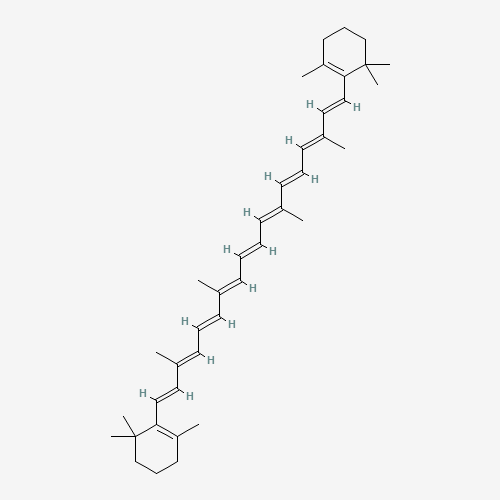
Beta-carotene is an orange pigment found in carrots and many other plants, used both as a colouring and as a source of vitamin A. It colours margarine, drinks, dairy products and confectionery.
Where it is and isn’t permitted
| Jurisdiction | Status | Scope and limits | Citation |
|---|---|---|---|
| Australia and New Zealand | Permitted, with conditions | 48 food categories no numerical limit (good manufacturing practice) Show every food category
| Food Standards Code, Schedule 15, S15—5and 47 further provisionsretrieved 2026-10-17 |
| Canada | Permitted, with conditions | no numerical limit (good manufacturing practice) 8 permitted uses Show every permitted use
| Health Canada, List of Permitted Food Colours (List 3)and 7 further provisionsretrieved 2026-10-17 |
| European Union | Permitted, with conditions | 54 food categories highest permitted level 20 mg/kg Show every food category
| Regulation (EC) No 1333/2008, Annex IIand 53 further provisionsretrieved 2026-10-18 |
| Great Britain | Permitted, with conditions | 60 food categories highest permitted level 20 mg/kg or mg/l Show every food category
| Assimilated Regulation (EC) No 1333/2008, Annex II (as at 28 June 2024)and 59 further provisionsretrieved 2026-10-18 |
| Japan | Permitted, with conditions | Designated additive: Appended Table 1, item 105, β―カロテン(別名β―カロチン) (“beta-Carotene” in the unofficial English translation). …Designated additive: Appended Table 1, item 105, β―カロテン(別名β―カロチン) (“beta-Carotene” in the unofficial English translation). Standards for use — Specifications and Standards for Foods, Food Additives, etc. (MHW Notification No. 370 of 1959), Part II (Food Additives), F (Standards for use), entry β―カロテン: (1) [must not be used in the foods stated] “β―カロテンは、こんぶ類、食肉、鮮魚介類(鯨肉を含む。)、茶、のり類、豆類、野菜及びわかめ類に使用してはならない。” The Japanese is the standard as published. There is no official English translation of the Notification; the English in square brackets is this site’s description of what each sentence does, not a translation of the foods or the levels. Compositional specifications for this additive, in the same Notification, are not imported and are not shown here; nor are the general rules in F 添加物一般, which apply to every additive. | Regulations for Enforcement of the Food Sanitation Act (MHW Ordinance No. 23 of 1948), Appended Table 1retrieved 2026-10-18 |
| South Korea | Permitted, with conditions | Designated food additive: Standards and Specifications for Food Additives, Part III, 1. …Designated food additive: Standards and Specifications for Food Additives, Part III, 1. 일반식품첨가물 (general food additives), β-카로틴 (“β-Carotene”, the English the Code prints beside it); the Code marks it as also usable as a nutrient fortifier; 3. 영양강화제 (nutrient fortifiers), β-카로틴; nutrient: 비타민A; the Code marks it as also usable as a general food additive. Main use (주용도) of β-카로틴: 착색료. Standard for use (사용기준) of β-카로틴: (1) [must not be used in the foods listed] “β-카로틴은 아래의 식품에 사용하여서는 아니 된다. 1. 천연식품[식육류, 어패류, 과일류, 채소류, 해조류, 콩류 등 및 그 단순가공품(탈피, 절단 등)] 2. 다류 3. 커피 4. 고춧가루, 실고추 5. 김치류 6. 고추장, 조미고추장 7. 식초” Standard for use (사용기준) of β-카로틴: (1) [follows the standard for use of another entry in the Code] “III. 1. 일반식품첨가물의 β-카로틴의 사용기준을 따른다.” The Korean is the standard as published. There is no official English translation of the current Code (the English version on MFDS’s website is the 2020 edition and has no legal effect); the English in square brackets is this site’s description of what each sentence does, not a translation of the foods or the levels. Compositional specifications (Part IV) are not imported, nor are the general standards in Part II, which apply to every additive. | Standards and Specifications for Food Additives (식품첨가물의 기준 및 규격), MFDS Notification, Part III (Standards for use, by item)retrieved 2026-10-18 |
| United States | Permitted | 21 CFR 73.95and 1 further provisionretrieved 2026-10-17 | |
| Codex Alimentarius | Not listedDoes not appear on this jurisdiction’s permitted list. That is not the same as being prohibited. |
How much is permitted
A listing usually limits the quantity as well as the food. Only one of the forms that takes is a figure: quantum satis and good manufacturing practice permit the amount the technological effect requires and no more, which is a limit rather than the absence of one. Figures below are the range across every food category this page is listed in, and categories differ between regulators — see how much is permitted.
| Australia and New Zealand | — | 48 GMP |
|---|---|---|
| Canada | — | 8 GMP |
| European Union | 20 mg/kg | 2 numeric limit, 52 quantum satis |
| Great Britain | 20 mg/kg | 2 numeric limit, 4 several limits, 54 quantum satis |
| Japan | — | 1 no quantity stated |
| South Korea | — | 1 no quantity stated |
| United States | — | 2 no quantity stated |
What it is made from
Obtained three ways, and the route is not usually stated on a label: chemical synthesis from petroleum-derived intermediates, fermentation using the fungus Blakeslea trispora or the alga Dunaliella salina, or extraction from plants such as carrots and palm fruit. Suspensions may be carried in gelatin, which would make that specific preparation non-vegetarian.
- Vegan status depends on the source
- Vegetarian status depends on the source
This is not an omission. What this additive is made from is not fixed — depending on the manufacturer it may be plant, animal or microbial in origin, nobody is required to say which, and the same product can change source between production runs. Ask the manufacturer if it matters to you; a label cannot answer it.
Compare other additives on the dietary indexes.
- CAS registry number
- 7235-40-7
- InChIKey
- OENHQHLEOONYIE-JLTXGRSLSA-N
- PubChem
- CID 5280489
How JECFA defines it
The international specification for identity and purity, prepared by the Joint FAO/WHO Expert Committee on Food Additives and published by FAO. It is a different document from any above, written by a different body and revised on its own cycle; it is advisory, and a country adopts it or does not.
INS 160a(i) beta-Carotene, synthetic
These specifications apply to synthetic β-carotene which consists predominantly of all-trans-β-carotene. Synthetic β- carotene may also contain minor amounts of cis-isomers and other carotenoids such as all- trans-retinal, β-apo-12’- carotenal, and β-apo-10’-carotenal. Commercial preparations of β-carotene intended for use in food are prepared from β- carotene meeting these specifications and are formulated as suspensions in edible oils or water-dispersible powders. These preparations may have different ratio of trans/cis isomers.
Synonyms: CI Food Orange 5; INS No. 160°(i); CI (1975) No. 40800
Assay, identification and purity criteria
Description and assay
- Specification history
- β-CAROTENE, SYNTHETIC Prepared at the 87 th JECFA (2019) and published in FAO Monographs 23 (2019). Superseding specifications prepared at the 74thJECFA (2011) and published in FAO Monographs 11 (2011). A group ADI of 0-5 mg/kg bw for beta carotene, synthetic and from Blakeslea trispora, was established at the 57 th JECFA (2001).
- Chemical names
- ß-Carotene, ß,ß-carotene 1,1’-(3,7,12,16-tetramethyl-1,3,5,7,9,11,13,15,17-octadecanonaene-1,18- diyl)bis[2,6,6-trimethylcyclohexene]
- C.A.S. number
- 7235-40-7
- Chemical formula
- C 40 H 56
- Structural formula
- All- trans -β-carotene (main compound)
- Formula weight
- 536.88
- Assay
- Not less than 96% total colouring matters, expressed as ß- carotene.
- DESCRIPTION
- Red to brownish-red crystals or crystalline powder; sensitive to oxygen and light and should therefore be kept in a light-resistant container under inert gas.
- FUNCTIONAL USES
- Colour
- METHOD OF ASSAY
- Total colouring matters content by spectrophotometry Proceed as directed under Total Colouring Matters Content – Colouring Matters Content by Spectrophotometry, Procedure 2, using the following conditions: Sample weight (W): 0.08 g (±0.01 g); Volume of the three volumetric flasks: V 1 = V 2 = V 3 = 100 ml; Volume of the two pipets: v 1 = v 2 = 5 ml; Specific absorbance of the standard: A 1% = 2500 ; 1cm Wavelength of maximum absorption: λ max about 455 nm. Calculation Calculate the percentage of total colouring matters using the following formula: A × V 1 × D Total colouring matters (%, w/w) = 1% A 1cm × W where A is the absorbance of the twice-diluted sample solution at 455 nm; and D is the dilution factor (V 2 xV 3 )/(v 1 /v 2 ).
Identification
- Solubility
- Insoluble in water; practically insoluble in ethanol; slightly soluble in vegetable oils.
- Spectrophotometry (Vol. 4)
- Determine the absorbance of the diluted sample solution used in the Method of Assay from 300 – 600nm. The spectrum shows a shoulder at about 427 nm, an absorption maximum at about 455 nm, and another maximum at about 483 nm. The ratio A 455 /A 483 is between 1.14 and 1.18. Determine the absorbance of the diluted sample solution used in the Method of Assay at 455 nm and 340 nm. The ratio A 455 /A 340 is not less than 15.
Purity criteria
- Sulfated Ash (Vol. 4)
- Not more than 0.1% Test 2 g of the sample (Method I).
- Carotenoids other than ß-carotene
- Not more than 3% of total colouring matters. See description under TESTS
- Lead (Vol. 4)
- Not more than 2 mg/kg. Determine using a method appropriate to the specified level. The selection of sample size and method of sample preparation may be based on the principles of the methods described in Volume 4, under “General Methods, Metallic Impurities”.
- Test: Carotenoids other than β-carotene
- Chromatographic system − HPLC equipped with a UV/Vis detector or a photodiode array detector, refrigerated auto sampler and integrator − Detector wavelength: 453 nm − Column: Reverse phase C18; Suplex pkb-100 (250 x 4.6 mm, 5 μm) from Supelco or equivalent − Mobile phase: In a 1000 ml volumetric flask, dissolve 50 mg BHT in 20 ml 2 ‐ propanol and add 0.2 ml N ‐ ethyldiisopropyl ‐ amine, 25 ml 0.2% aqueous ammonium acetate solution, 455 ml acetonitrile, and 3pprox.. 450 ml methanol. Mixture cools and contracts. Allow to reach room temperature and dilute to volume with methanol. Discard after 2 days. − Isocratic elution − Column temperature: 30° − Flow rate: 0.6 ml/min − Injection volume: 10 μl − Temperature of the autosampler: (4pprox.. 15°) − Run time: 4pprox.. 35 min Reagents - Butylated hydroxytoluene (BHT), reagent grade - 2-Propanol, HPLC grade - N-ethyldiisopropyl-amine, reagent grade - Ammonium acetate, reagent grade - Acetonitrile, HPLC grade - Methanol, HPLC grade - Ethanol, HPLC grade - Tetrahydrofuran, HPLC grade Sample solution Weigh accurately (to ±0.1 mg) 0.010 g of the sample and dissolve in tetrahydrofuran (stabilized with 0.025% BHT). Transfer to a 100 ml volumetric flask and bring to volume with tetrahydrofuran. Dilute to the ratio of 1:10 with ethanol. Procedure Inject the sample solution using the conditions detailed under Chromatographic system . The retention times for all- trans -β-carotene and cis-isomers are in the range of 20-25 min. The largest peak in the chromatogram corresponds to all- trans -β-carotene. The relative retention times of minor carotenoids and cis-isomers of β-carotene with respect to the retention time of all- trans - β-carotene are: all- trans -retinal (0.26), all- trans -β-apo-12’-carotenal (0.33), all- trans -β-apo-10’carotenal (0.34), all- trans - -carotene (0.85), all- trans -α-carotene (0.95), 9-cis-β-carotene (1.05), 13-cis-β-carotene (1.15) and 15-cis-β-carotene (1.18). Integrate the areas of the peaks in the chromatogram. Calculation Calculate the percentage of carotenoids other than β- carotenes (%, w/w) using the following formula: 𝑤 𝐶𝑎𝑟𝑜𝑡𝑒𝑛𝑜𝑖𝑑𝑠 𝑜𝑡ℎ𝑒𝑟 𝑡ℎ𝑎𝑛 𝛽‐𝑐𝑎𝑟𝑜𝑡𝑒𝑛𝑒𝑠 (%, ) = 𝑤 𝐴 𝑡𝑜𝑡𝑎𝑙 × 𝐴 𝛽−𝑐𝑎𝑟𝑜𝑡𝑒𝑛𝑒𝑠 × 100 𝐴 𝑡𝑜𝑡𝑎𝑙 where A total is the sum of the area of all the peaks in the chromatogram, excluding the solvent peak (area units); and A β-carotene is the sum of the areas of the peaks of all β- carotenes (all- trans -β-carotene, 9-cis-β-carotene, 13-cis-β- carotene and 15-cis-β- carotene) in the chromatogram (area units).
INS 160a(ii) Carotenes (Vegetable)
Carotenes (vegetable) are obtained by solvent extraction of carrots ( Daucus carota ), oil of palm fruit ( Elaeis guinensis ), sweet potato ( Ipomoea batatas ) and other edible plants with subsequent purification. The main colouring principles are alpha- and ß-carotenes of which ß-carotenes account for the major part. Minor amounts of gamma- and delta-carotenes and other pigments may be present. Besides the colour pigments, this substance may contain oils, fats and waxes naturally occurring in the source material. The only solvents used for the extraction are acetone, methanol, ethanol, propan-2-ol, hexane, carbon dioxide and vegetable oils. The main articles of commerce are solutions or suspensions in food grade vegetable/plant oil. This is for ease of use and to improve stability as carotenes easily oxidise.
Synonyms: Natural ß-carotene, carotenes-natural; CI Food Orange 5, mixed carotenes, INS No. 160a(ii); CI (1975) No. 75130; CI (1975) No. 40800 (ß-Carotene) Carotenes-natural; CI (1975) No. 40800 (beta-Carotene); CI Food Orange 5; Mixed carotenes; Natural beta-carotene
Assay, identification and purity criteria
Description and assay
- Specification history
- Prepared at the 51st JECFA (1998), published in FNP 52 Add 6 (1998) superseding specifications prepared at the 44th JECFA (1995), published in FNP 52 Add 3 (1995). ADI "acceptable", provided the level of use does not exceed the level normally found in vegetables, established at the 41st JECFA in 1993. Metals and arsenic specifications revised at the 59 th JECFA (2002).
- Class
- Carotenoid
- C.A.S. number
- 7235-40-7
- Chemical formula
- C40H56 (ß-Carotene)
- Structural formula
- all- trans -ß-Carotene
- Formula weight
- 536.88 (ß-Carotene)
- Assay
- Content of carotenes (calculated as ß-carotene) is not less than declared
- DESCRIPTION
- Red-brown to brown or orange to dark orange solid or liquid
- FUNCTIONAL USES
- Colour
- METHOD OF ASSAY
- Proceed as directed under Colouring Matters, Total Content by Spectrophotometry in Volume 4, using the following conditions: W (g) = amount of the sample to obtain adequate absorbance V1 = V2 = V3 = 100 ml v1 = v2 = 5 ml A 1% 1 cm = 2500 lambda max = 440-457 nm
Identification
- Solubility (Vol. 4)
- Insoluble in water
- Spectrophotometry (Vol. 4)
- A cyclohexane solution of the sample (1 in 200,000) shows maximum absorptions at 440-457 and 470-486 nm
- Colour reaction
- A spot of a solution of the sample in toluene (about 400 μg /ml of ß-carotene) on a filter paper turns blue 2-3 min after application of a spray or drop of 20% solution of antimony trichloride solution in toluene.
Purity criteria
- Residual solvents (Vol. 4)
- Not more than 50 mg/kg, singly or in combination, of acetone, hexane, methanol, ethanol and propan-2-ol
- Lead (Vol. 4)
- Not more than 5 mg/kg Determine using an atomic absorption technique appropriate to the specified level. The selection of sample size and method of sample preparation may be based on the principles of the method described in Volume 4, “Instrumental Methods.”
INS 160a(iii) beta-Carotene from Blakeslea trispora
Obtained by a fermentation process using the two sexual mating types (+) and (-) of the fungus Blakeslea trispora. The colour is isolated from the biomass by solvent extraction and crystallised. The colouring principal consists predominantly of trans β-carotene together with variable amounts of cis isomers of β-carotene. Minor amounts of other carotenoids of which γ- carotene accounts for the major part may also be present. The only organic solvents used in the extraction and purification are ethanol, isopropanol, ethyl acetate and isobutyl acetate. The main articles of commerce are suspensions in food grade vegetable/plant oil and water dispersible powders.
Synonyms: CI Food Orange 5; INS No. 160a(iii)
Assay, identification and purity criteria
Description and assay
- Specification history
- β-CAROTENE from BLAKESLEA TRISPORA Prepared at the 87 th JECFA (2019) published in FAO Monographs 23 (2019). Superseding specifications prepared at the 61 st JECFA (2003), published in FNP 52 Add 11 (2003). A group ADI with β -carotene (synthetic) of 0 – 5 mg/kg bw was established at the 57 th JECFA (2001).
- Chemical names
- ß-Carotene, ß,ß-carotene
- C.A.S. number
- 7235-40-7
- Chemical formula
- C 40 H 56
- Formula weight
- 536.88
- Assay
- Not less than 96.0% total colouring matter (expressed as ß- carotene).
- DESCRIPTION
- Red to brownish-red crystals or crystalline powder.
- FUNCTIONAL USES
- Colour
- METHOD OF ASSAY
- Total colouring matters content by spectrophotometry Proceed as directed under Total Colouring Matters Content – Colouring Matters Content by Spectrophotometry, Procedure 2, using the following conditions: Sample weight (W): 0.08 g (±0.01 g); Volume of the three volumetric flasks: V 1 = V 2 = V 3 = 100 ml; Volume of the two pipets: v 1 = v 2 = 5 ml; Specific absorbance of the standard: A 1% = 2500 ; 1cm Wavelength of maximum absorption: λ max about 455 nm. Calculation Calculate the percentage of total colouring matters using the following formula: A × V 1 × D Total colouring matters (%, w/w) = 1% A 1cm × W where A is the absorbance of the twice-diluted sample solution at 455 nm; and D is the dilution factor (V 2 xV 3 )/(v 1 /v 2 ).
Identification
- Solubility
- Insoluble in water; practically insoluble in ethanol; slightly soluble in vegetable oils.
- Spectrophotometry (Vol. 4)
- Determine the absorbance of the diluted sample solution used in the Method of Assay from 300 – 600nm. The spectrum shows a shoulder at about 427 nm, an absorption maximum at about 455 nm, and another maximum at about 483 nm. The ratio A 455 /A 483 is between 1.14 and 1.18. Determine the absorbance of the diluted sample solution used in the Method of Assay at 455 nm and 340 nm. The ratio A 455 /A 340 is not less than 15.
Purity criteria
- Sulfated Ash (Vol. 4)
- Not more than 0.2%
- Carotenoids other than ß-carotene
- Carotenoids other than ß-Carotene: Not more than 3% of total colouring matters. See description under TESTS
- Residual solvents (Vol. 4)
- Ethanol and Ethyl acetate: Not more than 0.8% singly or in combination Isopropanol: Not more than 0.1% Isobutyl acetate: Not more than 1.0% See description in Volume 4
- Lead (Vol. 4)
- Not more than 2 mg/kg. Determine using a method appropriate to the specified level. The selection of sample size and method of sample preparation may be based on the principles of the methods described in Volume 4, under “General Methods, Metallic Impurities”.
- Test: Carotenoids other than β-carotene
- Determine by liquid chromatography (see Volume 4) using the following procedure: Chromatographic system − HPLC equipped with a UV/Vis detector or a photodiode array detector, refrigerated auto sampler and integrator − Detector wavelength: 445 nm − Column: Reverse phase C18; Vydac 218 TP54 (250 x 4.6 mm, 5 μm) or equivalent − Mobile phase: 99% methanol and 1% tetrahydrofuran containing 50 mg/l of L-ascorbic acid − Isocratic elution − Column temperature: 30° − Flow rate: 0.6 ml/min − Injection volume: 10 μl − Temperature of the autosampler: (4pprox.. 15°) − Run time: 4pprox.. 25 min Sample preparation Weigh 25 mg of the sample and dissolve in tetrahydrofuran. Transfer to a 100 ml volumetric flask and bring to volume with tetrahydrofuran. Dilute 1 ml of the solution to 25 ml in a volumetric flask with mobile phase. Use freshly prepared solutions. Results The retention time for β-carotene (all trans isomer) is about 19 minutes corresponding to the largest peak in the chromatogram. The retention time for γ-carotene is about 20 minutes and the peak at about 22 minutes corresponds to the 13-cis isomer. Γ-Carotene as a % of total β-carotene: A 1 x 100 = A 1 + A 2 + A 3 where A 1 is the area of the γ-carotene peak A 2 is the is the area of the all-trans β-carotene peak A 3 is the combined area of the peaks from the isomers of all-trans β-carotene
INS 160a(iv) Carotenes (Algae)
Carotenes (algae) are obtained by solvent extraction of the dried Dunaliella salina (syn. D. bardawil and D. Kone ). The main colouring principles are trans and cis -ß-carotene together with minor amounts of other carotenoids such as alpha-carotene and xanthophylls. Besides the colour pigments, carotenes (algae) may contain lipids, naturally occurring in the source material, food grade vegetable oil, and tocopherol added to retard oxidation of the pigment. The only solvents used for the extraction are carbon dioxide, acetone, methanol, propan-2-ol, hexane, ethanol and vegetable oil. The main articles of commerce are suspensions in food grade vegetable/plant oil. Others are liquid in food grade oil, dispersion in water using food additive emulsifier, and as a powder using a pulverizing agent such as dextrin. This is for ease of use and to improve stability as ß-carotenes easily oxidize.
Synonyms: Natural ß-carotene, carotenes-natural; INS No. 160a(iv); CI (1975) No. 75130; CI (1975) No. 40800 (ß-Carotene) Carotenes-natural; CI (1975) No. 40800 (beta-Carotene); Natural beta-carotene
Assay, identification and purity criteria
Description and assay
- Specification history
- Prepared at the 51st JECFA (1998), published in FNP 52 Add 6 (1998) superseding specifications prepared at the 44th JECFA (1995), published in FNP 52 Add 3 (1995). No ADI allocated at the 41st JECFA in 1993. Metals and arsenic specifications revised at the 59 th JECFA (2002).
- Class
- Carotenoid
- C.A.S. number
- 7235-40-7
- Chemical formula
- C40H56 (ß-Carotene)
- Structural formula
- all- trans -ß-Carotene
- Formula weight
- 536.88 (ß-Carotene)
- Assay
- Content of carotenes (calculated as ß-carotene) is not less than declared
- DESCRIPTION
- Red-brown to brown or orange to dark orange solid, suspension, liquid, dispersion or powder
- FUNCTIONAL USES
- Colour
- METHOD OF ASSAY
- Proceed as directed under Colouring Matters, Total Content by Spectrophotometry in Volume 4, using the following conditions: W (g) = amount to obtain adequate absorbance; V1 = V2 = V3 = 100 ml; v1 = v2 = 5 ml; A 1% 1 cm = 2500; and lambda max = 448 - 457 nm
Identification
- Solubility (Vol. 4)
- Insoluble in water
- Spectrophotometry (Vol. 4)
- A cyclohexane solution of the sample (1 in 200,000) shows maximum absorptions at 448 -457 and 474 - 486 nm
- Colour reaction
- A spot of a solution of the sample in toluene (about 400 μg /ml of ß-carotene) on a filter paper turns blue 2-3 min after application of a spray or drop of 20% solution of antimony trichloride solution in toluene.
Purity criteria
- Residual solvents (Vol. 4)
- Not more than 50 mg/kg, singly or in combination, of acetone, hexane, methanol, ethanol and propan-2-ol
- Tocopherols
- Not more than 0.5% See description under TESTS
- Lead (Vol. 4)
- Not more than 5 mg/kg Determine using an atomic absorption technique appropriate to the specified level. The selection of sample size and method of sample preparation may be based on the principles of the method described in Volume 4, “Instrumental Methods.”
- Test: Tocopherols
- Reagents - Ethanol: Dehydrate as follows. Add 0.02% each of KMnO4 and KOH to absolute ethanol (Reagent quality) and distil. Discard the first 5% of the distillate and leave at least 5% in the distilling flask. - Petroleum ether (bp. 30-60 o ): Distil prior to use. - Ferric chloride Solution: Dissolve 1 g of ferric chloride in and make up to 500 ml with dehydrated ethanol. Store in a non-actinic glass flask. - alpha,alpha'-Dipyridyl Solution: Dissolve 1 g of alpha,alpha'-dipyridyl in and make up to 220 ml with dehydrated ethanol. Store in a non-actinic glass flask. Procedure Transfer 0.1 g of the sample, accurately weighed, into a 25 ml volumetric flask. Add a few ml of petroleum ether, and swirl to dissolve the sample. Add approximately 10 ml of ethanol. Boil petroleum ether by heating carefully on a steam bath. Make up to volume with ethanol (first cool the flask and its contents to room temperature). Pipet an aliquot into a second volumetric flask, and make up to volume with ethanol. The aliquot and flask size should be such that on making up to volume this second time the solution contains approximately 15 mg tocopherol per 100 ml. Pipet 2 ml of the solution into a third 25 ml volumetric flask. Add 1 ml of ferric chloride solution and begin timing, using a stopwatch. Immediately add 1 ml of alpha,alpha'-dipyridyl solution and mix thoroughly by swirling. Dilute to volume with ethanol and mix again by shaking vigorously. Approximately 9.5 min after the timing began, fill the spectrophotometer cell. Exactly 10 min after the addition of ferric chloride, read the absorbance vs. ethanol at 520 nm. The readings should be between 0.2 and 0.8. Measure absorbance of a blank. For the blank use 2 ml of ethanol instead of the sample solution. % Total Tocopherols is where: AD = Absorbance of sample - Absorbance of blank; 28.2 = Factor for alpha-, beta-, gamma- and delta- tocopherols; L = Length of the spectrophotometer cell in cm; CD = Concentration of the sample expressed as grams of sample in 100 ml of ethanol solution of which 2 ml was taken before adding ferric chloride solution
Every name it appears under
90 recorded names. A label may use any of them.
E number
- E160a
CAS registry number
- 116-32-5
- 7235-40-7
As it appears in regulation
- Beta -carotene
- Carotene
- Carotenes
- β-Carotene
Other names
- .beta.,.beta.-Carotene
- .beta.-Carotene
- .beta.-Carotene, all-trans-
- 01YAE03M7J
- 9-cis--Carotene
- Algal carotenes
- all-trans-.beta.-Carotene
- all-trans-beta-Carotene
- b,b-Carotene
- b-Carotene
- beta Carotene
- beta,beta-Carotene
- Beta-carotene
- beta-Carotene, all-trans-
- beta-Carotin
- beta-Karotin
- Betacarotene
- Betacarotene (INN)
- Betacaroteno
- Betacarotenum
- BetaVit
- C.I. Food Orange 5
- Carotaben
- Caroten base 35468
- Carotene
- Carotene,beta
- CARTB
- CI Food Orange 5
- E 160a(i)
- E 160a(ii)
- E 160a(iv)
- E-160a(iii)
- Eldon
- Food orange 5
- Gerard
- Golden rose
- Ins no.160a(iii)
- Ins-160a(iii)
- Karotin
- KPMK
- Lucaratin
- Lucarotin 30sun
- Lumitene
- Lurotin
- Max Caro
- MaxCaro
- Mixed carotenes from algae
- Mixed carotenes from natural strains of edible plants
- Natural Yellow 26
- Nature's plus
- Optimun
- Plant carotenes
- Provatene
- Provatenol
- Provitamin A
- Rovimix .beta.-carotene
- ROVIMIX beta-CAROTENE
- Serlabo
- Solatene
- Solatene (caps)
- Zlut prirodni 26
Systematic names
- (all-E)-1,1'-(3,7,12,16-Tetramethyl-1,3,5,7,9,11,13,15,17-octadecanonaene-1,18-diyl)bis(2,6,6-trimethylcyclohexene)
- 1,3,3-trimethyl-2-[(1E,3E,5E,7E,9E,11E,13E,15E,17E)-3,7,12,16-tetramethyl-18-(2,6,6-trimethylcyclohexen-1-yl)octadeca-1,3,5,7,9,11,13,15,17-nonaenyl]cyclohexene
- 2,2'-((1E,3E,5E,7E,9E,11E,13E,15E,17E)-3,7,12,16-tetramethyloctadeca-1,3,5,7,9,11,13,15,17-nonaene-1,18-diyl)bis(1,3,3-trimethylcyclohex-1-ene)
- 3,7,12,16-tetramethyl-1,18-bis(2,6,6-trimethyl-1-cyclohexenyl)-octadeca-1,3,5,7,9,11,13,15,17-nonaene
- Cyclohexene, 1,1'-(3,7,12,16-tetramethyl-1,3,5,7,9,11,13,15,17-octadecanonaene-1,18-diyl)bis(2,6,6-trimethyl-, (all-E)-
The EU re-evaluation programme
Every additive authorised in the EU before 20 January 2009 was put back through EFSA by Commission Regulation (EU) No 257/2010, and this one is named in it. What the Regulation required is below; whether the opinion has since been published is not something this site records.
- To be evaluated by 31 December 2015. Named in Annex II, Part I, point 3 as “Carotenes: (i) mixed carotenes, (ii) beta-carotene”, among the additives given priority within its class.
Hazard reference values
| Type | Value | Population | Assessed by | Opinion |
|---|---|---|---|---|
| ADI | not allocated | — | JECFA | 1989 |
Evidence and how bodies read it
What assessing bodies concluded
Each conclusion is paraphrased in the body's own framing, from the published opinion linked beneath it. Where bodies differ, both stand; this site does not adjudicate between them or add a view of its own.
EFSA 2012
The ANS Panel concluded that no ADI could be established for mixed carotenes (E 160a(i)) or β-carotene (E 160a(ii)), and that their use as a colour is not of safety concern provided intake from additive and supplement use does not exceed what is typically ingested from foods in which they occur naturally (5–10 mg/day). It found the specifications for mixed carotenes inadequate and could not conclude on their safety in use.
Common questions
Assembled from what is above, in the words the questions are usually asked in. Each answer is the same statement the relevant section makes, with the same citations behind it.
- What is E 160a?
- E 160a is Beta -carotene. Beta-carotene is an orange pigment found in carrots and many other plants, used both as a colouring and as a source of vitamin A. It colours margarine, drinks, dairy products and confectionery.
- What is Beta -carotene used for in food?
- It is listed as a colour — the role Canada, the EU and the US assign it. This page shows every function each regulator records, with the citation for each.
- Where is Beta -carotene permitted?
- Of the seven regulators this site reads, Australia and New Zealand, Canada, the EU, Great Britain, Japan, South Korea and the US permit it. Each permission is for named foods at named levels, not a blanket one; the table on this page gives them with citations.
- Is Beta -carotene vegan?
- It depends on the source, and a label will not tell you. Beta -carotene can be made from plant or animal material, manufacturers are not obliged to say which, and the same product can change between production runs. Anyone who needs to know has to ask the manufacturer.
Sources for this page
- anz retrieved 2026-10-17
- ca retrieved 2026-10-17
- eu retrieved 2026-10-18
- gb retrieved 2026-10-18
- jp retrieved 2026-10-18
- kr retrieved 2026-10-18
- ecfr retrieved 2026-10-17
- jecfaspecs retrieved 2026-09-23
Full licence terms and publisher details on Sources. How this page is built and updated: Method.
Machine-readable: a JSON record of this additive is given on request —how to ask for access.
Follow changes to Beta -carotene:Atom feed — regulatory events, and any change the weekly refresh detects in its provisions.