Carbon dioxide
124-38-9 · 18923-20-1 · 2684-00-6 · AER Fixus · After-damp · Air 90% Carbon Dioxide 10% · Anhydride carbonique · Anhydride, Carbonic · carbon dioxid · Carbon dioxide · CARBON DIOXIDE (13C; 18O2) · Carbon dioxide (JP18/USP) · Carbon Dioxide Air · Carbon Dioxide Air Mixture · CARBON DIOXIDE CARBON DIOXIDE · Carbon Dioxide Compressed · Carbon Dioxide Nitrogen · Carbon Dioxide Refrigerated · Carbon Dioxide Std CO2 standard 2g/L (2mL ampoules) · Carbon Dioxide Std CO2 standard 3g/L (2mL ampoules) · Carbon Dioxide Std CO2 standard 4g/L (2mL ampoules) · Carbon Dioxide Std CO2 standard 6g/L (2mL ampoules) · Carbon dioxide, >=99.8% · Carbon dioxide, Messer(R) CANgas, 99.995% · Carbon dioxide, puriss., >=99.998% · Carbon dioxide, refrigerated liquid · Carbon dioxide, solid or dry ice · CARBON DIOXIDE, USP · Carbon oxide (CO2) · Carbon oxide, di- · Carbon-12 dioxide · Carbonic acid anhydride · Carbonic acid gas · Carbonic anhydride · Carbonica · Cardice · Caswell No. 163 · CO2F · Dioxide, Carbon · Dioxido de carbono · dioxidocarbon · Dioxomethane · Dioxomethane # · Dioxyde de carbone · Dricold · Drikold · Dry ice · Dry ice (solid · Dry ice (solid form) · dry-ice · E 290 · EPA Pesticide Chemical Code 016601 · epoxyketone · HSDB 516 · INS NO.290 · INS-290 · Khladon 744 · Kohlendioxyd · Kohlensaure · Makr carbon dioxide · methane, dioxo- · methanedione · E290 · 290 · dioxomethane · Carbon dioxide · Anglies dioksidas · Anidride carbonica · Carbon dioxide · Carbondioxid · Diossidu tal-karbonju · Dioxid de carbon · Dioxyde de carbone · Dióxido de carbono · Dwutlenek węgla · Hiilidioksidi · Kohlendioxid · Koldioxid · Koolstofdioxide · Oglekļa dioksīds · ogljikov dioksid · Oxid uhličitý · Szén-dioxid · Süsinikdioksiid · UGLJIKOV DIOKSID · Ugljični dioksid · Διοξείδιο του άνθρακα · Въглероден диоксидE number E290INS 290CAS 124-38-9
Listed as a propellant by Canada, Codex and the US.
Listed as propellants and aerating agents (CA, US, Codex) · preservatives (US, Codex) · acidity regulators (CA, US) · carbonating agents (CA, Codex) · solvents and vehicles (CA, US) · antioxidants (US) · raising agents (US) · flavour enhancers (US) · foaming and whipping agents (Codex) · packaging gases (Codex) · flavouring agents and adjuvants (US) · formulation aids (US) · processing aids (US)
- Canada: Carbonating agent and pressure dispensing agent — Health Canada, List of Permitted Food Additives with Other Purposes of Use (List 8)
- United States: Propellant — FDA, Substances Added to Food: CARBON DIOXIDE
- United States: Propellants, aerating agents, and gases — 21 CFR 184.1240, citing 21 CFR 170.3(o)(25)
- Codex Alimentarius: Propellant — CXS 192-1995 Table One, INS 290
- United States: Antimicrobial agent — FDA, Substances Added to Food: CARBON DIOXIDE
- Codex Alimentarius: Preservative — CXS 192-1995 Table One, INS 290
- Canada: Acidity regulator — Health Canada, List of Permitted Acidity Regulators and Acid-Reacting Materials (List 10)
- United States: pH control agent — FDA, Substances Added to Food: CARBON DIOXIDE
- Canada: Carbonating agent — Health Canada, List of Permitted Food Additives with Other Purposes of Use (List 8)
- Canada: Carbonating agent and pressure dispensing agent — Health Canada, List of Permitted Food Additives with Other Purposes of Use (List 8)
- Codex Alimentarius: Carbonating agent — CXS 192-1995 Table One, INS 290
- Canada: Extraction solvent — Health Canada, List of Permitted Solvents (List 15)
- United States: Solvent — FDA, Substances Added to Food: CARBON DIOXIDE
- United States: Antioxidant — FDA, Substances Added to Food: CARBON DIOXIDE
- United States: Leavening agents — 21 CFR 184.1240, citing 21 CFR 170.3(o)(17)
- United States: Flavor enhancer — FDA, Substances Added to Food: CARBON DIOXIDE
- Codex Alimentarius: Foaming agent — CXS 192-1995 Table One, INS 290
- Codex Alimentarius: Packaging gas — CXS 192-1995 Table One, INS 290
- United States: Flavoring agent or adjuvant — FDA, Substances Added to Food: CARBON DIOXIDE
- United States: Formulation aid — FDA, Substances Added to Food: CARBON DIOXIDE
- United States: Processing aid — FDA, Substances Added to Food: CARBON DIOXIDE
- United States: Processing aids — 21 CFR 184.1240, citing 21 CFR 170.3(o)(24)
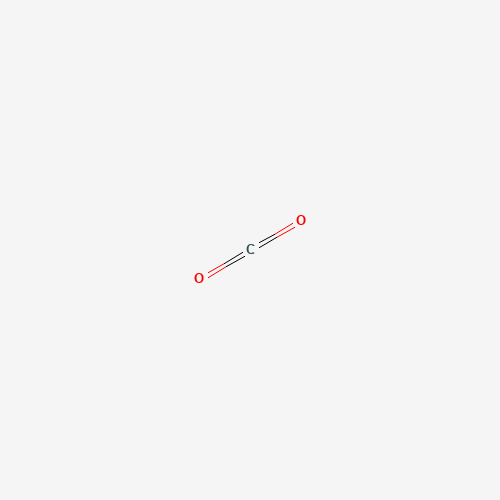
Carbon dioxide is the gas in carbonated drinks, and also a preservative: in modified-atmosphere packaging it displaces oxygen and slows the growth of spoilage organisms.
Where it is and isn’t permitted
| Jurisdiction | Status | Scope and limits | Citation |
|---|---|---|---|
| Australia and New Zealand | Permitted, with conditions | 59 food categories no numerical limit (good manufacturing practice) Show every food category
| Food Standards Code, Schedule 15, S15—5and 58 further provisionsretrieved 2026-10-17 |
| Canada | Permitted | no numerical limit (good manufacturing practice) 10 permitted uses Show every permitted use
| Health Canadaand 9 further provisionsretrieved 2026-10-17 |
| European Union | Permitted, with conditions | 68 food categories Show every food category
| Regulation (EC) No 1333/2008, Annex IIand 67 further provisionsretrieved 2026-10-18 |
| Great Britain | Permitted, with conditions | 67 food categories Show every food category
| Assimilated Regulation (EC) No 1333/2008and 66 further provisionsretrieved 2026-10-18 |
| Japan | Permitted, with conditions | Designated additive: Appended Table 1, item 294, 二酸化炭素(別名炭酸ガス) (“Carbon Dioxide (Carbonic Acid Gas)” in the unofficial English translation). …Designated additive: Appended Table 1, item 294, 二酸化炭素(別名炭酸ガス) (“Carbon Dioxide (Carbonic Acid Gas)” in the unofficial English translation). Standards for use — Specifications and Standards for Foods, Food Additives, etc. (MHW Notification No. 370 of 1959), Part II (Food Additives), F (Standards for use): The Notification sets no standard for use (使用基準) for this additive, so it is not restricted there to particular foods or amounts. Compositional specifications for this additive, in the same Notification, are not imported and are not shown here; nor are the general rules in F 添加物一般, which apply to every additive. | Regulations for Enforcement of the Food Sanitation Act (MHW Ordinance No. 23 of 1948), Appended Table 1retrieved 2026-10-18 |
| South Korea | Permitted, with conditions | Designated food additive: Standards and Specifications for Food Additives, Part III, 1. …Designated food additive: Standards and Specifications for Food Additives, Part III, 1. 일반식품첨가물 (general food additives), 이산화탄소 (“Carbon Dioxide”, the English the Code prints beside it). Main use (주용도) of 이산화탄소: 분사제, 충전제. Standard for use (사용기준) of 이산화탄소: (1) [to be used under the general standard for use in II. 2. 1), the minimum amount that achieves the technical effect, with no limit set for this additive in particular] “II. 2. 1)의 규정에 따라 사용하여야 한다.” The Korean is the standard as published. There is no official English translation of the current Code (the English version on MFDS’s website is the 2020 edition and has no legal effect); the English in square brackets is this site’s description of what each sentence does, not a translation of the foods or the levels. Compositional specifications (Part IV) are not imported, nor are the general standards in Part II, which apply to every additive. | Standards and Specifications for Food Additives (식품첨가물의 기준 및 규격), MFDS Notification, Part III (Standards for use, by item)retrieved 2026-10-18 |
| United States | Permitted | 21 CFR 184.1240retrieved 2026-10-17 | |
| Codex Alimentarius | Permitted, with conditions | 19 food categories no numerical limit (good manufacturing practice) Show every food category and its notes
| CXS 192-1995 Table Three, INS 290and 19 further provisionsretrieved 2026-09-07 |
How much is permitted
A listing usually limits the quantity as well as the food. Only one of the forms that takes is a figure: quantum satis and good manufacturing practice permit the amount the technological effect requires and no more, which is a limit rather than the absence of one. Figures below are the range across every food category this page is listed in, and categories differ between regulators — see how much is permitted.
| Australia and New Zealand | — | 59 GMP |
|---|---|---|
| Canada | — | 10 GMP |
| European Union | — | 46 several limits, 22 no quantity stated |
| Great Britain | — | 67 quantum satis |
| Japan | — | 1 no quantity stated |
| South Korea | — | 1 no quantity stated |
| United States | — | 1 no quantity stated |
| Codex Alimentarius | — | 20 GMP |
No regulator sets a figure for Carbon dioxide. That is not an absence of control: where the listing says quantum satis or good manufacturing practice, the quantity is limited to what the effect requires.
What a label must say
Words a food containing Carbon dioxide is obliged to carry, quoted from the instrument that imposes them. A required statement is a fact about the regulation, not a finding about the substance — every rule below applies where the additive is authorised.
‘packaged in a protective atmosphere’.
A food whose durability has been extended using an authorised packaging gas. Regulation (EU) No 1169/2011, Annex III, point 1.1 · Assimilated Regulation (EU) No 1169/2011, Annex III
Every rule collected at what a label must say.
What it is made from
Captured as a by-product of ammonia manufacture, fermentation and other industrial processes, then purified to food grade.
- Vegan
- Vegetarian
Compare other additives on the dietary indexes.
- CAS registry number
- 124-38-9
- InChIKey
- CURLTUGMZLYLDI-UHFFFAOYSA-N
- PubChem
- CID 280
The two specifications, compared
The European Union sets identity and purity by regulation; JECFA publishes its own through FAO, advisory until a country adopts it. Both documents are below in full. These are the parameters each puts a number on.
| Parameter | European Union | JECFA |
|---|---|---|
| Assay | no less than 99 % | no less than 99 % |
The two documents state the same figures for every parameter compared here.
How the EU defines it
The legal specification an additive must meet to be sold as this E number in the EU — what it is, how it may be made, and the purity it must reach. From Commission Regulation (EU) No 231/2012.
E 290 Carbon dioxide
Synonyms: Carbonic acid gas; Dry ice (solid form); Carbonic anhydride
Assay, identification and purity criteria
Description and assay
- Einecs
- 204-696-9
- Chemical name
- Carbon dioxide
- Chemical formula
- CO₂
- Molecular weight
- 44,01
- Assay
- Content not less than 99 % v/v on the gaseous basis
- Description
- A colourless gas under normal environmental conditions with a slight pungent odour. Commercial carbon dioxide is shipped and handled as a liquid in pressurised cylinders or bulk storage systems, or in compressed solid blocks of ‘dry ice’. Solid (dry ice) forms usually contain added substances, such as propylene glycol or mineral oil, as binders
Identification
- Precipitate formation
- When a stream of the sample is passed through a solution of barium hydroxide, a white precipitate is produced which dissolves with effervescence in dilute acetic acid
Purity criteria
- Acidity
- 915 ml of gas bubbled through 50 ml of freshly boiled water must not render the latter more acid to methylorange than is 50 ml freshly boiled water to which has been added 1 ml of hydrochloric acid (0,01 N)
- Reducing substances, hydrogen phosphide and sulphide
- 915 ml of gas bubbled through 25 ml of ammoniacal silver nitrate reagent to which has been added 3 ml of ammonia must not cause clouding or blackening of this solution
- Carbon monoxide
- Not more than 10 μl/l
- Oil content
- Not more than 5 mg/kg
How JECFA defines it
The international specification for identity and purity, prepared by the Joint FAO/WHO Expert Committee on Food Additives and published by FAO. It is a different document from any above, written by a different body and revised on its own cycle; it is advisory, and a country adopts it or does not.
INS 290 Carbon Dioxide
Synonyms: INS No. 290
Assay, identification and purity criteria
Description and assay
- Specification history
- Prepared at the 49th JECFA (1997) , published in FNP 52 Add5 (1997) superseding specifications prepared at the 29th JECFA (1985), published in FNP 34 (1986) and in FNP 52 (1992) An ADI 'not specified' was established at the 29th JECFA (1985)
- C.A.S. number
- 124-38-9
- Chemical formula
- CO 2
- Formula weight
- 44.01
- Assay
- Not less than 99% of CO 2 , by volume Colourless, odourless gas, 1 litre of which weighs about 1.98 g at 0 o and
- DESCRIPTION
- 760 mm of mercury. Under a pressure of about 59 atmospheres it may be condensed to a liquid, a portion of which forms a white solid (Dry Ice) upon rapid evaporation. Solid carbon dioxide evaporates without melting upon exposure to air. Commercial carbon dioxide is shipped and handled in pressurized cylinders or low pressure bulk liquid systems, or in solid blocks.
- FUNCTIONAL USES
- Propellant, freezing agent, carbonating agent, preservative, extraction solvent
- CHARACTERISTICS
- The following specifications apply to gaseous carbon dioxide as produced from its condensed liquid or solid phase by evolution to the gas phase at normal environmental conditions. Additional specifications may be applied to liquid or solid forms of carbon dioxide by vendors or by specific users of commercial carbon dioxide products.
- METHOD OF ASSAY
- Transfer a 1 in 3 potassium hydroxide solution into a gas pipette of adequate volume. Measure accurately about 1,000 ml of the sample into a gas burette containing a 1 in 10 sodium chloride solution. Transfer the sample into the gas pipette and shake well. When the volume of gas remaining unabsorbed is constant (V ml), the content of carbon dioxide is calculated by:
Identification
- Precipitate formation
- When a stream of the sample is passed through a solution of barium hydroxide, a white precipitate is produced which dissolves with effervescence in dilute acetic acid.
- Detector tube test
- Passes test See description under TEST
- Test: Detector tube test
- Pass 100±5 ml, released from the vapour phase of the contents of the container, through a carbon dioxide detector tube (see below) at the rate specified for the tube: The indicator change extends throughout the entire indicating range of the tube. Detector tube is a fuse-sealed glass tube (Draeger or equivalent) that is designed to allow gas to be passed through it and that contains suitable adsorbing filters and support media for the indicators hydrazine and crystal violet. (The Draeger Reference Number is CH 30801, National Draeger Inc., P.O. Box 120, Pittsburgh, PA 15205-0120, USA; the measuring range is 0.01% to 0.30%).
Purity criteria
- Acidity
- Transfer 50 ml of water, previously boiled and cooled to room temperature, into a Nessler tube. Introduce 1,000 ml of the sample into the water through a tube (1 mm internal diameter) keeping the opening of the tube within 2 mm from the bottom of the vessel. Add 0.1 ml of methyl orange TS. The red colour produced is not darker than the colour of an identical control solution to which has been added 1.0 ml of 0.01 N hydrochloric acid instead of the carbon dioxide.
- Phosphine, hydrogen sulfide, and other organic reducing substances
- Transfer 25 ml of silver ammonium nitrate TS and 3 ml of ammonia TS into a Nessler tube. In the absence of light, introduce 1,000 ml of the sample in the same manner as in the test of Acidity. No brown colour is produced.
- Carbon monoxide
- Not more than 10 μl/l See description under TESTS
- Non-volatile hydrocarbons
- Not more than 10 mg/kg See description under TESTS
- Volatile hydrocarbons
- Not more than 50 μl/l See description under TESTS
- Water
- Passes test See description under TESTS
- Test: Carbon monoxide
- Principle Carry out the test on the first portion of gas issuing from the cylinder. Use 5.0 l of the sample mixed with an equal volume of carbon monoxide-free nitrogen and 10 l of carbon monoxide-free nitrogen as the control. The difference between the volumes of 0.002 N sodium thiosulfate used in the two titrations is not greater than 0.5 ml. Apparatus The apparatus consists of the following parts connected in series: -U-tube containing anhydrous silica gel impregnated with chromium trioxide. -Scrubber bottle (dreschel type) containing 100 ml of a 40% w/v solution of potassium hydroxide. -U-tube containing phosphorus pentoxide dispersed on previously granulated, fused pumice. -Tube containing recrystallized iodic anhydride (I 2 O 5 ) in granules, previously dried at 200 o and kept at a temperature of 120 o . The iodic anhydride is packed in the tube in 1-cm columns separated by 1-cm columns of glass wool to give an effective length of 5 cm. -Flask containing 2.0 ml of potassium iodide TS and 3 drops of starch solution TS. Procedure Flush the apparatus with 5.0 l of carbon dioxide-free air and, if necessary, discharge the blue colour in the iodide solution by adding the smallest necessary quantity of freshly prepared 0.002 N sodium thiosulfate. Continue flushing until not more than 0.045 ml of 0.002 N sodium thiosulfate is required after passing 5.0 l of carbon dioxide-free air. Pass the gas from the cylinder through the apparatus. Flush the last traces of liberated iodine into the reaction flask by passing through the apparatus 1.0 l of carbon monoxide-free air. Titrate the liberated iodine with 0.002 N sodium thiosulfate. Carry out a blank assay using 10 l of carbon monoxide-free nitrogen. The difference between the volumes of 0.002 N sodium thiosulfate solution used in the two titrations should not be more than 0.5 ml.
- Test: Non-volatile hydrocarbons
- Pass a sample of liquid carbon dioxide from storage container or sample cylinder through a commercial carbon dioxide snow horn directly into an open, clean container. Weigh 500 g of this sample into a clean beaker. Allow the carbon dioxide solid to sublime completely, with a watch-glass placed over the beaker to prevent ambient contamination. Wash the beaker with a residue-free solvent, and transfer the solvent from the beaker to a clean, tared watch-glass or petri dish with two additional rinses of the beaker with the solvent. Allow the solvent to evaporate, using heating to 104 o until the watch-glass or petri dish is at a constant weight. Determine the weight of the residue by difference. The weight of the residue does not exceed 5 mg.
- Test: Volatile hydrocarbons
- Standard preparation Flush a 500-ml glass, septum-equipped sampling bulb with helium, and inject into the bulb a 5.00-ml sample of methane. Allow the bulb to stand for 15 min to permit the gases to mix, and then inject 2.50 ml of the mixture into a second 500-ml sampling bulb, also flushed with helium, and allow this tube to stand for 15 min to permit the gases to mix. This mixture is a nominal 50 ppm v/v standard. Determine the exact concentration from the exact volumes of the gas-sampling bulbs. To determine these volumes, weigh the empty tubes, fill them with water, and reweigh. From the weight of the water and its temperature, calculate the volumes of the tubes. Chromatographic system The gas chromatograph is equipped with the flame ionization detector and a 1.8-m x 3-mm o.d. metal column packed with 80- to 100-mesh Hayesep Q (or equivalent). The carrier gas is helium at a flow rate of 30 ml/min. The injector temperature and the detector temperatures both are maintained at 230 o . The column temperature is programmed according to the following steps: It is held at 70 o for 1 min, then increased to 200 o at a rate 20 o /min, and then held at 200 o for 10 min. The parameters for the detector are sensitivity range: 10 -12 A/mV; attenuation: 32. The concentration of volatile hydrocarbons is reported in methane equivalents. The various gas chromatographic responses, excluding the carbon dioxide response, are summed to yield the total volatile hydrocarbon concentration. The composition of hydrocarbons present will vary from sample to sample. Typical retention times are methane: 0.4 min; carbon dioxide: 0.8 min; hexane: 14.4 min. Procedure Inject in triplicate 1.00 ml of the standard preparation into the gas chromatograph, and average the peak area responses. The relative standard deviation should not exceed 5.0%. Similarly, inject in triplicate 1.00 ml of sample, sum the average peak areas of the individual peaks, except for the carbon dioxide peaks, and calculate the concentration v/v in the sample by formula: μl/L = S(A U /A S ), where S is the calculated ppm of methane in the standard preparation (approximately 50 μl/l) A U is the sum of the averages of the individual peak area responses in the sample A S is the average area of the standard preparation area responses
- Test: Water
- Water vapour detector tube. A fuse-sealed glass tube (Draeger or equivalent) that is designed to allow gas to be passed through it and that contains suitable absorbing filters and support media for the indicator, which consists of a selenium sol in suspension of sulphuric acid. (The Draeger Reference Number is CH 67 28531, National Draeger Inc., P.O. Box 120, Pittsburgh, PA 15205-0120, USA; the measuring range is 5 to 200 mg/m 3 ). Pass 24,000 ml of the gas sample through a suitable water-absorption tube not less than 100 mm in length, which previously has been flushed with about 500 ml of the sample and weighed. Regulate the flow so that about 60 min will be required for passage of the gas. The gain in weight of the absorption tube does not exceed 1.0 mg.
Authorised in other additives, enzymes, flavourings and nutrients
These authorisations are not for use in food. They let this substance be used inside another additive, a food enzyme, a flavouring or a nutrient preparation — often as a carrier — and it reaches food only as part of that product. Annex III to Regulation (EC) No 1333/2008.
| Part | May be used in | Maximum level | Citation |
|---|---|---|---|
| Annex III, Part 2: Food additives other than carriers in food additives | All food additive preparationsAuthorised as a member of Table 1 of Part 6, listed as "Table 1" Note (1): Except enzymes authorised as food additives. | quantum satis | Regulation (EC) No 1333/2008, Annex III, Part 2, via Table 1 of Part 6 |
| Annex III, Part 3: Food additives including carriers in food enzymes | Food enzymesNote (1): Including enzymes authorised as food additives. | In enzyme preparation: quantum satis In final food except beverages: quantum satis In beverages: quantum satis | Regulation (EC) No 1333/2008, Annex III, Part 3 |
| Annex III, Part 4: Food additives including carriers in food flavourings | All flavouringsAuthorised as a member of Table 1 of Part 6, listed as "Table 1" | quantum satis | Regulation (EC) No 1333/2008, Annex III, Part 4, via Table 1 of Part 6 |
| Annex III, Part 5, Section A: Food additives added in nutrients except in nutrients intended to be used in foodstuffs listed in Part E, point 01.10, of Annex II and foodstuffs for infants and young children listed in Part E, point 13.1, of Annex II | All nutrients | quantum satis | Regulation (EC) No 1333/2008, Annex III, Part 5, Section A |
Every name it appears under
88 recorded names. A label may use any of them.
E number
- E290
INS number
- 290
CAS registry number
- 124-38-9
- 18923-20-1
- 2684-00-6
As it appears in regulation
- Carbon dioxide
Other names
- AER Fixus
- After-damp
- Air 90% Carbon Dioxide 10%
- Anhydride carbonique
- Anhydride, Carbonic
- carbon dioxid
- Carbon dioxide
- CARBON DIOXIDE (13C; 18O2)
- Carbon dioxide (JP18/USP)
- Carbon Dioxide Air
- Carbon Dioxide Air Mixture
- CARBON DIOXIDE CARBON DIOXIDE
- Carbon Dioxide Compressed
- Carbon Dioxide Nitrogen
- Carbon Dioxide Refrigerated
- Carbon Dioxide Std CO2 standard 2g/L (2mL ampoules)
- Carbon Dioxide Std CO2 standard 3g/L (2mL ampoules)
- Carbon Dioxide Std CO2 standard 4g/L (2mL ampoules)
- Carbon Dioxide Std CO2 standard 6g/L (2mL ampoules)
- Carbon dioxide, >=99.8%
- Carbon dioxide, Messer(R) CANgas, 99.995%
- Carbon dioxide, puriss., >=99.998%
- Carbon dioxide, refrigerated liquid
- Carbon dioxide, solid or dry ice
- CARBON DIOXIDE, USP
- Carbon oxide (CO2)
- Carbon oxide, di-
- Carbon-12 dioxide
- Carbonic acid anhydride
- Carbonic acid gas
- Carbonic anhydride
- Carbonica
- Cardice
- Caswell No. 163
- CO2F
- Dioxide, Carbon
- Dioxido de carbono
- dioxidocarbon
- Dioxomethane
- Dioxomethane #
- Dioxyde de carbone
- Dricold
- Drikold
- Dry ice
- Dry ice (solid
- Dry ice (solid form)
- dry-ice
- E 290
- EPA Pesticide Chemical Code 016601
- epoxyketone
- HSDB 516
- INS NO.290
- INS-290
- Khladon 744
- Kohlendioxyd
- Kohlensaure
- Makr carbon dioxide
- methane, dioxo-
- methanedione
Systematic names
- dioxomethane
Hazard reference values
| Type | Value | Population | Assessed by | Opinion |
|---|---|---|---|---|
| ADI | not specified | — | JECFA | 1985 |
Evidence and how bodies read it
Studies, and the differing conclusions regulators drew from them, are curated rather than machine-read, and none has been written for this substance yet.
Common questions
Assembled from what is above, in the words the questions are usually asked in. Each answer is the same statement the relevant section makes, with the same citations behind it.
- What is E 290?
- E 290 is Carbon dioxide. Carbon dioxide is the gas in carbonated drinks, and also a preservative: in modified-atmosphere packaging it displaces oxygen and slows the growth of spoilage organisms.
- What is Carbon dioxide used for in food?
- It is listed as a propellant — the role Canada, Codex and the US assign it. This page shows every function each regulator records, with the citation for each.
- Where is Carbon dioxide permitted?
- Of the seven regulators this site reads, Australia and New Zealand, Canada, the EU, Great Britain, Japan, South Korea, the US and the Codex standard permit it. Each permission is for named foods at named levels, not a blanket one; the table on this page gives them with citations.
- Is Carbon dioxide vegan?
- Yes. Carbon dioxide is not derived from animals, and is suitable for vegetarians. This page says what it is made from and how.
Sources for this page
- anz retrieved 2026-10-17
- ca retrieved 2026-10-17
- eu retrieved 2026-10-18
- gb retrieved 2026-10-18
- jp retrieved 2026-10-18
- kr retrieved 2026-10-18
- ecfr retrieved 2026-10-17
- gsfa retrieved 2026-09-07
- euspecs retrieved 2026-10-18
- jecfaspecs retrieved 2026-09-23
Full licence terms and publisher details on Sources. How this page is built and updated: Method.
Machine-readable: a JSON record of this additive is given on request —how to ask for access.
Follow changes to Carbon dioxide:Atom feed — regulatory events, and any change the weekly refresh detects in its provisions.