| Australia and New ZealandFood Standards Australia New Zealand | ◐Permitted, with conditions | 54 food categories no numerical limit (good manufacturing practice) Show every food category- 0 Preparations of food additives — GMP
- 1.1.1 Liquid milk (including buttermilk) — GMPOnly UHT goats milk.
- 1.1.2 Liquid milk products and flavoured liquid milk — GMP
- 1.2.2 Fermented milk products and rennetted milk products — GMP
- 1.3 Condensed milk and evaporated milk — GMP
- 1.4.1 Cream, reduced cream and light cream — GMPOnly UHT creams and creams receiving equivalent or greater heat treatments.
- 1.4.2 Cream products (flavoured, whipped, thickened, sour cream etc) — GMP
- 1.5 Dried milk, milk powder, cream powder — GMP
- 1.6 Cheese and cheese products — GMP
- 10.2 Liquid egg products — GMP
- 10.3 Frozen egg products — GMP
- 10.4 Dried or heat coagulated egg products — GMP
- 11.1.1 Rainbow sugar — GMP
- 11.3.1 Dried honey — GMP
- 11.4 Tabletop sweeteners — GMP
- 12.1.2 Reduced sodium salt mixture — GMP
- 12.1.3 Salt substitute — GMP
- 12.5 Yeast and yeast products — GMP
- 12.6 Vegetable protein products — GMP
- 13.3 Formulated meal replacements and formulated supplementary foods — GMP
- 13.4 Formulated supplementary sports foods — GMP
- 13.5 Food for special medical purposes — GMP
- 14.1.1.2 Carbonated, mineralised and soda waters — GMP
- 14.1.2.1 Fruit and vegetable juices — GMPFor juice separated by other than mechanical means only.
- 14.1.2.2 Fruit and vegetable juice products — GMP
- 14.1.3 Water based flavoured drinks — GMP
- 14.1.4 Formulated Beverages — GMP
- 14.1.5 Coffee, coffee substitutes, tea, herbal infusions and similar products — GMP
- 14.2.3 Wine based drinks and reduced alcohol wines — GMP
- 14.2.4.1 Fruit wine products and vegetable wine products — GMP
- 14.2.5 Spirits and liqueurs — GMP
- 14.3 Alcoholic beverages not included in item 14.2 — GMP
- 2.1 Edible oils essentially free of water — GMP
- 2.2.1.2 Butter products — GMP
- 2.2.1.3 Margarine and similar products — GMP
- 2.2.2 Oil emulsions (<80% oil) — GMP
- 20 Foods not included in items 0 to 14 — GMP
- 3 Ice cream and edible ices — GMP
- 4.1.3 Fruits and vegetables that are peeled, cut, or both peeled and cut — GMP
- 4.3 Processed fruits and vegetables — GMP
- 5.1 Chocolate and cocoa products — GMP
- 5.2 Sugar confectionery — GMP
- 5.4 Icings and frostings — GMP
- 6.3 Processed cereal and meal products — GMP
- 6.4 Flour products (including noodles and pasta) — GMP
- 7 Breads and bakery products — GMP
- 8.2 Processed meat, poultry and game products in whole cuts or pieces — GMP
- 8.3 Processed comminuted meat, poultry and game products, other than products listed in item 8.3.2 — GMP
- 8.3.2 Sausage and sausage meat containing raw, unprocessed meat — GMP
- 8.4 Edible casings — GMP
- 8.5 Animal protein products — GMP
- 9.2 Processed fish and fish products — GMP
- 9.3 Semi preserved fish and fish products — GMP
- 9.4 Fully preserved fish including canned fish products — GMP
| Food Standards Code, Schedule 15, S15—5and 53 further provisionsretrieved 2026-10-17 |
|---|
| CanadaHealth Canada | ○No listing matchedHealth Canada’s lists name additives without E or INS numbers, so this site matches them by exact name. A substance listed there under a name this site does not recognise has no row here. | — | — |
|---|
| European UnionEuropean Commission / EFSA | ◐Permitted, with conditions | 70 food categories Show every food category- 1.3 unflavoured fermented milk products heat-treated after fermentation — several limitsPermitted as a member of Group I, Additives. ML = quantum satis; except E 425 ML = 10000 mg/kg; E 620 to E 625, ML = 10000 mg/kg individually or in combination, expressed as glutamic acid; E 626 to E 635, ML = 500 mg/kg individually or in combination, expressed as guanylic acid.
- 1.4 flavoured fermented milk products including heat-treated products — several limitsPermitted as a member of Group I, Additives. ML = quantum satis; except E 425 ML = 10000 mg/kg; E 620 to E 625, ML = 10000 mg/kg individually or in combination, expressed as glutamic acid; E 626 to E 635, ML = 500 mg/kg individually or in combination, expressed as guanylic acid.
- 1.6.3 other creams — several limitsPermitted as a member of Group I, Additives. ML = quantum satis; except E 425 ML = 10000 mg/kg; E 620 to E 625, ML = 10000 mg/kg individually or in combination, expressed as glutamic acid; E 626 to E 635, ML = 500 mg/kg individually or in combination, expressed as guanylic acid.
- 1.7.1 unripened cheese excluding products falling in category 16Permitted as a member of Group I, Additives. except mozzarella.
- 1.7.5 processed cheese — several limitsPermitted as a member of Group I, Additives. except E 425 ML = 10000 mg/kg; E 620 to E 625, ML =10000 mg/kg individually or in combination, expressed as glutamic acid;E 626 to E 635, ML = 500 mg/kg individually or in combination, expressedas guanylic acid.
- 1.7.6 cheese products (excluding products falling in category 16) — several limitsPermitted as a member of Group I, Additives. ML = quantum satis; except E 425 ML = 10000 mg/kg; E 620 to E 625, ML = 10000 mg/kg individually or in combination, expressed as glutamic acid; E 626 to E 635, ML = 500 mg/kg individually or in combination, expressed as guanylic acid.
- 1.8 Dairy analogues, including beverage whiteners — several limitsPermitted as a member of Group I, Additives. ML = quantum satis; except E 425 ML = 10000 mg/kg; E 620 to E 625, ML = 10000 mg/kg individually or in combination, expressed as glutamic acid; E 626 to E 635, ML = 500 mg/kg individually or in combination, expressed as guanylic acid.
- 10.2 processed eggs and egg products — several limitsPermitted as a member of Group I, Additives. ML = quantum satis; except E 425 ML = 10000 mg/kg; E 620 to E 625, ML =10000 mg/kg individually or in combination, expressed as glutamic acid;E 626 to E 635, ML = 500 mg/kg individually or in combination, expressedas guanylic acid.
- 11.2 Other sugars and syrups — several limitsPermitted as a member of Group I, Additives. ML = quantum satis; except E 425 ML = 10000 mg/kg; E 620 to E 625, ML = 10000 mg/kg individually or in combination, expressed as glutamic acid; E 626 to E 635, ML = 500 mg/kg individually or in combination, expressed as guanylic acid.
- 12.1.2 salt substitutes — several limitsPermitted as a member of Group I, Additives. ML = quantum satis; except E 425 ML = 10000 mg/kg; E 620 to E 625, ML = 10000 mg/kg individually or in combination, expressed as glutamic acid; E 626 to E 635, ML = 500 mg/kg individually or in combination, expressed as guanylic acid.
- 12.1.2 salt substitutes — quantum satisPermitted as a member of Ribonucleotides. quantum satis.
- 12.2.2 Seasonings and condiments — several limitsPermitted as a member of Group I, Additives. ML = quantum satis; except E 425 ML = 10000 mg/kg; E 620 to E 625, ML = 10000 mg/kg individually or in combination, expressed as glutamic acid; E 626 to E 635, ML = 500 mg/kg individually or in combination, expressed as guanylic acid.
- 12.2.2 Seasonings and condiments — quantum satisPermitted as a member of Ribonucleotides. quantum satis.
- 12.3 Vinegars and diluted acetic acid (diluted with water to 4-30 % by volume) — several limitsPermitted as a member of Group I, Additives. ML = quantum satis; except E 425 ML = 10000 mg/kg; E 620 to E 625, ML = 10000 mg/kg individually or in combination, expressed as glutamic acid; E 626 to E 635, ML = 500 mg/kg individually or in combination, expressed as guanylic acid.
- 12.4 Mustard — several limitsPermitted as a member of Group I, Additives. ML = quantum satis; except E 425 ML = 10000 mg/kg; E 620 to E 625, ML = 10000 mg/kg individually or in combination, expressed as glutamic acid; E 626 to E 635, ML = 500 mg/kg individually or in combination, expressed as guanylic acid.
- 12.5 Soups and broths — several limitsPermitted as a member of Group I, Additives. ML = quantum satis; except E 425 ML = 10000 mg/kg; E 620 to E 625, ML = 10000 mg/kg individually or in combination, expressed as glutamic acid; E 626 to E 635, ML = 500 mg/kg individually or in combination, expressed as guanylic acid.
- 12.6 Sauces — several limitsPermitted as a member of Group I, Additives. ML = quantum satis; except E 425 ML = 10000 mg/kg; E 620 to E 625, ML = 10000 mg/kg individually or in combination, expressed as glutamic acid; E 626 to E 635, ML = 500 mg/kg individually or in combination, expressed as guanylic acid.
- 12.7 Salads and savoury-based sandwich spreads — several limitsPermitted as a member of Group I, Additives. ML = quantum satis; except E 425 ML = 10000 mg/kg; E 620 to E 625, ML = 10000 mg/kg individually or in combination, expressed as glutamic acid; E 626 to E 635, ML = 500 mg/kg individually or in combination, expressed as guanylic acid.
- 12.8 Yeast and yeast products — several limitsPermitted as a member of Group I, Additives. ML = quantum satis; except E 425 ML = 10000 mg/kg; E 620 to E 625, ML = 10000 mg/kg individually or in combination, expressed as glutamic acid; E 626 to E 635, ML = 500 mg/kg individually or in combination, expressed as guanylic acid.
- 12.9 Protein products excluding products covered in category 1 8 — several limitsPermitted as a member of Group I, Additives. ML = quantum satis; except E 425 ML = 10000 mg/kg; E 620 to E 625, ML = 10000 mg/kg individually or in combination, expressed as glutamic acid; E 626 to E 635, ML = 500 mg/kg individually or in combination, expressed as guanylic acid.
- 13.2 Foods for special medical purposes as defined by Regulation (EU) No 609/2013 (excluding products from food category 13.1.5.) — several limitsPermitted as a member of Group I, Additives. ML = quantum satis; except E 425 ML = 10000 mg/kg; E 620 to E 625, ML = 10000 mg/kg individually or in combination, expressed as glutamic acid; E 626 to E 635, ML = 500 mg/kg individually or in combination, expressed as guanylic acid.
- 13.3 Total diet replacement for weight control food as defined by Regulation (EU) No 609/2013 — several limitsPermitted as a member of Group I, Additives. ML = quantum satis; except E 425 ML = 10000 mg/kg; E 620 to E 625, ML = 10000 mg/kg individually or in combination, expressed as glutamic acid; E 626 to E 635, ML = 500 mg/kg individually or in combination, expressed as guanylic acid.
- 14.1.2 Fruit juices as defined by Directive 2001/112/EC and vegetable juicesPermitted as a member of Group I, Additives. only vegetable juices.
- 14.1.3 Fruit nectars as defined by Directive 2001/112/EC and vegetable nectars and similar productsPermitted as a member of Group I, Additives. only vegetable nectars, E 420, E421, E 953, E965, E 966, E 967 and E 968 may not be used.
- 14.1.4 Flavoured_drinksPermitted as a member of Group I, Additives. E 420, E 421, E 953, E 965, E 966 and E 967 may not be used E 968 may not be used except where specifically provided for in this food category.
- 14.1.5.2 otherPermitted as a member of Group I, Additives. excluding unflavoured leaf tea; including flavoured instant coffee; E 420, E421, E 953, E965, E 966, E 967 and E 968 may not be used in drinks.
- 14.2.3 Cider and perryPermitted as a member of Group I, Additives. E 420, E421, E 953, E965, E 966, E 967 and E 968 may not be used.
- 14.2.4 Fruit wine and made winePermitted as a member of Group I, Additives. E 420, E421, E 953, E965, E 966, E 967 and E 968 may not be used.
- 14.2.5 MeadPermitted as a member of Group I, Additives. E 420, E421, E 953, E965, E 966, E 967 and E 968 may not be used.
- 14.2.6 Spirit drinks as defined in Regulation (EU) 2019/787Permitted as a member of Group I, Additives. except whisky or whiskey; E 420, E421, E 953, E 965, E 966, E 967 and E 968 may not be used except in liqueurs.
- 14.2.7.1 Aromatised winesPermitted as a member of Group I, Additives. E 420, E421, E 953, E965, E 966, E 967 and E 968 may not be used.
- 14.2.7.2 Aromatised wine-based drinksPermitted as a member of Group I, Additives. E 420, E421, E 953, E965, E 966, E 967 and E 968 may not be used.
- 14.2.7.3 Aromatised wine-product cocktailsPermitted as a member of Group I, Additives. E 420, E421, E 953, E965, E 966, E 967 and E 968 may not be used.
- 14.2.8 Other alcoholic beverages including mixtures of alcoholic beverages with non-alcoholic beverages and other alcoholic beverages based on distilled alcohol with alcoholic strength by volume less than 15 %Permitted as a member of Group I, Additives. E 420, E421, E 953, E 965, E 966, E 967 and E 968 may not be used.
- 15.1 Potato- cereal- flour- or starch-based snacks — several limitsPermitted as a member of Group I, Additives. ML = quantum satis; except E 425 ML = 10000 mg/kg; E 620 to E 625, ML = 10000 mg/kg individually or in combination, expressed as glutamic acid; E 626 to E 635, ML = 500 mg/kg individually or in combination, expressed as guanylic acid.
- 15.2 Processed nuts — several limitsPermitted as a member of Group I, Additives. ML = quantum satis; except E 425 ML = 10000 mg/kg; E 620 to E 625, ML = 10000 mg/kg individually or in combination, expressed as glutamic acid; E 626 to E 635, ML = 500 mg/kg individually or in combination, expressed as guanylic acid.
- 16 Desserts excluding products covered in category 1 3 and 4 — several limitsPermitted as a member of Group I, Additives. ML = quantum satis; except E 425 ML = 10000 mg/kg; E 620 to E 625, ML = 10000 mg/kg individually or in combination, expressed as glutamic acid; E 626 to E 635, ML = 500 mg/kg individually or in combination, expressed as guanylic acid.
- 17.1 food supplements supplied in a solid form excluding food supplements for infants and young children’,Permitted as a member of Group I, Additives. E 410, E 412, E 415, E 417 and E 425 may not be used to produce dehydrated food supplements intended to rehydrate on ingestion.
- 17.2 food supplements supplied in a liquid form excluding food supplements for Infants and young children — several limitsPermitted as a member of Group I, Additives. ML = quantum satis; except E 425 ML = 10000 mg/kg; E 620 to E 625, ML = 10000 mg/kg individually or in combination, expressed as glutamic acid; E 626 to E 635, ML = 500 mg/kg individually or in combination, expressed as guanylic acid.
- 18 Processed foods not covered by categories 1 to 17 — several limitsPermitted as a member of Group I, Additives. ML = quantum satis; except E 425 ML = 10000 mg/kg; E 620 to E 625, ML = 10000 mg/kg individually or in combination, expressed as glutamic acid; E 626 to E 635, ML = 500 mg/kg individually or in combination, expressed as guanylic acid.
- 18.1 Processed foods not covered by categories 18.2 and 18.3, excluding foods for infants and young children — several limitsPermitted as a member of Group I, Additives. ML = quantum satis; except E 425 ML = 10000 mg/kg; E 620 to E 625, ML = 10000 mg/kg individually or in combination, expressed as glutamic acid; E 626 to E 635, ML = 500 mg/kg individually or in combination, expressed as guanylic acid.
- 18.2 Meal replacement for weight control as referred to in Commission Regulation (EU) No 432/2012 — several limitsPermitted as a member of Group I, Additives. ML = quantum satis; except E 425 ML = 10000 mg/kg; E 620 to E 625, ML = 10000 mg/kg individually or in combination, expressed as glutamic acid; E 626 to E 635, ML = 500 mg/kg individually or in combination, expressed as guanylic acid.
- 18.3 Food specially produced to reduce the gluten content of gluten-containing ingredients or substitute the gluten-containing ingredientsPermitted as a member of Group I, Additives. Including dry pasta.
- 2.2.2 Other fat and oil emulsions including spreads as defined by Regulation (EC) No 1234/2007 and liquid emulsions — several limitsPermitted as a member of Group I, Additives. ML = quantum satis; except E 425 ML = 10000 mg/kg; E 620 to E 625, ML = 10000 mg/kg individually or in combination, expressed as glutamic acid; E 626 to E 635, ML = 500 mg/kg individually or in combination, expressed as guanylic acid.
- 2.3 Vegetable oil pan spray — several limitsPermitted as a member of Group I, Additives. ML = quantum satis; except E 425 ML = 10000 mg/kg; E 620 to E 625, ML = 10000 mg/kg individually or in combination, expressed as glutamic acid; E 626 to E 635, ML = 500 mg/kg individually or in combination, expressed as guanylic acid.
- 3 edible ices — several limitsPermitted as a member of Group I, Additives. ML = quantum satis; except E 425 ML = 10000 mg/kg; E 620 to E 625, ML = 10000 mg/kg individually or in combination, expressed as glutamic acid; E 626 to E 635, ML = 500 mg/kg individually or in combination, expressed as guanylic acid.
- 4.2.1 dried fruit and vegetablesPermitted as a member of Group I, Additives. E 410, E 412, E 415 and E 417 may not be used to produce dehydrated foods intended to rehydrate on ingestion.
- 4.2.2 fruit and vegetables in vinegar oil or brine — several limitsPermitted as a member of Group I, Additives. ML = quantum satis; except E 425 ML = 10000 mg/kg; E 620 to E 625, ML = 10000 mg/kg individually or in combination, expressed as glutamic acid; E 626 to E 635, ML = 500 mg/kg individually or in combination, expressed as guanylic acid.
- 4.2.4.1 fruit and vegetable preparations excluding compote — several limitsPermitted as a member of Group I, Additives. ML = quantum satis; except E 425 ML = 10000 mg/kg; E 620 to E 625, ML = 10000 mg/kg individually or in combination, expressed as glutamic acid; E 626 to E 635, ML = 500 mg/kg individually or in combination, expressed as guanylic acid.
- 4.2.5.4 nut butters and nut spreads — several limitsPermitted as a member of Group I, Additives. ML = quantum satis; except E 425 ML = 10000 mg/kg; E 620 to E 625, ML = 10000 mg/kg individually or in combination, expressed as glutamic acid; E 626 to E 635, ML = 500 mg/kg individually or in combination, expressed as guanylic acid.
- 4.2.6 processed potato products — several limitsPermitted as a member of Group I, Additives. ML = quantum satis; except E 425 ML = 10000 mg/kg; E 620 to E 625, ML = 10000 mg/kg individually or in combination, expressed as glutamic acid; E 626 to E 635, ML = 500 mg/kg individually or in combination, expressed as guanylic acid.
- 5.1 Cocoa and chocolate products as covered by Directive 2000/36/ECPermitted as a member of Group I, Additives. only energy-reduced or with no added sugars.
- 5.2 Other confectionery including breath freshening micro-sweetsPermitted as a member of Group I, Additives. The substances listed under numbers E 400, E 401, E 402, E 403, E 404, E 406, E 407, 407a, E 410, E 412, E 413, E 414, E 415, E 417, E 418, E 425 and E 440 may not be used in jelly mini-cups, defined, for the purpose of this Regulation, as jelly confectionery of a firm consistence, contained in semi rigid mini-cups or mini-capsules, intended to be ingested in a single bite by exerting pressure on the mini-cups or mini-capsule to project the confectionery into the mouth; E 410, E 412, E 415 E 417 may not be used to produce dehydrated foods intended to rehydrate on ingestion. E425 may not be used in jelly confectionery.
- 5.3 chewing gum — several limitsPermitted as a member of Group I, Additives. ML = quantum satis; except E 425 ML = 10000 mg/kg; E 620 to E 625, ML = 10000 mg/kg individually or in combination, expressed as glutamic acid; E 626 to E 635, ML = 500 mg/kg individually or in combination, expressed as guanylic acid.
- 5.4 Decorations, coatings and fillings, except fruit-based fillings covered by category 4.2.4 — several limitsPermitted as a member of Group I, Additives. ML = quantum satis; except E 425 ML = 10000 mg/kg; E 620 to E 625, ML = 10000 mg/kg individually or in combination, expressed as glutamic acid; E 626 to E 635, ML = 500 mg/kg individually or in combination, expressed as guanylic acid.
- 6.2.2 starches — several limitsPermitted as a member of Group I, Additives. ML = quantum satis; except E 425 ML = 10000 mg/kg; E 620 to E 625, ML = 10000 mg/kg individually or in combination, expressed as glutamic acid; E 626 to E 635, ML = 500 mg/kg individually or in combination, expressed as guanylic acid.
- 6.3 breakfast cereals — several limitsPermitted as a member of Group I, Additives. ML = quantum satis; except E 425 ML = 10000 mg/kg; E 620 to E 625, ML = 10000 mg/kg individually or in combination, expressed as glutamic acid; E 626 to E 635, ML = 500 mg/kg individually or in combination, expressed as guanylic acid.
- 6.4.2 Dry pasta — several limitsPermitted as a member of Group I, Additives. ML = quantum satis; except E 425 ML = 10000 mg/kg; E 620 to E 625, ML = 10000 mg/kg individually or in combination, expressed as glutamic acid; E 626 to E 635, ML = 500 mg/kg individually or in combination, expressed as guanylic acid.
- 6.4.4 Potato GnocchiPermitted as a member of Group I, Additives. except fresh refrigerated potato gnocchi.
- 6.4.5 fillings of stuffed pasta (ravioli and similar) — several limitsPermitted as a member of Group I, Additives. ML = quantum satis; except E 425 ML = 10000 mg/kg; E 620 to E 625, ML = 10000 mg/kg individually or in combination, expressed as glutamic acid; E 626 to E 635, ML = 500 mg/kg individually or in combination, expressed as guanylic acid.
- 6.5 Noodles — several limitsPermitted as a member of Group I, Additives. ML = quantum satis; except E 425 ML = 10000 mg/kg; E 620 to E 625, ML = 10000 mg/kg individually or in combination, expressed as glutamic acid; E 626 to E 635, ML = 500 mg/kg individually or in combination, expressed as guanylic acid.
- 6.6 Batters — several limitsPermitted as a member of Group I, Additives. ML = quantum satis; except E 425 ML = 10000 mg/kg; E 620 to E 625, ML = 10000 mg/kg individually or in combination, expressed as glutamic acid; E 626 to E 635, ML = 500 mg/kg individually or in combination, expressed as guanylic acid.
- 6.7 pre-cooked or processed cereals — several limitsPermitted as a member of Group I, Additives. ML = quantum satis; except E 425 ML = 10000 mg/kg; E 620 to E 625, ML = 10000 mg/kg individually or in combination, expressed as glutamic acid; E 626 to E 635, ML = 500 mg/kg individually or in combination, expressed as guanylic acid.
- 7.1 Bread and rollsPermitted as a member of Group I, Additives. except products in 7.1.1 and 7.1.2.
- 7.2 Fine bakery wares — several limitsPermitted as a member of Group I, Additives. ML = quantum satis; except E 425 ML = 10000 mg/kg; E 620 to E 625, ML = 10000 mg/kg individually or in combination, expressed as glutamic acid; E 626 to E 635, ML = 500 mg/kg individually or in combination, expressed as guanylic acid.
- 8.3.1 Non-heat-treated processed meat — several limitsPermitted as a member of Group I, Additives. ML = quantum satis; except E 425 ML = 10000 mg/kg; E 620 to E 625, ML = 10000 mg/kg individually or in combination, expressed as glutamic acid; E 626 to E 635, ML = 500 mg/kg individually or in combination, expressed as guanylic acid.
- 8.3.2 Heat-treated meat productsPermitted as a member of Group I, Additives. except foie gras, foie gras entier, blocs de foie gras, Libamáj, libamáj egészben, libamáj tömbben.
- 8.3.3 Casings and coatings and decorations for meat — several limitsPermitted as a member of Group I, Additives. ML = quantum satis; except E 425 ML = 10000 mg/kg; E 620 to E 625, ML = 10000 mg/kg individually or in combination, expressed as glutamic acid; E 626 to E 635, ML = 500 mg/kg individually or in combination, expressed as guanylic acid.
- 9.2 Processed fish and fishery products including molluscs and crustaceans — several limitsPermitted as a member of Group I, Additives. ML = quantum satis; except E 425 ML = 10000 mg/kg; E 620 to E 625, ML = 10000 mg/kg individually or in combination, expressed as glutamic acid; E 626 to E 635, ML = 500 mg/kg individually or in combination, expressed as guanylic acid.
- 9.3 fish roePermitted as a member of Group I, Additives. only processed fish roe.
| Regulation (EC) No 1333/2008, Annex IIand 69 further provisionsretrieved 2026-10-18 |
|---|
| Great BritainFood Standards Agency / Food Standards Scotland | ◐Permitted, with conditions | 68 food categories Show every food category- 1.3 Unflavoured fermented milk products, heat-treated after fermentationPermitted as a member of Group I. Maximum level: 500 mg/kg, individually or in combination, expressed as guanylic acid.
- 1.4 Flavoured fermented milk products including heat-treated productsPermitted as a member of Group I. Maximum level: 500 mg/kg, individually or in combination, expressed as guanylic acid.
- 1.6.3 Other creamsPermitted as a member of Group I. Maximum level: 500 mg/kg, individually or in combination, expressed as guanylic acid.
- 1.7.1 Unripened cheese excluding products falling in category 16Permitted as a member of Group I. Maximum level: 500 mg/kg, individually or in combination, expressed as guanylic acid. except mozzarella.
- 1.7.5 Processed cheesePermitted as a member of Group I. Maximum level: 500 mg/kg, individually or in combination, expressed as guanylic acid.
- 1.7.6 Cheese products (excluding products falling in category 16)Permitted as a member of Group I. Maximum level: 500 mg/kg, individually or in combination, expressed as guanylic acid.
- 1.8 Dairy analogues, including beverage whitenersPermitted as a member of Group I. Maximum level: 500 mg/kg, individually or in combination, expressed as guanylic acid.
- 10.2 Processed eggs and egg productsPermitted as a member of Group I. Maximum level: 500 mg/kg, individually or in combination, expressed as guanylic acid.
- 11.2 Other sugars and syrupsPermitted as a member of Group I. Maximum level: 500 mg/kg, individually or in combination, expressed as guanylic acid.
- 12.1.2 Salt substitutesPermitted as a member of Group I. Maximum level: 500 mg/kg, individually or in combination, expressed as guanylic acid.
- 12.1.2 Salt substitutes — quantum satisPermitted as a member of E 626–635: Ribonucleotides. quantum satis.
- 12.2.2 Seasonings and condimentsPermitted as a member of Group I. Maximum level: 500 mg/kg, individually or in combination, expressed as guanylic acid.
- 12.2.2 Seasonings and condiments — quantum satisPermitted as a member of E 626–635: Ribonucleotides. quantum satis.
- 12.3 Vinegars and diluted acetic acid (diluted with water to 4-30 % by volume)Permitted as a member of Group I. Maximum level: 500 mg/kg, individually or in combination, expressed as guanylic acid.
- 12.4 MustardPermitted as a member of Group I. Maximum level: 500 mg/kg, individually or in combination, expressed as guanylic acid.
- 12.5 Soups and brothsPermitted as a member of Group I. Maximum level: 500 mg/kg, individually or in combination, expressed as guanylic acid.
- 12.6 SaucesPermitted as a member of Group I. Maximum level: 500 mg/kg, individually or in combination, expressed as guanylic acid.
- 12.7 Salads and savoury based sandwich spreadsPermitted as a member of Group I. Maximum level: 500 mg/kg, individually or in combination, expressed as guanylic acid.
- 12.8 Yeast and yeast productsPermitted as a member of Group I. Maximum level: 500 mg/kg, individually or in combination, expressed as guanylic acid.
- 12.9 Protein products, excluding products covered in category 1.8Permitted as a member of Group I. Maximum level: 500 mg/kg, individually or in combination, expressed as guanylic acid.
- 13.2 Dietary foods for special medical purposes defined in Directive 1999/21/EC (excluding products from food category 13.1.5)Permitted as a member of Group I. Maximum level: 500 mg/kg, individually or in combination, expressed as guanylic acid.
- 13.3 Dietary foods for weight control diets intended to replace total daily food intake or an individual meal (the whole or part of the total daily diet)Permitted as a member of Group I. Maximum level: 500 mg/kg, individually or in combination, expressed as guanylic acid.
- 13.4 Foods suitable for people intolerant to gluten as defined by Commission Regulation (EC) No 41/2009Permitted as a member of Group I. Maximum level: 500 mg/kg, individually or in combination, expressed as guanylic acid. including dry pasta.
- 14.1.2 Fruit juices as defined by Directive 2001/112/EC and vegetable juicesPermitted as a member of Group I. Maximum level: 500 mg/kg, individually or in combination, expressed as guanylic acid. only vegetable juices.
- 14.1.3 Fruit nectars as defined by Directive 2001/112/EC and vegetable nectars and similar productsPermitted as a member of Group I. Maximum level: 500 mg/kg, individually or in combination, expressed as guanylic acid. only vegetable nectars, E 420, E421, E 953, E965, E 966, E 967 and E 968 may not be used.
- 14.1.4 Flavoured drinksPermitted as a member of Group I. Maximum level: 500 mg/kg, individually or in combination, expressed as guanylic acid. E 420, E 421, E 953, E 965, E 966 and E 967 may not be used E 968 may not be used except where specifically provided for in this food category.
- 14.1.5.2 OtherPermitted as a member of Group I. Maximum level: 500 mg/kg, individually or in combination, expressed as guanylic acid. excluding unflavoured leaf tea; including flavoured instant coffee; E 420, E421, E 953, E965, E 966, E 967 and E 968 may not be used in drinks.
- 14.2.3 Cider and perryPermitted as a member of Group I. Maximum level: 500 mg/kg, individually or in combination, expressed as guanylic acid. E 420, E421, E 953, E965, E 966, E 967 and E 968 may not be used.
- 14.2.4 Fruit wine and made winePermitted as a member of Group I. Maximum level: 500 mg/kg, individually or in combination, expressed as guanylic acid. E 420, E421, E 953, E965, E 966, E 967 and E 968 may not be used.
- 14.2.5 MeadPermitted as a member of Group I. Maximum level: 500 mg/kg, individually or in combination, expressed as guanylic acid. E 420, E421, E 953, E965, E 966, E 967 and E 968 may not be used.
- 14.2.6 Spirit drinks as defined in Regulation (EC) No 110/2008Permitted as a member of Group I. Maximum level: 500 mg/kg, individually or in combination, expressed as guanylic acid. except whisky or whiskey; E 420, E421, E 953, E965, E 966, E 967 and E 968 may not be used except in liqueurs.
- 14.2.7.1 Aromatised winesPermitted as a member of Group I. Maximum level: 500 mg/kg, individually or in combination, expressed as guanylic acid. E 420, E421, E 953, E965, E 966, E 967 and E 968 may not be used.
- 14.2.7.2 Aromatised wine-based drinksPermitted as a member of Group I. Maximum level: 500 mg/kg, individually or in combination, expressed as guanylic acid. E 420, E421, E 953, E965, E 966, E 967 and E 968 may not be used.
- 14.2.7.3 Aromatised wine-product cocktailsPermitted as a member of Group I. Maximum level: 500 mg/kg, individually or in combination, expressed as guanylic acid. E 420, E421, E 953, E965, E 966, E 967 and E 968 may not be used.
- 14.2.8 Other alcoholic drinks including mixtures of alcoholic drinks with non-alcoholic drinks and spirits with less than 15 % of alcoholPermitted as a member of Group I. Maximum level: 500 mg/kg, individually or in combination, expressed as guanylic acid. E 420, E421, E 953, E965, E 966, E 967 and E 968 may not be used.
- 15.1 Potato-, cereal-, flour- or starch-based snacksPermitted as a member of Group I. Maximum level: 500 mg/kg, individually or in combination, expressed as guanylic acid.
- 15.2 Processed nutsPermitted as a member of Group I. Maximum level: 500 mg/kg, individually or in combination, expressed as guanylic acid.
- 16 Desserts excluding products covered in categories 1, 3 and 4Permitted as a member of Group I. Maximum level: 500 mg/kg, individually or in combination, expressed as guanylic acid.
- 17.1 Food supplements supplied in a solid form, excluding food supplements for infants and young childrenPermitted as a member of Group I. Maximum level: 500 mg/kg, individually or in combination, expressed as guanylic acid. E 410, E 412, E 415, E 417 and E 425 may not be used to produce dehydrated food supplements intended to rehydrate on ingestion.
- 17.2 Food supplements supplied in a liquid form, excluding food supplements for infants and young childrenPermitted as a member of Group I. Maximum level: 500 mg/kg, individually or in combination, expressed as guanylic acid.
- 18 Processed foods not covered by categories 1 to 17, excluding foods for infants and young childrenPermitted as a member of Group I. Maximum level: 500 mg/kg, individually or in combination, expressed as guanylic acid.
- 2.2.2 Other fat and oil emulsions including spreads as defined by Regulation (EC) No 1234/2007 and liquid emulsionsPermitted as a member of Group I. Maximum level: 500 mg/kg, individually or in combination, expressed as guanylic acid.
- 2.3 Vegetable oil pan sprayPermitted as a member of Group I. Maximum level: 500 mg/kg, individually or in combination, expressed as guanylic acid.
- 3 Edible icesPermitted as a member of Group I. Maximum level: 500 mg/kg, individually or in combination, expressed as guanylic acid.
- 4.2.1 Dried fruit and vegetablesPermitted as a member of Group I. Maximum level: 500 mg/kg, individually or in combination, expressed as guanylic acid. E 410, E 412, E 415 E 417 may not be used to produce dehydrated foods intended to rehydrate on ingestion.
- 4.2.2 Fruit and vegetables in vinegar, oil, or brinePermitted as a member of Group I. Maximum level: 500 mg/kg, individually or in combination, expressed as guanylic acid.
- 4.2.4.1 Fruit and vegetable preparations excluding compotePermitted as a member of Group I. Maximum level: 500 mg/kg, individually or in combination, expressed as guanylic acid.
- 4.2.5.4 Nut butters and nut spreadsPermitted as a member of Group I. Maximum level: 500 mg/kg, individually or in combination, expressed as guanylic acid.
- 4.2.6 Processed potato productsPermitted as a member of Group I. Maximum level: 500 mg/kg, individually or in combination, expressed as guanylic acid.
- 5.1 Cocoa and chocolate products as covered by Directive 2000/36/ECPermitted as a member of Group I. Maximum level: 500 mg/kg, individually or in combination, expressed as guanylic acid. only energy-reduced or with no added sugar.
- 5.2 Other confectionery including breath refreshening microsweetsPermitted as a member of Group I. Maximum level: 500 mg/kg, individually or in combination, expressed as guanylic acid. The substances listed under numbers E 400, E 401, E 402, E 403, E 404, E 406, E 407, 407a, E 410, E 412, E 413, E 414, E 415, E 417, E 418, E 425 and E 440 may not be used in jelly mini-cups, defined, for the purpose of this Regulation, as jelly confectionery of a firm consistence, contained in semi rigid mini-cups or mini-capsules, intended to be ingested in a single bite by exerting pressure on the mini-cups or mini-capsule to project the confectionery into the mouth; E 410, E 412, E 415 E 417 may not be used to produce dehydrated foods intended to rehydrate on ingestion. E425 may not be used in jelly confectionery.
- 5.3 Chewing gumPermitted as a member of Group I. Maximum level: 500 mg/kg, individually or in combination, expressed as guanylic acid.
- 5.4 Decorations, coatings and fillings, except fruit based fillings covered by category 4.2.4Permitted as a member of Group I. Maximum level: 500 mg/kg, individually or in combination, expressed as guanylic acid.
- 6.2.2 StarchesPermitted as a member of Group I. Maximum level: 500 mg/kg, individually or in combination, expressed as guanylic acid.
- 6.3 Breakfast cerealsPermitted as a member of Group I. Maximum level: 500 mg/kg, individually or in combination, expressed as guanylic acid.
- 6.4.2 Dry pastaPermitted as a member of Group I. Maximum level: 500 mg/kg, individually or in combination, expressed as guanylic acid. only gluten free and/or pasta intended for hypoproteic diets in accordance with Directive 2009/39/EC.
- 6.4.4 Potato gnocchiPermitted as a member of Group I. Maximum level: 500 mg/kg, individually or in combination, expressed as guanylic acid. except fresh refrigerated potato gnocchi.
- 6.4.5 Fillings of stuffed pasta (ravioli and similar)Permitted as a member of Group I. Maximum level: 500 mg/kg, individually or in combination, expressed as guanylic acid.
- 6.5 NoodlesPermitted as a member of Group I. Maximum level: 500 mg/kg, individually or in combination, expressed as guanylic acid.
- 6.6 BattersPermitted as a member of Group I. Maximum level: 500 mg/kg, individually or in combination, expressed as guanylic acid.
- 6.7 Pre-cooked or processed cerealsPermitted as a member of Group I. Maximum level: 500 mg/kg, individually or in combination, expressed as guanylic acid.
- 7.1 Bread and rollsPermitted as a member of Group I. Maximum level: 500 mg/kg, individually or in combination, expressed as guanylic acid. except products in 7.1.1 and 7.1.2.
- 7.2 Fine bakery waresPermitted as a member of Group I. Maximum level: 500 mg/kg, individually or in combination, expressed as guanylic acid.
- 8.3.1 Non-heat-treated meat productsPermitted as a member of Group I. Maximum level: 500 mg/kg, individually or in combination, expressed as guanylic acid.
- 8.3.2 Heat-treated meat productsPermitted as a member of Group I. Maximum level: 500 mg/kg, individually or in combination, expressed as guanylic acid. except foie gras, foie gras entier, blocs de foie gras, Libamáj, libamáj egészben, libamáj tömbben.
- 8.3.3 Casings and coatings and decorations for meatPermitted as a member of Group I. Maximum level: 500 mg/kg, individually or in combination, expressed as guanylic acid.
- 9.2 Processed fish and fishery products including mollusks and crustaceansPermitted as a member of Group I. Maximum level: 500 mg/kg, individually or in combination, expressed as guanylic acid.
- 9.3 Fish roePermitted as a member of Group I. Maximum level: 500 mg/kg, individually or in combination, expressed as guanylic acid. only processed fish roe.
| Assimilated Regulation (EC) No 1333/2008, Annex II (as at 28 June 2024)and 67 further provisionsretrieved 2026-10-18 |
|---|
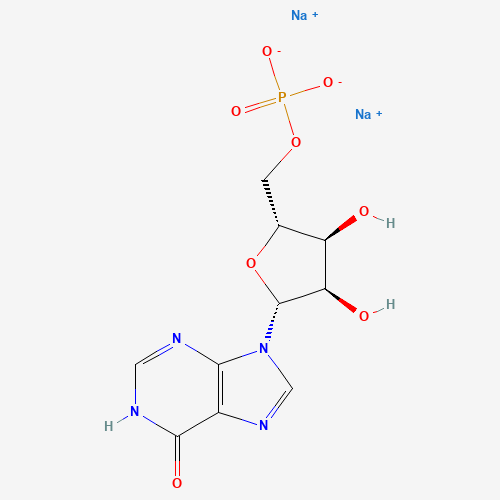
| JapanConsumer Affairs Agency | ◐Permitted, with conditions | Designated additive: Appended Table 1, item 64, 5'―イノシン酸二ナトリウム(別名5'―イノシン酸ナトリウム) (“Disodium 5' -Inosinate (Sodium 5' -Inosinate)” in the unofficial English translation). …Designated additive: Appended Table 1, item 64, 5'―イノシン酸二ナトリウム(別名5'―イノシン酸ナトリウム) (“Disodium 5' -Inosinate (Sodium 5' -Inosinate)” in the unofficial English translation). Standards for use — Specifications and Standards for Foods, Food Additives, etc. (MHW Notification No. 370 of 1959), Part II (Food Additives), F (Standards for use): The Notification sets no standard for use (使用基準) for this additive, so it is not restricted there to particular foods or amounts. Compositional specifications for this additive, in the same Notification, are not imported and are not shown here; nor are the general rules in F 添加物一般, which apply to every additive. | Regulations for Enforcement of the Food Sanitation Act (MHW Ordinance No. 23 of 1948), Appended Table 1retrieved 2026-10-18 |
|---|
| South KoreaMinistry of Food and Drug Safety | ◐Permitted, with conditions | Designated food additive: Standards and Specifications for Food Additives, Part III, 1. …Designated food additive: Standards and Specifications for Food Additives, Part III, 1. 일반식품첨가물 (general food additives), 5'-이노신산이나트륨 (“Disodium 5'-Inosinate”, the English the Code prints beside it); the Code marks it as also usable as a nutrient fortifier; 3. 영양강화제 (nutrient fortifiers), 5‘-이노신산이나트륨; nutrient: 뉴클레오 티드; the Code marks it as also usable as a general food additive. Main use (주용도) of 5'-이노신산이나트륨: 향미증진제. Standard for use (사용기준) of 5'-이노신산이나트륨: (1) [to be used under the general standard for use in II. 2. 1), the minimum amount that achieves the technical effect, with no limit set for this additive in particular] “II. 2. 1)의 규정에 따라 사용하여야 한다.” Standard for use (사용기준) of 5‘-이노신산이나트륨: (1) [to be used under the general standard for use in II. 2. 1), the minimum amount that achieves the technical effect, with no limit set for this additive in particular] “II. 2. 1)의 규정에 따라 사용하여야 한다.” The Korean is the standard as published. There is no official English translation of the current Code (the English version on MFDS’s website is the 2020 edition and has no legal effect); the English in square brackets is this site’s description of what each sentence does, not a translation of the foods or the levels. Compositional specifications (Part IV) are not imported, nor are the general standards in Part II, which apply to every additive. | Standards and Specifications for Food Additives (식품첨가물의 기준 및 규격), MFDS Notification, Part III (Standards for use, by item)retrieved 2026-10-18 |
|---|
| United StatesFood and Drug Administration | ◐Permitted, with conditions | | 21 CFR 172.535retrieved 2026-10-17 |
|---|
| Codex AlimentariusCodex Alimentarius Commission / JECFA | ◐Permitted, with conditions | 10 food categories no numerical limit (good manufacturing practice) Show every food category and its notes- 04.2.2.7 Fermented vegetable (including mushrooms and fungi, roots and tubers, pulses and legumes, and aloe vera) and seaweed products, excluding fermented soybean products of food categories 06.8.6, 06.8.7, 12.9.1, — GMP
- Note 279 Except for products conforming to the standard for Edible Fungi and Fungus Products (CODEX STAN 38-1981).
- 06.4.2 Dried pastas and noodles and like products — GMP
- Note 256 For use in noodles, gluten-free pasta and pasta intended for hypoproteic diets only.
- 08.1 Fresh meat, poultry, and game — GMP
- Note 16 For use in glaze, coatings or decorations for fruit, vegetables, meat or fish only.
- 09.2.1 Frozen fish, fish fillets, and fish products, including molluscs, crustaceans, and echinoderms — GMP
- Note 95 For non-standardized foods: for use in surimi and fish roe products only.
- Note XS36 Excluding products conforming to the Standard for Quick Frozen Finfish, Uneviscerated and Eviscerated (CODEX STAN 36-1981).
- Note XS92 Excluding products conforming to the Standard for Quick Frozen Shrimps and Prawns (CODEX STAN 92-1981).
- Note XS95 Excluding products conforming to the Standard for Quick Frozen Lobsters (CODEX STAN 95-1981).
- Note XS165 Excluding products conforming to the Standard for Quick Frozen Blocks of Fish Fillet, Minced Fish Flesh and Mixtures of Fillets and Minced Fish Flesh (CODEX STAN 165-1989).
- Note XS190 Excluding products conforming to the Standard for Quick Frozen Fish Fillets (CODEX STAN 190-1995).
- Note XS191 Excluding products conforming to the Standard for Quick Frozen Raw Squid (CODEX STAN 191-1995).
- Note XS292 Excluding products conforming to the Standard for Live and Raw Bivalve Molluscs (CODEX STAN 292-2008).
- Note XS312 Excluding products conforming to the Standard for Live Abalone and for Raw Fresh Chilled or Frozen Abalone for Direct Consumption or for Further Processing (CODEX STAN 312-2013).
- Note XS315 Excluding products conforming to the Standard for Fresh and Quick Frozen Raw Scallop Products (CODEX STAN 315-2014).
- 09.2.2 Frozen battered fish, fish fillets and fish products, including molluscs, crustaceans, and echinoderms — GMP
- Note 309 For use in breaded or battered foods applied to non-standardized foods only.
- Note XS166 Excluding products conforming to the Standard for Quick Frozen Fish Sticks (Fish Fingers), Fish Portions and Fish Fillets – Breaded or in Batter (CODEX STAN 166-1989).
- 09.2.3 Frozen minced and creamed fish products, including molluscs, crustaceans, and echinoderms — GMP
- Note 311 For use in terrine only.
- 09.2.4 Cooked and/or fried fish and fish products, including molluscs, crustaceans, and echinoderms — GMP
- Note 312 For use in tsukudani and surimi products only.
- 09.2.5 Smoked, dried, fermented, and/or salted fish and fish products, including molluscs, crustaceans, and echinoderms — GMP
- Note 29 For use in non-standardized food.
- Note XS167 Excluding products conforming to the Standard for Salted Fish and Dried Salted Fish of the Gadidae Family of Fishes (CODEX STAN 167-1989).
- Note XS189 Excluding products conforming to the Standard for Dried Shark Fins (CODEX STAN 189-1993).
- Note XS222 Excluding products conforming to the Standard for Crackers from Marine and Freshwater Fish, Crustaceans and Molluscan Shellfish (CODEX STAN 222-2001).
- Note XS236 Excluding products conforming to the Standard for Boiled Dried Salted Anchovies (CODEX STAN 236-2003).
- Note XS244 Excluding products conforming to the Standard for Salted Atlantic Herring and Salted Sprat (CODEX STAN 244-2004).
- Note XS311 Excluding products conforming to the Standard for Smoked Fish, Smoked-flavoured Fish and Smoke-dried Fish (CODEX STAN 311-2013).
- 12.1.2 Salt substitutes — GMP
- 14.1.5 Coffee, coffee substitutes, tea, herbal infusions, and other hot cereal and grain beverages, excluding cocoa — GMP
- Note 201 For use in flavoured products only.
| CXS 192-1995 Table Three, INS 631and 10 further provisionsretrieved 2026-09-07 |
|---|