Ethyl acetate
141-78-6 · 1-acetoxyethane · acet-ethylester · Acetate d'ethyle · Acetato de etilo · acetic acid ethyl · Acetic acid ethyl ester · Acetic ester · Acetic ether · acetic-acid-ethylester · Acetidin · Acetoxyethane · Acetyl ester · AcOEt · Aethylacetat · CAS-141-78-6 · Caswell No. 429 · CCRIS 6036 · CH3COOC2H5 · ehtyl acetate · ehyl acetate · EPA Pesticide Chemical Code 044003 · Essigester · ethanol acetate · ethl acetate · ethly acetate · ethy acetate · Ethyl acetate · ETHYL ACETATE (1-13C) · ETHYL ACETATE (2-13C) · Ethyl acetate (natural) · Ethyl acetate (NF) · Ethyl acetate, ACS reagent · Ethyl acetate, ACS reagent, >=99.5% · Ethyl acetate; Ethyl ethanoate · Ethyl acetic ester · ethyl acteate · Ethyl ester of acetic acid · Ethyl ethanoate · ethyl-acetate · ethyl_acetate · ethylaceate · Ethylacetaat · Ethylacetat · Ethylacetate · ethylactate · ethylacteate · Ethylazetat · Ethyle (acetate d') · Ethylester kyseliny octove · Etile (acetato di) · EtOAc · Etylacetate · FEMA No. 2414 · HSDB 83 · Octan etylu · RCRA waste no. U112 · RCRA waste number U112 · Vinegar naphtha · E1504 · ethyl acetate · Ethyl acetateCAS 141-78-6
Listed as a solvent by Canada and the US.
Listed as solvents and vehicles (CA, US) · colours (US) · flavour enhancers (US) · flavouring agents and adjuvants (US) · carriers (CA)
- Canada: Carrier solvent — Health Canada, List of Permitted Solvents (List 15)
- Canada: Extraction solvent — Health Canada, List of Permitted Solvents (List 15)
- United States: Solvent or vehicle — FDA, Substances Added to Food: ETHYL ACETATE
- United States: Color or coloring adjunct — FDA, Substances Added to Food: ETHYL ACETATE
- United States: Flavor enhancer — FDA, Substances Added to Food: ETHYL ACETATE
- United States: Flavoring agent or adjuvant — FDA, Substances Added to Food: ETHYL ACETATE
- Canada: Carrier solvent — Health Canada, List of Permitted Solvents (List 15)
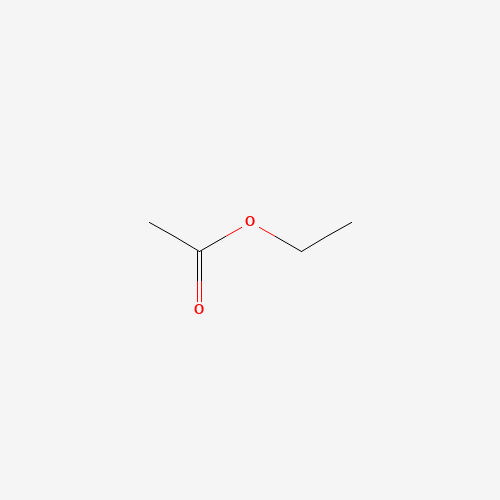
Ethyl acetate is the solvent behind coffee marketed as naturally decaffeinated: it occurs in fruit, so a decaffeination using it can be described that way, even though the solvent used industrially is normally synthesised.
Where it is and isn’t permitted
| Jurisdiction | Status | Scope and limits | Citation |
|---|---|---|---|
| Australia and New Zealand | Permitted | 1 food category no numerical limit (good manufacturing practice) | Food Standards Code, Schedule 15, S15—5, item 0.3, Ethyl acetateretrieved 2026-10-17 |
| Canada | Permitted, with conditions | no numerical limit (good manufacturing practice) 6 permitted uses Show every permitted use
| Health Canada, List of Permitted Solvents (List 15)and 5 further provisionsretrieved 2026-10-17 |
| European Union | No listed food uses foundThis site has not matched this substance to any food use on this jurisdiction’s list of authorised food additives. A food additive may be used only in foods that list names. Flavourings, enzymes, processing aids and added nutrients are regulated separately and do not appear on it. | ||
| Great Britain | No listed food uses foundThis site has not matched this substance to any food use on this jurisdiction’s list of authorised food additives. A food additive may be used only in foods that list names. Flavourings, enzymes, processing aids and added nutrients are regulated separately and do not appear on it. | ||
| Japan | Permitted, with conditions | Designated additive: Appended Table 1, item 154, 酢酸エチル (“Ethyl Acetate” in the unofficial English translation). …Designated additive: Appended Table 1, item 154, 酢酸エチル (“Ethyl Acetate” in the unofficial English translation). Standards for use — Specifications and Standards for Foods, Food Additives, etc. (MHW Notification No. 370 of 1959), Part II (Food Additives), F (Standards for use), entry 酢酸エチル: (1) [may be used only for the purpose of flavouring; states an exception to the preceding sentence; must be removed or broken down before the food is finished] “酢酸エチルは、着香の目的以外に使用してはならない。ただし、酢酸エチルを、柿の脱渋に使用するアルコール、結晶果糖の製造に使用するアルコール、香辛料の顆粒若しくは錠剤の製造に使用するアルコール、コンニャク粉の製造に使用するアルコール、ジブチルヒドロキシトルエン若しくは、ブチルヒドロキシアニソールの溶剤として使用するアルコール又は食酢の醸造原料として使用するアルコールを変性する目的で使用する場合、酵母エキス(酵母の自己消化により得られた水溶性の成分をいう。以下この目において同じ。)の製造の際の酵母の自己消化を促進する目的で使用する場合及び酢酸ビニル樹脂の溶剤の用途に使用する場合は、この限りでない。また、酵母エキスの製造に使用した酢酸エチルは、最終食品の完成前に除去しなければならない。” The Japanese is the standard as published. There is no official English translation of the Notification; the English in square brackets is this site’s description of what each sentence does, not a translation of the foods or the levels. Compositional specifications for this additive, in the same Notification, are not imported and are not shown here; nor are the general rules in F 添加物一般, which apply to every additive. | Regulations for Enforcement of the Food Sanitation Act (MHW Ordinance No. 23 of 1948), Appended Table 1retrieved 2026-10-18 |
| South Korea | Permitted, with conditions | Designated food additive: Standards and Specifications for Food Additives, Part III, 1. …Designated food additive: Standards and Specifications for Food Additives, Part III, 1. 일반식품첨가물 (general food additives), 초산에틸 (“Ethyl Acetate”, the English the Code prints beside it); the Code marks it as also usable as a processing aid; 2. 가공보조제 (processing aids), 초산에틸 (“Ethyl Acetate”, the English the Code prints beside it); the Code marks it as also usable as a general food additive. Main use (주용도) of 초산에틸: 향료. Standard for use (사용기준) of 초산에틸: (1) [may be used only for flavouring] “초산에틸은 착향의 목적에 한하여 사용하여야 한다.” Main use (주용도) of 초산에틸: 추출용제. Standard for use (사용기준) of 초산에틸: (1) [may be used only in the foods or uses listed; sets a limit on the amount used] “초산에틸은 아래의 식품 또는 용도에 한하여 사용하여야 한다. 초산에틸의 사용량은 1. 초산비닐수지의 용제 2. 건강기능식품의 기능성원료 추출 또는 분리 목적 : 0.05g/kg 이하(초산에틸로서 잔류량) 3. 식용유지 제조 시 유지성분의 추출 목적 : 0.01g/kg 이하(초산에틸로서 잔류량) 4. 다류, 커피의 카페인 제거 목적 : 0.01g/kg 이하(초산에틸로서 잔류량)” The Korean is the standard as published. There is no official English translation of the current Code (the English version on MFDS’s website is the 2020 edition and has no legal effect); the English in square brackets is this site’s description of what each sentence does, not a translation of the foods or the levels. Compositional specifications (Part IV) are not imported, nor are the general standards in Part II, which apply to every additive. | Standards and Specifications for Food Additives (식품첨가물의 기준 및 규격), MFDS Notification, Part III (Standards for use, by item)retrieved 2026-10-18 |
| United States | Permitted, with conditions | 21 CFR 173.228retrieved 2026-10-17 | |
| Codex Alimentarius | Not listedDoes not appear on this jurisdiction’s permitted list. That is not the same as being prohibited. |
How much is permitted
A listing usually limits the quantity as well as the food. Only one of the forms that takes is a figure: quantum satis and good manufacturing practice permit the amount the technological effect requires and no more, which is a limit rather than the absence of one. Figures below are the range across every food category this page is listed in, and categories differ between regulators — see how much is permitted.
| Australia and New Zealand | — | 1 GMP |
|---|---|---|
| Canada | — | 3 GMP, 3 no quantity stated |
| Japan | — | 1 no quantity stated |
| South Korea | — | 1 no quantity stated |
| United States | — | 1 no quantity stated |
No regulator sets a figure for Ethyl acetate. That is not an absence of control: where the listing says quantum satis or good manufacturing practice, the quantity is limited to what the effect requires.
What it is made from
Produced by reacting ethanol with acetic acid. It occurs naturally in ripening fruit and in wine, which is the basis for the natural description.
- Vegan
- Vegetarian
Compare other additives on the dietary indexes.
- CAS registry number
- 141-78-6
- InChIKey
- XEKOWRVHYACXOJ-UHFFFAOYSA-N
- PubChem
- CID 8857
How JECFA defines it
The international specification for identity and purity, prepared by the Joint FAO/WHO Expert Committee on Food Additives and published by FAO. It is a different document from any above, written by a different body and revised on its own cycle; it is advisory, and a country adopts it or does not.
Ethyl Acetate
Synonyms: Acetic acid ethyl ester; Ethyl ethanoate
Assay, identification and purity criteria
Description and assay
- Specification history
- Prepared at the 46th JECFA (1996), published in FNP 52 Add 4 (1996) superseding specifications prepared at the 11th JECFA (1967), published in NMRS 44B (1969) and in FNP 52 (1992). An ADI of 0-25 mg/kg bw was established at the 11th JECFA (1967)
- SYNONYMS DEFINITION Chemical names C.A.S. number Chemical formula Structural formula
- Acetic acid ethyl ester, ethyl ethanoate Ethyl acetate 141-78-6 C 4 H 8 O 2
- Formula weight Assay DESCRIPTION FUNCTIONAL USES Refractive index (Vol. 4) Specific gravity (Vol. 4) Acid value (Vol. 4) Boiling point (Vol. 4) METHOD OF ASSAY
- 88.11 Not less than 99.0% Colourless, transparent liquid having a fruity odour Carrier solvent, flavouring agent (see Volume 5) n (20, D): 1.371-1.376 d (25, 25): 0.894-0.901 Not more than 5.0 77º Transfer about 1.5 g, accurately weighed in a tared stoppered weighing bottle, to a suitable flask, add 50.0 ml of 0.5N sodium hydroxide, and reflux on a steam bath for 1 h. Allow to cool, add phenolphthalein TS and titrate the excess sodium hydroxide with 0.5N hydrochloric acid. Perform a blank determination, and make any necessary correction. Each ml of 0.5N sodium hydroxide is equivalent to 44.06 mg of C 4 H 8 O 2 .
Every name it appears under
62 recorded names. A label may use any of them.
E number
- E1504
CAS registry number
- 141-78-6
As it appears in regulation
- Ethyl acetate
Other names
- 1-acetoxyethane
- acet-ethylester
- Acetate d'ethyle
- Acetato de etilo
- acetic acid ethyl
- Acetic acid ethyl ester
- Acetic ester
- Acetic ether
- acetic-acid-ethylester
- Acetidin
- Acetoxyethane
- Acetyl ester
- AcOEt
- Aethylacetat
- CAS-141-78-6
- Caswell No. 429
- CCRIS 6036
- CH3COOC2H5
- ehtyl acetate
- ehyl acetate
- EPA Pesticide Chemical Code 044003
- Essigester
- ethanol acetate
- ethl acetate
- ethly acetate
- ethy acetate
- Ethyl acetate
- ETHYL ACETATE (1-13C)
- ETHYL ACETATE (2-13C)
- Ethyl acetate (natural)
- Ethyl acetate (NF)
- Ethyl acetate, ACS reagent
- Ethyl acetate, ACS reagent, >=99.5%
- Ethyl acetate; Ethyl ethanoate
- Ethyl acetic ester
- ethyl acteate
- Ethyl ester of acetic acid
- Ethyl ethanoate
- ethyl-acetate
- ethyl_acetate
- ethylaceate
- Ethylacetaat
- Ethylacetat
- Ethylacetate
- ethylactate
- ethylacteate
- Ethylazetat
- Ethyle (acetate d')
- Ethylester kyseliny octove
- Etile (acetato di)
- EtOAc
- Etylacetate
- FEMA No. 2414
- HSDB 83
- Octan etylu
- RCRA waste no. U112
- RCRA waste number U112
- Vinegar naphtha
Systematic names
- ethyl acetate
Hazard reference values
EFSA and JECFA have both set an acceptable daily intake for Ethyl acetate, and they agree: 25 mg/kg bw/day. An acceptable daily intake is a reference value set by a committee, not a threshold above which harm begins. See where the two committees differ.
| Type | Value | Population | Assessed by | Opinion |
|---|---|---|---|---|
| ADI | 25 mg/kg bw/day | — | JECFA | 1996 |
| ADI | 25 mg/kg bw/day | consumers | EFSA | not identified in the dataset |
Evidence and how bodies read it
Studies, and the differing conclusions regulators drew from them, are curated rather than machine-read, and none has been written for this substance yet.
Common questions
Assembled from what is above, in the words the questions are usually asked in. Each answer is the same statement the relevant section makes, with the same citations behind it.
- What is Ethyl acetate?
- Ethyl acetate is the solvent behind coffee marketed as naturally decaffeinated: it occurs in fruit, so a decaffeination using it can be described that way, even though the solvent used industrially is normally synthesised.
- What is Ethyl acetate used for in food?
- It is listed as a solvent — the role Canada and the US assign it. This page shows every function each regulator records, with the citation for each.
- Is Ethyl acetate banned in Europe?
- No. Ethyl acetate does not appear on the EU's list of authorised food additives, which is not the same as being banned: the EU permits an additive only where it has authorised it, and usually the reason for an absence is that no one applied. The EU has made no finding against this substance. It does mean it may not be used as a food additive in the EU today.
- Where is Ethyl acetate permitted?
- Of the seven regulators this site reads, Australia and New Zealand, Canada, Japan, South Korea and the US permit it. Each permission is for named foods at named levels, not a blanket one; the table on this page gives them with citations.
- Is Ethyl acetate vegan?
- Yes. Ethyl acetate is not derived from animals, and is suitable for vegetarians. This page says what it is made from and how.
Sources for this page
- anz retrieved 2026-10-17
- ca retrieved 2026-10-17
- jp retrieved 2026-10-18
- kr retrieved 2026-10-18
- ecfr retrieved 2026-10-17
- jecfaspecs retrieved 2026-09-23
Full licence terms and publisher details on Sources. How this page is built and updated: Method.
Machine-readable: a JSON record of this additive is given on request —how to ask for access.
Follow changes to Ethyl acetate:Atom feed — regulatory events, and any change the weekly refresh detects in its provisions.