Ethyl methyl ketone
78-93-3 · 2 -butanone · 2- butanone · 2-butanal · 2-butanon · 2-Butanone · 2-Butanone, ACS reagent, >=99.0% · 2-Butanone, HPLC Grade · 2-Butanone-1,1,1,3,3-d? · 2-BUTANONE-D8 · 2-Oxobutane · 3-Butanone · 6PT9KLV9IO · Acetone, methyl- · Aethylmethylketon · AI3-07540 (USDA) · Butan-2-one · butan-3-one · butane-2-one · Butanone · Butanone 2 · C2H5COCH3 · Caswell No. 569 · CCRIS 2051 · EPA Pesticide Chemical Code 044103 · Ethyl methyl cetone · Ethyl methyl ketone · ethyl methylketone · ethyl-methyl ketone · ethylmathyl ketone · ethylmethyl ketone · Ethylmethylcetone · Ethylmethylketon · ethylmethylketone · FEMA No. 2170 · HSDB 99 · Ketone, ethyl methyl · Meetco · MEK · Methyl acetone · methyl ethyl cetone · Methyl ethyl ketone · methyl ethylketone · methyl etyl ketone · methyl-ethyl ketone · methyl-ethyl-ketone · methyl-ethylketone · methylacetone · Methylethyl ketone · methylethyl-ketone · Methylethylketon · Methylethylketone · Metiletilcetona · Metiletilchetone · Metyl ethyl ketone · Metyloetyloketon · n-butanone · Oxobutane · RCRA waste no. U159 · RCRA waste number U159CAS 78-93-3
Listed as a flavouring agent and a solvent by the US and Canada.
Listed as flavouring agents and adjuvants (US) · solvents and vehicles (CA)
- United States: Flavoring agent or adjuvant — FDA, Substances Added to Food: 2-BUTANONE
- Canada: Extraction solvent — Health Canada, List of Permitted Solvents (List 15)
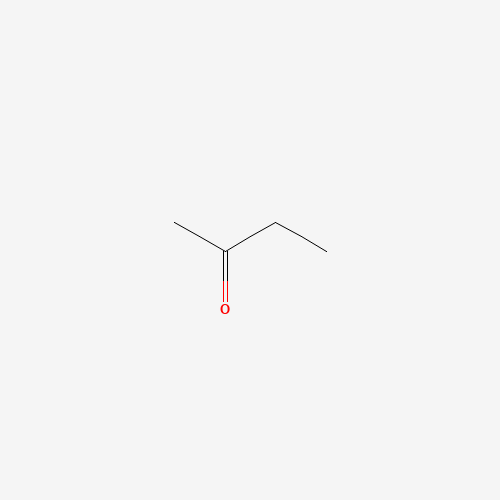
Ethyl methyl ketone, also written 2-butanone or methyl ethyl ketone, is an extraction solvent and a flavouring agent. Health Canada lists it under the name 2-butanone.
Where it is and isn’t permitted
| Jurisdiction | Status | Scope and limits | Citation |
|---|---|---|---|
| Australia and New Zealand | No listed food uses foundThis site has not matched this substance to any food use on this jurisdiction’s list of authorised food additives. A food additive may be used only in foods that list names. Flavourings, enzymes, processing aids and added nutrients are regulated separately and do not appear on it. | ||
| Canada | Permitted, with conditions | In: Natural extractives; Spice extracts. Purpose: Extraction solvent. Limit: Residue not to exceed 50 ppm. | Health Canada, List of Permitted Solvents (List 15), item B.2retrieved 2026-10-17 |
| European Union | No listed food uses foundThis site has not matched this substance to any food use on this jurisdiction’s list of authorised food additives. A food additive may be used only in foods that list names. Flavourings, enzymes, processing aids and added nutrients are regulated separately and do not appear on it. | ||
| Great Britain | No listed food uses foundThis site has not matched this substance to any food use on this jurisdiction’s list of authorised food additives. A food additive may be used only in foods that list names. Flavourings, enzymes, processing aids and added nutrients are regulated separately and do not appear on it. | ||
| Japan | No listing matchedThis site imports only Japan’s list of designated additives (Appended Table 1 to the Regulations for Enforcement of the Food Sanitation Act), matched by English name. Existing additives, natural flavouring agents and ordinary foods used as additives are permitted outside that list and are not imported, so an empty row does not show that Japan does not permit the substance. | ||
| South Korea | No listing matchedThis site imports Part III of South Korea’s Standards and Specifications for Food Additives, matched by CAS number, then INS number, then exact name. Mixed preparations and sanitisers are not imported, and an entry whose identifiers disagreed with a page’s is held for review, so an empty row does not show that South Korea does not permit the substance. | ||
| United States | Permitted, with conditions | Named in the list of synthetic flavoring substances and adjuvants in 21 CFR 172.515(b), which may be safely used in food in the minimum quantity required to produce their intended effect. The section is held on this site as the page synthetic-flavoring-substances-and-adjuvants; read it for the conditions. | 21 CFR 172.515retrieved 2026-10-18 |
| Codex Alimentarius | Not listedDoes not appear on this jurisdiction’s permitted list. That is not the same as being prohibited. |
How much is permitted
A listing usually limits the quantity as well as the food. Only one of the forms that takes is a figure: quantum satis and good manufacturing practice permit the amount the technological effect requires and no more, which is a limit rather than the absence of one. Figures below are the range across every food category this page is listed in, and categories differ between regulators — see how much is permitted.
| Canada | — | 1 no quantity stated |
|---|---|---|
| United States | — | 1 no quantity stated |
No regulator sets a figure for Ethyl methyl ketone. That is not an absence of control: where the listing says quantum satis or good manufacturing practice, the quantity is limited to what the effect requires.
What it is made from
Made industrially by dehydrogenating butan-2-ol.
- Vegan
- Vegetarian
Compare other additives on the dietary indexes.
- CAS registry number
- 78-93-3
- InChIKey
- ZWEHNKRNPOVVGH-UHFFFAOYSA-N
- PubChem
- CID 6569
How JECFA defines it
The international specification for identity and purity, prepared by the Joint FAO/WHO Expert Committee on Food Additives and published by FAO. It is a different document from any above, written by a different body and revised on its own cycle; it is advisory, and a country adopts it or does not.
Ethyl Methyl Ketone
Synonyms: Methyl ethyl ketone, MEK MEK; Methyl ethyl ketone
Assay, identification and purity criteria
Description and assay
- Specification history
- Prepared at the 28th JECFA (1984), published in FNP 31/2 (1984) and in FNP 52 (1992). No ADI was allocated at the 25th JECFA (1981)
- Chemical names
- 2-Butanone, butane-2-one
- C.A.S. number
- 78-93-3
- Chemical formula
- C 4 H 8 O
- Formula weight
- 72.11
- Assay
- Not less than 99.5%
- DESCRIPTION
- Clear colourless liquid with a characteristic odour
- FUNCTIONAL USES
- Extraction solvent, flavouring agent (see "Flavouring agents" monograph JECFA no. 278)
- METHOD OF ASSAY
- Determine by gas-liquid chromatography (see Volume 4)(the GLC method allow the limit test for volatile organic impurities, such as alcohols, aldehydes, ketones; the total of these impurities shall not be more than 0.5%) using an instrument containing a thermal conductivity detector. Prepare a 4-m x 6-mm column consisting of a blend of equal quantities of 20% Carbowax 20 M on acid-washed, 60/80 mesh Chromosorb W, and 20% tetra-hydroxyethyl ethylenediamine on 30/60 mesh Chromosorb P, or use other suitable column materials capable of separating ethyl methyl ketone and the impurities whose retention times are listed below. Observe the following operating conditions during the determination: Sample size: 10 μl Column temperature: about 80 o Helium flow rate: 30 to 32 ml per min Detector voltage: 8.0 V The approximate retention times, in min, are as follows: acetone - 7 ethyl acetate - 9 ethyl methyl ketone - 11 tertiary-butanol - 14 methanol - 15 ethanol - 19 2-butanol - 30 propanol – 36 Measure the area under each peak of the chromatogram so obtained, calculate the area percent of each impurity, and record the sum of the impurities as A. NOTE: In this procedure, area percent and weight percent may be assumed to be identical. Calculate the percent of C 4 H 8 O in the sample by the formula: where B = % of water determined under Water Content, and C = % of acetic acid calculated from the test for acidity (in which each ml of 0.02 N alcoholic potassium hydroxide is equivalent to 1.20 mg of acetic acid).
Identification
- Solubility (Vol. 4)
- Freely soluble in water
- Specific gravity (Vol. 4)
- d (20, 20): 0.803 - 0.807 d (25, 25): 0.801 - 0.803
Purity criteria
- Distillation range (Vol. 4)
- 79 - 81 o
- Colour (Vol. 4)
- Not more than Colour Standard No. 10
- Non-volatile residue (Vol. 4)
- Not more than 2 mg/100 ml
- Water (Vol. 4)
- Not more than 0.2% (Karl Fischer Method)
- Acidity
- Not more than 0.003% (as acetic acid) Transfer 75 ml (60 g) of sample into a 250-ml Erlenmeyer flask, add phenolphthalein TS, and titrate with 0.02 N alcoholic potassium hydroxide to a pink end-point that persists for at least 15 sec. Not more than 1.5 ml is required.
- Hexan-2-one
- Not more than 50 mg/kg See description under TESTS
- Test: Hexan-2-one
- Determine by gas-liquid chromatography (see Volume 4) using an instrument equipped with a flame ionization detector under conditions capable of an adequate separation of ethyl methyl ketone and hexan-2-one. Examples of appropriate operating conditions are: (1) Column: 25 or 50 m oviod capillary column (methylpholysiloxane coating) Column Temperature: 50 o - 100 o gradient with a temperature increase of 5 o per min. (2) Column: 2 m x 2 mm O.D. glass column packed with 6.6 Carbowax 20 M on 80 - 120 mesh carbon black (supplied by Supelco, Inc.) Column Temperature: 80 o - 180 o gradient with a temperature increase of 4 o per min. In both cases nitrogen or helium carrier gas may be used at a flow rate of 20 - 30 ml/min and with an injection port temperature of 80 o . Measure the areas under the peaks corresponding to ethyl methyl ketone and hexan-2-one and calculate the proportion of hexan-2-one.
Every name it appears under
60 recorded names. A label may use any of them.
CAS registry number
- 78-93-3
Other names
- 2 -butanone
- 2- butanone
- 2-butanal
- 2-butanon
- 2-Butanone
- 2-Butanone, ACS reagent, >=99.0%
- 2-Butanone, HPLC Grade
- 2-Butanone-1,1,1,3,3-d?
- 2-BUTANONE-D8
- 2-Oxobutane
- 3-Butanone
- 6PT9KLV9IO
- Acetone, methyl-
- Aethylmethylketon
- AI3-07540 (USDA)
- Butan-2-one
- butan-3-one
- butane-2-one
- Butanone
- Butanone 2
- C2H5COCH3
- Caswell No. 569
- CCRIS 2051
- EPA Pesticide Chemical Code 044103
- Ethyl methyl cetone
- Ethyl methyl ketone
- ethyl methylketone
- ethyl-methyl ketone
- ethylmathyl ketone
- ethylmethyl ketone
- Ethylmethylcetone
- Ethylmethylketon
- ethylmethylketone
- FEMA No. 2170
- HSDB 99
- Ketone, ethyl methyl
- Meetco
- MEK
- Methyl acetone
- methyl ethyl cetone
- Methyl ethyl ketone
- methyl ethylketone
- methyl etyl ketone
- methyl-ethyl ketone
- methyl-ethyl-ketone
- methyl-ethylketone
- methylacetone
- Methylethyl ketone
- methylethyl-ketone
- Methylethylketon
- Methylethylketone
- Metiletilcetona
- Metiletilchetone
- Metyl ethyl ketone
- Metyloetyloketon
- n-butanone
- Oxobutane
- RCRA waste no. U159
- RCRA waste number U159
Hazard reference values
No reference value for this substance in the sources we hold.
Evidence and how bodies read it
Studies, and the differing conclusions regulators drew from them, are curated rather than machine-read, and none has been written for this substance yet.
Common questions
Assembled from what is above, in the words the questions are usually asked in. Each answer is the same statement the relevant section makes, with the same citations behind it.
- What is Ethyl methyl ketone?
- Ethyl methyl ketone, also written 2-butanone or methyl ethyl ketone, is an extraction solvent and a flavouring agent. Health Canada lists it under the name 2-butanone.
- What is Ethyl methyl ketone used for in food?
- It is listed as a flavouring agent and a solvent — the role the US and Canada assign it. This page shows every function each regulator records, with the citation for each.
- Is Ethyl methyl ketone banned in Europe?
- No. Ethyl methyl ketone is not on the EU's list of authorised food additives, but it would not be expected to be: every role regulators give it — flavouring agent and solvent — the EU regulates under separate law. Its absence from the additives list says nothing about whether it is permitted in Europe.
- Where is Ethyl methyl ketone permitted?
- Of the seven regulators this site reads, Canada and the US permit it. Each permission is for named foods at named levels, not a blanket one; the table on this page gives them with citations.
- Is Ethyl methyl ketone vegan?
- Yes. Ethyl methyl ketone is not derived from animals, and is suitable for vegetarians. This page says what it is made from and how.
Sources for this page
- ca retrieved 2026-10-17
- us-listings retrieved 2026-10-18
- jecfaspecs retrieved 2026-09-23
Full licence terms and publisher details on Sources. How this page is built and updated: Method.
Machine-readable: a JSON record of this additive is given on request —how to ask for access.
Follow changes to Ethyl methyl ketone:Atom feed — regulatory events, and any change the weekly refresh detects in its provisions.