FD&C Red No. 3
15905-32-5 · 16423-68-0 · 49746-10-3 · 1A878FZQ9B · 2',4',5',7'-Tetraiodofluorescein · 2',4',5',7'-Tetraiodofluorescein disodium salt · 2',4',5',7'-Tetraiodofluorescein disodium salt monohydrate · 2',5',7'-Tetraiodofluorescein · 2, 4,5,7-Tetraiodofluorescein · 2,4,5,7-Erythrosin · 2,5,7-Erythrosin · 2,5,7-Tetraiodofluorescein · 3',6'-dihydroxy-2',4',5',7'-tetraiodo-3H-spiro[2-benzofuran-1,9'-xanthen]-3-one · 3',6'-Dihydroxy-2',4',5',7'-tetraiodo-3H-spiro[[2]benzofuran-1,9'-xanthen]-3-one · 3',6'-Dihydroxy-2',4',5',7'-tetraiodo-3H-spiro[isobenzofuran-1,9'-xanthen]-3-one · 3',6'-dihydroxy-2',4',5',7'-tetraiodo-spiro[isobenzofuran-3,9'-xanthene]-1-one · 3',6'-dihydroxy-2',4',5',7'-tetraiodospiro[2-benzofuran-3,9'-xanthene]-1-one · 4-19-00-02923 (Beilstein Handbook Reference) · 9- (O- CARBOXYPHENYL)-6-HYDROXY - 2,4,5,7-TETRAIODO- MONOHYDRATE · 9-(O-CARBOXYPHENYL)-6-HYDROXY-2,4,5,7-TETRAIODO-MONOHYDRATE · A1EPA · Acid Brilliant Scarlet 3R · Acid Ponceau 4R · Acid red 18 · Acid red 51 · Acid Scarlet 3R · Acid Scarlet 3RZ · Acid Scarlet 4R · Acilan Scarlet V3R · AKA3 · Atul Acid Scarlet 3R · Atul Scarlet F · Brilliant Ponceau 3R · Brilliant Ponceau 4R · Brilliant Ponceau 5R · Brilliant Scarlet · Brilliant Scarlet 3R · Brilliant Scarlet 4R · BRN 0062817 · C.I. Acid Red 18 · C.I. Acid Red 18 (VAN) · C.I. Acid Red 18, Trisodium Salt · C.I. Acid Red 28 · C.I. Food Red 14 · C.I. Solvent Red 140 · Ceplac · Certicol Ponceau 4RS · Cilefa Ponceau 4R · Coccin Red · Coccine · Cochineal Red 4R · Cochineal Red A · Cogilor orange 211.10 · Cogilor orange 312.42 · Colacid Ponceau 4R · Curol Bright Red 4R · Dianthine B · disodium 2-(2,4,5,7-tetraiodo-6-oxido-3-oxo-3H-xanthen-9-yl)benzoate · Disodium 2-(2,4,5,7-tetraiodo-6-oxido-3-oxoxanthen-9-yl)benzoate · disodium;2-(2,4,5,7-tetraiodo-3-oxido-6-oxoxanthen-9-yl)benzoate;hydrate · DYE FDC RED #3 [VANDF] · E127 Erythrosine · Edicol Supra Ponceau 4RS · Edicol Supra Ponceaux 4 RS · Erythrosin B · Erythrosin B, Dye content >=95 % · Erythrosin extra bluish · Erythrosin Free Acid · ERYTHROSINE (MART.) · ERYTHROSINE [MART.] · Erythrosine acid · Erythrosine B (free acid) · ERYTHROSINE J · ERYTHROSINE SODIUM (USP IMPURITY) · Erythrosine sodium (USP XXII) · ERYTHROSINE SODIUM [USP IMPURITY] · Erythrosine sodium hydrate · Erythrosine, phenolic · Erythrosine, sodium anhydrous · ERYTHROSINE, SODIUM MONOHYDRATE · F D & C RED #3 [VANDF] · F D & C RED #3 ALUMINUM LAKE [VANDF] · F D & C RED NO. 3 · FD & C red no. 3 · FD and C Red No. 3 · FD&C RED NO. 3 (II) · FD&C RED NO. 3 [FCC] · FDC Red No. 3 · Felumin · Fenazo Scarlet 3R · Fluorescein, 2',4',5',7'-tetraiodo- (VAN) · Fluorescein,4',5',7'-tetraiodo- · Fluoresceins · Food Red 102 · Food Red 7 · Food Red No. 102 · Food Red Number 102 · HD Ponceau 4R · Hexacol Ponceau 4R · INS NO.127 · INS-127 · Iodeosin · Iodeosine B · Iodoeosin · Iodoeosine · IVKWXPBUMQZFCW-UHFFFAOYSA-L · JAPAN RED 3 · Java Scarlet 3R · Kiton Scarlet 4R · Naphthalene Ink Scarlet 4R · Neklacid Red 3R · Neklacid Red 4R · Neucoccin · New Coccin · New coccine · PN2ZH5LOQY · Ponceau 4R · Ponceau 4RC · Ponceau 4RE · Ponceau 4RE.FQ · Ponceau 4RF · Ponceau 4RT · Pontacyl Scarlet RR · Purple Red · Pyrosine B · Red 1427 · RED 1799 · RED 3 · Red No. 3 · Revelplac (TN) · Scarlet 4R · Scarlet 4RA · Schultz Nr. 213 · Solvent Red 140 · Solvent red 140; Iodoeosine · Solvent Red 140; Tetraiodofluoresceuin; Erythrosine · Spiro[isobenzofuran-1(3H), 3',6'-dihydroxy-2',4',5',7'-tetraiodo- · Strawberry Red · SX Purple · tetra-iodo-fluorescein · Tetraiodofluorescein · Tetrajodfluorescein · Trace · Victoria Scarlet 3R · Victoria Scarlet Red · YELLOW NO. 201 · E127 · 127 · 12,15-dihydroxy-11,13,14,16-tetraiodospiro[3-hydroisobenzofuran-3,9'-xanthene] -1-one · 3',6'-Dihydroxy-2',4',5',7'-tetraiodospiro(isobenzofuran-1(3H),9'-(9H)xanthene)-3-one · 3',6'-Dihydroxy-2',4',5',7'-tetraiodospiro[isobenzofuran-1(3H),9'(9H)-xanthen]-3-one, 9CI · Sodium 2-(2,4,5,7-tetraiodo-6-oxido-3-oxo-3H-xanthen-9-yl)benzoate--water (2/1/1) · Spiro(isobenzofuran-1(3H),9'-(9H)xanthen)-3-one, 3',6'-dihydroxy-2',4',5',7'-tetraiodo-, disodium salt · Spiro(isobenzofuran-1(3H),9'-(9H)xanthen)-3-one, 3',6'-dihydroxy-2',4',5',7'-tetraiodo-, disodium salt, monohydrate · Spiro[isobenzofuran-1(3H),9'-[9H]xanthen]-3-one, 3',6'-dihydroxy-2',4',5',7'-tetraiodo- · Spiro[isobenzofuran-1(3H),9'-[9H]xanthen]-3-one,3',6'-dihydroxy-2',4',5',7'-tetraiodo-, sodium salt, hydrate (1:2:1) · Erythrosine · FD&C Red No. 3 · Eritrosina · Eritrozin · Eritrozinas · Eritrozină · Eritrozīns · Erythrosin · Erythrosine · Erytrosiini · Erytrosin · ERYTROSINE · Erytrozyna · Erytrozín · Erütrosiin · Ερυθροσίνη · ЕритрозинE number E127INS 127CAS 16423-68-0
Listed as a colour by Canada, Codex, the EU and the US.
Listed as colours (CA, EU, US, Codex) · solvents and vehicles (US)
- Canada: Food Colour — Health Canada, List of Permitted Food Colours (List 3)
- Canada: Food colour — Health Canada, List of Permitted Food Colours (List 3)
- European Union: Colours — Regulation (EC) No 1333/2008, Annex II, Part B, 1. Colours (consolidated text 02008R1333-20260818)
- United States: Color additive (21 CFR part 74) — 21 CFR 74.303
- United States: Color or coloring adjunct — FDA, Substances Added to Food: FD&C RED NO. 3
- Codex Alimentarius: Colour — CXS 192-1995 Table One, INS 127
- United States: Solvent or vehicle — FDA, Substances Added to Food: FD&C RED NO. 3
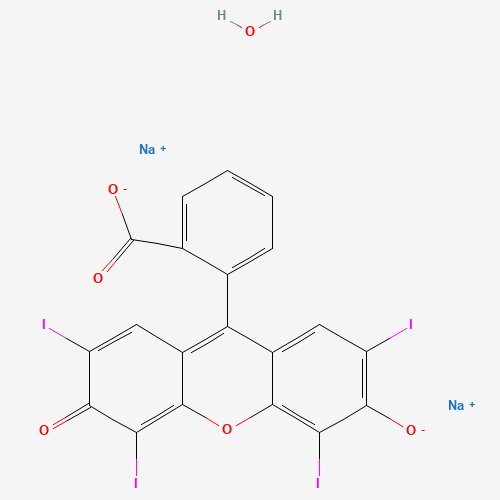
FD&C Red No. 3, known internationally as erythrosine, is a synthetic cherry-pink dye used in confectionery, glacé cherries and baked goods. In January 2025 the FDA revoked its authorisation for use in food, with effect from 15 January 2027. The EU permits it only in cocktail and candied cherries.
Where it is and isn’t permitted
| Jurisdiction | Status | Scope and limits | Citation |
|---|---|---|---|
| Australia and New Zealand | Permitted, with conditions | 2 food categories highest permitted level 200 mg/kg Show every food category
| Food Standards Code, Schedule 15, S15—5and 1 further provisionretrieved 2026-10-17 |
| Canada | Permitted, with conditions | no numerical limit (good manufacturing practice) 9 permitted uses Show every permitted use
| Health Canada, List of Permitted Food Colours (List 3)and 8 further provisionsretrieved 2026-10-17 |
| European Union | Permitted, with conditions | 1 food category highest permitted level 200 mg/kg ML = 200 mg/kg. only cocktail cherries and candied cherries. | Regulation (EC) No 1333/2008, Annex II, as amended by (EU) No 1129/2011retrieved 2026-10-18 |
| Great Britain | Permitted, with conditions | 1 food category (1) ML 200: only cocktail cherries and candied cherries; (2) ML 150: only bigareaux cherries in syrup and in cocktails. | Assimilated Regulation (EC) No 1333/2008, Annex II (as at 28 June 2024)retrieved 2026-10-18 |
| Japan | Permitted, with conditions | Designated additive: Appended Table 1, item 217, 食用赤色三号(別名エリスロシン)及びそのアルミニウムレーキ (“Food Red No. …Designated additive: Appended Table 1, item 217, 食用赤色三号(別名エリスロシン)及びそのアルミニウムレーキ (“Food Red No. 3 (Erythrosine) and Food Red No. 3 Aluminum Lake” in the unofficial English translation; listed member: Food Red No. 3 (Erythrosine)). Standards for use — Specifications and Standards for Foods, Food Additives, etc. (MHW Notification No. 370 of 1959), Part II (Food Additives), F (Standards for use), entry 食用赤色3号: (1) [must not be used in the foods stated] “食用赤色3号は、カステラ、きなこ、魚肉漬物、鯨肉漬物、こんぶ類、しょう油、食肉、食肉漬物、スポンジケーキ、鮮魚介類(鯨肉を含む。)、茶、のり類、マーマレード、豆類、みそ、めん類(ワンタンを含む。)、野菜及びわかめ類に使用してはならない。” The Japanese is the standard as published. There is no official English translation of the Notification; the English in square brackets is this site’s description of what each sentence does, not a translation of the foods or the levels. Compositional specifications for this additive, in the same Notification, are not imported and are not shown here; nor are the general rules in F 添加物一般, which apply to every additive. | Regulations for Enforcement of the Food Sanitation Act (MHW Ordinance No. 23 of 1948), Appended Table 1retrieved 2026-10-18 |
| South Korea | Permitted, with conditions | Designated food additive: Standards and Specifications for Food Additives, Part III, 1. …Designated food additive: Standards and Specifications for Food Additives, Part III, 1. 일반식품첨가물 (general food additives), 식용색소적색제3호 (“Food Red No.3”, the English the Code prints beside it). Main use (주용도) of 식용색소적색제3호: 착색료. Standard for use (사용기준) of 식용색소적색제3호: (1) [may be used only in the foods listed; refers to another provision where it is used together with other additives; sets a limit on the amount used] “식용색소적색제3호는 아래의 식품에 한하여 사용하여야 한다. 다만, 다른 식용색소와 병용할 때에는 III. 1. 1) (4)의 규정에 따라 사용한다. 식용색소적색제3호의 사용량은 1. 과자, 캔디류 : 0.3g/kg 이하 2. 추잉껌 : 0.05g/kg 이하 3. 빙과 : 0.15g/kg 이하 4. 빵류, 떡류, 만두류 : 0.3g/kg 이하 5. 기타 코코아가공품, 초콜릿류 : 0.3g/kg 이하 6. 기타잼, 기타설탕, 기타엿 : 0.3g/kg 이하 7. 소시지류 : 0.03g/kg 이하 8. 어육소시지 : 0.3g/kg 이하 9. 과·채음료, 탄산음료, 기타음료 : 0.3g/kg 이하(다만, 희석하여 음용하는 제품에 있어서는 희석한 것으로서) 10. 향신료조제품[고추냉이(와사비)가공품 및 겨자가공품에 한함] : 0.5g/kg 이하 11. 소스 : 0.3g/kg 이하 12. 젓갈류(명란젓에 한함) : 0.5g/kg 이하 13. 절임류(밀봉 및 가열살균 또는 멸균처리한 제품에 한함. 다만, 단무지는 제외) : 0.2g/kg 이하 14. 주류(탁주, 약주, 소주, 주정을 첨가하지 않은 청주 제외) : 0.3g/kg 이하 15. 즉석섭취식품 : 0.3g/kg 이하 16. 곡류가공품, 전분가공품 : 0.3g/kg 이하 17. 서류가공품 : 0.2g/kg 이하 18. 기타 식용유지가공품, 기타 수산물가공품, 기타가공품, 유함유가공품 : 0.5g/kg 이하 19. 당류가공품 : 0.1g/kg 이하 20. 건강기능식품(정제의 제피 또는 캡슐에 한함), 캡슐류 : 0.3g/kg 이하(색소의 사용량은 총 중량 기준으로 적용) 21. 아이스크림류, 아이스크림믹스류 : 0.3g/kg 이하 22. 커피(표면장식에 한함) : 0.1 g/kg 이하(식용색소적색제40호, 식용색소청색제1호, 식용색소황색제4호와 병용할 때는 사용량의 합계가 0.1 g/kg 이하)” The Korean is the standard as published. There is no official English translation of the current Code (the English version on MFDS’s website is the 2020 edition and has no legal effect); the English in square brackets is this site’s description of what each sentence does, not a translation of the foods or the levels. Compositional specifications (Part IV) are not imported, nor are the general standards in Part II, which apply to every additive. | Standards and Specifications for Food Additives (식품첨가물의 기준 및 규격), MFDS Notification, Part III (Standards for use, by item)retrieved 2026-10-18 |
| United States | Phase-out announcedPermitted here until 15 January 2027, when the instrument removing it takes effect. The regulatory changes below cite it. | Subject to batch certification by FDA. | 21 CFR 74.303retrieved 2026-10-17 |
| Codex Alimentarius | Permitted, with conditions | 8 food categories highest permitted level 200 mg/kg Show every food category and its notes
| CXS 192-1995 Table One, INS 127and 7 further provisionsretrieved 2026-09-07 |
How much is permitted
A listing usually limits the quantity as well as the food. Only one of the forms that takes is a figure: quantum satis and good manufacturing practice permit the amount the technological effect requires and no more, which is a limit rather than the absence of one. Figures below are the range across every food category this page is listed in, and categories differ between regulators — see how much is permitted.
| Australia and New Zealand | 2 mg/kg – 200 mg/kg | 2 numeric limit |
|---|---|---|
| Canada | — | 2 GMP, 7 no quantity stated |
| European Union | 200 mg/kg | 1 numeric limit |
| Great Britain | — | 1 several limits |
| Japan | — | 1 no quantity stated |
| South Korea | — | 1 no quantity stated |
| United States | — | 1 no quantity stated |
| Codex Alimentarius | 30 mg/kg – 200 mg/kg | 8 numeric limit |
Regulatory changes
Dated acts affecting this additive, then anything the weekly comparison of the imported lists has seen move. The status panel above shows where the rules stand now; these are the decisions that got them there.
· United States · scheduled
FD&C Red No. 3 no longer permitted in food in the United States
The repeal of 21 CFR 74.303 takes effect, ending the use of FD&C Red No. 3 in food, including dietary supplements. The date was set by the order at 90 FR 4628 and confirmed at 91 FR 50475 when the stay was lifted. Its use in ingested drugs continues until 18 January 2028.
· United States
FDA rejects objections, lifts the stay and confirms the FD&C Red No. 3 deadlines
At 91 FR 50475, FDA concluded that the objections did not raise issues of material fact justifying a hearing, and lifted the administrative stay as of 5 August 2026. The objections argued, among other things, that FDA should not have counted benign adenomas alongside carcinomas when finding that the dye induces cancer in male rats. The effective dates of 15 January 2027 for food and 18 January 2028 for ingested drugs are confirmed.
· United States
FD&C Red No. 3 revocation stayed after objections were filed
Objections and requests for a public hearing, filed on behalf of Micro-Tracers, Inc., administratively stayed the January 2025 order as of 18 February 2025, the deadline for objections. The stay held the effective dates open while FDA considered the objections. FDA records the stay in its later response at 91 FR 50475; no separate notice of the stay appears in the Federal Register.
· United States
FDA orders FD&C Red No. 3 removed from food, effective 15 January 2027
The order at 90 FR 4628 granted a colour additive petition from the Center for Science in the Public Interest and others, repealing 21 CFR 74.303, which permits FD&C Red No. 3 in food including dietary supplements, from 15 January 2027. Its listing for ingested drugs, 21 CFR 74.1303, is removed from 18 January 2028. The basis is the Delaney Clause of the Federal Food, Drug, and Cosmetic Act, under which a colour additive found to induce cancer in humans or animals is deemed unsafe as a matter of law. FDA found that FD&C Red No. 3 can induce cancer in male rats, through a rat-specific hormonal mechanism.
What it is made from
An iodinated xanthene dye, made by adding iodine to fluorescein, itself synthesised from petroleum-derived phthalic anhydride and resorcinol. No animal-derived material is involved.
- Vegan
- Vegetarian
Compare other additives on the dietary indexes.
- CAS registry number
- 16423-68-0
- InChIKey
- IVKWXPBUMQZFCW-UHFFFAOYSA-L
- PubChem
- CID 166534
The two specifications, compared
The European Union sets identity and purity by regulation; JECFA publishes its own through FAO, advisory until a country adopts it. Both documents are below in full. These are the parameters each puts a number on.
| Parameter | European Union | JECFA |
|---|---|---|
| Assay | no less than 87 % | no less than 87 % |
| Lead | no more than 2 mg/kg | no more than 2 mg/kg |
| Arsenic | no more than 3 mg/kg | — |
| Mercury | no more than 1 mg/kg | — |
| Cadmium | no more than 1 mg/kg | — |
The two documents state the same figures for every parameter compared here.
How the EU defines it
The legal specification an additive must meet to be sold as this E number in the EU — what it is, how it may be made, and the purity it must reach. From Commission Regulation (EU) No 231/2012.
E 127 Erythrosine
Erythrosine consists essentially of disodium 2-(2,4,5,7-tetraiodo-3-oxido-6-oxoxanthen-9-yl) benzoate monohydrate and subsidiary colouring matters together with water, sodium chloride and/or sodium sulphate as the principal uncoloured components. Erythrosine is manufactured by iodination of fluorescein, the condensation product of resorcinol and phthalic anhydride Erythrosine is described as the sodium salt. The calcium and the potassium salt are also permitted.
Synonyms: CI Food Red 14
Assay, identification and purity criteria
Description and assay
- Colour Index No
- 45430
- Einecs
- 240-474-8
- Chemical name
- Disodium 2-(2,4,5,7-tetraiodo-3-oxido-6-oxoxanthen-9-yl)benzoate monohydrate
- Chemical formula
- C₂₀H₆I₄Na₂O₅ H₂O
- Molecular weight
- 897,88
- Assay
- Content not less than 87 % total colouring matters, calculated as the anhydrous sodium salt [image] 1 100 at ca. 526 nm in aqueous solution at pH 7
- Description
- Red powder or granules.
- Appearance of the aqueous solution
- Red
Identification
- Spectrometry
- Maximum in water at ca. 526 nm at pH 7
Purity criteria
- Inorganic iodides
- Not more than 0,1 % (calculated as sodium iodide)
- Water insoluble matter
- Not more than 0,2 %
- Subsidiary colouring matters (except fluorescein)
- Not more than 4,0 %
- Fluorescein
- Not more than 20 mg/kg
- Tri-iodoresorcinol
- Not more than 0,2 %
- 2-(2,4-dihydroxy-3,5-diiodobenzoyl) benzoic acid
- Not more than 0,2 %
- Ether extractable matter
- From a solution of pH from 7 through 8, not more than 0,2 %
- Arsenic
- Not more than 3 mg/kg
- Lead
- Not more than 2 mg/kg
- Mercury
- Not more than 1 mg/kg
- Cadmium
- Not more than 1 mg/kg
How JECFA defines it
The international specification for identity and purity, prepared by the Joint FAO/WHO Expert Committee on Food Additives and published by FAO. It is a different document from any above, written by a different body and revised on its own cycle; it is advisory, and a country adopts it or does not.
INS 127 Erythrosine
Erythrosine consists of the disodium salt of 2-(2,4,5,7-tetraiodo-6-oxido-3-oxoxanthen-9-yl)benzoate monohydrate and subsidiary colouring matters. Sodium chloride and/or sodium sulfate are the principal uncoloured components. Erythrosine is manufactured by iodination of fluorescein, the condensation product of resorcinol and phthalic anhydride. Erythrosine may be converted to the corresponding aluminium lake in which case only the requirements in the General Specifications for Aluminium Lakes of Colouring Matters apply.
Synonyms: INS No. 127, CI Food Red 14, CI (1975) No. 45430, Food Red No. 3, FD&C Red No. 3 CI (1975) No. 45430; CI Food Red 14; FD&C Red No. 3
Assay, identification and purity criteria
Description and assay
- Specification history
- 2 out of 10 Prepared at the 86th JECFA and published in FAO JECFA Monograph 22 (2018) superseding specifications prepared at the 41st JECFA (1993), published in FNP 52 Add 2 (1993). Metals and arsenic specifications revised at the 59th JECFA (2002). An ADI of 0-0.1 mg/kg bw was established at the 37th JECFA (1991) and confirmed at the 86th JECFA (2018).
- Chemical names
- Disodium 2-(2,4,5,7-tetraiodo-6-oxido-3-oxoxanthen-9-yl)benzoate monohydrate; Disodium;2',4',5',7'-tetraiodo-3-oxospiro[2-benzofuran-1,9'- xanthene]-3',6'-diolate; Disodium 2′,4′,5’,7′ -tetraiodofluorescein monohydrate
- C.A.S. number
- 16423-68-0
- Chemical formula
- C20H6I4Na2O5 · H2O
- Formula weight
- 879.86
- Assay
- Not less than 87% total colouring matters
- DESCRIPTION
- Red powder or granules
- FUNCTIONAL USES
- Colour
- METHOD OF ASSAY
- Determine total colouring matters content by spectrophotometry using Procedure 1 in Volume 4 (under “Specific Methods, Food Colours”) and an appropriate solvent. Using water as the solvent: absorptivity (a) = 110 l/(g × cm) wavelength of maximum absorbance = 527 nm. 9 out of 10
Identification
- Solubility (Vol. 4)
- Soluble in water, slightly soluble in ethanol
- Spectrophotometry (Vol. 4)
- Maximum wavelength approximately 527 nm Determine the UV-visible absorption spectrum of the sample dissolved in water.
Purity criteria
- Loss on drying, chloride and sulfate as sodium salts (Vol. 4)
- Not more than 13% Determine chloride as sodium chloride, sulfate as sodium sulfate, and loss on drying (135°, 6 h) as described in Volume 4 (under “Specific Methods, Food Colours”).
- Inorganic iodides
- Not more than 0.1% calculated as sodium iodide See description under TESTS
- Water insoluble matter (Vol. 4)
- Not more than 0.2%
- Zinc (Vol. 4)
- Not more than 50 mg/kg Determine using a method appropriate to the specified level. The selection of sample size and method of sample preparation may be based on the principles of the method described in Volume 4 (under “General Methods, Metallic Impurities”).
- Lead (Vol. 4)
- Not more than 2 mg/kg Determine using a method appropriate to the specified 4 out of 10 level. The selection of sample size and method of sample preparation may be based on the principles of the method described in Volume 4 (under “General Methods, Metallic Impurities”).
- Subsidiary colouring matters
- Not more than 4% (except fluorescein) See description under TESTS Note: Do not allow the sample and standard solutions to be exposed to direct sunlight.
- Fluorescein
- Not more than 20 mg/kg See description under TESTS
- Organic compounds other than colouring matters
- Triiodoresorcinol: Not more than 0.2% 2-(2,4-dihydroxy-3,5-diiodobenzoyl)benzoic acid: Not more than 0.2% See description under TESTS
- Ether extractable matter (Vol. 4)
- From a solution of pH not less than 7, not more than 0.2%
- Hydrochloric acid- insoluble matter in Erythrosine Lake
- Not more than 0.5% See description under TESTS
- Test: Inorganic iodides
- Weigh 1.0 g of the sample into a 100-ml beaker. Add 75 ml distilled water and a magnetic stirrer. Stir to dissolve. Immerse an iodide specific electrode and a reference electrode in the solution and use a suitable millivoltmeter to read the potential of the system in millivolts. Add 0.001 M silver nitrate solution from a burette initially in 0.5 ml aliquots, reducing these to 0.1 ml as the end-point approaches as indicated by an increasing change in potential for each addition. After allowing time for the reading to stabilize, record the millivolt readings after each addition. Continue the titration until further additions make 5 out of 10 little change in the potential. Plot the millivolt readings against the volume of silver nitrate solution added. The equivalence point is the volume corresponding to the maximum slope of the curve. The percentage of sodium iodide in the sample = Titre × 0.015% where Titre ml-equivalent of silver nitrate solution 0.015% 0.001 mol/l x 10 -3 l/ml x 149.89 g sodium iodide/mol x 1 mol/equivalent x 1/1.0 g (sample weight) x 100.
- Test: Subsidiary colouring matters
- Determine subsidiary colouring matters content by reversed-phase HPLC (Vol. 4) using the following conditions: - Column: C8 (250 mm x 4.6 mm i.d., 5 μm particle size) - Eluent A: 0.1 M ammonium acetate in water - Eluent B: methanol - Injection volume: 20 μl - Column temperature: ambient - Detector: UV-visible/diode array at 514 nm - Flow rate: 1.0 ml/min Gradient: Elution time Eluent A (%) Eluent B (%) (min) 0 55 45 20 34 66 21.1 0 100 25.5 0 100 26.0 55 45 40.0 55 45 Reagents: HPLC grade Standards: - 2′,4′,5′ -Triiodofluorescein (C.A.S. 56254-06-9) – synthesized material (see Appendix) 6 out of 10 - 2′,4′,7′ -Triiodofluorescein (C.A.S. 83498-90-2) – synthesized material (see Appendix) - 4′,5′ -Diiodofluorescein, disodium salt (C.A.S. 33239-19-9) – Alfa Aesar, Cat. No. A15626 or equivalent - 2′ -Monoiodofluorescein, disodium salt (C.A.S. 52010-85-2) – synthesized material (see Appendix) - 4′ -Monoiodofluorescein, disodium salt (C.A.S. 52010-86-3) – synthesized material (see Appendix) - Erythrosine (C.A.S. 16423-68-0) – TCI, >95.0% disodium 2′,4′,5’,7′ -tetraiodofluorescein, Cat. No. F0139 or equivalent (use if subsidiary colouring matter standards are not available) Prepare standard solutions as required. Sample preparation: Weigh accurately 200±2 mg sample and dissolve in 100 ml of water. Dilute the solution, if required, to separate subsidiary colours from the primary colour component in order to improve their resolution. Calculations: Construct the relevant standard curves. Integrate all peaks of the chromatogram obtained at 514 nm. If Erythrosine is used as a standard, calculate the ratio of the sum of all peaks not corresponding to Erythrosine to the sum of all peaks.
- Test: Fluorescein
- Determine fluorescein by the test for subsidiary colouring matters content except use the following conditions: - Injection volume: 50 μl - Detector: UV-visible/diode array at 492 nm Standard: Fluorescein, disodium salt (C.A.S. 518-47-8) – TCI, Cat. No. F0096 or equivalent Sample preparation: Weigh accurately 2.00±0.05 g sample and dissolve in 10 ml of water.
- Test: Organic compounds other than colouring matters
- Determine organic compounds other than colouring matters by reversed-phase HPLC (Vol. 4) using the following conditions: - Column: C18 (150 mm x 2.1 mm i.d., 5 μm particle size) - Eluent A: 0.05 M sodium dihydrogen phosphate in 95/5 water/methanol, pH 4.0 - Eluent B: methanol - Injection volume: 5 μl - Column temperature: 27° - Detector: UV-visible/diode array at 223 nm 7 out of 10 - Flow rate: 0.5 ml/min Gradient: Elution time Eluent A (%) Eluent B (%) (min) 0 95 5 3 95 5 5 80 20 13 35 65 15 0 100 25 0 100 27 95 5 37 95 5 Reagents: HPLC grade Standards: - 2,4,6-Triiodoresorcinol (C.A.S. 19403-92-0) – Alfa Chemistry, Cat. No. ACM19403920 or equivalent - 2-(2,4-Dihydroxy-3,5-diiodobenzoyl)benzoic acid (C.A.S. 3480-21-5) – Wako, Cat. No. 043-32981 or equivalent Prepare standard solutions as required. Dissolve the standards in methanol. Use an amber glass volumetric flask for 2,4,6-triiodoresorcinol and prepare the standard and calibration solutions immediately before use. Sample preparation: Weigh accurately 100±5 mg sample and dissolve in 10 ml of methanol. Calculations: Construct the relevant standard curves. Integrate all peaks of the chromatogram obtained at 223 nm.
- Test: Hydrochloric acid- insoluble matter in
- Reagents - Concentrated hydrochloric acid - Hydrochloric acid, 0.5% v/v 8 out of 10
- Test: Erythrosine Lake
- - Dilute ammonium hydroxide solution (dilute 10 ml of 14.5 M ammonium hydroxide to 100 ml with water). Procedure Accurately weigh approximately 5 g of the lake into a 500-ml beaker. Add 250 ml water and 60 ml concentrated hydrochloric acid. Boil to dissolve the alumina while the Erythrosine converts to its "free acid" form, which is insoluble in acid. Filter through a tared No. 4 sintered glass crucible. Wash the crucible with a small amount of hot 0.5% hydrochloric acid and then with some hot distilled water. Remove the acid filtrate from the filter flask, replace the crucible, and wash with hot dilute ammonium hydroxide solution until the washings are colourless. Dry the crucible to constant weight at 135º. Express the residue as a percentage of the weight taken.
- Test: 1 – FluoresceinA – 2 – 4’ -IodofluoresceinB –
- 2′,4′,5’,7′ -tetraiodofluorescein 2′,4′,7′ -triiodofluorescein 10 out of 10
- Test: 3 – 2’ -IodofluoresceinC – 4 – 4’,5’ -Diiodofluorescein 5 – 2’,5’ -Diiodofluorescein 6 – 2’,7’ -Diiodofluorescein 7 – 2’,4’,7’ -Triiodofluorescein and
- 2′,4′,5′ -triiodofluorescein and 2’,4’,5’ -Triiodofluorescein 2′,4′,5’,7′ -tetraiodofluorescein
Every name it appears under
173 recorded names. A label may use any of them.
E number
- E127
INS number
- 127
CAS registry number
- 15905-32-5
- 16423-68-0
- 49746-10-3
As it appears in regulation
- Erythrosine
- FD&C Red No. 3
Other names
- 1A878FZQ9B
- 2',4',5',7'-Tetraiodofluorescein
- 2',4',5',7'-Tetraiodofluorescein disodium salt
- 2',4',5',7'-Tetraiodofluorescein disodium salt monohydrate
- 2',5',7'-Tetraiodofluorescein
- 2, 4,5,7-Tetraiodofluorescein
- 2,4,5,7-Erythrosin
- 2,5,7-Erythrosin
- 2,5,7-Tetraiodofluorescein
- 3',6'-dihydroxy-2',4',5',7'-tetraiodo-3H-spiro[2-benzofuran-1,9'-xanthen]-3-one
- 3',6'-Dihydroxy-2',4',5',7'-tetraiodo-3H-spiro[[2]benzofuran-1,9'-xanthen]-3-one
- 3',6'-Dihydroxy-2',4',5',7'-tetraiodo-3H-spiro[isobenzofuran-1,9'-xanthen]-3-one
- 3',6'-dihydroxy-2',4',5',7'-tetraiodo-spiro[isobenzofuran-3,9'-xanthene]-1-one
- 3',6'-dihydroxy-2',4',5',7'-tetraiodospiro[2-benzofuran-3,9'-xanthene]-1-one
- 4-19-00-02923 (Beilstein Handbook Reference)
- 9- (O- CARBOXYPHENYL)-6-HYDROXY - 2,4,5,7-TETRAIODO- MONOHYDRATE
- 9-(O-CARBOXYPHENYL)-6-HYDROXY-2,4,5,7-TETRAIODO-MONOHYDRATE
- A1EPA
- Acid Brilliant Scarlet 3R
- Acid Ponceau 4R
- Acid red 18
- Acid red 51
- Acid Scarlet 3R
- Acid Scarlet 3RZ
- Acid Scarlet 4R
- Acilan Scarlet V3R
- AKA3
- Atul Acid Scarlet 3R
- Atul Scarlet F
- Brilliant Ponceau 3R
- Brilliant Ponceau 4R
- Brilliant Ponceau 5R
- Brilliant Scarlet
- Brilliant Scarlet 3R
- Brilliant Scarlet 4R
- BRN 0062817
- C.I. Acid Red 18
- C.I. Acid Red 18 (VAN)
- C.I. Acid Red 18, Trisodium Salt
- C.I. Acid Red 28
- C.I. Food Red 14
- C.I. Solvent Red 140
- Ceplac
- Certicol Ponceau 4RS
- Cilefa Ponceau 4R
- Coccin Red
- Coccine
- Cochineal Red 4R
- Cochineal Red A
- Cogilor orange 211.10
- Cogilor orange 312.42
- Colacid Ponceau 4R
- Curol Bright Red 4R
- Dianthine B
- disodium 2-(2,4,5,7-tetraiodo-6-oxido-3-oxo-3H-xanthen-9-yl)benzoate
- Disodium 2-(2,4,5,7-tetraiodo-6-oxido-3-oxoxanthen-9-yl)benzoate
- disodium;2-(2,4,5,7-tetraiodo-3-oxido-6-oxoxanthen-9-yl)benzoate;hydrate
- DYE FDC RED #3 [VANDF]
- E127 Erythrosine
- Edicol Supra Ponceau 4RS
- Edicol Supra Ponceaux 4 RS
- Erythrosin B
- Erythrosin B, Dye content >=95 %
- Erythrosin extra bluish
- Erythrosin Free Acid
- ERYTHROSINE (MART.)
- ERYTHROSINE [MART.]
- Erythrosine acid
- Erythrosine B (free acid)
- ERYTHROSINE J
- ERYTHROSINE SODIUM (USP IMPURITY)
- Erythrosine sodium (USP XXII)
- ERYTHROSINE SODIUM [USP IMPURITY]
- Erythrosine sodium hydrate
- Erythrosine, phenolic
- Erythrosine, sodium anhydrous
- ERYTHROSINE, SODIUM MONOHYDRATE
- F D & C RED #3 [VANDF]
- F D & C RED #3 ALUMINUM LAKE [VANDF]
- F D & C RED NO. 3
- FD & C red no. 3
- FD and C Red No. 3
- FD&C RED NO. 3 (II)
- FD&C RED NO. 3 [FCC]
- FDC Red No. 3
- Felumin
- Fenazo Scarlet 3R
- Fluorescein, 2',4',5',7'-tetraiodo- (VAN)
- Fluorescein,4',5',7'-tetraiodo-
- Fluoresceins
- Food Red 102
- Food Red 7
- Food Red No. 102
- Food Red Number 102
- HD Ponceau 4R
- Hexacol Ponceau 4R
- INS NO.127
- INS-127
- Iodeosin
- Iodeosine B
- Iodoeosin
- Iodoeosine
- IVKWXPBUMQZFCW-UHFFFAOYSA-L
- JAPAN RED 3
- Java Scarlet 3R
- Kiton Scarlet 4R
- Naphthalene Ink Scarlet 4R
- Neklacid Red 3R
- Neklacid Red 4R
- Neucoccin
- New Coccin
- New coccine
- PN2ZH5LOQY
- Ponceau 4R
- Ponceau 4RC
- Ponceau 4RE
- Ponceau 4RE.FQ
- Ponceau 4RF
- Ponceau 4RT
- Pontacyl Scarlet RR
- Purple Red
- Pyrosine B
- Red 1427
- RED 1799
- RED 3
- Red No. 3
- Revelplac (TN)
- Scarlet 4R
- Scarlet 4RA
- Schultz Nr. 213
- Solvent Red 140
- Solvent red 140; Iodoeosine
- Solvent Red 140; Tetraiodofluoresceuin; Erythrosine
- Spiro[isobenzofuran-1(3H), 3',6'-dihydroxy-2',4',5',7'-tetraiodo-
- Strawberry Red
- SX Purple
- tetra-iodo-fluorescein
- Tetraiodofluorescein
- Tetrajodfluorescein
- Trace
- Victoria Scarlet 3R
- Victoria Scarlet Red
- YELLOW NO. 201
Systematic names
- 12,15-dihydroxy-11,13,14,16-tetraiodospiro[3-hydroisobenzofuran-3,9'-xanthene] -1-one
- 3',6'-Dihydroxy-2',4',5',7'-tetraiodospiro(isobenzofuran-1(3H),9'-(9H)xanthene)-3-one
- 3',6'-Dihydroxy-2',4',5',7'-tetraiodospiro[isobenzofuran-1(3H),9'(9H)-xanthen]-3-one, 9CI
- Sodium 2-(2,4,5,7-tetraiodo-6-oxido-3-oxo-3H-xanthen-9-yl)benzoate--water (2/1/1)
- Spiro(isobenzofuran-1(3H),9'-(9H)xanthen)-3-one, 3',6'-dihydroxy-2',4',5',7'-tetraiodo-, disodium salt
- Spiro(isobenzofuran-1(3H),9'-(9H)xanthen)-3-one, 3',6'-dihydroxy-2',4',5',7'-tetraiodo-, disodium salt, monohydrate
- Spiro[isobenzofuran-1(3H),9'-[9H]xanthen]-3-one, 3',6'-dihydroxy-2',4',5',7'-tetraiodo-
- Spiro[isobenzofuran-1(3H),9'-[9H]xanthen]-3-one,3',6'-dihydroxy-2',4',5',7'-tetraiodo-, sodium salt, hydrate (1:2:1)
The EU re-evaluation programme
Every additive authorised in the EU before 20 January 2009 was put back through EFSA by Commission Regulation (EU) No 257/2010, and this one is named in it. What the Regulation required is below; whether the opinion has since been published is not something this site records.
- To be evaluated by 31 December 2010. Named in Annex II, Part I, point 2 as “Erythrosine”, among the additives given priority within its class.
Hazard reference values
EFSA and JECFA have both set an acceptable daily intake for FD&C Red No. 3, and they agree: 0.1 mg/kg bw/day. An acceptable daily intake is a reference value set by a committee, not a threshold above which harm begins. See where the two committees differ.
Evidence and how bodies read it
What assessing bodies concluded
Each conclusion is paraphrased in the body's own framing, from the published opinion linked beneath it. Where bodies differ, both stand; this site does not adjudicate between them or add a view of its own.
FDA 2025
Revoked the authorisation for FD&C Red No. 3 in food and ingested drugs, acting under the Delaney Clause, which prohibits any additive shown to induce cancer in animals regardless of dose. The agency noted the mechanism observed in male rats is not considered to operate in humans, but that the clause leaves no discretion once the animal finding stands.
Action taken: Revoked authorisation, with compliance dates in 2027 and 2028
EFSA 2011
The ANS Panel considered that the thyroid tumours seen in rats given Erythrosine (E 127) are secondary to effects on thyroid function rather than genotoxicity, and of limited relevance to humans. It concluded that there was no basis to revise the ADI of 0.1 mg/kg bw/day and no safety concern at current exposure levels, noting the colour is authorised only for certain cherries.
Common questions
Assembled from what is above, in the words the questions are usually asked in. Each answer is the same statement the relevant section makes, with the same citations behind it.
- What is E 127?
- E 127 is FD&C Red No. 3. FD&C Red No. 3, known internationally as erythrosine, is a synthetic cherry-pink dye used in confectionery, glacé cherries and baked goods. In January 2025 the FDA revoked its authorisation for use in food, with effect from 15 January 2027. The EU permits it only in cocktail and candied cherries.
- What is FD&C Red No. 3 used for in food?
- It is listed as a colour — the role Canada, Codex, the EU and the US assign it. This page shows every function each regulator records, with the citation for each.
- Where is FD&C Red No. 3 permitted?
- Of the seven regulators this site reads, Australia and New Zealand, Canada, the EU, Great Britain, Japan, South Korea, the US and the Codex standard permit it. Each permission is for named foods at named levels, not a blanket one; the table on this page gives them with citations.
- Is FD&C Red No. 3 vegan?
- Yes. FD&C Red No. 3 is not derived from animals, and is suitable for vegetarians. This page says what it is made from and how.
Sources for this page
- anz retrieved 2026-10-17
- ca retrieved 2026-10-17
- eu retrieved 2026-10-18
- gb retrieved 2026-10-18
- jp retrieved 2026-10-18
- kr retrieved 2026-10-18
- ecfr retrieved 2026-10-17
- gsfa retrieved 2026-09-07
- euspecs retrieved 2026-10-18
- jecfaspecs retrieved 2026-09-23
Full licence terms and publisher details on Sources. How this page is built and updated: Method.
Machine-readable: a JSON record of this additive is given on request —how to ask for access.
Follow changes to FD&C Red No. 3:Atom feed — regulatory events, and any change the weekly refresh detects in its provisions.