Ferrous sulfate
13463-43-9 · 17375-41-6 · 7720-78-7 · 2IDP3X9OUD · Blood Stop Powder · Combiron · dried ferrous sulfate · DRIED FERROUS SULPHATE · driedferrous sulfate · Duretter · Duroferon · Enteric Coated Ferrous Sulfate · Exsiccated ferrous sulphate · exsiccated iron(2+) sulfate · FE-Vite Iron Oral Solution · FeH2O5S · Ferobuff · Ferolix · Feromax · Feroritard · Ferr sulf, dried · Ferralyn · Ferro-Theron · Ferrograd · Ferrosi sulfas · Ferrosulfat · Ferrosulfate · FERROUS SULFATE · Ferrous sulfate (1:1) · Ferrous Sulfate 324mg Enteric Coated · Ferrous Sulfate 325 mg Green · Ferrous Sulfate 325 mg Red · Ferrous sulfate anhydrous · Ferrous Sulfate Enteric Coated · Ferrous Sulfate Enteric-Coated · Ferrous sulfate monohydrate · Ferrous sulfate, exsiccated · Ferrous sulfate,dried · Ferrous sulphate · Ferrous sulphate (1:1) · FERROUS SULPHATE ANHYDROUS · Ferrous Sulphate Monohydrate · FERROUS SULPHATE, DRIED · ferrous;sulfate;hydrate · Fersolate · Ferulen · Ferusal · FeSO4 · FeSO4.H2O · FESO4: FERROUS SULFATE, IRON(II) SULFATE · Fespan · Iron (as ferrous sulfate) · Iron (as sulphate) · Iron monosulfate · Iron sulfate (1:1) · Iron sulfate (FeSO4) · IRON SULFATE (MONOHYDRATE) · Iron sulfate anhydrous · Iron sulphate · Iron sulphate (feso4) · IRON SUPPLEMENT · Iron( cento) sulfate hydrate · Iron() sulfate hydrate · Iron(2+) sulfate · Iron(2+) sulfate (1:1) · IRON(2+) SULFATE (1:1) HYDRATE · Iron(2+) sulfate monohydrate · iron(2+) sulfate--water (1/1) · Iron(2+) sulfate--water (1/1/1) · IRON(2+) SULPHATE (1:1) HYDRATE · iron(2+);sulfate;hydrate · Iron(II) sulfate · Iron(II) sulfate (1:1) · Iron(II) sulfate hydrate · Iron(II) sulfate hydrate, 99.999% trace metals basis · iron(II) sulfate monohydrate · Irospan · Kendural · Kesuka · Odophos · ONE VITE Iron Supplement Liquid · Quickfloc (salt) · Sal chalybis · SFE 171 · Slow Fe · Sorbifer durules · Sulfuric acid iron(2+) salt monohydrate · Sulfuric acid, iron(2+) salt (1:1) · Sulfuric acid, iron(2+) salt (1:1), monohydrate · Tetucur · XBDUTCVQJHJTQZ-UHFFFAOYSA-L · Iron(2+);sulfate;hydrate · Iron(II) sulfate hydrate, puriss., meets analytical specification of Ph. Eur., BP, exsiccated, 86.0-89.0% FeSO4 basis · Ferrous sulfateCAS 17375-41-6
Listed as a thickener, a stabiliser and a nutrient supplement by the US.
Listed as thickeners (US) · stabilisers (US) · nutrient supplements (US) · yeast foods (CA) · processing aids (US)
- United States: Stabilizer or thickener — FDA, Substances Added to Food: FERROUS SULFATE
- United States: Stabilizer or thickener — FDA, Substances Added to Food: FERROUS SULFATE
- United States: Nutrient supplement — FDA, Substances Added to Food: FERROUS SULFATE
- United States: Nutrient supplements — 21 CFR 184.1315, citing 21 CFR 170.3(o)(20)
- Canada: Yeast food — Health Canada, List of Permitted Yeast Foods (List 14)
- United States: Processing aid — FDA, Substances Added to Food: FERROUS SULFATE
- United States: Processing aids — 21 CFR 184.1315, citing 21 CFR 170.3(o)(24)
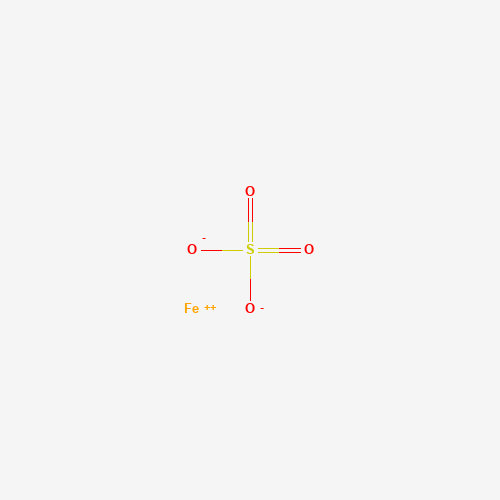
Ferrous sulfate is a widely used iron fortificant with good absorption, used in flour, cereals and infant foods. It can react with fats and colours, causing off-flavours and discolouration, which limits where it can be used.
Where it is and isn’t permitted
| Jurisdiction | Status | Scope and limits | Citation |
|---|---|---|---|
| Australia and New Zealand | No listed food uses foundThis site has not matched this substance to any food use on this jurisdiction’s list of authorised food additives. A food additive may be used only in foods that list names. Flavourings, enzymes, processing aids and added nutrients are regulated separately and do not appear on it. | ||
| Canada | Permitted | no numerical limit (good manufacturing practice) In: Bacterial cultures. Purpose: Yeast food. Limit: Good Manufacturing Practice. | Health Canada, List of Permitted Yeast Foods (List 14), item F.1retrieved 2026-10-17 |
| European Union | No listed food uses foundThis site has not matched this substance to any food use on this jurisdiction’s list of authorised food additives. A food additive may be used only in foods that list names. Flavourings, enzymes, processing aids and added nutrients are regulated separately and do not appear on it. | ||
| Great Britain | No listed food uses foundThis site has not matched this substance to any food use on this jurisdiction’s list of authorised food additives. A food additive may be used only in foods that list names. Flavourings, enzymes, processing aids and added nutrients are regulated separately and do not appear on it. | ||
| Japan | Permitted, with conditions | Designated additive: Appended Table 1, item 455, 硫酸第一鉄 (“Ferrous Sulfate” in the unofficial English translation). …Designated additive: Appended Table 1, item 455, 硫酸第一鉄 (“Ferrous Sulfate” in the unofficial English translation). Standards for use — Specifications and Standards for Foods, Food Additives, etc. (MHW Notification No. 370 of 1959), Part II (Food Additives), F (Standards for use): The Notification sets no standard for use (使用基準) for this additive, so it is not restricted there to particular foods or amounts. Compositional specifications for this additive, in the same Notification, are not imported and are not shown here; nor are the general rules in F 添加物一般, which apply to every additive. | Regulations for Enforcement of the Food Sanitation Act (MHW Ordinance No. 23 of 1948), Appended Table 1retrieved 2026-10-18 |
| South Korea | Permitted, with conditions | Designated food additive: Standards and Specifications for Food Additives, Part III, 3. …Designated food additive: Standards and Specifications for Food Additives, Part III, 3. 영양강화제 (nutrient fortifiers), 황산제일철; nutrient: 철(Fe). Standard for use (사용기준) of 황산제일철: (1) [to be used under the general standard for use in II. 2. 1), the minimum amount that achieves the technical effect, with no limit set for this additive in particular] “II. 2. 1)의 규정에 따라 사용하여야 한다.” The Korean is the standard as published. There is no official English translation of the current Code (the English version on MFDS’s website is the 2020 edition and has no legal effect); the English in square brackets is this site’s description of what each sentence does, not a translation of the foods or the levels. Compositional specifications (Part IV) are not imported, nor are the general standards in Part II, which apply to every additive. | Standards and Specifications for Food Additives (식품첨가물의 기준 및 규격), MFDS Notification, Part III (Standards for use, by item)retrieved 2026-10-18 |
| United States | Permitted | 21 CFR 184.1315retrieved 2026-10-17 | |
| Codex Alimentarius | Not listedDoes not appear on this jurisdiction’s permitted list. That is not the same as being prohibited. |
How much is permitted
A listing usually limits the quantity as well as the food. Only one of the forms that takes is a figure: quantum satis and good manufacturing practice permit the amount the technological effect requires and no more, which is a limit rather than the absence of one. Figures below are the range across every food category this page is listed in, and categories differ between regulators — see how much is permitted.
| Canada | — | 1 GMP |
|---|---|---|
| Japan | — | 1 no quantity stated |
| South Korea | — | 1 no quantity stated |
| United States | — | 1 no quantity stated |
No regulator sets a figure for Ferrous sulfate. That is not an absence of control: where the listing says quantum satis or good manufacturing practice, the quantity is limited to what the effect requires.
What it is made from
Produced by dissolving iron in sulfuric acid, or recovered as a by-product of steel pickling and titanium dioxide manufacture.
- Vegan
- Vegetarian
Compare other additives on the dietary indexes.
- CAS registry number
- 17375-41-6
- InChIKey
- BAUYGSIQEAFULO-UHFFFAOYSA-L
- PubChem
- CID 24393
How JECFA defines it
The international specification for identity and purity, prepared by the Joint FAO/WHO Expert Committee on Food Additives and published by FAO. It is a different document from any above, written by a different body and revised on its own cycle; it is advisory, and a country adopts it or does not.
Ferrous Sulfate
Ferrous sulfate occurs as the heptahydrate
Assay, identification and purity criteria
Description and assay
- Specification history
- Prepared at the 53rd JECFA (1999) and published in FNP 52 Add 7 (1999), superseding specifications prepared at the 51st JECFA (1998), published in FNP 52 Add 6 (1998). PTMDI 0.8 mg/kg bw for iron, established at the 27th JECFA in 1983.
- C.A.S. number
- 7720-78-7
- Chemical formula
- FeSO 4 ·7H 2 O
- Formula weight
- 278.02
- Assay
- Not less than 99.5% and not more than 104.5%
- DESCRIPTION
- Pale, bluish or whitish green, odourless crystals, crystalline powder or granules. Effloresces in dry air. In moist air it oxidizes readily to form brownish yellow basic ferric sulfate
- FUNCTIONAL USES
- Nutrient supplement
- METHOD OF ASSAY
- Dissolve about 1 g of the sample, accurately weighed, in a mixture of 25 ml of 2 N sulfuric acid and 25 ml of recently boiled and cooled water, add orthophenanthroline TS, and immediately titrate with 0.1 N ceric sulfate. Perform a blank determination, and make any necessary correction. Each ml of 0.1 N ceric sulfate is equivalent to 27.80 mg of FeSO 4 ·7H 2 O.
Identification
- Solubility (Vol. 4)
- One g dissolves in 1.5 ml of water at 25° and in 0.5 ml of boiling water; insoluble in ethanol
- Acidity (Vol. 4)
- A 1 in 10 solution is acid to litmus
- Test for iron (Vol. 4)
- Passes test
- Test for sulfate (Vol. 4)
- Passes test
Purity criteria
- Lead ( Vol. 4)
- Not more than 2 mg/kg Determine using an atomic absorption technique appropriate to the specified level. The selection of sample size and method of sample preparation may be based on the principles of the method described in Volume 4, “Instrumental Methods.”
- Mercury
- Not more than 1 mg/kg See description under TESTS
- Test: Mercury
- Dithizone extraction solution Dissolve 30 mg of dithizone in 1000 ml of chloroform, add 5 ml of alcohol, and mix. Store in a refrigerator. Shake a volume, which can be kept and used within a period of one month, with about half its volume of dilute nitric acid (1 in 100) and discard the nitric acid. Dilute dithizone solution Just prior to use, dilute 5 ml of Dithizone extraction solution with 25 ml of chloroform. Hydroxylamine hydrochloride solution Dissolve 20 g of hydroxylamine hydrochloride in water to make about 65 ml. Transfer the solution into a separator, add a few drops of thymol blue TS, and then add ammonium hydroxide until the solution assumes a yellow colour. Add 10 ml of sodium diethyldithiocarbamate solution (1 in 25), mix, and allow to stand for 5 min. Extract the solution with successive 10- to 15-ml portions of chloroform until a 5 ml test portion of the chloroform extract does not assume a yellow colour when shaken with a dilute cupric sulfate solution. Add 2.7 N hydrochloric acid until the extracted solution is pink, adding 1 or 2 drops more of thymol blue TS, if necessary, then dilute to 100 ml with water, and mix. Mercury stock solution Transfer 135.4 mg accurately weighed, of mercuric chloride into a 100 ml volumetric flask, dissolve in 1 N sulfuric acid , dilute to volume with the acid and mix. Dilute 5 ml of this solution to 500 ml with 1 N sulfuric acid. Each ml contains the equivalent of 10 μg of Hg. Diluted standard mercury solution On the day of use, transfer 100 ml of Mercury stock solution into a 100 ml volumetric flask, dilute to volume with 1 N sulfuric acid, and mix. Each ml contains the equivalent of 1 μg of Hg. Sodium citrate solution Dissolve 250 g of sodium citrate dihydrate in 1000 ml of water. Sample solution Dissolve 3 g of the sample in 30 ml of 1.7 N nitric acid by heating on a steam bath. Cool to room temperature in an ice bath, stir, and filter through S and S No. 589, or equivalent, filter paper that has been previously washed with 1.7 N nitric acid, followed by water. To the filtrate add 20 ml of Sodium citrate solution and 1 ml of Hydroxylamine hydrochloride solution. Procedure Work in subdued light. Prepare a control containing 3 ml of Diluted standard mercury solution, 30 ml of 1.7 N nitric acid, 5 ml of Sodium citrate solution and 1 ml of Hydroxylamine hydrochloride solution. Using a pH meter, adjust the pH of the control and the sample solution to 1.8 with ammonium hydroxide and transfer them to separators. Extract with two 5 ml portions of Dithizone extraction solution followed by 5 ml of chloroform. Discard the aqueous solutions. Transfer into clean separators the combined extracts of the two solutions, add 10 ml of dilute hydrochloric acid (1 in 2), shake well and discard the chloroform layers. Wash the acid solutions with 3 ml of chloroform and discard the chloroform layers. Add to each separator 0.1 ml of 0.05 M disodium EDTA and 2 ml of 6 N acetic acid, mix, and then slowly add 5 ml of ammonium hydroxide. Stopper the separators , and cool under a stream of cold water. Dry the outside of the separators. Through the tops of the separators, pour the solutions carefully to avoid losses, into separate beakers, and using pH meters, adjust their pH to 1.8 with 6 N ammonium hydroxide. Return the solutions to their original separators, add 5 ml of Diluted dithizone extraction solution and shake vigorously. Any colour developed in the Sample solution does not exceed that in the control.
Ferrous Sulfate, dried
Ferrous sulfate, dried consists primarily of the monohydrate with smaller amounts of the tetrahydrate
Assay, identification and purity criteria
Description and assay
- Specification history
- New specifications prepared at the 53rd JECFA (1999) and published in FNP 52 Add 7 (1999). PTMDI 0.8 mg/kg bw for iron, established at the 27th JECFA in 1983.
- Chemical formula
- FeSO 4 · H 2 O FeSO 4 · 4H 2 O
- Formula weight
- Monohydrate: 169.91 Tetrahydrate: 223.91
- Assay
- Not less than 86% and not more than 89% of FeSO 4
- DESCRIPTION
- A greyish-white to buff-coloured powder
- FUNCTIONAL USES
- Nutrient supplement
- METHOD OF ASSAY
- Dissolve about 1 g of the sample, accurately weighed, in a mixture of 25 ml of 2 N sulfuric acid and 25 ml of recently boiled and cooled water, add orthophenanthroline TS, and immediately titrate with 0.1 N ceric sulfate. Perform a blank determination, and make any necessary correction. Each ml of 0.1 N ceric sulfate is equivalent to 27.80 mg of FeSO 4 ·7H 2 O.
Identification
- Solubility (Vol.4)
- Dissolves slowly in water; insoluble in ethanol
- Test for iron (Vol.4)
- Passes test
- Test for sulfate (Vol. 4)
- Passes test
Purity criteria
- Acid-insoluble matter
- Not more than 0.05% Dissolve 2 g in 20 ml of freshly boiled dilute sulfuric acid (1 in 100), heat to boiling, and then digest in a covered beaker on a steam bath for 1 h. Filter through a tared filtering crucible, wash thoroughly, and dry at 105 o . The weight of the insoluble residue does not exceed 1mg
- Lead (Vol. 4)
- Not more than 2 mg/kg Determine using an atomic absorption technique appropriate to the specified level. The selection of sample size and method of sample preparation may be based on the principles of the method described in Volume 4, “Instrumental Methods.”
- Mercury
- Not more than 1 mg/kg See description under TESTS
- Test: Mercury
- Dithizone extraction solution Dissolve 30 mg of dithizone in 1000 ml of chloroform, add 5 ml of alcohol, and mix. Store in a refrigerator. Shake a volume, which can be kept and used within a period of one month, with about half its volume of dilute nitric acid (1 in 100) and discard the nitric acid. Dilute dithizone solution Just prior to use, dilute 5 ml of Dithizone extraction solution with 25 ml of chloroform. Hydroxylamine hydrochloride solution Dissolve 20 g of hydroxylamine hydrochloride in water to make about 65 ml. Transfer the solution into a separator, add a few drops of thymol blue TS, and then add ammonium hydroxide until the solution assumes a yellow colour. Add 10 ml of sodium diethyldithiocarbamate solution (1 in 25), mix, and allow to stand for 5 min. Extract the solution with successive 10- to 15-ml portions of chloroform until a 5-ml test portion of the chloroform extract does not assume a yellow colour when shaken with a dilute cupric sulfate solution. Add 2.7 N hydrochloric acid until the extracted solution is pink, adding 1 or 2 drops more of thymol blue TS, if necessary, then dilute to 100 ml with water, and mix. Mercury stock solution Transfer 135.4 mg accurately weighed, of mercuric chloride into a 100-ml volumetric flask, dissolve in 1 N sulfuric acid, dilute to volume with the acid and mix. Dilute 5 ml of this solution to 500 ml with 1 N sulfuric acid. Each ml contains the equivalent of 10 μg of Hg. Diluted standard mercury solution On the day of use, transfer 100 ml of Mercury stock solution into a 100-ml volumetric flask, dilute to volume with 1 N sulfuric acid, and mix. Each ml contains the equivalent of 1 μg of Hg. Sodium citrate solution Dissolve 250 g of sodium citrate dihydrate in 1000 ml of water. Sample solution Dissolve 3 g of the sample in 30 ml of 1.7 N nitric acid by heating on a steam bath. Cool to room temperature in an ice bath, stir, and filter through S and S No. 589, or equivalent, filter paper that has been previously washed with 1.7 N nitric acid, followed by water. To the filtrate add 20 ml of Sodium citrate solution and 1 ml of Hydroxylamine hydrochloride solution. Procedure Work in subdued light. Prepare a control containing 3 ml of Diluted standard mercury solution, 30 ml of 1.7 N nitric acid, 5 ml of Sodium citrate solution and 1 ml of Hydroxylamine hydrochloride solution. Using a pH meter, adjust the pH of the control and the sample solution to 1.8 with ammonium hydroxide and transfer them to separators. Extract with two 5-ml portions of Dithizone extraction solution followed by 5 ml of chloroform. Discard the aqueous solutions. Transfer into clean separators the combined extracts of the two solutions, add 10 ml of dilute hydrochloric acid (1 in 2), shake well and discard the chloroform layers. Wash the acid solutions with 3 ml of chloroform and discard the chloroform layers. Add to each separator 0.1 ml of 0.05 M disodium EDTA and 2 ml of 6 N acetic acid, mix, and then slowly add 5 ml of ammonium hydroxide. Stopper the separators, and cool under a stream of cold water. Dry the outside of the separators. Through the tops of the separators, pour the solutions carefully to avoid losses, into separate beakers, and using pH meters, adjust their pH to 1.8 with 6 N ammonium hydroxide. Return the solutions to their original separators, add 5 ml of Diluted dithizone extraction solution and shake vigorously. Any colour developed in the Sample solution does not exceed that in the control.
Every name it appears under
94 recorded names. A label may use any of them.
CAS registry number
- 13463-43-9
- 17375-41-6
- 7720-78-7
As it appears in regulation
- Ferrous sulfate
Other names
- 2IDP3X9OUD
- Blood Stop Powder
- Combiron
- dried ferrous sulfate
- DRIED FERROUS SULPHATE
- driedferrous sulfate
- Duretter
- Duroferon
- Enteric Coated Ferrous Sulfate
- Exsiccated ferrous sulphate
- exsiccated iron(2+) sulfate
- FE-Vite Iron Oral Solution
- FeH2O5S
- Ferobuff
- Ferolix
- Feromax
- Feroritard
- Ferr sulf, dried
- Ferralyn
- Ferro-Theron
- Ferrograd
- Ferrosi sulfas
- Ferrosulfat
- Ferrosulfate
- FERROUS SULFATE
- Ferrous sulfate (1:1)
- Ferrous Sulfate 324mg Enteric Coated
- Ferrous Sulfate 325 mg Green
- Ferrous Sulfate 325 mg Red
- Ferrous sulfate anhydrous
- Ferrous Sulfate Enteric Coated
- Ferrous Sulfate Enteric-Coated
- Ferrous sulfate monohydrate
- Ferrous sulfate, exsiccated
- Ferrous sulfate,dried
- Ferrous sulphate
- Ferrous sulphate (1:1)
- FERROUS SULPHATE ANHYDROUS
- Ferrous Sulphate Monohydrate
- FERROUS SULPHATE, DRIED
- ferrous;sulfate;hydrate
- Fersolate
- Ferulen
- Ferusal
- FeSO4
- FeSO4.H2O
- FESO4: FERROUS SULFATE, IRON(II) SULFATE
- Fespan
- Iron (as ferrous sulfate)
- Iron (as sulphate)
- Iron monosulfate
- Iron sulfate (1:1)
- Iron sulfate (FeSO4)
- IRON SULFATE (MONOHYDRATE)
- Iron sulfate anhydrous
- Iron sulphate
- Iron sulphate (feso4)
- IRON SUPPLEMENT
- Iron( cento) sulfate hydrate
- Iron() sulfate hydrate
- Iron(2+) sulfate
- Iron(2+) sulfate (1:1)
- IRON(2+) SULFATE (1:1) HYDRATE
- Iron(2+) sulfate monohydrate
- iron(2+) sulfate--water (1/1)
- Iron(2+) sulfate--water (1/1/1)
- IRON(2+) SULPHATE (1:1) HYDRATE
- iron(2+);sulfate;hydrate
- Iron(II) sulfate
- Iron(II) sulfate (1:1)
- Iron(II) sulfate hydrate
- Iron(II) sulfate hydrate, 99.999% trace metals basis
- iron(II) sulfate monohydrate
- Irospan
- Kendural
- Kesuka
- Odophos
- ONE VITE Iron Supplement Liquid
- Quickfloc (salt)
- Sal chalybis
- SFE 171
- Slow Fe
- Sorbifer durules
- Sulfuric acid iron(2+) salt monohydrate
- Sulfuric acid, iron(2+) salt (1:1)
- Sulfuric acid, iron(2+) salt (1:1), monohydrate
- Tetucur
- XBDUTCVQJHJTQZ-UHFFFAOYSA-L
Systematic names
- Iron(2+);sulfate;hydrate
- Iron(II) sulfate hydrate, puriss., meets analytical specification of Ph. Eur., BP, exsiccated, 86.0-89.0% FeSO4 basis
Hazard reference values
| Type | Value | Population | Assessed by | Opinion |
|---|---|---|---|---|
| ADI | 12.5 mg/kg bw/day | consumers | EFSA | 2011 |
Evidence and how bodies read it
Studies, and the differing conclusions regulators drew from them, are curated rather than machine-read, and none has been written for this substance yet.
Common questions
Assembled from what is above, in the words the questions are usually asked in. Each answer is the same statement the relevant section makes, with the same citations behind it.
- What is Ferrous sulfate?
- Ferrous sulfate is a widely used iron fortificant with good absorption, used in flour, cereals and infant foods. It can react with fats and colours, causing off-flavours and discolouration, which limits where it can be used.
- What is Ferrous sulfate used for in food?
- It is listed as a thickener, a stabiliser and a nutrient supplement — the role the US assigns it. This page shows every function each regulator records, with the citation for each.
- Is Ferrous sulfate banned in Europe?
- No. Ferrous sulfate does not appear on the EU's list of authorised food additives, which is not the same as being banned: the EU permits an additive only where it has authorised it, and usually the reason for an absence is that no one applied. The EU has made no finding against this substance. It does mean it may not be used as a food additive in the EU today.
- Where is Ferrous sulfate permitted?
- Of the seven regulators this site reads, Canada, Japan, South Korea and the US permit it. Each permission is for named foods at named levels, not a blanket one; the table on this page gives them with citations.
- Is Ferrous sulfate vegan?
- Yes. Ferrous sulfate is not derived from animals, and is suitable for vegetarians. This page says what it is made from and how.
Sources for this page
- ca retrieved 2026-10-17
- jp retrieved 2026-10-18
- kr retrieved 2026-10-18
- ecfr retrieved 2026-10-17
- jecfaspecs retrieved 2026-09-23
Full licence terms and publisher details on Sources. How this page is built and updated: Method.
Machine-readable: a JSON record of this additive is given on request —how to ask for access.
Follow changes to Ferrous sulfate:Atom feed — regulatory events, and any change the weekly refresh detects in its provisions.