Hexane
110-54-3 · 50981-41-4 · 92112-69-1 · 1-hexane · 2DDG612ED8 · Butane, ethyl- · CAS-110-54-3 · CCRIS 6247 · Dipropyl · Epitope ID:116866 · Esani · Exxsol Hexane (Salt/Mix) · Gettysolve-B · Heksan · hexan · Hexane · Hexane Fraction, purum · Hexane, ACS reagent, 99% · Hexane, analytical standard · Hexane, anhydrous, 95% · Hexane, AR, >=99% · Hexane, for HPLC · Hexane, for HPLC, >=95% · Hexane, for HPLC, >=97.0% (GC) · Hexane, for HPLC, >=99% · Hexane, JIS special grade, >=96.0% · Hexane, Laboratory Reagent, >=95% · Hexane, p.a. · Hexane, p.a., 95% · Hexane, p.a., 95.0% · Hexane, purification grade, 95% · Hexane, puriss., >=95% (GC) · Hexane, purum, >=98.0% (GC) · Hexane, ReagentPlus(R), >=99% · Hexane, SAJ first grade, >=95.0% · Hexane, technical grade · Hexane, UV HPLC spectroscopic, 97% · Hexane; NSC 68472; Skellysolve B; n-Hexane · Hexanen · Hexanes · Hexanes, mixture of isomers · HEXANES, MIXTURE OF ISOMERS, FOR SPECTROSCOPY · HexH · Hexyl hydride · HSDB 91 · n-Hexan · n-Hexane · n-Hexane 100 microg/mL in Methanol · n-Hexane 1000 microg/mL in Methanol · n-HEXANE 85% · n-HEXANE 99% · n-Hexane HPLC grade · n-HEXANE, 95% · n-Hexane, ACS grade · n-Hexane, anhydrous · n-Hexane, Environmental grade · n-Hexane, p.a. · n-Hexane, Spectrophotometric Grade · Normal hexane · normal-hexane · SENOFILCON C [USAN] · Skellysolve B · WLN: 6H · hexane · HexaneCAS 110-54-3
Listed as a solvent by Canada and the US.
Listed as solvents and vehicles (CA, US)
- Canada: Extraction solvent — Health Canada, List of Permitted Solvents (List 15)
- United States: Solvent or vehicle — FDA, Substances Added to Food: HEXANE
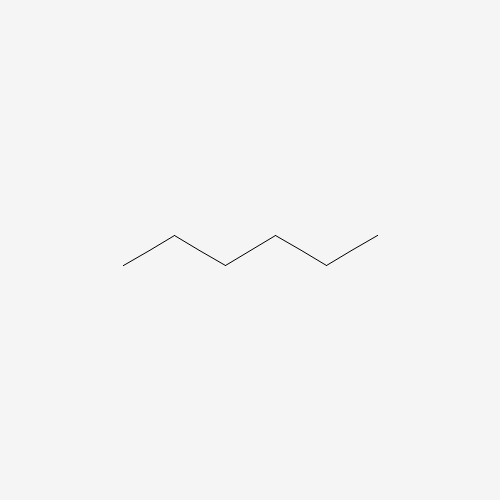
Hexane is the solvent used to extract most of the world's vegetable oil. Pressing alone leaves oil in the seed; hexane extraction recovers nearly all of it.
Where it is and isn’t permitted
| Jurisdiction | Status | Scope and limits | Citation |
|---|---|---|---|
| Australia and New Zealand | No listed food uses foundThis site has not matched this substance to any food use on this jurisdiction’s list of authorised food additives. A food additive may be used only in foods that list names. Flavourings, enzymes, processing aids and added nutrients are regulated separately and do not appear on it. | ||
| Canada | Permitted, with conditions | 5 permitted uses Show every permitted use
| Health Canada, List of Permitted Solvents (List 15)and 4 further provisionsretrieved 2026-10-17 |
| European Union | No listed food uses foundThis site has not matched this substance to any food use on this jurisdiction’s list of authorised food additives. A food additive may be used only in foods that list names. Flavourings, enzymes, processing aids and added nutrients are regulated separately and do not appear on it. | ||
| Great Britain | No listed food uses foundThis site has not matched this substance to any food use on this jurisdiction’s list of authorised food additives. A food additive may be used only in foods that list names. Flavourings, enzymes, processing aids and added nutrients are regulated separately and do not appear on it. | ||
| Japan | No listing matchedThis site imports only Japan’s list of designated additives (Appended Table 1 to the Regulations for Enforcement of the Food Sanitation Act), matched by English name. Existing additives, natural flavouring agents and ordinary foods used as additives are permitted outside that list and are not imported, so an empty row does not show that Japan does not permit the substance. | ||
| South Korea | Permitted, with conditions | Designated food additive: Standards and Specifications for Food Additives, Part III, 2. …Designated food additive: Standards and Specifications for Food Additives, Part III, 2. 가공보조제 (processing aids), 헥산 (“Hexane”, the English the Code prints beside it). Main use (주용도) of 헥산: 추출용제. Standard for use (사용기준) of 헥산: (1) [may be used only in the foods or uses listed; sets a limit on the amount used] “헥산은 아래의 식품 또는 용도에 한하여 사용하여야 한다. 헥산의 사용량은 1. 유지성분의 추출, 분리, 정제의 목적 : 0.005g/kg 이하(헥산으로서 잔류량) 2. 건강기능식품의 기능성원료 추출 또는 분리 등의 목적 : 0.005g/kg 이하(헥산으로서 잔류량)” The Korean is the standard as published. There is no official English translation of the current Code (the English version on MFDS’s website is the 2020 edition and has no legal effect); the English in square brackets is this site’s description of what each sentence does, not a translation of the foods or the levels. Compositional specifications (Part IV) are not imported, nor are the general standards in Part II, which apply to every additive. | Standards and Specifications for Food Additives (식품첨가물의 기준 및 규격), MFDS Notification, Part III (Standards for use, by item)retrieved 2026-10-18 |
| United States | Permitted, with conditions | 21 CFR 173.270retrieved 2026-10-17 | |
| Codex Alimentarius | Not listedDoes not appear on this jurisdiction’s permitted list. That is not the same as being prohibited. |
How much is permitted
A listing usually limits the quantity as well as the food. Only one of the forms that takes is a figure: quantum satis and good manufacturing practice permit the amount the technological effect requires and no more, which is a limit rather than the absence of one. Figures below are the range across every food category this page is listed in, and categories differ between regulators — see how much is permitted.
| Canada | — | 5 no quantity stated |
|---|---|---|
| South Korea | — | 1 no quantity stated |
| United States | — | 1 no quantity stated |
No regulator sets a figure for Hexane. That is not an absence of control: where the listing says quantum satis or good manufacturing practice, the quantity is limited to what the effect requires.
What it is made from
A petroleum distillate fraction. It is evaporated and recovered after extraction, and residues in the finished oil are limited.
- Vegan
- Vegetarian
Compare other additives on the dietary indexes.
- CAS registry number
- 110-54-3
- InChIKey
- VLKZOEOYAKHREP-UHFFFAOYSA-N
- PubChem
- CID 8058
How JECFA defines it
The international specification for identity and purity, prepared by the Joint FAO/WHO Expert Committee on Food Additives and published by FAO. It is a different document from any above, written by a different body and revised on its own cycle; it is advisory, and a country adopts it or does not.
Hexanes
The product "hexanes" refers to the hexane petroleum hydrocarbon distillation fraction that contains a high proportion of n-hexane. Typically hexanes contain mainly n-hexane, 2-methylpentane, 3-methylpentane or mixtures of these with smaller amounts of n-pentane, isopentane, cyclohexane, n-heptane, dimethylbutanes and methylcyclopentane.
Assay, identification and purity criteria
Description and assay
- Specification history
- Prepared at the 51st JECFA (1998), published in FNP 52 Add 6 (1998) superseding specifications prepared at the 14th JECFA (1970), published in NMRS 48B (1971) and in FNP 52 (1992). ADI "limited by GMP" established at the 14th JECFA in 1970.
- Chemical names
- Hexanes
- Chemical formula
- C 6 H 14
- Formula weight
- 86.18
- DESCRIPTION
- Clear colourless highly flammable liquid with a characteristic petroleum-like odour; free from sediment and suspended matter
- FUNCTIONAL USES
- Extraction solvent
Identification
- Solubility (Vol. 4)
- Insoluble in water, soluble in ether, alcohol, and acetone
- Specific gravity (Vol. 4)
- d 20 : 0.665 - 0.687 (pure n-hexane: about 0.660)
- Refractive index (Vol. 4)
- n 20 : 1.381 - 1.384 (pure n-hexane: about 1.375) D
Purity criteria
- Distillation range (Vol. 4)
- 95% v/v distils between 64 to 70 o
- pH (Vol. 4)
- Neutral to methyl orange (pH indicator)
- Non-volatile residue (Vol. 4)
- Not more than 0.0005% w/v
- Sulfur (Vol. 4)
- Not more than 5 mg/kg
- Benzene
- Not more than 0.05% v/v See description under TESTS
- Lead (Vol. 4)
- Not more than 1 mg/kg Determine using an atomic absorption technique appropriate to the specified level. The selection of sample size and method of sample preparation may be based on the principles of the method described in Volume 4, “Instrumental Methods.”
- Polycyclic aromatic hydrocarbon
- Passes test See description under TESTS
- Test: Polycyclic aromatic hydrocarbon
- Transfer 25.0 ml of sample to a 125 ml separator and add 25 ml of hexane. Mix and add 5.0 ml of dimethyl sulfoxide. Shake vigorously for 1 min and allow to stand until two clear layers are formed. Transfer the lower layer to a second separating funnel, add 2 ml of hexane and shake the mixture vigorously. Allow to stand until two clear layers are formed. Separate the lower layer and measure its absorbance over the range 260 nm to 420 nm using as reference liquid the clear lower layer obtained by vigorously shaking 5.0 ml of dimethyl sulfoxide with 25 ml of hexane for 1 min. Prepare a reference solution in trimethyl pentane containing 7.0 mg of naphthalene per liter and measure the absorbance of that solution at 275 nm using trimethylpentane as a blank. At no wavelength in the range 260 nm to 420 nm does the absorbance of the test solution exceed one-third that of the reference solution at 275 nm. Use hexane, dimethyl sulfoxide and trimethylpentane in quality specified fo r ultraviolet spectrophotometry.
- Test: Lead
- Principle The sample is treated with bromine, heated on a steam bath to decompose the alkyl lead and alkyl lead salts, and then extracted with dilute nitric acid. The pH of the aqueous extract is adjusted by means of a buffer and the lead is extracted with a chloroform solution of dithizone. The absorbance of the chloroform extract is measured and the lead content is determined from a previously prepared calibration curve. Apparatus - The glassware should be borosilicate and confirmed to be lead-free. - Spectrophotometer, fitted with covered absorption cells having a 1 cm light path. - Shaking machine (optional), capable of approximately 250 rpm. - Separatory funnels, Squibb-type, 125 ml volume. Reagents - Purity of reagents: Reagent grade chemicals shall be used in all tests. - Purity of water: Unless otherwise indicated, references to water shall be understood to mean distilled water or other water of equivalent purity. - Bromine solution: Dilute 300 ml of bromine to 1000 ml with chloroform. Filter through a sintered-glass filter before using. (Do in fume hood). - Buffer solution: Dissolve 20 g of potassium cyanide (KCN) (Caution), 6 g of ammonium citrate, and 6 g of sodium sulfite (Na 2 SO 3 ), separately in water. Mix the solutions, add 150 ml of concentrated ammonium hydroxide (NH 4 OH, sp gr 0.90), and dilute to 1,000 with water. This solution is stable for 3 months (in refrigerator). - Dithizone solution: Dissolve 30 mg of dithizone in 1000 ml of chloroform. This solution is stable for only 4 weeks. - Lead standard solution: Dissolve l.5985 g of lead nitrate (Pb(NO 3 ) 2 ) in 250 ml of water contained in a liter volumetric flask. Add 8 ml of concentrated HNO 3 (sp gr l.42), dilute to volume with water, and mix thoroughly. For calibration purposes, pipet 5.0 ml of this solution into a 1-liter volumetric flask, add 8 ml of concentrated HNO 3 (sp gr 1.42), and dilute to volume with water (1 ml = 0.005 mg Pb). - Nitric acid (sp gr 1.42): Concentrated nitric acid (HNO 3 ). - Nitric acid (8:992): Mix 8 ml of concentrated HNO 3 (sp gr 1.42) with 992 ml of water. Calibration Prepare a calibration curve using the lead solution (1 ml = 0.005 mg Pb) as follows: Pipet 0.0, 2.0, 5.0, 10.0, and 15.0 ml of the solution respectively into each of five separatory funnels and dilute each solution to 50 ml with HNO 3 (8:992). Treat these solutions as described in paragraphs 3 and 4, under Procedure, using the one not containing lead as the reagent blank. Construct a calibration curve by plotting the absorbance of the solutions against the mg of lead per 25 ml of dithizone solution. Procedure Pipet 50 g of the sample into a 250 ml-beaker. Add bromine solution until the bromine colour persists for at least 2 min, then allow the beaker to stand for an additional 5 min. At the same time prepare a reagent blank by adding the same amount of bromine solution to 25.0 ml of HNO 3 (8:992) in a 250 ml-beaker. Place the beakers on a steam bath and heat until the bromine colour disappears. Place the beakers on a hot plate and bring the solutions to a vigorous boil. Cool to room temperature and transfer each solution quantitatively into separatory funnels using 25.0 ml of HNO 3 (8:992). Shake the test sample for 2 min. Drain the aqueous extract of the test sample into another separatory funnel. Repeat the extraction of the tests sample using 25.0 ml of HNO 3 (8:992). Drain the aqueous layer into the separatory funnel containing the initial extract. Transfer the reagent blank solution quantitatively to a 50 ml volumetric flask using 25.0 ml of HNO 3 (8:992). Dilute to the mark with water and drain the contents of the flask into a separatory funnel. Add 120 ml of the buffer solution to both separatory funnels to adjust the pH to a point between 9.5 and 11.0. Pipet 25 ml of dithizone solution and shake for 2 min. Drain and discard a small portion of the chloroform layer from the funnel to remove any water or lead that may have accumulated in the stem. Transfer a portion of each chloroform layer into separate absorption cells. Adjust the spectrophotometer to read zero absorbance for the reagent blank and then measure the absorbance of the sample with respect to the blank at a wavelength of 510 nm. Convert the absorbance measurement to concentration of lead in milligrams of lead per 25 ml of dithizone solution by means of the previously prepared calibration curve. Calculate the lead content in milligrams per kilogram as follows: where A is the lead concentration, in mg per 25 ml of dithizone solution corresponding to the measured absorbance.
- Test: Benzene
- (ASTM D 4367 Adapted, with permission, from the Annual Book of ASTM Standards, copyright American Society for Testing and Materials, 100 Harbor Drive, West Conshohocken, PA 19428. Copies of the complete ASTM standard may be purchased direct from ASTM, phone: 610-832-9585, fax: 610-832-9555, e-mail: service@astm.org, website: http://www.astm.org) Principle An internal standard, methyl ethyl ketone (MEK) is added to the test hexane which is then introduced into a gas chromatograph equipped with two columns connected by a flow diversion valve (Figure 1). The specimen passes first through a column packed with a non-polar phase, methyl silicone, which separates the non-polar hydrocarbons (column A). After octane has eluted, the flow through the nonpolar column (column A) is reversed and diverted to a second column (column B) containing a highly polar phase. Components which have not eluted column A are thus diverted to column B which separates the aromatic and non-aromatic compounds. The eluted components are detected by a flame ionization detector and recorded on a strip chart. The peak areas are measured and the concentration of each component is calculated by reference to the internal standard. Apparatus Chromatograph - Any gas chromatographic that has a backflush system, a flame ionization detector, and suitable electronic recorder. Columns - one 0.8 m long by 3.2 mm outside diameter stainless steel column packed with 10% methyl silicone coated on 60-80 mesh acid washed diatomaceous earth and one 4.6 m long by 3.2 mm outside diameter stainless steel column packed with 25% 1,2,3-Tris(2-cyanoethoxy) propane (TCEP) coated on 80-100 mesh acid washed diatomaceous earth. Join Columns A and B as shown in Figure 1 using an appropriate flow diverting valve. Adjust the helium gas flow through both columns to approximately 40 ml/min with the flow valve in the forward flow position (Figure 2a). Set the valve in the backflush position and set the flow rate for column B to 40 ml/min (Figure 2b). Reagents and materials Reagent grade chemicals shall be used in all tests Methyl Ethyl Ketone (MEK), >99.9 % Benzene, >99% Isooctane, >99%; n-Nonane, >99% Calibration Determine time required for before changing the valve (i.e., backflushing), which varies for each column system and must be determined experimentally as follows: Prepare a mixture of 5 volume % isooctane in n-nonane. With the system in the forward flow mode (Figure 2a) inject 1 μl of the isooctane n-nonane mixture and allow both compounds to elute. Measure the time in seconds from the injection until all the isooctane but none of the n-nonane has eluted. One half of the measured time approximates the time to switch the backflush valve. Repeat the run, including the injection, but switching the system to the backflush mode at the determined backflush time. This should result in a chromatogram of isooctane with little or no n-nonane evident. If necessary, make additional runs, adjusting the time to backflush until a chromatogram of all the isooctane and little or none of the n-nonane is obtained. This established backflush time, including the actual valve operations, must be used in all subsequent calibrations and analyses. Calibration and standardization Standard Solutions - Prepare seven standard solutions covering the range of 0 to 1 volume % benzene as follows: For each standard, measure the volume of benzene listed below into a 100 ml volumetric flask. Dilute to volume with isooctane, with all components and glassware at normal room temperature, and mix thoroughly. Volume % ml 1 1 0.5 0.5 0.25 0.25 0.10 0.10 0.05 0.05 0.01 0.01 0.005 0.005 Calibration Solutions - Accurately measure 0.5 ml of MEK into a 100-ml volumetric flask, fill to the mark with the first standard solution and mix thoroughly. Repeat with each of the other standard solutions. Chromatographic Analysis - Using the conditions established above, chromatograph each of the calibration solutions after injecting approximately 3 μl. Calibration - Measure the areas of the benzene and of MEK peaks. Calculate the ratio of the benzene peak area to the MEK peak area. Plot the concentration of benzene versus the ratio. The calibration must be done to ensure that the chromatographic system is operating properly and that the concentration of any one component has not exceeded the linear response range of any part of the system. The calibration plot should be linear. Determine the retention times for each component for future identification. Procedure Test solution - Accurately measure 0.5 ml of MEK into a 100 ml volumetric flask. Fill to the mark with the material under test and mix well. Chromatograph a specimen from the test solution. Identify on the chromatogram the benzene and the internal standard MEK peaks from the retention times of the standards. The order of elution is non-aromatic hydrocarbons, benzene, MEK, and toluene when using the specified columns. Measure the areas under the benzene peak and under the MEK peak. Calculation Calculate the ratio of peak area of benzene to the peak area of MEK. Read from the calibration curve the volume % of benzene corresponding to the calculated peak ratio. If the results are desired on a weight basis, convert to weight % as follows: Benzene, weight % = (V/D) x 0.8844 where V = benzene, volume %, and D = relative density of sample at 15.6/15.6ºC Report the benzene content in volume or weight % to the nearest 0.005 %. Fig.1 Tubing Assembly and Instrumentation Fig.2 Flow Switching System
Every name it appears under
65 recorded names. A label may use any of them.
CAS registry number
- 110-54-3
- 50981-41-4
- 92112-69-1
As it appears in regulation
- Hexane
Other names
- 1-hexane
- 2DDG612ED8
- Butane, ethyl-
- CAS-110-54-3
- CCRIS 6247
- Dipropyl
- Epitope ID:116866
- Esani
- Exxsol Hexane (Salt/Mix)
- Gettysolve-B
- Heksan
- hexan
- Hexane
- Hexane Fraction, purum
- Hexane, ACS reagent, 99%
- Hexane, analytical standard
- Hexane, anhydrous, 95%
- Hexane, AR, >=99%
- Hexane, for HPLC
- Hexane, for HPLC, >=95%
- Hexane, for HPLC, >=97.0% (GC)
- Hexane, for HPLC, >=99%
- Hexane, JIS special grade, >=96.0%
- Hexane, Laboratory Reagent, >=95%
- Hexane, p.a.
- Hexane, p.a., 95%
- Hexane, p.a., 95.0%
- Hexane, purification grade, 95%
- Hexane, puriss., >=95% (GC)
- Hexane, purum, >=98.0% (GC)
- Hexane, ReagentPlus(R), >=99%
- Hexane, SAJ first grade, >=95.0%
- Hexane, technical grade
- Hexane, UV HPLC spectroscopic, 97%
- Hexane; NSC 68472; Skellysolve B; n-Hexane
- Hexanen
- Hexanes
- Hexanes, mixture of isomers
- HEXANES, MIXTURE OF ISOMERS, FOR SPECTROSCOPY
- HexH
- Hexyl hydride
- HSDB 91
- n-Hexan
- n-Hexane
- n-Hexane 100 microg/mL in Methanol
- n-Hexane 1000 microg/mL in Methanol
- n-HEXANE 85%
- n-HEXANE 99%
- n-Hexane HPLC grade
- n-HEXANE, 95%
- n-Hexane, ACS grade
- n-Hexane, anhydrous
- n-Hexane, Environmental grade
- n-Hexane, p.a.
- n-Hexane, Spectrophotometric Grade
- Normal hexane
- normal-hexane
- SENOFILCON C [USAN]
- Skellysolve B
- WLN: 6H
Systematic names
- hexane
Hazard reference values
No reference value for this substance in the sources we hold.
Evidence and how bodies read it
Studies, and the differing conclusions regulators drew from them, are curated rather than machine-read, and none has been written for this substance yet.
Common questions
Assembled from what is above, in the words the questions are usually asked in. Each answer is the same statement the relevant section makes, with the same citations behind it.
- What is Hexane?
- Hexane is the solvent used to extract most of the world's vegetable oil. Pressing alone leaves oil in the seed; hexane extraction recovers nearly all of it.
- What is Hexane used for in food?
- It is listed as a solvent — the role Canada and the US assign it. This page shows every function each regulator records, with the citation for each.
- Is Hexane banned in Europe?
- No. Hexane is not on the EU's list of authorised food additives, but it would not be expected to be: every role regulators give it — solvent — the EU regulates under separate law. Its absence from the additives list says nothing about whether it is permitted in Europe.
- Where is Hexane permitted?
- Of the seven regulators this site reads, Canada, South Korea and the US permit it. Each permission is for named foods at named levels, not a blanket one; the table on this page gives them with citations.
- Is Hexane vegan?
- Yes. Hexane is not derived from animals, and is suitable for vegetarians. This page says what it is made from and how.
Sources for this page
- ca retrieved 2026-10-17
- kr retrieved 2026-10-18
- ecfr retrieved 2026-10-17
- jecfaspecs retrieved 2026-09-23
Full licence terms and publisher details on Sources. How this page is built and updated: Method.
Machine-readable: a JSON record of this additive is given on request —how to ask for access.
Follow changes to Hexane:Atom feed — regulatory events, and any change the weekly refresh detects in its provisions.