Lactic acid
50-21-5 · 598-82-3 · 79-33-4 · (+-)-2-Hydroxypropanoic acid · (2RS)-2-Hydroxypropanoic acid · (RS)-2-Hydroxypropionsaeure · 2 Hydroxypropanoic Acid · 2-hydroxypropanoic acid · 2-hydroxypropionic acid · Acidum lacticum · Aethylidenmilchsaeure · alpha-Hydroxypropanoic acid · alpha-Hydroxypropionic acid · Aura Teat Scrubber · CD2 Activator · CD2-FB Activator · CD2-HD Activator · CD2-LV Activator · Cheongin Haejanghwan · Cheongin Haewoohwan · Cheongin Samrakhwan · Chloroxide A · Cover All Part A · Cover II Part A · D Lactic Acid · Dermaplex · Dermaplex Pre-Post · DL-Lactic acid · E 270 · Encore Pre/Post · Ethylidenelactic acid · ExfoliatingGel · FEMA No. 2611 · HIPURE 88 · INS NO.270 · INS-270 · Kyselina mlecna · Lactate · Lactate, Ammonium · Lactic acid · Lactic acid USP · Lactic acid, dl · Lactic acid, dl- · Lactic acid, L-, D- and DL- · Lactic acid,buffered · LacticPlus · Lacticum acidum · Lactovagan · Lurex · Milchsaeure · Milchsaure · Milk acid · Ordinary lactic acid · Primary aliphatic saturated or unsaturated alcohols/aldehydes/acids/acetals/esters with a second primary, secondary or tertiary oxygenated functional group including aliphatic lactones · Pro-San Activator · Propanoic acid, 2-hydroxy- · Propionic acid, 2-hydroxy- · Purac FCC 80 · Purac FCC 88 · Racemic lactic acid · Soft-San · Synofilm · Synoshield · Tonsillosan · E270 · 270 · 2-Hydroxypropanoic acid · Lactic acid · Acid lactic · Acide lactique · Acido lattico · Aċidu lattiku · Kwas mlekowy · Kyselina mliečna · Kyselina mléčná · Lactic acid · Maitohappo · Melkzuur · Milchsäure · Mjölksyra · mlečna kislina · Mliječna kiselina · Mælkesyre · Pieno rūgštis · Pienskābe · Piimhape · Tejsav · Ácido láctico · Γαλακτικό οξύ · Млечна киселинаE number E270INS 270CAS 50-21-5
Listed as an acidity regulator by Canada, Codex and the US.
Listed as acidity regulators (CA, US, Codex) · preservatives (US) · raising agents (CA) · flavour enhancers (US) · curing and pickling agents (US) · flavouring agents and adjuvants (US) · solvents and vehicles (US)
- Canada: Acidity regulator — Health Canada, List of Permitted Acidity Regulators and Acid-Reacting Materials (List 10)
- United States: pH control agent — FDA, Substances Added to Food: LACTIC ACID
- United States: pH control agents — 21 CFR 184.1061, citing 21 CFR 170.3(o)(23)
- Codex Alimentarius: Acidity regulator — CXS 192-1995 Table One, INS 270
- United States: Antimicrobial agent — FDA, Substances Added to Food: LACTIC ACID
- United States: Antimicrobial agents — 21 CFR 184.1061, citing 21 CFR 170.3(o)(2)
- Canada: Acid-reacting material — Health Canada, List of Permitted Acidity Regulators and Acid-Reacting Materials (List 10)
- United States: Flavor enhancer — FDA, Substances Added to Food: LACTIC ACID
- United States: Flavor enhancers — 21 CFR 184.1061, citing 21 CFR 170.3(o)(11)
- United States: Curing and pickling agents — 21 CFR 184.1061, citing 21 CFR 170.3(o)(5)
- United States: Curing or pickling agent — FDA, Substances Added to Food: LACTIC ACID
- United States: Flavoring agent or adjuvant — FDA, Substances Added to Food: LACTIC ACID
- United States: Flavoring agents and adjuvants — 21 CFR 184.1061, citing 21 CFR 170.3(o)(12)
- United States: Solvent or vehicle — FDA, Substances Added to Food: LACTIC ACID
- United States: Solvents and vehicles — 21 CFR 184.1061, citing 21 CFR 170.3(o)(27)
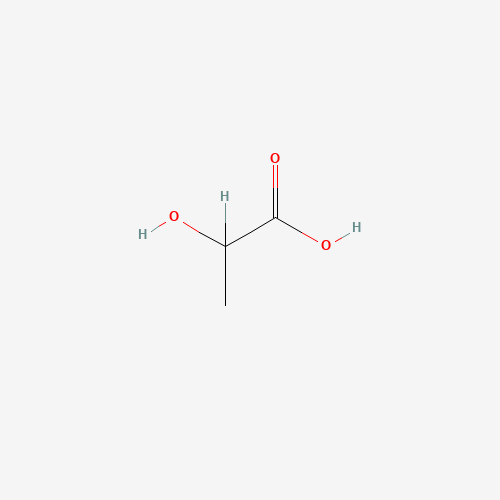
Lactic acid is an acidity regulator and preservative used in drinks, confectionery, dressings, cured meats and bread. Despite the name it is not made from milk and is not a dairy ingredient.
Where it is and isn’t permitted
| Jurisdiction | Status | Scope and limits | Citation |
|---|---|---|---|
| Australia and New Zealand | Permitted, with conditions | 60 food categories highest permitted level 2,000 mg/kg Show every food category
| Food Standards Code, Schedule 15, S15—5and 59 further provisionsretrieved 2026-10-17 |
| Canada | Permitted | no numerical limit (good manufacturing practice) 8 permitted uses Show every permitted use
| Health Canada, List of Permitted Acidity Regulators and Acid-Reacting Materials (List 10)and 7 further provisionsretrieved 2026-10-17 |
| European Union | Permitted, with conditions | 87 food categories highest permitted level 5,000 mg/l Show every food category
| Regulation (EC) No 1333/2008and 86 further provisionsretrieved 2026-10-18 |
| Great Britain | Permitted, with conditions | 85 food categories highest permitted level 5,000 mg/kg or mg/l Show every food category
| Assimilated Regulation (EC) No 1333/2008and 84 further provisionsretrieved 2026-10-18 |
| Japan | Permitted, with conditions | Designated additive: Appended Table 1, item 297, 乳酸 (“Lactic Acid” in the unofficial English translation). …Designated additive: Appended Table 1, item 297, 乳酸 (“Lactic Acid” in the unofficial English translation). Standards for use — Specifications and Standards for Foods, Food Additives, etc. (MHW Notification No. 370 of 1959), Part II (Food Additives), F (Standards for use): The Notification sets no standard for use (使用基準) for this additive, so it is not restricted there to particular foods or amounts. Compositional specifications for this additive, in the same Notification, are not imported and are not shown here; nor are the general rules in F 添加物一般, which apply to every additive. | Regulations for Enforcement of the Food Sanitation Act (MHW Ordinance No. 23 of 1948), Appended Table 1retrieved 2026-10-18 |
| South Korea | Permitted, with conditions | Designated food additive: Standards and Specifications for Food Additives, Part III, 1. …Designated food additive: Standards and Specifications for Food Additives, Part III, 1. 일반식품첨가물 (general food additives), 젖산 (“Lactic Acid”, the English the Code prints beside it). Main use (주용도) of 젖산: 산도조절제. Standard for use (사용기준) of 젖산: (1) [to be used under the general standard for use in II. 2. 1), the minimum amount that achieves the technical effect, with no limit set for this additive in particular] “II. 2. 1)의 규정에 따라 사용하여야 한다.” The Korean is the standard as published. There is no official English translation of the current Code (the English version on MFDS’s website is the 2020 edition and has no legal effect); the English in square brackets is this site’s description of what each sentence does, not a translation of the foods or the levels. Compositional specifications (Part IV) are not imported, nor are the general standards in Part II, which apply to every additive. | Standards and Specifications for Food Additives (식품첨가물의 기준 및 규격), MFDS Notification, Part III (Standards for use, by item)retrieved 2026-10-18 |
| United States | Permitted | 21 CFR 184.1061retrieved 2026-10-17 | |
| Codex Alimentarius | Permitted, with conditions | 18 food categories highest permitted level 2,000 mg/kg Show every food category and its notes
| CXS 192-1995 Table Three, INS 270and 18 further provisionsretrieved 2026-09-07 |
How much is permitted
A listing usually limits the quantity as well as the food. Only one of the forms that takes is a figure: quantum satis and good manufacturing practice permit the amount the technological effect requires and no more, which is a limit rather than the absence of one. Figures below are the range across every food category this page is listed in, and categories differ between regulators — see how much is permitted.
| Australia and New Zealand | 2,000 mg/kg | 1 numeric limit, 59 GMP |
|---|---|---|
| Canada | — | 8 GMP |
| European Union | 5,000 mg/kg | 1 numeric limit, 46 several limits, 18 quantum satis, 22 no quantity stated |
| Great Britain | 5,000 mg/kg | 1 numeric limit, 84 quantum satis |
| Japan | — | 1 no quantity stated |
| South Korea | — | 1 no quantity stated |
| United States | — | 1 no quantity stated |
| Codex Alimentarius | 2,000 mg/kg | 1 numeric limit, 18 GMP |
What it is made from
Produced by fermenting sugars from maize, beet or cane with lactic acid bacteria. The name comes from its discovery in soured milk, not from its manufacture.
- Vegan
- Vegetarian
Compare other additives on the dietary indexes.
- CAS registry number
- 50-21-5
- InChIKey
- JVTAAEKCZFNVCJ-UHFFFAOYSA-N
- PubChem
- CID 612
The two specifications, compared
The European Union sets identity and purity by regulation; JECFA publishes its own through FAO, advisory until a country adopts it. Both documents are below in full. These are the parameters each puts a number on.
| Parameter | European Union | JECFA |
|---|---|---|
| Assay | no less than 76 % | no less than 95 % |
| Sulphated ash | no more than 0.1 % | no more than 0.1 % |
| Lead | no more than 2 mg/kg | no more than 2 mg/kg |
| Arsenic | no more than 3 mg/kg | — |
| Mercury | no more than 1 mg/kg | — |
One parameter differs between the two documents. A difference is not a disagreement about safety: the two are revised on their own cycles, and an assay or a drying loss can be measured against a different preparation of the substance, which is why only the contaminant ceilings are marked. Within the EU the EU's figure is the one that binds.
How the EU defines it
The legal specification an additive must meet to be sold as this E number in the EU — what it is, how it may be made, and the purity it must reach. From Commission Regulation (EU) No 231/2012.
E 270 Lactic acid
Consists of a mixture of lactic acid (C₃H₆O₃) and lactic acid lactate (C₆H₁₀O₅). It is obtained by the lactic fermentation of sugars or is prepared synthetically. Lactic acid is hygroscopic and when concentrated by boiling, it condenses to form lactic acid lactate, which on dilution and heating hydrolyses to lactic acid.
Assay, identification and purity criteria
Description and assay
- Einecs
- 200-018-0
- Chemical name
- Lactic acid; 2-Hydroxypropionic acid; 1-Hydroxyethane-1-carboxylic acid
- Chemical formula
- C₃H₆O₃
- Molecular weight
- 90,08
- Assay
- Content not less than 76 %
- Description
- Colourless or yellowish, nearly odourless, syrupy liquid to solid
Identification
- Test for lactate
- Passes test
Purity criteria
- Sulphated ash
- Not more than 0,1 %
- Chloride
- Not more than 0,2 %
- Sulphate
- Not more than 0,25 %
- Iron
- Not more than 10 mg/kg
- Arsenic
- Not more than 3 mg/kg
- Lead
- Not more than 2 mg/kg
- Mercury
- Not more than 1 mg/kg
How JECFA defines it
The international specification for identity and purity, prepared by the Joint FAO/WHO Expert Committee on Food Additives and published by FAO. It is a different document from any above, written by a different body and revised on its own cycle; it is advisory, and a country adopts it or does not.
INS 270 Lactic Acid
Obtained by the lactic fermentation of sugars or is prepared synthetically; may contain condensation products such as lactic acid, lactate and dilactide. Common products of commerce are 50-90% solutions. Solid products containing about 100-125% of titratable lactic acid also exist. (Note: Lactic acid is hygroscopic and when concentrated by boiling or by distillation it forms condensation products which hydrolyze to lactic acid on dilution and heating in water).
Synonyms: INS No. 270
Assay, identification and purity criteria
Description and assay
- Specification history
- Prepared at the 46th JECFA (1996), published in FNP 52 Add 4 (1996) superseding specifications prepared at the 21st JECFA (1977), published in NMRS 57 (1977) and in FNP 52 (1992). Metals and arsenic specifications revised at the 63rd JECFA (2004). An ADI 'not limited' for lactic acid and its salts was established at the 23rd JECFA (1979)
- Chemical names
- Lactic acid, 2-hydroxypropanoic acid, 2-hydroxypropionic acid
- C.A.S. number
- 50-21-5 (L-: 79-33-4; D-: 10326-41-7; DL-: 598-82-3)
- Chemical formula
- C 3 H 6 O 3
- Formula weight
- 90.08
- Assay
- Not less than 95.0% and not more than 105.0% of the labelled concentration. For the purity tests, prepare an aqueous solution containing 40% of lactic acid, using the labelled concentration. To dissolve the sample, use warming if necessary. When the labelled concentration is less than 40%, use the product for the test without dilution. The amount of sample to be tested in the tests is the amount of lactic acid calculated from the labelled concentration of the products, except in the tests for "sugars" and for "readily carbonizable substances". In the latter two tests, the term "sample" refers to the 40% solution of lactic acid. The limit of the tests is based on the amount of lactic acid, calculated from the labelled concentration.
- DESCRIPTION
- Colourless, syrupy liquid or white to light yellow solid or powder
- FUNCTIONAL USES
- Acid, acidifier
- METHOD OF ASSAY
- Weigh accurately a portion of the sample equivalent to about 3 g of lactic acid, transfer to a 250-ml flask, add 50 ml of 1N sodium hydroxide, mix, and boil for 20 min. Add phenolphthalein TS, titrate the excess alkali in the hot solution with 1N sulfuric acid, and perform a blank determination. Each ml of 1N sodium hydroxide is equivalent to 90.08 mg of C 3 H 6 O 3 .
Identification
- Solubility (Vol. 4)
- Liquid: Soluble in water and in ethanol Solid: Sparingly soluble in water, soluble in acetone
- Test for acid
- A 1 in 10 solution or dispersion of the sample is acid to litmus paper
- Test for lactate (Vol. 4)
- Passes test
Purity criteria
- Sulfated ash (Vol. 4)
- Not more than 0.1% Test 2 g of the sample (Method I). Retain the ash for use in the test for iron.
- Chloride
- Not more than 0.2% Weigh accurately a portion of the sample solution equivalent to about 5 g of lactic acid, dissolve in 50 ml of water, and neutralize to litmus with sodium hydroxide solution (1 in 4). Add 2 ml of potassium chromate TS and titrate with 0.1N silver nitrate to the first appearance of a red tinge. Each ml of 0.1N silver nitrate is equivalent to 3.545 mg of Cl.
- Sulfate
- Not more than 0.25% Weigh accurately a portion of the sample solution equivalent to about 50 g of lactic acid, transfer into a 600-ml beaker, dissolve in 200 ml of water, and neutralize to between pH 4.5 and 6.5 with sodium hydroxide solution (1 in 2), making the final adjustment with a more dilute alkali solution. Filter, if necessary, and heat the filtrate or clear solution to just below the boiling point. Add 10 ml of barium chloride TS, stirring vigorously, boil the mixture gently for 5 min, and allow to stand for at least 2 h, or preferably overnight. Collect the precipitate of barium sulfate in a tared Gooch crucible, wash until free from chloride, dry, and ignite at 600 o to constant weight. The weight of barium sulfate so obtained, multiplied by 0.412, represents the weight of SO 4 in the sample taken.
- Iron
- Not more than 10 mg/kg To the ash obtained in the test for Sulfated ash add 2 ml of dilute hydrochloric acid (1 in 2), and evaporate to dryness on a steam bath. Dissolve the residue in 1 ml of hydrochloric acid, dilute to 40 ml with water, and add 40 mg of ammonium persulfate crystals and 10 ml of ammonium thiocyanate TS. Any red or pink colour does not exceed that produced by 2.0 ml of Iron Standard Solution (20 μg Fe) in an equal volume of solution containing the quantities of reagents used in the test.
- Cyanide
- To 0.1 g of the sample add 3 ml of a 20% of sodium hydroxide solution and heat on a water bath for 10 min. After cooling, add 1 drop of phenolphthalein TS and add dropwise dilute acetic acid TS until the pink colour has disappeared. Add 3 drops of dilute acetic acid TS and water to make 40 ml. Add 0.6 ml of chloramine-T solution (dissolve 1 g of chloramine-T (C 7 H 7 NNaO 2 SCl · 3H 2 O) in water to make 100 ml; prepare freshly before use) and allow to stand for 3 min. Add 10 ml of pyridine-pyrazolone (dissolve 0.5 g of 1-phenyl-3-methyl-5-pyrazolone in 100 ml of hot water at 75º and cool to room temperature; mix with 20 ml of pyridine containing 0.025 g of bis-(1-phenyl-3-methyl-5-pyrazolone); prepare freshly before use) and allow to stand for 25 min. No blue colour is produced (limit approx. 1 mg/kg).
- Citric, oxalic, phosphoric or tartaric acid
- Dilute 1 g of the sample to 10 ml with water, add 40 ml of calcium hydroxide TS, and boil for 2 min. No turbidity is produced
- Sugars
- Add 5 drops of the sample solution to 10 ml of hot alkaline cupric tartrate TS. No red precipitate is formed.
- Readily carbonizable substances
- Superimpose carefully 5 ml of the sample solution kept at 15 o on 5 ml of sulfuric acid TS kept at 15 o . No deep grey colour is produced within 15 min at the contact zone of the two liquids.
- Lead (Vol. 4)
- Not more than 2 mg/kg Determine using an atomic absorption technique appropriate to the specified level. The selection of sample size and method of sample preparation may be based on the principles of the method described in Volume 4, “Instrumental Methods.”
Authorised in other additives, enzymes, flavourings and nutrients
These authorisations are not for use in food. They let this substance be used inside another additive, a food enzyme, a flavouring or a nutrient preparation — often as a carrier — and it reaches food only as part of that product. Annex III to Regulation (EC) No 1333/2008.
| Part | May be used in | Maximum level | Citation |
|---|---|---|---|
| Annex III, Part 2: Food additives other than carriers in food additives | All food additive preparationsAuthorised as a member of Table 1 of Part 6, listed as "Table 1" Note (1): Except enzymes authorised as food additives. | quantum satis | Regulation (EC) No 1333/2008, Annex III, Part 2, via Table 1 of Part 6 |
| Annex III, Part 3: Food additives including carriers in food enzymes | Food enzymesCan be used as a carrier: Yes Note (1): Including enzymes authorised as food additives. | In enzyme preparation: quantum satis In final food except beverages: quantum satis In beverages: quantum satis | Regulation (EC) No 1333/2008, Annex III, Part 3 |
| Annex III, Part 4: Food additives including carriers in food flavourings | All flavouringsAuthorised as a member of Table 1 of Part 6, listed as "Table 1" | quantum satis | Regulation (EC) No 1333/2008, Annex III, Part 4, via Table 1 of Part 6 |
| Annex III, Part 5, Section A: Food additives added in nutrients except in nutrients intended to be used in foodstuffs listed in Part E, point 01.10, of Annex II and foodstuffs for infants and young children listed in Part E, point 13.1, of Annex II | All nutrients | quantum satis | Regulation (EC) No 1333/2008, Annex III, Part 5, Section A |
Every name it appears under
90 recorded names. A label may use any of them.
E number
- E270
INS number
- 270
CAS registry number
- 50-21-5
- 598-82-3
- 79-33-4
As it appears in regulation
- Lactic acid
Other names
- (+-)-2-Hydroxypropanoic acid
- (2RS)-2-Hydroxypropanoic acid
- (RS)-2-Hydroxypropionsaeure
- 2 Hydroxypropanoic Acid
- 2-hydroxypropanoic acid
- 2-hydroxypropionic acid
- Acidum lacticum
- Aethylidenmilchsaeure
- alpha-Hydroxypropanoic acid
- alpha-Hydroxypropionic acid
- Aura Teat Scrubber
- CD2 Activator
- CD2-FB Activator
- CD2-HD Activator
- CD2-LV Activator
- Cheongin Haejanghwan
- Cheongin Haewoohwan
- Cheongin Samrakhwan
- Chloroxide A
- Cover All Part A
- Cover II Part A
- D Lactic Acid
- Dermaplex
- Dermaplex Pre-Post
- DL-Lactic acid
- E 270
- Encore Pre/Post
- Ethylidenelactic acid
- ExfoliatingGel
- FEMA No. 2611
- HIPURE 88
- INS NO.270
- INS-270
- Kyselina mlecna
- Lactate
- Lactate, Ammonium
- Lactic acid
- Lactic acid USP
- Lactic acid, dl
- Lactic acid, dl-
- Lactic acid, L-, D- and DL-
- Lactic acid,buffered
- LacticPlus
- Lacticum acidum
- Lactovagan
- Lurex
- Milchsaeure
- Milchsaure
- Milk acid
- Ordinary lactic acid
- Primary aliphatic saturated or unsaturated alcohols/aldehydes/acids/acetals/esters with a second primary, secondary or tertiary oxygenated functional group including aliphatic lactones
- Pro-San Activator
- Propanoic acid, 2-hydroxy-
- Propionic acid, 2-hydroxy-
- Purac FCC 80
- Purac FCC 88
- Racemic lactic acid
- Soft-San
- Synofilm
- Synoshield
- Tonsillosan
Systematic names
- 2-Hydroxypropanoic acid
Hazard reference values
| Type | Value | Population | Assessed by | Opinion |
|---|---|---|---|---|
| ADI | not limited | — | JECFA | 2001 |
Evidence and how bodies read it
Studies, and the differing conclusions regulators drew from them, are curated rather than machine-read, and none has been written for this substance yet.
Common questions
Assembled from what is above, in the words the questions are usually asked in. Each answer is the same statement the relevant section makes, with the same citations behind it.
- What is E 270?
- E 270 is Lactic acid. Lactic acid is an acidity regulator and preservative used in drinks, confectionery, dressings, cured meats and bread. Despite the name it is not made from milk and is not a dairy ingredient.
- What is Lactic acid used for in food?
- It is listed as an acidity regulator — the role Canada, Codex and the US assign it. This page shows every function each regulator records, with the citation for each.
- Where is Lactic acid permitted?
- Of the seven regulators this site reads, Australia and New Zealand, Canada, the EU, Great Britain, Japan, South Korea, the US and the Codex standard permit it. Each permission is for named foods at named levels, not a blanket one; the table on this page gives them with citations.
- Is Lactic acid vegan?
- Yes. Lactic acid is not derived from animals, and is suitable for vegetarians. This page says what it is made from and how.
Sources for this page
- anz retrieved 2026-10-17
- ca retrieved 2026-10-17
- eu retrieved 2026-10-18
- gb retrieved 2026-10-18
- jp retrieved 2026-10-18
- kr retrieved 2026-10-18
- ecfr retrieved 2026-10-17
- gsfa retrieved 2026-09-07
- euspecs retrieved 2026-10-18
- jecfaspecs retrieved 2026-09-23
Full licence terms and publisher details on Sources. How this page is built and updated: Method.
Machine-readable: a JSON record of this additive is given on request —how to ask for access.
Follow changes to Lactic acid:Atom feed — regulatory events, and any change the weekly refresh detects in its provisions.